Turning Advocacy Wins into Operator Wins

The word “advocacy” is a loaded term. It evokes different emotions in different people. However, in the cannabis industry, it’s a case of goose and gander, as a win for advocacy is a win for operators as well — with policy wins ultimately translating into financial benefits for operators. Thus, it would stand to reason that whenever possible, operators should lend their support to the side of advocacy. In this article, we’ll explore how the two can work together to their mutual benefit.
From Bill Passage to Bank Balance
Due to its quasi-legal status, every positive legislative change can be a massive boon for the cannabis industry. As many are aware, the industry can often operate on a cash-only basis due to federal restrictions. Thus, something like the SAFER Banking Act, which advocates have been pushing for, can be highly beneficial to the industry.
To recap: this act would help provide federal protection to financial institutions, including preventing the depository institution from being penalized for providing banking services to a state-sanctioned cannabis business. Further, the Act prohibits a federal banking service from requesting or requiring a depository institution to cancel a deposit account.
While this act is still waiting to be passed by the Senate, it could represent a significant step forward for the industry by offering essential banking services such as loans, credit lines, and cash management services, such as armored deposit services.
Another big issue for cannabis advocacy is rescheduling. Going from a Schedule I narcotic to a Schedule III narcotic would also open many doors for the industry. One of the most significant advantages of this shift would be the elimination of IRC 280E, which restricts what operators can deduct under the tax code. Unshackled from this prohibitive tax code, operators would have a wealth of items they could deduct, such as wages, rent, utilities, insurance, marketing, and administrative costs.
The benefits of rescheduling wouldn’t stop there. This shift could also herald more research and development opportunities for cannabis, as there would be a greater legal recognition of the plant’s medicinal value.
TL;DR: Advocacy could help operators in many ways; here are but a few examples:
- The SAFER Banking Act would provide federal protections, allowing banks to safely offer essential services, such as checking accounts, loans, and cash management, to state-legal cannabis businesses. This would reduce cash-only risks and improve industry stability.
- Rescheduling cannabis to Schedule III would eliminate the restrictive tax code 280E, enabling cannabis businesses to deduct regular business expenses and promoting more research, development, and legal recognition of cannabis’s medical value.
Now, let’s discuss how the industry is already working together to be most effective for everyone.
Coalition Building
Fortunately for the cannabis industry, supporters are passionate and proactive. We can examine several examples of how the industry has leveraged partnerships across different segments to the benefit of everyone.
California NORML – (CA NORML)
The oldest chapter of NORML, established in 1972, the National Organization for the Reform of Marijuana Laws — California chapter continues its legacy from the Compassionate Use Act of 1996 to the recent passage of AB 564, a tax-reducing policy.
California NORML unites the cannabis industry by coordinating lobbying, publishing resources, and building a business directory — acting as a bridge between consumers, legislators, and cannabis businesses to promote equitable laws and industry cohesion.
The Minority Cannabis Business Association (MCBA)
Favoring a grassroots approach, the MCBA seeks, in their words:
“To create equal access for cannabis businesses and economically empower communities of color through policy, programming, and outreach initiatives to achieve equity for the communities most impacted by the War on Drugs.”
Through advocacy and events, the MCBA creates partnerships through many industry segments (retail, cultivation, etc.) for maximum impact.
Besides working together, let’s explore how we can utilize one state’s win as a model for others.
National Cannabis Industry Association (NCIA)
NCIA brings together various players in the cannabis industry by providing national advocacy, policy coordination, education, networking, and a member directory across all verticals — ensuring businesses and stakeholders speak with one informed, powerful voice.
Scaling Local Success
We can look to states such as California, Oregon, and Washington as (limited) success stories. These states have passed legislation enabling their governors to enter into interstate agreements, allowing border-transversing sales of cannabis between states where it is legal. This enables operators to reach far-flung markets beyond their home state. We see how these states follow each other’s lead while also working collaboratively to secure the best return on investment, although full-scale interstate commerce remains limited pending federal changes.
We can also turn back the clock nearly thirty years from today to when California passed the Compassionate Use Act of 1996. Other states would follow California’s model, and by 2023, 37 states had medical marijuana laws.
Or we can turn to Colorado and Washington, rewinding the clock not quite as far to 2012, when the states legalized recreational cannabis use. This would also serve as a model for other states, and by 2023, 19 states had followed Colorado’s example.
It goes without saying that when one state makes progress for cannabis reform and has quantifiable results, other states are likely to follow suit.
Conclusion
There is no cannabis industry without advocacy. Every step advocacy makes, operators are in lockstep with it. Fortunately, as competitive as the industry is, groups like the National Cannabis Industry Association are arduously working for legislative changes that benefit many in the industry. At the same time, we have other organizations like the Minority Cannabis Business Association toiling to help specific groups that have been historically disadvantaged. However, when these minority groups benefit, everyone benefits — as these social equity initiatives support whole communities by providing jobs and using tax revenue for mental health support, legal services, and other community reinvestment programs.
And speaking of tax revenue, when one state’s cannabis laws are effective — whether medical or recreational — it’s easier to get the ball rolling on similar laws in other states.
How to Make the Most Out of Lobby Days
Dr. Amanda Reiman in conversation with Jeremy Marsh, from the Office of Congresswoman Dina Titus
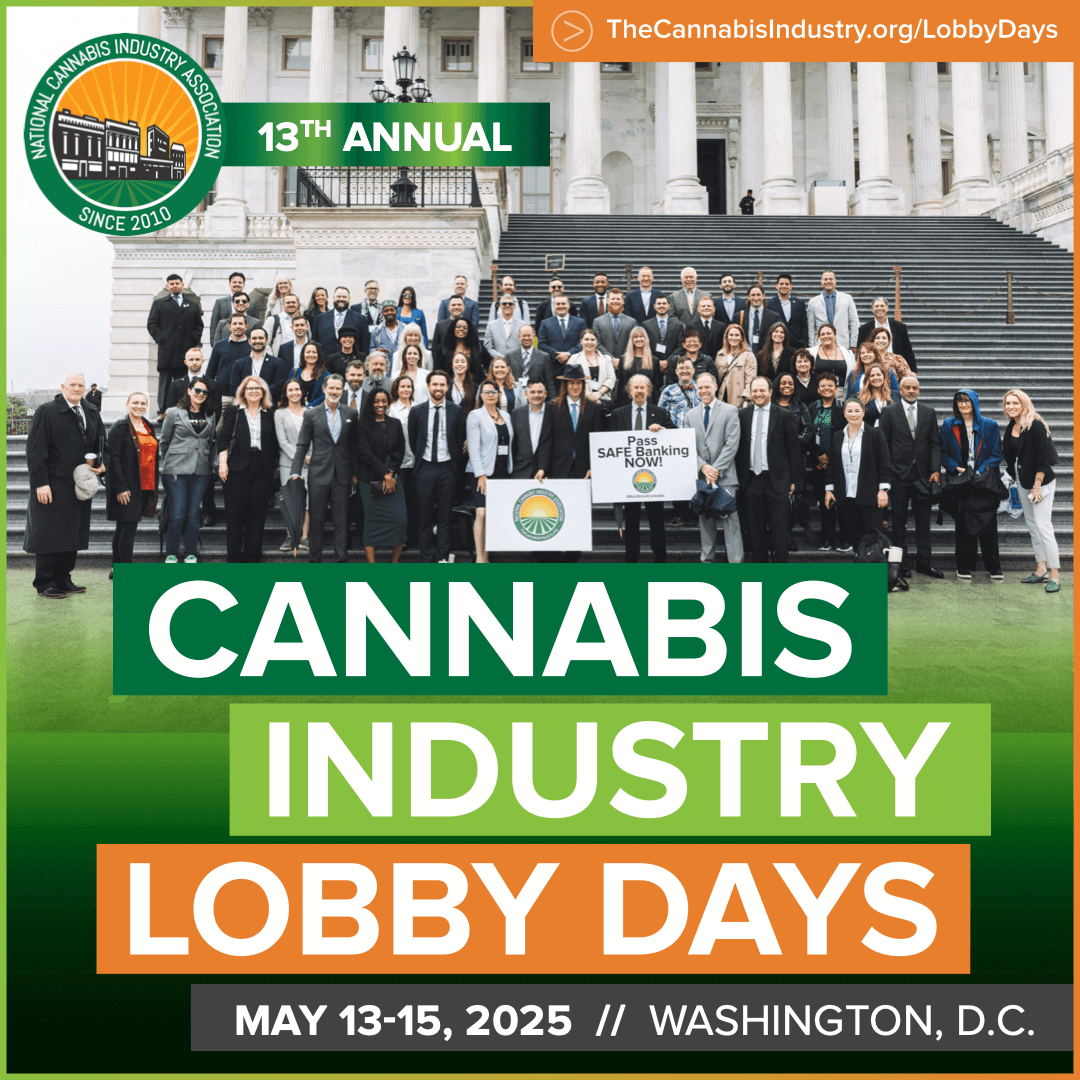
NCIA’s 13th annual Cannabis Industry Lobby Days is rapidly approaching and new and seasoned attendees alike may be wondering how to make the most out of the precious time with electeds’ offices. Meeting with allies and skeptics both present unique challenges and opportunities. To provide advice on how to make the most out of Lobby Days, I reached out to Congresswoman Dina Titus’ office and spoke with Legislative Assistant Jeremy Marsh. Following his advice will help you walk away from Lobby Days feeling accomplished and confident that your message got through.
Stories from the community matter
White papers and data points are fine, but what really moves the needle are stories from the community and the front lines. Tailoring stories to the district/state of the office you are meeting with shows how constituents and local businesses are impacted by policy. These stories are great tools for supportive legislators to take to the floor and their committees. And, when meeting with a legislative office that has supported cannabis in the past, be sure to thank them! Standing up for cannabis is still a risk and those willing to take it should be acknowledged.
Rescheduling and hemp are still areas of confusion
Elected officials are more cannabis savvy now than ever before, but there are still some issues where education is needed. Don’t assume that elected officials, even supporters of cannabis are experts in all of the hot button issues being discussed in the industry. Mr. Marsh explains that rescheduling/descheduling and hemp regulation are two areas where confusion persists. Explain the issue before asking for support, and have some fact sheets ready with background information, as well be willing to answer questions and give context to these issues. Be sure you yourself can clearly explain the issues you are bringing into your Lobby Days visits.
Be early and be flexible
If you’re early you’re on time, if you’re on time, you’re late. This adage was drilled into my head by my Dad (thanks Dad!) and it is a great rule of thumb for Lobby Days. Try to be at least 5 minutes early to each meeting. Time is precious and being early shows that you are taking the process seriously. It also gives you time to collect your thoughts and your breath before heading into a meeting. Lines to get into the Capitol can be long, so keep this in mind before your first meeting of the day. If you are going to be late to a meeting, call the office and let them know. At the same time, be flexible. Schedules are constantly shifting for elected officials, so don’t take it personally if you are meeting with a staffer, or in the hallway outside the office. ALL communication is important, and many vital conversations happen outside the office doors (just watch Veep!).
The economy and public safety are selling points for opponents
Many would argue that meeting with opponents is just as, if not more, valuable than meeting with allies. And although cannabis has gained support from both sides of the aisle over the years, many are still skeptical of changing the laws around cannabis. If you meet with someone who has not traditionally been supportive, discussing the economic and public safety benefits of legalization is a good focus. Cannabis tax revenue has been used to support schools, roads, substance abuse programs, job placement and more. And, research shows that, after legalization, fewer teens are using cannabis, and fewer people are using opiates. You don’t have to be a fan of cannabis to be a fan of legalization.
NCIA’s 13th annual Cannabis Industry Lobby Days is a chance to bring the cannabis issue front and center with lawmakers. Once a source of snickers and jokes, the cannabis movement has become a major political force. Even so, assumptions about those involved in cannabis persist. Being prepared, professional and well versed on the issues will make an impression. And being a part of shedding a positive light on this industry and the people who work in it feels really great.
Committee Blog: Breaking the Stigma – Cannabis in the Retail World

Published on behalf of members of NCIA’s Retail Committee
Cannabis, once relegated to the shadows of society, is making a significant push into mainstream America. However, the journey from prohibition to acceptance is faced with many challenges, particularly in the retail world. The stigma surrounding cannabis stems from historical, legal, social, and cultural factors, and lack of education, plays a role in shaping the stigma. In this blog, we’ll explore some of the roots of the stigma on cannabis and how the landscape is gradually changing.
The Historical Backdrop
The roots of cannabis stigma are deeply embedded in history. In the early 20th century, cannabis was criminalized in many parts of the world. The United States’ War on Drugs, which began in the 1970s, heavily penalized cannabis use, linking it to criminal behavior and societal decay. Media reports of cannabis users as lazy, unmotivated, or criminals; these negative stereotypes are what many believe to be true.
However, alongside this negative portrayal, there exists a rich history of cannabis as a medicinal plant. For centuries, cannabis has been used to treat a variety of medical issues. Ancient cultures across Asia, the Middle East, and Africa utilized cannabis for its therapeutic properties, including pain relief and anti-inflammatory benefits.
In more recent times, cannabis has shown promise in helping cancer patients manage symptoms such as nausea, pain, and loss of appetite. Additionally, it has been found to fight inflammation, which is beneficial in treating conditions like arthritis and multiple sclerosis. This positive history of cannabis as a healing plant is often overshadowed by its criminalization and the stigma attached to its recreational use.
Legal and Regulatory Hurdles
One of the most significant barriers to cannabis acceptance in retail is the complex legal landscape. In the United States, for instance, cannabis remains illegal at the federal level, despite being legal in several different states. This legal ambiguity creates uncertainty and fear among businesses, banks, customers as well as B2B consumers.
Moreover, the reluctance of banks and financial institutions to work with cannabis-related businesses due to federal regulations results in limited access to financial services and funding. This financial exclusion makes it difficult for cannabis businesses to operate and expand, perpetuating the stigma. It also makes it challenging for funding purposes for these businesses to continue to operate efficiently.
Social and Cultural Challenges
Public perception plays a crucial role in the acceptance of cannabis. Despite increasing acceptance, many still view cannabis use negatively and as a Schedule 1 drug, influenced by concerns about health impacts, addiction, and moral values. Workplace policies that maintain strict no-drug stances, regardless of legal status, also contribute to this negative perception. Enhancing education on cannabis can help mitigate this stigma within our culture, which in turn will aid in positioning the cannabis industry as a credible sector in the eyes of consumers, banks, and other business sources.
Retail Industry-Specific Issues
In addition, mainstream retailers are often hesitant to carry cannabis products due to fear of backlash from conservative customers or communities, which limits the visibility and availability of these products in the broader spectrum.
Furthermore, stringent marketing and advertising regulations restrict cannabis businesses from effectively reaching new customers and normalizing their products. Social Media advertising is prohibited as well as certain television channels.
Conclusion
Resolving the challenges surrounding the stigma of cannabis in the retail world requires a multifaceted approach. Firstly, education plays a pivotal role: increasing public awareness about the medicinal benefits of cannabis and dispelling myths through targeted campaigns can shift negative perceptions. Secondly, advocating for legislative reform to align federal and state laws can provide clarity and confidence for businesses to operate effectively. Moreover, fostering open dialogue among stakeholders, including policymakers, industry leaders, and the public, can promote understanding and acceptance. Lastly, mainstream retailers can be encouraged to embrace cannabis products through initiatives that demonstrate responsible consumption and highlight regulatory compliance, thereby normalizing its presence in the retail market. By addressing these aspects comprehensively, we can gradually reduce stigma and integrate cannabis as a legitimate and beneficial sector within the retail market.
Follow NCIA
Newsletter
Facebook
Twitter
LinkedIn
Instagram
News & Resource Topics
–
This Just In
Committee Blog: Access to Capital in the U.S. Cannabis Market Outlook
Member Blog: The Risks of Removing a Regulated Cannabis Market