Member Blog: How to Prepare a Winning Dispensary License Application
by Gary Cohen, Cova Software
The cannabis industry has come a long way in the U.S. Although we still await federal legalization, many new states have recently jumped on the bandwagon, and legacy states are awarding more social equity licenses. While New Jersey and Mississippi will be opening their first dispensaries by the end of 2022, New York has started accepting applications for CAURD licenses from justice-involved individuals. But scoring high points on your dispensary license application can be challenging, especially with all the stringent requirements. Here are some quick tips to help you stand out and prepare a winning dispensary license application.
Follow your State Cannabis Authority’s Guidelines
Every state in the US has different guidelines and regulations for a cannabis dispensary license. Do a thorough review of all the information available on your state cannabis authority’s website, and keep a look out for when they will start accepting applications. Most states accept only electronic applications, and you will likely have to create an account online on a designated website and link your company’s official information. For an application to be deemed complete, a response to each criterion specified must be included, along with the required documents.
Ensure You Qualify and Apply for the Right Category
To be eligible to submit a cannabis dispensary license application, you must reside in the state where you are applying or must be registered to do business in that state. Many states are awarding conditional cannabis business licenses to social equity applicants first or prioritizing applicants impacted by the war on drugs to build an equitable cannabis industry. If you qualify for any of these categories, ensure that you apply for the right one to expedite the processing of your dispensary license application.
Connect with the Community Where you Plan to Operate
Some states require your dispensary to be located in the municipality you live in, and you will be awarded a license only for a particular zone. Community reach and impact are also criteria laid down by some cannabis authorities, and you must establish connections with not just local and state officials but also other people who can help you understand the bigger picture better. For example, New Jersey and New York want you to explain the positive community impact your dispensary business will have. If you don’t connect with the community, you won’t be able to align your vision with their needs in your dispensary license application.
Fortify Application with a Business Operations & Security Plan
After familiarizing yourself with the license requirements and structure, you must dive into how you can prepare the best possible application to score higher points on every measure. For example, to obtain a conditional dispensary license in New Jersey, 40 out of 100 points are for your dispensary business plan, and another 50 points are for a regulatory compliance plan. One of the most crucial aspects of this is a dispensary operations plan that you must include in your application. This plan helps authorities understand how your dispensary business will comply with all cannabis laws and regulations and ensure safe access to cannabis for your customers.
Compliance is the Name of the Game
The detailed plans included in your cannabis dispensary license application must also mention the technology provider you intend to partner with, and choosing a compliant cannabis retail platform will help you fortify your application further. Prepare a winning dispensary license application by downloading Cova Software’s free template, Dispensary Operations and Security Plan, which will serve as a comprehensive guide to writing a winning plan for a successful cannabis retailer license application.
Gary Cohen is the CEO of Cova Software, the fastest growing technology brand in the cannabis industry. Cohen’s focus has been driving the company’s overall strategy, including its vision, go-to-market plan, and strategic development. Since joining the cannabis industry in 2016 and launching Cova commercially in 4q17, Cohen has led Cova to dominate the enterprise sector for dispensary Point of Sale, while forging client relationships with hundreds of single-store retailers across North America.
With Cova’s cannabis POS and its excellent integrations with eCommerce and delivery services, the online order automatically pops up for the budtender to tender the sales, and the POS system updates inventory once payment is approved. Cova offers multiple eCommerce solutions to choose from, as per your needs and budget, and you can legally sell cannabis online stress-free while staying compliant with strict government regulations.
Equity Member Spotlight: Osbert Orduña – The Cannabis Place
NCIA’s editorial department continues the Member Spotlight series by highlighting our Social Equity Scholarship Recipients as part of our Diversity, Equity, and Inclusion Program. Participants are gaining first-hand access to regulators in key markets to get insight on the industry, tips for raising capital, and advice on how to access and utilize data to ensure success in their businesses, along with all the other benefits available to NCIA members.
Tell us a bit about you, your background, and why you launched your company.
I am a first-generation Latino of Colombian descent, Spanish was my first language and my dad spent most of my youth incarcerated. I grew up in NYC Public Housing projects, and I have first-hand knowledge of the indignity of what it feels like to personally be stopped and frisked nearly 100 times which is what happened to me as a kid and young adult for doing nothing else than being a poor Latino growing up in the hood. I was an Education Opportunity Fund scholar and the first in my family to go to college, where I received a degree in business, and a graduate certificate in law. I earned the designation of Disabled Veteran while serving in Iraq with the United States Marine Corps, and I am also a 9/11 first responder. I retired after a career in public service, and have worked as an entrepreneur for over 10 years, and know what it takes to start a business from scratch, without a rich uncle, generational wealth, or rich financial backers.
In late 2020 and early 2021, I had the opportunity to visit 50 non-MSO recreation and medical dispensaries in five states on the east and west coast. I wanted to learn more about dispensaries and best practices across the industry, but my trip opened my eyes to a different reality. Forty-nine of the dispensaries were owned by white males and one was owned by a white female, not one owner looked like me or shared a similar background. None of these dispensary owners had been stopped and frisked hundreds of times for no other reason than just because they lived in an area with historically high rates of arrests and enforcement from over-policing. Yet they were now engaged in an industry that seemed to exclude us. My trip left me sad but determined to enter the cannabis market so that people who look like me who came from the struggle of the streets, and were collateral damage in the war on drugs could have a chance. I was determined to create a positive example for Latinos and others to follow.
What unique value does your company offer to the cannabis industry?
The Cannabis Place offers a unique value proposition which is our commitment to launching as a union cannabis dispensary on day one. As of yet, we are the only dispensary in the state of New Jersey and the nation to propose this. By launching our business as a unionized shop we are being a partner to our Jersey City, NJ community. Our value proposition promises that we will be a responsible and proactive member of the community that provides union career opportunities with true living wages that will empower our team members to provide upward mobility for themselves, their families, and the greater community. Furthermore, we are engaged as a Workforce Development partner with Cornell University, the Workforce Development Institute, and Hudson County (NJ) Workforce Development Board. With these partnerships, we will develop standardized training modules that will be utilized to train prospective dispensary workers and provide opportunities for those seeking cannabis careers in this new and emerging industry.
Our mission: To provide high-quality cannabis to clients with a consistent product and first-class service they can trust. To build our brand on the core values of client service and care, while maintaining the highest standards of quality, integrity, and community outreach.
What is your goal for the greater good of cannabis?
As the CEO of The Cannabis Place, our primary goal for the greater good of cannabis is to advocate and support a proactive approach to adult-use by providing a local and safe environment to dispense cannabis products. We operate as a social impact cannabis brand and are dedicated to providing consistent access to safe and reliable cannabis products that are ethically grown and sourced. Our aim is to launch the first unionized cannabis dispensary in New Jersey, leading by example, and demonstrating to other businesses that true success is based on placing people over profits.
Our goals are as follows:
Be an accelerator for generational wealth-building opportunities among our employees from the community
Be a reliable source for cannabis education and awareness
Utilize our Community Impact grants to assist and support outreach in areas that have been disproportionately impacted
Our advocacy at The Cannabis Place is based on workers rights, especially organization, fairness and quality healthcare. We believe that it should be easier for people in all job fields to organize. At The Cannabis Place we support the implementation of legislation that will raise the minimum wage floor for all workers in our community, to provide for true living wages that place people over profits. Workers in all industries deserve more from the moment they are hired. Like many others I grew up as part of the working poor, in public housing with limited minimum wage job opportunities, without healthcare and with minimal alternatives to life on the streets. At The Cannabis Place we believe that by providing our workforce with union careers with true living wages and full benefits, our team members, their families and their communities will feel the immediate difference of financial stability, long-term growth, and the impact of upward financial mobility to help them support their family and to build a better life.
What kind of challenges do you face in the industry and what solutions would you like to see?
Latinos are consistently underrepresented in terms of business owners throughout all industries. Now when you focus specifically on cannabis and look at a national level, just 5.7% of all license types are held by the Hispanic community. I have seen challenges in the cannabis industry in two key areas, access to capital and the real estate market. It takes money to make money so if you grew up poor, without generational wealth, no rich uncle, no hedge fund connections or oligarchs to call on, how do you raise funds to have the millions that are needed to launch a dispensary or grow? Next and along the same lines is real estate. A lot of landlords won’t lease to cannabis businesses but unfortunately, our experience has been that again a predatory market exists where cannabis rental rates are 2 to 10 times the normal lease rates for the area. The other option is to buy a commercial parcel which brings us back to issue #1 – access to capital. I am ever the optimist, and I see the Latino community growing in the legal cannabis industry as entrepreneurs, c-suite members, and as leaders in the industry bringing our unique insight and sabor to the industry while creating opportunities for generational wealth for our community. In order to get there, we need to bridge the gap through social equity grants and loans that can help Hispanic cannabis entrepreneurs raise enough capital to start their business, and receiving financial education is also crucial for Hispanic entrepreneurs in multiple phases of the cannabis business planning timeline.
Why did you join NCIA? What’s the best or most important part about being a member through the Social Equity Scholarship Program?
We are a Disabled Veteran and Latino-owned company with a core focus on community impact through social impact so the ability to be a Social Equity Scholarship recipient in an organization like the NCIA, a group who are actually dedicated to ensuring that small cannabis businesses have a seat at the table in Washington, D.C. and beyond, was super important to us. We look forward to learning new information and utilizing networking opportunities to help us grow and succeed in the cannabis industry.
The fact that NCIA is leading change to protect the legal cannabis industry, advocate for our state laws, advance federal policy reforms, and to make this a more inclusive and prosperous space by working together to defend the responsible cannabis industry. Creating more opportunities for small businesses rather than just the wealthiest few is the most important thing for us as members of the Social Equity Scholarship Program.
The Cannabis Place 420 Corp is the first ever Disabled Veteran and Minority Owned Business enterprise to successfully navigate the Jersey City, NJ municipal cannabis dispensary approval process in this new and emerging cannabis market.
Video: NCIA Today – Thursday, June 2, 2022
Happy PRIDE! NCIA Director of Communications Bethany Moore checks in with what’s going on across the country with the National Cannabis Industry Association’s membership, board, allies, and staff. Join us every other Thursday on Facebook for NCIA Today Live.
Make the investment, take the time, and do the work to position yourself for success in the Empire State!
State-Level Insights: Momentum Builds Across Our Nation
By Sadaf Naushad, NCIA Intern
Although the action-packed April must come to an end, the fight for cannabis reform never stops! With U.S. Senators delaying the much-anticipated introduction of the Cannabis Administration and Opportunity Act (CAOA) last month, Congress has a lot of work to do.
In the meantime, a congressional bicameral bipartisan committee is considering the Secure and Fair Enforcement (SAFE) Banking Act as an amendment to the House’s U.S. Innovation and Competition (COMPETES) Act.
Now let’s focus on action occurring within the states. State-level updates help provide us with insights on cannabis reform progress at the federal level. As more state constituents vote in favor of cannabis initiatives, reformation support overall increases within the United States. Efforts to reform cannabis policies at the state level encourage members of Congress at the federal level to enact legislation.
Let’s take a look at this week’s state-level insights:
New York
As the legal cannabis market is set to launch later this year, New York lawmakers intend to ensure that a sufficient supply of marijauna exists. Last month, state regulators voted to allow conditional marijuana cultivation licenses to several hemp businesses. Regulators also established that adults with prior cannabis convictions, along with family members who have previously faced criminalization, would receive the first round of adult-use cannabis retailer licenses – ahead of present medical marijuana businesses. This week, lawmakers recently approved a second round of applications for recreational cannabis cultivators. Additionally, the Cannabis Control Board (CCB) passed amended regulations granting medical marijuana patients to grow their own plants for personal use.
Delaware
A Delaware House Committee approved a bill that would terminate 50 years of cannabis prohibition and criminalization. For the second time in history, Delaware’s District 24 Representative Ed Osienski (D) introduced House Bill 371, legislation legalizing cannabis possession and gifting. The legislation is attached to a companion measure that would build a regulatory framework for the market. Its two-piece model comes after the House defeated a prior measure in March that incorporated both components.
South Carolina
An eight-year attempt to legalize medical marijuana in a largely conservative state abruptly came to an end on the House floor Wednesday. South Carolina’s District 13 Representative and House Leader John McCravy (R) ruled that the Session 124 measure comprises an unconstitutional tax increase, thereby ceasing further consideration of the bill. According to Representative McCravy, since the bill contains a tax on medical cannabis, lawmakers should have introduced the bill in the House under the state constitution’s article for legislation that raises revenue. The bill’s sponsor, U.S. Senator Tom Davis (R), is rapidly seeking other ways to keep the issue active as the session concludes.
Missouri
In preparation for the 2022 midterm elections, a Missouri House Committee approved a GOP-led joint resolution seeking to place cannabis legalization on the November ballot. Missouri’s District 98 Representative Shamed Dogan (R) sponsored an amended version of the legislation, in which The Special Committee on Criminal Justice passed in a 7-2 vote. The amended bill eliminated provisions that would remove the state’s current separate medical marijuana program and set regulations regarding taxation in the legal market. Under the amended resolution, marijuana offenses would be removed from the Missouri criminal statute, permitting adults to possess, use and sell cannabis without facing penalties.
Washington
State officials Lieutenant Governor Denny Heck (D), Attorney General Bob Ferguson (D), Treasurer Mike Pellicciotti (D) and Governor Jay Inslee (D) sent a letter to congressional leaders, outlining the urgency of passing the Secure and Fair Enforcement (SAFE) Banking Act. With Washington being one of the first states to legalize cannabis, lawmakers remain frustrated at the industry’s lack of access to essential financial services stemming from federal prohibition.
New Jersey
Last month the state attorney general’s office released a controversial document detailing how New Jersey’s marijuana laws currently authorize police to use cannabis when not working. This week, New Jersey lawmakers introduced a string of bills designed to encourage employers to penalize workers from consuming cannabis off duty in compliance with state law. Punishable workers specifically include law enforcement officers and first responders. Now, three new bills exist that intend to enforce restrictions on such activity for particular employees. New Jersey’s 6th Legislative District Representative Louis Greenwald (D) aims to amend state statute to contain the following provisions: penalizing police for using cannabis, conducting random drug tests and the right to refuse job applicants due to lawful cannabis use. Although Representative Greenwald’s bill targets police officers, two other measures presently remain that would also impose employment-based restrictions on lawful marijuana use.
Ohio
The Coalition to Regulate Marijuana Like Alcohol (CTRMLA) filed a lawsuit to keep cannabis legalization on Ohio’s November 2022 ballot. In December 2021, CTRMLA turned in petition signatures to Ohio’s secretary of state’s office, but the office deemed the signatures insufficient. To advance the legislative review of their measure, CTRMLA turned in additional petitions on January 13, 2022. According to the state statute, however, a ballot petition must be submitted “no less than ten days prior to the commencement of any session of the general assembly.” The session commenced on January 19, falling outside of that ten-day certification window. As a result, CTRMLA contacted Franklin County Court of Common Pleas, requesting a ruling on a prospective challenge concerning the timing of the group’s initial signature submission to Ohio for the reform proposal.
Stay tuned for more updates on cannabis policy reform. If you are interested in learning more about NCIA’s government relations work and how to get involved please reach out to Madeline@thecannabisindustry.org.
February Hodgepodge: An Update from D.C.
Photo By CannabisCamera.com
by Michelle Rutter Friberg, NCIA’s Deputy Director of Government Relations
It may only be February, but the NCIA government relations team has been busy at work this year advocating for you and your business! Just over the last month, the SAFE Banking Act passed the House for the sixth time, we held our first mini-virtual lobby days, and Majority Leader Schumer provided an updated timeline for the Cannabis Administration and Opportunity Act (CAOA). Keep reading to learn the latest:
SAFE Banking
Last week, Congressman Perlmutter (D-CO) followed through on his promise to attach SAFE Banking to any viable legislative package when he filed it as an amendment to the America COMPETES Act, which is a large manufacturing bill. Now, the bill is headed to a “conference committee” – a term for when House and Senate leadership, as well as committee chairs and other members of Congress get together to negotiate differences in the two chambers’ bills.
Congressman Perlmutter and the other lead offices of SAFE Banking are currently talking with leadership about the importance of enacting the provision, however, Leader Schumer and Senator Booker have been clear about their opposition to passing SAFE without broader equity provisions. During early February, keep your eyes on the news to see if SAFE Banking makes it into the final, enacted language!
Virtual Lobby Days
Due to NCIA’s Evergreen members’ investment in shaping policy for the cannabis industry, we have been able to take our Government Relations work virtual by hosting our first ever Mini-Lobby Days! As we continue to represent a value-driven, responsible industry, our main goal is to educate congressional offices on all aspects of cannabis policy reform, including social equity, banking, 280E, scientific data, and much more.
During the first week of February, NCIA’s Evergreen Roundtable members participated in more than 30 virtual congressional meetings, including time with Sen. Cory Booker (D-NJ), Sen. Jeff Merkley (D-OR), and Rep. Dave Joyce (R-OH). Members also met with relevant committee staff and communicated the importance of holding hearings and markups on cannabis policy issues, as well as enacting reform while Democrats hold the majority in both chambers.
Sound interesting? Get in touch with Maddy Grant (Madeline@TheCannabisIndustry.org) to learn more about becoming an Evergreen member today!
Latest on CAOA
Back in September, NCIA and other stakeholders submitted responses to the Cannabis Administration and Opportunity Act (CAOA) discussion draft, led by Leader Schumer (D-NY, and Sens. Booker (D-NJ) and Wyden (D-OR). Since then, the Senate’s focus has been primarily on passing President Biden’s Build Back Better Act, which has significantly slowed progress on the CAOA. While the bill hasn’t been formally introduced yet, the sponsoring offices have slowly continued to have conversations with committees of jurisdiction to tee things up behind the scenes.
In a recent press conference in New York, Leader Schumer announced plans to introduce the CAOA in April. Can anyone say 4/20?
This update just represents a small snapshot of all that NCIA’s government relations team has been working on in D.C. – make sure to keep an eye on the blog, find us on NCIA Connect, and follow us on our social media channels to learn the latest!
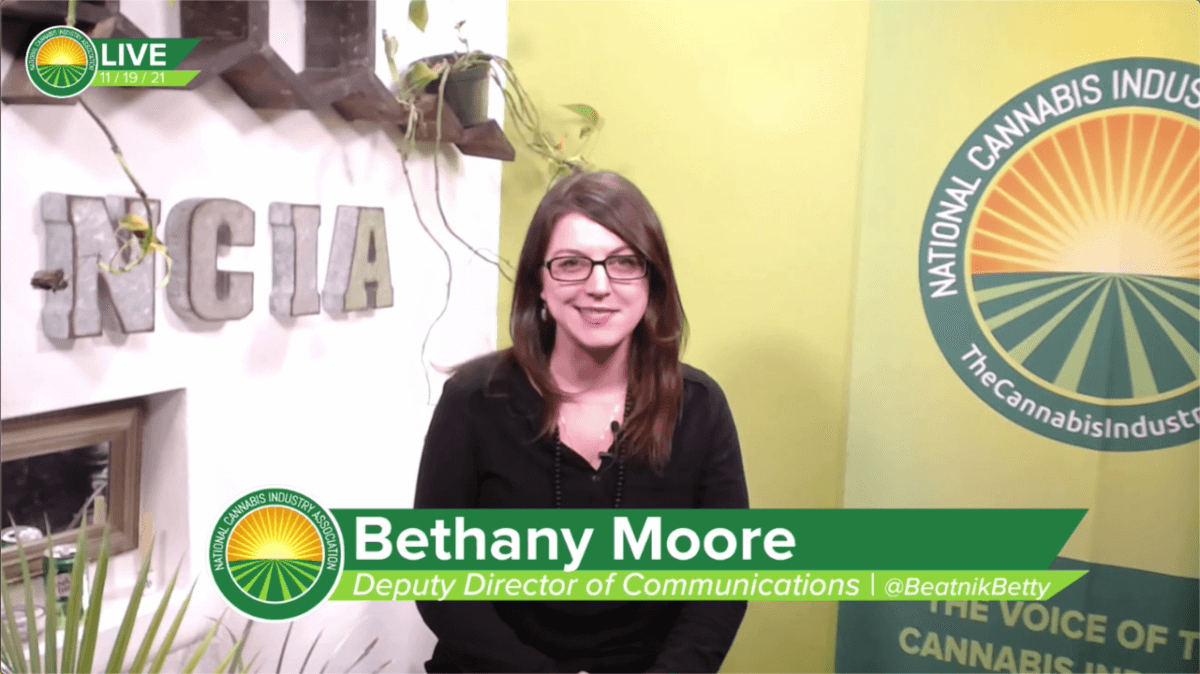
Video: NCIA Today – Friday, November 19, 2021
NCIA Deputy Director of Communications Bethany Moore checks in with what’s going on across the country with the National Cannabis Industry Association’s membership, board, allies, and staff. Join us every Friday on Facebook for NCIA Today Live.
Member Blog: Let the Good Times Roll – New Jersey’s Cannabis Markets Primed to Meet High Demand with Two Big Announcements from the Cannabis Regulatory Commission
New Jersey’s medicinal and adult-use cannabis markets are finally starting to take shape more than ten years after the medicinal marijuana program was launched. In the span of one month, the New Jersey Cannabis Regulatory Commission (“CRC”) not only announced awards for fourteen new medicinal cannabis licenses, but also, on November 9, 2021, gave the long-anticipated official notice that the state will soon begin the application process for the award of personal-use cannabis licenses.
In particular, the CRC announced this week that it will begin accepting adult-use applications for Class 1 Cultivator and Class 2 Manufacturer licenses, as well as licenses to run testing laboratories, beginning on Monday, December 15, 2021. Additionally, the CRC announced it will begin accepting applications for Class 5 Retailer personal-use cannabis licenses on March 15, 2022. While there is more information that will be forthcoming from the CRC, some major takeaways from the CRC’s November 9th notice are as follows:
The CRC set forth its scoring criteria and what applicants need to provide to score full points, as well as bonus points;
Bonus points will be awarded for, among other things, confirmation that at least one owner has been a New Jersey resident for at least five years as of the date of the application, and submission of a signed project labor agreement with a bona fide labor organization;
Local support for applicants will be critical as a municipality may, among other things, submit its preference to the CRC for the issuance of licenses to certain adult-use cannabis businesses;
Applications will be accepted on a rolling basis, with no limit on the number of licenses the CRC will award, other than a preliminary limit of 37 Class 1 Cultivator licenses prior to February 22, 2023. These cultivator licenses will be awarded to the first 37 applicants that meet all licensing, regulatory and operational requirements, and satisfy the conditions for priority approval;
The only exception to the above cap on Class 1 Cultivator licenses is for those applicants who apply as a “microbusiness” (there are residency requirements to qualify as a microbusiness, and operations of a microbusiness shall include no more than 10 employees; a facility of no more than 2,500 square feet; possession of no more than 1,000 plants per month; and/or a limit of 1,000 pounds of usable cannabis per month); and
Priority review and approval will be given to applicants who meet the CRC’s social equity, diversely-owned, and impact zone business criteria, in addition to other metrics.
The CRC will hold a pre-application webinar on November 30, 2021 for anyone interested in personal-use cannabis licensure. The medicinal and personal-use cannabis markets have put down deep roots in New Jersey, and consumer demand is budding like never before. Don’t let questions about this new regulatory landscape leave you and your business up in the air.
Charles J. Messina is a Partner at Genova Burns LLC and Co-Chairs the Franchise & Distribution, Agriculture and Cannabis Industry Groups. He teaches one of the region’s first cannabis law school courses and devotes much of his practice to advising canna-businesses as well as litigating various types of matters including complex contract and commercial disputes, insurance and employment defense matters, trademark and franchise issues and professional liability, TCPA and shareholder derivative actions.
Jennifer Roselleis a Partner at Genova Burns LLC and Co-Chair of Genova Burns’ Cannabis Practice Group. She has unique experience with labor compliance planning and labor peace agreements in the cannabis marketplace. In addition to her work in the cannabis industry, Jennifer devotes much of her practice to traditional labor matters, human resources compliance and employer counseling.
Daniel Pierreis an Associate at Genova Burns and a member of the Cannabis and Labor Law Practice Groups. In addition to labor work, he likewise assists clients in the cannabis industry, from analyzing federal and state laws to ensure regulatory compliance for existing businesses to counseling entrepreneurs on licensing issues.
For over 30 years, Genova Burns has partnered with companies, businesses, trade associations, and government entities, from around the globe, on matters in New Jersey and the greater northeast corridor between New York City and Washington, D.C. We distinguish ourselves with unparalleled responsiveness and provide an array of exceptional legal services across multiple practice areas with the quality expected of big law, but absent the big law economics by embracing technology and offering out of the box problem-solving advice and pragmatic solutions.
Our firm is proud of its proven track record of assisting multiple clients with being awarded medical licensure in New Jersey, and continuing to counsel clients on the dynamic federal and state regulatory landscape, as well as with corporate transactional, labor/employment, real estate, land-use and other issues.
Given Genova Burns’ significant experience representing clients in the cannabis, hemp and CBD industries from the earliest stages of development in the region, the firm is uniquely qualified to advise investors, cultivators, processors, distributors, retailers and ancillary businesses.
Member Blog: We’re Out of the Weeds – CRC Releases Initial Rules & Regs for New Jersey’s Adult-Use Marketplace
New Jersey recently passed the Cannabis Regulatory, Enforcement Assistance, and Marketplace Modernization Act (“CREAMMA”). Among other things, CREAMMA permits adults 21 years and older to consume cannabis and allows New Jersey residents to operate six types of cannabis businesses within the state. The new adult-use marketplace, as well as the already established medicinal marketplace, will be administered by the Cannabis Regulatory Commission (“the CRC”). The CRC is a panel of five appointed members who will oversee the development, regulation, and enforcement of the use and sale of all legal cannabis in New Jersey.
The CRC recently approved its first set of rules and regulations on August 19, 2021. This will enable the start of the licensing process for personal adult-use cannabis operations in New Jersey. Here are the 15 takeaways from the initial rules and regulations:
What type of license can I apply for?
There are six different license types:
Class 1 – Cannabis Cultivator License
Class 2 – Cannabis Manufacturer License
Class 3 – Cannabis Wholesaler License
Class 4 – Cannabis Distributor License
Class 5 – Cannabis Retailer License (also includes consumption lounges)
Class 6 – Cannabis Delivery License
Businesses may also apply for a license to operate a cannabis testing facility or medical cannabis testing laboratory. License-holders may hold multiple licenses concurrently; however, there are limitations on the number and type of licenses that may be held concurrently.
Are there any caps on the number of licenses that may be awarded?
The State only placed a cap on Class 1 licenses for cultivators. In particular, there will be a statewide cap of a total of 37 cultivators until February 22, 2023. Keep in mind that state limits aren’t the end of the inquiry; municipalities may set restrictions on the number of businesses in their jurisdiction.
What are the fees to apply for one of the adult-use licenses?
In an effort to make the application fee reasonable, the CRC will require applicants to only pay 20% of the application fee at the time of application, and the remaining 80% will only be collected at the time the license is approved. The initial application cost may be as low as $100 but successful applicants should be prepared to pay additional fees ranging from a total cost of $500 – $2,000.
Are there any fees other than the initial application fee?
Yes. There are annual licensing fees, which can range from $1,000 for a microbusiness to $50,000 for a cultivator, with up to 150,000 square feet of cultivation capacity. This fee range only applies to the adult use marketplace. There is a different licensing fee schedule for the medicinal use marketplace.
Will anyone be given priority in the application process for a cannabis license?
Yes. The CRC will prioritize applicants who live in specifically definedeconomically disadvantaged areas of New Jersey or who have past convictions for cannabis offenses (“Social Equity Applicants”). It will also prioritize applications from minority-owned, woman-owned, or disabled veteran-owned businesses that are certified by the New Jersey Department of the Treasury (“Diversely Owned Businesses”). Businesses in impact zones will also take priority (“Impact Zone Businesses”).
What do you mean by “priority review?”
Applicants meeting the criteria described above will have their applications reviewed before other applications, regardless of when they apply. Remember, however, that priority review doesn’t guarantee selection.
When will the CRC begin to review applications?
No date has been announced, but the CRC promises that it will be soon. The CRC will publish notice in the New Jersey Register announcing its intent to review applications and submissions will be reviewed, scored, and approved on a rolling basis (pun intended), subject to the required priority review for certain applicants.
What should I expect from the application?
Applicants will be expected to submit a detailed application that includes specific details for the proposed site for the business (which must be owned or leased), municipal approval, and zoning approval. Applicants must also submit an operating summary plan detailing the applicants’ experience, history, and knowledge of operating a cannabis business. The scoring of applicants and awarding of licenses will be based entirely on the application materials.
What if I don’t have all of the materials to submit a complete application?
Don’t worry, you can apply for a “Conditional License.” A Conditional License is a provisional award that gives the holder 120 days to become fully licensed by satisfying all the requirements for full licensure, includingfinding an appropriate site, securing municipal approval and applying for conversion to an annual license.
What are the requirements to be considered for a Conditional License?
Conditional License applicants mustsubmit a separate application for each cannabis business license requested, along with a background disclosure, a business plan and a regulatory compliance plan to the CRC. At the time of the application, all owners with decision-making authority of the conditional license applicant will need to prove that they made less than $200,000 in the preceding tax year, or $400,000 if filing jointly.
Are there any advantages in being awarded a Conditional License?
Conditional License holders that convert to an annual license will not have to submit the sections of the application that, under statute, require applicants to demonstrate experience in a regulated cannabis industry. This flexible option offers an opportunity for newcomers to get into the cannabis industry.
What is a Microbusiness License?
Microbusiness licenses are for applicants who want to run a relatively small operation. Applicants may apply for a microbusiness license for any of the six license types. A microbusiness license limits the business to 10 employees; a facility of no more than 2,500 square feet; possession of no more than 1,000 plants per month; and/or a limit of 1,000 pounds of usable cannabis per month.
Can I rely solely on my local municipality for a license?
No. The state must award the cannabis license. Municipalities play a critical role, however, in the licensing process. For example, applicants will only be licensed by the CRC if the applicant has demonstrated support from the municipality, zoning approval, and has been verified to operate in compliance with any other local licensing requirement.
Can municipalities ban cannabis businesses from operating within their jurisdiction?
Yes. Municipalities may ban certain businesses from operating within their borders if they enact an ordinance regulating or banning cannabis businesses by August 21, 2021. Municipalities may update their ordinances at any time to remove any restrictions that they previously placed.
What happens if I don’t follow the CRC’s rules and regulations?
The CRC is authorized to inspect cannabis businesses and testing laboratories, issue notices of violations for infractions and issue fines. Standard fines can be no higher than $50,000, while fines for infractions implicating issues of public safety or betrayal of public trust can be as high as $500,000. Licenses may also be suspended or revoked. Don’t take the risk!
These 15 key points present only a quick summary of the CRC’s initial set of rules and regulations. We anticipate there will be a second set of rules released later this year, which will likely resolve issues that weren’t addressed in the initial set of rules and regulations, or CREAMMA. We expect the second set of rules and regulations to focus mainly on the needs of distribution and delivery service, and preparing for the acceptance of applications, before the Garden State is in full bloom…
Charles J. Messina is a Partner at Genova Burns LLC and Co-Chairs the Franchise & Distribution, Agriculture and Cannabis Industry Groups. He teaches one of the region’s first cannabis law school courses and devotes much of his practice to advising canna-businesses as well as litigating various types of matters including complex contract and commercial disputes, insurance and employment defense matters, trademark and franchise issues and professional liability, TCPA and shareholder derivative actions.
Jennifer Roselle is a Partner at Genova Burns LLC and Co-Chair of Genova Burns’ Cannabis Practice Group. She has unique experience with labor compliance planning and labor peace agreements in the cannabis marketplace. In addition to her work in the cannabis industry, Jennifer devotes much of her practice to traditional labor matters, human resources compliance and employer counseling.
Daniel Pierre is an Associate at Genova Burns and a member of the Cannabis and Labor Law Practice Groups. In addition to labor work, he likewise assists clients in the cannabis industry, from analyzing federal and state laws to ensure regulatory compliance for existing businesses to counseling entrepreneurs on licensing issues.
For over 30 years, Genova Burns has partnered with companies, businesses, trade associations, and government entities, from around the globe, on matters in New Jersey and the greater northeast corridor between New York City and Washington, D.C. We distinguish ourselves with unparalleled responsiveness and provide an array of exceptional legal services across multiple practice areas with the quality expected of big law, but absent the big law economics by embracing technology and offering out of the box problem-solving advice and pragmatic solutions.
Given Genova Burns’ significant experience representing clients in the cannabis, hemp and CBD industries from the earliest stages of development in the region, the firm is uniquely qualified to advise investors, cultivators, processors, distributors, retailers and ancillary businesses.
Member Blog: Eradicating Pesticide Use in the Cannabis Industry – Without Sacrificing Crop Quality
One of the direst, yet infrequently discussed, issues in the cannabis industry is the lack of federal guidelines regulating pesticide use. Despite the adult-use cannabis market consistently expanding on a state-by-state basis, as long as the crop remains illegal on the federal level, much-needed national oversight will continue to be limited.
The more states that legalize under a national prohibition, the more varying and convoluted state-by-state crop management regulations may become. Meanwhile, without standards firmly set in stone across the country, some cultivators have turned to hazardous chemicals to control pathogens and preserve their crop yields. Such cultivation solutions can compromise the safety of staff, the environment and, of course, the consumers.
Health Hazards of Pesticides in Cannabis
Even when shopping at a licensed adult-use or medical dispensary, consumers today still cannot be 100 percent confident that the cannabis they are purchasing is completely safe and free of contaminants and unwanted components, such as pesticides, harmful microbials, heavy metals, and solvents. Emerging research from Colorado State University shows that contaminants in cannabis, including pesticides, “are imminent threats that directly impact public health and wellness, particularly to the immunocompromised and pediatric patients who take cannabis products as a treatment for numerous human disorders including cancer patients and those suffering from epileptic seizures.” With many consumers turning to cannabis for its health benefits, and because it’s a natural alternative to heavily processed pharmaceuticals, the cultivation process should honor cannabis’ medical use by being as safe and accountable as possible.
The pesticide issue is compounded when we think about how cannabis is often consumed: through inhalation. Additional research has shown that nearly 70 percent of the pesticides used in cultivation remain in the cannabis flower that consumers smoke.
Even when these same pesticides are permitted in other types of American agricultural industries, this is a global anomaly. More than 25 percent of pesticides used in the U.S. are banned in other countries.
Moving Towards a Pesticide-Free Flower
So how do we work towards a pesticide-free cannabis industry? Licensed businesses, regulators, and consumers need to band together to set standards and guidelines for pesticide use across each legal state, and eventually on a federal level.
In 2020, Arizona took a page out of Oregon’s playbook by establishing a regulatory agency and adopting Oregon’s standards for limiting pesticide use in cannabis, setting a prime example for inter-state collaboration and accountability. Measures also need to be taken to lower the cost of testing cannabis products for pesticides and contaminants. And, of course, we need to embrace more sustainability and environmentally-minded education, and emerging technologies.
While testing does not necessarily prevent contaminants during the grow process, frequent, reliable, and standardized testing can help ensure contaminated products don’t make it to market. Unfortunately, testing requirements continue to differ by state, with some being more lenient than others. For instance, certain states only test for certain types of microbials, while others allow companies and cultivators to cherry-pick samples. This makes it easier for companies’ products to meet compliance, however, doesn’t ensure that the final products available for purchase will be safe for the consumer. Looking ahead towards inevitable federal legalization, testing requirements need to be uniform across all legal markets.
However, cultivators shouldn’t wait for federal oversight to hold themselves to the highest possible standards. There are inexpensive testing procedures currently available that cultivators can adopt before sending their cannabis products to the lab, which can help to better ensure what they are doing is working and catch a problem before it starts.
There are also non-toxic crop management technologies available now, and in addition to seeking out vendors offering innovation-driven solutions to replace conventional pesticides, cannabis companies and their cultivators can embrace simple, preventative measures to minimize outbreaks of bio-contaminants. This includes controlling humidity at the grow site, plant spacing, adequate air circulation, and implementing a strict chain of custody throughout the supply chain. Successful prevention mitigates the temptation to turn to potentially toxic pesticides to eradicate contaminants.
While federal legalization looms, it likely won’t happen this year. Therefore, state regulatory agencies should continue to be prepared with comprehensive outreach plans to communicate their pesticide and testing regulations to cultivators and their companies, ensuring that industry participants are fully informed. Planning and communication also sets the stage for the industry to have tried and true standards already in place by the time federal legalization does come to fruition.
The good news is the cannabis industry has the potential to lead a paradigm shift towards a safer agricultural sector as a whole. In years past, the amount of information shared between cannabis and other agricultural industries was limited, cutting cannabis cultivators off from reliable best practices for cultivation and crop management. However, this is changing quickly. Cannabis is also pushing the envelope towards more sustainable practices, with more cultivation sites moving indoors and into greenhouses, complete with LED lighting and additional sustainable practices. Cannabis cultivators are becoming more cutting-edge and setting an example for the broader agricultural community. The industry should continue these forward-thinking approaches by embracing pesticide-free solutions on a broad, scalable level.
Carlos Perea is the CEO and Co-founder of Terra Vera, an agricultural technology company offering innovative solutions to replace conventional pesticides and increase product safety and consumer confidence within the agriculture industry. Carlos is a serial entrepreneur with a focus on the intersection of technology and social impact. Prior to founding Terra Vera, he formed MIOX Corporation, a technology company that treats water in a variety of applications and is distributed in over 30 countries. He is active as an advisor and board member with several early stage companies and social enterprises including YPO, where is he an active board member. Carlos has an MBA from the Stanford Graduate School of Business, and an BS in Mechanical Engineering from the University of New Mexico.
Member Blog: It’s Still Snowing – But is Jersey’s Grass Finally Green?
by Charles J. Messina, Esq., Jennifer Roselle, Esq., and Daniel Pierre, Esq. of Genova Burns LLC
The seeds are planted: Earlier this week, Governor Murphy finally signed the enabling legislation for adult use into law. Although voters approved a referendum to legalize adult use of cannabis back in November, lawmakers’ efforts to draft the enabling legislation often went up in smoke. Until recently, the governor’s office and legislative leaders couldn’t decide how to address underage possession and use of cannabis. Now, lawmakers agree that minors should be subject to a three-tiered warning system in lieu of hefty fines.
But for adults, the Governor’s signature does not allow for immediate access to or use of recreational cannabis. Even with the passage of the recreational use law, residents cannot grow their own cannabis at home or legally purchase it without a medical marijuana card. Presently, there are no dispensaries authorized to sell adult-use cannabis.
Medical dispensaries, however, are expected to be the first access point for the adult-use cannabis market. There are 13 medical dispensaries serving the 100,000+ medical patients in the Garden State, and 24 new medical marijuana licenses are expected to be announced soon, many of which will be designated as dispensaries. Once the existing medical dispensaries demonstrate to the CRC that they have satisfied the medical needs of their patients, and that they have municipal approval for adult-use sales, they should be the first to sell to adults 21 and over.
In order for the Garden State to grow a recreational market, the CRC requires the appointment of two more members. Once all five members of the CRC are appointed, it has a specific timeframe to promulgate the rules that will regulate New Jersey’s recreational use industry. The CRC must, for example, fully develop the criteria and application process for the following six classes of recreational licenses that applicants can apply for:
Class 1 Cannabis Cultivator license — permits growing, cultivation or production of cannabis in New Jersey. Cultivators are also permitted to sell and transport cannabis to other cultivators, manufacturers, wholesalers or retailers, but not to consumers.
Class 2 Cannabis Manufacturer license — permits the manufacturing, preparing and packaging of cannabis and selling it to other cannabis manufacturers, wholesalers, retailers, but not to consumers.
Class 3 Cannabis Wholesaler license — permits the storage and sale of cannabis strictly for resale to another wholesaler or retailer, but not to consumers.
Class 4 Cannabis Distributor license — permits the intrastate transportation of cannabis in bulk from one licensed cannabis establishment to another licensed cannabis establishment. Distributors may also engage in the temporary storage of cannabis as necessary to carry out transportation activities.
Class 5 Cannabis Retailer license — permits the sale of cannabis directly to members of the public from a retail store. Cannabis retailers may also operate cannabis consumption areas for consumers.
Class 6 Cannabis Delivery license — permits courier services for consumer purchases of cannabis by a cannabis retailer directly to consumers.
Once established, we anticipate applications for licensing to be announced. This will certainly happen after the epic snowfall melts, but many New Jerseyans and others are already starting to get their fertilizer ready…
Charles J. Messina is a Partner at Genova Burns LLC and Co-Chairs the Franchise & Distribution, Agriculture and Cannabis Industry Groups. He teaches one of the region’s first cannabis law school courses and devotes much of his practice to advising canna-businesses as well as litigating various types of matters including complex contract and commercial disputes, insurance and employment defense matters, trademark and franchise issues and professional liability, TCPA and shareholder derivative actions.
Jennifer Roselle is Counsel with Genova Burns LLC and Co-Chair of Genova Burns’ Cannabis Practice Group. She has unique experience with labor compliance planning and labor peace agreements in the cannabis marketplace. In addition to her work in the cannabis industry, Jennifer devotes much of her practice to traditional labor matters, human resources compliance and employer counseling.
Daniel Pierre is an Associate in Genova Burns’ Newark, NJ office and a member of the Cannabis and Labor Law Practice Groups. In addition to labor work, he likewise assists clients in the cannabis industry, from analyzing federal and state laws to ensure regulatory compliance for existing businesses to counseling entrepreneurs on licensing issues.
For over 30 years, Genova Burns has partnered with companies, businesses, trade associations, and government entities, from around the globe, on matters in New Jersey and the greater northeast corridor between New York City and Washington, D.C. We distinguish ourselves with unparalleled responsiveness and provide an array of exceptional legal services across multiple practice areas with the quality expected of big law, but absent the big law economics by embracing technology and offering out of the box problem-solving advice and pragmatic solutions.
Given Genova Burns’ significant experience representing clients in the cannabis, hemp and CBD industries from the earliest stages of development in the region, the firm is uniquely qualified to advise investors, cultivators, processors, distributors, retailers and ancillary businesses.
Member Blog: Four States Legalized Cannabis in November – Here’s What That Means for the Industry
Voters in New Jersey, Arizona, South Dakota, and Montana legalized adult-use cannabis sales during November’s election. So, what comes next?
Last month, Americans in four states voted to legalize adult-use cannabis.
If you’re an adult over 21 in Arizona, New Jersey, South Dakota, or Montana, theoretically, you’ll be able to consume and purchase cannabis legally in 2021.
To many Americans, the end of cannabis prohibition in these states looks like a sudden act of voter mobilization. But industry insiders know it took years of work by activists, business people, and lawmakers to make legalization possible.
Before adults can legally purchase and consume cannabis, lawmakers in each state must outline rules and regulations, and dispensaries must go through intense licensing processes before opening their doors to the public.
The process won’t happen overnight.
In some newly legal states, it could take close to a year to iron out the details. And in the past, it’s taken even longer.
Take Massachusetts, for example. Voters cast their ballots in favor of legalization in 2016, but the first dispensary didn’t open until 2018.
Maine’s citizens also voted in support of legal weed in 2016, but it took four years for the first dispensary to open. The first two retailers – SeaWeed and Theory Wellness – opened on October 8 of this year.
“It has taken four years to move from referendum to retail sales since Mainers narrowly approved the legalization of recreational cannabis at the ballot box in 2016. Legislative rewrites, gubernatorial vetoes, a change in state administration, and then the impact of COVID-19 pandemic have combined to make Maine’s rollout the slowest in U.S. history.” – Portland Press Herald
Lawmakers in New Jersey are trying to speed things up. Democratic Senator Nick Scutari wants to move quickly to pass legislation modeled off a 2019 legal cannabis bill he sponsored. Still, legislators are fighting over the details. New Jersey’s Medical Marijuana licensing policies force applicants to pay large sums to compete for a limited number of licenses, allowing big businesses with deep pockets and holdings in other legal states to make millions.
Some New Jersey lawmakers are trying to keep the same from happening when adult-use dispensaries open their doors by prioritizing local businesses.
Arizona lawmakers anticipate legal cannabis sales to begin as early as March. The state plans to prioritize licenses for owners “from communities disproportionately impacted by the enforcement of previous marijuana laws.” Arizona’s 123 medical marijuana dispensaries will have the first opportunities to apply for adult-use licenses in January after the Arizona Department of Health Services writes the rules.
Entrepreneurs in South Dakota and Montana are ready to apply for dispensary licenses, but they, too, will have to wait.
In South Dakota, lawmakers say dispensaries will be open and selling legal adult-use cannabis by July 1. In Montana, people should be able to legally purchase cannabis on October 1, barring any bumps in the road.
Have we reached a tipping point?
The public’s view of cannabis is changing. One in three Americans now live in a state with legal weed, and, according to a recent Gallup poll, 68% of Americans support federal cannabis legalization. So, have we reached a tipping point?
That’s hard to say.
Thirty-six states now have a legal medical cannabis system. When sales begin in Arizona, New Jersey, South Dakota, and Montana, more than twenty states will have fully legalized cannabis. And while federal cannabis reform might be a defining aspect of the incoming administration’s legacy, legalization is mostly dependent on congress, and it’s still unclear which party will control the Senate next year.
Democratic leaders have pledged to end federal cannabis prohibition. If the Democratic party wins Senate control, full legalization is almost a certainty. But if Republicans maintain their Senate majority, the Republican party’s past approach to cannabis doesn’t indicate their leaders are ready to support far-reaching reform. Still, federal cannabis legalization isn’t outside the realm of possibility, even with a Republican-controlled Senate.
Only time will tell.
And again, regardless of what happens politically, it’s obvious America’s opinion of cannabis isn’t what it once was.
Oprah asked former President Obama if he and Michelle indulged in “pizza, pot, or alcohol” on election night in a recent televised interview. When a television icon casually asks a former President if he smoked weed with the former first lady, you know attitudes are changing.
Could federal cannabis legalization be the key to healing our COVID-ravaged economy?
This year, COVID-19 slowed the progress of cannabis legalization for individual states, but the pandemic could help push federal legalization forward next year. Here’s why.
A federally legal cannabis industry would accelerate America’s economic recovery.
The pandemic has had a catastrophic impact on many industries, and while a lot of employees will return to work, many jobs will be forever lost. The longer it takes for people to find employment, the longer it will take for the economy to recover.
The end of federal cannabis prohibition would create thousands of new jobs and reverse the pandemic’s adverse economic impact.
Here’s a point to consider: according to estimates from New Frontier Data, America’s legal cannabis market could be worth nearly $30 billion by 2025 – and that’s without federal legalization. If government officials choose to end federal prohibition next year, the estimates will increase dramatically.
For cannabis dispensaries, cultivators, cannabis-adjacent businesses (like cannabis marketing agencies), and American citizens, a nationwide end to prohibition would be life-changing.
But again, what the immediate future holds is anyone’s guess.
Aaron Rosenbluth is Hybrid Marketing Co‘s Content Director, and he loves to write blogs. He’s written so many blogs that he’s lost count. And beyond his skills as a copywriter and storyteller, he’s an obsessive reader and researcher. Aaron writes on subjects ranging from cannabis to collaboration, social equity to HR software, interior design to cybersecurity. His words attract, engage, educate, and convert. Btw, Aaron hates the phrase “content is king” (even though content is king – and queen).
Hybrid Marketing Co is a Denver-based branding and marketing agency that specializes in building custom strategies that supercharge growth and drive revenue. Working with brands and businesses across the U.S. and Canada, Hybrid’s partners run the full-spectrum of the cannabis world including dispensaries, manufacturers, cultivators, and ancillary businesses. Visit hybridmarketingco.com to learn more about the Hybrid approach.
Member Blog: Rolling Out Legal Cannabis in New Jersey – 15 Key Points from the Proposed Law
by Charles J. Messina, Esq. and Daniel Pierre, Esq. of Genova Burns LLC
Many are thrilled that the Garden State will finally allow recreational use of cannabis for adults aged 21 years and older. Before recreational use can become legal, however, we have to wait for Trenton to pass a law that will regulate New Jersey’s cannabis marketplace. Determined to get the ball rolling, Senators Nicholas Scutari and Stephen Sweeney recently introduced a 200+ page bill, S-21, to start the process for legalization. This article highlights major points from the bill you should know if you’re looking to join this emerging industry.
Is adult-use (recreational) of cannabis currently legal in New Jersey?
No. Although New Jersey voters approved the referendum that amended the State Constitution to legalize the recreational use of cannabis for adults age 21 years and older, recreational use is not legal until New Jersey lawmakers pass a bill that regulates recreational use of cannabis.
When will New Jersey lawmakers pass the enabling law?
It is uncertain when the enabling law will pass. But Senator Nicholas Scutari said he wants the bill to hopefully pass before the end of this month. Two days after the referendum passed in New Jersey, he and Senator Stephen Sweeney introduced Bill S-21 – “New Jersey Cannabis Regulatory, Enforcement Assistance, and Marketplace Modernization Act.” If passed, the bill will legalize the personal use of cannabis for adults subject to regulation by the Cannabis Regulatory Commission.
What is the Cannabis Regulatory Commission (CRC)?
The CRC is a panel of five appointed individuals who will be responsible to oversee the development, regulation, and enforcement of use and sale of cannabis in New Jersey. The CRC will also implement the legislation that Governor Murphy will ultimately sign to legalize recreational use within the state.
Who are the CRC members?
As of today, only two appointees have been named – Dianna Houenou, who will serve as the CRC Chair, and Krista Nash as a member. Although we are still waiting for the remaining three members to be named, we know that Jeff Brown – the Assistant Commissioner of the Department of Health, who currently leads the medicinal marijuana program in New Jersey – has been tapped to become the first Executive Director of the CRC.
What are the CRC’s powers?
The CRC has the authority to, among other things, adopt, amend or repeal regulations that control the cannabis marketplace. It can also grant, refuse, suspend, revoke, cancel, or take actions otherwise limiting licenses or conditional licenses related to cannabis.
What are the different types of cannabis licenses contemplated in the proposed legislation?
Currently, there are six classes of licenses:
Class 1 Cannabis Grower license – permits growing, cultivation, or production of cannabis in New Jersey.
Class 2 Cannabis Processor license – permits manufacturing, preparing, and packaging of cannabis.
Class 3 Cannabis Wholesale license – permits the storage and sale of cannabis strictly for resale.
Class 4 Cannabis Distributor license – permits the intrastate transportation of cannabis in bulk.
Class 5 Cannabis Retailer license – permits the sale of cannabis directly to members of the public.
Class 6 Cannabis Delivery license – permits delivery of cannabis from a retailer to the public.
Also, the bill was recently amended to allow the CRC to create a new license category.
Can individuals or small businesses apply for any of the licenses?
Yes. Under the current version of the bill, at least 25% of the total number of licenses in each class are reserved solely for microbusinesses. “Microbusiness” is defined as a person or entity with business operations that employ no more than 10 employees. Reserving 25% of licenses for small businesses is intended to, among other things, prevent interstate megabrands from completely dominating the marketplace in New Jersey.
Are there any restrictions placed on microbusinesses?
Yes, in order to qualify as a microbusiness under the proposed legislation, you cannot process more than 1,000 cannabis plants each month, operate a cannabis establishment that occupies more than 2,500 square feet, or acquire more than 1,000 pounds of cannabis in dried form for retail, resale, or processing each month.
Can I personally grow cannabis from my house for personal use or retail?
No. There is currently no “home grow” component to the bill.
Can I hold two classes of licenses concurrently?
As currently written, there are certain restrictions with respect to holding two classes of licenses concurrently. In particular, once retail sales of cannabis begin, there is supposed to be an 18-month limitation on the number and classes of licenses any one licensee may hold. During this 18-month period, the current bill prohibits a licensed grower, processor, wholesaler, distributor, or delivery service licensee to also become a licensed retailer, and vice versa. Also, a grower or processor may only concurrently hold two licenses – either another grower or processor license – for now.
How do I apply for a license?
Not so fast…first, the remaining appointment of the CRC Commissioners needs to happen along with the promulgation of regulations by the CRC. Then at some point in 2021, an application round for licenses should be announced. Each application for an annual license to operate a cannabis business must be submitted to the CRC. A separate license or conditional license will be required for each location where a cannabis establishment seeks to operate (or for the location of each premises from which a cannabis distributor or delivery service seeks to operate). Renewal applications for another annual license may be filed up to 90 days prior to the expiration of the establishment’s, distributor’s, or delivery service’s license.
What should I be doing now to prepare for obtaining a license?
Too much to write in one paragraph! But, after forming your application team and getting your corporate formation ducks in a row, one of the first things you should be thinking about is location.
Does that mean municipal approval is required in order to open a cannabis business?
Good guess. The CRC will require proof of local support for the suitability of the location of your proposed cannabis business. There were 70+ municipalities that were intending to ban canna-businesses. This number is likely to drop as municipalities should be able to charge up to a 2% tax on cannabis sales, which can help plug the deficit gap related to the ongoing COVID-19 pandemic and further other social justice initiatives.
Speaking of taxes, how will cannabis be taxed once regulated?
According to the referendum, cannabis products would be subject to New Jersey’s sales tax (i.e., 6.625%), in addition to the potential local tax of up to 2%. As the bill is currently drafted, the sales tax revenue is supposed to be used to administer the cannabis program and reimburse police departments for training costs associated with enforcing the law. There may also be an additional tax imposed on cultivators, and that revenue would likely be directed to social equity initiatives.
Will the CRC prioritize applications based on location?
Yes. The CRC is supposed to prioritize applications on the basis of impact zones, for which past criminal marijuana enterprises contributed to higher concentrations of law enforcement activity, unemployment, and poverty. The bill defines an “impact zone” as any municipality that has a population of 120,000 residents and ranks in the top 40 percent of municipalities in New Jersey for cannabis related arrests.
Daniel Pierre is an Associate in Genova Burns’ Newark, NJ office and a member of the Cannabis and Labor Law Practice Groups. In addition to labor work, he likewise assists clients in the cannabis industry, from analyzing federal and state laws to ensure regulatory compliance for existing businesses to counseling entrepreneurs on licensing issues.
Charles J. Messina is a Partner at Genova Burns LLC and Co-Chairs the Franchise & Distribution, Agriculture and Cannabis Industry Groups. He teaches one of the region’s first Cannabis law school courses and devotes much of his practice to advising canna-businesses as well as litigating various types of matters including complex contract and commercial disputes, insurance and employment defense matters, trademark and franchise issues and professional liability, TCPA and shareholder derivative actions.
For over 30 years, Genova Burns has partnered with companies, businesses, trade associations, and government entities, from around the globe, on matters in New Jersey and the greater northeast corridor between New York City and Washington, D.C. We distinguish ourselves with unparalleled responsiveness and provide an array of exceptional legal services across multiple practice areas with the quality expected of big law, but absent the big law economics by embracing technology and offering out of the box problem-solving advice and pragmatic solutions.
Given Genova Burns’ significant experience representing clients in the cannabis, hemp and CBD industries from the earliest stages of development in the region, the firm is uniquely qualified to advise investors, cultivators, processors, distributors, retailers and ancillary businesses.
This site uses cookies. By using this site or closing this notice, you agree to the use of cookies and our privacy policy.


 Gary Cohen is the CEO of Cova Software, the fastest growing technology brand in the cannabis industry. Cohen’s focus has been driving the company’s overall strategy, including its vision, go-to-market plan, and strategic development. Since joining the cannabis industry in 2016 and launching Cova commercially in 4q17, Cohen has led Cova to dominate the enterprise sector for dispensary Point of Sale, while forging client relationships with hundreds of single-store retailers across North America.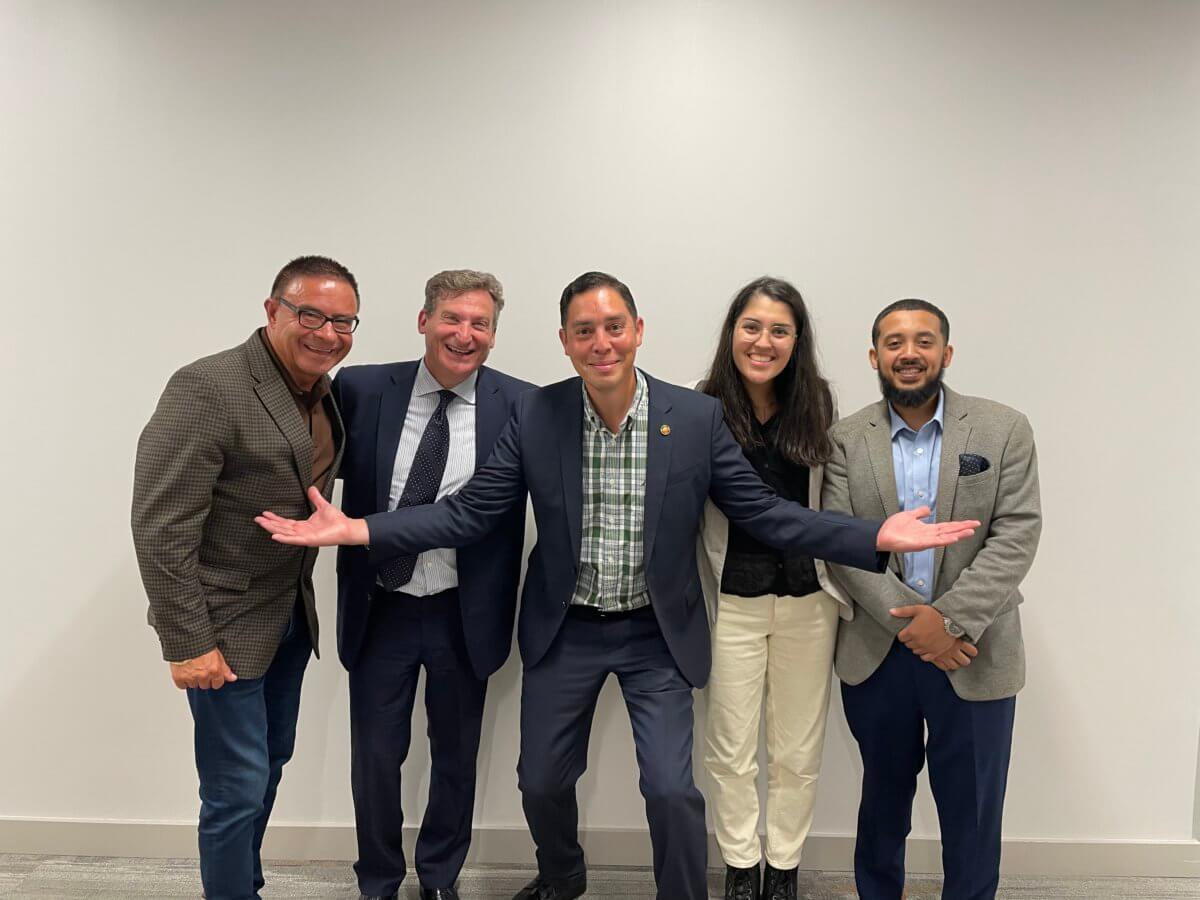
 NCIA’s editorial department continues the Member Spotlight series by highlighting our
 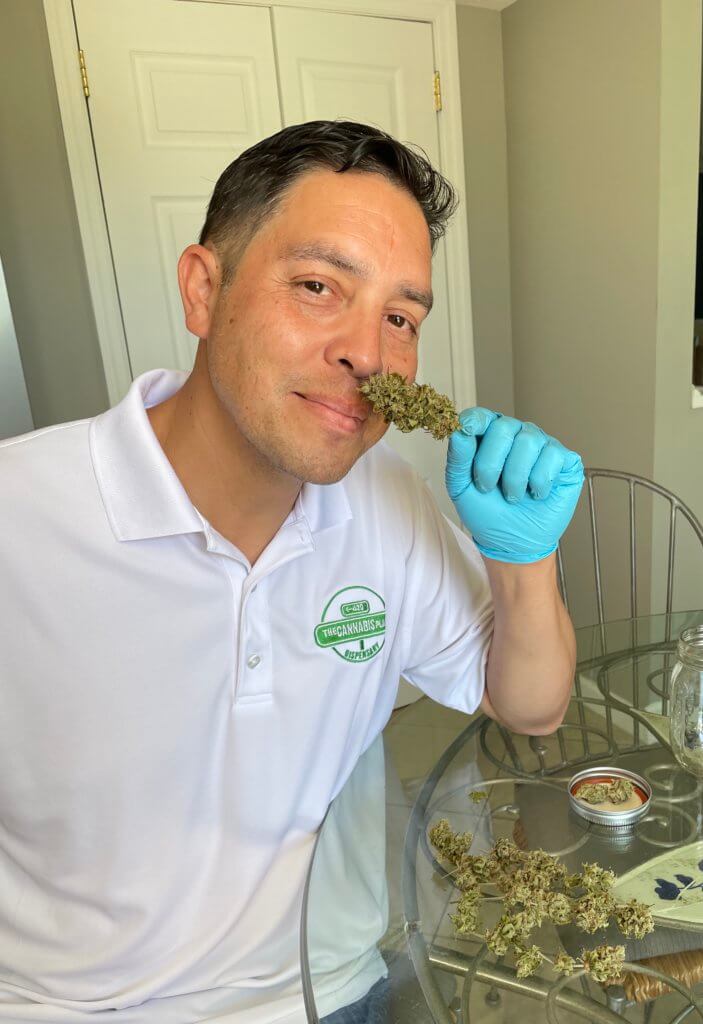 I am a first-generation Latino of Colombian descent, Spanish was my first language and my dad spent most of my youth incarcerated. I grew up in NYC Public Housing projects, and I have first-hand knowledge of the indignity of what it feels like to personally be stopped and frisked nearly 100 times which is what happened to me as a kid and young adult for doing nothing else than being a poor Latino growing up in the hood. I was an Education Opportunity Fund scholar and the first in my family to go to college, where I received a degree in business, and a graduate certificate in law. I earned the designation of Disabled Veteran while serving in Iraq with the United States Marine Corps, and I am also a 9/11 first responder. I retired after a career in public service, and have worked as an entrepreneur for over 10 years, and know what it takes to start a business from scratch, without a rich uncle, generational wealth, or rich financial backers.
  Latinos are consistently underrepresented in terms of business owners throughout all industries. Now when you focus specifically on cannabis and look at a national level, just 5.7% of all license types are held by the Hispanic community. I have seen challenges in the cannabis industry in two key areas, access to capital and the real estate market. It takes money to make money so if you grew up poor, without generational wealth, no rich uncle, no hedge fund connections or oligarchs to call on, how do you raise funds to have the millions that are needed to launch a dispensary or grow? Next and along the same lines is real estate. A lot of landlords won’t lease to cannabis businesses but unfortunately, our experience has been that again a predatory market exists where cannabis rental rates are 2 to 10 times the normal lease rates for the area. The other option is to buy a commercial parcel which brings us back to issue #1 – access to capital. I am ever the optimist, and I see the Latino community growing in the legal cannabis industry as entrepreneurs, c-suite members, and as leaders in the industry bringing our unique insight and sabor to the industry while creating opportunities for generational wealth for our community. In order to get there, we need to bridge the gap through social equity grants and loans that can help Hispanic cannabis entrepreneurs raise enough capital to start their business, and receiving financial education is also crucial for Hispanic entrepreneurs in multiple phases of the cannabis business planning timeline.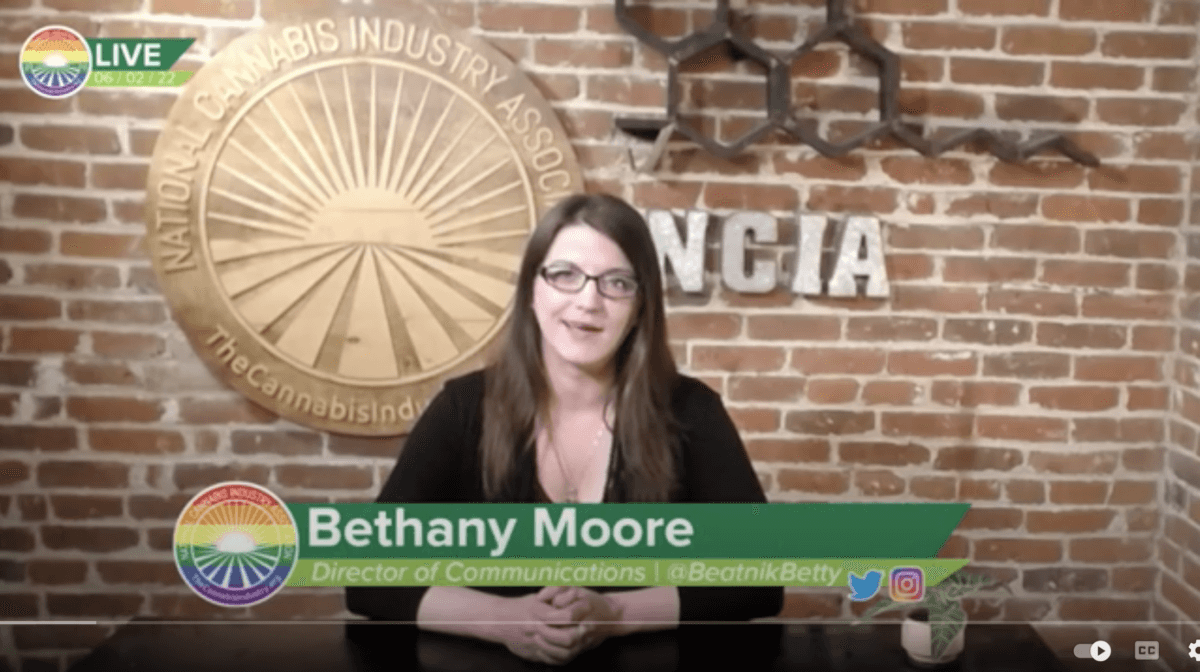

 By Sadaf Naushad, NCIA Intern


 Charles J. Messina
 Jennifer Roselle
  Daniel Pierre

 Carlos Perea is the CEO and Co-founder of
 Jennifer Roselle
 Aaron Rosenbluth is