By Madeline Grant, NCIA’s Government Relations Manager
The midterm elections are quickly approaching with less than three weeks away. Not only will the elections determine the balance of power in Congress, but local elections and ballot measures are set to make a big impact across the country. As the midterm elections approach, another 20 million Americans could soon be living in a state where anyone at least 21 years old can legally possess marijuana. There are six states with recreational cannabis legalization initiatives or referendums on the ballot this November: Arkansas, Maryland, Missouri, North Dakota, Oklahoma, and South Dakota. Let’s take a closer look at each state:
Arkansas
Although the Arkansas Board of Election Commissioners rejected the ballot question in August, the state Supreme Court cleared the way for the question to make it to the poll. The Responsible Growth Arkansas campaign submitted about 193,000 signatures- more than double what’s required to qualify the constitutional amendment- in July. If the initiative, Issue 4/ the Marijuana Legalization Initiative, is approved by voters, it would allow adults 21 years and older to legally possess up to an ounce of cannabis. It would implement a 10 percent tax on sales and require the state’s Alcoholic Beverage Control Division to develop rules for businesses, according to Ballotpedia. The initiative does not allow for home cultivation, and it has no provisions to expunge cannabis-related criminal records. For more specifics on what the initiative would accomplish read HERE.
Maryland
When Marylanders head to the polls in November, they will be asked to approve or reject legislation that allows adults 21 and over to possess, use, or grow small amounts of cannabis. If passed, the referendum would open the door to creating a taxed and regulated recreational cannabis industry in the State. State lawmakers have been paving the way for future cannabis legalization when they passed two separate bills in April of this year. House bill 837, which is set to go into effect in July 2023, would allow anyone over the age of 21 to possess up to 1.5 ounces of cannabis, with anything between 1.5 and 2.5 ounces subject to a civil fine of $250 and anything above 2.5 ounces subject to a charge of possession and intent to distribute. The second bill, House Bill 1, established that the question of legalization would be put to voters via a referendum on the November ballot. It’s important to note that this bill does not establish the regulatory framework for the recreational market, and state lawmakers will need to return next session to build out a framework for the cannabis industry if the referendum passes in November. A recent Goucher poll found that 62 percent of residents- including about half of Republicans- support legalizing recreational cannabis, with just 34 percent opposed.
Missouri
After a long battle between the Legal Missouri 2022 and prohibitionists, an initiative to legalize cannabis in Missouri officially cleared for ballot placement this September. Joy Sweeny, who is affiliated with the Community Anti-Drug Coalitions of America (CADCA), filed a lawsuit, alleging that the legalization initiative violated the single-subject rule for ballot measures under the state Constitution and that the signatures were improperly certified, according to Marijuana Moment. Two lower courts dismissed the challenge, so Sweeney sought to bring it directly to Missouri’s Supreme Court, where they would not take the case. Missouri Amendment 3, Marijuana Legalization Initiative (2022) would legalize the purchase, possession, consumption, use, delivery, manufacturing, personal use for adults over the age of 21; allow individuals convicted of nonviolent cannabis-related offenses to petition to be released from incarceration and/or expungement; and exact a 6 percent tax on the sale of cannabis.
North Dakota
The campaign New Approach ND delivered 25,762 signatures to the secretary of state’s office in July 2022. A month later, Secretary of State Al Jaegar’s (R) office approved the measure, certifying that the campaign had submitted enough valid petitions to put the measure before voters, according to Marijuana Moment. The initiative would allow adults 21 and older to purchase and possess up to one ounce of cannabis and grow up to three plants for personal use. The legalization proposal will now be designated as “Measure 1” on the ballot this November.
Oklahoma
Oklahoma’s cannabis reform measure will not be on the November ballot but Governor Kevin Stitt (R-OK) issued an executive order on October 18 setting a special election to determine if legal sales of cannabis should be extended to anyone at least 21 years old or older. Oklahomans for Sensible Marijuana collected far more than 95,000 signatures required to make the November ballot. However, because the contractor hired by the Oklahoma Secretary of State’s office took 48 days to certify the signatures, there wasn’t time for the initiative to be placed on the November ballot. The group unsuccessfully sued the state in hopes of forcing the question. The court said, despite sufficient signatures to qualify for the ballot, the measure was held up by bureaucratic requirements, protest deadlines and a new signature-counting software. Nevertheless, Governor Stitt issued the executive order and Oklahomans for Sensible Marijuana Laws will have less than five months to make their case to voters for why legalization should be extended to anyone at least 21 years old. It’s important to note that when Oklahoma voters legalized medical cannabis in 2018 there was evident opposition from practically every elected official, health care group, law enforcement official, and business organization in the state.
South Dakota
Similar to North Dakota, in May 2022 the secretary of state’s office confirmed that South Dakotans for Better Marijuana Laws (SDBML) turned in a sufficient number of signatures to qualify a cannabis legalization measure for the November ballot.In the 2020 election SDBML’s success at the ballot was overruled by the state Supreme Court as a result of a legal challenge funded by Governor Kristi Noem’s (R) administration. The court ruled that the measure violated a single-subject rule for ballot initiatives. Ironically, Governor Noem made comments pledging to implement cannabis legalization if voters approve the ballot initiative at an event this past August. Some advocates believe she has no choice but to pivot her support now that she is up for reelection. With SDBML’s success this year, South Dakotans will vote on the ballot measure in November.
There is no denying that 2022 is a big year for cannabis policy reform. Although state campaigns have met challenges through the courts, state officials, governors, prohibitionists, law enforcement, and more; it is evident that there is no stopping the voice of the people. As the country gears up for the midterm elections, all of these states will continue to educate and campaign for the recreational passage of cannabis. The 2022 midterm elections come on the heels of President Biden’s announcement to pardon thousands of people convicted of marijuana possession under federal law and review whether marijuana should be in the same legal category as drugs like heroin and LSD. The timing of President Biden’s announcement illustrates an important fundamental change in America’s response to cannabis and the National Cannabis Industry Association is hard at work on Capitol Hill to continue educating Congress.
Midterm Election Voters Will Likely Determine Cannabis Legalization Amid Several States
By Sadaf Naushad, NCIA Intern
With midterm elections just four months away, cannabis activists are paving the path for major reformations to take place nationwide.
In order for voters to see cannabis legalization on their state’s midterm ballot, cannabis advocates are scrambling to collect the number of signatures necessary. Fortunately, residents within various states are in support of cannabis legalization, as demonstrated through the high volumes of submitted signatures.
The rapidly emerging cannabis industry has led to spiked encouragement of cannabis legalization across the U.S., emphasizing the demand for lawmakers to implement safe and secure cannabis policies.
Let’s take a closer look at some of the state-level progress:
Arkansas
Cannabis activists are highly optimistic after their recent efforts to push for legalization on Arkansas’ midterm ballot. Last week, advocates turned in more than twice as many signatures to the Secretary of State’s office as required to appear on the ballot. According to Responsible Growth Arkansas, 89,151 signatures are needed to qualify for the measure. Advocates stunned the Secretary of State when they delivered just over 190,000 signatures.
Provisions on the measure would permit anyone at least 21 years of age to possess up to one ounce of cannabis. Additionally, Arkansas would grant its current medical shops permission to add adult-use sales on March 8, 2023. A lottery would also distribute 40 additional licenses for adult-use dispensaries, and municipalities would need to hold a referendum if they prefer to prohibit adult-use businesses. On the other hand, the measure does not include expungements of prior marijuana convictions.
While many view the signatures as enhanced legalization support, Arkansas True Grass and Arkansans for Marijuana Reform have raised concerns about the potential provisions. Both organizations state that the measure would favor large businesses in the present medical cannabis industry. But Steve Lancaster, Responsible Growth Arkansas’ spokesperson, believes that the “constitutional amendment provides a sound infrastructure for reform that prioritizes regulations.” If voters approve legalization, Lancaster intends to advance further reforms in the legislature.
At the moment, however, two weeks remain for Arkansas to verify the submitted signatures.
North Dakota
Cannabis consumers find themselves one step closer to legalization in North Dakota. Just three months ago, lawmakers approved the cannabis legalization ballot language, clearing the procedural obstacle to begin gathering signatures.
On Friday, cannabis activists collected numerous signatures, exceeding North Dakota’s 15,582 minimum requirement. The New Approach North Dakota campaign claimed they obtained 21,400 valid signatures and anticipate that number to increase before today’s deadline.
The measure’s initiative would allow those 21 years of age and older to purchase and possess a maximum of one ounce of cannabis, along with permitting adults to cultivate a maximum of three plants for personal use. Furthermore, the Department of Health and Human Services would be responsible for conducting regulations and overseeing licensing for cannabis businesses. The department’s regulators would have until October 1, 2023 to incorporate rules regarding security, advertising, labeling, packaging and testing standards. To mitigate the possibility of a monopolized market, North Dakota’s initiative specifies that any individual or organization can only own up to four retail locations or one cultivation facility.
Nebraska
Tremendous momentum builds across Nebraska, as activists exceed the amount of signatures to qualify medical cannabis legalization initiatives for the midterm ballot.
Nebraska requires each proposal to have 87,000 valid signatures from registered voters to qualify for November’s ballot. On Wednesday, however, advocates encountered a legal hurdle when a federal court overturned a lower federal court’s ruling that had momentarily eased ballot prerequisites. The ruling states that signatures “must come from a minimum of five percent of voters in at least 38 counties across the state.” The Nebraskans for Medical Marijuana Campaign, in addition to many activists, deem this ruling as unconstitutional, stating that it generates a detrimental burden that gives oversized influence to small, rural communities that are more challenging to reach.
Nevertheless, these barriers have not fazed activists assembling cannabis legalization support. In May, the campaign collected 20,000 signatures on each petition, and now that number has increased to over 90,000. To guarantee sufficient valid signatures, the Nebraskans for Medical Marijuana campaign aim to gather several thousand more signatures before Thursday’s turn-in deadline.
Minnesota
With Minnesota’s recent legalization of edibles and drinks infused with low amounts of THC, consumers remain excited for what’s to come.
But for lawmakers, this means acknowledging Minnesota’s current absence of statewide cannabis regulations. For now, local governments are responsible for enacting market rules within their jurisdictions. According to U.S. Representative Heather Edelson (DFL), “the ability for municipalities to offer important guidance and clarity on day-to-day operations and compliance within a city is vital.”
That being said, Representative Edelson has conducted meetings with mayors, city council members, city managers and the League of Minnesota Cities to inform them about how the new law could shape their areas and how they can execute parameters within local markets.
Oklahoma
Oklahoma is yet another state pushing for cannabis legalization to surface on the November ballot. Last Tuesday, The Oklahomans for Sensible Marijuana Laws campaign submitted over 164,000 signatures to the Secretary of State’s office, surpassing the minimum number of 94,911 signatures necessary to qualify for the ballot.
If passed, the measure would permit adults 21 and older to possess and purchase up to one ounce of cannabis. Adults would also be able to grow a maximum of six mature plants and six seedings for personal use. The Oklahoma Medical Marijuana Authority Department is in charge of regulating the market, as well as issuing cannabis business licenses. The department would impose a 15% tax on adult-use cannabis products, in which its revenue would go towards the “Oklahoma Marijuana Revenue Trust Fund.” These funds would initially cover the costs of managing the program, while the rest of the funds would be allocated between municipalities where the sales followed, the State Judicial Revolving Fund, the general fund, public education grants and grants for organizations involved in substance abuse treatment and prevention.
Finally, for those serving time due to prior cannabis convictions, the measure allows inmates to “file a petition for resentencing, reversal of conviction and dismissal of case, or modification of judgment and sentence.” Those who previously served a sentence for past cannabis convictions can petition for expungement.
Altogether, the cannabis industry is witnessing a growing number of legalization support nationwide. From Minnesota to Oklahoma, cannabis consumers are eager to have their voices heard and addressed on November’s midterm ballot. The recent legalization efforts across states shine a light on the mounting acceptance of the industry’s movement, setting the stage for crucial cannabis reformations to follow.
Stay tuned for more updates on cannabis policy reforms. If you are interested in learning more about NCIA’s government relations work and how to get involved, please reach out to Madeline@thecannabisindustry.org.
Video: NCIA Today – September 17, 2021
NCIA Deputy Director of Communications Bethany Moore checks in with what’s going on across the country with the National Cannabis Industry Association’s membership, board, allies, and staff. Join us every Friday here on Facebook for NCIA Today Live.
Member Blog: Want to Open A Dispensary In Oklahoma? Here’s What You Need to Know.
In Oklahoma, the cannabis business is thriving. Yes, the controversial plant that users were prosecuted for using so very recently, is on a roll. You could even say, there is a cannabis rush.
In this article, we will cover how you can go about opening a dispensary, including how to acquire a license, and some laws you should be aware of. And we will also touch on how to set up your dispensary operations and software! Let’s dig in!
What do you need to open a dispensary in Oklahoma?
The process of opening a dispensary should go smoothly if you fill out an application form and follow the Oklahoma Medical Marijuana Authority’s guidelines. Although the costs of opening a cannabis dispensary in Oklahoma are significantly lower than elsewhere, it is critical to have accurate information and to review some of the most relevant regulatory constraints.
Let’s start at the beginning, if you intend to learn how to open a dispensary in Oklahoma for commercial purposes, you must be at least 25 years old before proceeding. You must also make the following items available:
Proof of Oklahoma residency
A tax ID number, as well as a general business license
Valid identification documents
You’ll need to assess your commitment after you’ve got everything in place. Not only must you be informed of current cannabis production and sales regulations, but also of proposed legislation and revisions that may shortly come into force.
Now that you’re certain you’re ready to make this big move, it’s time to proceed to the next step: finding a suitable property.
You should check the following:
Rent cost
Cost of license
Licensing application fee
Employee salary
Transportation and storage of product
Security
How to get a dispensary license In Oklahoma.
Licenses for growers in Oklahoma come in the form of a certificate and are issued through the OMMA website. The charge to producers, processors, and dispensaries for applying for a license is $2,500. You must provide the following to apply:
A business plan
A financial plan
An inventory control plan
Patient education
Record keeping
Security plans
There are distinct rules in every state in the United States about opening dispensaries. Each state sets its own standards. You will need to study the rules that apply in Oklahoma.
The general requirement for opening a dispensary in Oklahoma is that you undergo marijuana dispensing training and acquire a license.
How to keep your dispensary compliant in Oklahoma.
You must abide by all of Oklahoma’s strict marijuana regulations to keep your dispensary compliant. These include:
Marijuana dispensaries in Oklahoma are prohibited from selling more than the following amounts in a single transaction:
Three ounces of cannabis
Concentrate of one ounce
72 ounces of cannabis
Oklahoma dispensary owners, like any other legitimate business, must pay taxes and ensure that they give the following information:
All cannabis-related information with other permitted firms
Details of batch numbers that show the weight of cannabis acquired at wholesale
The number of plants that have been approved for relocation to other locations
Batch numbers showing the weight of cannabis sold
Record of all items that have become obsolete
Substantial fines are imposed for noncompliance. There is a $5,000 punishment for a first infraction while a second offense will result in license revocation. Because of this, you are going to need the assistance of technology to automatically update you if the OMMA cannabis rules change.
Understanding Metrc in Oklahoma.
Metrc is an integrated system for tracking and tracing marijuana products in real-time. Every plant and its wholesale shipment has a unique tag attached by licensees. To uniquely identify each plant, these tags use readable text, barcodes, and radio frequency identification (RFID) chips for easy identification.
Metrc is already being used in Oklahoma following the state’s legalization of marijuana. The OMMA can only see and track inventory once it has been entered into Metrc by a commercial licensee.
To get started with Metrc in Oklahoma you should:
Watching their training videos and schedule training.
Request online access and complete the New Business System Metrc training with your dedicated Metrc Account Manager.
Connect all of your employees with Metrc and make sure they have the permissions they need for their jobs.
Request Metrc plant tags, package tags, and other UID tags and document the physical receipt of requested Metrc UID tags.
Assign UID tags to your cannabis items.
Access the Beginning Inventory Guide in Metrc for proper guidelines and references to other important factors.
What are the dispensary laws in Oklahoma?
Cannabis laws in Oklahoma are the guidelines that every cannabis dispenser must heed while dispensing medical marijuana. Every prospective cannabis retailer will be guided by these same rules, and it is one of the first things you discover when learning how to operate a dispensary in Oklahoma.
Some of these rules include:
To legally sell cannabis, you’ll need a state-issued license, but CBD oil made from industrial hemp is permitted without one.
Patients must first obtain an authorized medical marijuana card to acquire and consume medicinal cannabis.
Possession of paraphernalia is a misdemeanor that carries a maximum sentence of one year in prison and a fine of $1,000.=
Individuals under the age of 18 are only allowed to enter a dispensary with an adult who has a valid medical card.
The sale of fewer than 25 pounds of marijuana is a felony punishable by a two-year prison sentence and a $20,000 fine.
Who can your dispensary sell to in Oklahoma?
Only medical cannabis patients (or their caregivers) with valid patient licenses can shop at an Oklahoma dispensary. Medical cannabis is available to Oklahoma residents over the age of 18 who have a physician’s recommendation.
A physical medical marijuana ID card or the state’s database can be used to verify a patient or caregiver. Out-of-state persons or companies are not permitted to purchase medical marijuana from licensed dispensaries. Licensed processors can sell to other licensed processors and licensed dispensaries.
Oklahoma dispensary market size and opportunity.
Despite its accomplishments, the cannabis industry in Oklahoma is still in its infancy, and the environment is rapidly changing. Marijuana laws in the state are continually changing to make it more accessible.
Another feature that distinguishes Oklahoma from other states is that it allows cannabis smoking and vaping anywhere that tobacco can be lawfully consumed, such as on the sidewalk or in a bar that allows smoking. As a result, Oklahoma has morphed into an industrial cannabis state with a variety of dispensary options.
There are only a few challenges to overcome. Any sort of cannabis — from raw flowers to topical lotions, from oils and gels to vaporization and patches — can be sold by anybody who pays $2,500 for a dispensary license.
Cannabis legalization has resulted in a significant expansion in legal cannabis cultivation and distribution, as well as an explosion of related service providers in many states. Cannabis has become a lucrative business prospect for many inhabitants in the state.
What cannabis software do I need to run a dispensary?
To run a compliant dispensary in Oklahoma, you will need the following business software:
One of the most important technologies in a dispensary is a point-of-sale system. A compliant POS system will make sales transactions easier for your dispensary’s staff and provide the greatest payment options for customers. A POS can help run the following tasks:
Regulate inventory control and legal compliance
Manage customer check-in and ensure that your customers follow the daily sales tracking guidelines
Assists you in automatically rejecting transactions for people who are not authorized to buy.
Integrate with the Metrc system, and keep you compliant.
Integrate with yourscheduling softwareand provide labor forecasts for scheduling.
Produce all sales and customer reports for the approval of cannabis authorities.
Dispensary payroll software.
Integrated dispensary payroll software will assist you in managing your employees’ pay. It manages all expenses and interfaces with other systems such as personnel administration and payroll tax deductions. It makes direct contributions to the IRS and compensates employees via direct deposit. Another benefit of using an integrated payroll system is that you can integrate your company’s payroll with the rest of your workforce management suite; performing tasks like approving clocked hours to payroll, and running payroll in the click of a button. Dispensaries who used this type of system report saving 5 hours per week on running dispensary payroll.
Scheduling and time tracking software.
Also known as workforce management software, integrated scheduling and time tracking software makes creating staff schedules, and managing staff hours very hands off. With this type of software, you are able to create schedules remotely, and staff can request shift swaps or time off. With time tracking, staff can sign into work using facial recognition technology, and staff-approved hours can be streamlined to payroll – so staff who clock into their shifts, get paid with the click of a button.
Dispensary HR software.
Recruiting, hiring, interviewing and onboarding can take up a lot of time. Especially when staff have important documents they need to sign, and criminal record checks that need to be completed. With dispensary HR software you can automate recruiting, and onboarding, by having staff onboard themselves and sign digitized documents.
A Security system.
A good security software system with cameras to monitor what goes on inside and outside your dispensary should be paramount to ensure your dispensary remains compliant. You will need a system where you can monitor all the affairs of your dispensaries at one glance without being in different places at the same time.
Inventory management software.
You require some software to help you manage your inventory, and the process of placing orders and confirming inventory counts from your vendors. You’ll also need a system that will remind you when new orders are needed when it detects product shortages.
Website.
If you are in a state that allows e-commerce for dispensaries, a website should be a top priority for competing for top rankings in today’s market. Because of technological advancements, you may now open an e-store where customers can buy cannabis online and have it delivered to their doorsteps.
Your website should be able to collect KYC information from your consumers to verify their identities and eligibility to acquire cannabis products, so you can be confident you’re following the cannabis serving guidelines. If you deliver a cannabis product to someone who isn’t eligible for it, you’ll be breaking the rules guiding cannabis consumption, and this might be a huge risk for your new business.
Metrc.
Metrc, also known as Marijuana Enforcement Tracking Reporting Compliance is a regulatory compliance system and was built to keep track of cannabis cultivation, preparation, and packaging. Basically, Metrc is a database for tracking cannabis from seed to sale, and identifying it using RFID tags. In Oklahoma, you must submit data to Metrc to run a compliant dispensary. Reporting to Metrc can be done manually, however cannabis-specific POS systems are offering a Metrc integration, meaning it is done automatically for you as you sell your product.
What else do I need to know?
Now that we have covered all the technical and operational bases, the rest is up to you.
Other key parts of opening a dispensary include considering where your store might be located, what your brand value and vibe will be, and how your product and store will look.
Marketing should also be a consideration, as well as staff training, and company culture.
Many new cannabis entrepreneurs hire consultants to help them navigate these areas.
For now, we hope this has been a helpful way to get you started.
Tommy Truong is the Director of Partnerships at KayaPush; the cannabis software helping dispensary owners manage their HR, scheduling and payroll all from one easy to use platform. KayaPush also integrates with leading dispensary POS systems, giving you an end-to-end solution. Tommy loves hot sauce, fried chicken, and running with his Boston terriers.
This site uses cookies. By using this site or closing this notice, you agree to the use of cookies and our privacy policy.
 By Madeline Grant, NCIA’s Government Relations Manager
 By Sadaf Naushad, NCIA Intern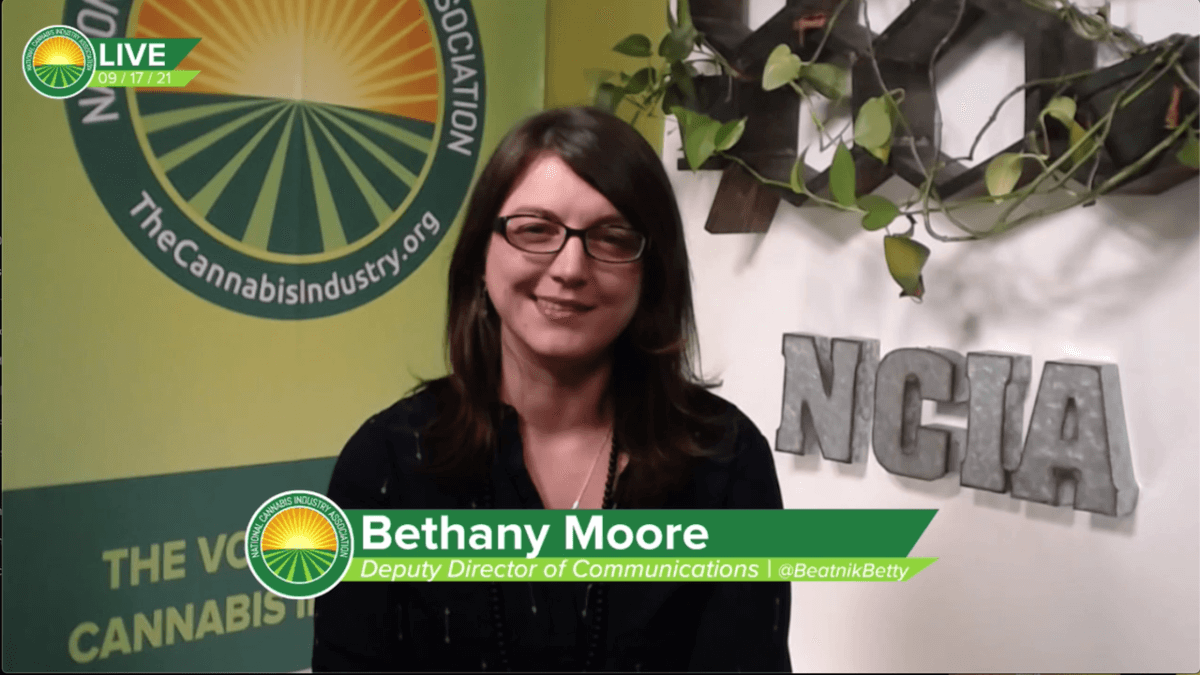

 Tommy Truong is the Director of Partnerships at