
Overwhelming Support for Marijuana Rescheduling Expressed in Public Comments to the Department of Justice
FOR IMMEDIATE RELEASE
July 23, 2024
CONTACT:
Aaron Smith, NCIA CEO and Co-Founder
(888) 683-5650, Aaron@TheCannabisIndustry.org
Cy Scott, Headset CEO
(888) 784-3237, cy@headset.io
Overwhelming Support for Marijuana Rescheduling Expressed in Public Comments to the Department of Justice
Cannabis industry advocates press for swift reclassification accompanied by guidance that protects existing state-based cannabis programs
WASHINGTON, D.C. – A sixty-day public comment period for the Department of Justice’s proposal to reclassify marijuana from a Schedule I to a Schedule III substance in the Controlled Substances Act closed last night.
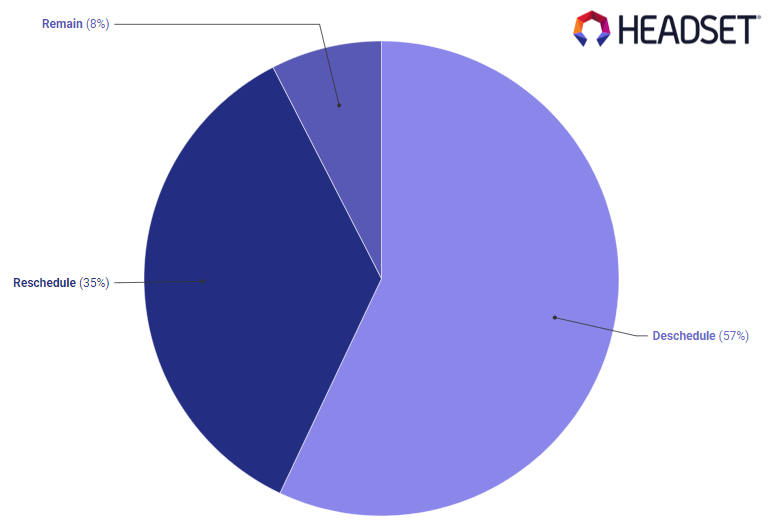
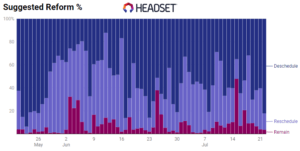
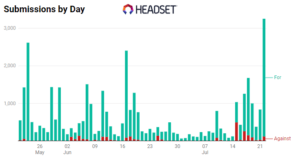
More than 40,000 comments were submitted by various agencies, organizations, academics, and concerned citizens. An overwhelming 91% of comments were submitted in favor of the rescheduling proposal or making it legal under federal law, according to an analysis of the data conducted by Headset. The analysis found that among those supporting a change 56% advocated for complete descheduling of cannabis and 35% supported rescheduling to a less restrictive category.
The National Cannabis Industry Association (NCIA) submitted comments supporting the proposal to move cannabis to Schedule III and is also calling for administrativeguidance to ensure that state cannabis programs are protected from federal interference. The association, which represents over 500 legal cannabis businesses, also called on further action to remove cannabis from the Controlled Substances Act (CSA) and establish federal regulations for the drug.
“It’s clear: decades of scientific data, medical literature, and the experience of millions of American patients using it legally under the care of a physician all show that marijuana absolutely does not belong in Schedule I of the CSA. Reclassifying marijuana to Schedule III is a positive first step in aligning federal and state law, however, we continue to assert that removing marijuana from the CSA entirely would be the best and most appropriate action.
We again emphasize that any reclassification of marijuana should be accompanied by guidance to ensure successful state programs are not disrupted by inappropriate federal enforcement of the CSA. Public health and safety are best served by the elimination of the illicit market and the regulation of marijuana and marijuana products. We urge the relevant departments to move expeditiously in publishing the final rule related to this topic,” NCIA’s comments conclude.
NCIA also submitted statements from dozens of members attesting to the successes seen with state cannabis regulation as well as the medical value of cannabis.
Read NCIA’s complete comments here.
Just over half of Americans live in a state that has made cannabis legal for adults over 21 and three out of four Americans live in a state that has legalized cannabis for medical use. A November 2023 Gallup survey found that 70% of Americans support making cannabis legal for adults and a recent Pew Research Center poll found that less than 10% of Americans still support marijuana prohibition.
###
The National Cannabis Industry Association (NCIA) is the largest cannabis trade association in the U.S. and the only organization representing small and independent cannabis-related businesses at the national level. NCIA promotes the growth of a responsible, sustainable, and inclusive cannabis industry and works for a favorable social, economic, and regulatory environment for that industry throughout the United States.

Follow NCIA
Newsletter
Facebook
Twitter
LinkedIn
Instagram
News & Resource Topics
–
This Just In
How THCa Vapes Are Changing Consumer
Announcing NCIA’s 2026-2028 Board of Directors