Breaking It Down: Appropriations
by Michelle Rutter, NCIA Government Relations Coordinator
CannApprops
Every year, Congress must pass appropriations legislation to fund federal government operations for the upcoming fiscal year. This annual funding bill has been one of the only avenues by which pro-cannabis reform language can be inserted into the federal budget, due to Congress’ inability to pass meaningful stand-alone legislation addressing the legal cannabis industry.
The Appropriations Committees have always been two of the most influential committees in Congress, since the Committees’ power is derived from its ability to disburse funds. The House Appropriations Committee is currently chaired by Rep. Hal Rogers (R-KY), with Rep. Nita Lowey (D-NY) as the highest-ranking Democratic member, and the Senate Appropriations Committee is chaired by Thad Cochran (R-MS) with Barbara Mikulski (D-MD) as the ranking Democrat.
Because it is unlikely that Congress will enact stand-alone pro-cannabis legislation this session, NCIA has decided to focus intensely on the appropriations process this year. In addition to making sure that the Rohrabacher-Farr medical cannabis amendment passes for the third year in a row, NCIA will be focusing on getting amendments included in the final budget bill that pertain to banking access and that protect all state-compliant cannabis businesses, not just medical ones. The continued inclusion of the Rohrabacher-Farr amendment in the final budget bill is crucial to cannabis policy moving forward into a new administration. We at NCIA want to ensure that this amendment is seen as non-controversial as we go into FY2017.
Over the years, the budget process in Washington, D.C. has become broken and it has become harder for Congress to perform basic functions. New Speaker of the House Paul Ryan (R-WI) has thrown his support behind returning to “regular order” in the budget process – meaning that Congress would return to the piece-by-piece appropriations process rather than passing large omnibus budget bills as has been the case in recent years. Although the Speaker has good intentions, small groups and caucuses in the House of Representatives are unhappy with the spending levels proposed in many of the new appropriations bills, making it more likely that an omnibus bill will again be passed, despite Speaker Ryan’s desire to return to regular order.
This “regular order” of the appropriations process usually starts in February as various pieces of legislation works its way through the Appropriations Committee and finally to the House/Senate Floor. Congress typically starts with less controversial bills in April and then works through the spring and summer months until all appropriations bills are completed. Legally, they need to be completed by September 30th (as October 1st is the start of the new fiscal year). Regular order gives NCIA multiple opportunities to insert pro-cannabis amendments into the legislation. With an omnibus or stopgap bill, it becomes much more difficult to include pro-cannabis amendments.
In Years Past
Last year, there were two pro-cannabis amendments included in the Commerce, Justice, and Science Appropriations bill that made it into the final budget: the Bonamici-Massie industrial hemp amendment and the Rohrabacher-Farr medical marijuana amendment. The Bonamici-Massie amendment blocks federal money from being used to prevent states from allowing the use, distribution, possession, or cultivation of industrial hemp. This means that the federal government cannot use federal funds to enforce federal law against state-compliant businesses dealing with hemp. This measure passed the House of Representatives overwhelmingly: the vote was 282-146, with 101 Republicans voting in favor.
The second pro-cannabis amendment in the FY2016 budget was the Rohrabacher-Farr medical marijuana amendment, which was included for the second year in a row. This amendment bans the Department of Justice from spending money to prevent the implementation of state-level medical cannabis programs, in addition to removing funding for federal medical cannabis raids, arrests and prosecutions in states where medical cannabis is legal. The vote count increased from 219-189 in 2014 to 242-186 this year, with 67 Republicans voting ‘Yes’. Just like the Bonamici-Massie hemp amendment, the Rohrabacher-Farr amendment prohibits the Department of Justice from enforcing federal law against state-legal medical cannabis businesses.
Remember…
It’s crucial to remember that these appropriations amendments only pertain to the current fiscal year and have to be voted on and renewed every year. The NCIA team and our lobbyists in Washington, D.C., are working intently with appropriators and other Members of Congress to ensure that pro-cannabis amendments and provisions are included in the federal budget this year – whether that be through “regular order” or otherwise.

Want your voice heard in our nation’s capitol on issues affecting the cannabis industry? Join us for our 6th Annual NCIA Member Lobby Days in Washington, D.C., on May 12 & 13, 2016.
To make the most out of the Lobby Days experience, register early so that we can begin the process of setting up meetings for you on the Hill. Members who register before April 30th will be entered to win admission and travel expenses for two at NCIA’s Cannabis Business Summit & Expo, including airfare and lodging.
Appropriations Pros and Cons in 2015 for Cannabis
by Michelle Rutter, Government Relations Coordinator
Every year, Congress must pass appropriations legislation to fund the government for the upcoming fiscal year. This annual funding bill has been one of the only avenues by which pro-cannabis reform language can be inserted into the federal budget, due to Congress’ inability to pass meaningful stand-alone legislation addressing the legal cannabis industry.
This year, two riders were included in the budget bill pertaining to cannabis. The first, known as the Rohrabacher-Farr amendment, bans the Department of Justice from spending money to prevent the implementation of state-level medical cannabis programs, in addition to removing funding for federal medical cannabis raids, arrests, and prosecutions in states where medical cannabis is legal. When debated on the House floor this summer, the vote count increased from 219-189 in 2014 to 242-186 this year, with 67 Republicans voting ‘Yes.’ The Rohrabacher-Farr language was included in the final budget bill for the second year in a row, which is a promising sign of progress in Washington, D.C.
A rider known as the Bonamici-Massie amendment, which prevents the DEA from intervening with state-sanctioned and legal hemp, was also included in the final budget package. This section blocks federal money from being used to prevent states from allowing the use, distribution, possession, or cultivation of industrial hemp. It’s important to note that although this progress is promising, the DEA has ignored appropriations language pertaining to cannabis in years prior.
There were other commonsense policy reforms related to cannabis, which were proposed and added to earlier versions of the budget package, but which unfortunately did not make it into the final bill. A crucial example was a provision which would have prevented the Treasury Department from punishing banks that work with legitimate marijuana-related businesses. Another would have allowed Veterans Affairs (VA) doctors to recommend medical cannabis to veterans without fear of retaliation or punishment, and would have also prevented the VA from denying services to any veteran who is a medical marijuana patient.
An additional disappointment in the final budget package was the continuation of language from the previous year which blocks the adult-use sale and purchase of cannabis in Washington, D.C.
It’s important to remember that these appropriations amendments only protect states’ medical cannabis and hemp laws for the upcoming fiscal year and have to be re-included and voted on every year. While this progress is encouraging, it falls short of achieving our goals. NCIA will continue lobbying on behalf of the cannabis industry to achieve the substantive and lasting reforms that our businesses deserve.
Policy Update: Success in the Senate
by Michelle Rutter, Government Relations Coordinator
In the first week of June, the cannabis industry was celebrating its victories in the House of Representatives. At the end of last week, we were celebrating a victory in the US Senate, too.
At the beginning of the month, the U.S. House of Representatives debated the Commerce, Justice, and Science (CJS) Appropriations bill (HR 2578), which funds applicable government agencies for the upcoming FY2016. This year, there were four cannabis-related amendments under consideration in the House: the Rohrabacher-Farr medical marijuana amendment, the McClintock-Polis adult-use marijuana amendment, the Bonamici-Massie industrial hemp amendment, and the Perry CBD oil amendment. You can read about the results of the House votes in this NCIA blog post.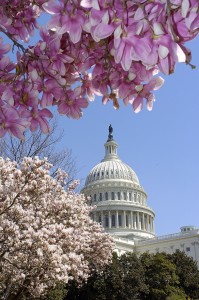
On June 11, two cannabis-related amendments were brought before the Senate Appropriations Committee. Cannabis champion Sen. Barbara Mikulski (D-MD) offered a medical cannabis amendment, which would ban the Department of Justice from interfering with state-compliant medical cannabis businesses. In addition, Sen. Jon Tester (D-MT) offered a hemp amendment that would protect state industrial hemp laws from the Department of Justice’s interference. These amendments are the Senate companions to the House’s Rohrabacher-Farr and Bonamici-Massie amendments, respectively.
The Senate Appropriations Committee voted with Sen. Mikulski to protect state medical marijuana laws 21-9. Senator Jerry Moran (R-KS) changed his original ‘No’ vote to a ‘Yes’, while presidential contender and Senator Lindsey Graham (R-SC) also attempted to change his ‘No’ vote to a ‘Yes’, but was too late. Sen. Tester’s industrial hemp amendment also passed through the committee via voice-vote.
Victory is sweet, but it’s important to remember that these appropriations amendments only protect states’ medical cannabis and hemp laws for the upcoming fiscal year. As encouraging as the appropriations season has been, it is still imperative that we pass comprehensive cannabis banking and 280E reform bills in order to be treated like every other American business.
Below is the detailed vote breakdown from the Senate committee’s vote on the Mikulski amendment:
| Republicans |
Democrats |
| Thad Cochran (R-MS): No |
Barbara Mikulski (D-MD): Yes |
| Mitch McConnell (R-KY): No |
Patrick Leahy (D-VT): Yes |
| Richard Shelby (R-AL): No |
Patty Murray (D-WA): Yes |
| Lamar Alexander (R-TN): Yes |
Dianne Feinstein (D-CA): No |
| Susan Collins (R-ME): Yes |
Richard Durbin (D-IL): Yes |
| Lisa Murkowski (R-AK): Yes |
Jack Reed (D-RI): Yes |
| Lindsey Graham (R-SC): No |
Jon Tester (D-MT): Yes |
| Mark Kirk (R-IL): No |
Tom Udall (D-NM): Yes |
| Roy Blunt (R-MO): Yes |
Jean Shaheen (D-NH): Yes |
| Jerry Moran (R-KS): Yes |
Jeff Merkley (D-OR): Yes |
| John Hoven (R-ND): No |
Chris Coons (D-DE): Yes |
| John Boozman (R-AR): No |
Brian Schatz (D-HI): Yes |
| Shelley Moore Capito (R-WV): Yes |
Tammy Baldwin (D-WI): Yes |
| Bill Cassidy (R-LA): Yes |
Chris Murphy (D-CT): Yes |
| James Lankford (R-OK): No |
|
| Steve Daines (R-MT): Yes |
|
CANNABIS MILESTONE: CONGRESS VOTES IN FAVOR OF THE ROHRABACHER-FARR AMENDMENT
by Michelle Rutter, NCIA Government Relations Coordinator
This week was a milestone in the cannabis industry.
On Wednesday, the U.S. House of Representatives debated the Commerce, Justice, and Science (CJS) Appropriations bill (HR 2578), which funds applicable government agencies for the upcoming FY2016. This year, there were four cannabis-related amendments under consideration: the Rohrabacher-Farr medical marijuana amendment, the McClintock-Polis adult-use marijuana amendment, the Bonamici-Massie industrial hemp amendment, and the Perry CBD oil amendment. The results signaled a clear victory for the cannabis industry.
Rohrabacher-Farr
For the second year in a row, Congress voted in favor of the Rohrabacher-Farr medical cannabis amendment. This amendment, introduced by Reps. Dana Rohrabacher (R-CA) and Sam Farr (D-CA), bans the Department of Justice from spending money to prevent the implementation of state-level medical cannabis programs, in addition to removing funding for federal medical cannabis raids, arrests and prosecutions in states where medical cannabis is legal. The vote count increased from 219-189 in 2014, to 242-186 this year, with 67 Republicans voting ‘Yes.’
McClintock-Polis
For the first time ever, the McClintock-Polis amendment was offered on the House floor. This amendment, introduced by Reps. Tom McClintock (R-CA) and Jared Polis (D-CO), is similar to the Rohrabacher-Farr amendment, but would have extended the same protections from the Department of Justice to non-medical retail marijuana businesses and consumers in states where adult-use sales have been legalized. The measure narrowly failed, 206-222, with more than 40 Republicans in support.
Bonamici-Massie
This amendment, officially named the Bonamici-Massie-Blumenauer-Polis amendment, blocks federal tax dollars from being used to prevent states from allowing the use, distribution, possession, or cultivation of industrial hemp. A member of the cannabis family, hemp is a valuable agricultural commodity that can be found in more than 25,000 commercial products including food, paper, beauty products, and more. The measure passed overwhelmingly, 282-146, with 101 Republicans voting in favor.
Perry
Rep. Scott Perry (R-PA) proposed an amendment to the CJS bill that would protect state laws that allow the use of CBD oils, but still leaves most medical marijuana patients and their providers vulnerable to federal arrest and prosecution. The measure was overwhelmingly passed by a margin of 297-130.
Just a few years ago, pro-cannabis amendments passing Congress was something that those involved in the industry could only dream of. Now, we’re just 16 votes shy of limiting the Department of Justice’s interference with any state-sanctioned marijuana business (McClintock-Polis). Though Congress moves at a notoriously glacial pace, these amendments shed light on politicians’ evolving stances on cannabis policy. These votes prove that NCIA, and all of our members, are slowly but surely convincing Congress that the cannabis industry is to be taken seriously.
Cannabis Milestone: Congress votes in favor of the Rohrabacher-Farr amendment
by Michelle Rutter, NCIA Government Relations Coordinator
This week was a milestone in the cannabis industry.
On Wednesday, the U.S. House of Representatives debated the Commerce, Justice, and Science (CJS) Appropriations bill (HR 2578), which funds applicable government agencies for the upcoming FY2016. This year, there were four cannabis-related amendments under consideration: the Rohrabacher-Farr medical marijuana amendment, the McClintock-Polis adult-use marijuana amendment, the Bonamici-Massie industrial hemp amendment, and the Perry CBD oil amendment. The results signaled a clear victory for the cannabis industry.
Rohrabacher-Farr
For the second year in a row, Congress voted in favor of the Rohrabacher-Farr medical cannabis amendment. This amendment, introduced by Reps. Dana Rohrabacher (R-CA) and Sam Farr (D-CA), bans the Department of Justice from spending money to prevent the implementation of state-level medical cannabis programs, in addition to removing funding for federal medical cannabis raids, arrests and prosecutions in states where medical cannabis is legal. The vote count increased from 219-189 in 2014, to 242-186 this year, with 67 Republicans voting ‘Yes.’
McClintock-Polis
For the first time ever, the McClintock-Polis amendment was offered on the House floor. This amendment, introduced by Reps. Tom McClintock (R-CA) and Jared Polis (D-CO), is similar to the Rohrabacher-Farr amendment, but would have extended the same protections from the Department of Justice to non-medical retail marijuana businesses and consumers in states where adult-use sales have been legalized. The measure narrowly failed, 206-222, with more than 40 Republicans in support.
Bonamici-Massie
This amendment, officially named the Bonamici-Massie-Blumenauer-Polis amendment, blocks federal tax dollars from being used to prevent states from allowing the use, distribution, possession, or cultivation of industrial hemp. A member of the cannabis family, hemp is a valuable agricultural commodity that can be found in more than 25,000 commercial products including food, paper, beauty products, and more. The measure passed overwhelmingly, 282-146, with 101 Republicans voting in favor.
Perry
Rep. Scott Perry (R-PA) proposed an amendment to the CJS bill that would protect state laws that allow the use of CBD oils, but still leaves most medical marijuana patients and their providers vulnerable to federal arrest and prosecution. The measure was overwhelmingly passed by a margin of 297-130.
Just a few years ago, pro-cannabis amendments passing Congress was something that those involved in the industry could only dream of. Now, we’re just 16 votes shy of limiting the Department of Justice’s interference with any state-sanctioned marijuana business (McClintock-Polis). Though Congress moves at a notoriously glacial pace, these amendments shed light on politicians’ evolving stances on cannabis policy. These votes prove that NCIA, and all of our members, are slowly but surely convincing Congress that the cannabis industry is to be taken seriously.

Follow NCIA
Newsletter
Facebook
Twitter
LinkedIn
Instagram
News & Resource Topics
–
This Just In
Member Blog: The Evolving Cannabis Legal & Regulatory Landscape in 2026
How THCa Vapes Are Changing Consumer