Member Blog: Licensing 101 – A Guide for Local Cannabis Entrepreneurs

An interview with Nate Reed, Unity Rd. & Item 9 Labs
Curious about opening up a dispensary? Here we sit down with Nate Reed, Unity Rd.’s Director of Licensing, to answer commonly asked questions about one of the most crucial pieces to open a compliant dispensary in any market – obtaining a license on the local and state levels.
What Do I Need To Apply For a License?
Let us start with the basics. In cannabis, every business venture is going to be looked at under a microscope.
First, it is wise to have a team at the ready. Having owners, executives or principals in place is essential to begin, both for paperwork purposes as well as the face of the organization that will be presented to regulators.
This does not mean having a store’s general manager in mind from the outset, but rather the high-level management that make major decisions.
In this regard, it is also wise to include leadership with qualities that are desirable for owners and managers in this industry—if it is not stated explicitly, look to read between the lines. Someone with prior cannabis experience is always first prize.
This includes anyone with relevant legal cannabis experience, such as someone who has run or owned a dispensary or headed up a cultivation operation. These folks will bring the most value when rounding out a team.
Beyond that, license applicants will want to be able to demonstrate that they have a solid suite of business-minded staff. Some may be able to keep rounding out the team to present a full picture, including a head of finance, and leaders that understand construction, real estate and security—essentially all the various talents that will make an enterprise successful.
The other important piece is the cash. Is there capital or an investor in line to finance the venture?
Whether that is an actual owner or a third-party financier, everyone wants to feel confident an applicant is not going to run out of money before breaking ground.
Next, there are some basic fees associated with the application process that vary by jurisdiction.
Typically, one can expect an application filing fee at the state level. These can vary wildly ranging from a few hundred dollars to over $10,000.00. The local government might also require an additional fee, but these will be typically lower than state fees.
Finally – social equity. This umbrella term includes everything from previous disenfranchisement to being disproportionately harmed by the war on drugs. If an applicant falls into one of these categories, they may qualify for reduced fees or cost reimbursements.
What Is the Timeline Like To Apply For and Receive a License?
Again, this largely depends on where the license is being applied for – individual cities and states all have their own timelines.
States have a certain amount of time to receive applications, which is followed by a review process. In most states, there is a window – for example, applications will be accepted from August to October, followed by a 100-day review period before a license is issued. However, most municipalities also carve out exceptions for themselves, so they are not strictly held to deadlines, further obscuring clear timelines.
Keeping expectations in check in this area will keep applicants from getting discouraged.
From the day an application window is open to the day a license is issued, be prepared for the timeline to be lengthy. It can take from months to years and any number of factors can slow it down—all stalling the process.
Often, though, most licenses are issued somewhere between six to 18 months. This is admittedly a wide window and will ultimately depend upon the state the application is being made in. Understanding the process takes time and can drag on indefinitely will be helpful.
Before any of this, however, the entire process of gathering the application materials is time-consuming and intensive. Unlike a typical business license, cannabis licensing is complex. Take, for example, merit-based or competitive applications. In these cases, applicants are required to write narratives and answer prompts. One may be required to supply ten years of income tax returns. A spouse’s information may be required. Expect robust hoop-jumping before even submitting the application.
It is wise to begin the application process as soon as possible, allowing time to be thorough and present the best possible case.
Do I Need To Live in The City or State I Want To Apply in?
As with everything else in licensing, it depends. However, as the industry expands, this is less important than it once was. Early on, states and cities were more guarded with who could apply for and receive licenses and emphasized a local approach. However, some recent court rulings have deemed it unconstitutional to limit licenses solely to state residents.
While this requirement does still exist in some states, it is falling away in others. If there is a residence requirement, it is helpful to know that this is not an automatic disqualifier – someone who already owns a different business in the state may qualify based on that.
Do I Need To Form a New Company To Apply Under?
Is it required? No.
Is it advisable? Absolutely.
When applying for a license, it is always advisable to form a new company.
Presenting a clear picture of the new company will make life smoother for both applicant and the regulator—outline the operating agreement, ownership structure, mission statement, and the like.
Typically, most opt for LLCs as they tend to be the most straightforward entity to form. Creating a C Corps is another option for those with grand plans.
Do I Need Real Estate or Site Control To Apply? If so, Where Should I be Looking?
Again, this will depend on the state in which the application is being filed and what its specific requirements are. Some will want to see a lease, a purchase agreement, or a title deed for a compliant piece of real estate as part of an initial application package.
Regardless of whether real estate is required at the time of application, almost all states or municipalities will mandate a site with requisite buffers or setback zones. Across every state, dispensaries are required to be at a certain distance from schools, for example. There may be further requirements regarding proximity to residential areas. Finding the proper piece of real estate can often feel like searching for a needle in a haystack.
Some states, such as New Jersey and Illinois, offer conditional licenses – these include a proposed area but do not require a pre-existing lease agreement. Once a state grants this conditional license, it will trigger a countdown of sorts to fulfill the real estate clause before the issuance of a full operating license.
Does it Matter if I Have Been Arrested or Convicted of a Crime?
Simply put, it depends on the crime. In certain cases – such as being previously arrested for low-level cannabis possession; it may actually help! This is in line with social equity provisions in state legislation that seeks to redress harms caused by war on drugs. These benefits may include discounts on application fees, technical assistance, or even real estate in some cases.
However, convictions for other types of crimes, such as fraud or violent crime, are automatically disqualifying.
How Many Other Licenses are Going To be Awarded
This varies by location and often evolves along with shifting sentiment and legislation.
Generally, states with medical-use-only laws are more like to have caps, as this is their first foray into the cannabis market. When Alabama legalized medical marijuana, for example, they allowed 37 total dispensaries. However, as states learn from neighbors or adopt plans to legalize adult-use cannabis, these limits are often drawn down.
Nevertheless, there are few universal truths when it comes to market size and local laws – Oklahoma is medical use only, with no upper limits on dispensaries, while New Mexico removed its cap for adult-use.
Can I Apply For Multiple Licenses?
Typically not, although this depends on location. Generally speaking, regulators tend to limit licenses to one vertically integrated operation – encompassing cultivation, manufacturing and retail.
In some states with more laissez-faire regulation, it can be essentially unlimited, however – think New Mexico, Mississippi and Oklahoma. An outlier is Florida, where only a certain number of licenses are allowed, but under those licenses, an operator is allowed to have as many locations as they want, as long as the real estate is compliant.
How can Franchising be a Viable Vehicle?
By now it is probably clear that jumping into the business of cannabis is not for the faint of heart.
Many who have taken the plunge have found it indispensable to have access to the experience of those with industry acumen to navigate the complexity of everything from licensing to zoning and real estate.
 At Unity Rd., we made it our mission to provide insight and expertise to guide local entrepreneurs and small business owners through these challenging hurtles – allowing them to enter the cannabis industry with the confidence they need to thrive successfully and compliantly.
Nate Reed is currently the Director of Licensing for Unity Rd., the national cannabis dispensary franchise in the U.S. from Item 9 Labs Corp., which also cultivates and produces the award-winning Item 9 Labs product brand. He spearheads licensing efforts for the Company’s retail brand, develops standard operating procedures (SOPs) for corporate and franchise partner applications and conducts in-depth market research as cannabis legalizations increases.
He first began his career in the legal cannabis industry in 2016, handling legal and compliance work for a cannabis real estate company. Reed has since worked in various licensing, legal and compliance roles for CannaRegs, MedMen, Embarc Retail and Vicente Sederberg.
In 2015, Reed graduated from the University of Denver’s Sturm College of Law where he attended a Dean’s Scholarship and held various impressive legal internships and clerkships with companies such as MillerCoors and Fortis Law Partners. After successfully passing the Bar exam, he received his J.D. and officially became a lawyer.

 Glenn H. Truitt, Esq. is the Managing Partner of
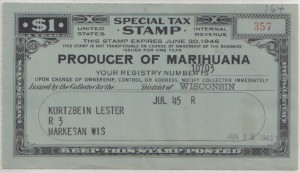
 But before you buy your cannabis equipment and hire a staff, you will first need for your state to give you a license. In order to get this license, you will need to apply to the state for review and approval. Your application can range from 300 to 2,000 pages and will cover a wide range of operational programs, including a well-defined security plan.
Follow NCIA
Newsletter
Facebook
Twitter
LinkedIn
Instagram
News & Resource Topics
–
This Just In
Committee Blog: Budtenders Make or Break Your Business – A No-Nonsense Guide to Cannabis Retail Staffing
Member Blog: Guaranteeing the First Loan