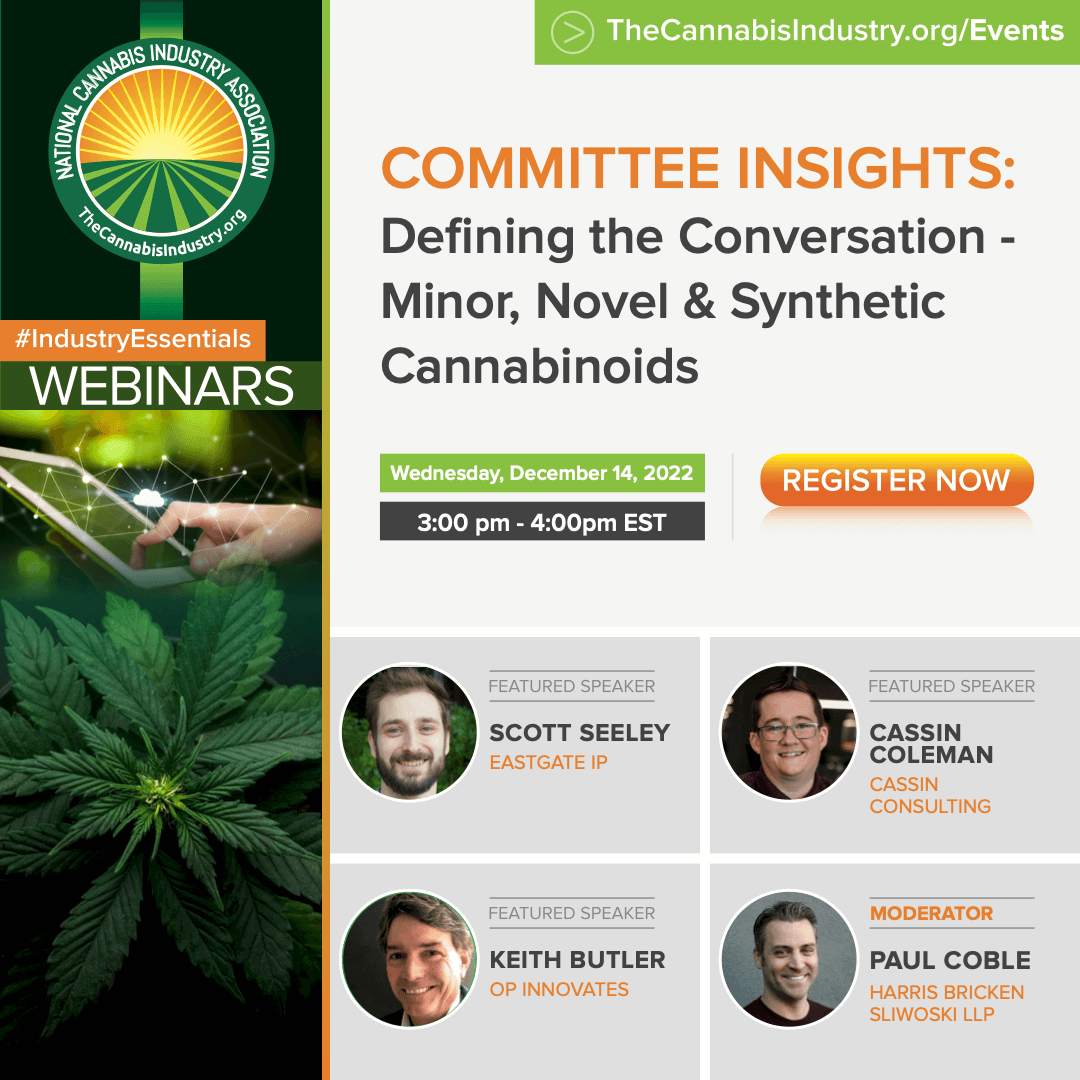
NCIA’s #IndustryEssentials webinar series is our premier digital educational series featuring a variety of interactive programs allowing us to provide you timely, engaging and essential education when you need it most.
In this edition of our NCIA Committee Insights series, originally aired on December 14 and produced in collaboration by NCIA’s Cannabis Manufacturing Committee, Scientific Advisory Committee and Hemp Committee we introduced and framed the myriad regulatory, scientific, linguistic, and ethical issues that come with the rise of minor, novel, and synthetic cannabinoids.
Learning Objectives:
• Understand the role of minor, novel, and synthetic cannabinoids in the cannabis industry and the unique issues relating to their current status.
At the conclusion of the discussion our panel hosted a lengthy moderated Q&A session so our network could get all their burning questions answered by these leading manufacturing, biochemical, and legal professionals from the hemp and cannabis industries.
Panelists:
Scott Seeley
Biochemist and Patent/TM Attorney @Eastgate IP
Cassin Coleman
Founder
Cassin Consulting
Keith Butler
CEO
OP Innovates / Hemp Mellow
Paul Coble
Intellectual Property Attorney
Harris Bricken Sliwoski LLP
There is more to cannabis than THC and CBD. As our understanding (and commercialization) of cannabis evolves, new compounds like CBG, delta-8-THC, THCv, and others are coming onto the scene. These various “minor” cannabinoids, however, bring with them a host of new issues.
Over the next few months this collaboration will continue to explore these issues with various subjects ranging from basic and advanced overviews of these molecules, regulatory recommendations, risk management and compliance concerns all the way to consumer and manufacturer safety. Stay up to date and be the first to know when additional follow-up sessions are scheduled by signing up via the form below.
In our rapid advance in cannabis science through recent years with the easing of restrictions of handling and experimenting on cannabis and cannabinoids via legalization and regulation efforts across the country, we have discovered and re-discovered cannabinoids that hold potential for great advancement in cannabis chemistry and potential for many beneficial health and wellness benefits along with identifying via production methodology, the safe and cost-effective means of producing these cannabinoids themselves.
We define these new cannabinoids, different from the standard ones identified and required to be noted on regulated cannabis products (i.e. THC-A, THC, and CBD) in a number of ways, all being used in this article to define Minor/Novel cannabinoids. Minor cannabinoids are simply defined as every other cannabinoid that is found in cannabis besides THC and CBD. Science has identified over 100 outside the two standards, and more are discovered each year. Defining “Novel” cannabinoids; we look at five major classifications; Classical, Non-Classical, Hybrids, Aminoalkindoles, and Eicosanoids. Finally, we use the term “Synthetic” cannabinoids to define compounds related to cannabinoids, but not naturally found in any concentration in the cannabis plant or related plants themselves. Realistically, the term Synthetic could be replaced by Novel, Classical Synthetics, and Non-Classic Synthetic compounds. For the sake of this article, we will be defining and discussing the basics of the generalized “Minor” cannabinoid family along with touching briefly on possible “Synthetic” compounds of interest in the future.
It would be easy to dismiss all these compounds outside THC and CBD as so rarely found in the natural cannabis plant, that they would not impact the industry or growth/focus on regulatory affairs in the space for discussion. However, one thing that these compounds have been found to cause is not only true intoxication in individuals, but also potential workarounds between State and Federal law regarding restrictions around classic cannabinoids THC and CBD, which have been the main focus of lawmakers and regulators in the past. One of the most prevalent and important that has made its way into many small gas stations and head shops across the country would be a compound such as Delta-8-THC. Often described as “THC light” Delta-8 has been produced through semi-synthetic means to achieve intoxicating effects while still skirting around the laws regarding Delta-9 THC. Delta-8 is not a new compound, having been known for years in the organic chemistry field and now being produced via widely available and federally legal CBD isolate. Compounds such as “Delta-10” and others are now becoming available to market in a large way and generalized knowledge of the substance and its effects are becoming widely discussed.
Overall, the compounds themselves have years of real research behind them, showing that when produced correctly and tested for efficacy, there are real potential benefits to use in the human body for a variety of reasons or conditions. Many more years of research are to be done to learn proper testing methodology based on production methods, but overall, we are seeing many potential benefits of these compounds for human use.
The human body internally operates and relies on what is called the endocannabinoid system. The system affects the human body’s ability to heal/regenerate, regulate body temperature, and many other positive background systems in the body. Humans are built to process and use cannabinoids and the deficiencies of those can lead to imbalance in the body’s systems. One effect of cannabinoids in the human body is also that of intoxication. Scientists rely on various interacting chemistries in the body and brain to determine the concept of intoxication. There is no doubt in the argument against any intoxication, however, we tend to view intoxication through a negative light while simultaneously ingesting a cup of coffee in the morning for the intoxicating effects of caffeine. Looking at intoxication through this light, down to the way in which a cup of tea can calm, soothe, rejuvenate, or stimulate; we seek to define and examine the potential benefits of these minor cannabinoids in the human experience while studying and researching their potential uses in the future.
Taking a brief look at overall results from studies around minor cannabinoids, we find a variety of effects and use in minor cannabinoids that far outstrips the standard belief of what THC or CBD can do for the body. THC-V, for instance, that is found in higher concentrations of strains from specific parts of the world, including the south part of the continent of Africa, has been shown to work towards appetite suppression and could potentially be a lesser harmful compound in the quest for weight loss in individuals. Looking at the compound CBG, it has been shown in studies to improve focus and cognition, a very different outcome than its relative THC. THC-O has even been shown to have a greater intoxicating effect than Delta-8 or 9 due to the ability of the human body to uptake the compound more efficiently. Finally, one compound that is making waves in the field of sleep science is CBN, an oxidized molecule of CBD that could help people find non-habit-forming relief in the quest for better rest. While all of these compounds are and can be created from various forms of THC and CBD, much more research is needed (and thankfully finally becoming allowed in this country) to judge their effectiveness and side effects.
All these modifications via organic chemistry with existing cannabinoids, while yielding beneficial results in the lab and clinical research; should be examined and tested like any other regulated product being consumed by humans. One very real potential danger is not only the continued prohibition and extreme regulation of research into cannabinoids leading to clandestine production methods in markets that do not require testing (i.e., “Bathtub” Delta-8 production using strong and dirty acid compounds) but the continued chasing of new compounds outside the current regulatory structure that exists with the DEA here in America. Cannabis has been through this struggle before; with THC highly regulated and tested for in individuals in the military, probation, transportation, or heavy equipment operation; there was a desire to still feel the effects while “complying” with the strict THC ban. These compounds were developed at a rapid rate, leading to “Synthetic THC” or “Spice”-type compounds. While the legislation was aware of the issue, the methodology of banning a single compound led underground chemists here and around the world to tweak the molecular structure to have a similar effect while essentially testing their new blends on the unsuspecting masses, resulting in many injuries and developing long-lasting negative effects in individuals.
One of our biggest tools to combat another “Spice” development cycle that outpaces the research done on these compounds is to deregulate and lessen the difficulties in studying these compounds in highly regulated scientific settings (i.e., universities and scientific institutions). Following that initial change, there needs to be significant development through those institutions regarding establishing long-term studies and testing methods to examine the effects on the human body. Regarding final product testing; in the regulated market, all cannabis products sold through licensed dispensaries from licensed producers need to undergo stringent testing for potency/solvents/heavy metals contamination/microbial contamination, and other potential hazards before the product are deemed safe to sell to customers. Allowing other minor compounds, such as Delta-8-THC, to be sold to consumers via untested pathways and through unregulated channels opens the possibility of harm either through incorrect dosing or contamination via shoddy production methods or less-than-clean packaging standards. Labs need to continue to modify and develop their means to accurately test these compounds and regulators need to hold manufacturers accountable in following the health and safety testing requirements as are currently being done in the regulated cannabis markets across the country.
Not only do these compounds have a significant potential for health and human wellness but could even assist in the development of significantly cleaner production methodology for the main cannabinoids like THC, allowing for lower costs of production and for much more market competitiveness and development by lowering hurdles like highly regulated cannabis agriculture. If you do not need to spend valuable resources to grow the plant itself and the compounds can be safely produced with higher consistency, it will be a boon to manufactured products that require them for their formulations.
In no way should we shut the door on the potential future of these compounds but embrace the study and research to re-invigorate the development and growth of the use of a plant that has been part of the human consciousness for over 3,000 years. While the names sound scary and different, we are just cracking the code on the depth of this plant and what it can do after so many years in the shadows.
The Cannabis Manufacturing Committee focuses on reviewing existing business practices and state regulations of concentrates, topicals, vaporizers, and edibles, ensuring the manufacturing sector is helping shape its destiny.
As we make our way closer to 2022, the world is also entering a new paradigm for the cannabis industry. Due to advancing global legalization efforts, cannabis use is gaining mainstream acceptance for the first time in history. With these shifting perspectives also comes the rapid deterioration of traditional stereotypes.
Today, cannabis is not only widely regarded as a legitimate medicine, but many people also look to it as a performance tool. To this end, the endorsement of the herb by pro athletes, media icons, and high-powered executives has again turned our conceptions of cannabis on its head.
With such rapidly shifting perspectives, we are witnessing a monumental moment in time where propaganda is being replaced with factual evidence. As things evolve, active people are not only endorsing legalization, but many swear by cannabis as a performance tool.
Indica and Sativa
The more places that legalize cannabis around the world, the more opportunities we have to study cannabis in controlled settings. As our knowledge expands, so does our ability to use specific compounds in cannabis to aid particular activities.
In the early days of legalization, broad terms such as “Indica” and “Sativa” were used to describe just about every attribute of cannabis – including both product descriptions and psychoactive effects. To this end, Indicas are widely accepted as calming, while Sativas are known to be energetic.
Terpenes & Strains
While the effects of Sativas and Indicas are still widely accepted across the industry, we are also beginning to see a much more nuanced approach to cannabis consumption. Especially when it comes to performance, a more granular perspective of cannabis is necessary.
To maximize the performance benefits of cannabis, it’s critical to understand the constituent parts of the cannabis flower. By understanding the effects of different strains and cannabinoids, and terpenes, people can better choose the right products for their performance needs.
Notable cannabinoids and terpenes and their effects:
Tetrahydrocannabinol (THC): Cannabinoid that provides energy and focus during activities helps boost creativity. Pain reliever after physical activity.
Cannabidiol (CBD): Cannabinoid that relieves anxiety before and during performances. Pain reliever and anti-inflammatory agent after physical activity.
Cannabigerol (CBG): Cannabinoid, which promotes motivation and stimulates pleasure. Pain reliever and anti-inflammatory agent after physical activity.
CLS Holdings’ own City Trees developed several popular products based on the effects of certain cannabinoids and terpenes. Their Calm, Relief, Rest, and Energy distillate vape cartridges offer simplified shopping experiences for new cannabis consumers. By building product messaging around the effects of the products, they help people understand exactly what they are purchasing.
Physical & Mental Performance
While a detailed assessment of the compounds found in cannabis can go a long way, you must also account for your specific performance needs when finding the right cannabis product. Depending on how your body and mind react with cannabis, you can utilize it to help with physical activities and cerebral pursuits.
Whether you are interested in feeling more energized for your workout routine or getting the creative juices flowing for a writing assignment, there is likely a cannabinoid and terpene combination to suit your needs.
Olympic gold medalist snowboarder Ross Regalati swears by cannabis during both training and competition. The famous Canadian snowboarder feels cannabis “improves concentration” and is great for training because flowers are both “fat-free and calorie-free.” While no longer a professional snowboarder, Regaliti is still a world-class athlete. Today, his choice cannabis strain for exercise is the Sativa-dominant hybrid Bruce Banner.
The famous female vocalist Alanis Morisette swears by cannabis as part of the creative process. In an interview with High Times, she states, “As an artist, there’s a sweet jump-starting quality to [marijuana] for me… So if I ever need some clarity… or a quantum leap in terms of writing something, it’s a quick way for me to get to it.” Morisette can utilize the right cannabis product for her needs and push through creative boundaries and explore new territories.
Tips for Finding the Perfect Fit
While studying different terpene profiles and cannabinoids is a great way to learn about the effects of cannabis, you also need to consider your physiology. Notably, a cannabis product that works well for one person won’t necessarily do the same with another.
For example, if you are an introverted, anxiety-prone person, using an energetic strain like Diesel for a social situation might not be a good idea. In this case, a mellow Indica CBD hybrid like Cannatonic might be just what you need to feel relaxed and engaged. Yet, a naturally extroverted person would likely enjoy an energetic strain for social situations and need the CBD hybrid to wind down at the end of the day.
If you aren’t sure what cannabis products will work for you, we recommend visiting a credible dispensary with well-trained budtenders. Once you have sound recommendations, always start small when experimenting with new cannabis products. With a bit of careful trial and error, you will likely discover cannabis products that can help you with anything from enhancing your workout to stimulating your sex life.
Summary
Having been on pain management therapies since the age of 17 for my Kyphosis, I now rely solely on concentrated cannabis extracts to manage my pain and keep my Activities of Daily Living at peak performance. Being diagnosed at 17, I was prescribed 1x Hydrocodone per day to manage my pain. By the time I graduated from Pharmacy School, I was taking 18 pills a day (540/month) to manage my pain and the side effects of other medications. It’s been 8 years since I’ve taken a prescribed medication and cannabis and cannabis products have replaced every medication that I was on prior. I’m grateful and humbled to be a key member of a team that produces the very own products I use to manage my health and wellness.
Looking back just a few short years to the genesis of legal cannabis, it’s remarkable to see how far we have come. In the industry’s early days, people didn’t have the luxury to match a specific cannabis product to a particular performance need. Not only was our knowledge of cannabis not sophisticated enough to accomplish this task, but Good Manufacturing Practices (GMPs) were still lacking in the early days.
As our knowledge of cannabis continues to expand, so does our ability to make informed decisions on the products we use. Whether you are a trail runner who enjoys a Sativa before you head to the mountains, or a musician who likes to settle into practice with hybrid flowers, some careful study will lead you to the right products for your performance needs.
During this period of rapid change, it’s exhilarating to see negative stereotypes of lazy cannabis users finally being upended. Even more, it’s incredible to witness pro athletes, high-powered executives, and famous artists not only advocate for legalization but openly promote cannabis as a performance tool.
Dr. Monaco is the Director of Laboratory Operations forCLS Holdings’ newly opened approximately $4 million laboratory, and is responsible for all day-to-day operations inside the North Las Vegas facility. Dr. Monaco brings over 8 years of licensed & regulated cannabis experience, starting back in 2012 when medical marijuana first opened in Arizona, he has held numerous positions, with escalating responsibilities year over year. He graduated from the University of Arizona College of Pharmacy, in Tucson, Arizona, with a Doctor of Pharmacy in 2010.

 Dr. Monaco
Follow NCIA
Newsletter
Facebook
Twitter
LinkedIn
Instagram
News & Resource Topics
–
This Just In
NCIA Applauds Reintroduction of SAFE Banking Following Lobby Days
Beyond Rescheduling: Inside NCIA’s 14th Annual National Cannabis Industry Lobby Days