Video: NCIA Today – Thursday, April 20, 2023
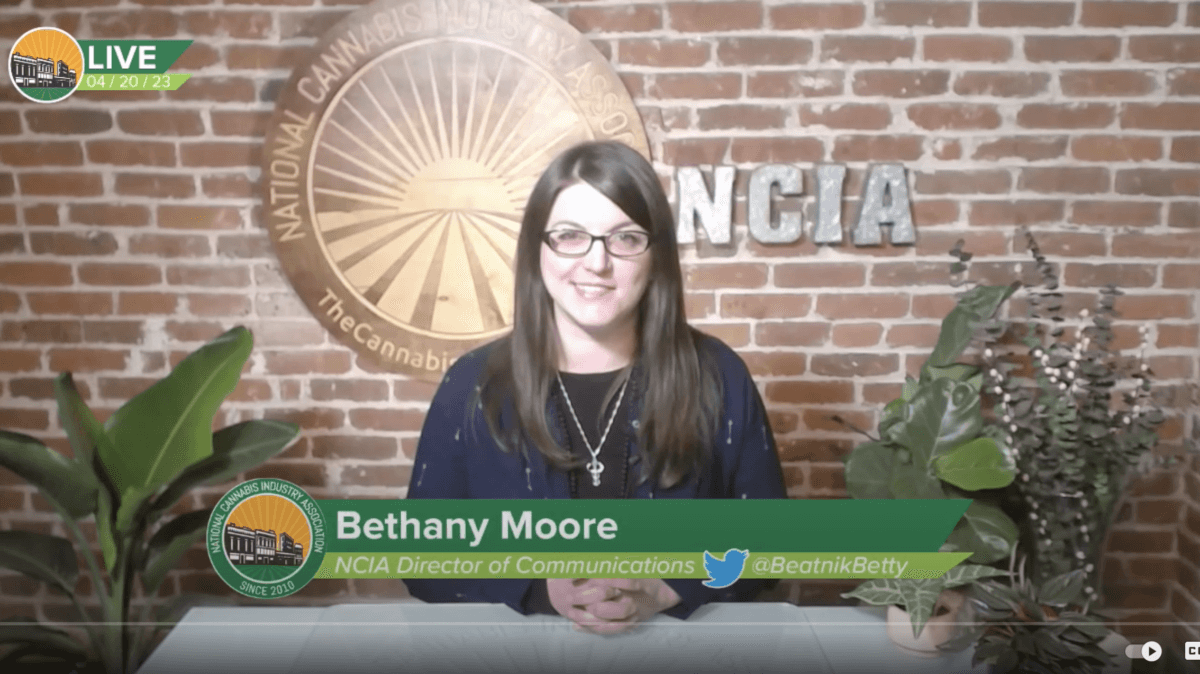
It’s the 4/20 Cannabis Industry Update!
Join NCIA Director of Communication Bethany Moore for an update on what’s going on with NCIA and our members.
It’s the 4/20 Cannabis Industry Update!
Join NCIA Director of Communication Bethany Moore for an update on what’s going on with NCIA and our members.
 By Morgan Fox, NCIA’s Director of Media Relations
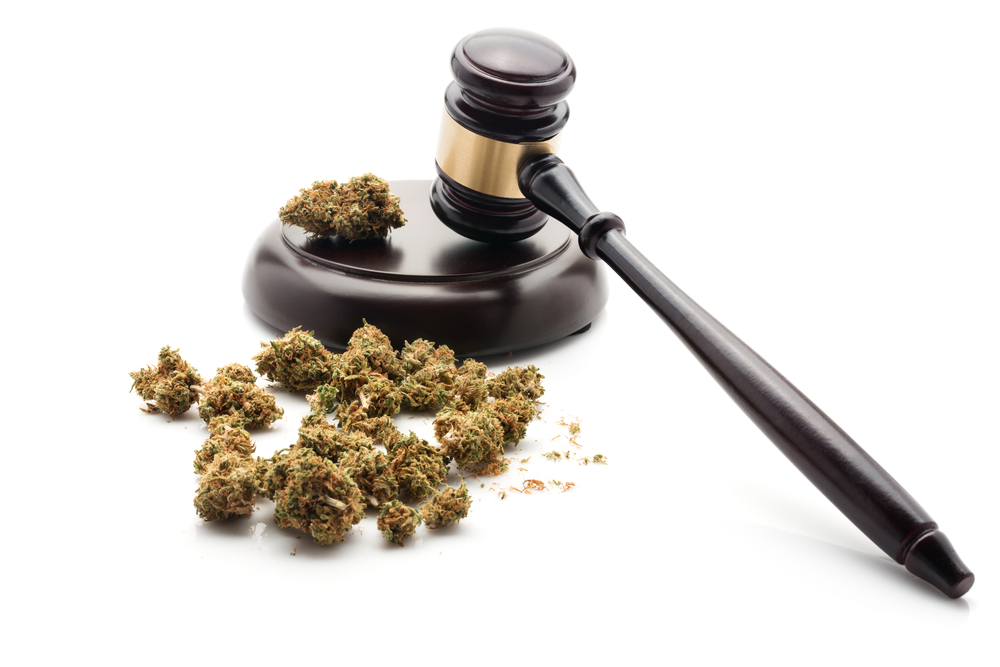
The process of approving the federal budget is moving full steam ahead, with the House Rules Committee considering several amendments related to cannabis to a series of funding bills this week. Amendments that pass this committee move on to a full vote on the House floor.
In terms of overall cannabis policy reform, the most prominent amendment is one that would prevent the Department of Justice from using funds to interfere with state adult-use and medical cannabis programs or target people and businesses that are in compliance with state cannabis laws. This amendment was offered by bipartisan congressional cannabis champions Reps. Earl Blumenauer (D-OR), Tom McClintock (R-CA), Eleanor Holmes Norton (D-DC) and Barbara Lee (D-CA). The amendment was ruled in order Wednesday and will proceed to a vote, possibly as soon as this week.
Even though the DOJ has generally been respecting state cannabis laws in recent years, passage of this amendment in the final federal budget would add the force of law to that policy for the next fiscal year, providing peace of mind for tens of thousands of regulated cannabis businesses and millions of consumers across the country. This would also add significant momentum to congressional efforts to remove cannabis from the schedule of controlled substances and regulate it at the federal level in separate stand-alone legislation.
Provisions to prevent the DOJ solely from targeting state-legal medical cannabis programs and providers have been approved by Congress every year since 2014. With public support for medical cannabis at roughly 90%, these protections have become mostly a non-issue in Congress and have been included in the original base language of the relevant House appropriations bills since 2019.
The amendment extending those protections to state adult-use programs was approved by the House in the budget votes in 2019 and 2020. Unfortunately, it did not receive the same support in the Senate and was not included in the final funding packages approved by the previous Congress.
An amendment that would remove the renewal of medical cannabis program protections from this legislation, flying in the face of long-supported policy and unnecessarily taking up lawmakers’ time, was also introduced by Rep. Doug LaMalfa (R-CA) and ruled in order.
Rep. LaMalfa, a staunch prohibitionist, has also introduced several amendments to appropriations bills to increase DEA funding for eradication efforts. He made headlines recently when his office released videos of him joining law enforcement in bulldozing outdoor cultivation sites in Siskiyou County, California while grandstanding for the camera and ripping off quotes from the film Apocalypse Now. These sites were located in primarily Hmong communities, a Southeast Asian ethnic diaspora that alleges that the county has prevented its members from obtaining cannabis licenses and prevented water shipments to their communities with serious harm to the quality of life there. LaMalfa’s behavior in these videos is particularly offensive given that many Hmong fled their homes to settle in the United States during and following the Vietnam War after facing persecution for supporting America in that conflict.
Unfortunately, some positive cannabis amendments were ruled out of order by the committee this week and will not be voted upon in this legislation. Delegate Norton offered a pair of provisions that would have prevented the Dept. of Housing and Urban Development from using funds to punish residents of federally assisted housing for state-legal cannabis use in adult-use and medical states, respectively. These reforms are incredibly important, as people living in federal housing can be and are frequently evicted from their homes if they or anyone in their household exercises their legal rights or uses the medicine that works best for them. This leaves many people with no place to legally use cannabis, leading to increased public consumption in low-income communities and continued racial disparities in arrests and citations.
On the positive side, an amendment from Rep. Kurt Schrader (D-OR) to highlight the need for the Food and Drug Administration to establish regulations for CBD products was also ruled in order and approved.
Last week, another bad amendment, introduced by Rep. Debbie Lesko (R-AZ), to remove language from the original legislation that would allow federal funding for universities that are conducting cannabis research was ruled in order but voted down in the House.
The House appropriations bills have a broad range of other cannabis provisions related to topics like banking reform, research, law enforcement funding and grant programs, federal employment guidelines, and allowing the District of Columbia to finally regulate cannabis after it was legalized by voters in 2014. We’ll get into these in more detail in the coming weeks as we get closer to a full vote in the House. Stay tuned!
Recently, NCIA’s Policy Council contributed toward a larger effort by the Minority Cannabis Business Association (MCBA) to create model social equity legislation for cities across the country. The legislation’s drafting committee started with the basic framework of the RESPECT Resolution introduced by Congresswoman Barbara Lee in 2018. The drafters also “borrowed liberally” from social equity ordinances in development in other cities such as Los Angeles, Oakland, San Francisco, and Sacramento, “attempting to improve upon these pioneering works with the benefit of hindsight.”
Khurshid Khoja, co-chair of the MCBA Policy Committee and Vice Chair of NCIA’s Board of Directors, led the drafting team. “The Model Ordinance is a statement from the communities we represent to the local lawmakers, regulators, entrepreneurs and other stakeholders who are building our nation’s cannabis industry one town at time – social equity is not only possible, it should be the industry standard moving forward. Our work gives those actors the tools they need to make equity a present reality in our industry rather than a lost opportunity.”
“We are grateful to have had the opportunity to assist the Minority Cannabis Business Association with crafting this important model ordinance,” said Aaron Smith, executive director of NCIA. “As we replace prohibition with regulated cannabis programs, it’s important that the communities most adversely impacted by the disastrous war on marijuana have access to the new economic opportunities of the post-prohibition era. Policymakers across the country should look to this model ordinance as the framework for ensuring that their local cannabis market is inclusive and reflective of the broader community.”
Read the final draft of the Model Municipal Social Equity Ordinance here.
This site uses cookies. By using this site or closing this notice, you agree to the use of cookies and our privacy policy.
Follow NCIA
Newsletter
Facebook
Twitter
LinkedIn
Instagram
News & Resource Topics
–
This Just In
Member Blog: The Evolving Cannabis Legal & Regulatory Landscape in 2026
How THCa Vapes Are Changing Consumer