Committee Blog: The New York Cannabis Market Landscape – A Real Time Analysis with a Social Equity Call to Action

Published by NCIA’s Diversity, Equity & Inclusion Committee (DEIC)
The burgeoning New York State Cannabis Market has been able to launch in record time compared to more mature markets like California and Illinois. The time between state legalization and the actual opening of licensed cannabis medicinal retail and more recently adult-use dispensaries is within one year! This is a great feat to be proud of by any metric though we are in the beginning stages.
With an indelible New York State of Mind, cannabis industry advocates, ancillary technical/professional services stakeholders and regulators created well-informed introductory regulations to get the ball rolling. The New York Social Equity Roundtable examined the best and worst practices of other programs and weighed in on current regulations in our recommendations to the NY Office of Cannabis Management (OCM).
The New York Social Equity Roundtable is a diverse gathering of industry stakeholders along the cannabis industry supply chain with a mission to be a catalyst in the building of an equitable and inclusive cannabis that reflects the ethnic, cultural, social, and economic diversity of New York State. The Roundtable is committed to gathering and sharing valuable industry insights and invites collaboration with other advocacy organizations and individuals to develop solutions.
This article is a followup to The Pathway to Greater Equity in New York’s New Adult Use Cannabis Market and serves as a compendium of the work this Roundtable has executed on over the past year since that article was published.
I would like to point out that while the news cycle has brought to light certain aspects of the New York market, the public should also be made aware of the ongoing, painstaking battle it has taken to fight for equity in New York.
Below are snapshots of the NY market landscape and some of the major challenges facing current and aspiring cannapreneurs that will hopefully inspire further conversations on the matter. Our hope is that this article helps not only provide understanding of what it has been like in the Empire State, but also provides new states with an understanding of the massive undertaking that cannabis legalization requires in order to be executed upon equitably.
In this article:
- Comments on the impact of unregulated smoke shops
- Comments on bad faith lawsuits
- Legacy Operator definition
- A note on Supply Chain Opportunities
- July 31st Public Comments on Adult Use Rules
- January & February Public Comments
- Letter recommending an Advisory Board focused on Economic Inclusion & Expansion
- Letter to the Governor urging Pardons for ALL Nonviolent Cannabis Offenders
Unregulated Smoke Shops / Grey Market thwarting the growth of licensed retailers
Frederika Easley, The People’s Ecosystem, MCBA Board Member: New York’s goal must be to create a regulated market that is so enticing and easy to navigate that operating in both the gray and legacy markets feels like unnecessary risk. The smoke shop owners who have decided to be greedy and harmful in many cases offering tainted products and appealing to the youth must receive consequences that educate, penalize and offer opportunity for redemption.
Stephanie Keeffe, Etain: Allowing smoke shops to operate without the appropriate licensure sets a dangerous precedent and undermines the efforts to establish a safe and legitimate cannabis industry in New York. It is in the best interest of everyone, including consumers, businesses, and the government to ensure that all businesses follow the appropriate licensure procedures and comply with regulations. Safety should always be paramount.
Tavian Crosland, Social Equity Empowerment Network: Gray market operators are a reality in any transitioning market and we don’t want to have a second wave of cannabis criminalization. We also want to give the people most impacted by prohibition a chance to profit from the plant. With priority CAURD licenses issued we have taken a step towards restitution and equity and without the step of enforcement we may be setting them up for failure. This is the most hostile environment a new business, in a new market could traverse. Enforcement doesn’t have to mean criminalization and we’ll miss our mark if we don’t reign in non compliant operators. We won’t get a second chance to get it right.
Scheril Murray Powell Esq, JUSTUS Foundation: The MRTA is very clear that priority should be given to those who have been significantly harmed by the criminalization of cannabis. The typical Grey market participant is not from these disproportionately impacted communities and have the financial means to open these storefronts. The individuals that have not directly experienced the harm referenced in the MRTA should recognize that they are trying to skip ahead of those who qualify for equity and have been harmed. There will be thousands of retail licenses in NY and plenty of opportunity for everyone to participate, but the grey market actors need to wait their turn. This is not judgment, but an appeal to their moral compass.
Hawaii Mike: The grey market shops are causing the biggest obstacle on the pathway to a thriving legal market. The lack of clear laws and regulations make this an almost impossible battle without using extreme measures to force these businesses to cease operations. Until these shops are closed permanently there will be confusion amongst the consumers and unsurmountable competition to legal operators.
Raina Jackson, NCIA DEI Committee Organizer: NY needs an Advisory Board that is more representative of the cannabis supply chain as operators and ancillary providers with direct applicant/operator interaction. Too many assumptions are made about what operators want without a robust survey of what we say we actually need. More than just money is needed. would help illuminate pain points and to keep the conversation focused on how to resolve unintended consequences arising from any venture this new under regulation. The current configuration does not represent stakeholders disproportionately targeted and excluded.
Lawsuits Attempting to Circumvent the Equitable Rollout of Cannabis Retail Licenses
The recent CARCS lawsuit is reminiscent of lawsuits launched in Illinois by general market operators disregarding the need for the prioritization of those disproportionately harmed by racially motivated cannabis prohibition tactics. Guided by greed, their intentions are to use the courts to stall progress and eliminate competition.
Mike Lomuto (former Head of DEI at the NCIA): While New York has an uphill battle as it navigates the unregulated market and integrates Legacy operators into the regulated space, OCM has ensured that the first set of licenses in New York go to individuals deemed disproportionately impacted by the war on drugs. It appears as if this lawsuit is a tactic we have seen in other states, where the small handful of multistate licensees who were part of a highly exclusive rollout of the Medical market are attempting to push themselves into the Adult Use market, under the guise of promoting equity while in actuality furthering the harm of the war on drugs and continuing the exclusion of justice-involved licensees.
Raina Jackson, NCIA DEIC Organizer, Policy & Regulatory subcommittee chair: As a reminder to companies that have unloaded these spurious lawsuits against well intentioned cannabis programs, be on notice that we see you and have documented what you have been doing to undermine equity, progress, and fairness. When you end up on the wrong side of history, no one will buy your revisionist historical accounts. The influential Millennials and GenZ populations that you seek as customers demand a higher level of corporate responsibility and may not be so forgiving. Before it’s too late I hope you find that it’s more rewarding to cooperate and coexist rather than to try to conquer. It is proven that well run companies that prioritize equity, inclusion, and transformation reap the benefits in the bottom line, including employee retention and community goodwill, no matter what industry.
Discussion of the ASTM Legacy Operator Definition
Legacy operators have been maligned and misunderstood in the regulated The definition of Legacy is Definition – as an added layer to help readers understand the situation
ASTM Definition of Legacy Operator
- “A Legacy Operator is an individual who:
- 1) Commercially for the majority of their income, or sacramentally, or ceremonially distributed cannabis
- 2) Outside of the Legal Framework
- 3) During the period of Prohibition
- 4) For a minimum of 5 years before legalization”
Lack of Education on Supply Chain Opportunities and Licensing Timelines
We notice that the infrastructure focus on brick and mortar retail is often to the detriment of other license types that don’t get as much attention but are more financially attainable.
- Lack of education provided on license types within the supply chain outside of retail and cultivation, including ancillary opportunities without a need for licensure. There is a need for real or hypothetical case studies illuminating the financial and business steps and resources necessary to succeed. Expectations need to be tied to realistic timelines and financial inputs.
- Resolutions and Opportunities. Need for heightened levels of Technical assistance and ancillary service/product providers
Public Comments Submitted on July 31st Regarding Adult Use Rules
The Office of Cannabis Management put out a request for public comments in May of this year, on its latest round of Adult Use rules. Over the course of several Roundtable discussions and countless hours of document review, comparison to previous Rules, and several debates over specific language, our Roundtable produced a set of public comments we are very proud of, that we believe if adopted would provide for a more equitable industry.
This is an excerpt of the full document, which can be found here.
Part 121 – Social and Economic Equity
§ 121.1 Qualifications for a Social and Economic Equity Applicant. (a) (b)
RECOMMENDED TEXT
(a) General Qualifications. To qualify as a social and economic equity applicant, an applicant shall demonstrate, through the mandatory production of documents and other information described in this Part:
(1) that sole control of the applicant is held by:
(i) an individual from a community disproportionately impacted by the enforcement of cannabis prohibition;
(ii) a minority-owned business;
(iii) a women-owned business;
(iv) a distressed farmer; or
(v) a service-disabled veteran owned business.
(b) If sole control of the applicant is held by a woman who is also a minority-group member or women who are also all minority group members, the applicant may qualify as a minority- owned business, a women-owned business, or both.
(1) Applicants qualifying for both a minority and women owned business shall have extra priority status in processing applications.
RATIONALE
We have added (b.1) because there needs to be a prioritization of Black, (Afro-Latin), and Indigenous women within women-owned businesses. Otherwise social equity disproportionately benefits White women, as selective affirmative action has often done in the past.
Due to Prop 209 in CA, race could not be used as a qualifying criterion for equity. As a result in San Francisco, equity grant funds were distributed among an even number of Black and White applicants/operators. CA is unique because of the history of white legacy operators upstate yet this was not equitable funds distribution. NY should avoid the same mistake.
Public Comments Submitted in January and February 2023
Earlier in 2023, our Roundtable also submitted public comments on an earlier version of OCM’s Adult Use rules, as well as its rules regarding marketing and packaging. Internally, our Roundtable faced the challenge of transitioning into a new year and a new committee term at the NCIA. The fact that our public comments were the most robust document we had completed to date was a testament to the resilience and collaborative nature of our Roundtable.
These documents can be found here.
And here.
Letter Recommending Advisory Board, Re-submitted to OCM September 2023
In September of last year, our Roundtable submitted a letter to OCM, recommending the creation of an Advisory Board that would be community-based and focus on Economic Inclusion & Expansion. This was modeled after a similar initiative that has produced successful in Michigan, with Eric Foster, M4MM’s National Policy Director, serving as the bridge between our Roundtable and the Michigan Social Equity Task Force.
You can read the full letter here.
Letter to Governor Hochul Urging Pardons for Nonviolent Cannabis Offenders
A very strong unifying factor of our Roundtable is everyone at the table’s commitment to the repair of the harm inflicted by the War on Drugs. With that in mind, we submitted a letter to Governor Hochul late in 2022 urging her to pardon ALL nonviolent cannabis offenders, effectively taking the lead of President Biden, but going an imperative step further to set New York as a leader to undo some of the harm it has itself inflicted. As this action has still not taken place, our Roundtable has resubmitted this letter to the Governor.
The full letter can be read here.
In Conclusion
This is just the beginning. Unfortunately, it is necessary for us to always remain diligent in our work for true equity, not only in cannabis but in society. At least until the overall momentum of society is moving in that same direction. Until then, we encourage you to keep going strong, to tap into collaborative groups doing the same work, to draw on one another’s strengths, as well as wisdoms, experiences, and collective resources.
The fight to create an equitable industry in New York and other states will continue on, and the members of the New York Social Equity Roundtable will be here until our mission is achieved.
Equity Member Spotlight: Osbert Orduña – The Cannabis Place
 NCIA’s editorial department continues the Member Spotlight series by highlighting our Social Equity Scholarship Recipients as part of our Diversity, Equity, and Inclusion Program. Participants are gaining first-hand access to regulators in key markets to get insight on the industry, tips for raising capital, and advice on how to access and utilize data to ensure success in their businesses, along with all the other benefits available to NCIA members.
Tell us a bit about you, your background, and why you launched your company.
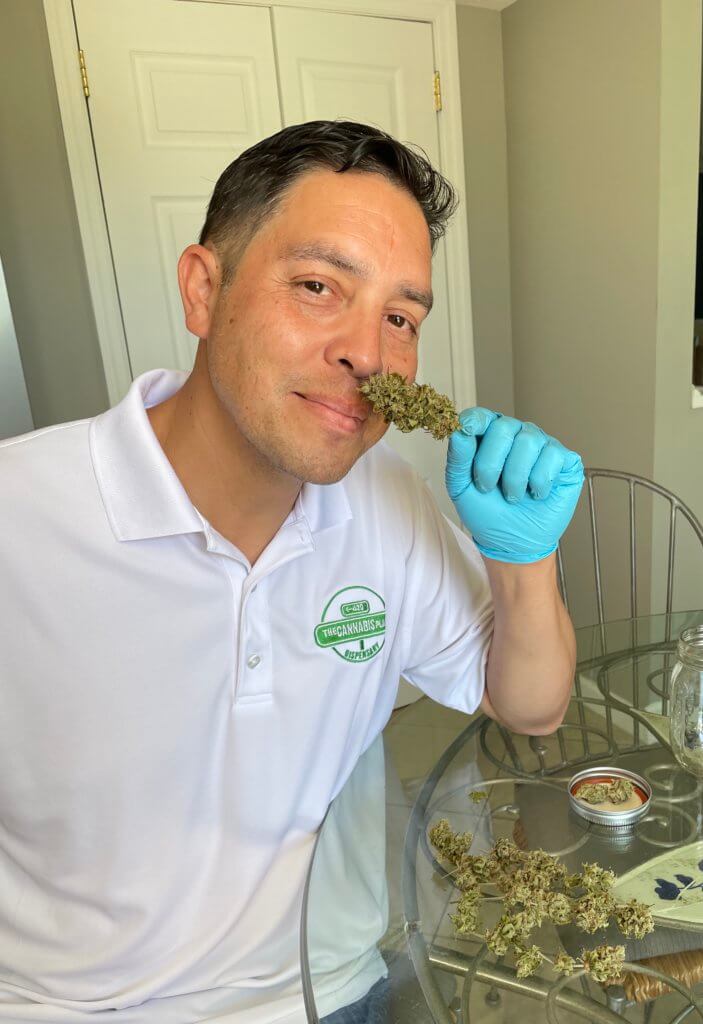 I am a first-generation Latino of Colombian descent, Spanish was my first language and my dad spent most of my youth incarcerated. I grew up in NYC Public Housing projects, and I have first-hand knowledge of the indignity of what it feels like to personally be stopped and frisked nearly 100 times which is what happened to me as a kid and young adult for doing nothing else than being a poor Latino growing up in the hood. I was an Education Opportunity Fund scholar and the first in my family to go to college, where I received a degree in business, and a graduate certificate in law. I earned the designation of Disabled Veteran while serving in Iraq with the United States Marine Corps, and I am also a 9/11 first responder. I retired after a career in public service, and have worked as an entrepreneur for over 10 years, and know what it takes to start a business from scratch, without a rich uncle, generational wealth, or rich financial backers.
In late 2020 and early 2021, I had the opportunity to visit 50 non-MSO recreation and medical dispensaries in five states on the east and west coast. I wanted to learn more about dispensaries and best practices across the industry, but my trip opened my eyes to a different reality. Forty-nine of the dispensaries were owned by white males and one was owned by a white female, not one owner looked like me or shared a similar background. None of these dispensary owners had been stopped and frisked hundreds of times for no other reason than just because they lived in an area with historically high rates of arrests and enforcement from over-policing. Yet they were now engaged in an industry that seemed to exclude us. My trip left me sad but determined to enter the cannabis market so that people who look like me who came from the struggle of the streets, and were collateral damage in the war on drugs could have a chance. I was determined to create a positive example for Latinos and others to follow.
What unique value does your company offer to the cannabis industry?
The Cannabis Place offers a unique value proposition which is our commitment to launching as a union cannabis dispensary on day one. As of yet, we are the only dispensary in the state of New Jersey and the nation to propose this. By launching our business as a unionized shop we are being a partner to our Jersey City, NJ community. Our value proposition promises that we will be a responsible and proactive member of the community that provides union career opportunities with true living wages that will empower our team members to provide upward mobility for themselves, their families, and the greater community. Furthermore, we are engaged as a Workforce Development partner with Cornell University, the Workforce Development Institute, and Hudson County (NJ) Workforce Development Board. With these partnerships, we will develop standardized training modules that will be utilized to train prospective dispensary workers and provide opportunities for those seeking cannabis careers in this new and emerging industry.
Our mission: To provide high-quality cannabis to clients with a consistent product and first-class service they can trust. To build our brand on the core values of client service and care, while maintaining the highest standards of quality, integrity, and community outreach.
What is your goal for the greater good of cannabis?
As the CEO of The Cannabis Place, our primary goal for the greater good of cannabis is to advocate and support a proactive approach to adult-use by providing a local and safe environment to dispense cannabis products. We operate as a social impact cannabis brand and are dedicated to providing consistent access to safe and reliable cannabis products that are ethically grown and sourced. Our aim is to launch the first unionized cannabis dispensary in New Jersey, leading by example, and demonstrating to other businesses that true success is based on placing people over profits.
Our goals are as follows:
- Be an accelerator for generational wealth-building opportunities among our employees from the community
- Be a reliable source for cannabis education and awareness
- Utilize our Community Impact grants to assist and support outreach in areas that have been disproportionately impacted
Our advocacy at The Cannabis Place is based on workers rights, especially organization, fairness and quality healthcare. We believe that it should be easier for people in all job fields to organize. At The Cannabis Place we support the implementation of legislation that will raise the minimum wage floor for all workers in our community, to provide for true living wages that place people over profits. Workers in all industries deserve more from the moment they are hired. Like many others I grew up as part of the working poor, in public housing with limited minimum wage job opportunities, without healthcare and with minimal alternatives to life on the streets. At The Cannabis Place we believe that by providing our workforce with union careers with true living wages and full benefits, our team members, their families and their communities will feel the immediate difference of financial stability, long-term growth, and the impact of upward financial mobility to help them support their family and to build a better life.
What kind of challenges do you face in the industry and what solutions would you like to see?
 Latinos are consistently underrepresented in terms of business owners throughout all industries. Now when you focus specifically on cannabis and look at a national level, just 5.7% of all license types are held by the Hispanic community. I have seen challenges in the cannabis industry in two key areas, access to capital and the real estate market. It takes money to make money so if you grew up poor, without generational wealth, no rich uncle, no hedge fund connections or oligarchs to call on, how do you raise funds to have the millions that are needed to launch a dispensary or grow? Next and along the same lines is real estate. A lot of landlords won’t lease to cannabis businesses but unfortunately, our experience has been that again a predatory market exists where cannabis rental rates are 2 to 10 times the normal lease rates for the area. The other option is to buy a commercial parcel which brings us back to issue #1 – access to capital. I am ever the optimist, and I see the Latino community growing in the legal cannabis industry as entrepreneurs, c-suite members, and as leaders in the industry bringing our unique insight and sabor to the industry while creating opportunities for generational wealth for our community. In order to get there, we need to bridge the gap through social equity grants and loans that can help Hispanic cannabis entrepreneurs raise enough capital to start their business, and receiving financial education is also crucial for Hispanic entrepreneurs in multiple phases of the cannabis business planning timeline.
Why did you join NCIA? What’s the best or most important part about being a member through the Social Equity Scholarship Program?
We are a Disabled Veteran and Latino-owned company with a core focus on community impact through social impact so the ability to be a Social Equity Scholarship recipient in an organization like the NCIA, a group who are actually dedicated to ensuring that small cannabis businesses have a seat at the table in Washington, D.C. and beyond, was super important to us. We look forward to learning new information and utilizing networking opportunities to help us grow and succeed in the cannabis industry.
The fact that NCIA is leading change to protect the legal cannabis industry, advocate for our state laws, advance federal policy reforms, and to make this a more inclusive and prosperous space by working together to defend the responsible cannabis industry. Creating more opportunities for small businesses rather than just the wealthiest few is the most important thing for us as members of the Social Equity Scholarship Program.
The Cannabis Place 420 Corp is the first ever Disabled Veteran and Minority Owned Business enterprise to successfully navigate the Jersey City, NJ municipal cannabis dispensary approval process in this new and emerging cannabis market.
Member Blog: Diversity and Inclusion Emerge as Major Themes in Cannabis

By Morgan Stinson, Social Impact Leader, MGO
While MGO put together its annual Cannabis 50 Impact Report of organizations and individuals pushing the cannabis industry forward, we were able to acquire new insights from some of the most influential leaders in the industry, like Kim Rivers, founder, chairman, and CEO of Trulieve; Berner, co-founder and CEO of Cookies; and Troy Datcher, CEO of The Parent Company. A clear trend that emerged in the report is the number of honorees focusing on social equity. Those who are contributing to the social equity community are bringing awareness, fostering inclusion, increasing diversity and expunging criminal records for cannabis convictions.
Diversity Where it Matters
Visual artist, hip-hop pioneer, and filmmaker Fred Brathwaite aka Fab 5 Freddy wasn’t wrong when he told us, “The biggest obstacle is making sure we’re all focusing on social equity and inclusion so people of color can benefit from the [cannabis] industry, as they’ve been the most victimized for being a part of it.” At this point, the industry at large is starting to acknowledge the debt it owes people of color.
Because underrepresented populations have borne the brunt of cannabis prohibition and many are not reaping the economic benefits of legalization, the logical step is to increase people of color ownership in the industry.
One of the biggest barriers in the industry is the cost of entering the market. Launching a dispensary or cultivation business requires anywhere from $750,000 to $1 million, and acquiring licenses isn’t easy. State and local governments must even the playing field, and although some states have incorporated social equity programs into cannabis legislation, many say the programs are falling short.
Building a Backbone Through Programs and Government Uniformity
So where do we go from here? Some organizations, like The Parent Company, are focusing on discovering the industry’s future entrepreneurs of color, providing the capital and mentorship necessary to build a more equitable and diverse industry.
If we let it, cannabis can be the new economic backbone for many communities, be it on the city, county, or even state level. Troy Datcher, the CEO of The Parent Company, notes where things need to progress. “There’s still so much work to do collectively to improve regulations, taxation policies, and safety,” he said. “But most importantly, we must work together to ensure the industry remains committed to inviting a diverse community to participate as the landscape takes shape.”
The industry is also supporting organizations and programs focused on dispensing education and support to budding minority entrepreneurs — some of which are mentioned in MGO’s Cannabis 50, like Our Academy presented by Our Dream. Hilary Yu, founder of Our Academy, told us, “We have this unique opportunity to carve out generational wealth opportunities for the communities who have been harmed by cannabis legislation,” and she knows building and supporting new leaders is key.
Making a Change
MGO is enthused to see so many organizations and individuals making tangible progress toward social equity and inclusion. If you’re interested in learning more about the honorees in this year’s Cannabis 50 report, click here. For those building a better future for the industry, read the section “Doing Good.”
 Morgan Stinson is a social impact manager, leader of the MGO Diversity, Equity & Inclusion program, and co-creator of The Future Game. She combines a professional background in accounting and finance with a passion for developing actionable solutions for creating professional and educational opportunities for minorities and persons from disadvantaged backgrounds.
Equity Member Spotlight: Next Level Edibles – Anthony Jenkins Jr.

This month, NCIA’s editorial department continues the monthly Member Spotlight series by highlighting our Social Equity Scholarship Recipients as part of our Diversity, Equity, and Inclusion Program. Participants are gaining first-hand access to regulators in key markets to get insight on the industry, tips for raising capital, and advice on how to access and utilize data to ensure success in their businesses, along with all the other benefits available to NCIA members.
Tell me a bit about your background and why you launched your company?

I was born in Hayward, California and spent most of my childhood in Mesa, Arizona, and in the Bay Area, in Northern California. After high school, I spent some time at The Farm (Stanford) and graduated from The House (Morehouse College).
Next Level was started almost 10 years ago. During a particularly trying part of my life, a medical professional recommended antidepressants and anti-anxiety medicine for symptoms I was experiencing. Taking these drugs made me feel slightly better, but came with a host of other problems; twitching, irritability, weight gain. I needed another solution.
In college, I experimented with cannabis and as an adult, I found that it alleviated my symptoms without the side effects. Unfortunately, the halflife for cannabis is only 90 minutes which wasn’t nearly long enough to cover my full workday. I learned about edibles and how they can last for 4 to 6 hours and I was really attracted to their lack of smell. As a business professional, a deal could be broken if I smelled like cannabis. Edibles did not have a negative connotation and were perfectly discreet for my work environment.
Unfortunately, edibles only came in two different types at this time period: tasty, but completely lacking on potency, or absolutely disgusting and potent. No one should ever need a chaser for their edibles. The industry was ripe for a company with absolutely delicious products that could also provide a strong dosage.
What unique value does your company offer to the cannabis industry?

Next Level empowers people to infuse any food or beverage and accurately dose it for higher tolerances. With our products, the home cook can imbue any dish her heart desires and the morning warrior can add a kick to his favorite hot beverages.
Cannabis companies have a unique responsibility to shape this growing industry to be socially responsible and advocate for it to be treated fairly. How does your company help work toward that goal for the greater good of the cannabis industry?
When we started this venture, there was not much information out there about equity cannabis companies. Realizing there are probably many other minority entrepreneurs trying to start a cannabis business, I started a Facebook group called CES (Cannabis Equity Success) to help disseminate information about equity programs across America and to raise the profile of equity companies to support. In addition, I’ve been assisting new entrepreneurs to get connected with resources to see their vision come to light. As a minority-owned business, it is very important that we celebrate and support other businesses owned and operated by women, veterans, those with disabilities, and people of color.
It is Next Level’s vision to support these minority-owned businesses. Partnering with women-owned businesses, like Changemaker Creative, not only makes good business sense as they are local leaders in the industry, but also allows us to gain key insights into our target market. The owner and head creator, Lilli Keinaenen, is able to provide details and cater designs that appeal directly to her demographic. Other awesome women-led companies that are our strategic partners include our copacker, the Galley, and Supernova women.
In our distribution chain, we work with BIPOC owned companies like Local Equity Distribution and Breeze which provide jobs and revenue to the people and communities negatively impacted by cannabis arrests.
What kind of challenges do you face in the industry and what solutions would you like to see?
The biggest challenge we face in the industry is getting dispensaries to buy small company products. We are a small “mom and pop” owned by family members from Oakland, CA. It’s more challenging to get dispensary buyers to sit down with us because they prefer to save their time and shelf space for the larger established brands. One possible solution for this problem is to have each dispensary dedicate a certain portion of its stock to legacy brands/small mom and pops/equity companies.
The other challenge we face is getting access to capital. This is a bootstrapped venture, and issues in cannabis take a lot more time and money to solve than other industries. Unfortunately, there are not a lot of angel investors or investment companies putting money in cannabis and even less in minority entrepreneurs. The solution for this is to make the investment world much more equitable and inclusive.
Why did you join NCIA through the DEI Scholarship Proogram? What’s the best part about being a member?
I joined NCIA through the DEI Scholarship Program for an opportunity to learn best practices for my industry and to network with the finest minds in cannabis.
Equity Member Spotlight: iFlyWellness – David Rodrigues, CEO

This month, NCIA’s editorial department is reviving the monthly Member Spotlight series by highlighting our Social Equity Scholarship Recipients as part of our Diversity, Equity, and Inclusion Program. Participants are gaining first-hand access to regulators in key markets to get insight on the industry, tips for raising capital, and advice on how to access and utilize data to ensure success in their businesses, along with all the other benefits available to NCIA members.
Tell us a bit about you, your background, and why you launched your company?
 I have been using cannabis for 20 years, and got into the industry in 2011, before METRC was implemented, and before adult-use legalization. I was working in cultivation, budtending, purchasing, and managing. At the time, I was seeing firsthand the products dispensaries were providing, and began developing a vision of what the San Jose community needed versus what was out there. Stepping back from my position at a successful dispensary, I made a choice to go all in on my visions and build a delivery service and lifestyle brand in San Jose. I created iFlyWellness for the people.
iFlyWellness delivery service will connect the legendary Humboldt County to the Bay Area. Offering a unique flower menu from Humboldt County to Indoor exotic flower, iFlyWellness will cater to the everyday smoker/user, specifically the people of San Jose. There are over 1.1 million people in San Jose, with a high percentage of cannabis users. Connecting the “farm to blunt” is the method behind iFlyWellness. Patients are currently buying jars at ninety dollars an eighth. The everyday consumer has struggles affording such medicine. The logic is to figure out a way for patients to consume top-tier flower at an affordable price.
What unique value does your company offer to the cannabis industry?
I know quite a few cannabis growers and will go straight to the source. This is the “farm to blunt” experience. The indoor cultivation side and the Humboldt side both make a supply chain connection from the Emerald triangle all the way to the Bay Area. This is really good medicine for the people.
What is your goal for the greater good of cannabis?
 It’s about getting on the ground. Talking directly to the people in the community that you want to make a social impact with. I am working with Daniel Montero and Javier Armas of BALCA (Bay Area Latino Cannabis Alliance), and I am connected directly with Humboldt farmers and legacy growers.
Our vision is for the patient to feel a direct connection with the flower they are smoking. Big corporations in this industry fail to recognize that this industry has been here for over 100 years. They are looking at the industry as a money grab. You can make it as a small business owner, but it comes with many more challenges. Forming alliances among us and going directly to the people helps us face these challenges.
What kind of challenges do you face in the industry and what solutions would you like to see?
Capital is big and can dominate the industry. I am working right now with Javier Armas of BALCA to acquire a building and license in Oakland, CA. With the minimal amount of licenses the city of San Jose has to offer, if you don’t have deep pockets, it can be challenging applying for the same license that a multi-million dollar corporation is applying for.
Why did you join NCIA? What’s the best or most important part about being a member?
I joined NCIA through the DEI Scholarship Program to learn and network, as the cannabis industry is constantly changing and I need to stay up to date. When I was working for dispensaries in San Jose, I was networking a lot but representing someone else’s company, not representing my vision and dreams of connecting and catering to the everyday cannabis consumers. It’s time now to build my vision and with the strength of great associations like NCIA and BALCA, I’m confident it will happen.
Follow NCIA
Newsletter
Facebook
Twitter
LinkedIn
Instagram
News & Resource Topics
–
This Just In
How THCa Vapes Are Changing Consumer
Announcing NCIA’s 2026-2028 Board of Directors