Committee Blog: Cannabis Auto Insurance – Best Practices, Claims Processes, and More!
by Jesse Parenti, Programs Director of Nine Points Strategies, Stephanie Bozzuto of Cannabis Connect Insurance Services, Matthew Johnson, Vice President of QuadScore Risk Services, and Helkin Berg, CEO of Strimo Members of NCIA’s Risk Management and Insurance Committee
If your company has an “auto exposure” such as delivery, distribution, or employees simply running company errands, your company needs a robust risk management program.
Managing a fleet is essential to ensure drivers are given the necessary tools to be safe and responsible while on the open road. Implementing a vehicle maintenance program is also a necessary component of fleet management.
Proper automotive risk management starts with driver guidelines on how you hire your drivers and what is required to qualify to be employed by your organization. Best practices on age, driving experience, motor vehicle reports, and training make for a great start. Even though your employees may think they are only delivering or transporting cannabis, they are commercial drivers, and they need to take that duty very seriously. Morbid as it may sound, death is not the worst thing that can happen…
Here are some best practices:
Drivers should ideally be at least 25 years old with five years of driving experience. For the best insurance pricing and experience, you should hire drivers that are between 35-55 years old. Note that commercial drivers over a certain age will face increased pricing from insurance companies much like their youthful counterparts. Keep that 22-year-old with four speeding tickets off your policy, even if they are the business owner’s relative!
Only hire drivers with squeaky clean driving records. Experienced drivers with a clean record are more likely to continue to drive this way when working for your organization. If you hire drivers with violations or points on their records, expect this level of driving to continue when working for you. Drivers don’t often change driving habits just because of their employment status. Note that age and driving records directly affect commercial auto rates.
Set up an Employee Pull Notice Program or Motor Vehicle Reportpull program through the DMV. A “pull program” ensures that you are aware of your drivers’ violations in real-time, whether the violations happen during or outside of work. Suppose a driver is out of compliance based on your insurance carrier guidelines. In that case, your insurer can deny a claim based on your driver’s record or violations that happened while employed by your organization, even if the violation occurred outside of work. If you are not monitoring your drivers, you would never be aware of these concerns or problems. Secured motor vehicle records (MVR) storage is also crucial to protect your employee’s personal information. Make sure you backup all your records in the cloud or a protected server network. Identity theft can happen quickly, and unprotected data will create cyber liability exposures if not protected correctly.
Take cell phone, texting, or distracted driving violations very seriously. Distracted driving is the #1 cause of death and accidents since 2012 and is increasing yearly as time goes on. The NHTSA reports that an estimated 1.6 million accidents in 2020 were caused by distracted drivers too busy eating, texting, smoking, etc., to keep their eyes on the road. Suppose one of your drivers has a distracted driving violation. In that case, you can rectify it by having them take a distracted driver class to understand the gravity of such infractions. Then put that driver on probation with consistent monitoring of their MVR for 18-24 months to ensure they don’t continue to have these violations.
Onboarding driver training must include how to drive defensively, what to do if you are held up for a robbery, and what to do if you are pulled over by the police. This training makes a world of difference when or if any of these take place. In addition to robust onboarding training, training needs to continue over time as safety never stops, and good practices always need to be reinforced.
Here are some examples of claims to give you an idea of what could happen to you:
A large distribution company hires a driver and has them complete some training in a large, empty box truck. This training helps the driver understand how to drive and brake with a(n empty) truck. The next day the driver goes out with a full load of cannabis flower and concentrates in their truck. The driver notices that the truck is handling differently than when it was empty. A wind picks up just as the truck is taking a turn. The truck rolls onto its side and totals the box on the truck, damaging the product inside. The company could have avoided this accident had they trained their driver in real-life experiences, with actual loads.
A driver is delivering cannabis to a customer’s home. While en route, the driver accidentally hits a pedestrian crossing a sidewalk on a poorly lit street. The driver did nothing wrong, but the accident still caused permanent disability to the man who was the head of the household, and the insurance company paid out over $7M. If the insured didn’t have the $10M in auto liability, they would have had to close their doors.
You and your employees can do everything right, but accidents can and will still happen. That is why culture, safety, and accountability are essential when working in the transportation and delivery space. If you don’t take this seriously, your company will pay the price. To avoid these costly mistakes, work with your legal team, insurance providers, and software vendors to ensure ideal policies, training requirements, and data storage.
——————————————————————————————–
Nine Point Strategies is a national risk management firm specializing in all forms of commercial auto for the cannabis industry. We can help you with anything you need concerning hiring, training and maintaining all your required driver compliance you need to be a safe and profitable organization. Contact us to discuss how we can better protect your cannabis auto exposures.
QuadScore Insurance Services is the nation’s leading insurance provider for marijuana businesses. QuadScore offers comprehensive property & casualty solutions as well as a full suite of risk management services for large cannabis companies around the United States.
The Strimo™ team is comprised of industry veterans. We are both practitioners in cannabis and long-time experts in software. We have supported companies in rapid growth and deeply understand that your software needs to grow with you. Strimo is the leading enterprise cannabis SaaS platform.
Cannabis Connect Insurance is a specialty division of Bozzuto Insurance, an insurance firm serving businesses since 1978 and part of Acrisure, LLC the 4th largest insurance brokerage in the United States. We specialize in connecting cannabis business owners with custom built insurance programs.Cannabis Connect was founded on basic principles of honesty, integrity, and trust. We are actively involved in the cannabis industry on both a local and state level. We are involved in multiple cannabis associations and continue to remain informed on policy forms and legislative changes to ensure our clients best interests come first.
Member Blog: Cannabis Dispensaries Are Essential Businesses – Transforming How Cannabis Businesses Operate
The COVID-19 pandemic has drastically changed how businesses operate and how people interact with one another. For many individuals, one of the greatest changes is living under “shelter-in-place” orders. The restrictions put in place have resulted in the closure of businesses that just a few weeks ago, many of us assumed would be open. The impact of COVID-19 on the cannabis industry has been dramatic, and the regulations and designations put in place over the past six weeks have altered the way cannabusinesses interact with their patients, as well as the way they are perceived as part of the larger healthcare conversation. The increasing adoption of technology solutions will continue to define the evolution of the industry long after the COVID-19 crisis has passed.
Dispensaries As Essential Businesses
Shelter-in-place has expanded across the country at a similar rate to the virus itself. When officials from states like California and Colorado issued these orders, cannabis dispensaries were initially not designated as an essential business. Due to public outcry, however, these initial orders were reversed. Dispensaries were classified essential and critical, joining other vital businesses like grocery stores, pharmacies, banks, and gas stations.
This distinction of dispensaries — medical, recreational, or both, depending on the state — as an essential business reflects how the cannabis industry and retailers are evolving to become a key part of the health infrastructure. Medical marijuana is a $5 billion industry with around 2,000 retailers serving more than two million patients nationwide. Among them are patients fighting cancer and using cannabis to manage their symptoms, veterans working to manage post-traumatic stress syndrome and those being treated for severe forms of epilepsy, Dravet syndrome, and Lennox-Gastaut syndrome. For patients like these, the cannabis industry plays an important role in their day-to-day health.
According to our research, cannabis sales have increased by 19.2% during the COVID-19 pandemic. Additionally, between March 11 and March 31, online ordering increased by 355%, delivery sales went up by 280% and pickup orders increased by 118%.
Modernizing the Cannabis Industry’s Way of Distribution
As demand continues to grow, cannabis dispensaries must adapt and adjust their operations in order to be compliant with the CDC’s guidelines for social distancing. For some business owners, this can be challenging, as historically, most cannabis dispensaries have sold and delivered product in-person and in-store with cash payments. In this “old way” of doing business, budtenders played an important role in helping customers, as they are trained to listen and discuss the most suitable products for each individual.
The reality of today’s world is forcing a shift in how businesses operate, moving from the traditional “in-person” model and embracing digital transformation for online menus, ordering, and delivery. Dispensary owners need to ask themselves: how with the aid of technology can they differentiate their products, and how can they engage and educate new and existing customers? As an essential business, how can cannabis dispensaries embrace the “new ways” of operating?
Through the integrated use of technology, business owners can keep up with the changing landscape to connect and engage with customers through:
Offering online video budtender consultations to replace in-person meetings
Providing online menus with robust product descriptions, improved merchandising, and bundled offerings around specific themes such as ‘sleep’ or ‘calming’
Developing targeted email and text messaging campaigns customized for individual customers to educate them on new product information
Guaranteeing secure, electronic payments
While industries across the board are embracing digital transformation, the cannabis industry now has an opportunity to fast-track its way there – and in time, this is what will enable cannabis business owners to thrive while protecting the health and safety of the community.
Nina Simosko serves as Chief Revenue Officer for Akerna, a global regulatory compliance technology company in the cannabis space. Akerna’s companies and investments also include MJ Freeway, Ample Organics, Last Call Analytics, Leaf Data Systems®, solo sciences, and ZolTrain.
With more than 20 years of technology industry experience, she has spearheaded strategic innovation initiatives for global Fortune 100 companies including Oracle, SAP, and most recently, NTT Group. Nina oversees both Akerna and MJ Freeway’s revenue generation streams, builds strategies to drive revenue growth, and plays a pivotal role in aligning revenue generation processes across the Akerna organization
Previously, Nina was President and CEO of NTT Innovation Institute Inc. (NTTi3), the prestigious Silicon Valley-based innovation center for NTT Group, one of the world’s largest ICT companies. Prior to NTT i3, Nina was responsible for leading the creation and execution of Nike Technology strategy, planning and operations world-wide. At SAP, she was the Senior Vice President of SAP’s Global Premier Customer Network (PCN) where she led both the PCN Center of Excellence and SAP’s Global Executive Advisory Board. During her eight-year tenure, she was a part of SAP’s Global Ecosystem & Partner Group which was charged with continuing to build and enable an open ecosystem of software, service and technology partners together with SAP’s communities of innovation.
Ms. Simosko currently sits on the Advisory board at Santa.io, AppOrchid and Reflektion and she has also been a member of the advisory boards at Appcelerator and Taulia.
The changes around ordering, delivery, payment, patient education and promotion are here to stay. With more than 70 integrated partners, MJ Platform offers clients the advanced technology solutions that are becoming increasingly important to the industry as we work through these challenging times, and that will define the future of cannabis in the months and years to come.
Member Spotlight: Cannabase
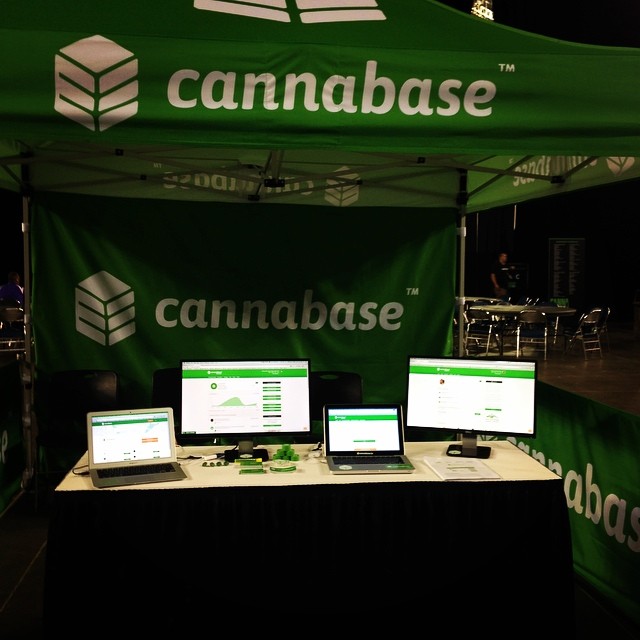
In this month’s NCIA Member Spotlight, we speak with Jennifer Beck, co-founder and Managing Director of Cannabase, a wholesale cannabis marketplace and technology dashboard. Cannabase is headquartered in Denver, serving more than 75% of marijuana licenses in Colorado, with plans to expand nationwide in 2017.
Cannabase
Cannabis Industry Sector:
Wholesale Distribution, Technology
NCIA Member Member Since:
2014
Tell me a bit about your background in cannabis and why you launched Cannabase?
Cannabase co-founders, Chase Beck and Jennifer Beck
When my husband, Chase Beck, and I co-founded Cannabase, we had a background in technology and a passion for cannabis. Not only were we amazed by the incredible science surrounding medical marijuana, but we also believed that cannabis was a much healthier alternative to alcohol for general adult-use purposes. The idea of being part of an emerging industry – helping to shape the framework while increasing its validity and chances of survival – was a really exciting idea to us.
What unique value does Cannabase offer to the cannabis industry?
Cannabase is the oldest and largest online wholesale marketplace in Colorado, providing a safe and compliant platform for businesses to connect over wholesale bud, trim, extracts, seeds, and edibles. We represent over 75% of the licensees in the state in our intuitive, automated platform, streamlining wholesale purchases and aggregating the powerful market data that drives our market statewide. Cannabase will be expanding nationwide in 2017, and is the exclusive wholesale partner of BioTrackTHC and MJ Freeway point-of-sale systems, which makes Cannabase the only firm to have direct, non-self-report access to virtually the entire Colorado market’s real-time inventory.
Cannabis companies have a unique responsibility to shape this growing industry to be socially responsible and advocate for it to be treated fairly. How does Cannabase help work toward that goal for the greater good of the cannabis industry?
Cannabase was founded on the principle that legal cannabis was a statewide experiment, and the health of the industry was critical to that experiment being considered a success. As a result, we’ve treated compliance, transparency, and integrity as non-negotiable cornerstones of our company’s evolution and product development. We’re disciplined in our vetting of licensed businesses and ensuring that anyone using our product has a valid license with their state and uses the site appropriately. Similarly, we’re passionate about supporting industry groups like NCIA that are doing amazing work for the future of our industry. We believe that investing in industry groups is as important as ever, especially in light of the changing political climate.
What kind of challenges do you face in the industry and what solutions would you like to see?
We still see the ramifications of the overarching federal limitations and restrictions – primarily 280E (which squeezes capital industry-wide) and lack of banking. These roadblocks impede progress for all cannabis businesses, and make it more difficult for ancillary businesses to solve the critical day-to-day challenges faced by our customers.
Why did you join NCIA? What’s the best part about being a member?
We love the work NCIA does to strengthen, connect, empower, and fight for the legal cannabis industry. In the three years we’ve been in the cannabis industry, we’ve never experienced anything short of total professionalism from the staff at NCIA. It’s a group that never under-delivers, and has been a pillar for community and our community’s future. We are proud to be a part of NCIA and look forward to seeing what 2017 brings!
Note: NCIA member profiles highlight members and stories within our cannabis industry community. They do not constitute an endorsement or recommendation of specific products or services by NCIA.


 by Jesse Parenti, Programs Director of Nine Points Strategies, Stephanie Bozzuto of Cannabis Connect Insurance Services, Matthew Johnson, Vice President of QuadScore Risk Services, and Helkin Berg, CEO of Strimo
 Nina Simosko serves as Chief Revenue Officer for


Follow NCIA
Newsletter
Facebook
Twitter
LinkedIn
Instagram
News & Resource Topics
–
This Just In
How THCa Vapes Are Changing Consumer
Announcing NCIA’s 2026-2028 Board of Directors