Member Blog: Future Of FDIC Easing for Cannabis Banking After Biden Decriminalizes Marijuana

by Joshua Gilstrap, e2b teknologies
Over the years, the simple possession or use of cannabis has seen many lives upended by arrests and criminal convictions. Unfairly, racial disparities have determined that black and brown individuals suffer most of these convictions, arrests, and prosecutions, even though white individuals use and possess cannabis at similar rates. The resulting criminal records lead to individuals being denied fundamental rights to employment, housing, and education opportunities.
However, on October 6, 2022, President Biden made an announcement that could change the cannabis and criminal clemency conversation. The president asserted he would:
- grant pardons to individuals with prior low-level federal cannabis possession offenses
- change federal cannabis laws by reviewing the cannabis Schedule I rule.
The federal government’s classification of cannabis as a Schedule I substance puts it in the same category as more lethal drugs like heroin and LSD while drugs like fentanyl are not considered less severe than marijuana since it falls under Schedule II.
As more states legalize the sale and use of cannabis, the classification of Schedule I no longer makes sense. Additionally, more direct research on the proper utilization of marijuana can develop suitable restrictive and preventative measures to protect against harmful outcomes of cannabis use.
The Biden initiative is crucial because it can begin to remove the burden of employment, education, and housing limitations often experienced by individuals with simple cannabis possession convictions. Besides, if marijuana is rescheduled to Schedule II, or as many advocates champion for a complete descheduling, it could mean the end of cannabis prohibition altogether.
Widespread Support for this Initiative
Nearly 70% of Americans support the President’s pardon proclamation. Publicly, two in three Americans support Biden’s plan for cannabis reforms, and three in four support the removal of cannabis from Schedule I of the Controlled Substances Act.
Bipartisan support for this move is also high, with 74% of Independents, 84% of Democrats, and 58% of Republicans backing the proposal. At the state level, 68% of respondents support governors that want to issue pardons for people with low-level cannabis possession convictions.
Why This is Important
The expeditious review process requested by President Biden has the potential to open the cannabis industry to further changes, like the easing of banking restrictions for cannabis businesses. For instance, the call for action by governors is already inspiring many to rethink state and local relief for marijuana users. Kentucky, Colorado, and Kansas are three states already actively considering enacting the Biden pardons and drafting new reform bills for marijuana cases.
The Colorado governor is pushing Congress to pass a bipartisan banking bill on marijuana.
“The lack of safe banking and financial services for the cannabis industry in the State of Colorado has become a dire public safety issue for highly regulated cannabis businesses operating in compliance with state law,” Gov. Jared Polis’ office wrote to House and Senate leaders.
“Further, the lack of safe banking exacerbates the uneven playing field faced by small and minority-owned cannabis businesses, despite their serving the same communities and being subject to the same increased state regulation as other cannabis businesses in the State,” the letter said.
It’s true – over the years, the cannabis industry has dealt with a lack of financial and banking services because of the strict regulations and criminalization associated with marijuana. Consequently, this has resulted in severe public safety issues, even for cannabis businesses that operate within the compliance mandates of the state law.
Additionally, operators are disadvantaged because they lack funding or banking systems that support cannabis business processes. But following Biden’s pardon, many hope that Congress’ marijuana reform will pass the Secure and Fair Enforcement (SAFE) Banking Act for the industry.
If passed, the protection against armed robbery will increase. Also, the SAFE Banking Act will support the minority, veterans, and women who own small cannabis businesses. This, in turn, is expected to improve public safety amid the growing use of cannabis and cannabis products while simultaneously creating jobs within states.
Ushering in the Era of Cannabis Banking and FDIC
Even though the SAFE Banking Act has been in the House of Congress seven times, federally insured banking services and modern digital banking solutions like electronic payment processing are still inaccessible to the cannabis industry.
The Act lags in the senate under Democratic and Republican control. However, the senate is said to be preparing to enact the reform for the SAFE Banking Act as part of the Biden marijuana proposals. And why not? There is significant support for the SAFE Banking Act.
For instance, National Association of State Treasures members have voiced their support for the SAFE Banking Act. Public policy also demands the immediate relief the ACT will provide cannabis businesses. Therefore, the expectation that leaders in the government will push for banking reforms for cannabis businesses is prevalent.
The SAFE Banking Act is an Advocate for the War on Drugs
Many believe that the baking legislation would advocate for the war on drugs because it would offer protection against the risk of robbery and violence. By denying cash-based cannabis businesses access to the traditional financial system, the state and local governments provide an invitation threat that has seen many victims working in cannabis businesses lose their lives or livelihoods.
On the other hand, the right to payment solutions, like credit cards, protects against armed robbery. Nonetheless, for the banking legislation to work, it requires the support of criminal reforms. This is where initiatives like predicant Biden’s pardon and marijuana schedule reform come in.
The SAFE Banking Act will solve the injustice associated with financial inequality, thus, providing public safety that protects customers, employees, and businesses in the cannabis industry. And with reduced invitations for armed robberies working in tandem with the use of mandated cannabis products, the war on drugs will ensue.
Cannabis Businesses Contribute Equally to the Economy
As such, it is only fair to provide them with the same rights and protections that other businesses, whether big or small, enjoy. Therefore, starting with the push to decriminalize and legalize marijuana, not just at the federal level but at the state level, is a solid place to start.
Following this pardon with an advocacy of the SAFE Banking Act will additionally provide cannabis businesses with the capability to carry out operations securely and optimally. But attention must be paid to the details pertinent to these reforms to ensure thousands of convicts get a better chance at life and cannabis businesses get opportunities to continue contributing to the economy.
FAQs
What does President Biden’s pardon for marijuana possession entail?
President Biden’s cannabis reform initiatives are set to accomplish three things:
- Pardon convicts with low-level marijuana possession offenses, thus, allowing them to get housing, education, and employment without prejudice
- Reduce the marijuana Schedule level on the Controlled Substances Act from Schedule I to Schedule II, which lessens the seriousness of marijuana possession
- Inspire governors to offer the same pardons at the state and local levels where most marijuana convictions are carried out
Is there support for President Biden’s announcement?
Yes. There is ample support from the public and bipartisan control for Biden’s pardon and advocacy for the marijuana schedule change in the Controlled Substances Act.
What would the pardon mean for cannabis banking?
The de-scheduling of the marijuana Controlled Substances Act would remove the many legal hurdles and fears of the financial institutions that keep them from supporting cannabis businesses. This would reduce the discriminatory risks associated with banking or financing cannabis businesses.
 Joshua Gilstrap is the Marketing Manager for e2b teknologies, in addition to his marketing responsibilities Joshua leads business development for e2b teknologies emerging Canna Suite product line. A business graduate with a focus in marketing from Miami University in Oxford, Ohio, he joined the e2b team in the Fall of 2019. Josh brought with him a wide array of business and practical experience in planning and execution. Since coming aboard he has led multiple projects including website hosting and theme standardization company wide, marketing automation streamlining the efficiency of the customer journey, and sales automation where he is changing the conversation from promotion to education, from pitching to catching, and from push to pull in order to keep up with the shifting tides of a digital transformation.
Member Blog: Reflections On Banking Reform For Cannabis Operators
by Joshua Gilstrap, e2b teknologies
Isn’t it crazy to think that the legal cannabis industry could be worth $57 billion by 2030? Or that nearly half of the country’s adult population (49%) has tried marijuana, the largest number ever recorded.*
At the time of this article, nineteen states, two territories, and Washington D.C. have legalized cannabis for adult recreational use. With more than two-thirds of U.S. states that have legalized the sale of both adult-use and medical cannabis and nearly half the population of potential cannabis consumers – it’s safe to say the cannabis industry is thriving.
But can it continue to grow without banking reform?
Cannabis businesses have a hard time accessing traditional banking options because the plant is still federally illegal. This means that banks are hesitant to work with cannabis companies for fear of retribution from the federal government.
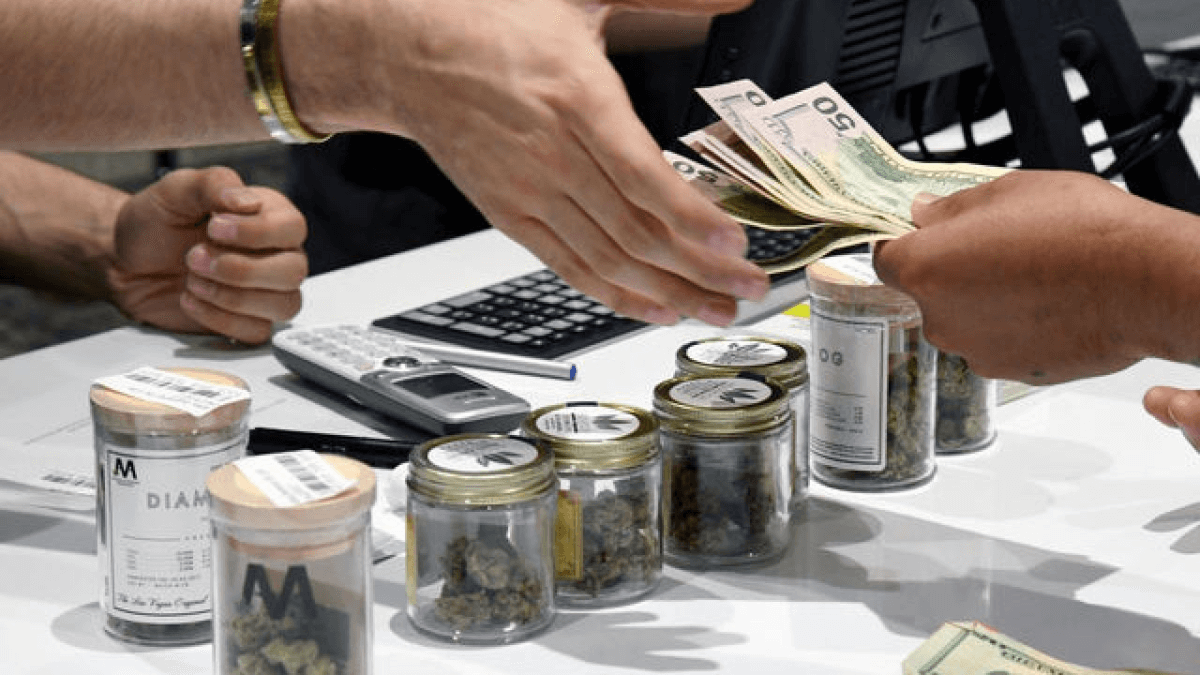
This lack of banking options creates a difficult environment for cannabis businesses to operate in. Since they can’t deposit money or write checks, they have to operate on a cash-only basis, which can lead to security problems.
Cannabis operators also have a hard time securing financing because most traditional lenders are unwilling to work with them. This leaves them struggling to get the capital they need to grow and scale their business.
When cannabis businesses lack financing options for basic business growth, a banking system more ideal for cannabis operators is needed.
The Federal Law Guides Everything
Despite the growing opportunities in the cannabis industry at the state level, many prospecting business owners are stalled by a lack of capital. Businesses in the cannabis industry might celebrate legalization in their respective states but still deal with the challenge of accessing banking services.
Cannabis dispensaries that run cash-only operations are forced to confront security challenges in a new way. Online ordering, credit and debit card processing, taking business loans, and accessing other revenue-driving financial services are denied to cannabis businesses due to their federal status.
This shows an immediate need for financial reprieve in the cannabis industry.
Getting Financial Reprieve
The House of Representatives has passed several bills supporting the cannabis industry. Some of these bills include:
- Bill to decriminalize marijuana
- The Marijuana Opportunity Reinvestment and Expungement (MORE) Act
- Legalization of adult-use cannabis
- Legislation for medical marijuana programs
- Legislation to reduce barriers to cannabis research
- Approval of measures for adult cannabis use
One such bill that focuses on banking reform is the Secure and Fair Enforcement (SAFE) Banking Act, which aims to reduce the banking services challenges in the cannabis industry. If the SAFE Banking bill passes in Congress, financial institutions can open their services to cannabis businesses without the fear of violating anti-money laundering (AML) laws.
In return, cannabis businesses reduce the risk of theft and employee welfare by transitioning from cash-only services to banking services. However, this financial reprieve doesn’t address the cannabis tax code that prevents cannabis businesses from deducting business expenses from the gross income as per the Controlled Substances Act
Nonetheless, the SAFE Banking bill is a step in the right direction. The remaining concern is whether these financial reprieves will pass in the Senate and legalize cannabis businesses at the federal level.
Another financial option expected to reform the cannabis industry is crypto. The authenticity and security of blockchain currencies like Bitcoin are becoming a lucrative consideration for financial reprieve in the cannabis industry.
Currently, there are cryptocurrencies like PotCoin and CannabisCoin mined to cater to various needs within the cannabis industry. However, the uncertainty in the crypto world makes it challenging for the cannabis industry to settle on using crypto as a financial banking solution.
Granted, some crypto technology like blockchain technology is used to transact sales in the cannabis industry, where buyers make cashless payments, and the dispensaries convert this into crypto. But these transactions are not fully transparent.
Notwithstanding, there is hope for the cannabis industry as the number of banks willing to work with cannabis businesses increases. This could result from the increasing support of cannabis banking reform at the state and Congress levels.
But Is The Banking Industry Prepared For This Reprieve?
Financial institutions are gathering more courage when working with the cannabis industry. In 2021, 755 banks showed working relationships with cannabis clients. However, this comfort is more prevalent at the state level than at the federal level, where cannabis is yet to be legalized.
But since support from the federal government is anticipated, banking institutions must equally prepare for the capability to host cannabis businesses legally. Banks must stay compliant with the anti-money laundering (AML) laws.
Banks should conduct due diligence on cannabis businesses that want to use their services. Since federal legalization of cannabis is still pending, some cannabis operations might be illegal. Therefore, it is prudent for banks to start preparation by ensuring any new partners are not lawbreakers.
This means checking for legalization and registration licenses and conducting due diligence on employees and angel investors. Business transactions are also an excellent indicator of whether a cannabis business is involved in illegal activities.
For instance, a cannabis business in a state that frowns upon international shipments shouldn’t have any international transactions. Avid AML monitoring controls should quickly identify legitimate cannabis businesses.
In a nutshell, every business that partners with a cannabis business should be prepared to support its decisions with factual claims. In case of any suspicious activity, the bank should be ready to give an account of their due diligence procedure and the findings.
Creating relationships with federal regulations is also prudent since they help make the regulation process easier. Regulators also help ensure that banks remain compliant with the Federal cannabis laws, which protect their banking operations.
Cannabis business owners must also prepare for the possibility of using open and traditional banking services for their operations. If, or when, cannabis is Federally legalized, the cannabis industry will streamline its operations throughout the U.S.
This means added investments in research, cultivation, marketing, production, and sales of cannabis and cannabis products, whether medicinal or recreational. And the added boost of a legal banking system would further increase employment and boost the economy.
Cards On The Table
Does the cannabis industry need a banking reform? Absolutely. The challenge, however, is that, despite the willingness of the House of Representatives to support the SAFE Act bill, among other proposed banking reforms for the industry, approval in the Senate is still in question. Cards on the table, bank financing in the cannabis industry will propel businesses into more growth, which, in turn, should pragmatically influence the overall U.S. economy. But this starts with active congressional action.
FAQs
What is the current cannabis banking system?
The current cannabis banking system is not ideal for cannabis businesses because the lack of Federal legalization keeps banks from offering traditional banking services to cannabis businesses for fear of violating anti-money laundering (AML) laws.
What are the challenges of using non-FDIC banking options?
Non-FDIC banking options are not secured by the FDIC, meaning businesses that operate under these banking services are not protected by the Federal laws against theft or failure.
What can a banking reform do for the cannabis industry?
A banking reform allows banking institutions to offer cannabis businesses the same banking services they offer other businesses, like capital loans, online bill payments, and debit and credit cards.
Joshua Gilstrap is the Marketing Manager for e2b teknologies, in addition to his marketing responsibilities Joshua leads business development for e2b teknologies emerging Canna Suite product line. A business graduate with a focus in marketing from Miami University in Oxford, Ohio, he joined the e2b team in the Fall of 2019. Josh brought with him a wide array of business and practical experience in planning and execution. Since coming aboard he has led multiple project’s including website hosting and theme standardization company wide, marketing automation streamlining the efficiency of the customer journey, and sales automation where he is changing the conversation from promotion to education, from pitching to catching, and from push to pull in order to keep up with the shifting tides of a digital transformation.
Member Blog: Trends in Cannabis Technology – Data Mining And Compliance

By Joshua Gilstrap, e2b teknologies
Cannabis businesses are looking for the best practices to enhance operations, with a primary focus on optimization and growth. So whether you are in the cultivation, production, manufacturing, or selling and marketing section of the cannabis industry, you need technology to steer your business into the future.
The cannabis industry is still growing, albeit faster than anticipated, with an increasing demand for products that continue propelling innovation. Data is driving this innovation because it’s the differentiating factor for long-term success and sustainability.
Today, cannabis is a $25 billion business in the U.S. In fact, the 2022 Leafly Jobs Report found the legal cannabis industry supports 428,059 right now, a 33% increase over the 280 new jobs created per day, on average, last year.
We know all of this because of data, and it’s a critical decision-making factor in this industry. Without access to real-time information, cannabis companies can’t know where to invest or improve to remain competitive and compliant.
Here are the top 4 data and technology trends transforming the cannabis industry to keep in mind.
Laws and Regulations Software
Cannabis compliance is one of the most challenging yet vital factors to consider in the cannabis industry. Government mandates demand that cannabis companies provide cultivation, production, shipping, and sales information to help monitor the entire distribution process.
This makes sense because lack of transparency in other industries has caused several crises, like the vaping crisis or the romaine lettuce E.coli outbreak of 2019. But collecting, tracking, and monitoring data is challenging for businesses, so is understanding the government regulations and ramifications.
With the emergence of cloud-based cannabis software, cannabis companies remain updated with these tight data restrictions. This software collects the appropriate data and analyzes business operations by checking the right boxes to ensure compliance.
With these industry-specific software solutions, cannabis businesses can establish and implement a standard of operations that comply with cannabis regulations. As an added benefit, these solutions offer convenient avenues for cannabis employees and business owners alike to understand the rules and regulations of the industry. Some also provide security against potential threats like cybersecurity threats.
Artificial Intelligence (AI) and Machine Learning (ML)
Cannabis plants usually require significant attention and fixed schedules because of their temperamental nature. As such, AI and ML are taking effect in the cannabis industry. Machine learning gathers data and provides suggestions on what farmers can change in the growing process.
The detail in machine learning makes it possible to collect, monitor, and track the growing cycle every hour, meaning cannabis farms use machine learning to improve these plants’ growing environment significantly.
For instance, farmers are using agricultural sensors to manipulate the growing environment to suit the needs of the cannabis plants. This is achieved by connecting the environment to growing systems with humidity sensors and controls, thermostats, and temperature controls.
These sensors ensure that cannabis is continually growing in optimal conditions. As such, the products cultivated continue to be of high quality.
Also, the machine learning sensors and tracking IDs make it easier to track cannabis products from seed to sale.
Artificial intelligence then automates these processes to make the entire growing experience easy for cannabis farmers. For instance, AI helps to automatically control the humidity levels as per the settings given by the farm moderator.
AI also automatically changes the light in the growing room since it affects the temperature needed for the plants to grow optimally. This continued innovation and adoption of AI and machine learning in the cannabis industry will lead to increased crop production and reduced manual labor.
Hybrid Cloud-Based Storage
Video data is a significant investment in the cannabis industry right now. Some government regulations outline the need for cannabis companies to have immediate access to video surveillance footage and on-demand. This need is driving the demand for storage spaces for the video footage.
While many cannabis businesses store data on-site, it is unpredictable and expensive. This is where hybrid cloud-based storage technology comes in. The technology is enough to hold video data until it is needed, like in the case of a cyberattack and the subsequent investigation.
It also gives cannabis businesses the choice to store data on-site and in the cloud. This enhances the flexibility, accessibility, and security of business files. Cloud platforms also make it easier to access business information from any location.
Blockchain Technology
Traditionally, the cannabis industry is a cash transaction industry, especially in dispensaries where the majority of the cannabis sales take place. Additionally, many cannabis businesses find it challenging to work with banks since most aren’t legally allowed to work with companies in the industry.
There is also the matter of making secure payments and tracking transactions successfully. In a word, the cannabis industry is adopting blockchain technology for cryptocurrency payments and transaction tracking.
Blockchain is secure, and it has processes that make it easy to track and monitor transactions. But because using blockchain as an alternative to traditional payments methods is a relatively new trend, there is still the challenge of getting cannabis companies to agree on solutions that can standardize the trend.
In conclusion
Every business industry is now leveraging data by defining connections between the different data points and gathering actionable insights on processes. As such, you can optimize, strategize, plan, report, and identify problems using business data.
You can also better understand the consumer using data insights like your consumer consumption preferences. As such, data is crucial for determining where to invest, improve, and remain competitive and compliant in the cannabis industry.
FAQs
What is the future of the cannabis industry?
The future of the cannabis industry is very bright… The cannabis industry is expected to grow by about 20 to 30 percent every year to a value of $50 billion by 2026.
How is technology influencing the cannabis industry?
Technology is propelling the growth of the cannabis industry quickly. Cannabis businesses use innovation and technology to identify downtime in workflows, streamline processes, and identify opportunities for success and growth.
What is the role of data in cannabis manufacturing?
Data is critical for improving all the cannabis processes from seed to sale. Decisions driven by data significantly improve the quality of the cannabis operations from cultivation through to marketing, sales, and customer satisfaction. As such, data is now an integral part of cannabis manufacturing.
Joshua Gilstrap is the Marketing Manager for e2b teknologies, in addition to his marketing responsibilities Joshua leads business development for e2b teknologies emerging Canna Suite product line. A business graduate with a focus in marketing from Miami University in Oxford, Ohio, he joined the e2b team in the Fall of 2019. Josh brought with him a wide array of business and practical experience in planning and execution. Since coming aboard he has led multiple project’s including website hosting and theme standardization company wide, marketing automation streamlining the efficiency of the customer journey, and sales automation where he is changing the conversation from promotion to education, from pitching to catching, and from push to pull in order to keep up with the shifting tides of a digital transformation.
Follow NCIA
Newsletter
Facebook
Twitter
LinkedIn
Instagram
News & Resource Topics
–
This Just In
Committee Blog: Access to Capital in the U.S. Cannabis Market Outlook
Member Blog: The Risks of Removing a Regulated Cannabis Market