Committee Blog: Everything You Wanted to Know About Cannabis Facilities But Were Afraid to Ask Field Guide – Part 1 – Cultivation
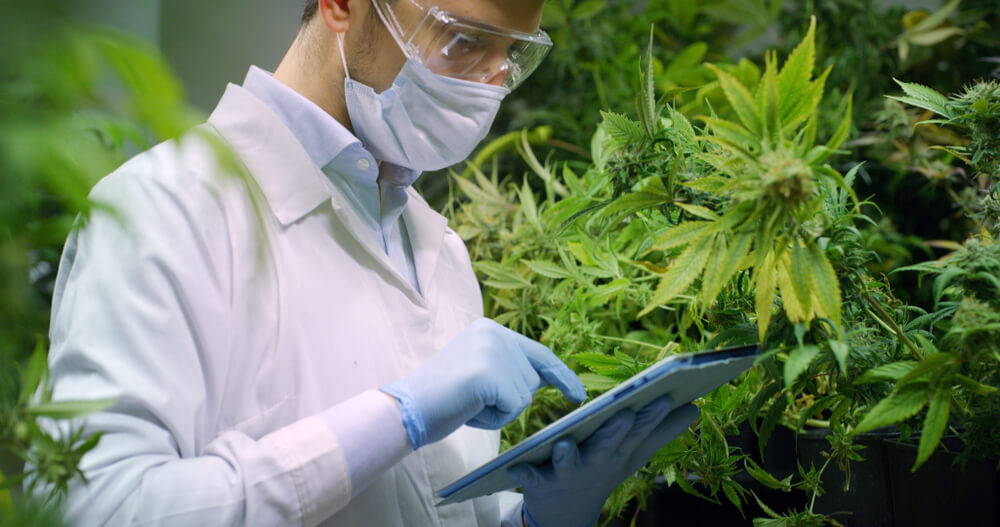
 by members of NCIA’s Facilities Design Committee
Jacques Santucci, Brian Anderson, David Vaillencourt, and David Dixon
Introducing our five-part series on the behind-the-scenes workings of the legal cannabis industry. This series focuses on all of the inner dealings and industry advice from established professionals to craft this unlimited How-to-Guide to assist you in setting up your own facility. These articles cover cultivation, extraction, infused products, and retail facilities as well as support activities. In general, remember to be compliant with all local rules and regulations and contact a licensed contractor and industry expert.
Part 1, Cultivation: The Top Things to Consider When Planning Your Cannabis Cultivation Facilities
As you are planning to start your own indoor cultivation facility, there are some often ignored basic parameters that should be taken into account in the design and decision-making process. We have listed the key parameters that will ease the process of going live and may save time and money while you design your facility and the building process. Always remember to be compliant with all local rules and regulations.
Lighting Recommendations
Depending on your goals, building setting, and local requirements, you have many options for lighting, from HPS light to LED lights. Lighting standards are measured in watts per square foot. Recommendations may vary per state or other criteria. For example, Massachusetts recommends an intensity of 36w/sft for energy consumption.
Water Recovery: Minimum Percentage
Cannabis is a water-intensive crop, and consideration of effluent capacity can be inefficient, expensive, and an issue for municipalities. Depending on your cultivation practices, you should consider a water recovery system and what percentage you are able to capture. There are two types of water recovery – leachate, and condensate. An effective system will recover at least 70% of the water for utilization, significantly reducing your water and sewer expenses. Your irrigation and fertigation selection will have an impact on your water consumption.
Generator Capacity: Minimum Recommendations
Your area or your business model may dictate for a generator – which is a critical Business Continuity consideration as a power outage, even if for a brief period of time can destroy a crop. Make sure to calculate the minimum capacity requirements of your facility. Do you plan to have it for emergency or stand-by usage? Typically, 50% of your short lighting load capacity of cultivation, 100% for AHU (air handling), and some back-office and security system, including cameras, access, and server needs.
Carbon Dioxide Enrichment: New Versus Recaptured
You can consider 75% new tanked- or generated- natural gas and 25% recaptured sources, for cultivation rooms, gas-fired chillers, and gas-fired boilers.
Carbon Dioxide Alarms Levels: Cultivation and Common Areas
Carbon Dioxide monitoring is critical for worker safety. You should be monitoring common areas to ensure that you are below 3,500 ppm. Monitoring should be tied to the fire alarm system for building evacuation, with 2,000 ppm alarm levels for the cultivation area. 5000 ppm limits are required by NFPA/OHSA. Alarms should contain visual strobes, red/green room access indicator lights and/or possibly an exhaust system that is triggered by an alarm
Renewable Energy: Minimum Energy Production Percentage
To demonstrate a commitment to sustainability, a minimum target of 10% of your facility’s energy consumption should be from renewable energy production: i.e. solar power, wind energy, geothermal, biomass, and/or battery energy.
Refuse Disposal: Recycling and Composting
Consider certified disposal of horticulture byproducts with a minimum of 25% recycling or composting by volume; rendered unusable. You will want to establish and verify that your shredder or equivalent system is capable of breaking up debris to a specified size.
Airlock Doors for In-Between Uses
You should install an airlock barrier, or at a minimum an air curtain, between the business and the production side, for outside and inside egresses, to keep a controlled environment. Keep in mind considerations for ventilation systems and cascading airflow.
Wall Material
For best performance to mitigate biological hazards and contamination, depending on your region, recommend installing insulated metal panels, that are non-porous, solid core wall, insulated metal panels (IMP), with surface mounted devices.
Security Entrance: Facility Safety
Consider creating a separate mantrap style entrance to allow for better safety at the entrance point, monitor visitors, keep a controlled environment as well as avoid weather-related issues, i.e. wet areas due to rain or snow, or temperature variance due to extreme heat or cold.
Limiting doors access and key sets for employees needs to be part of your overall security plan, with proper door labeling and authorization levels. The idea is to prevent unauthorized personnel from accessing specific spaces, for proper environment control and to be compliant with the local regulatory body. Remember to be compliant with local rules and regulations.
Security Camera: Minimum Area of Coverage
In most states, you will need security coverage for 100% percent of your faculty where cannabis products will be stored or displayed, with proper recording and monitoring. Keep in mind that your security room will likely need its own dedicated HVAC systems
Security Camera: Minimum Data Storage and Resolution
You will need to store all security camera footage on-site for a minimum of 90-days, or more depending on regulations. You may need to store the data offsite for five years for future legal needs. Footage quality may need to be shot in 1080p minimum. An ASTM International Standard Guide for Video Surveillance System provides additional parameters to utilize.
Security Alarm: Monitoring
Security alarm needs to be monitored by a reputable company. A service level agreement (SLA) or similar to ensure there are redundancies in the event of a failure should be considered, and redundancy or a backup system might be necessary.
Odor Control: Exhaust Air Management
Odor mitigation is a crucial part of all operations. All exhaust airflow must be oxidized or ionized. You also need a fogger system and carbon filtration. Refer to local municipal bylaws and regulations for more information.
For interior odor control and non-cultivation areas, consider cascading air flows from non-cultivation areas to provide a common method of control for pressurization control. Plan to control air flow and exhaust.
Fire Sprinkler: Maximum Bench Sizing
Sprinklers are designed to cover a limited surface area. When installed on cultivation tabletops wider than 48”, additional sprinkler coverage may be required.
Flooring Type: Continuous
Cultivation floors shall have continuous resin or epoxy coating with at least a four-inch lip onto the adjacent wall.
Energy Incentives: Minimum HVAC/D Efficiency Rating
Air Conditioning (AC) units should be no less than 16 SEER, High Point (HP) units no less than 9 HSPF. Incentives for this vary by state. Please check with your local utility company and regulatory commission for all available rebates.
HVAC Validation Requirements:
Bi-Annual Third Party Controlled Environment Validation using required Trend Data Metrics is the validation and calibration of control sensors, including temperature, humidity, CO2, and other devices such as scales, flow meters, integral valves, PPM sensors, EC meters, TDS meters, HVAC dampers and other applicable devices that may drift from factory or initial installation specifications.
Good Agricultural and Collection or Manufacturing Practices (GACP/GMP): Ready Versus Complaint
Your operation should be designed with documentation to prepare for GACP or GMP requirements. Depending on final product types, specific food-based GMPs with appropriate risk assessment programs (such as HACCP, and others referenced within the Food Safety Modernization Act) will prepare you for any federal or international trade opportunities in a federally legalized framework.
Employee Locker Access
Plan for gender-specific, male and female locker rooms, with six square feet per employee per shift expected to arrive at the facility at any given time. Employee supplied flock for locker or lock provided by the employer is a business decision. Keep in mind how you will keep the environment of your production facility under control. You might consider having locker access adjacent to the growing area with a proper gowning area.
Locker Room Type
Make sure your locker room is correctly set up for employees to be able to change in a safe way. Specifications for Locker Room and Gowning/PPE Areas should allow access to faucets for washing hands as well as bathrooms. Note gowning areas should be separate from the bathrooms directly off the locker room area.
Employee Shower Access
Per International Building Code (IBC) and State Plumbing Codes, calculate the number of employees and determine the number of showers based on code requirements as well as business policies. Having gender-specific showers is a recommendation as well as a business decision.
Emergency Eye Wash- Shower
For safety and based on OSHA standards, Integrated Pest Management (IPM), fertigation, and extraction operations must-have emergency eye wash showers. Eyewash stations need to be placed throughout the facility so that they are within 10-15 seconds walking distance from employees. Check local requirements for additional needs.
Note: in a facility where corrosives and skin irritants could pose harm to employees and require immediate remediations, you should consider emergency showers.
First Aid Kit Distribution
First aid kits should be available in all rooms where sharp tools and other hazardous materials are intended to be used. These kits need to be within 10-15 seconds of employee walking distances. Per OSHA requirements, first aid kits should be located in all trim, extraction, flower hallway, and shredding areas. This is overall a must-have in your facility.
Safety and Injury Handling
We recommend that you ensure that you have enough first aid and burn kits available throughout your faculty, based on your activity and the number of employees.
Check Out These Related Articles for More Top Things to Consider When Planning:
Part 1 – Cannabis Cultivation Facilities
Part 2 – Cannabis Extraction Facilities
Part 3 – Cannabis Food Production Facilities
Part 4 –Cannabis Retail & Dispensary Facilities
Part 5 – Cannabis Facility Support Areas
Member Blog: Strategies to Reduce Indoor Cultivation Facility Energy Costs
by Jason Magnuson of Mintropy
Indoor cannabis cultivation facilities are complex environments, where a large number of variables interact to create an ideal ecosystem to grow cannabis. The upside of an indoor facility is it allows a year-long growing climate, optimized for each stage of the plant grow cycle. The downside, however, is creating this ideal climate is very energy-intensive.
The total energy costs for indoor cannabis grow operations typically vary between 20%-50% of total operating costs (approximately 120-150 kWh/sq.ft). In comparison, energy use in a typical commercial building environment is approximately 25 kWh/sq. ft. As indoor cultivation facilities increase, they can be a source of strain on electrical grids. A recent study showed indoor cannabis cultivation alone accounted for 4% of the energy grid usage in Denver. (IEEE, 2020)
With that context, any areas we can identify to improve energy efficiencies without introducing a negative impact to the grow environment can have enormous bottom-line impacts for cultivation owners and society at large.
In this article, we are going to be examining two ways we can optimize HVACD systems to improve energy efficiency. When HVACD systems are designed for grow facilities, the primary variables we are looking to influence are the following psychrometric properties: temperature (either wet or dry bulb) and relative humidity. Mechanical engineers will often refer to an information-packed graph called a psychrometric chart shown below.
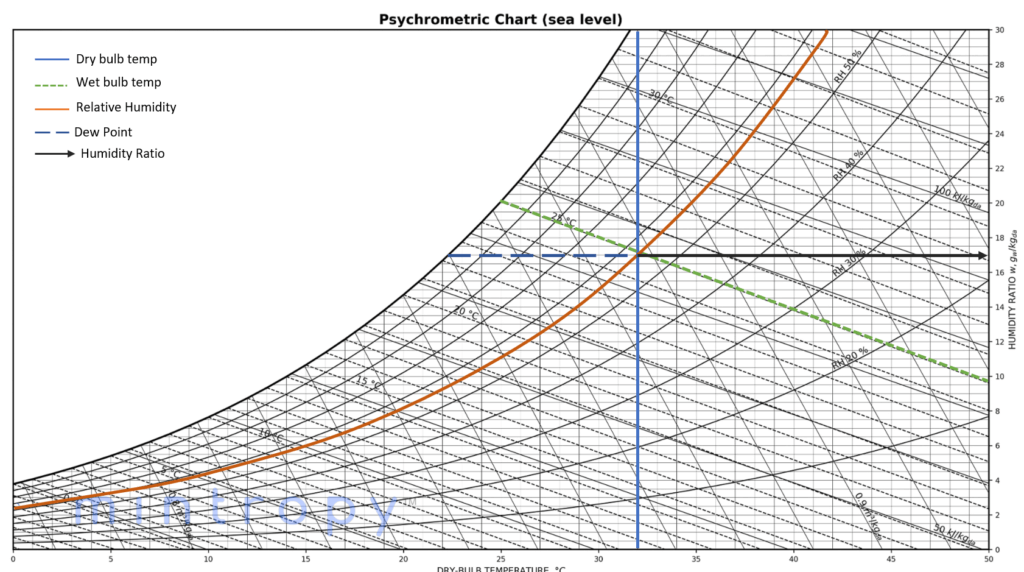
This chart helps to visualize the relationships different properties of air like temperature, humidity (relative and absolute) and dew points along the saturation curve have with each other. This is useful to analyze, as these are direct inputs to a scientific measure often favored by growers called Vapor Pressure Deficit (VPD).
Vapor Pressure Deficit, simply described, compares these variables to determine how much additional room for water vapor there is in the air. This is important as it determines how well cannabis plants can transpire. Controlling transpiration rates help to aid in healthy, robust growth through the plant life cycle. Growers tend to want lower VPD, and thus lower transpiration, early in plant maturity, and increase to higher VPDs, and thus high transpiration, at the flowering stage before harvesting.
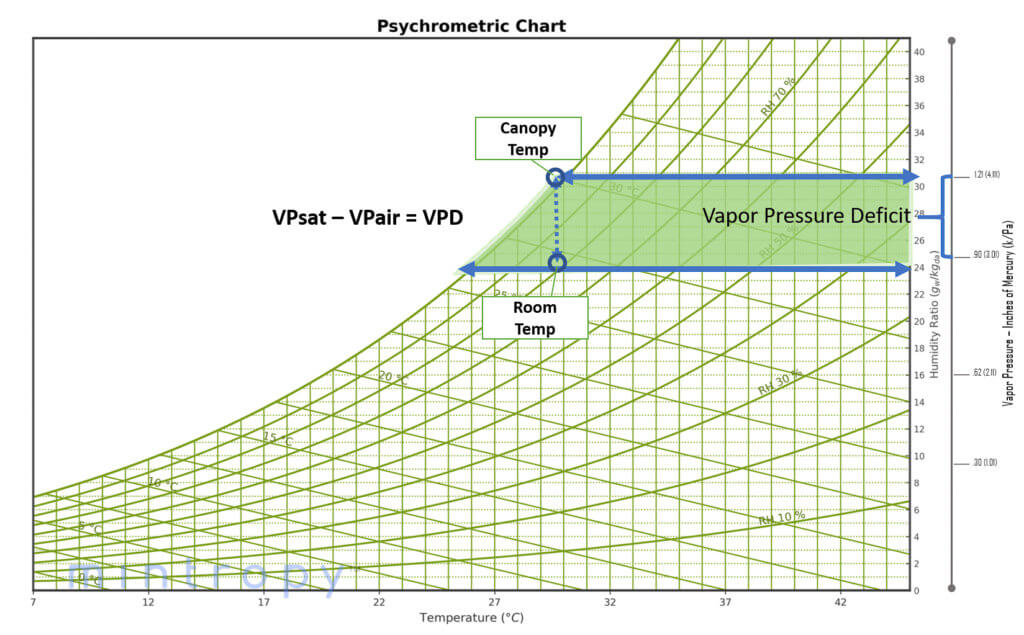
So we know a successful indoor cultivation facility HVAC system will need to control temperature and humidity to ensure the desired VPD values. How can we do that efficiently?
Stand-Alone Dehumidifiers Are Inefficient
A cannabis plant can transpire up to 99% of the water absorbed through its roots. Due to this, we often tell people that designing an Indoor Cultivation Facility is like designing a Data Center with a swimming pool inside. Because of the increased humidity introduced from plant transpiration, we must pay special attention to dehumidification strategies within the grow space. Humid air requires treating significant latent loads in the grow space, requiring additional energy to remove moisture from the airstream. This is one reason HVACD systems can consume up to 50% of the energy budget in a cultivation facility. As previously mentioned, higher humidity levels will lower the VPD in the room, preventing a plant from transpiring effectively to continue healthy growth. To combat this, sometimes stand-alone dehumidifiers are added into the grow room.
While these units can do the job of removing moisture from the room, it is a very energy-intensive process. One of the issues with stand-alone dehumidifiers is that they reject heat back into the grow room, thereby adding additional cooling load onto the main HVAC equipment.
Integral Hot Gas Bypass System
An air handling unit, sometimes called an air handler or AHU, is a piece of equipment that is used to condition and circulate air as a component of a heating, ventilating, and air conditioning system.
The air handler is usually a large metal box that contains a blower, heating and cooling elements, filter chambers, sound attenuators, and dampers. It then connects to ductwork that distributes the conditioned air throughout the space before returning it back to the AHU.
Of particular interest are the units cooling coil and reheat coil. These two components are namely responsible for controlling VPD levels in our grow space. In an Integral Hot Gas Reheat AHU, the cooling coil serves as a dehumidifier, by cooling the air thereby reducing its moisture/latent load (we highly recommend capturing this water for treatment and reuse: read more here). The hot gas reheat capability utilizes heat from grow space and compressor heat to reheat the air before returning to the grow space (without using additional heating energy).
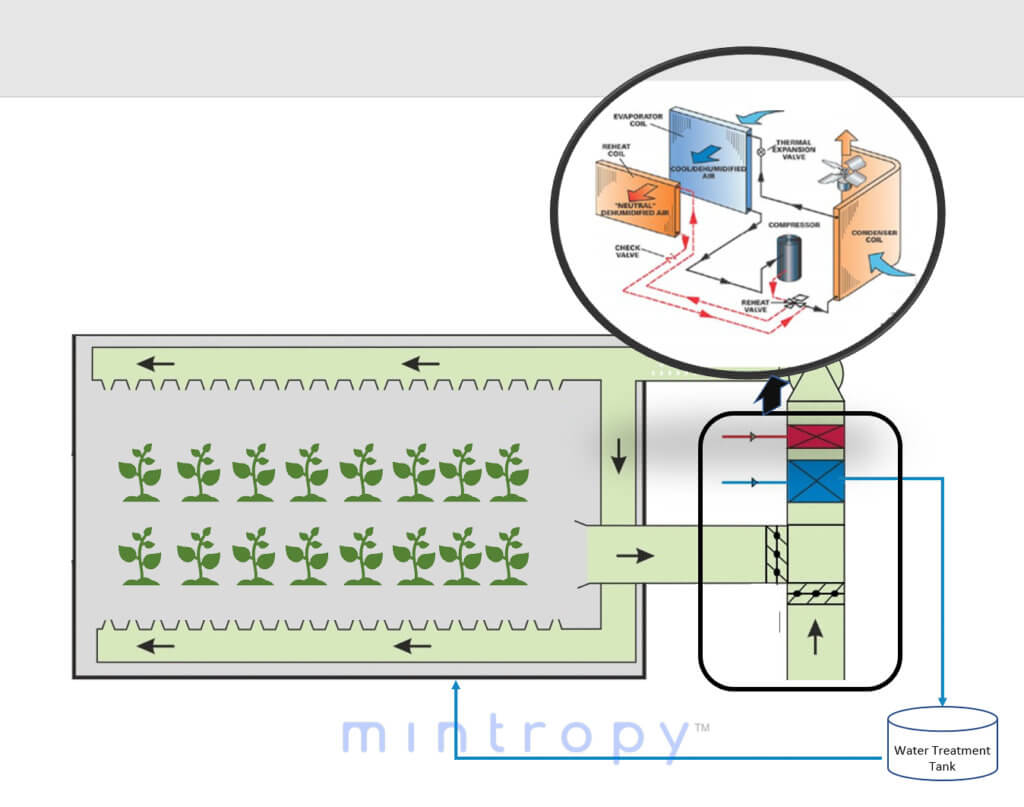
While this may seem like a minor design change, it results in a considerable reduction in energy. As the chart below illustrates, leveraging the Integral Hot Gas Bypass AHU units can result in a 30-35% reduction in HVACD energy when compared with other dehumidification systems. Additional automation capabilities built-into these systems will ensure that the grow room will remain tightly controlled within the desired state points of your grow room to optimize VPD.
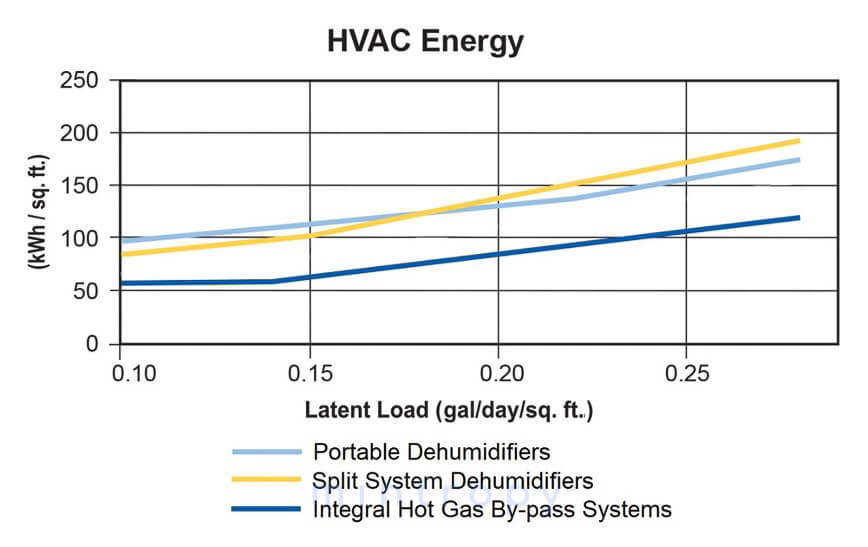
This reduction in energy quickly adds up to reduced utility bills. Despite marginally higher upfront costs as compared to standard HVAC equipment coupled with standalone dehumidifiers, this option results in a lower 5-year system cost than common HVACD systems installed in cultivation facilities, and these savings will only increase over time.
Maintaining Consistent VPD, but at higher Temperature / Humidity Ranges
The second energy-saving measure we would like to discuss goes back to the earlier discussion of VPD. Recall the equation for VPD is
V P sat – V P air = VPD
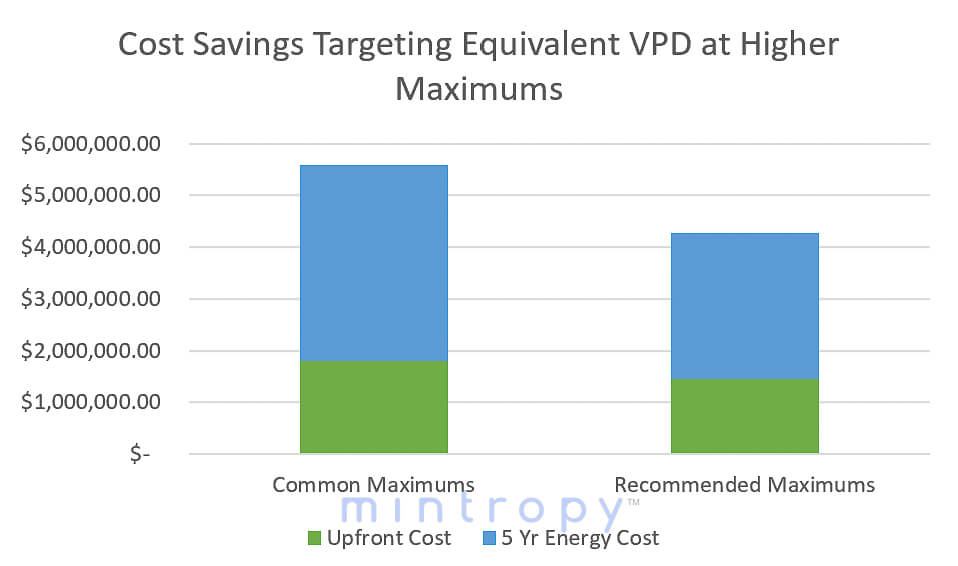
This is important, as it provides growers the flexibility to fall within desired VPD ranges, but at higher temperature and humidity ranges than typically used. Many growers target maximum temperatures around 70-75F and limit relative humidity to a maximum of 50 percent, but by allowing slightly higher maximum room temperatures of 75-80F, with corresponding relative humidity increases, we can create identical VPDs. The cost-benefit of this small adjustment is considerable. The HVAC system (including cooling and dehumidification) can be sized at roughly 20-30% smaller capacity, reducing the grower’s up-front equipment costs. In addition, the system’s energy consumption and costs during operations will be significantly lower, to the tune of 30-40%. In a theoretical 30,000 square foot facility, this could result in a $1,300,000 savings in the first 5 years.
 Jason Magnuson is the Director of Business Development at mintropy. Mintropy is an MEP (Mechanical, Electrical, Plumbing) Engineering Design firm, with a focus on Indoor Cultivation Facility and Dispensary design. At mintropy, we strive to minimize entropy (minimize disorder) in building systems, by creating innovative and efficient designs to meet our client’s needs. For assistance in your cultivation facility, be it auditing/upgrading existing systems or designing new, reach out to us today.
Member Blog: Growing Beyond THC – Terroirs and Terpenes Are The Future Of Premium Cannabis
By Eric Sklar, CEO and Co-founder of Napa Valley Fumé
I’m a serial entrepreneur and my roots in Napa Valley run deep. I’ve been a cultivator in this beautiful terroir for over 40 years, initially as a wine guy from a family of growers and makers, and now as the Co-Founder and CEO of a premium seed-to-sale cannabis company. I see a lot of similarities between wine and cannabis, comparisons that paint a bright, accessible, and profitable future for our industry.
Wine + Cannabis Offer Interesting Comparisons
Both are agricultural products that are highly regulated, though cannabis far more so given the industry is still in its infancy. 40 years ago, when my family started in the wine business they experienced similar business challenges, or as I like to call them – opportunities.
Like wine, cannabis comes in a variety of strains and formats. Also, like wine, cannabis is extremely well suited to the growing conditions of California’s terroirs, especially those where I live in Northern California. If you think about the wide variety of wine varietals – Cabernet, Pinot, Sauvignon Blanc, Rieslings, and so on – there is an even greater variety of cannabis strains – Lemon Sour Diesel, Double Chem OG, Budzilla, Bogota Berry, etc. There is something for every palette, which pre-legalization, I am not sure many people really paid attention to. This is all to say, that just as there are many different ways to enjoy wine depending on your tastes, your budget, or your intentions and preferences, the same is true for cannabis.
There’s so much more. If you’ve ever had a great wine or even a decent wine, you know that there are all these flavors and aromas that layer on each other and evolve over time, interacting in different ways to create this wonderful sensory experience that’s both about taste and smell. The same goes for cannabis. Premium cannabis is as complex as the most complex wine. Both wine and cannabis contain terpenes and it’s the variety of different terpenes in each of them that determines the flavors, aromas, and overall experience. Coming from wine, this is something I understand and I think as people explore cannabis without the stigma of prohibition, they will begin to seek out terpene-rich strains, just as they now seek out complex wine profiles – perhaps unknowingly given how wine is such a normalized product in today’s society.
Of course, there are obvious differences between cannabis and wine. The plants themselves are very different. One’s an annual plant and one’s a perennial vine. But, they both produce very similar compounds that make the sensory experience of their flower and fruit so much richer.
Let’s Talk Terpenes
You’ve probably been hearing a lot more about terpenes lately. They’re kinda the new ‘it’ thing in our industry. Terpenes are organic compounds in plants responsible for the unique smells and tastes of your favorite plants, flowers, and fruits. Most people don’t know this but with both wine and cannabis, most of what you think you’re tasting is actually what you’re smelling. It’s these terpenes that give your favorite wines and cannabis strains their signature scents.
Some of them overlap — there are some of the same terpenes in both cannabis and wine grapes like limonene and myrcene. And then there are some terpenes that are more unique to one plant or the other. But it’s the same compounds and so coming out of wine, it was such a natural thing for me to say, I’m not in this to build the strongest, highest-THC-get-you-wasted product. I wanted to develop something that honored the terroirs I’ve come to know and love. A premium product offering, with the same wonderful components of the wines I’ve been creating and the same rich variety of flavor profiles as the grapes I’ve been growing for all these years.
As chemicals go, terpenes offer delicate but very distinctive aromas but they are volatile and, if you’re not careful, will disappear quite quickly. You have to work to maintain them to keep them from evaporating from your flower as from your wine. Taking the time and care to capture and preserve these aromas and flavors that are truly unique to each strain and varietal makes for a much richer experience than the extreme high that some people chase, the cannabis equivalent of Night Train. With cannabis, quickly harvesting the flower and getting it into a temperature and humidity-controlled drying room helps maintain these volatile compounds as does the way you cure and store the flower after the initial drying. In wine, we preserve the terpenes with careful barreling and bottling.
The best way to enjoy terpenes is to use a flower vaporizer. Just heating it up enough to release everything without burning it and without burning rolling paper that covers up the subtle aromas of the terpenes.
Outdoor Growing Enriches the Final Product
The cannabis plant has been growing outside for millennia and our hypothesis at Napa Valley Fumé is that growing outdoors creates a wider range of terpenes and a richer, more nuanced consumption experience. A plant, like a human being, is a holistic entity, it’s a being of a sort. If you took a person — like in The Truman Show — and never let them outside, what would that do to that being?
In truth, we don’t really know what indoor growing does to the plant. But what I think is that these plants are meant to be grown outside. That’s where they do their best. They have to contend with elements that make them stronger, and other factors like pests, which over time create resistance, again making them stronger. They are also receiving full-spectrum sunlight that changes each day of the year. As the year goes on, the color spectrum starts to vary. It is bluer in the spring and redder in the fall. So while I get the efficiency of indoor growing, I believe that all of these environmental elements together with the heating during the day and cooling at night and the fact that different growing regions have different climates and terroirs, you get the best, most interesting plants when you grow outdoors.
Terroir: As Important to Cannabis as They are to Wine Grapes
Terroir is a great word because it’s not just about one element, it’s about everything in a given place. The altitude, the soil, the mineral content of the water, the directional exposure to the sun. In Napa where we’re based, the terroir is affected by the fog that comes up from the Bay. We measure the temperature days over the course of the whole growing season, assessing the total heat that the plant received. All of these things contribute to the terroir and the terroir informs and enriches the sensory experience of the resulting fruit and flower.
Plants, whether you’re talking about grapes or cannabis, will perform differently in different terroirs and will express themselves in different, nuanced ways. For me, this suggests a bright future for sun-grown cannabis with a wide variety of strains each displaying the unique signature of their terroir. The same seed grown across different terroirs expresses really differently, resulting in a distinct profile in the flower and an enhanced consumption experience.
Bottom Line: Terpenes, Terroirs, and Outdoor Growing Paint a Bright Future
This plant has so much to offer and is so expressive. While there’s a place for both indoor and outdoor, it seems to me that the most expressive form of this plant, with the most interesting aromas and flavors, comes when you grow in the full spectrum of sunlight outdoors. To attain the same rich variety in your cannabis experience as you do with wine, you want to do it outdoors, you want to tend them for the greatest terpene expression, you want to pick your strains at the beginning for that. Optimizing for terpenes doesn’t just have a flavor effect, it also shapes the psychoactive effect of the flower. The right terpenes and compounds can make the resulting high sleepier or more energetic, as well as providing other health benefits that are currently supported by anecdotal evidence and will likely be born out in the research that is currently underway.
As with the trajectory of the wine industry, we believe that educating consumers about terpenes and terroirs and offering them a wider variety of products and consumption experiences, will expand the category, creating a bright future for all of us. I’m excited and encouraged by articles like this one from Wine Magazine that suggest that we’re on to something.
 Eric Sklar is an entrepreneur, Napa Valley vineyard owner and public official. He and his family have been growing grapes in Napa Valley for 40 years and he planted his first licensed cannabis garden in 2018. Eric is the CEO and co-founder of Napa Valley Fumé, LLC, a cannabis management and branding company that has launched brands such as LAKE GRADE with a few others in the works. He is also the co-founder of the Napa Valley Cannabis Association and the President of California Fish and Game Commission, a position he has held since 2016.
In 2005, Eric founded Alpha Omega Winery in Rutherford, CA and was managing partner until 2013. He’s held positions on the Board of the Napa Valley Vintners, as well as Napa Valley Vintners’ Community and Industry Issues Committee. In 1989, he founded Burrito Brothers’ Inc., a restaurant chain based in Washington, DC, which he sold in 1999. Eric was also an adjunct professor at Georgetown University’s School of Business where he taught courses in entrepreneurship, business strategy and marketing. He has held several other political positions including Assistant Press Secretary to Vice Presidential candidate Geraldine Ferraro in 1984.
Eric received a Bachelor of Arts degree in Political Science at the University of California at Berkeley in 1984, a Diploma in Business Studies at the London School of Economics in 1986, and a Master of Business Administration at Georgetown University in Washington, D.C. in 1997.
Member Blog: Doing More With Less – Ways To Expand Yields, Save Money, And Keep Quality
By Andrew Myers, President & CEO of ProGrowTech
As the cannabis industry continues to expand, commercial growers are looking for new and cost-effective ways to get a competitive edge in an increasingly crowded market.
The persistent and ever-growing demand for cannabis products has industry professionals wondering how they can increase their production levels and maintain quality while remaining profitable. Simultaneously, the price of cannabis continues to drop yet operational costs facing growers remain the same — this combination undoubtedly limits the ability to make much-needed investments or updates to their facilities. While the answer may be different for each grower, evaluating a few key areas may lead to increased production without the skyrocketing expenses.
What are some of the best ways to cut down on costs without inhibiting quality? Start by asking the right questions.
Which Lights Provide the Right Intensity, Spectrum, and Efficiency for Your Grow?
It can’t be emphasized enough that lighting plays an integral role in the success of any harvest. When growing indoors, agriculturalists lose exactly what plants need to survive: the sun. LED lights that produce the appropriate light spectrum and intensity can be a (sometimes superior) replacement for the sun.
When used effectively, LEDs can mimic the changing of the seasons — thereby allowing horticulturalists to hasten flowering or encourage dormancy. They’re able to change the appearance, potency and size of the plant. Spectral tuning gives cultivators control over the timing of the plant’s natural life cycle and the resulting harvest, supporting the conclusion that LEDs are the optimal lighting choice for growers seeking higher production levels in a shorter amount of time.
LEDs deliver numerous other time- and money-saving benefits to commercial growers, including:
Energy efficiency – LEDs are an environmentally friendly and sustainable choice for horticulturalists looking to cut down on energy costs — easily surpassing other lighting technologies in this realm.
Cooler running temperature – They runs at a much cooler temperatures than most other options. This means that, even with several LED fixtures delivering bright, intense light, horticulturalists don’t have to worry about burning their plants.
Durability – Lights need to survive a high-demand, busy and ever-changing commercial grow environment. Some lights include especially durable features, such as tempered glass LED chip covers and industrial-grade aluminum — they’ll last for years while also giving growers peace-of-mind.
What Can Be Vertically Accomplished?
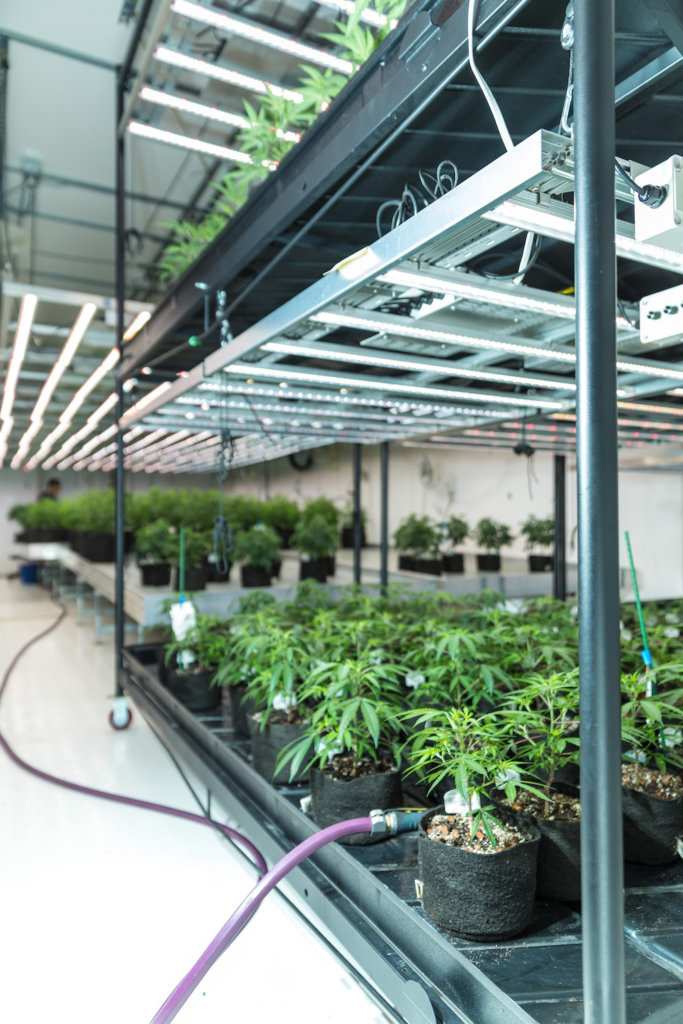 Vertical farming has revolutionized the way we think about indoor agriculture. With the advancement of vertical racking, growers can amplify their harvests — sometimes multiplying their crops ten-fold — without having to invest in more square footage.
While this layout certainly isn’t a new idea in agriculture, it was more recently adopted by cannabis growers as some LED grow lights are now capable of being vertically racked. Many growers’ facilities have square footage limitations, whether due to budget or state law; building up, rather than out, offers the opportunity to drastically expand growing capabilities even in smaller spaces.
To keep your vertical cannabis garden in excellent condition:
- Ensure your LED lighting fixture delivers uniform light intensity, so each plant gets the light it needs at every stage of growth to flourish.
- Assess whether spectral tuning is appropriate. Some growers might opt for more adjustability so they have the greatest level of control when custom crafting their crop.
- Make sure you have proper ventilation. This equalizes the environment of each tier and prevents the development of microclimates or condensation — which can lead to disease or rot.
- Install moveable benches to easily rearrange and access each tier as needed.
This combination of technology and intelligent design expands the realm of possibility for cannabis cultivators who want to use their space more efficiently.
Which Cutting-Edge Growing Techniques Make a Difference?
It’s also important to explore what the individual cultivator can do to improve harvests and offset costs. After all, they’re the ones who handle the plants on a day-to-day basis, and best understand what they need to prosper. Their approach plays a central role in crop health.
Commercial cultivators are able to implement advanced growing strategies to produce healthier and more profitable plants:
Tissue culture cultivation – This innovative technique is relatively new to the cannabis industry, although it has been used since the 1950s to aid in orchid reproduction. The process involves immersing cuttings from a healthy, mature plant in different hormone solutions. Tissue culture cultivation allows growers to quickly develop several — up to hundreds — of genetically identical plants.
Consolidate veg and bloom rooms – Adjustable LEDs offer an easy solution for growers who want to use the time-saving “flower-in-place” approach.LEDs start by delivering gentle springtime light, and growers gradually ramp up the intensity to replicate the height of summer. This method prevents plants from being shocked when they’re moved from room to room, encouraging resiliency — and reducing the required square footage to get a healthy harvest.
The Bottom Line
Critics of indoor agriculture argue it’s too expensive. And in some cases, skeptics have a point — when approached incorrectly, indoor cultivators are indeed faced with expensive operational costs that may slash their profits.
But this doesn’t always have to be the case. Advancements in technology and design, catalyzed by the creative minds leading the industry, are making indoor agriculture more realistic than ever — for any type of grower. Furthermore, indoor agriculture gives the individual grower ultimate control over the environment. One day, variables like unpredictable weather or changing seasons can be left behind. Traditional industrial agriculture results in soil degradation and pollution — moving indoors can help mitigate this negative impact on our environment. In addition, cultivators no longer have to use harmful pesticides, resulting in a healthier product for both the earth and the eventual consumer.
 Andrew Myers is President and CEO of ProGrowTech, which helps commercial horticulture operations increase profitability, yield and energy efficiency with industry-leading LED lighting systems. For more information, visit progrowtech.com.

Follow NCIA
Newsletter
Facebook
Twitter
LinkedIn
Instagram
News & Resource Topics
–
This Just In
Beyond Rescheduling: Inside NCIA’s 14th Annual National Cannabis Industry Lobby Days
DOJ Reschedules Medical Cannabis to Schedule III & Announces June 2026 Hearing on Broader Rescheduling