New Study Proves CBD Helps with Addiction, Anxiety, Impulsivity
by NCIA Editorial Staff
A new study reveals CBD (cannabidiol) can be used as a treatment in curbing cocaine and alcohol relapse in lab animals. The Neuropsychopharmacology study from Nature Journal serves as further proof that cannabinoids do, in fact, have therapeutic value.
Much of the cannabis-focused scientific community and business owners are well aware of these benefits. However, this study is a welcomed addition to the mounting evidence in favor of treating patients with CBD- as well as calling cannabis medicine.
Mary’s Medicinals is a trusted leader in the therapeutic CBD industry. Their Chief Scientific Officer, Jeremy Riggle Ph.D. isn’t surprised with the study’s outcome but hopeful it may result in human clinical testing in the future. “While the outcome of this study is exciting, there are literally hundreds of other animal/preclinical studies that have demonstrated the potential of CBD for human health,” he said to NCIA in an exclusive interview. He added, “Until the federal government allows comprehensive double blind randomized placebo-controlled studies on human populations these studies will continue to pile up without any action or validation.”
The Executive Director of California marijuana dispensary, A Therapeutic Alternative, agrees its a step in the right direction. “When a study like this comes out it corroborates the decade of anecdotal evidence that I have been seeing first hand,” said Kimberly Cargile. One of the top reasons members come to her shop is to reduce their use of pharmaceuticals, street drugs, alcohol and cigarettes. Her go-to recommendations for new members: CBD products.
Cargile said she sees it as the fastest growing market because anyone can use CBD without the psychoactive effects of products with THC. You can learn more about the differences between THC and CBD as well as how CBD helps patients with debilitating conditions in our recent MarijuanaDoctors.com blog post.
Facts from the published study:
CBD attenuated context-induced and stress-induced drug seeking without tolerance, sedative effects, or interference with normal motivated behavior
Following treatment termination, reinstatement remained attenuated up to ≈5 months
CBD also reduced experimental anxiety and prevented the development of high impulsivity in rats with an alcohol dependence history
Mary’s customers and patients can shop online for vaping oil, topical muscle freeze, and their CBD-releasing transdermal CBD gel pen – the same method of delivery used by researchers for the new study.
Unlike products with THC, CBD can be shipped across America because CBD is found in industrial hemp. As Dr. Riggle explained, “Industrial hemp is legal across the United States and most of the world so that gives hemp-infused product manufacturers more freedom than cannabis product manufacturers. Being able to sell products online and ship them nationwide is a game changer, and it allows for plant-based remedies to quickly and easily reach those who need it most.”
The team at Mary’s is also breaking new ground in the scientific community as they were the first to release products with lesser known compounds of the plant including; THCa, CBN, and CBC. “We dedicate a significant amount of resources to R&D so that we’re able to stay ahead of the curve and pave the way in releasing products that target different human indications,” said Dr. Riggle.
This new era of cannabis research is great for patients and for business. Savvy small business owners like Cargile know that by providing consumers with the option of CBD products, their business can increase sales. In addition to providing a higher level of customer satisfaction, “CBD products hold a higher sales value and will give a larger return as opposed to high-THC products,” she explained.
In the past decade, the medical community has seen more cannabinoid-related studies than any other time in history. As the industry and medical communities continue to establish cannabis as medicine, it’s only a matter of time until the U.S. Government removes cannabis from it’s list of banned substances without medical benefits.
The political implications of the study aren’t lost on the authors. They wrote, “the findings also inform the ongoing medical marijuana debate concerning medical benefits of non-psychoactive cannabinoids and their promise for development and use as therapeutics.” For Dr. Riggle, the issue of marijuana legalization and the medical application of CBD are completely separate. “I’d like to think that the vast number of studies being conducted, and the mounting amount of evidence can help move the needle,” he told NCIA.
Guest Post: The Common Ground between Advocacy and Business in the Cannabis Industry
The growth of the medical marijuana movement presents a unique opportunity for advocacy groups to work hand-in-hand with the business community in order to bring about positive social change. Historically, advocates for important social reforms like the 40-hour week and safer working conditions had an understandably anti-business orientation. But when we’re talking about providing greater access to medical marijuana, such an attitude is less than helpful. In fact, it’s counter-productive. I believe if that fact were merely recognized and accepted by both medical marijuana activists and the business community, we would be much closer to establishing national acceptance than we are today.
Changing state law to allow access to medical marijuana always starts with advocacy. Most likely groups like NORML will have been agitating for years, and individual patients’ rights groups will have formed around specific issues like access for children with epilepsy or veterans with PTSD. Eventually the Marijuana Policy Project, the largest organization working solely on marijuana policy reform, will start backing the local movements by injecting capital and other resources as part of an organized push for either a statewide initiative or legislative action. Although that is an oversimplification, it paints a picture of the landscape.
Usually, once a state law has been enacted to allow for access, the advocates quiet down and business rules the day. Licensees, who are above all businesspeople thrilled at this newfound opportunity, plow full steam ahead. They raise money, build infrastructure, create jobs, and serve the community.
Although they have common interests, the link between businesspeople and advocacy groups is never formally cemented and no long-term commitments are ever made. It seems like every other big (or growing) industry understands the need for advocacy at the local and federal level. This is true across the board, not only for industries like ours which reside in a controversial space. This is reflected in the effectiveness of groups like the National Restaurant Association or the American Medical Association.
Our industry has failed to create an effective symbiosis and I lay the blame on both groups. I will start with the business element; since I am part of that contingency, I am more comfortable calling out my closest colleagues. Far too many of us fail to acknowledge that, although it may be legal to run a cannabis business in your state today, it wasn’t yesterday and it may not be tomorrow. State rules can change, and even in instances where access expands, that doesn’t mean those in the business will have a seat at the table. California is the greatest example of this. Those currently operating dispensaries in California are doing so without state licensure (as none exists). The fact that millions of dollars from the current industry participants are not pouring into advocacy and lobbying efforts to ensure California eventually does standardize licensing, and when they do, to maintain a window of opportunity for those previously operating, is mind-boggling.
All you have to do is look at the online gaming fiasco to see what could happen. Online poker sites were previously licensed offshore but doing business in the United States. When the U.S. finally accepted the reality of online gambling and allowed licensing, one of the first regulations was to ban participation by companies who had previously operated without a license. The result was the domestic closure of all the major online poker sites and a huge advertisement at the Las Vegas airport promoting real money online poker now available at WSOP.com (owned by Harrah’s). Why did this happen? Because the “big business” folks understood the link between advocacy/lobbying and business, and at the end of the day the Las Vegas casino corporations were the primary supporters of the new landscape, and of course they helped influence it being set up in their favor.
In addition to the possibility of being shut out of their current marketplaces, the cannabis business community must understand that success in their state is partially reliant on the growth of the overall marketplace and success in other states. The best thing for a licensee in Illinois is to have Missouri legalize medical cannabis. The ideal situation would be for the operators in Illinois to somehow leverage their experience in that state to access licenses in their neighboring state. The only way this has a chance of happening is for the advocacy side to be successful. For that to occur, they need money and a commitment of resources.
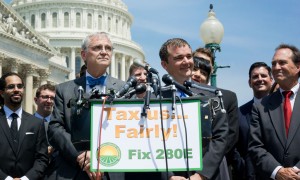
2013 Lobby Days, National Cannabis Industry Association, with Rep. Earl Blumenauer (D-OR)
To be fair, the advocacy groups have not done any better in forging lasting alliances. In fact, my biggest gripe with this community is their widespread distancing of their agenda from capitalism. Most, if not all, of the prominent drivers of social change on this issue have some part of their platform addressing the fact that this is about patients first. A downward spiral then ensues where, because it’s patients first, it must mean business second… or third or last or somehow altogether evil. Without successful businesses, patients will have nowhere to access the medicine that they fought so hard to get. Without successful businesses, there is no money to be poured into advocacy to open access in new states and hopefully once and for all, federally, which is the core mission of groups like the National Cannabis Industry Association (NCIA). There is absolutely no arguing this point. If that is the case, why is business so evil? It would be like a group that is fighting for family rights having part of their platform be anti-sex. Without sex you make no babies, and without successful business, patients have no cannabis.
Advocates and cannabis business owners have considerable common ground, but until they are willing to combine their efforts and wage a unified campaign, it’s going to continue to be a much harder fight than it should be.
MedMen is a medical marijuana licensing and management company with years of experience helping clients enter the field of medical marijuana, and has been a member of NCIA since August 2013.
Without a strong political machine driving legal reforms across the country, there would be no cannabis industry.
If you are a member of NCIA and would like to participate in our Annual Member Lobby Days, please visit our event page with details about the NCIA Policy Symposium and Member Lobby Days in Washington, D.C. from April 28-30, 2015.
A one-day conference focused on the latest efforts to reform state and federal marijuana laws will be held alongside NCIA’s Lobby Days, and will feature panel discussions as well as an interactive workshop teaching you how to lobby for cannabis reform. Please join us and pre-register today!
NCIA Member Profile: CBCB – Cannabis Buyers’ Club Berkeley
NCIA recently had an opportunity to speak with Aundre Speciale, director of CBCB, a locally-licensed medical cannabis dispensary in Berkeley, California. CBCB is a patient-centered collective with limited membership, bringing patients access to medicine in conjunction with a natural perspective of wellness, and they offer educational seminars, support groups, and a variety of services.
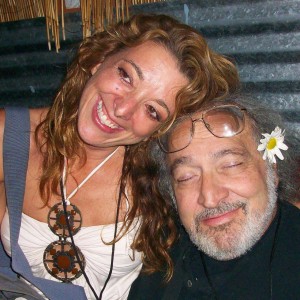
Aundre Speciale of CBCB sits with the late Jack Herer
Cannabis Industry Sector:
Medical Cannabis Provider
Sustaining NCIA Member Since:
2014
How do you uniquely serve the cannabis industry?
My background is a mix of activism, politics, and industry. I have worked for cannabis reform for 25 years as an activist and lobbyist, gaining civil disobedience experience as well as political allies. Through my activism I have been able to hear directly from patients what their needs are, and I now currently operate several dispensaries throughout the state.
My model for dispensing medical cannabis has included opening community centers that provide free services to patients and the local community, working closely with community service providers and city government to create enlightened cannabis policy, and funding major cannabis research and reform projects. I currently share my operational experience by sitting on the boards of a number of licensed dispensaries throughout California. I have been inspired by and learned from the compassionate models of people like Jack Herer, Eddy Lepp, Dennis Perron, Val and Mike Corral with WAMM, Debbie Goldsberry and Don Duncan with Berkeley Patients Group (BPG), and many more.
Why should patients looking for medical cannabis services go to Cannabis Buyers’ Club Berkeley (CBCB)?
CBCB was started in 1996 by patients with a desire to help other patients. It continues in the same spirit. We have two employees who have worked at the collective for more than 15 years, and we have patients who have been with the collective since its beginning. I became director in 2007.
CBCB’s style is uniquely Berkeley, as are its compassionate patient-centered programs. We offer many support groups, educational seminars, wellness programs, and a compassion program that provides free medicine for patients, including children with epilepsy, chemo patients, veterans, and end-of-life patients. Many programs and services are run by patient volunteers, “patients helping patients.” CBCB believes in community responsibility and not only funds and supports cannabis research, campaigns, and advocacy, but also supports community events, projects, and organizations. Our patient volunteers walk the neighborhood daily picking up all trash, while an extra CBCB security guard patrols the neighborhood greeting neighbors. Our employees are compassionate and cannabis-educated and are happy to spend as much time as patients need to assist them in finding the medicine that works best. CBCB has an unusually large range of products to serve the individual needs of our patients. We offer free fruit, coffee, and tea, and hugs are handed out liberally. Our official motto is ‘choose love.’
Tell us about your past involvement in the California medical marijuana community. Where do you see the laws and culture heading in California in the future?
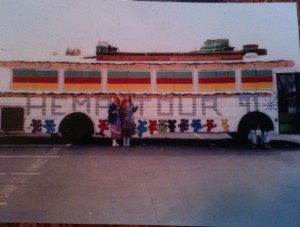
Aundre Speciale stands next to the Hemp Bus, 1991
My passion for cannabis advocacy began in 1989 at the height of the “just say no” era when my neighbor, Jack Herer, asked me to join him on the Hemp Bus, touring California and the country promoting hemp for fuel, food, fiber, fun, and medicine. Thus began my life-long love for and dedication to cannabis reform. I have been involved in countless cannabis campaigns and projects, including the federal hemp foods ban protests, and I was key organizer on behalf of defendants in the first federal trials of medical cannabis providers. I’m a founding member of Americans for Safe Access, where I developed its popular peer counseling program, gathered data for lawsuits protecting and expanding patientsʼ rights, and provided best-practices training for dispensary operators. I served on the board of the Marijuana Policy Project for three years, holding the vice chair position. I have been an early dispensary operator, opening dispensaries and working with several cities to craft medical cannabis regulations, including San Francisco, Sacramento, Venice Beach, Berkeley, South Lake Tahoe, and Oakland.
California has had a thriving cannabis culture for generations, and it is hard to get everyone to all agree what direction cannabis regulations should go. But I see California, along with the rest of the country and world, having access to adult-use cannabis, as well as hemp products, in the very near future. People are looking for safer, more natural products, from their medicine to their paints, and cannabis is the answer. Cannabis is the “new” in thing.
Why did you get involved in NCIA?
I love NCIA. I know NCIA’s executive director Aaron Smith from the amazing work he did with the Marijuana Policy Project (MPP), and he has a long record of successful campaigns. With NCIA, he has proven to be a strong, effective leader who has assembled an incredible staff. I appreciate the caliber and experience of NCIA speakers and members, truly the best in the industry, with whom I can truly learn and exchange ideas about timely and relevant industry information.
If you are a member of NCIA and would like to contribute to the NCIA blog, please contact Development Officer Bethany Moore by emailing bethany@thecannabisindustry.org.
Inside the Illinois Medical Marijuana Program with the Illinois Cannabis Industry Association
The number of licenses for cultivation centers and dispensaries are quite limited – only 22 available for cultivation centers and 60 for dispensaries. What are officials with the Illinois Department of Agriculture looking at in applications to determine who will be awarded a license? Is there a chance to earn bonus points in any category?
Dan: The Department of Agriculture will be grading on a number of different features but the grow plan and horticultural experience will be heavily weighted in the scoring. In the event of a tie between competing applications for a single license the application with the higher scored grow plan will be awarded the license.
Ali: The main required categories don’t have specific bonus points available, but each application has an entire Bonus Section of areas that are not required but available for applicants to gain additional points if the required sections meet a certain score threshold. The Bonus Section areas include Labor and Employment Practices, a Research Plan, a Community Benefits Plan, a Substance Abuse Prevention Plan, a Local Community/Neighborhood Report, an Environmental Plan as well as additional points for Illinois-based applicants and businesses that are minority-owned, female-owned, veteran-owned, or owned by a person with a disability.
Dan Linn, ILCIA
State officials are making security a high priority for all applications. What kind of standards must applicants meet in their business plan regarding security measures?
Dan: Applicants will need to have full seed-to-sale inventory tracking accessible in real time by the Illinois State Police. Security measures will need to include listings of where the bulletproof glass is on the floor diagram of the dispensary, the camera field of vision, the proper-sized televisions to monitor the cameras, as well as background checks on everyone involved in the program.
What is the climate regarding banking access in Illinois? Have any banks come out to say they will allow cannabis businesses to open bank accounts?
Dan: Some banks are just unwilling to work with the cannabis industry. None have publicly come out as being willing to engage this industry, but there are a number of smaller community banks that are handling accounts for cannabis businesses in Illinois.
September 22 is the deadline for submitting applications to open a cultivation center or dispensary. What does the timeline look like for when licenses will be awarded and when is it expected that dispensaries will actually be selling product?
Ali: Recent public reports indicate that licenses will likely be issued later in the fall, probably in November or December. Based on that timeline dispensaries should be open with product on the shelves for patients in late spring/early summer of 2015.
How many expected applications for cultivation centers and dispensaries will be submitted by the September 22 deadline?
Ali: It is likely that there will be an average of at least a few applicants for each of the 82 available licenses, with total applicants numbering anywhere from 250-600.
Applications also just opened for qualifying medical patients to apply for access to medical marijuana. What is the timeline for qualifying patients to apply and when will patients find out if they are accepted into the program?
Ali: Patients with last names beginning A-L can apply now through Oct 31. Patients with last names beginning M-Z can apply Nov. 1-Dec. 31 and beginning Jan. 1 there will be open year-round enrollment for all patients. The state has 30 days by law to process a patient application, plus 14 days to mail it. This means that patients should expect to receive their approval or denial within 45 days of submission.
What are some of the regulations regarding edibles and other infused products?
Ali Nagib, ILCIA
Ali: Edibles and other infused products can be produced, but only those that can be kept at room temperature safely; products that require hot-holding or refrigeration are prohibited. Otherwise a wide range of infused products can be produced, and the state regulations have some fairly specific guidelines on the some of the production processes (e.g. which solvents can be used to produce concentrates) in addition to robust testing and labeling requirements.
Dan: Additionally, edibles and infused products must be produced in a sanitary kitchen and cannot look like candy or any name-brand food items.
What is the anticipated cost per ounce once product starts becoming available?
Dan: $250-400 is the estimated initial expected cost per ounce.
Ali: The early stages of the Medical Cannabis Pilot Program are likely to see a wide range of prices and substantial fluctuations as early supply and demand features work themselves out. It is almost certain that initial prices will be above those currently found on the illegal market, if not substantially so, but how the industry will react to the patient demand is uncertain.
The Illinois program is a pilot program that currently expires in 2017, and lawmakers must renew or extend the program at that time. What do you think lawmakers will be considering when deciding to renew or extend the program when the time comes?
Dan: They will be examining any instances of diversion, shenanigans, positive health experiences for patients, jobs created, who is the next President of the United States, how much revenue the program is creating, and probably what the overall public opinion of the program is.
Ali: We expect that by early 2017 the local and national landscape on cannabis policy reform will have continued to progress to the point that we won’t be debating whether or not to extend the pilot program but rather how and when to transition to a full tax-and-regulate framework and how to incorporate medical cannabis patients into it.




Follow NCIA
Newsletter
Facebook
Twitter
LinkedIn
Instagram
News & Resource Topics
–
This Just In
Committee Blog: Access to Capital in the U.S. Cannabis Market Outlook
Member Blog: The Risks of Removing a Regulated Cannabis Market