A Closer Look at the “Flurry” of Cannabis Legislation in Congress
by Michael Correia, NCIA Director of Government Relations
Last week, we saw Congress introduce a flurry of marijuana related legislation, with many aspects directly affecting the cannabis industry.
Taking the lead on bill introductions were cannabis champions Rep. Earl Blumenauer and Sen. Ron Wyden of Oregon, who introduced a series of bi-cameral, bi-partisan bills that they referred to collectively as the ‘Path to Marijuana Reform’. In addition, the cannabis industry gained a new Republican champion – Rep. Carlos Curbelo of Florida. Rep. Curbelo is a member of the Ways and Means committee and is an original co-sponsor of the new legislation that aims to fix 280E. Their goal was to pave the way for regulation of cannabis at the federal level, and provide certainty in the 50 states. In addition, Colorado Congressman Jared Polis introduced his own stand-alone regulation bill.
Following is a summary of each bill:
H.R. 1810/S. 777, the Small Business Tax Equity Act of 2017:
This legislation would repeal the tax penalty that singles out state-legal marijuana businesses and bars them from claiming deductions and tax credits. Because marijuana is classified as a Schedule I drug, cannabis dispensaries operating legally under state law are prohibited from deducting normal business expenses from their net income on federal tax returns. In fact, many dispensaries have been forced to pay between 50 and 70 percent of their net income to the federal government. The lead sponsor is Republican Congressman Carlos Curbelo from Florida, who sits on the House Ways and Means Committee, the Committee of jurisdiction on tax bills. NCIA has been lobbying on this bill for years and is happy to have the Congressman help us navigate this bill through Congress.
H.R. 1824/S. 780, the Responsibly Addressing the Marijuana Policy Gap Act of 2017:
Congressional advocates say this bill reduces the conflict between state and federal law, without legalizing cannabis at the federal level. An all-encompassing bill, this legislation contains numerous sections addressing cannabis reform. Section 101 amends the Controlled Substances Act to exempt any person acting in compliance with state laws law from criminal penalties. Sections 201-207 address the 280E provision; makes exemptions for marijuana advertisements; allows access to banking services; allows access to bankruptcy relief; and allows tribal entities to pursue cannabis reform with fear of federal penalties. Sections 301-306 allow expungement of criminal records for certain marijuana-related offenses; limits marijuana drug testing for federal employment; excludes marijuana misdemeanors offenses from federal financial aid; limits federal civil forfeiture of state compliant marijuana businesses; limits immigrant deportation for marijuana related activity; and excludes marijuana related activity for federally assisted housing. Sections 401-403 lowers barriers to federal medical research of marijuana; authorizes Veterans Affairs doctors to allow recommendations for medical marijuana; and allows Indian Health Services to allow recommendations for medical marijuana.
H.R. 1823/S. 776, the Marijuana Revenue and Regulation Act:
This legislation would effectively legalize marijuana at the federal level by de-scheduling, taxing, and regulating marijuana. If passed, the Attorney General would have 60 days to remove marijuana from the Controlled Substances Act, but would still prohibit the transport of marijuana into any state in which it was still illegal under state law. Because of marijuana’s removal from the Controlled Substances Act, 280E would no longer apply to state-legal cannabis operators. In addition, this legislation would allow for a federal excise tax on marijuana. An excise tax of 10 percent would be in effect for the first two years after enactment. The rate would increase to 15 percent in the third year, 20 percent in the fourth year, and 25 percent thereafter. In addition, a $1000 per year occupational tax would be levied on each marijuana production facility.
H.R. 1841, the Regulate Marijuana Like Alcohol Act:
This bill, introduced by Colorado Congressman Jared Polis, would eliminate the federal ban on marijuana and establish a regulatory system that enables that choose to allow the use of marijuana without interference from the federal government. 60 days after enactment, marijuana would be removed from the Controlled Substances Act, but does not apply to interstate commerce. It would remove oversight from the DEA and move it to the Bureau of Alcohol, Tobacco, Firearms and Explosives; and would regulate marijuana like alcohol. It would establish a permitting system stemming from an annual licensing fee on marijuana producers. Finally, it would establish standards for advertising marijuana and its products.
—
With uncertainty still remaining related to potential Department of Justice enforcement, more and more advocates in Congress are coming out in support of our efforts. NCIA will continue pushing for reforms at the federal level and our friends on Capitol Hill won’t stop until your cannabis businesses are able to operate freely, like all other businesses.
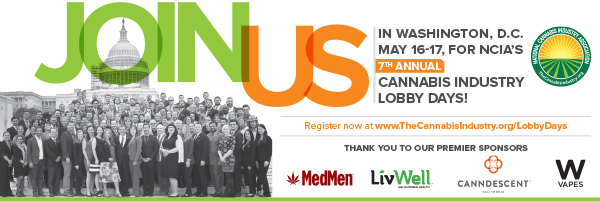
NCIA member looking to help advance our issues on Capitol Hill should register for our 7th Annual Cannabis Industry Lobby Days coming up May 16 and 17 in Washington, D.C.
Follow NCIA
Newsletter
Facebook
Twitter
LinkedIn
Instagram
News & Resource Topics
–
This Just In
How THCa Vapes Are Changing Consumer
Announcing NCIA’s 2026-2028 Board of Directors