Member Blog: Cannabis as a Performance Tool

By Dr. Dominick Monaco, CLS Holdings
As we make our way closer to 2022, the world is also entering a new paradigm for the cannabis industry. Due to advancing global legalization efforts, cannabis use is gaining mainstream acceptance for the first time in history. With these shifting perspectives also comes the rapid deterioration of traditional stereotypes.
Today, cannabis is not only widely regarded as a legitimate medicine, but many people also look to it as a performance tool. To this end, the endorsement of the herb by pro athletes, media icons, and high-powered executives has again turned our conceptions of cannabis on its head.
With such rapidly shifting perspectives, we are witnessing a monumental moment in time where propaganda is being replaced with factual evidence. As things evolve, active people are not only endorsing legalization, but many swear by cannabis as a performance tool.
Indica and Sativa
The more places that legalize cannabis around the world, the more opportunities we have to study cannabis in controlled settings. As our knowledge expands, so does our ability to use specific compounds in cannabis to aid particular activities.
In the early days of legalization, broad terms such as “Indica” and “Sativa” were used to describe just about every attribute of cannabis – including both product descriptions and psychoactive effects. To this end, Indicas are widely accepted as calming, while Sativas are known to be energetic.
Terpenes & Strains
While the effects of Sativas and Indicas are still widely accepted across the industry, we are also beginning to see a much more nuanced approach to cannabis consumption. Especially when it comes to performance, a more granular perspective of cannabis is necessary.
To maximize the performance benefits of cannabis, it’s critical to understand the constituent parts of the cannabis flower. By understanding the effects of different strains and cannabinoids, and terpenes, people can better choose the right products for their performance needs.
Notable cannabinoids and terpenes and their effects:
- Tetrahydrocannabinol (THC): Cannabinoid that provides energy and focus during activities helps boost creativity. Pain reliever after physical activity.
- Cannabidiol (CBD): Cannabinoid that relieves anxiety before and during performances. Pain reliever and anti-inflammatory agent after physical activity.
- Cannabigerol (CBG): Cannabinoid, which promotes motivation and stimulates pleasure. Pain reliever and anti-inflammatory agent after physical activity.
- Beta-pinene: Terpene believed to act as an anti-depressant.
- Caryophyllene: Terpene with anti-inflammatory properties.
- Humulene: Terpene thought to provide energy.
CLS Holdings’ own City Trees developed several popular products based on the effects of certain cannabinoids and terpenes. Their Calm, Relief, Rest, and Energy distillate vape cartridges offer simplified shopping experiences for new cannabis consumers. By building product messaging around the effects of the products, they help people understand exactly what they are purchasing.
Physical & Mental Performance
While a detailed assessment of the compounds found in cannabis can go a long way, you must also account for your specific performance needs when finding the right cannabis product. Depending on how your body and mind react with cannabis, you can utilize it to help with physical activities and cerebral pursuits.
Whether you are interested in feeling more energized for your workout routine or getting the creative juices flowing for a writing assignment, there is likely a cannabinoid and terpene combination to suit your needs.
Olympic gold medalist snowboarder Ross Regalati swears by cannabis during both training and competition. The famous Canadian snowboarder feels cannabis “improves concentration” and is great for training because flowers are both “fat-free and calorie-free.” While no longer a professional snowboarder, Regaliti is still a world-class athlete. Today, his choice cannabis strain for exercise is the Sativa-dominant hybrid Bruce Banner.
The famous female vocalist Alanis Morisette swears by cannabis as part of the creative process. In an interview with High Times, she states, “As an artist, there’s a sweet jump-starting quality to [marijuana] for me… So if I ever need some clarity… or a quantum leap in terms of writing something, it’s a quick way for me to get to it.” Morisette can utilize the right cannabis product for her needs and push through creative boundaries and explore new territories.
Tips for Finding the Perfect Fit
While studying different terpene profiles and cannabinoids is a great way to learn about the effects of cannabis, you also need to consider your physiology. Notably, a cannabis product that works well for one person won’t necessarily do the same with another.
For example, if you are an introverted, anxiety-prone person, using an energetic strain like Diesel for a social situation might not be a good idea. In this case, a mellow Indica CBD hybrid like Cannatonic might be just what you need to feel relaxed and engaged. Yet, a naturally extroverted person would likely enjoy an energetic strain for social situations and need the CBD hybrid to wind down at the end of the day.
If you aren’t sure what cannabis products will work for you, we recommend visiting a credible dispensary with well-trained budtenders. Once you have sound recommendations, always start small when experimenting with new cannabis products. With a bit of careful trial and error, you will likely discover cannabis products that can help you with anything from enhancing your workout to stimulating your sex life.
Summary
Having been on pain management therapies since the age of 17 for my Kyphosis, I now rely solely on concentrated cannabis extracts to manage my pain and keep my Activities of Daily Living at peak performance. Being diagnosed at 17, I was prescribed 1x Hydrocodone per day to manage my pain. By the time I graduated from Pharmacy School, I was taking 18 pills a day (540/month) to manage my pain and the side effects of other medications. It’s been 8 years since I’ve taken a prescribed medication and cannabis and cannabis products have replaced every medication that I was on prior. I’m grateful and humbled to be a key member of a team that produces the very own products I use to manage my health and wellness.
Looking back just a few short years to the genesis of legal cannabis, it’s remarkable to see how far we have come. In the industry’s early days, people didn’t have the luxury to match a specific cannabis product to a particular performance need. Not only was our knowledge of cannabis not sophisticated enough to accomplish this task, but Good Manufacturing Practices (GMPs) were still lacking in the early days.
As our knowledge of cannabis continues to expand, so does our ability to make informed decisions on the products we use. Whether you are a trail runner who enjoys a Sativa before you head to the mountains, or a musician who likes to settle into practice with hybrid flowers, some careful study will lead you to the right products for your performance needs.
During this period of rapid change, it’s exhilarating to see negative stereotypes of lazy cannabis users finally being upended. Even more, it’s incredible to witness pro athletes, high-powered executives, and famous artists not only advocate for legalization but openly promote cannabis as a performance tool.
 Dr. Monaco is the Director of Laboratory Operations for CLS Holdings’ newly opened approximately $4 million laboratory, and is responsible for all day-to-day operations inside the North Las Vegas facility. Dr. Monaco brings over 8 years of licensed & regulated cannabis experience, starting back in 2012 when medical marijuana first opened in Arizona, he has held numerous positions, with escalating responsibilities year over year. He graduated from the University of Arizona College of Pharmacy, in Tucson, Arizona, with a Doctor of Pharmacy in 2010.
Committee Blog: Cannabis Classification and the Role of Terpenes
by NCIA’s Scientific Advisory Committee
From Indica/Sativa to Hybridization
Cannabis is thought to have originally been domesticated in the mountainous regions of Central Asia. As humans started exploring the world, they brought the plant with them, and the plant needed to adapt to the different climates in order to thrive. This gave rise to many of the cultivars (or “strains”) we deem as “landrace,” allowing some subspecies of the cannabis plant to naturally start propagating. Since plant breeding didn’t become en vogue for thousands of years until Gregor Mendel’s work with pea plants, these natural cultivars were able to gain great genetic fitness, as well as become genetically diverse from other landrace strains as they adapted to their specific, often isolated, environments analogously to the finches of the Galapagos Islands.
We are all familiar with indica and sativa. With growing popularity of plant breeding and creating crosses of indica-dominant and sativa-dominant strains, we have largely lost true landrace cultivars that are 100% one way or the other. Almost every strain sold in the modern market is a hybrid, featuring a mixture of indica-derived and sativa-derived genes. Did you know that indica and sativa designations focus more on the phenotype, or the observable characteristics (e.g. height, leaf shape/color, and branch formation), rather than genotype, the unique DNA sequence of an organism?
In cool and dry climates, the cannabis plant leaves are broader and there is less space between branches. This creates a shorter, more compact plant that is better able to retain heat and moisture. The broad leaves help maximize photosynthesis on the otherwise short-statured indica-dominant plants. If you instead look at a warmer climate, you will see the plants grow much taller and thinner. They grow up and out more so that they can easily dissipate the heat and moisture in these warmer regions. The branches of the sativa-dominant plants are also longer and the leaves have more nodes, though they are thinner than that of an indica plant. All of these characteristics may also help prevent mold growth on a sativa-dominant plant due to better air flow within the plant.
Since indica and sativa classifications are more likely to indicate landrace phenotypes and the climate in which the cannabis plant grew in, new methods of classification are being explored to better express to consumers and patients the effects of the cannabis or cannabis-infused product they are using. For example, Leafly launched a new way for their website to categorize cannabis strains that considers terpene profiles, rather than labeling them as indica, sativa, or hybrid. Since terpenes are produced in plants other than cannabis, a description based on terpene profiles is the most compelling option, as research can be done on the effects of terpenes produced by other sources. While the entourage effect in cannabis is likely important to its variable uses in medicine, more research is warranted to fully understand the effect.
Terpenes and Terpenoids
Terpenes are plant constituents that impart olfactory, gustatory, and medicinal properties to plants. These Volatile Organic Compounds (VOCs) are “Generally Recognized as Safe” by the FDA and are composed of repeating isoprene units arranged head-to-tail to create the over 200 terpenes known to be produced in the cannabis plant. These terpenes are found in other plants as well. Terpenes generally come in three varieties depending on how many isoprene units are used to construct them: monoterpenes are composed of two isoprene units, sesquiterpenes of three units, and diterpenes of four units.
The term “terpenoid” is often used interchangeably with the term “terpene.” The difference is terpenoids are modified terpenes that contain oxygen, while terpenes are hydrocarbons containing only hydrogen and carbon. This modification usually occurs through either the movement or loss of a methyl (-CH3) group or, more commonly in cannabis, through its interaction with oxygen during the drying/curing process. As such, “terpenoids” are more correctly used to describe smokable flower, whereas “terpene” is more accurate when describing the compounds when they are being produced by the living plant.
Terpenes have three main purposes: environmental adaptation, the repulsion and destruction of predators, and the attraction of pollinators. Monoterpenes, such as limonene and α-pinene, tend to predominate in the flower portion of plants and have been shown to repel herbivorous insects in Arabidopsis thaliana, often used as a model organism of the cannabis plant, due to their volatile aromatic properties. Sesquiterpenes, on the other hand, have a bitter taste and deter larger plant-eating organisms, due to their predominance in the leaves of a plant. The sticky nature of terpenes also helps to trap bugs as they move around on the plant. From the perspective of cannabis, humans have shown to be excellent pollinators as illustrated by the diverse cannabis strains available at your local dispensary.
Terpenes are strongly inherited from parent plants and are not often affected by environmental factors over the short term. Terpene profiles, therefore, can be used to help distinguish between indica-dominant and sativa-dominant classifications due to the ratio of individual terpenes’ stimulating or sedating properties. Below are descriptions of some of the most common and best-researched terpenes. The summation of sedating and stimulating terpenes produced by the plant will determine whether the net effect of consumption will have more “indica” properties or more “sativa” properties.
α-pinene is one of the most common terpenes found in nature occurring in pine trees as well as many common spices such as rosemary, basil, and dill. Along with its role as an insect repellant, it has also been shown to have anti-inflammatory properties. It has the ability to cross the blood-brain barrier and inhibits the breakdown of acetylcholine, a neurotransmitter which can stimulate cognitive functions. This will cause α-pinene to have more of a stimulating effect.
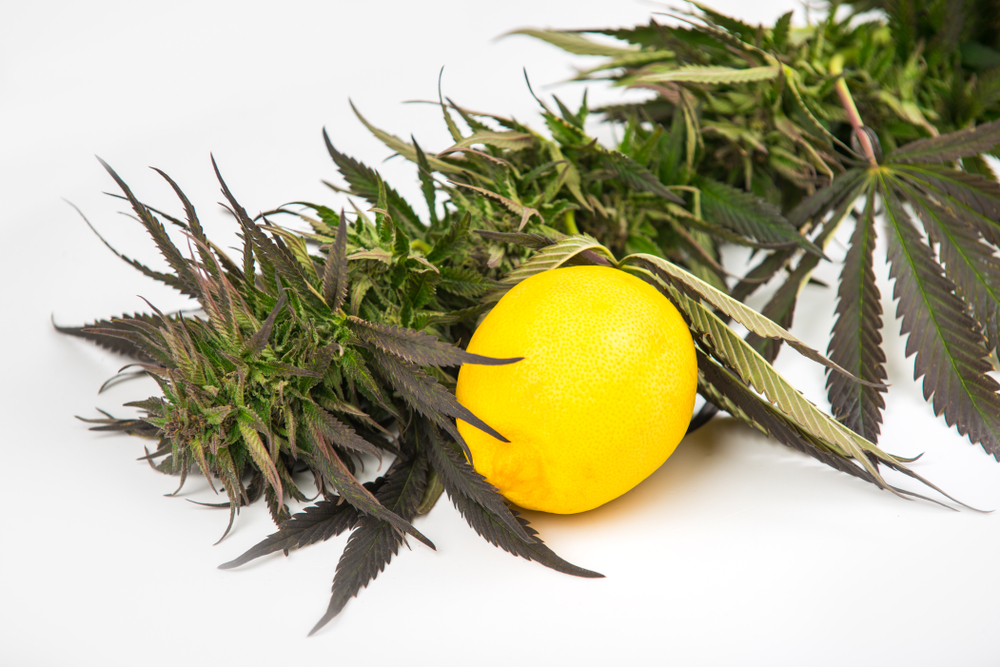
Limonene is another common terpene found in citrus fruits. It has been shown to help with anxiety and depression by increasing dopamine and serotonin levels in the brains of mammals. Limonene has also been shown to increase alertness as well as help with weight loss and relief of gastric distress.
β-myrcene is one of the most common terpenes found in cannabis, though it is also found in hops and mangos. It gives off an earthy aroma of cloves and has been shown to have pain-relieving and anti-inflammatory properties in mice. Due to its sedating effects, it was thought to be a reliable indicator of indica strains; however, recent studies have shown that this terpene is equally present in both indica and sativa strains. The sedating properties are responsible for the ”couch-lock” effect some people experience when consuming certain cannabis strains.
β-caryophyllene has a dual use in protecting plants from grazing species since it both attracts insect predators as well as repels grazing insects. It is commonly found in spices such as black pepper and oregano and has a spicy flavor. It can act as a gastro-protective agent and is helpful in fighting stomach ulcers. It has also been shown to help combat symptoms of opioid addiction, through a process called opioid sparing. β-caryophyllene selectively activates CB2 receptors, the cannabinoid receptor primarily found in muscle tissue as opposed to brain tissue which is generally high in CB1 receptors. Due to this, it has more physically sedating properties making it a common terpene found in more indica-leaning strains.
Linalool is a terpenoid alcohol commonly found in lavender. It is a highly sedating phytochemical that is coveted for its anti-anxiety properties. It also helps as an antidepressant since it assists in serotonin-receptor transmission. As an anti-epileptic, it helps to modulate motor movements, presumably due to its sedating properties. When applied topically, it has been shown to help heal skin burns as well as treat acne.
Through a combination of these terpenes and the other 200+ terpenes found in the cannabis plant, we get a balancing act between sedating and stimulating properties. And since everything is technically a hybrid now, the cannabis industry should strongly consider other ways to categorize different cultivars, rather than just indica or sativa, to better educate the consumer on its effects.
The Scientific Advisory Committee is comprised of practicing chemists and other scientific field professionals to advise other NCIA committees as they work to develop standards and guidelines for the various sectors of our industry, ensuring that any formal recommendations produced by other NCIA committees are scientifically sound, sustainable, and legitimate.
Member Blog: Hemp and Marijuana Genetics – A Closer Look At The Differences
by George Mouratidis, Industrial Hemp Farms
There are many ways to classify cannabis variants, but the most popular distinction is between hemp and marijuana. Although most of us take these classifications for granted, perhaps you’ve wondered if they are really legit? Put another way: are there real genetic and anatomical differences between marijuana and hemp? And, if so, what are they?
The hemp/marijuana classification is still a major debate within the cannabis community. Although up-to-date research suggests there are genetic differences, critics contend these distinctions have much more to do with legality than botany.
To better understand the complexity of the hemp v. marijuana classification, let’s quickly go through a primer on the cannabis genus. Afterward, we’ll take a closer look at the differences often associated with hemp v. marijuana and why these terms have gained such prominence.
The Basics Of Cannabis Distinctions
The first thing we should clear up is that the word “cannabis” is reserved for the plant genus. This means that both hemp and marijuana technically fall under the cannabis label. For many years, botanists have categorized the cannabis genus into the following three groups:
- Cannabis sativa
- Cannabis indica
- Cannabis ruderalis
Of these three, sativa and indica are probably the most familiar to you. Usually, cannabis connoisseurs draw the sativa v. indica distinction to help differentiate the physiological effects of each strain. Sativa-heavy strains are said to be more energizing while indicas are supposedly more sedating.
It’s important to remember, however, that sativas and indicas were first split up due to their flowering patterns and features. Here are just a few of the key distinctions often ascribed to these two cannabis variants:
Indicas
- Short
- Fat leaves
- Fast-growing
- Enjoys mild climate
Sativas
- Tall
- Thin leaves
- Slow-growing
- Enjoys a humid climate
Ruderalis is a shrub-like variety of cannabis that evolved in harsh northern environments. Due to its history in regions with little light or warmth, ruderalis strains evolved unique genetics that allows them to flower automatically rather than relying on specific amounts of light.
Cultivators nowadays cross-breed ruderalis strains with indicas, sativas, or hybrids to create what are known as “autoflowering seeds.” These auto varieties are convenient due to their predictable flowering period, but they tend to have fewer cannabinoids than standard sativas or indicas. Most often new cannabis cultivators use auto seeds to gain valuable growing experience.
Hemp v. Marijuana: The Legal Distinction
So, why do we need a hemp v. marijuana distinction on top of all these cannabis varieties? A short answer is that drawing the line between hemp and marijuana helps a lot in the legal department.
You see, hemp is legally defined as a substance containing less than 0.3 percent of the high-inducing compound tetrahydrocannabinol (THC). Marijuana, on the other hand, could have 0.3 percent THC content or above.
Obviously, this makes it a lot easier for legal authorities to categorize what is and what is not legal. As of today, the U.S. legalized hemp at a federal level, but marijuana laws vary by state.
Beyond THC: The Different Uses Of Hemp V. Marijuana
This all doesn’t mean that the hemp v. marijuana distinction was arbitrarily drawn up to help legislators. OK, the 0.3 percent benchmark was pretty arbitrary, however, it’s true that hemp naturally produces less THC than marijuana strains. But there’s more to this story than just THC.
Now that the CBD market has skyrocketed, it’s often hard for us to imagine non-edible uses of hemp. However, for most of human history, hemp has been cultivated strictly for industrial purposes. Indeed, people have used the hemp plant’s fibrous stalks to make clothing and rope for thousands of years. Amazingly, hemp is now showing great potential in a variety of fields including papers, plastics, cosmetics, and even fuel.
Marijuana, on the other hand, has always been associated with recreational and medical use. Growers who cultivated marijuana were always interested in maximizing certain terpene and cannabinoid profiles for their chosen strain.
So, the distinction between industrial hemp and marijuana is still valid and useful as the cannabis industry expands. Growing hemp for industrial purposes is far more interested in quantity rather than quality. Marijuana cultivation, on the other hand, requires a greater degree of care and attention to detail.
Industrial hemp cultivators could often get away with planting their male and female seeds in rather tough environments. Professional marijuana cultivators, on the other hand, need to focus a lot of attention on making their environment hospitable for female seeds.
Of course, there are now many high-CBD hemp cultivators out there using similar marijuana grow methods. With that in mind, it’s still quite useful for cultivators to distinguish between industrial hemp and marijuana to better plan their growth cycle.
Does Hemp Look Different Than Marijuana?
Now we know how hemp and marijuana differ in THC content, growth features, and traditional uses… but do they look different?
To the untrained eye, mature hemp and marijuana might appear to be the same. Indeed, there are many cases of police accidentally arresting truck drivers for “marijuana possession” when they were actually transporting hemp. There are, however, a few key anatomical differences to look out for.
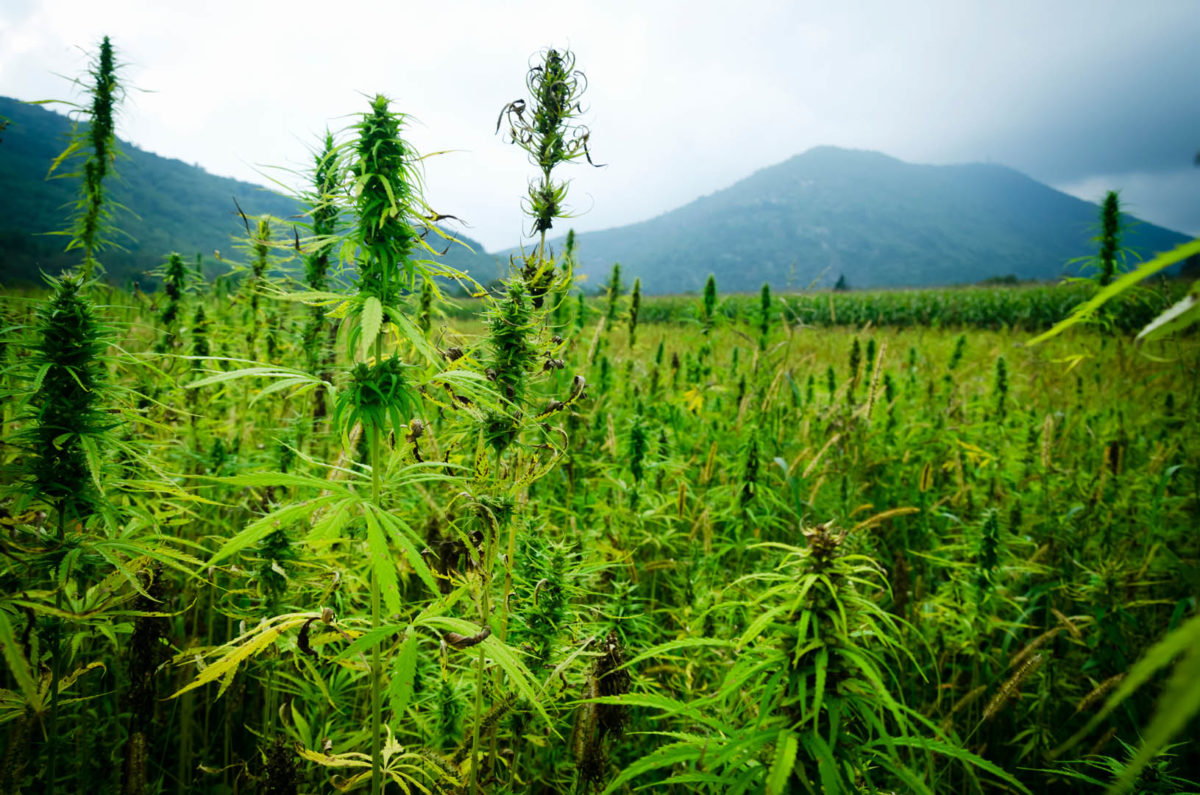
For instance, hemp plants are generally taller than most varieties of marijuana. Remember that many cultivators are interested in hemp’s fibrous stalks, which is why they’ve bred them to grow as tall as possible.
In addition to their height, hemp plants also tend to have thinner fan leaves compared with most strains of marijuana. These hemp leaves also tend to be concentrated at the top of the hemp flower with few leaves further down the stem. Marijuana plants, on the other hand, tend to have more leaves evenly spread throughout their branches.
Looking Into The Genes: Novel Research On Hemp v. Marijuana
After reading the above description, you might understandably conclude that hemp strains might lean more towards the sativa side. After all, sativas are typically associated with tall height and thin leaves.
While this makes logical sense, recent genetic research is changing how we think about the sativa v. indica theory. A team of Canadian researchers recently published a study examining the genetic makeup of over 80 marijuana and about 40 hemp strains. Shockingly, they found that hemp plants have a closer genetic tie to indicas rather than sativas. Most marijuana strains, however, showed a mix of sativa and indica influences.
The scientists concluded that there was enough of a genetic difference between hemp and marijuana strains to warrant the classification. Of course, more research will be necessary to understand these complex hereditary differences.
So, Is The Hemp v. Marijuana Distinction Valid?
While there will likely still be a debate about the hemp v. marijuana distinction, this classification system is popular for good reason. Also, there appears to be a scientific basis for grouping hemp and marijuana into separate genetic categories.
Distinguishing between hemp and marijuana can help consumers make a more informed decision when purchasing hemp flowers, hemp trim, oils, or other products. Plus, with the growing interest in hemp’s industrial uses, it’s important for farmers to separate out strains for industry and those for human consumption.
While it might not be a perfect classification system, “hemp v. marijuana” is still around because it continues to help cultivators and consumers make informed choices.
 George Mouratidis is a cannabis writer and freelance contributor to Industrial Hemp Farms, Cannabis Tech, and Highlife Media.
IHF LLC is a Colorado-based, fully licensed & certified hemp farming and wholesale company. IHF wholesales CBD hemp biomass and many different cultivars of clones and seeds. The Company also wholesales CBD distillate, T-Free, Decarboxylated Crude, Isolate and other cannabinoids produced at our extraction facility. One of our primary goals is to make mutually beneficial deals, connections and contacts in the hemp industry.

Follow NCIA
Newsletter
Facebook
Twitter
LinkedIn
Instagram
News & Resource Topics
–
This Just In
Committee Blog: Access to Capital in the U.S. Cannabis Market Outlook
Member Blog: The Risks of Removing a Regulated Cannabis Market