No part of the following information should be construed as medical advice on the part of NCIA.
As a cannabis industry professional, you’ve probably been asked the question: “Is it true that cannabis cures cancer?” If we know someone who has cancer and benefited from using cannabis, we may say “cannabis aids in the treatment of cancer.” However, medical research has not indicated that cannabis cures cancer. NCIA’s Scientific Advisory Committee is reviewing the scientific data related to cannabis as an additional treatment to traditional care in the management of cancer.
Our three-part blog aims to give you accurate andup to date information about cannabis and cancer by looking at the federal regulations governing cannabis research; reviewing past, current, and future research; a review of how our cells and the endocannabinoid system (ECS) work together to disable cancerous cells; and looking at institutions involved in cannabis studies.
According to the CDC, cancer is the second leading cause of death in the United States and second on the WeedMaps list of most common conditions that qualify you for a medical cannabis card. This is interesting, but really not a surprise as archeological evidence suggests this sacred plant has been used for medicinal purposes for thousands of years. According to the Pen Tsao Ching, written nearly 5,000 years ago, cannabis is recommended for many of the same diseases and conditions that occupy the current composite qualifying lists in the states where cannabis is legal for medical purposes. This history magnifies the significance of the endocannabinoid system, a little-known, but incredibly important system that maintains balance in our bodies at the cellular level.
Cancer is a disease that begins when the cells of our body go completely out of balance. Instead of following the instructions of their genes, cancer cells become destructive to the body they live in. Cancer starts when one or a small group of cells begin growing out of control. It takes many forms, including blood cancers (leukemia, lymphomas), bone cancer, skin cancer, and solid tumors (e.g., stomach, lung, breast, prostate, ovary). Depending on how aggressive the cancer is, it may metastasize, meaning it can spread throughout the body.
Cancer Diagnosis
If you or someone you know is diagnosed with cancer, always get a second opinion. Be sure when choosing a doctor or Cancer Center that they have solid knowledge of all treatment options for your type of cancer, and understand that diet and lifestyle are critically important for healing.
If you want to use cannabis as a cancer treatment, find a doctor who is knowledgeable about how cannabis can affect the metabolism and effectiveness of chemotherapy and understands the invaluable medicinal benefits. For example, cannabis can alleviate symptoms associated with cancer treatments including pain, nausea, vomiting, weight loss, numbness, tingling, and anxiety. A summary of patterns of cannabis use among cancer patients in the United States can be found here, along with a brief review about patterns of use of medical cannabis among Israeli cancer patients.
Cancer treatment depends largely on the type of cancer, its stage, and what your doctor recommends. The most common treatments are surgery, chemotherapy, and radiation therapy. There are several more advanced treatment options but few insurance companies cover them. Chemotherapy and radiation therapy have significant and unpleasant side effects because healthy cells are often destroyed in the process of killing cancer cells.
The Current State of Cannabis and Cancer Research
Under the existing political and legal landscape, cannabis research has faced multiple hurdles. Currently, little to no research on the medical benefits of cannabis has been done in federally funded institutions due to its federal illegality.
The most serious hurdle is the lack of experimental data proving there is great medicinal value in the plant. Even so, there are numerous physicians, scientists, and other professionals who believe there is no plant on earth with greater medicinal value than cannabis.
Next Steps in Cannabis Research
Hopefully, more clinical trials will be performed as political and legal requirements are improved and clarified.
The National Cancer Institute hosted a“Cannabis and Cannabinoids and Cancer Research Symposium”in December 2020 to “address current barriers to research and strategies to navigate these hurdles to ensure the feasibility of rigorous studies designed to address gaps in knowledge as well as potential research opportunities in the area of cancer-related cannabis research.”
In essence, we’re missing consistent and reproducible evidence that cannabis can treat cancer and treat the side effects of conventional cancer treatments. Also, we need more doctors educated on cannabis use amongst patients with cancer. Oncologists (cancer doctors) want more information about medical marijuana and cannabis.
Recent surveys reveal 30% of oncologists feel they can advise their patients about cannabis formulations in conjunction with their therapy.
The majority of oncologists as well as the American Cancer Society state, “do not forgo conventional therapy in favor of cannabis products only.” Dr. Donald Abrams, an integrative oncologist, discussed this issue in an article, “Should Oncologists Recommend Cannabis?’
In our next blog post, we will explain how the ECS and cells in our bodies interact with cannabis to disable threats from cancer cells.
Ann Allworth, PhD, is a cell biologist, who for more than 35 years has been educating adults, first in medical schools as an anatomy professor; then in the natural product industry, teaching the immense value of phytonutrient-rich foods and herbs to optimal health and well-being. Upon learning of the endocannabinoid system, she founded Cannabis Education Solutions, a company dedicated to illuminating minds to the vast nature of the endocannabinoid system and its unparalleled role in human health. Ann is now semi-retired and will soon be making a transition to a partnership in a new organization involved in medical cannabis advocacy.
Cynthia Shelby-Lane, MD, is an emergency physician, board-certified in anti-aging and functional medicine, and a certified Marijuana Doctor practicing medicine in Detroit, Michigan. Dr. Shelby-Lane has certified more than 10,000 medical cannabis patients in the State of Michigan. She coaches patients on their use of cannabis in conjunction with their current medications and medical conditions. She has been a member of NCIA and the Scientific Advisory Committee for the past five years, in addition to membership in multiple cannabis associations and organizations. She speaks at conferences/webinars and in the community on the use and benefits of cannabis and the evolving landscape of cannabis research. Dr. Shelby-lane has worked closely with the Last Prisoner Project.
WEBINAR: Cannabis Testing & How to Read Test Results
Learn from expert panelists: Alena Rodriguez, Managing Director, Rm3 Labs; Garrett Cropsey, Project Manager, Canna Advisors; and Tiffany Coleman, Director of Quality, Copperstate Farms.
Without delving too much into the testing methodologies used, we discuss reporting limits and some reasons for variability in test results. We also discuss the basic terminology used in test reports, provide examples of test results, and show you how to read them.
This webinar is great for general audiences that want to learn more about why we test in cannabis, how to interpret test results, and how you can use results as a consumer or cannabis business.
The Scientific Advisory Committee (SAC) is comprised of practicing chemists and other scientific field professionals to advise other NCIA committees as they work to develop standards and guidelines for the various sectors of our industry, ensuring that any formal recommendations produced by other NCIA committees are scientifically sound, sustainable, and legitimate.
For a deeper dive into cannabis testing policy, download this report prepared by NCIA’s Policy Council, where we explore recommendations for cannabis testing policies including requirements for proficiency, contaminants, potency and active ingredients, as well as records retention and laboratory accreditation.
A year ago, NCIA’s Infused Products Committee (IPC) made the decision to tackle the issue of cannabis testing. It is an issue we feel is at the heart of cannabis legalization and is negatively impacting cannabis businesses across the nation. Although it has been a struggle to get comparable lab results across different labs, IPC believes there is a future where cannabis testing will reach consistency.
We began our process by asking several questions and with the assistance of the NCIA, we crafted a survey that was sent to experts in the field. During our preliminary research, we discovered that most cannabis testing labs view their protocols and procedures as proprietary information.
To gain better insight about the testing sector, we asked Alena Rodriguez, a member of NCIA’s Scientific Advisory Committee (SAC) to participate in an interview. Alena represents Rm3 Labs, a cannabis testing laboratory in Colorado.
IPC: Are you concerned about the inconsistent and varying test results and the impact it has on consumer safety?
Alena: Yes, I’m concerned. I do not take my job lightly; I know that contaminated cannabis can be harmful and sometimes life threatening. That is why I am involved with state regulators and groups like NCIA’s SAC and Testing Policy Working Group. We aim to educate regulators and stakeholders on the importance of practices such as independent audits, proficiency testing and ISO/IEC 17025 accreditation for cannabis testing labs.
IPC: Do you think we are close to having consistent cannabis test results from different laboratories?
Alena: We are well on our way. In Colorado, licensed labs must undergo Proficiency Testing (PT) twice per year. PT is done through an inter-laboratory comparison where participating labs receive the same sample and analyze it using their methodology. Even though our procedures are not standardized to one method, most of the labs arrive at the same result. Unfortunately, not all states require PT yet, but I feel more and more states will adopt these programs.
Along with PT, consistent testing across labs requires the use of high-quality reference materials that are used to validate analytical methods and calibrate instruments. Cannabis testing labs in the United States have limited access to reference standards. Like cannabis, most industries started with limited resources, but over time the science will progress as federal barriers are lifted to make more research and better standards possible. It took decades to develop standardized, consistent methods in other industries, such as in pharmaceuticals and food testing. I don’t see the cannabis industry being any different.
IPC: Should there by penalties if a testing lab consistently provides drastically different results from prior tests of the same product?
Alena: It depends on the situation. If the lab is knowingly breaking the rules or trying to cheat the system, then absolutely. But, most of the time inconsistent results have causes other than fraud or negligence. This industry produces new products every day and some manufacturers and laboratories don’t “get it right” on the first try. There is a lot of research and development that is involved. Three of the biggest hurdles for consistent testing of cannabis products are 1) the variety of sample types 2) the lack of certified reference materials for uncommon cannabinoids and terpenoids and difficulties in obtaining concentrated standards and 3) inhomogeneity in some infused products or concentrates. Product uniformity is critical and should be confirmed by analytical testing for consumer safety. Variable results across multiple labs may suggest a product lacks uniformity.
IPC: Do you believe testing procedures and protocols areproprietary?
Alena: Yes, third-party cannabis laboratory protocols are just as proprietary as the protocols developed by cultivators, concentrate extractors and infused product makers. Testing labs having proprietary methods is not novel to this industry. If a lab in any other industry (e.g. food, medical, agriculture, environment) develops an alternative method to the standard method, they can use it if they can validate against the reference method.
IPC: Should labs be required to prove their analytical methods are accurate by submitting their practices confidentially to a regulatory body?
Alena: Absolutely! Colorado labs are currently required to send all new Standard Operating Procedures (SOPs) and method validations to the CDPHE prior to implementation. I hope more states adopt this practice, if they aren’t doing so already. As of January 1, 2019, all cannabis testing labs in Colorado will be required to be ISO/IEC 17025 accredited. ISO/IEC 17025 accreditation is the international gold standard for assessing the competence and quality management systems of testing labs across all industries to ensure consistent, accurate test results. More than a dozen cannabis labs have achieved this accreditation across the country.
IPC:Are you aware that the ASTM Committee D37 reportedly drafted testing procedures? If published, will cannabis testing labs follow published procedures that are not their own?
Alena: Yes, I’m excited! This is a great step for our industry. I imagine the committee will develop similar protocols to those being used by third-party labs. But as I mentioned before, labs will have the choice to use the published standard methods or their own alternative method, granted it is validated against the reference method. I expect some labs will attempt to validate their methods against the standard methods and some will adopt ASTM’s methods.
IPC: Are you aware of testing labs that allow for “tipping” on their order forms? Does this concern you, and why?
Alena:It concerns me that there are bad actors in the testing sector of the cannabis industry but I’m afraid there are bad actors in every segment of every industry. At Rm3 Labs, we do not participate in or condone unethical behavior such as paying for the results you want. We would never risk falsifying test results because we are aware immunocompromised individuals and children are possibly taking the products we are testing. I would not risk my entire scientific career to give you 5% higher THC potency results or lie about your contaminant testing results. I advise all cannabis testing labs to always act ethically because you are in the business of public safety and your lab is subject to investigation by regulatory agencies at any time.
IPC conducted the above enlightened interview with SAC. While we were inspired by some of the answers, much like our survey attempt this past year, many of our questions remain unanswered. For example, we don’t agree that cannabis cultivators or manufacturers are to blame for receiving inaccurate “clean/approved” test results from labs due to products being inhomogeneous.
That said, it is clear by a couple of the responses that some states, like Colorado, are making substantial progress in oversite and legal requirements for testing laboratories, while other states, like California, are still leaving significant and dangerous gaps.
In our opinion, the industry’s need for consistent and accurate testing results remains at the forefront of the issues facing commercial cannabis today. The ability to send the same sample, from the same batch, under the same conditions, and have it tested by multiple labs, achieving the same results, is paramount to our industry’s future and success. State laws should require it. The industry should demand it. And the consumers most certainly deserve it.
As such, the IPC will continue its mission to drive this conversation forward with both testing labs and operators alike. Only together, can we really solve this crucial issue facing our amazing industry.
 by Ann Allworth, Ph.D. And Cynthia Shelby-lane, M.D.
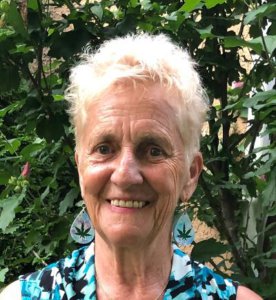 Ann Allworth, PhD, is a cell biologist, who for more than 35 years has been educating adults, first in medical schools as an anatomy professor; then in the natural product industry, teaching the immense value of phytonutrient-rich foods and herbs to optimal health and well-being. Upon learning of the endocannabinoid system, she founded Cannabis Education Solutions, a company dedicated to illuminating minds to the vast nature of the endocannabinoid system and its unparalleled role in human health. Ann is now semi-retired and will soon be making a transition to a partnership in a new organization involved in medical cannabis advocacy.
 Cynthia Shelby-Lane, MD, is an emergency physician, board-certified in anti-aging and functional medicine, and a certified Marijuana Doctor practicing medicine in Detroit, Michigan. Dr. Shelby-Lane has certified more than 10,000 medical cannabis patients in the State of Michigan. She coaches patients on their use of cannabis in conjunction with their current medications and medical conditions. She has been a member of NCIA and the Scientific Advisory Committee for the past five years, in addition to membership in multiple cannabis associations and organizations. She speaks at conferences/webinars and in the community on the use and benefits of cannabis and the evolving landscape of cannabis research. Dr. Shelby-lane has worked closely with the Last Prisoner Project.
Follow NCIA
Newsletter
Facebook
Twitter
LinkedIn
Instagram
News & Resource Topics
–
This Just In
How THCa Vapes Are Changing Consumer
Announcing NCIA’s 2026-2028 Board of Directors