Committee Blog: Everything You Wanted to Know About Cannabis Facilities But Were Afraid to Ask Field Guide – Part 2 – Extraction Facilities
 by members of NCIA’s Facilities Design Committee
Jacques Santucci, Brian Anderson, David Vaillencourt, and David Dixon
Continuing our five-part series on the behind-the-scenes workings of the legal cannabis industry. This series focuses on all of the inner dealings and industry advice from established professionals to craft this unlimited How-to-Guide to assist you in setting up your own facility. These articles cover cultivation, extraction, infused products, and retail facilities as well as support activities. In general, remember to be compliant with all local rules and regulations and contact a licensed contractor and industry expert.
Part Two, Extraction: Top Things to Consider When Planning Your Cannabis Extraction Operation
The extraction environment is akin to an industrial process and should be approached away from a safety and chemical handling standpoint. Here are some general considerations as you begin to plan your extraction operation that we often see assumed or overlooked resulting in major unanticipated barriers that significantly impact decision costs and timelines. Always remember to be compliant with all local rules and regulations.
Interior Building Materials
The walls and floors should be designed to be easily cleanable. In areas with solvent use, should have floors and walls made with the material, and ultimately the method for effective and ease of cleaning such FRP (Fiberglas Reinforced Panels).
Facility Specifications
There are many established standards from organizations like the NFPA and ICC-IFC which are commonly cited and required by Fire Marshalls with appropriate fire engineering controls, room interlocks, etc. Knowing which classifications are required based on the room type has a major impact on facility specifications (e.g. C1D1, C1D2, etc.) and the ultimate design. This requires knowing which solvents you will be using (and equally important, solvents you will not be using) as well as identifying all of the activities you will be doing in your extraction/processing facility (winterization, purification, bulk or final product packaging, and more) and whether the rooms will be wet and dry (how will you be cleaning these rooms?). How you answer those questions will help you and your team select the appropriate room materials and overall design.
Electrical Power Ideal Recommendations
Evaluate your utility power infrastructure, including street transformers and available power to your site when designing your facility. The power demand for a cannabis facility is significant and grid limitations can destroy or significantly delay the ability for a business to operate.
Losing power due to weather or events outside of your control are another major risk. When considering alternative power generation, consider a generator with auto-transfer switching and the appropriate fuel type, depending on location and local weather. Contact a local licensed professional. A generator can be an invaluable insurance policy as even a short duration power outage can destroy an entire crop and any products that must be maintained at critical temperatures.
Equipment Rooms and Maintenance Rooms
Appropriate space for equipment and dedicated rooms for maintenance is commonly needed. These all come with different combustion air requirements, venting requirements, air exchange rates, vacuum lines, and more. You may consider a room for spare parts and tools.
Appropriate Storage Area: Biomass, Volatiles, Raw Ingredients, and More
Separation of raw materials with appropriate and dedicated storage areas is needed for the various types of raw ingredients and materials utilized within a cannabis facility. Volatile solvents require extremely specific storage requirements, which will become part of your Chemical Hygiene Plan once you are operational. Refer to your local Fire Marshall for code considerations and from code organizations like the ICC and NFPA.
Cleaning and sanitation agents should be segregated from materials that are utilized in final product formulations (e.i food ingredients, oils, etc.) and raw materials ahead of the design is critical to ensure appropriate storage requirements are met whether indoor or outdoor. Biomass storage can vary based on whether wet or dry and often require controlled temperature and humidity. Finally, do not forget the dedicated space needed for finished good inventory.
Electrostatic Discharge (ESD) Safety
Do you know that shock you get when you are in your car in the winter or flipping on a light switch? Innocent in everyday life, but potentially lethal in an environment such as extraction rooms where highly flammable solvents could be present. Consider rated and non-rated clothing and other personal protection measures.
Food Grade Oil Considerations and Inspections
Extracted oils that will be used downstream in edibles and beverages are akin to ingredients that require Food Safety endorsements such as cGMP.
Equipment Ratings
Before selecting equipment for use, evaluation criteria should be established based on your business needs and compliance. Some authorities having jurisdiction require extraction equipment to come with stamps, certifications, or endorsements from organizations such as ASME, UL, and NFPA as relevant to ensure equipment safety and fit for use.
Room Environmental Controls
Grinding rooms often need separate dedicated ventilation and filtration to be checked against grinding method/equipment and concentration of particulate (typically measured in parts per million (ppm) in the air. Dust collection systems for grinding equipment are effective ways to keep dust levels at manageable levels, reducing the need for time consuming cleaning procedures. Extraction and final product rooms may require additional ventilation considerations and monitoring sensors depending on the extraction method or final product type. Example: Solvents will require sensors and air exchanges located near the ground level since most solvent fumes tend to be heavier than air.
HVACD Management
Designing your facility involves HVACD (Heating, Ventilation, Air Conditioning, and Dehumidification) management that considers airflow controls areas, airflow, and fire protection within control areas. Rooms may require positive and negative pressures with calibrated pressure indicators. You should aim at having a leveled constant environment.
Safety and Injury Handling
Facilities need to have sufficient accessible First Aid and Burn Kits on site. Safety and Emergency Showers are often determined by code and the type of extraction solvent in use at the locations. Eye wash stations may also be required.
Spill and Solvent Safety
In areas where solvents are or may be used, you will need to have barrier/spill kits specific to the solvents and extraction materials on hand. This barrier can be built in or hand delivered per emergency. Solvent storage locations, depending on the type of solvent and hazardous rating.
Having one or two dedicated people to run point on spills can be part of a comprehensive spill procedure that would include evacuation of the area, assessment of the spill and of the clean up technique, disposal method, etc. There are many materials that are not compatible or properties that make them volatile under certain circumstances so having dedicated people to evaluate the situation will save you time, money, and any possible mishaps.
Solvent Storage
Indoor and outdoor solvent storage are dictated by NFPA, ICC-IFC, and local regulations. Storage types and limits are essential to check before buying or building a facility. Fire professionals base these limits on several factors of flammability including class and volatility. You may also need to adhere to SARA Type III reporting depending on the solvent and storage amounts. Do not forget about solvent tank types, whether they need to be mounted or chained to walls, security access controls, and SDS requirements.
Solvent Enclosure
C1D1, C1D2 is needed for solvent use. The actual type of solvents (e.g. CO2, Ethanol, etc.), and volume of solvent will dictate the different requirements for enclosures. This section pertains to areas in which the solvent would be transferred, mixed, extracted, recovered, etc. The type of enclosure is dependent on the type and class of solvent. Most enclosures will have volume limits, containment, vapor detector, electrical and ventilation requirements.
Emergency Ventilation
Ensure wall switch and fast ventilation, automated ventilation when sensors are activated during spill of contaminate.Sensors to be located where appropriate for the substance in use. Coordinated with the fire marshall to meet local requirements through design with architect and mechanical teams.
Employee Access Control
Limiting door access, proper security labeling, and key sets for employees need to be part of your overall security plan. LThe idea is to prevent unauthorized personnel from accessing the extraction space compliant with the local regulatory body.
Equipment Regulatory Listing
There are requirements such as UL certifications/marks which are dependent on the actual device and intended use. Always contact your local code enforcement office and a licensed contractor.
Check Out These Related Articles for More Top Things to Consider When Planning:
Part 1 – Cannabis Cultivation Facilities
Part 2 – Cannabis Extraction Facilities
Part 3 – Cannabis Food Production Facilities
Part 4 –Cannabis Retail & Dispensary Facilities
Part 5 – Cannabis Facility Support Areas
Member Blog: The Days Of Breaking Bad Are Over… Sort Of
by Meghan McCormick, Ph.D, Spektrum Cannabis Technologies
With the expanding decriminalization of marijuana and hemp and increasing market demand for cannabis concentrates, more people are assuming the role of pseudo-chemists or lab technicians without formal training. People no longer need to ‘break bad’ by extracting and processing cannabis in their garages, kitchens, or old RVs. Commercial laboratory spaces are becoming more common. Unfortunately, without formal laboratory training, appropriate laboratory safety habits are often not established. The ‘whatever-it-takes’ mentality plus some questionable lab techniques add up to be quite dangerous in a pursuit for the ‘good stuff.’
Solvents used for extraction, though often odorous, are clear and colorless and therefore invisible in vapor form. They are often handled in the lab like water. For those manufacturing cannabis concentrates for retail, the focus has been on possible regulations set by the FDA, but these new, small businesses are also under the jurisdiction of OSHA. While studying industrial hygiene standards written by OSHA, most safety practices seem like common sense, but only after the chemical hazards are recognized.
For more in-depth safety standards and fire codes for non-glassware or non-laboratory-scale (read: industrial-scale) extraction and processing equipment, ANSI/CAN/ UL/ULC 1389 or NFPA 1 Chapter 38 are great starting points.
Most of What We Breathe Is Invisible
As mentioned above, the solvents used to extract and process cannabis are either gases compressed into their liquid form or clear, colorless organic liquids. [Note: here ‘Organic’ means a substance that contains carbon, not the label you find at your grocery store]. These solvents include ethanol, propane, butane, pentane, hexane, isopropyl alcohol, methanol, acetonitrile, and other less common ones.
The danger of these solvents is that even when they are cold they vaporize easily enough for inhalation, some without harsh odors as a warning. Opening containers, glassware, or vessels without proper ventilation or PPE (personal protective equipment) exposes laboratory workers over a short time and many times a day. This exposure can occur during simple acts of pouring, transferring, heating, drying, mixing, or weighing on a balance. While many of the solvents used have a GRAS designation (generally regarded as safe) by the FDA, this label is used for food additives with the intention of ingestion, not inhalation. There are a few research studies on the toxicological effects of breathing in these VOCs (volatile organic compounds) in a short period of time. However, chronic studies of consistent exposure for years are rare. NIOSH, or the National Institute for Occupational Safety and Health, provides a decent summary of worker exposure studies for common industrial chemicals. Some of which can cause respiratory effects that evolve into allergies or even neurological damage. Unfortunately, most of the toxicological literature available can be decades old.
Yet laboratory technicians are not the only ones exposing themselves to a potential hazard. Working on large-scale extraction equipment, workers come into contact with large plums of high concentrated VOC when opening extraction tanks and vessels. This process happens many times a day when workers reach in to load and unload bags of cannabis biomass. Exposure also occurs through skin contact, as many of these solvents absorb into uncovered skin.
Gases under pressure are yet another non-chemical hazard. Compressed gas tank cylinders need to be transported and stored safely to keep them from falling over and crushing limbs. If a cylinder valve breaks off, they turn into a projectile missile, or they become damaged enough to rupture and release thousands of liters of suffocating gas within minutes or seconds.
Carbon dioxide solid in the form of ‘dry ice’ is often used in large amounts for cold traps in cannabis oil processing. Dry ice easily sublimes, where the solid form converts directly into a gas. Gaseous carbon dioxide is much heavier than general air and can easily displace oxygen in closed-off storage areas. Oxygen sensors, proper ventilation, and limited exposure help to avoid hazardous side-effects of oxygen deprivation.
The Tools to Keep Everyone Safe Are Out There
Any workplace that handles or stores chemicals should have the corresponding Safety Data Sheets (SDS) of the chemical. These are usually obtained from the manufacturer of the chemical, but there are also free databases online for easy access. All SDS’s should be available for easy access to workers who handle or are in an environment that uses chemicals.
OSHA also provides its own chemical database system that lists the physical properties of chemicals as well as their permissible exposure limits (PELs) and short-term exposure limits (STELs). These limits are used for compliance purposes, but in short, they provide a rough guide for how dangerous it is to breathe in some of these chemicals. Note that OSHA’s exposure limit guidelines may be outdated as many have been written 50 years ago when OSHA had been founded! For the latest guidelines visit NIOSH and ACGIH. These organizations/agencies keep up with current toxicological research and provide more up-to-date exposure limits that are sometimes significantly lower. Air sampling of your workers can always be done through an AIHA-accredited laboratory that will send out certified industrial hygienist to sample during a work shift.
Any industrial hygienist will tell you that the use of PPE is the last line of defense against chemical hazards and exposure. Engineering controls like proper room ventilation and local ventilation, including fume hoods, exhaust hoods, and elephant hoses, are some of the best ways to avoid exposure through inhalation. Fume hoods are almost always found in laboratory spaces; however, it’s easy to form bad habits when using them. For example, storing large objects and numerous chemical bottles inside the hood significantly blocks the proper airflow that needs to occur to make sure any vapor is properly ventilated. The sash (or glass door) should always be kept as low as possible and especially below the chin of the person working at the hood. Newer models of fume hoods have airflow monitoring devices and alarms systems to make sure the face velocity of the hood is between 80 and 120 fpm (feet/min).
Finally, PPE that fits comfortably, doesn’t interfere with the flow of work, and is rated properly for the hazards of the chemicals used, is a definite requirement when working with chemicals even when other controls are in place.
When effective local ventilation is not available for situations where a large plume of solvent vapor is expected (e.g., opening an extraction vessel to remove biomass bags), a full-face or half-face respirator is the best option to prevent exposure.
Respirators have specific cartridges that stop the inhalation of certain hazards. VOC cartridges are required to keep out the organic solvents most used. However, respirators will only protect as they meant to be if they are fit-tested, and properly cleaned and stored.
Last, eye protection via safety glasses is an obvious and thankfully well-practiced habit even in workplaces without chemicals. Unfortunately, the commonsense practice of making sure workers are wearing long pants, shirts with sleeves or lab coats, and closed-toe shoes (preferably non-absorbent) is more difficult to enforce if the location is in warmer climates.
All that said, for those who are dabbling in the new, exciting world of cannabis extraction, let’s hope they are following Walter White’s lead and suit up before they get to work.
 With more than 15 years of experience working and teaching in chemistry laboratories, Meghan McCormick, Ph.D. is the Senior Chemist and a part of the Herban Legends team at Spektrum Cannabis Technologies, an innovative, fit-for-purpose engineering services company. Meghan serves as the resident expert in the chemical processes that occur during cannabis extraction and post-processing and has helped design and test the Spektrum industrial-scale cannabis processing modules. Meghan worked as a Senior Chemist for the OSHA Salt Lake Technical Center for 3 years. She received her Ph.D. in Inorganic Chemistry at Indiana University studying organometallic electrocatalysis and anti-cancer prodrug activation mechanisms.
Member Blog: Doing More With Less – Ways To Expand Yields, Save Money, And Keep Quality
By Andrew Myers, President & CEO of ProGrowTech
As the cannabis industry continues to expand, commercial growers are looking for new and cost-effective ways to get a competitive edge in an increasingly crowded market.
The persistent and ever-growing demand for cannabis products has industry professionals wondering how they can increase their production levels and maintain quality while remaining profitable. Simultaneously, the price of cannabis continues to drop yet operational costs facing growers remain the same — this combination undoubtedly limits the ability to make much-needed investments or updates to their facilities. While the answer may be different for each grower, evaluating a few key areas may lead to increased production without the skyrocketing expenses.
What are some of the best ways to cut down on costs without inhibiting quality? Start by asking the right questions.
Which Lights Provide the Right Intensity, Spectrum, and Efficiency for Your Grow?
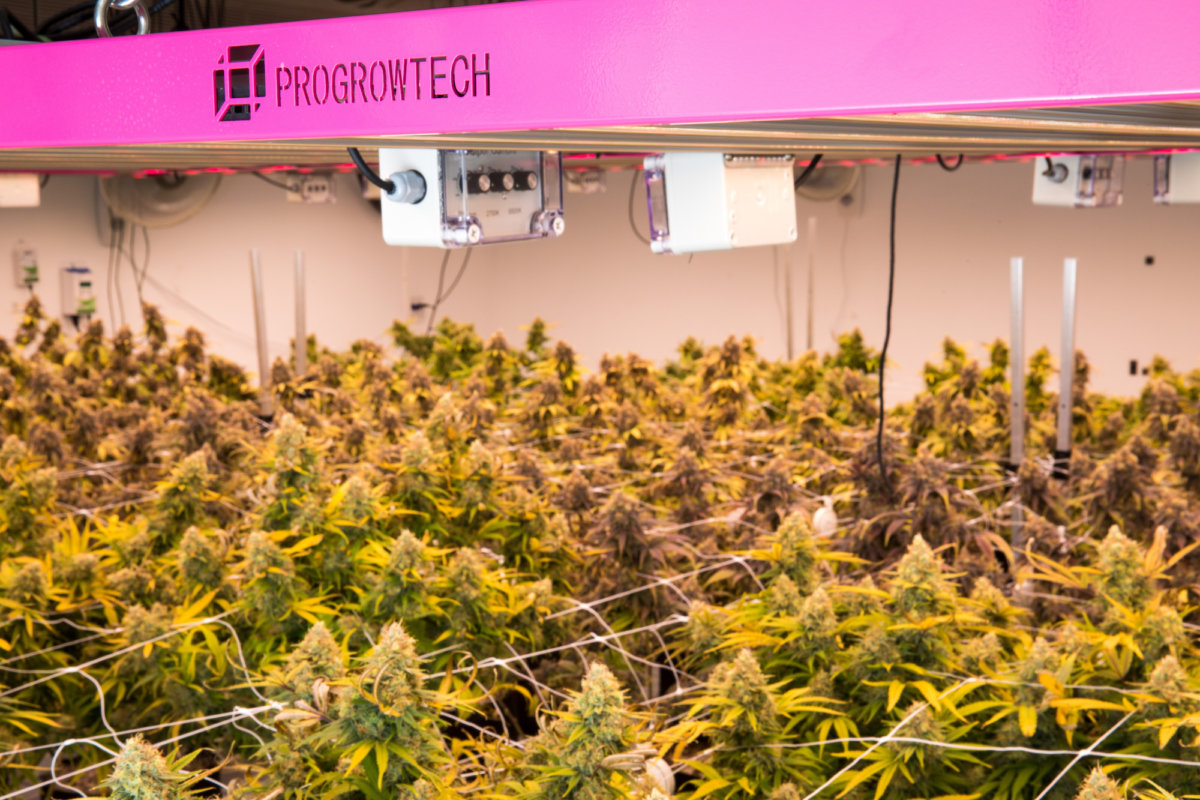
It can’t be emphasized enough that lighting plays an integral role in the success of any harvest. When growing indoors, agriculturalists lose exactly what plants need to survive: the sun. LED lights that produce the appropriate light spectrum and intensity can be a (sometimes superior) replacement for the sun.
When used effectively, LEDs can mimic the changing of the seasons — thereby allowing horticulturalists to hasten flowering or encourage dormancy. They’re able to change the appearance, potency and size of the plant. Spectral tuning gives cultivators control over the timing of the plant’s natural life cycle and the resulting harvest, supporting the conclusion that LEDs are the optimal lighting choice for growers seeking higher production levels in a shorter amount of time.
LEDs deliver numerous other time- and money-saving benefits to commercial growers, including:
Energy efficiency – LEDs are an environmentally friendly and sustainable choice for horticulturalists looking to cut down on energy costs — easily surpassing other lighting technologies in this realm.
Cooler running temperature – They runs at a much cooler temperatures than most other options. This means that, even with several LED fixtures delivering bright, intense light, horticulturalists don’t have to worry about burning their plants.
Durability – Lights need to survive a high-demand, busy and ever-changing commercial grow environment. Some lights include especially durable features, such as tempered glass LED chip covers and industrial-grade aluminum — they’ll last for years while also giving growers peace-of-mind.
What Can Be Vertically Accomplished?
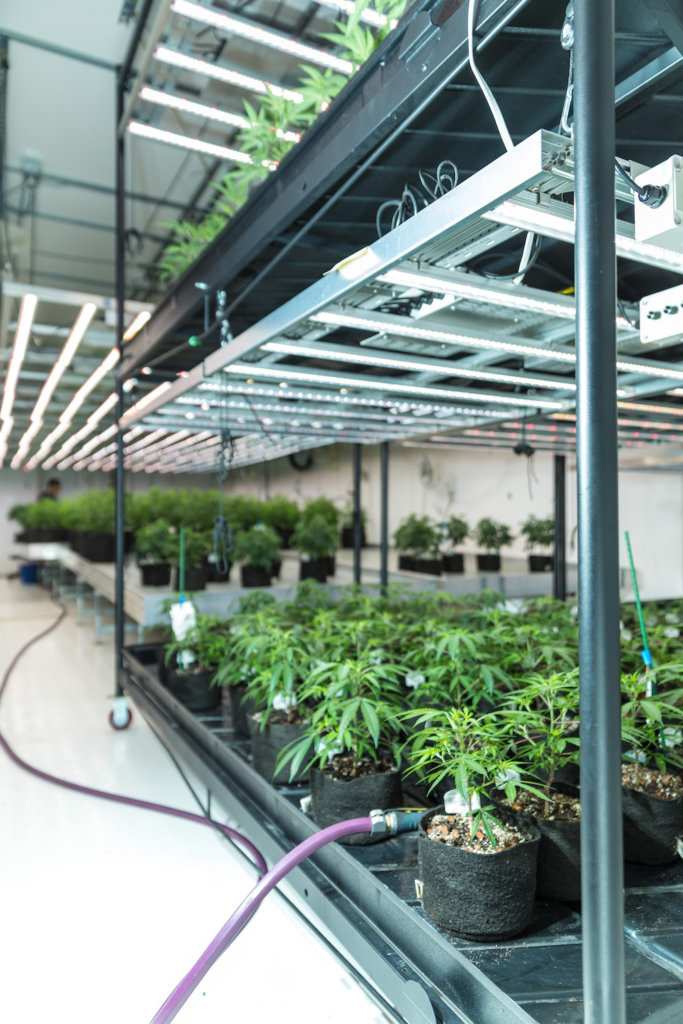 Vertical farming has revolutionized the way we think about indoor agriculture. With the advancement of vertical racking, growers can amplify their harvests — sometimes multiplying their crops ten-fold — without having to invest in more square footage.
While this layout certainly isn’t a new idea in agriculture, it was more recently adopted by cannabis growers as some LED grow lights are now capable of being vertically racked. Many growers’ facilities have square footage limitations, whether due to budget or state law; building up, rather than out, offers the opportunity to drastically expand growing capabilities even in smaller spaces.
To keep your vertical cannabis garden in excellent condition:
- Ensure your LED lighting fixture delivers uniform light intensity, so each plant gets the light it needs at every stage of growth to flourish.
- Assess whether spectral tuning is appropriate. Some growers might opt for more adjustability so they have the greatest level of control when custom crafting their crop.
- Make sure you have proper ventilation. This equalizes the environment of each tier and prevents the development of microclimates or condensation — which can lead to disease or rot.
- Install moveable benches to easily rearrange and access each tier as needed.
This combination of technology and intelligent design expands the realm of possibility for cannabis cultivators who want to use their space more efficiently.
Which Cutting-Edge Growing Techniques Make a Difference?
It’s also important to explore what the individual cultivator can do to improve harvests and offset costs. After all, they’re the ones who handle the plants on a day-to-day basis, and best understand what they need to prosper. Their approach plays a central role in crop health.
Commercial cultivators are able to implement advanced growing strategies to produce healthier and more profitable plants:
Tissue culture cultivation – This innovative technique is relatively new to the cannabis industry, although it has been used since the 1950s to aid in orchid reproduction. The process involves immersing cuttings from a healthy, mature plant in different hormone solutions. Tissue culture cultivation allows growers to quickly develop several — up to hundreds — of genetically identical plants.
Consolidate veg and bloom rooms – Adjustable LEDs offer an easy solution for growers who want to use the time-saving “flower-in-place” approach.LEDs start by delivering gentle springtime light, and growers gradually ramp up the intensity to replicate the height of summer. This method prevents plants from being shocked when they’re moved from room to room, encouraging resiliency — and reducing the required square footage to get a healthy harvest.
The Bottom Line
Critics of indoor agriculture argue it’s too expensive. And in some cases, skeptics have a point — when approached incorrectly, indoor cultivators are indeed faced with expensive operational costs that may slash their profits.
But this doesn’t always have to be the case. Advancements in technology and design, catalyzed by the creative minds leading the industry, are making indoor agriculture more realistic than ever — for any type of grower. Furthermore, indoor agriculture gives the individual grower ultimate control over the environment. One day, variables like unpredictable weather or changing seasons can be left behind. Traditional industrial agriculture results in soil degradation and pollution — moving indoors can help mitigate this negative impact on our environment. In addition, cultivators no longer have to use harmful pesticides, resulting in a healthier product for both the earth and the eventual consumer.
 Andrew Myers is President and CEO of ProGrowTech, which helps commercial horticulture operations increase profitability, yield and energy efficiency with industry-leading LED lighting systems. For more information, visit progrowtech.com.
Follow NCIA
Newsletter
Facebook
Twitter
LinkedIn
Instagram
News & Resource Topics
–
This Just In
How THCa Vapes Are Changing Consumer
Announcing NCIA’s 2026-2028 Board of Directors