Committee Blog: Future-Proofing Cannabis Manufacturing Facilities
 by NCIA’s Cannabis Manufacturing Committee
As the cannabis industry scales and more states legalize for adult-use, the demand for consumable cannabis products increases. To keep up with the demand, manufacturing facilities have to not only scale, but stay ahead of the curve as far as conserving resources, constantly innovating facility design to meet regulations and third-party compliance, e.g., ASTM Cannabis Certification Program and Good Manufacturing Practices (GMP).
Here are a few areas of environmental, product quality, and worker impacts to consider when planning for the future of your manufacturing facility.
Energy
As with any manufacturing facility, cannabis manufacturers pull power from shared electrical grids, meaning there is increasing pressure to reduce energy usage as they scale their operations. There are many design strategies for facilities to consider, whether they retrofit or build new, to reduce environmental impacts and position their operation for a sustainable future. One example for the cannabis industry is to recapture and repurpose heat generated from the processing equipment used for manufacturing products. Another example is incorporating climate control technologies to reduce the amount of energy required in extreme environments. More and more energy companies are starting to incentivize cannabis operations to reduce their energy usage and offer guidance on how to do so. Furthermore, regulators are beginning to enforce energy usage requirements for manufacturing facilities.
There are many ways to reduce your facility’s energy usage from efficient lighting to control system maintenance and making sure your odor and emissions control systems are designed to your facility’s specific emission load and mechanical design. Whenever possible, installing cloud-based smart systems with the ability to capture energy usage and system maintenance data will help to improve your facility’s energy efficiency. More areas of impact and best management practice guidance can be found in the NCIA’s Environmental Sustainability Report, released in October 2020.
Air Quality
Manufacturers of Infused Products, or MIPs, are Colorado’s manufacturing facilities, which is one example of a market segment facing regulatory enforcements for air quality control. The large-volume use of solvents for extraction leads regulators to monitor the volatile organic compounds (VOCs) emitted from the use of these solvents, as VOCs are contributors to low-level ozone formation, poor air quality, and public health issues. These solvents are also potential contributors to water contamination if wastewater is not discharged properly from the facility and are consequently on the radar for regulators to tightly monitor. The EPA states “the main concern indoors is the potential for VOCs to adversely impact the health of people that are exposed. While VOCs can also be a health concern outdoors, EPA regulates VOCs outdoors mainly because of their ability to create photochemical smog (or low-level ozone) under certain conditions.”
Luckily, smart technology such as cloud-based platforms using the Industrial Internet of Things (IIoT) for control equipment is increasingly being installed in manufacturing facilities, allowing for the collection and monitoring of facility data, such as emissions. Furthermore, the same technologies that are used for odor mitigation, such as molecular filtration systems (aka carbon scrubbers) also remove VOCs in the facilities’ air space from both the products and the solvents in the facility. The ability to prove this removal to regulators with real-time data will help reduce facilities’ contributions to VOC emissions when regulators require reporting.
Worker Health & Safety
In addition to environmental impacts from VOCs, along with other emissions inside of a cannabis manufacturing facility, there is also the issue of indoor air quality and worker health. There is not a lot known about the potential impacts of the processing of cannabis on indoor air quality. What is known is that terpenoids that are emitted in the cultivation and processing of cannabis can contribute, through a series of atmospheric reactions, to the production of known air pollutants. Terpenoids, such as monoterpenes (C10H16) and sesquiterpenes (C15 H24), are highly reactive compounds with atmospheric lifetimes ranging from seconds to hours. These compounds on their own are non-toxic. However, the atmospheric reactions they participate in can result in a range of low volatility products that create aerosols or ozone. These two compounds have clear implications for indoor air quality and thus occupational health.
Uncertainty remains as to the extent of the formation of these pollutants since previous studies have been hampered by a lack of reliable data and are predicated on conditions and practices prevalent in illicit operations. Given that the methods employed in these illegal operations are driven by different needs, the methods currently used in legalized facilities may produce vastly different conditions. This speaks to the urgent need for rigorous new scientific research and evaluation to aid this new industry and relevant regulatory bodies in assessing the current occupational environmental threats of marijuana processing and provide solutions to mitigate those impacts.
Quality by Design
The competitive licensing process, regulatory requirements, and lack of knowledge on scaled cannabis production has contributed to facilities that were not designed to properly ensure control of environments, the process flow that minimizes risks of cross-contamination and the adequate storage for the many types of raw materials, work in process, and final products. The result is an inefficient operation that may have been spared significant Capital Expenses (CapEx), but requires significant Operational Expenses (OpEx) to maintain.
The concept of Quality by Design (QbD) was first developed by the quality pioneer Dr. Joseph Juran. It posits that quality should be designed into a product and recognizes that most quality issues are a result of poor initial design. It is supported by long-standing evidence that increased testing does not necessarily improve product quality.
Currently, there is an overarching emphasis on final product testing as the determinant of whether cannabis products are safe for release into the marketplace. This has pitted labs, regulators, and producers against each other, leading to accounts of lab shopping, exclusive contracts, and other nefarious activities. This approach does not serve anyone, and is in stark contrast with the concept of Quality by Design.
Transitioning from a Quality Control Approach to Quality by Design
Transitioning from our current processes into a proactive Quality by Design approach requires an understanding of Good Manufacturing Practices or GMPs. The first set of GMPs for finished pharmaceuticals were established for enforcement by the United States FDA in the Federal Register in 1963. Since then, GMPs have been created for and adopted globally for nearly all products that can be consumed or applied for human and veterinary use –- categorized under dietary supplements, food, cosmetics, and of course, pharmaceuticals. GMPs represent the minimum sanitary and processing requirements to ensure safe and consistent products. Consider the road map and cross-over between major FDA cGMP (current Good Manufacturing Practices) by industry sector.
GMP regulations are written by the FDA and adopted in the code of federal regulations under the authority given to the FDA by various laws. Almost all of these regulations are performance standards. There are dozens to potentially thousands of substantially different products regulated under each category of GMP standards. It is up to each manufacturer to ensure their unique processes meet the GMP standards. In this way the regulations are flexible yet force all manufacturers to operate with a minimum level of rigor that includes programs that proactively mitigate risks that can lead to product failures and cannot be controlled simply through final product testing. They take a holistic approach to facility operations, starting with the facility culture, design, layout, placement, and selection of equipment, along with ongoing training, supplier qualification, environmental monitoring, and executive commitment.
The current status quo of manufacturing facility design has been built on a quality control approach. Most facility owners believe cannabis will be assigned a cGMP category based on the final product type and have been trying to build compliant facilities under this assumption. Some States have incorporated by reference the federal GMP regulations. However the competitive application process and focus on final product safety via testing has created an environment in which facility owners feel compelled to do as much if not more than the other facilities in order to meet regulator expectations and all focus is on the final product, not the process. In order to win the application, businesses want to look ‘better’ than the other applicants so they tack on as many hazard controls as they can think of. This has given regulators unrealistic expectations as to the best practices required to operate responsibly. Instead of quantifying hazards by collecting data and making informed decisions as to how to best eliminate risks, facilities are simply copying hazard controls they have seen used in other industries with hopes they meet the regulators’ expectations of what a GMP facility looks like. This culture of adding as many hazard controls as possible is a quality control approach focused on the final product, not a Quality by Design approach focused on the process. As a result, envelope in an envelope style facilities in which the manufacturing process is entombed in layers of energy and resource consuming hazard controls are commonplace.
There are other ways of designing compliant facilities; ways that could be more efficient and use less energy and resources. With a Quality by Design approach, these options become explorable. With quantified hazards the process can be approached holistically and significant design questions asked, e.g.. how much energy goes into the outer envelope and how much product quality/safety is gained from that?
In the Southwest deserts, there is consideration given to opening canopy/atrium style extraction spaces that would use less energy while providing the safety of unconstrained open atmosphere ventilation. The important question to ask when considering alternative facility designs is – How much energy/resources goes into containing human contamination versus the likelihood and the actual consequences? Perhaps manufacturing facility workers can wear long sleeves, pants, and hair restraints and that will be sufficient versus wearing a full body gown?
Quantification of Risks
Quantifying the processes and proven hazards of the cannabis manufacturing industry will allow for more informed design and operational choices versus prescriptive solutions that may potentially over-mitigate the risks and possibly introduce additional risks. Moreover, this data would provide validation that the design and operational choices made are in fact the best practices. Instead of scrambling to follow each standard in a quality control approach, Quality by Design considers the whole process, how the 10 principles of GMP standards apply and focuses on finding the most efficient strategies to eliminate risks.
A Way Forward
Training is vital for the manufacturers to know the next steps and why they are critical for the future of cannabis extraction and post-processing. Knowledge is required to put valuable technology, tools, and equipment in place with the least operational downtime. Further, it is necessary to accept guidance from verified knowledgeable support, such as from a vetted supplier. Lastly, risk mitigation education is necessary to highlight the reality of long-term savings and sustainability versus the common short-sighted tendency for immediate cost savings, which can result in significant consequences for a business such as TerrAscend Canada’s 2021 recall of infused gummies due to mold contamination.
Committee Blog: Future-Proofing Cannabis Manufacturing Processes – Part 2
 by NCIA’s Cannabis Manufacturing Committee
Despite prohibition, the cannabis industry is not behind the curve of sustainability progress. While other industries were inventing modern Cloud-based quality control/distribution systems and making stuff out of plastic, cannabis producers were maximizing yields per watt and creating stronger concentrates in attempts to get the most out of their value streams while staying under the radar. Now all industries are racing towards a more sustainable future and the cannabis industry has the opportunity to show that it can be a good example, even a leader in sustainability. Regardless if it is in preparation for competition or regulation, now is the time to start building more sustainable, energy-efficient, and overall lower footprint businesses.
As the manufacturing branch of the cannabis industry paves its way into the future, the processes involved need to be made environmentally sustainable and best practices need to be shared and standardized to ensure product safety and industry longevity. Collecting and sharing data from manufacturing facilities is the ideal way to achieve these sector goals.
Environmental sustainability is a multi-discipline effort. Experts in engineering, emissions, air quality, worker health and legal matters should be relied on for educating and guiding businesses into a more sustainable future.
The Data Vacuum Is Holding Back Environmental Sustainability Advancements
While cultivation is one of the main focuses of the cannabis sustainability effort, manufacturing procedures are also prime targets for sustainable advancements. Due to the nature of the organic chemical processes used to produce consumables, some of the materials and practices could have a negative impact on both worker and environmental health if not addressed and handled properly. As a best management practice, regulated cannabis manufacturers typically operate closed-loop systems, which greatly reduce certain dangers, but this can require other more energy-intensive systems. As these relatively new processing techniques are being pioneered, we need more data to understand how they can be made more efficient and sustainable. For various reasons — such as intellectual property concerns — advancements in sustainable practices are often not shared and therefore not visible to potentially become a standard process that ensures product and consumer safety.
Cannabis Science Outpacing Regulations
The scientific improvements for manufacturing cannabis into consumer products in high demand have outpaced regulations. From process design and equipment to processing material sourcing, the manufacturing branch of the cannabis industry has much to offer the future of sustainable cannabis products. In many jurisdictions today, regulators have hastily opted for vertical, prescriptive regulations which have left many manufacturing operations without the leeway required to innovate more sustainable process strategies. Even more businesses with the legal leeway simply do not want to push the envelope in today’s regulatory climate. More forward-thinking, regulation-savvy equipment manufacturers have begun focusing on lower energy-use in their newer products as a selling point. The industry as a whole could be making progress much faster if regulators focused on performance standards for manufacturing facilities.
Strategies inspired by building and process heat recovery offer dozens of basic possibilities when it comes to implementation in a cannabis manufacturing facility. Using the energy released during solvent condensation for solvent evaporation is a prime example. Connecting liquid-cooled equipment with the building’s central plant system is another. These are big ideas that could be implemented in different ways with different efficiencies. Intelligent use of insulation, exhaust recirculation, odor mitigation, ventilation minimization, demand-control ventilation for providing makeup air, etc. could also make significant differences. Data collected from actual operating facilities experimenting with different strategies will be the best guide going forward in determining what the best energy saving strategies are.
Cannabis Extraction Processes and Air Quality
In an effort to prevent unnecessary Volatile Organic Compounds (VOC) emissions it is important to maintain proper solvent transfer and storage, perform extraction equipment inspections, and ensure a maintained inventory and handling of solvents on site are a part of a facility’s standard operating procedures. Best practice for extraction and post-processing dictates the use of butane, propane, CO2, ethanol, isopropanol, acetone, heptane, and pentane as solvents to encourage safe consumer products.
Carbon filtration is also the best management practice for controlling cannabis terpenes (VOCs) and odor emissions. It is important to install properly engineered molecular filtration systems (aka carbon scrubbers) that are sized appropriately for a facility’s ‘emission load’ and don’t exceed the maximum cfm rating for air circulation through the filter. To prevent VOC and odor breakthrough, it is imperative to inspect and conduct regular maintenance of HVAC systems and carbon filters. A standardized method for measuring the lifespan of carbon is by using a Butane Life Test, which equips manufacturers with the data to know how to manage their carbon replacement schedule effectively, minimizing unnecessary carbon waste. Additionally, processors can conduct air sampling to detect and measure VOC and odor levels in their facilities and the data can be used to validate the impact of control technologies further protecting worker and environmental health.
Proper VOC and cannabis odor control from manufacturing processes helps reduce community odor complaints and improve neighborhood relations. It also improves public and environmental health by reducing local ozone concentrations. Proper emissions control when running cannabis manufacturing processes and handling chemicals helps to shift the industry at large toward sustainable and environmentally conscious business practices.
Preparing Your Business for the Next Stage
Cannabis manufacturers are seeing big changes on the horizon. Increased legalization brings increased competition and inevitable M&A activity. Whether a business aspires to compete on the world stage or to be acquired in one of the coming green waves, there are actions that can be taken today to help cannabis manufacturers maximize their value to both customers and potential acquirers.
One of the most important assets a company can have — both to compete effectively and to attract purchasers — is intellectual property. Intellectual property, or IP for short, is the term for an intangible asset that has been afforded certain legal protections to solidify the asset into a commodity that can be bought, sold, and licensed. IP can have a negative connotation in some circles, mostly resulting from misconceptions in the law but also rooted in IP abuses by unscrupulous “trolls.” In reality, IP is an important tool to help companies protect their hard work and, when properly deployed, intellectual property can increase transparency into cannabis manufacturing processes and open new avenues of scientific advancement.
Intellectual property broadly covers a number of different types of rights. Patents protect new inventions like processes, machines, compositions of matter, ornamental designs, and plant genetics. Patents can grant relatively broad rights to these ideas, but with substantial additional costs and scrutiny.
Similarly, copyright can protect creative works, like writings, drawings, and sculptures. But many do not recognize that copyright can also protect compilations of data that have been creatively selected or arranged. Data and algorithm copyrights are relatively nascent, but they promise to play a large role in the intellectual property landscape of the future cannabis industry.
Another sect of intellectual property, trademarks, is all about protecting a brand: the names, logos, slogans, and overall look that tells customers that a good or service is from a particular company. Federal trademark registration is unavailable for federally illegal goods and services, but that does not mean that federal trademark protection is unavailable to cannabis brands. Many companies are using the zone-of-expansion doctrine baked into federal trademark law to set up registrations on related legal products (smoking/vaping devices, clothing, and even CBD edibles) that can be expanded to cover THC products when federally legal.
The nuances and requirements of these property rights — along with other IP rights like trade secrets and trade dress — are highly fact-specific, so involve a good IP attorney to guide your strategy from the start.
Towards A More Sustainable Future
Now is the time to start building more sustainable, energy-efficient, and overall lower carbon footprint businesses and the emerging legal cannabis industry is well-positioned to be the leader. If manufacturers are incentivized to safely share processing data directly or through emerging data collection and tracking platforms, the industry will make major advancements towards more environmentally sustainable practices. Environmental impact areas, such as air quality, energy, water, soil waste, and community all need to be considered by the manufacturing arm of the cannabis industry. Regulators can help push the industry forward by reducing negative impacts in these areas though focusing on performance standards for manufacturing facilities and their processes. Lastly, understanding that IP, including trademarks, can in fact increase transparency into cannabis manufacturing processes and open new avenues of scientific advancement will help position operators for M&A activity coupled with proper legal representation. These factors work together to protect the environment and communities, as well as future-proof manufacturing operations setting up the rest of the cannabis industry for longevity and federal legalization.
Committee Blog: Cannabis Classification and the Role of Terpenes
by NCIA’s Scientific Advisory Committee
From Indica/Sativa to Hybridization
Cannabis is thought to have originally been domesticated in the mountainous regions of Central Asia. As humans started exploring the world, they brought the plant with them, and the plant needed to adapt to the different climates in order to thrive. This gave rise to many of the cultivars (or “strains”) we deem as “landrace,” allowing some subspecies of the cannabis plant to naturally start propagating. Since plant breeding didn’t become en vogue for thousands of years until Gregor Mendel’s work with pea plants, these natural cultivars were able to gain great genetic fitness, as well as become genetically diverse from other landrace strains as they adapted to their specific, often isolated, environments analogously to the finches of the Galapagos Islands.
We are all familiar with indica and sativa. With growing popularity of plant breeding and creating crosses of indica-dominant and sativa-dominant strains, we have largely lost true landrace cultivars that are 100% one way or the other. Almost every strain sold in the modern market is a hybrid, featuring a mixture of indica-derived and sativa-derived genes. Did you know that indica and sativa designations focus more on the phenotype, or the observable characteristics (e.g. height, leaf shape/color, and branch formation), rather than genotype, the unique DNA sequence of an organism?
In cool and dry climates, the cannabis plant leaves are broader and there is less space between branches. This creates a shorter, more compact plant that is better able to retain heat and moisture. The broad leaves help maximize photosynthesis on the otherwise short-statured indica-dominant plants. If you instead look at a warmer climate, you will see the plants grow much taller and thinner. They grow up and out more so that they can easily dissipate the heat and moisture in these warmer regions. The branches of the sativa-dominant plants are also longer and the leaves have more nodes, though they are thinner than that of an indica plant. All of these characteristics may also help prevent mold growth on a sativa-dominant plant due to better air flow within the plant.
Since indica and sativa classifications are more likely to indicate landrace phenotypes and the climate in which the cannabis plant grew in, new methods of classification are being explored to better express to consumers and patients the effects of the cannabis or cannabis-infused product they are using. For example, Leafly launched a new way for their website to categorize cannabis strains that considers terpene profiles, rather than labeling them as indica, sativa, or hybrid. Since terpenes are produced in plants other than cannabis, a description based on terpene profiles is the most compelling option, as research can be done on the effects of terpenes produced by other sources. While the entourage effect in cannabis is likely important to its variable uses in medicine, more research is warranted to fully understand the effect.
Terpenes and Terpenoids
Terpenes are plant constituents that impart olfactory, gustatory, and medicinal properties to plants. These Volatile Organic Compounds (VOCs) are “Generally Recognized as Safe” by the FDA and are composed of repeating isoprene units arranged head-to-tail to create the over 200 terpenes known to be produced in the cannabis plant. These terpenes are found in other plants as well. Terpenes generally come in three varieties depending on how many isoprene units are used to construct them: monoterpenes are composed of two isoprene units, sesquiterpenes of three units, and diterpenes of four units.
The term “terpenoid” is often used interchangeably with the term “terpene.” The difference is terpenoids are modified terpenes that contain oxygen, while terpenes are hydrocarbons containing only hydrogen and carbon. This modification usually occurs through either the movement or loss of a methyl (-CH3) group or, more commonly in cannabis, through its interaction with oxygen during the drying/curing process. As such, “terpenoids” are more correctly used to describe smokable flower, whereas “terpene” is more accurate when describing the compounds when they are being produced by the living plant.
Terpenes have three main purposes: environmental adaptation, the repulsion and destruction of predators, and the attraction of pollinators. Monoterpenes, such as limonene and α-pinene, tend to predominate in the flower portion of plants and have been shown to repel herbivorous insects in Arabidopsis thaliana, often used as a model organism of the cannabis plant, due to their volatile aromatic properties. Sesquiterpenes, on the other hand, have a bitter taste and deter larger plant-eating organisms, due to their predominance in the leaves of a plant. The sticky nature of terpenes also helps to trap bugs as they move around on the plant. From the perspective of cannabis, humans have shown to be excellent pollinators as illustrated by the diverse cannabis strains available at your local dispensary.
Terpenes are strongly inherited from parent plants and are not often affected by environmental factors over the short term. Terpene profiles, therefore, can be used to help distinguish between indica-dominant and sativa-dominant classifications due to the ratio of individual terpenes’ stimulating or sedating properties. Below are descriptions of some of the most common and best-researched terpenes. The summation of sedating and stimulating terpenes produced by the plant will determine whether the net effect of consumption will have more “indica” properties or more “sativa” properties.
α-pinene is one of the most common terpenes found in nature occurring in pine trees as well as many common spices such as rosemary, basil, and dill. Along with its role as an insect repellant, it has also been shown to have anti-inflammatory properties. It has the ability to cross the blood-brain barrier and inhibits the breakdown of acetylcholine, a neurotransmitter which can stimulate cognitive functions. This will cause α-pinene to have more of a stimulating effect.
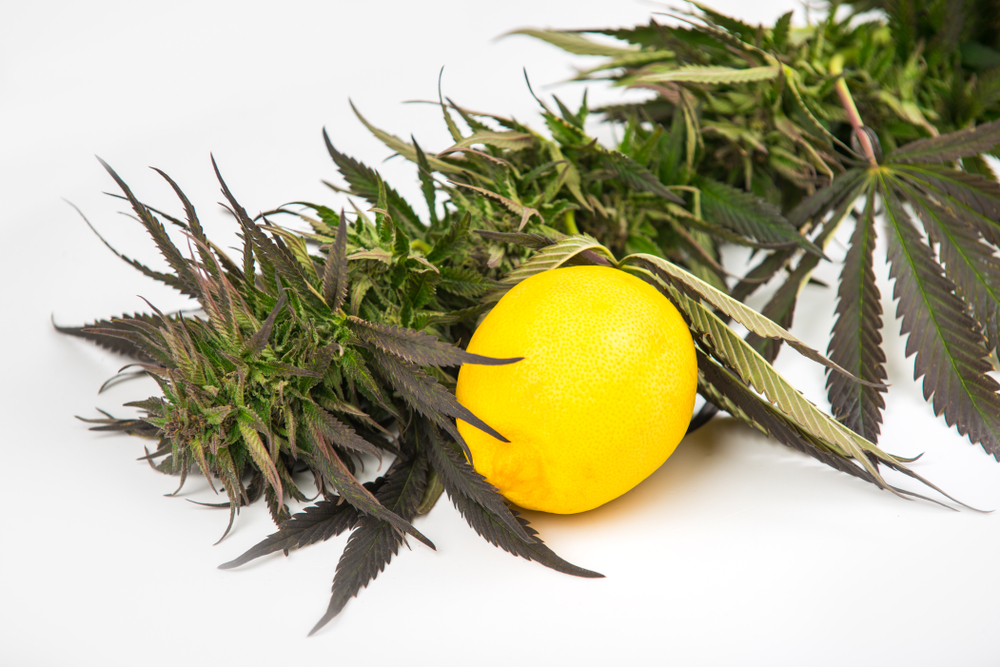
Limonene is another common terpene found in citrus fruits. It has been shown to help with anxiety and depression by increasing dopamine and serotonin levels in the brains of mammals. Limonene has also been shown to increase alertness as well as help with weight loss and relief of gastric distress.
β-myrcene is one of the most common terpenes found in cannabis, though it is also found in hops and mangos. It gives off an earthy aroma of cloves and has been shown to have pain-relieving and anti-inflammatory properties in mice. Due to its sedating effects, it was thought to be a reliable indicator of indica strains; however, recent studies have shown that this terpene is equally present in both indica and sativa strains. The sedating properties are responsible for the ”couch-lock” effect some people experience when consuming certain cannabis strains.
β-caryophyllene has a dual use in protecting plants from grazing species since it both attracts insect predators as well as repels grazing insects. It is commonly found in spices such as black pepper and oregano and has a spicy flavor. It can act as a gastro-protective agent and is helpful in fighting stomach ulcers. It has also been shown to help combat symptoms of opioid addiction, through a process called opioid sparing. β-caryophyllene selectively activates CB2 receptors, the cannabinoid receptor primarily found in muscle tissue as opposed to brain tissue which is generally high in CB1 receptors. Due to this, it has more physically sedating properties making it a common terpene found in more indica-leaning strains.
Linalool is a terpenoid alcohol commonly found in lavender. It is a highly sedating phytochemical that is coveted for its anti-anxiety properties. It also helps as an antidepressant since it assists in serotonin-receptor transmission. As an anti-epileptic, it helps to modulate motor movements, presumably due to its sedating properties. When applied topically, it has been shown to help heal skin burns as well as treat acne.
Through a combination of these terpenes and the other 200+ terpenes found in the cannabis plant, we get a balancing act between sedating and stimulating properties. And since everything is technically a hybrid now, the cannabis industry should strongly consider other ways to categorize different cultivars, rather than just indica or sativa, to better educate the consumer on its effects.
The Scientific Advisory Committee is comprised of practicing chemists and other scientific field professionals to advise other NCIA committees as they work to develop standards and guidelines for the various sectors of our industry, ensuring that any formal recommendations produced by other NCIA committees are scientifically sound, sustainable, and legitimate.
Member Blog: The Days Of Breaking Bad Are Over… Sort Of
by Meghan McCormick, Ph.D, Spektrum Cannabis Technologies
With the expanding decriminalization of marijuana and hemp and increasing market demand for cannabis concentrates, more people are assuming the role of pseudo-chemists or lab technicians without formal training. People no longer need to ‘break bad’ by extracting and processing cannabis in their garages, kitchens, or old RVs. Commercial laboratory spaces are becoming more common. Unfortunately, without formal laboratory training, appropriate laboratory safety habits are often not established. The ‘whatever-it-takes’ mentality plus some questionable lab techniques add up to be quite dangerous in a pursuit for the ‘good stuff.’
Solvents used for extraction, though often odorous, are clear and colorless and therefore invisible in vapor form. They are often handled in the lab like water. For those manufacturing cannabis concentrates for retail, the focus has been on possible regulations set by the FDA, but these new, small businesses are also under the jurisdiction of OSHA. While studying industrial hygiene standards written by OSHA, most safety practices seem like common sense, but only after the chemical hazards are recognized.
For more in-depth safety standards and fire codes for non-glassware or non-laboratory-scale (read: industrial-scale) extraction and processing equipment, ANSI/CAN/ UL/ULC 1389 or NFPA 1 Chapter 38 are great starting points.
Most of What We Breathe Is Invisible
As mentioned above, the solvents used to extract and process cannabis are either gases compressed into their liquid form or clear, colorless organic liquids. [Note: here ‘Organic’ means a substance that contains carbon, not the label you find at your grocery store]. These solvents include ethanol, propane, butane, pentane, hexane, isopropyl alcohol, methanol, acetonitrile, and other less common ones.
The danger of these solvents is that even when they are cold they vaporize easily enough for inhalation, some without harsh odors as a warning. Opening containers, glassware, or vessels without proper ventilation or PPE (personal protective equipment) exposes laboratory workers over a short time and many times a day. This exposure can occur during simple acts of pouring, transferring, heating, drying, mixing, or weighing on a balance. While many of the solvents used have a GRAS designation (generally regarded as safe) by the FDA, this label is used for food additives with the intention of ingestion, not inhalation. There are a few research studies on the toxicological effects of breathing in these VOCs (volatile organic compounds) in a short period of time. However, chronic studies of consistent exposure for years are rare. NIOSH, or the National Institute for Occupational Safety and Health, provides a decent summary of worker exposure studies for common industrial chemicals. Some of which can cause respiratory effects that evolve into allergies or even neurological damage. Unfortunately, most of the toxicological literature available can be decades old.
Yet laboratory technicians are not the only ones exposing themselves to a potential hazard. Working on large-scale extraction equipment, workers come into contact with large plums of high concentrated VOC when opening extraction tanks and vessels. This process happens many times a day when workers reach in to load and unload bags of cannabis biomass. Exposure also occurs through skin contact, as many of these solvents absorb into uncovered skin.
Gases under pressure are yet another non-chemical hazard. Compressed gas tank cylinders need to be transported and stored safely to keep them from falling over and crushing limbs. If a cylinder valve breaks off, they turn into a projectile missile, or they become damaged enough to rupture and release thousands of liters of suffocating gas within minutes or seconds.
Carbon dioxide solid in the form of ‘dry ice’ is often used in large amounts for cold traps in cannabis oil processing. Dry ice easily sublimes, where the solid form converts directly into a gas. Gaseous carbon dioxide is much heavier than general air and can easily displace oxygen in closed-off storage areas. Oxygen sensors, proper ventilation, and limited exposure help to avoid hazardous side-effects of oxygen deprivation.
The Tools to Keep Everyone Safe Are Out There
Any workplace that handles or stores chemicals should have the corresponding Safety Data Sheets (SDS) of the chemical. These are usually obtained from the manufacturer of the chemical, but there are also free databases online for easy access. All SDS’s should be available for easy access to workers who handle or are in an environment that uses chemicals.
OSHA also provides its own chemical database system that lists the physical properties of chemicals as well as their permissible exposure limits (PELs) and short-term exposure limits (STELs). These limits are used for compliance purposes, but in short, they provide a rough guide for how dangerous it is to breathe in some of these chemicals. Note that OSHA’s exposure limit guidelines may be outdated as many have been written 50 years ago when OSHA had been founded! For the latest guidelines visit NIOSH and ACGIH. These organizations/agencies keep up with current toxicological research and provide more up-to-date exposure limits that are sometimes significantly lower. Air sampling of your workers can always be done through an AIHA-accredited laboratory that will send out certified industrial hygienist to sample during a work shift.
Any industrial hygienist will tell you that the use of PPE is the last line of defense against chemical hazards and exposure. Engineering controls like proper room ventilation and local ventilation, including fume hoods, exhaust hoods, and elephant hoses, are some of the best ways to avoid exposure through inhalation. Fume hoods are almost always found in laboratory spaces; however, it’s easy to form bad habits when using them. For example, storing large objects and numerous chemical bottles inside the hood significantly blocks the proper airflow that needs to occur to make sure any vapor is properly ventilated. The sash (or glass door) should always be kept as low as possible and especially below the chin of the person working at the hood. Newer models of fume hoods have airflow monitoring devices and alarms systems to make sure the face velocity of the hood is between 80 and 120 fpm (feet/min).
Finally, PPE that fits comfortably, doesn’t interfere with the flow of work, and is rated properly for the hazards of the chemicals used, is a definite requirement when working with chemicals even when other controls are in place.
When effective local ventilation is not available for situations where a large plume of solvent vapor is expected (e.g., opening an extraction vessel to remove biomass bags), a full-face or half-face respirator is the best option to prevent exposure.
Respirators have specific cartridges that stop the inhalation of certain hazards. VOC cartridges are required to keep out the organic solvents most used. However, respirators will only protect as they meant to be if they are fit-tested, and properly cleaned and stored.
Last, eye protection via safety glasses is an obvious and thankfully well-practiced habit even in workplaces without chemicals. Unfortunately, the commonsense practice of making sure workers are wearing long pants, shirts with sleeves or lab coats, and closed-toe shoes (preferably non-absorbent) is more difficult to enforce if the location is in warmer climates.
All that said, for those who are dabbling in the new, exciting world of cannabis extraction, let’s hope they are following Walter White’s lead and suit up before they get to work.
 With more than 15 years of experience working and teaching in chemistry laboratories, Meghan McCormick, Ph.D. is the Senior Chemist and a part of the Herban Legends team at Spektrum Cannabis Technologies, an innovative, fit-for-purpose engineering services company. Meghan serves as the resident expert in the chemical processes that occur during cannabis extraction and post-processing and has helped design and test the Spektrum industrial-scale cannabis processing modules. Meghan worked as a Senior Chemist for the OSHA Salt Lake Technical Center for 3 years. She received her Ph.D. in Inorganic Chemistry at Indiana University studying organometallic electrocatalysis and anti-cancer prodrug activation mechanisms.

Follow NCIA
Newsletter
Facebook
Twitter
LinkedIn
Instagram
News & Resource Topics
–
This Just In
NCIA Applauds Reintroduction of SAFE Banking Following Lobby Days
Beyond Rescheduling: Inside NCIA’s 14th Annual National Cannabis Industry Lobby Days