Returning from a very busy summer season, NCIA continues the tradition of featuring one of our members in a monthly member spotlight. For October, we chat with Brian Caldwell of Triple C Cannabis Club, based in Tacoma, Washington. Triple C is proud of their home state of Washington for being one of the first in the nation to recognize and respect the right of every adult to decide what is best for his or her health and happiness. As one of the first and most successful medicinal dispensaries in the state, Triple C continues to lead the way in the transition to adult-use by elevating the retail experience with award-winning selection, service and staff.
Cannabis Industry Sector:
Medical Cannabis Providers
NCIA Member Since:
2014
How do you uniquely serve the cannabis community?
Triple C Cannabis Club is completely dedicated to procuring safe, tested, and properly labeled medical-grade cannabis products for our patients. We take meeting the needs of our patients very seriously and refuse to compromise our standards. We are committed to only providing the very best to our patients. Additionally, we feel we must help be the voice for the patients we serve that otherwise could or would get lost in a bureaucratic system. Change, especially the legalizing of cannabis that has occurred in Washington State, has been quite intimidating. We are here to help and support our patients through this process while ensuring our state’s regulators have trusted professionals from our industry to work with.
Why should customers looking for medical cannabis go to Triple C Cannabis Club?
Patients who want to #ExperienceChronicWellness ® will find a wide selections of oils, edibles, salves, topicals and more at Triple C Cannabis Club. We pride ourselves on consistent medicinal product availability that has been rigorously tested and is produced by the state’s elite manufacturers. Triple C Cannabis Club staff is award-winning and very knowledgeable on a wide array of products and medicines. They ensure product safety and patient confidentiality and consistently perform to the highest standards of care. As the first union shop in Washington, I am proud to work with UFCW to advance the safety and wellbeing of all who come through our doors, regardless if they are a patient or staff.
Our business has evolved rapidly along with the changing legal landscape. As a result, people come to us for very different reasons. Many want to relieve pain and promote healing naturally. Others seek to ease stress, enhance experiences, or nurture creativity. The many wonders and benefits of cannabis are why it has been so beloved for most of recorded history.
Brian Caldwell, Triple C Cannabis Club
Can you give us some insight into the cannabis community in Washington, the challenges, upsides, and where you’d like to see it go?
As we have seen in other states, and in Washington’s past, the road to regulation of cannabis is a difficult one, but one that is desperately needed. The state has to balance federal jurisdictional issues, patients have fears due to years of persecution, and business owners are trying hard to be law-abiding, good corporate citizens. When Washington started the medical cannabis journey in 1998, we all shared the vision of a legal and safe environment for patients. However, with the veto offered by then-Governor Christine Gregoire, that was not the case. The laws have been interpreted in many different ways, hence the success of the black and grey markets. So here we are some twenty years later, trying to fix the regulations to create that safe marketplace we all had envisioned. I believe that if we work with state legislators on practical regulations and our congressional delegation on fixing taxation and banking, it will go a long way in bringing our industry into mainstream acceptance and small business success.
Why did you join NCIA?
I joined NCIA for numerous reasons, but first and foremost is their clear mission to advance the cannabis industry with a thoughtful and targeted approach. The leadership they are providing to our congressional delegation on matters such as banking and taxation is unmatched by any other groups. The cannabis industry needs a strong and professional voice to help solve these critical industry problems, which is exactly what NCIA has stepped up to do. The commitment that NCIA has to membership development, education, and networking is another reason why I chose to become a member. Triple C Cannabis Club supports the efforts of those that want to advance our industry in a positive and educated manner, and NCIA is a good reflection of those principles.
One widely circulated quote equates the carbon footprint of producing a gram of hydroponically grown cannabis to that of “driving seventeen miles in a Honda Civic.” And while that beats seventeen miles in a Hummer, it’s a number we have the power to greatly reduce. Part of what excites me about this freshly-legal industry is that we have the opportunity to shape it in a way that big business has thus far failed to do by not putting a higher profit margin above the health of the planet.
In August I was asked to speak about this very topic in Las Vegas at the 2nd annual NCIA Southwest CannaBusiness Symposium. It gave me a chance to reflect on something I’m passionate about – the real environmental impact of what we do, what isn’t working, and how we can create positive change for this and future generations of growers and patients.
Get Under The Sun
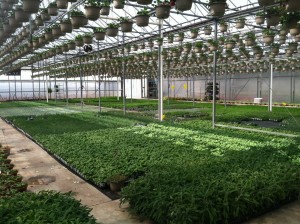
It takes vast resources to power a warehouse grow that relies on High Intensity Discharge (HID) or High Pressure Sodium (HPS) lights. Automated light deprivation greenhouses can produce cannabis of equal or greater value as that produced indoors at half the cost and one quarter the environmental impact.
Cannabis used for extracts can all be grown outdoors. Provided you live in a climate that allows for outdoor cultivation, sun-grown cannabis is excellent starting material for extractions. The finished form will be far from the flower, so why not take advantage of one of our most powerful (and free!) resources?
Solstice growhouse
Keep It Lean Indoors
I know that not every method of cultivation can rely exclusively on solar power. However, in indoor grows, we can focus on efficiency.
For most indoor grows, Heating, Ventilation, and Air Conditioning (HVAC) systems are a huge resource suck. I’ve discovered that the best method is to utilize a centralized Variable Air Volume (VAV) system.
Make sure the envelope is sealed. Keep your buildings well insulated to prevent energy leaks. Without a higher energy code and tighter insulation, many industrial-scale grows hemorrhage energy and resources.
Lay Down the Law
Frankly, some of the cities and states currently passing laws to regulate cannabis cultivation have the least enviable power infrastructures. Las Vegas, which relies heavily on coal and natural gas, is ahead of the curve in terms of legislation, whereas clean n’ green hydro-electrically-powered Washington State has yet to create stringent and sustainable regulations. Legislators have been more concerned with issues of security and diversion than environmental impact. The “pot is dangerous” paradigm needs to shift to “unregulated grow practices are dangerous for the planet.”
Nice Package…
We can effectively undo all the good of a smart grow with wasteful packaging.
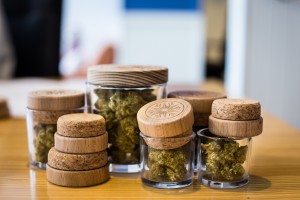
Glass jars with cork & wood tops
Think cradle-to-grave for your packaging: Where did it come from? What is it made of? Where will it go after it has been used? That plastic container might be a good fix in a pinch, but think about the impact it has as you scale.
We’ve got to reduce plastics and push glass, wood, or paper wherever possible. Almost every gram of cannabis that goes out into the world from a processing facility is wrapped in plastic – and we all know that it can’t be properly disposed of or recycled. However, the plastic used for business-to-business bulk orders could be saved and reused.
At Solstice we’ve been designing glass containers with cork and wood tops for our flower. They can be collected, reused, or returned for a deposit. Our pre-rolls are made from 60% post-consumer recycled paper and printed with vegetable ink. Every little bit counts.
Have Multiple Bottom Lines
The “Triple P bottom line: People, Planet, Profits” is the newest, sexiest take on commerce with a conscience. The Triple P works primarily because it’s a flexible paradigm; it gives business owners a framework in which they can question and evaluate the human and environmental cost of every move they make.
Across industries, innovative leaders are finding more generous, humane, and ultimately more sustainable ways to do big business. Some of these are easy and inexpensive: utilizing proper waste disposal, bike-to-work incentive programs (a Solstice favorite), Plant-A-Tree days, or making sure your pesticide program is safe for employees and the planet.
Sometimes however, there is an unavoidable immediate cost to doing what’s right. Google uses a fancy fuel cell with 2-3 bloom boxes for their building infrastructure. They’re getting loads of good PR for this – in part because very few people can afford to use them.
But it is my belief that the more you grow, the more capital you’re bringing in, the more you have to give to impeccable resource management.
Everyone knows that cannabis makes money; we’re looking at a multi-billion dollar industry over the next 5 years. Hobby systems and garage standards are not scalable for the cannabis boom. Whatever the laws might ‘allow’ us to do, we have to stay ahead of the curve and firmly within our own conscience.
Alex Cooley is the owner of Solstice, a member of NCIA since April 2013. Solstice founded their Seattle-based flagship in 2011 as the first-ever permitted cannabis production facility in Washington State. Solstice has taken an environmentally conscious approach to high quality cannabis production and has cultivated over 350 different types of cannabis, creating one of the most robust genetic libraries anywhere in the world.
 Cannabis Industry Sector: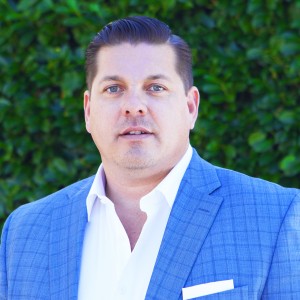

Follow NCIA
Newsletter
Facebook
Twitter
LinkedIn
Instagram
News & Resource Topics
–
This Just In
Member Blog: Solutions to Pre-Roll Cone Loading at Scale
Committee Blog: The Cannabis Beverage Industry’s Credibility Gap And How Real-World Research Can Close It