New Year, New Attorney General?
by Michelle Rutter, NCIA’s Government Relations Manager
Last month, the Senate Judiciary Committee began the confirmation hearing for William Barr, President Trump’s nominee for Attorney General. Barr served as Attorney General under President George H.W. Bush from 1991-1993 — a time when the War on Drugs was arguably at its peak. There was much concern that Barr’s position on cannabis would be reminiscent of the last Attorney General, Jeff Sessions, however, January’s hearings proved otherwise.
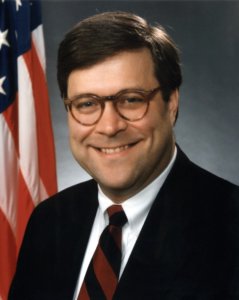 During the Senate confirmation hearing, Barr stated that he would respect state cannabis laws and legal businesses when it comes to enforcing federal marijuana statutes. In response to questioning from Sen. Cory Booker (D-NJ) and Sen. Kamala Harris (D-CA), Barr stated that if confirmed, his “approach to this would be not to upset settled expectations and the reliant interests that have arisen as a result of the Cole Memorandum.” Upon further questioning, he stated that he “is not going to go after companies that have relied on the Cole Memorandum.” (It’s also important to note that the two Senators who asked Barr about cannabis policy are both running for president).
Barr even put it in writing. In response to written questions, Barr wrote, “As discussed at my hearing, I do not intend to go after parties who have complied with state law in reliance on the Cole Memorandum… I have not closely considered or determined whether further administrative guidance would be appropriate following the Cole Memorandum and the January 2018 memorandum from Attorney General Sessions, or what such guidance might look like. If confirmed, I will give the matter careful consideration.” He also wrote to the committee, “I still believe that the legislative process, rather than administrative guidance, is ultimately the right way to resolve whether and how to legalize marijuana.”
The Cole Memo, issued in 2014, directed federal prosecutors not to use resources to target businesses or individuals that were in compliance with state cannabis laws and met a set of public safety criteria. That guidance, which gave many businesses and state governments the confidence to move forward with implementing regulated cannabis markets, was rescinded in January 2018 by then-Attorney General Jeff Sessions.
Several comprehensive cannabis policy reform bills that would allow states to determine their own laws without federal interference are expected to be considered this year. NCIA will continue to work with the Senate Judiciary Committee, Barr (should he be confirmed), and the Department of Justice on these critical issues.
Member Blog: Federal Authorities’ Current Position On Cannabis In 2019
by Robyn Ranke, Eskaton Law
Marijuana is anything but boring. And the politics of cannabis gets more and more interesting by the minute. On the tails of the 2018 Farm Bill signed into law, as we predicted, hemp-derived CBD leads as the most controversial subject in the pot trade. Politicians and lawmakers are divided. Federal government agencies, like state agencies, have separate and distinct enforcement and regulatory authority which lends itself to polar opposite view points.
U.S. Attorney General Nominee William Barr Takes A Favorable 360º Turn
In less than a month since the Act was signed into law, we have the nominated Attorney General William Barr taking a 360 from former U.S. Attorney General Jeff Sessions. In Senate confirmation hearings just recently, newly appointed Attorney General William Barr stated that he would “not go after” marijuana businesses operating in states where cannabis is legal. Barr reasoned that companies relied on the Obama-era Cole Memo (which Jeff Sessions rescinded) that kept federal authorities at bay from criminal prosecutions under Federal law. We are all aware Federal law prohibits the possession and sale of marijuana. A new bill was introduced into Congress last Friday that would revive the relaxed Cole Memo enforcement guidelines.
USFDA Commissioner Scott Gottlieb Announces CBD Product Sales Illegal
In stark contrast, USFDA Commissioner Scott Gottlieb issued a press release statement and didn’t mince words. Gottlieb expressly stated that introducing CBD/THC food products into interstate commerce is illegal “regardless of whether the substances are hemp-derived” – as we predicted and discussed in previous blogs. Despite the FDA’s foreseeable regulatory posture, we continue to believe there remains the open question:
“Can you produce and sell CBD food products – marijuana or hemp-derived – so long as you do not tout its medicinal benefits? A question that has yet to be specifically addressed by lawmakers. Ironically, the states’ legalization of marijuana all began with medical marijuana because of its medicinal benefits as an alternative treatment.”
Commissioner Gottlieb’s FDA Statement does not answer this question.
Stay Tuned – We’re Staying On Top Of Cannabis Politics For You
 An experienced corporate litigator having worked in both the private and government sectors, Attorney Robyn Ranke has taken a modern business approach to the cannabis industry and in working with cannabis business startups. Throughout her legal career, Robyn has represented a diverse base of business clientele in a variety of industries involving both complex and novel legal matters. Her diverse experience as a business litigator provides a valuable legal platform from which she is uniquely postured to address the regulatory hurdles, costly pitfalls, unique business transactions, and business litigation risks that confront California cannabis business owners today and into the future as state regulations continue to evolve.
Follow NCIA
Newsletter
Facebook
Twitter
LinkedIn
Instagram
News & Resource Topics
–
This Just In
Member Blog: The Evolving Cannabis Legal & Regulatory Landscape in 2026
How THCa Vapes Are Changing Consumer