U.S. House Approves MORE Act to End Federal Cannabis Prohibition for Second Time
Bill would remove cannabis from list of controlled substances, expunge federal convictions, provide resources to small businesses and impacted communities
WASHINGTON, D.C. – The Marijuana Opportunity, Reinvestment, and Expungement (MORE) Act, which would remove cannabis from the federal Controlled Substances Act and attempt to undo the damage caused by racially and economically disproportionate enforcement of prohibition, was approved by the House of Representatives today. An earlier version of the bill was passed in December 2020 in a largely party-line vote, becoming the first comprehensive cannabis policy reform legislation to receive a floor vote or be approved by either chamber of Congress.
Revisions from last session include the removal of a provision that would have allowed federal regulators to deny cannabis business licenses to applicants who have prior felony convictions. Other changes from the introduced text this session include revisions to property requirements, allowing operators to secure those locations after receiving a federal license.
A number of amendments were offered at a Rules Committee hearing to advance the bill, however, only three were ruled in order. The first passed on a roll call vote and was introduced by Rep. Josh Gottheimer (D-NJ), authorizes $10M for the National Highway Traffic Safety Administration to conduct a study on technologies and methods that law enforcement may use to determine whether a driver is impaired by marijuana.
Another amendment, introduced by Rep. Conor Lamb (D-PA). This amendment directs the National Institute for Occupational Safety and Health (NIOSH) to conduct a study on the impact of legalization to the workplace, using states that have legalized recreational use of cannabis as a guide, and requires NIOSH to develop best practices for employers as companies transition their policies related to cannabis, prioritizing employers engaged in federal infrastructure projects, transportation, public safety, and national security. Additionally, it directs the Department of Education to conduct a study on the impact of legalization to schools and school aged children, using states that have legalized recreational use of cannabis as a guide, and requires the Department of Education to develop best practices for educators and administrators to protect children from any negative impacts.” It passed on a roll call vote.
Another amendment, which failed on a roll call vote was offered by Rep. Jamie Raskin (D-MD) would have required federal agencies to review security clearance denials going back to 1971 and retroactively make it so cannabis could not be used “as a reason to deny or rescind a security clearance.”
While there is currently no companion bill in the Senate, Majority Leader Schumer (D-NY) along with Senators Booker (D-NJ) and Wyden (D-OR) are expected to introduce a comprehensive cannabis reform bill in the next month.
“With voter support for legal cannabis at an all-time high and more and more states moving away from prohibition, we commend the House for once again taking this step to modernize our federal marijuana policies,” stated NCIA Chief Executive Officer and co-founder Aaron Smith. “Now is the time for the Senate to act on sensible reform legislation so that we can finally end the failure of prohibition and foster a well regulated marketplace for cannabis.”
Laws to make cannabis legal for adults have passed in 18 states as well as the District of Columbia and the territories of CNMI and Guam, and 36 states as well as several territories have comprehensive medical cannabis laws. The substance is legal in some form in 47 states.
###
The National Cannabis Industry Association (NCIA) is the largest cannabis trade association in the U.S. and the only organization broadly representing cannabis-related businesses at the national level. NCIA promotes the growth of a responsible and legitimate cannabis industry and works toward a favorable social, economic, and legal environment for that industry in the United States.
Bill to End Federal Cannabis Prohibition and Repair Harms Reintroduced in U.S. House
MORE Act – first approved in December floor vote – would remove cannabis from list of controlled substances, expunge federal convictions, provide resources to small businesses and impacted communities
WASHINGTON, D.C. – The Marijuana Opportunity, Reinvestment, and Expungement (MORE) Act, which would remove cannabis from the federal Controlled Substances Act and attempt to undo the damage caused by racially and economically disproportionate enforcement of prohibition, was reintroduced in the House of Representatives today. An earlier version of the bill was passed in December in a largely party-line vote, becoming the first comprehensive cannabis policy reform legislation to receive a floor vote or be approved by either chamber of Congress.
The MORE Act, sponsored by House Judiciary Chairman Jerrold Nadler (D-NY), would make cannabis legal at the federal level by removing it from the Controlled Substances Act and eliminating the conflict between federal law and states with regulated cannabis systems, and would require the expungement of past federal cannabis convictions. The bill would establish a Cannabis Justice Office to administer a program to reinvest resources in the communities that have been most heavily impacted by prohibition, funded by a graduated tax on state-legal cannabis commerce. It would also prevent discrimination based on cannabis consumption during immigration proceedings, and permit doctors within the Veterans Affairs system to recommend medical cannabis to patients in accordance with applicable state laws.
The MORE Act has not been reintroduced in the Senate yet, but Majority Leader Chuck Schumer (D-NY) has made cannabis policy reform a priority for the upper chamber this year, and is expected to introduce separate comprehensive descheduling and restorative justice legislation with Sens. Cory Booker (D-NJ) and Ron Wyden (D-OR) in the near future.
“The House has the opportunity to double down on its commitment to justice and economic recovery this year by taking up the MORE Act immediately and continuing the robust debate on how to best end the disastrous federal war on cannabis,” said Aaron Smith, co-founder and chief executive officer of the National Cannabis Industry Association (NCIA). “Given the rapidly growing number of states with legal cannabis markets and the steadily increasing support from voters across the political spectrum, we expect there could be even more support for ending the failed federal prohibition in this session.”
Revisions from the version passed by the House in December include the removal of a provision that was added shortly before the successful floor vote that would have allowed federal regulators to deny cannabis business licenses to applicants who have prior felony convictions. It would also include provisions to allow the Small Business Administration to provide loans and technical assistance directly to cannabis-related businesses and support state and local equity licensing programs and put added emphasis on assisting people who have been most impacted by prohibition in succeeding in any industry.
However, advocates are concerned about the lack of a strong and comprehensive regulatory structure being included in the introductory language.
“In order to create a federal structure that is narrowly tailored to the unique characteristics of the cannabis industry and helps ensure fair opportunities for marginalized communities, innovation and stakeholder engagement are absolutely vital,” continued Smith. “We need to move beyond the alcohol and tobacco models and incorporate the lessons learned in legal cannabis markets if we want to create a regulatory environment where small businesses can truly thrive and which will start to repair the disparate harms caused by nearly a century of prohibition. We look forward to continuing our work with lawmakers on both sides of the aisle to further develop this legislation and continue the momentum that has been building since the House first voted to deschedule cannabis.”
A recent Gallup poll showed a record 68% of Americans support making cannabis legal. On Election Day, voters in Arizona, Montana, and New Jersey approved measures to regulate cannabis for adults, while Mississippians overwhelmingly approved a medical cannabis referendum and voters in South Dakota passed both adult use and medical initiatives. The Mississippi Supreme Court recently invalidated the popular medical initiative due to an outdated technicality, and voters and advocates in South Dakota await a final ruling by that state’s highest court on a similar challenge to the approved adult use ballot initiative.
So far in 2021, the states of New Mexico, New York, and Virginia have all passed laws regulating cannabis for adults, and Alabama approved a medical cannabis bill earlier this month. Dozens of states are considering cannabis policy reform legislation this year.
Cannabis is now legal for adults in 17 states as well as the District of Columbia and the territories of CNMI and Guam, and 36 states as well as several territories have comprehensive medical cannabis laws. The substance is legal in some form in 47 states.
###
SAFE Banking Act Passed by House of Reps. Again in Bipartisan Vote
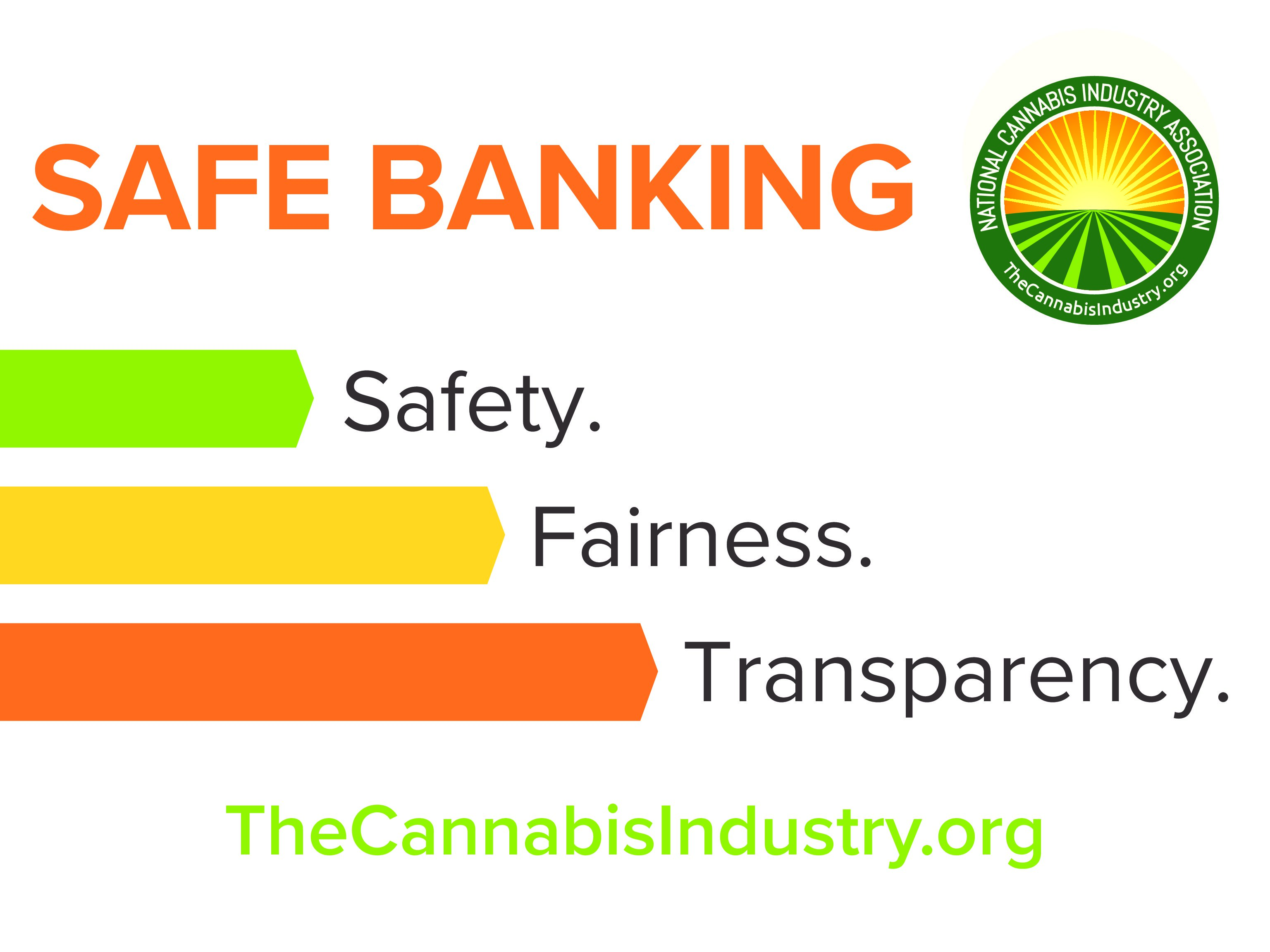
Legislation would allow state-legal cannabis businesses fair access to financial services
Today is fourth time the House has approved cannabis banking reform
WASHINGTON, D.C. – The House of Representatives approved legislation again today that would provide safe harbor for financial service providers to work with cannabis businesses that are in compliance with state laws. The Secure and Fair Enforcement (SAFE) Banking Act, or H.R. 1996, was reintroduced in March by Reps. Ed Perlmutter (D-CO), Steve Stivers (R-OH), Nydia Velazquez (D-NY), and Warren Davidson (R-OH), and had 177 total cosponsors by the time of the vote. The legislation was approved by a vote of 321-101, including a majority of voting Republicans.
This is the fourth time that the House has approved the language of the SAFE Banking Act, initially as the first standalone cannabis policy reform bill ever passed by either chamber of Congress in 2019 and two more times last year as part of pandemic relief packages that were not approved in the Senate.
“We are incredibly grateful to the bill sponsors who have been working with us for the last eight years to make this sensible legislation become law and have shepherded it through the House time and again,” said Aaron Smith, co-founder and chief executive officer of the National Cannabis Industry Association. “The SAFE Banking Act is vital for improving public safety and transparency and will improve the lives of the more than 300,000 people who work in the state-legal cannabis industry. It will also help level the playing field for small businesses and communities with limited access to capital. It is time for the Senate to start considering the companion legislation without delay.”
Advocates are hopeful that Senate Banking Committee Chair Sherrod Brown (D-OH) will take up the bill in the near future so that it can begin to move through the upper chamber as soon as possible and become law before the end of the year.
The SAFE Banking Act would protect financial institutions from federal prosecution for providing banking and other services to cannabis businesses that are in compliance with state law, as well as help address serious public health and safety concerns caused by operating in predominantly cash-only environments. The legislation would improve the operational viability of small businesses by helping them reduce costs associated with lack of access to banking and increasing options for traditional lending that many small businesses in other fields rely upon. It would also mandate a study on diversity in the cannabis industry.
Laws making cannabis legal for adults have been passed in 18 states as well as the District of Columbia and the territories of CNMI and Guam, and 36 states as well as several territories have comprehensive medical cannabis laws. The substance is legal in some form in 47 states.
###
Follow NCIA
Newsletter
Facebook
Twitter
LinkedIn
Instagram
News & Resource Topics
–
This Just In
Member Blog: The Evolving Cannabis Legal & Regulatory Landscape in 2026
How THCa Vapes Are Changing Consumer