Join Now

Equity and Access: Making the Case for Cannabis Consumption Lounges

It’s Time to Build the Next Chapter of Cannabis Commerce

Across the country, a simple question is gaining traction: Where can consumers legally consume the cannabis they legally purchase?

This white paper—Equity and Access: Making the Case for Cannabis Consumption Lounges—is your guide to answering that question with clarity, confidence, and purpose.

Developed by NCIA’s State Regulations Committee, this resource breaks down the evolving legal landscape and unpacks the economic, social, and regulatory case for onsite cannabis consumption.

Why This White Paper Matters

Legalization was never meant to stop at retail. Without legal places to consume, access remains incomplete, enforcement persists, and communities are left behind. Consumption lounges are more than venues—they’re platforms for education, equity, and economic development. They connect patients, support new consumer journeys, and revitalize main streets. With the right approach, they can become anchors of access and engines of inclusion.

Download this white paper to explore:

  • Regulatory frameworks across key markets—including California, Nevada, and Illinois
  • Strategies for outdoor consumption models, pilot programs, and advocacy campaigns
  • Myths vs. realities around public health, impaired driving, and youth access
  • Economic opportunities and social impact potential of consumption lounges
  • Real-world policy comparisons to guide your own local efforts

Be part of a smarter, stronger, and more equitable cannabis industry. Download your copy now.
Three Things Regulators and Policymakers Can Do to Undercut Criminal Markets and Support Legal Main Street Cannabis Businesses

The simple truth is that regulated cannabis markets are not working for the vast majority of small businesses, including equity businesses.

Regulators increasingly understand that these businesses are struggling, but face the daunting challenge of knowing where to start with the many, many, many voices calling for attention. Of course, regulators are also wary of accepting a rescue plan for Main Street businesses from lobbyists exclusively paid for by the handful of large Wall Street backed businesses that can afford such slick-talking representatives.

Providing a credible voice for those Main Street businesses is at the core of NCIA’s mission.

As a result, our Policy Co-Chairs Khurshid Khoja and Michael Cooper recently traveled to the annual external stakeholders meeting of the Cannabis Regulators Association (better known as CANNRA), where they were invited back to address state and local cannabis regulators from across the country. Michael and Khurshid spoke on issues of crucial importance to the future of the industry, including the challenges facing small businesses, the successes and failures of social equity programs, the potential pitfalls of rescheduling without addressing FDA oversight in advance, and establishing a level playing field between state-licensed cannabis businesses that provide highly regulated delta-9 THC marijuana products, and unregulated actors that provide equivalent products with equally potent, psychotropic and/or chemically analogous cannabinoids derived from hemp.

Regulators were clear at the meeting that they need more credible, tangible solutions for the challenges facing these markets, and they wanted to hear directly from the nation’s oldest, largest and still most representative non-profit trade association for the regulated cannabis industry.

Today, NCIA is proud to offer the first of a series of policy papers that offer specific steps that regulators and policymakers across the nation can take to help these struggling markets.

Want to help NCIA fix the challenges you’re facing? Existing members are encouraged to contact us at Membership@thecannabisindustry.org to provide feedback or learn how you can get involved with this project. Not a member? No problem. Sign up here, and roll up your sleeves to join the fight.

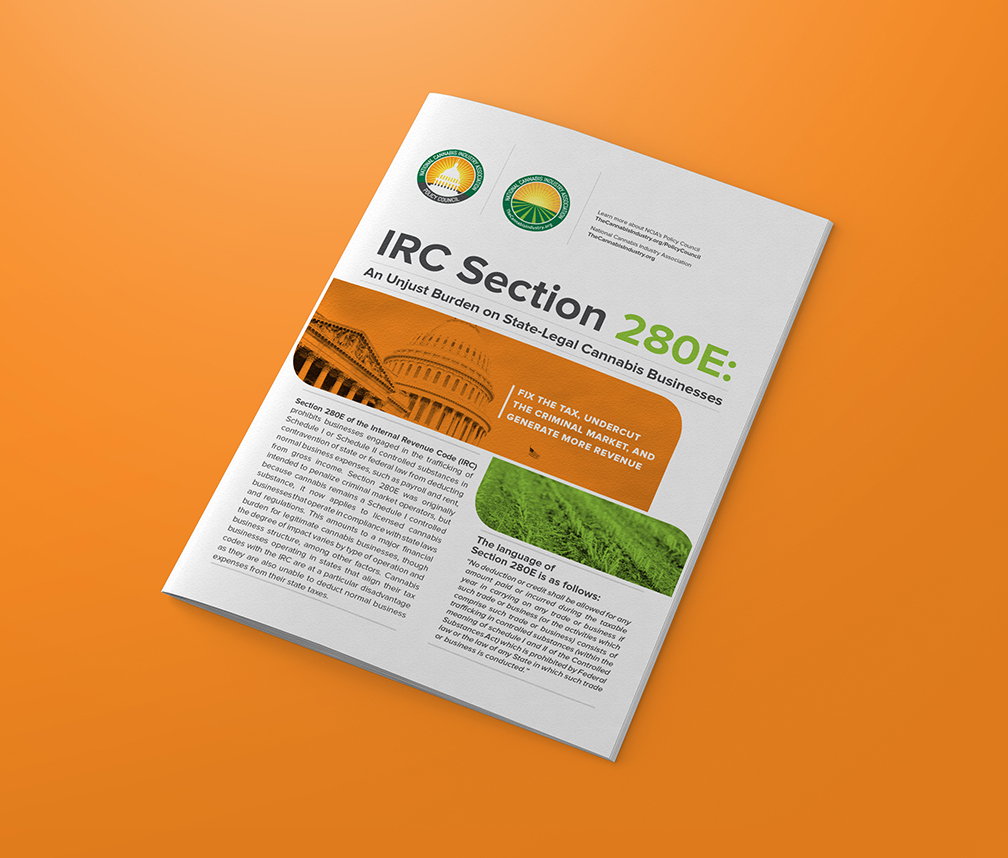
IRC Section 280E: An Unjust Burden on State-Legal Cannabis Businesses

Section 280E of the Internal Revenue Code forbids businesses from deducting otherwise ordinary business associated with the “trafficking” of Schedule I or II substances, as defined by the Controlled Substances Act.

This provision was enacted by Congress in 1982 in order to penalize illegal drug dealers.  However, today the IRS aggressively applies Section 280E to state-licensed cannabis businesses, entities that were never conceived of when the statute was originally adopted.

An overwhelming majority of U.S. states now permit some form of legal cannabis commerce despite its nonsensical Schedule I status under federal law. As a result of the outdated federal status, 280E is being applied to thousands of licensed businesses effectively prohibiting them from taking the ordinary business deductions every other business relies on. 

We updated our position paper, “IRC 280E: An Unjust Burden on State-Legal Cannabis Businesses,” to help illustrate the facts about this outdated provision of the tax code. We’ve already delivered this publication to every member of Congress but we encourage you to download it and share with those in your network who need to know about 280E. 

The publication includes data from NCIA’s chief economist Beau Whitney which shows that exempting state-legal cannabis businesses from 280E would create a net benefit to the economy of nearly $2 billion dollars over the next three years. That means more new jobs, more prosperity, and more payroll taxes for the federal government.

Risk Management and Insurance Manual: An Introduction to Cannabis Insurance

The National Cannabis Industry Association’s Risk Management & Insurance Committee is a multidisciplinary group of risk management professionals convened to draw on the expertise and experiences of professionals dedicated to the cannabis community.
This manual is the first in a series of insurance manuals that will help guide you through the various coverages and definitions used in the cannabis insurance industry. This first edition of the RMIC Insurance manual will outline the entry level knowledge base for the cannabis insurance industry. Future additions will dive deeper into more specific insurance topics.

The Medicine of Cannabis: An Overview for Medical Professionals and Policymakers

As cannabis use expands in the U.S., issues that require the guidance of scientists and clinicians are rapidly arising. Patients are looking to their medical providers for information on cannabis safety, potential for interactions with pharmaceuticals, and therapeutic applications. However, the existing legal environment significantly hinders the ability of clinicians to engage with cannabis research or offer clear guidance. The U.S. federal government continues to classify cannabis as a Schedule I Controlled Substance, by definition meaning it has no accepted medical use and is unsafe to use even under medical supervision. This position cripples the ability of clinicians to advise patients or to influence the burgeoning cannabis industry.

Scientific and medical cannabis research in the U.S. lags behind other nations. While the past decades have witnessed exponential growth of compelling research on cannabis safety and therapeutics, most of it comes from international sources in Europe and Israel, as federal prohibition in this country obstructs open scientific investigation of cannabis. Without clinical guidance or a coherent regulatory framework, the U.S. cannabis industry is failing to provide consumers and medical patients with much-needed guidance on appropriate use and crucial guarantees of product safety. In order to develop a regulated cannabis industry founded on scientific research, significant shifts in U.S. cannabis policy are needed, particularly at the federal level.

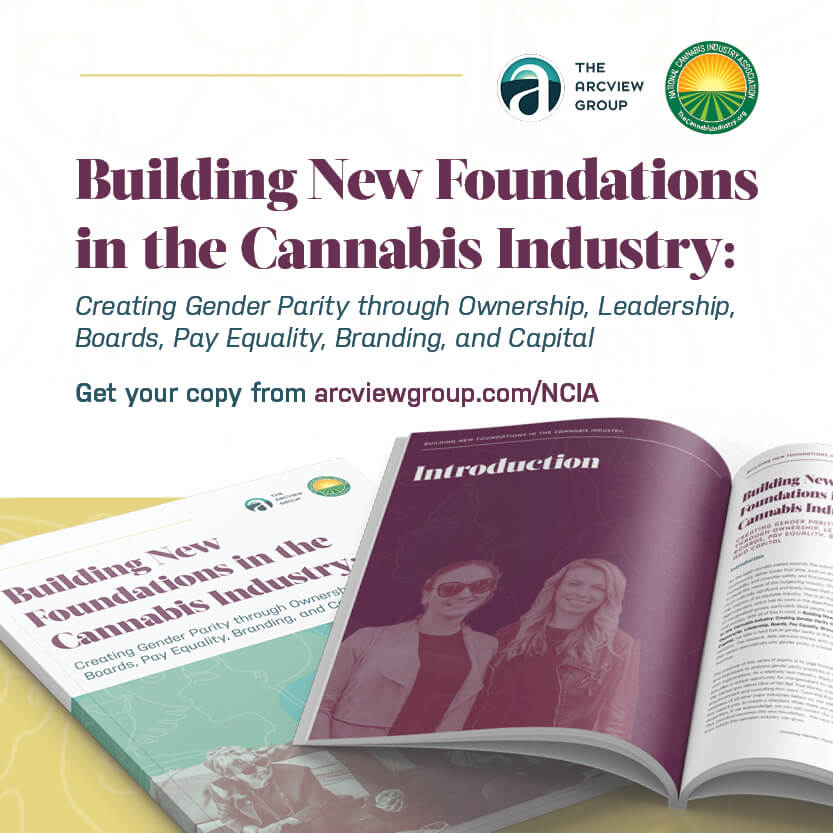
Building New Foundations In The Cannabis Industry

Building New Foundations in the Cannabis Industry: Creating Gender Parity through Ownership, Leadership, Boards, Pay Equality, Branding, and Capital, takes a hard look at gender parity in the U.S. cannabis industry. The research, data, personal stories, and case studies in this series demonstrate why gender parity is crucial to business success. The purpose of this series of papers is to urge businesses and individuals to embrace gender parity practices in their own organizations.
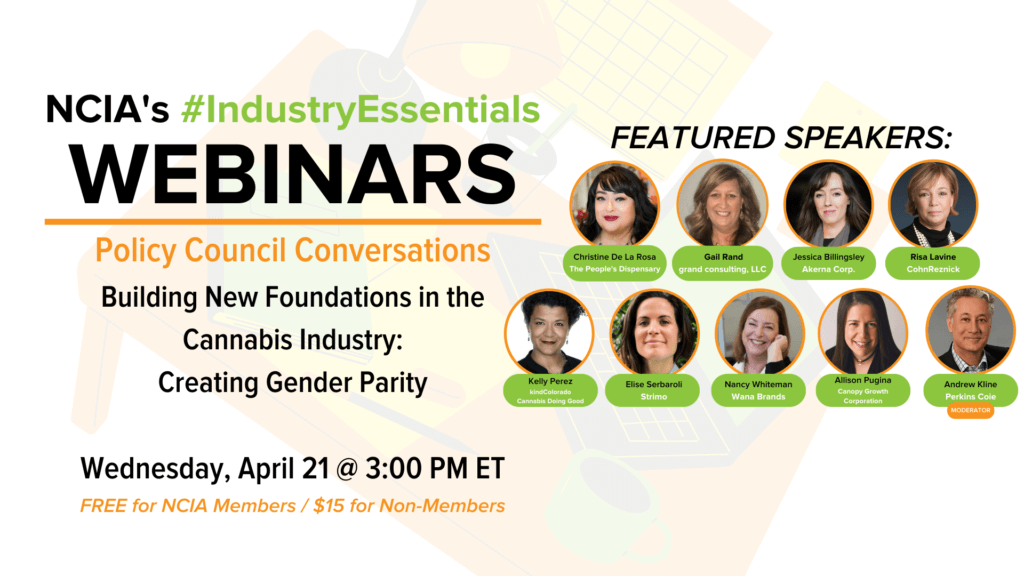

Longtime industry partners and cannabis research leaders, The Arcview Group and National Cannabis Industry Association (NCIA) champion equity, advocate for social justice, and help those affected by the war on drugs. Together, the two groups are honoring the inauguration of the first female Vice President of the United States through a series of white papers conceptualized by Andrew Kline, the former Public Policy Director of NCIA, and written by a collection of exceptional women.


Register now for the webinar on Wednesday, April 21, 2021 to learn more:

Policy Council Conversations: Building New Foundations in the Cannabis Industry – Creating Gender Parity

REGISTER FOR THE WEBINAR


Comments to the U.S. Dept. of Agriculture – Establishment of a Domestic Hemp Production Program

In October 2020, NCIA’s Policy Council, Hemp Committee, and Scientific Advisory Committee collaborated to submit comments to the U.S. Department of Agriculture in response to a reopening of the comment period to gather additional information on the establishment of final rules for domestic hemp production.

NCIA and Arcview Filed Amicus Brief in U.S. Supreme Court – Washington v. Barr

Law firm of Wilson Elser files Amicus Brief on behalf of NCIA and Arcview in a landmark U.S. Supreme Court case of Washington v. Barr, which challenges the constitutional legality of prohibition.

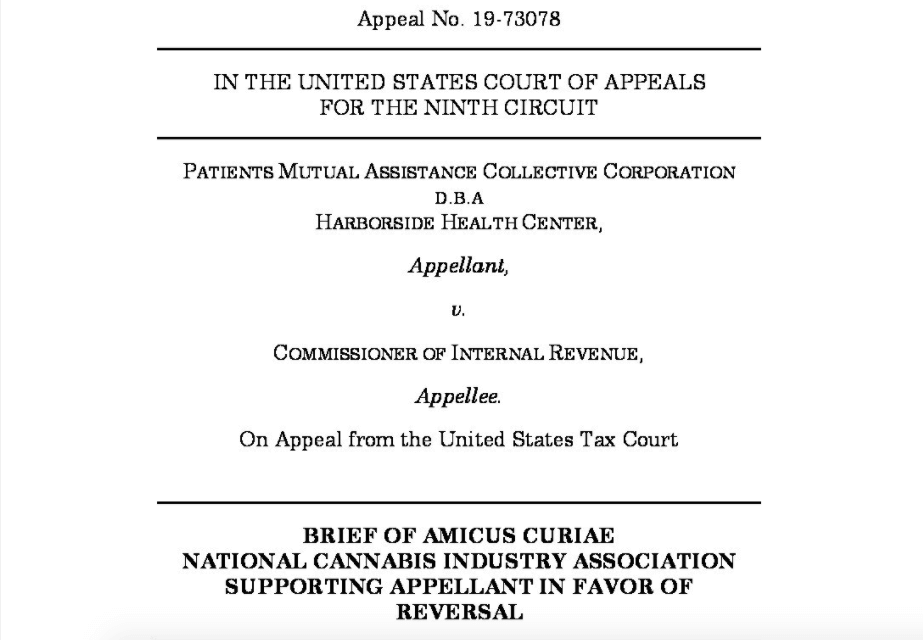
NCIA Filed Amicus Brief – Court of Appeals, Ninth Circuit

National Cannabis Industry Association Files Amicus Brief in Landmark Cannabis Tax Case

National trade organization presents substantive and Constitutional arguments against IRS 280E tax code preventing state-legal cannabis businesses from deducting normal business expenses

Harborside Health Center is appealing U.S. Tax Court decision over exorbitant federal tax bill


NCIA Response To DEA: RFI On Controls To Enhance The Cultivation of Marijuana For Research In The U.S.

In May 2020, NCIA submitted comments regarding the DEA’s Request For Information On Controls To Enhance The Cultivation of Marijuana For Research In The U.S.

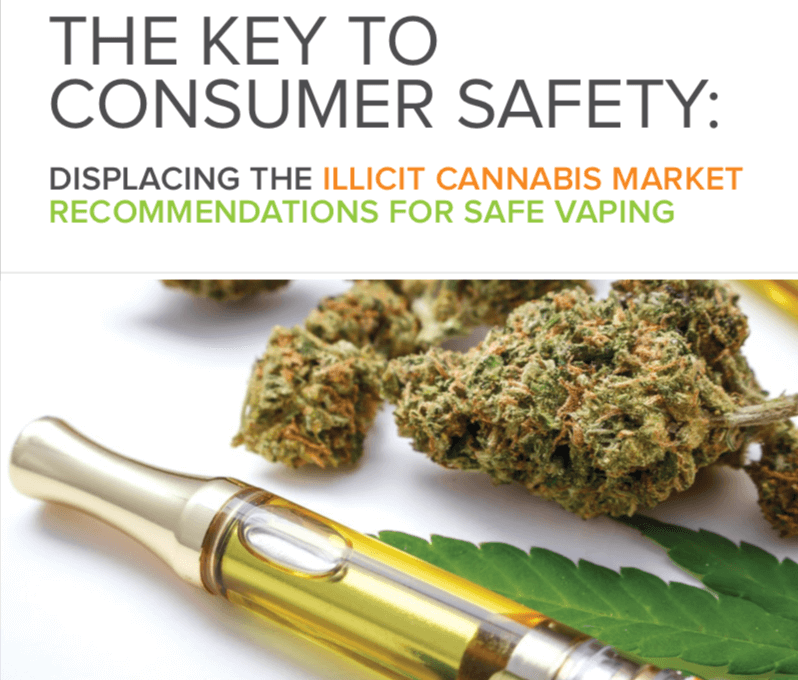
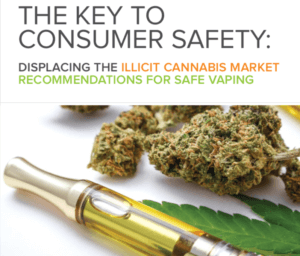
The Key to Consumer Safety: Displacing the Illicit Cannabis Market – Recommendations for Safe Vaping

As reports began to appear of a potential linkage between lung injuries and use of nicotine and/or cannabis vaping products, NCIA’s Policy Council established a Safe Vaping Task Force to provide a consistent response on behalf of the concerned members of the regulated cannabis industry. The Task Force’s mission was to communicate clearly in response to press reports and governmental actions, and articulate the state-legal cannabis industry’s fulsome efforts to act with integrity as responsible actors.
Today, it appears that public health experts have concluded that additives from the illicit market appear to be the primary cause of this crisis. While that work continues, we attempt to clear up some of the myths that exist about vaping cannabis oil and offer explanations for other potential dangers and strategies for minimizing risk.

Comment To The U.S. Department Of Agriculture: Establishment Of A Domestic Hemp Production

In November 2019, NCIA’s Policy Council and Hemp Committee collaborated to submit comments to the U.S. Department of Agriculture on establishing a domestic hemp production program.

Safe Vaping Task Force: NCIA Testimony Before The U.S. Senate Committee On Health, Education, Labor, and Pensions

In late 2019, the Center for Disease Control (CDC) identified a probable proximate cause of recent vaping injuries and deaths. Shortly after, the United States Senate (HELP Committee) held a hearing on Wednesday, November 13, on the vaping crisis, where CDC officials testified.

NCIA Policy Council’s Safe Vaping Task Force also submitted testimony for the record.

NCIA’s Policy Council calls for de-scheduling and regulation at the federal level to displace the illegal, untested, unregulated illicit market. It’s time for Congress to act. We can no longer sit by and watch as people are sickened by unregulated, untested, and dangerous products from the illicit market.


Adapting A Regulatory Framework For The Emerging Cannabis Industry

With the prohibition era nearing its end, it is imperative to begin discussing how to shape an effective, comprehensive cannabis regulatory framework. The system proposed in our white paper would allow all cannabis products to flow to the market through a regulatory scheme designed to best advance the policy goals raised by these products. It builds off the existing expertise of federal agencies and the developing state-level industry. Potentially intoxicating products and those making medical claims will be sold through controlled systems that limit their availability, while non-intoxicating products will not be hampered by those same restrictions. Our proposed system would end prohibition in a thoughtful and comprehensive manner, ensuring that the mistakes of the previous era do not negatively affect the opportunities that are at our doorstep.


NCIA Testimony Before The U.S. House Of Representatives Committee On Small Businesses In The Cannabis Industry

Increasing Equity In The Cannabis Industry: Six Achievable Goals For Policy Makers (March 2019)

With cannabis now fully legal for adults in ten U.S. states and the District of Columbia – and more elected officials considering legalization in other states every day – it appears as if the complete end of cannabis prohibition is nearly upon us. As we reach this milestone, we must acknowledge that cannabis prohibition was not only an attempt at preventing individuals from possessing and using cannabis, but also an accompanying criminal punishment regime that enforced this prohibition through government force. This system, like most other law enforcement regimes, did not affect everyone equally.

Although cannabis legalization ends prohibition, it does not necessarily stop or reverse the harm created by the punishment regime. As state-level legalization spreads and the legal cannabis market expands, the individuals and communities most impacted by cannabis prohibition have all too often been left behind. These laws and regulations related to entry into the industry, like cannabis prohibition before it, have disproportionately impacted people of color.

To create a legal cannabis market accessible to all, the laws need to be designed and implemented with equity and fairness in mind.

This site uses cookies. By using this site or closing this notice, you agree to the use of cookies and our privacy policy.