Member Blog: Pre-Rolls are Poised to Become the #1 Category in Canada – Will the Same Trends Follow in the US?

Earlier this year, we predicted that pre-rolls were destined to be the top-selling cannabis product by the end of this decade, and a new deep dive into the Canadian market has only further convinced us that pre-rolls are not only a cornerstone of the current market, but a major driver for future growth not only North of the Border, but in a federally legalized U.S. cannabis market as well.
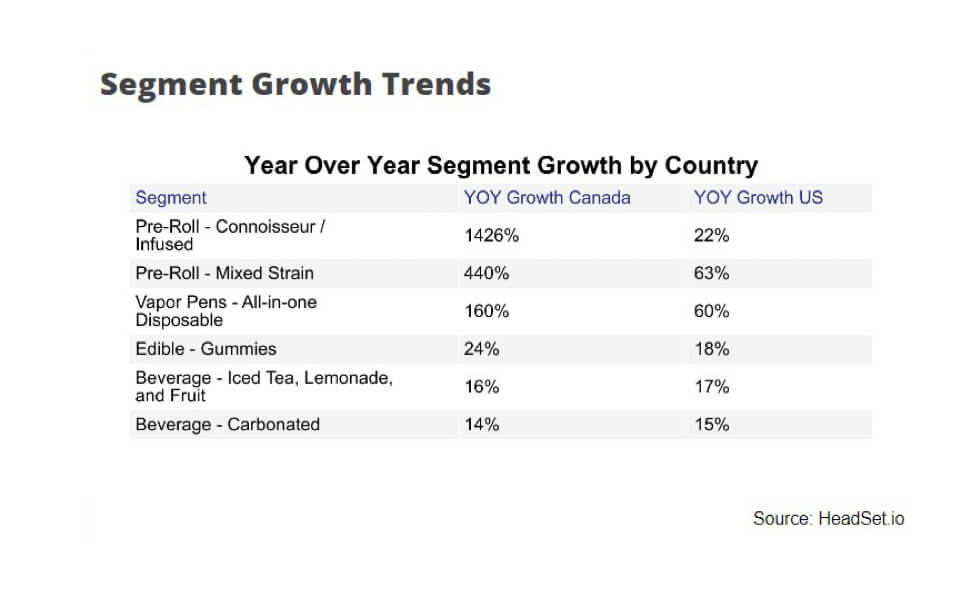
That’s because thanks in part to a staggering growth rate of 606% in infused pre-rolls from January 2022 to February 2023, pre-rolls are currently on the verge of overtaking flower as the top product category in Canada’s cannabis industry.
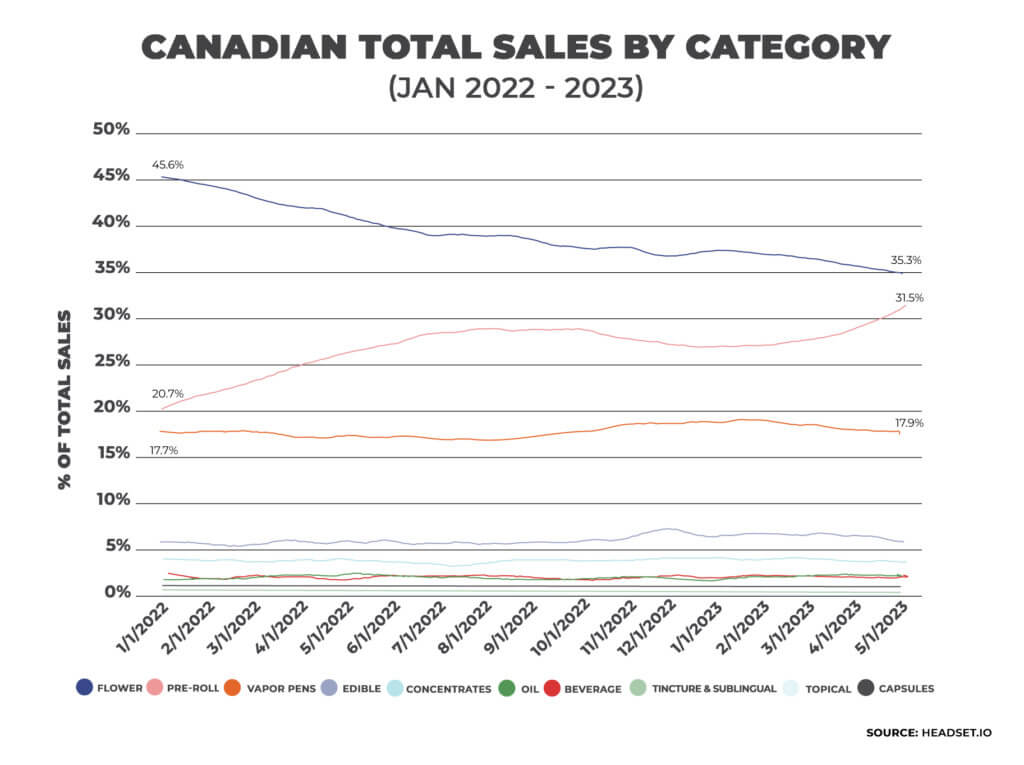
Using data from cannabis analytics firm Headset, our new White Paper, “Pre-Roll Growth in the Canadian Market,” details how pre-rolls in Canada have grown more than 50% over the past 18 months, from a 20.7% market share in early 2022 to a 31.5% total market share in May 2023, with total sales in the category topping CAD$1 billion in 2022. At the same time, flower sales in Canada continue to drop, falling to just 35% of sales in May 2023, compared to 31.5% for pre-rolls.
 With federal legalization believed to be on the horizon for the United States, Canada’s data stands out as a national system and gives us some insight into how the American market could respond to a federal program, as opposed to one that is regulated state-by-state.
Growth in Every Market
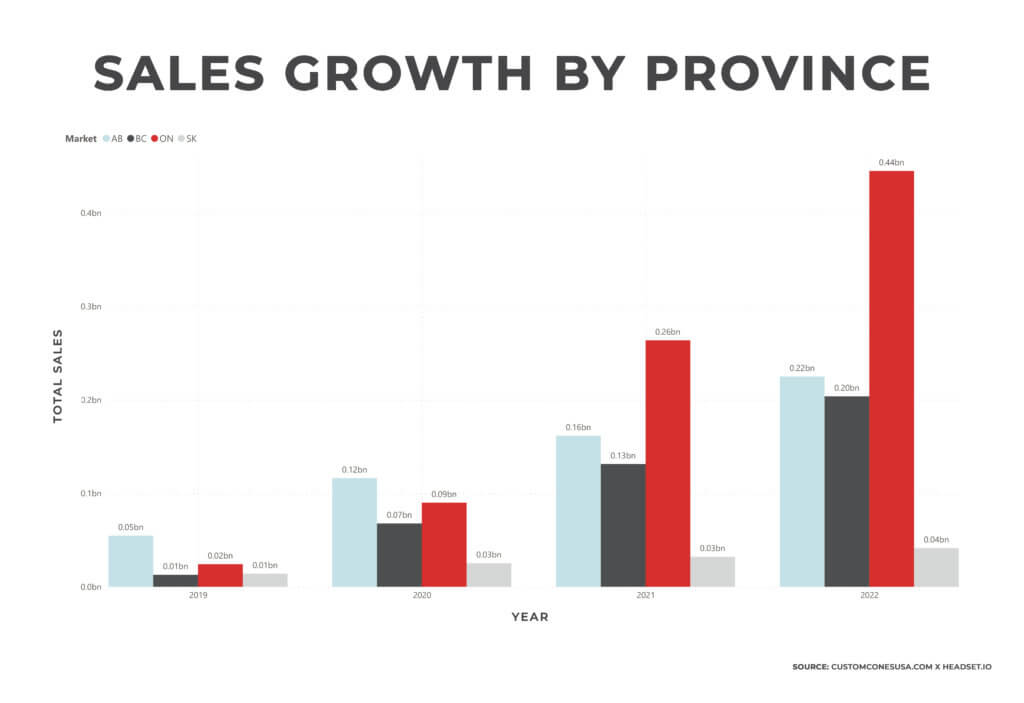
Sales of pre-rolls in all four of the provinces tracked by Headset saw large increases. Pre-roll sales saw 33% and 37% growth in Saskatchewan and Alberta, respectively, a nearly 54% growth in British Columbia and a whopping 69% increase in Ontario, the country’s most-populous province. In the U.S., pre-roll sales also continue to surge, growing to a 12.1% market share in the States.
 The sales growth has been fueled in part by the rise of infused, or “connoisseur” pre-rolls, which combine a cannabis concentrate and flower into a single pre-roll cone. The result is a more potent pre-roll, often at a higher price point, which has helped push revenue totals even higher since Health Canada clarified its rules in late 2021 to clear the way for the product.
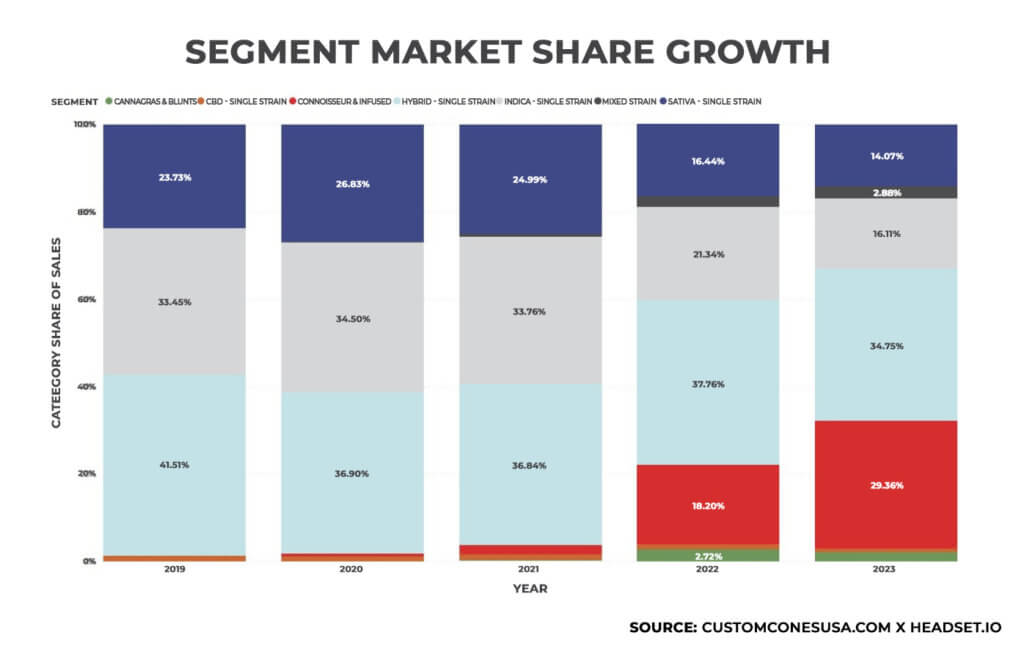
Consumers have responded, with infused pre-rolls seeing an eye-popping 1,426% growth rate from 2021 to 2022. The segment grew from just under 3% of the market at CAD$12.7 million in 2021 to nearly 30% and CAD$47.9 million by mid-2023. That’s more growth than any other pre-roll category except single-strain hybrids.
 Keeping Price Points High
The rising popularity of infused pre-rolls, with their higher price point, has been a significant factor contributing to the increase in the average price of Canadian pre-rolls. Infused pre-roll sales jumped from 6.2% of total sales in January 2022 to 29.8% of sales by February 2023. This trend has been instrumental in maintaining the overall price of pre-rolls even as prices for flower and concentrates have decreased.
According to Headset data, in 2022, pre-roll products accounted for 27% of the new items introduced in the Canadian market, demonstrating a remarkable growth rate of 48.2% compared to 2021, second only to beverages. In response to the increasing demand in this category, a total of 1,870 new pre-roll products were launched in the Canadian market during that year.
The resilience of pre-roll prices can also partially be attributed to their manufactured nature and the unique attributes of infused pre-rolls. The demand for stronger pre-rolls, coupled with declining prices for flower and concentrates, has created a favorable environment for launching infused pre-roll products.
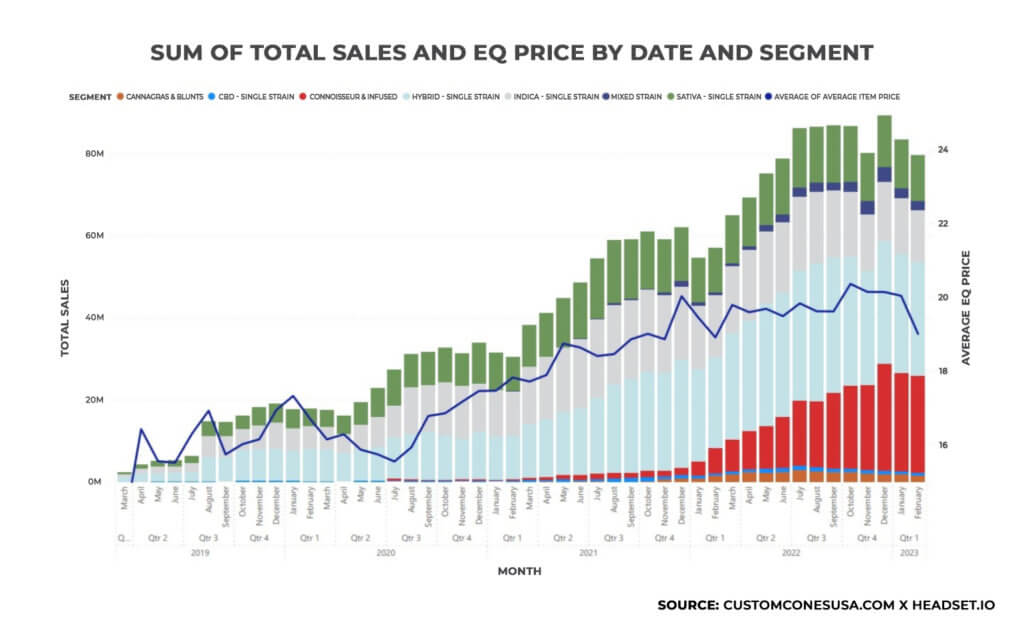
Additionally, automated pre-roll machinery continues to evolve, including new automated infused pre-roll machines, making it easier for manufacturers to produce large quantities of infused pre-rolls at a slight premium over regular pre-rolls, leading to the category’s rapid expansion.
Multi-Packs and Cross-Generational Appeal
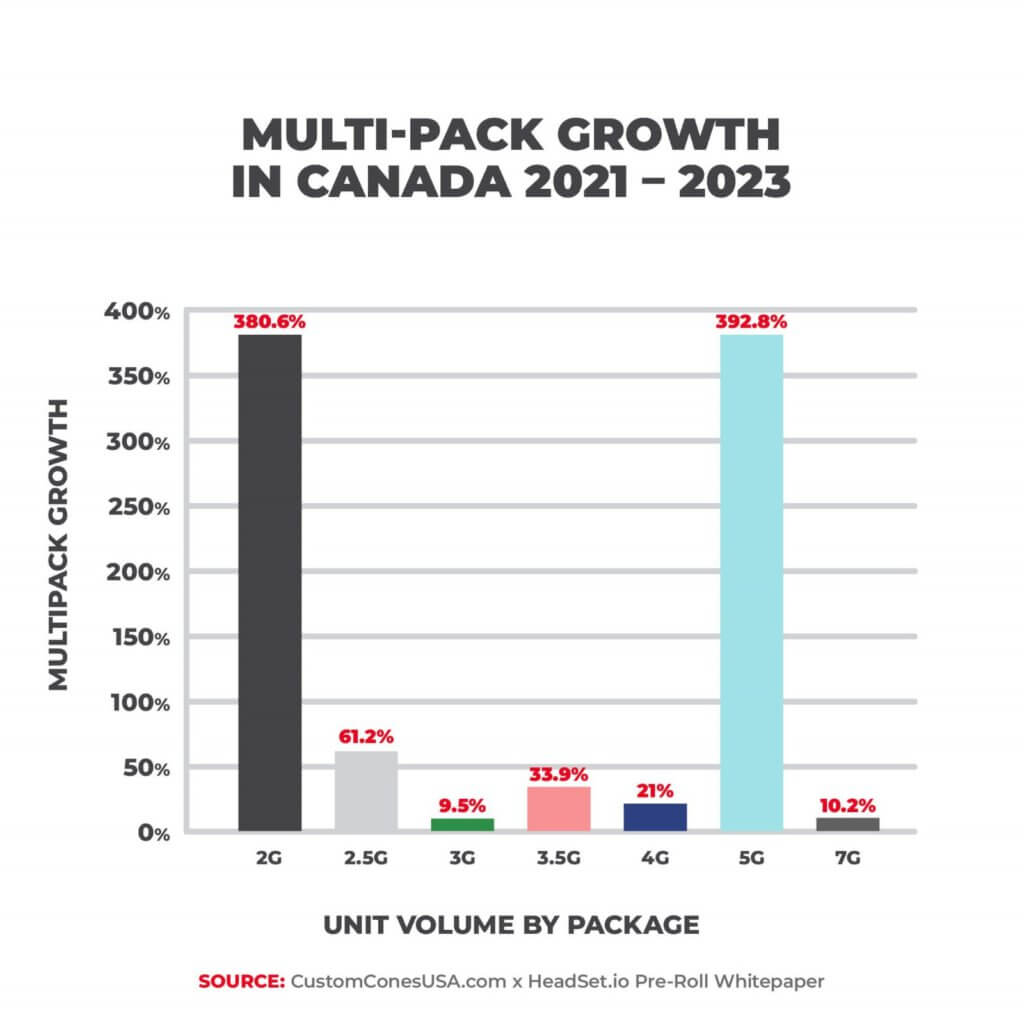
Other insights from our report include a surge in pre-roll multi-packs, with 2- and 5-gram packs seeing an almost 400% growth over the past two years, and that the pre-roll category shows less price compression than any other segment of the market, as it does in the U.S. as well.
Part of the strength of the pre-roll segment is its cross-generational appeal. For example, the Ontario market is the largest and fastest-growing of Canada’s provinces. With revenues reaching CAD$440 million in 2022, Ontario accounts for almost half of all sales in Canada. And within Ontario, the wallet share of pre-rolls grew within every generational group through 2021, with Gen X and Millennials seeing the largest growth, at around 45% each.
Within the fastest-growing group of consumers in the industry, Gen Z (which in Canada is a larger cohort than the U.S. due to a lower age restriction for cannabis purchases), pre-roll sales increased with both male and female consumers. The wallet share of pre-rolls among female buyers grew more than 4% to 20.4% in 2021. For males, the increase was even larger, growing from 14.6% of wallet share to 19.7%.
Final Thoughts on Pre-Roll Growth
The main factors driving the huge growth in pre-rolls are:
- Increased pre-roll quality, as flower and concentrate prices drop, so companies can create a higher quality pre-roll at cheaper and cheaper prices.
- Reduced labor costs, as advancements in pre-roll machinery help companies scale production and bring in automation.
- Consumer buying patterns showing that customers want convenience and are consuming for recreational use, not health and wellness.
The next big trend in pre-rolls, which will push pre-rolls to the No. 1 sales category in the industry, is freshness. Competing in the future will mean better packaging and a better supply chain, so pre-rolls are always fresh at retail.
But with sales surging across both Canada and the U.S., now is the right time for producer/processors to launch or expand pre-roll lines, particularly infused pre-rolls and pre-roll multi-packs.
For more information on how you can capitalize on the latest trends in the pre-roll segment, contact the Pre-Roll Experts at Custom Cones USA.
Member Blog: Harvesting Automation In The Time Of COVID-19

by Brett Layne, sales and manufacturing leader at Mobius Trimmer
Coronavirus is shining a light on the vulnerabilities (and inefficiencies) of manual processes in cannabis harvesting.
Coronavirus is disrupting the cannabis industry in North America. And while COVID-19 restrictions vary in different markets, many cannabis cultivators have had to stop or drastically reduce operations to maintain compliance.
Sadly, the long-term impact of coronavirus will force some cultivators to permanently close their doors.
Under the current social distancing mandates, the grow rooms themselves aren’t a problem. Staying 10 feet away from other staffers in a greenhouse is easy, there’s always plenty of space and the ability to rotate and spread out shifts.
Harvesting is the culprit.
Cramped and crowded trim rooms with at least a dozen employees (sometimes more) in close quarters isn’t acceptable or wise under today’s circumstances. Laws aside, many hourly employees are calling in sick or not showing up for work at all. Or even worse, they show up to work with an illness, COVID-19 or otherwise. Skilled workers aren’t easy to replace, but a sick employee introduces a new set of issues.
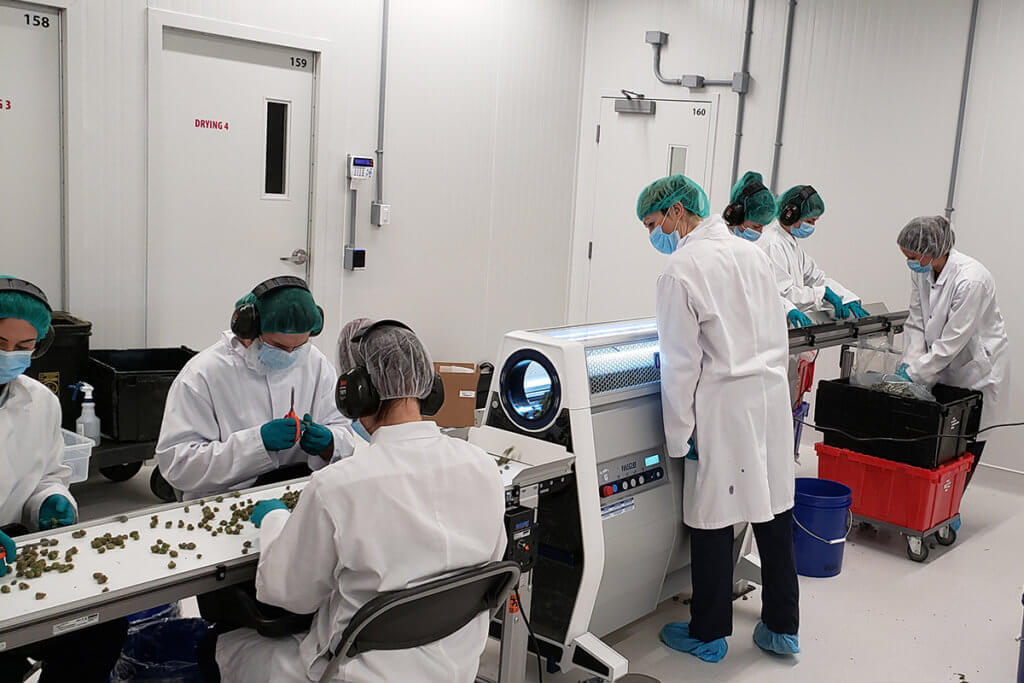
We’re advocates for highly-automated cannabis harvesting and processing. Automation is perfect for roles that are dangerous or repetitious or can introduce inconsistencies and contaminate products.
And because of coronavirus, the cannabis industry needs automation now more than ever.
You’re ahead of the curve if you’ve automated aspects of your harvesting workflow. And you’re probably still operational.
But it’s not too late for cultivators that are manually harvesting and trimming cannabis to re-think their processes, embrace automation, and adapt tools like automated trimming machines, buckers, conveyors, and mills to stay in business and keep their employees safe.
There are many dated arguments that claim trimming machines take the soul out of cannabis. Hand-trimming is viewed by some as a more refined process that does less damage to the flower. And while most people will always be a fan of craft cannabis, the arguments against automation are, at this point, inaccurate.
The trimming machine backlash was the result of legacy trimmers that weren’t able to match the quality of hand-trimmed cannabis. Today, this isn’t necessarily the case. Innovative machine trimmers can produce a trimmed flower that’s virtually indistinguishable from its hand-trimmed cousins. And the best machine trimmers can offer a level of consistency that hand-trimming can’t match.
If you’re not yet convinced, here’s something to consider: the consumer opinion of hand-trimmed cannabis will change after COVID-19. Customers will feel better knowing that their cannabis has had minimal human intervention.
The best of today’s machine trimmers produce an exceptional product, keep your employees safe, and help you stay in business. It’s a win-win for everyone.
Now is the time to consider automation if you haven’t before in order to keep your operations, your employees, and your customers safe, and watch your business continue to grow.
 Brett Layne is a sales and manufacturing leader at Mobius Trimmer, his “forever home.” Prior to his career in the cannabis industry he’s been a brewer, winemaker, industrial rigger, carpenter, and mass-timber builder. He lives in beautiful British Columbia with his family.
Mobius Trimmer takes the complexity out of harvesting by offering the world’s best cannabis and hemp processing equipment. Mobius equipment is engineered for ease of use, scalable output, employee safety, and GMP workflows. Plant material bucked, trimmed, and milled by Mobius equipment rivals product processed by hand.
Backed by harvest consulting experience earned in facilities around the world, top-tier customer service, and an immersive training academy to help you maximize your investment, Mobius is the unrivaled global standard for cannabis and hemp processing.
Member Blog: What The Cannabis Market Can Learn From The Energy Sector About Overcoming Market Complexity

by Mike Elliott, Business Development Executive at DCM
In an industry where change is a constant, cannabis companies face big challenges when it comes to brand-building, communications, and bringing products to market. The sector’s complexity is only increasing, which is compounded by its continual evolution, along with tight, varied, fluctuating regulations, and in some cases, less-than-informed consumers.
While the path forward may seem uncharted, in fact, similar market challenges exist in other verticals. With the right strategies and tools, these hurdles—including rigid regulatory conditions—can be overcome. If you’re looking for a roadmap for success, look no further than the U.S. energy sector – specifically, utilities.
The recent shift toward deregulated electric and gas markets has created an environment strikingly similar to that of cannabis. Both sectors grapple with strict, unpredictable regulatory governance. Both must comply with state-by-state variances and prohibitive marketing. And both face the challenge of communicating with customers who are often unfamiliar with the sector’s legislation and production processes.
By gaining an understanding of these obstacles, cannabis operators can improve their own market and regulatory navigation. Following are a few key lessons learned from energy.
-
Changing regulations demand razor-sharp communications management
For both energy suppliers and cannabis providers, regulation and compliance are determined at the state level. State-by-state laws vary widely and become increasingly complex when factoring in additional local and municipal regulations—not to mention continual review and change. This complexity has a direct impact on communications and brand management. Rules on communication and packaging—including, for cannabis, dosage—can diverge greatly and shift quickly. And there are few signs of this framework getting simpler.
Energy suppliers have addressed this complexity through variable, highly responsive communication platforms that can—very quickly and at scale—accommodate unique market requirements.
For cannabis companies, similar success depends on razor-sharp management, including automation of intensive, often spreadsheet-based processes that are manually maintained and prone to error. Robust, technology-driven platforms can now deliver a wide array of materials efficiently and accurately across different markets, all while ensuring airtight compliance with each market’s specific regulations.
-
New opportunities call for a fast, location-specific response
Both energy and cannabis businesses must be agile and flexible when responding to new market opportunities. In adapting to fluctuating, state-by-state rules surrounding contract terms and conditions, energy providers have learned the hard way how inefficiency and error can delay market entry and reduce sales potential.
Faced with similar circumstances, cannabis producers need the support of automated, location-specific marketing – technology that efficiently allows for customized, regional messaging across multiple markets and channels while ensuring locked-down branding and regulatory compliance.
-
Perception is everything when it comes to reaching consumers
With deregulation, utility companies realized that many consumers were uninformed regarding the legislative changes and were unaware of product availability and their own ability to shop around. Educating consumers was key – and communicating to them a value proposition that would distinguish each provider’s offering from that of the competition.
While cannabis is not entirely unfamiliar to many consumers, the dialogue around legalization and products remains similarly dogged by a lack of information and general misunderstanding. Cannabis companies must now shift those perceptions and educate potential customers on product safety and use. Producers must look at developing innovative communications supported by tools like automation, multi-channel communications management, and 1:1 marketing. These can help target, personalize, and monitor communications to better connect with consumers.
-
With little room to communicate, companies need to get creative
Utility companies are highly restricted in not only how they can make changes to billing and service charges, but also how they can market to consumers. The scenario is the same for cannabis companies, though regulations are even more complex and restrictive, with federal prohibition blocking most traditional means of advertising, including social and digital channels.
Cannabis companies can combat these restrictions with genuinely creative thinking backed by a thorough understanding of the rules. That means combining market knowledge with creative expertise in a way that skillfully complies with regulations without breaking them. At the same time, creativity and customization cannot hinder efficiency. The right tools must be in place to make sure everything works together – for example, a platform that lets users customize branded collateral for different segments and channels, allowing for both efficiency and creativity – consistency and customization.
The bottom line: the stakes are too high for non-compliance
Fines for non-compliance in the energy sector can reach into the millions. Likewise, stiff penalties are levied for non-compliance in the cannabis industry. The financial implications can be devastating for cannabis producers – even more so if it comes to relabeling or pulling product from store shelves. To compound the risk, publicized mishaps can deliver a serious blow to consumer confidence for brands trying to win consumer trust.
With that in mind, navigating the highly regulated cannabis landscape takes careful planning, constant oversight, and the ability to stay ahead of evolving regulatory requirements. While the opportunity is promising, it requires tools, technologies, and strategies that streamline processes, mitigate risk, and increase speed-to-market. Charting your course depends on careful planning, trusted advice, and experienced partners – along with the ability to learn from those who have been there and done that.
 Mike Elliott is a Business Development Executive specializing in cannabis at DCM
From brand strategy and consumer insights to dynamic labeling and POS solutions, DCM helps build, protect, and bring to market North America’s largest cannabis brands. Learn more at http://www.datacm.com.

Follow NCIA
Newsletter
Facebook
Twitter
LinkedIn
Instagram
News & Resource Topics
–
This Just In
Member Blog: The Evolving Cannabis Legal & Regulatory Landscape in 2026
How THCa Vapes Are Changing Consumer