Member Blog: How Brands Can Help Cannabis Decriminalization

By Mack Bush, King Palm
There has been a steady movement for the decriminalization of cannabis worldwide. Many organizations call for their governments to allow recreational and medical cannabis, and it’s hard to deny how valuable the cash crop can be for the local economy. Learn how some cannabis brands are contributing to decriminalizing cannabis and making an impact.
As it stands, 19 U.S. states have fully legalized cannabis, and another 19 have medical marijuana programs. While this is fantastic progress, it’s still leaving many people convicted of drug crimes, medical patients, and minorities behind. While some places go the extra mile, there are still many places where it’s a punishable crime with the smallest amount of cannabis. Cannabis laws continue to evolve to protect users, such as the new California law that protects employees from smoking outside work hours.
A bill to decriminalize marijuana passed in the U.S. House in April, but there’s not a lot of hope that Congress will take it up. However, the fact that it was proposed shows that recreational and medical cannabis is becoming closer to the mainstream.
Global Cannabis Decriminalization
Canada, Mexico, South Africa, Thailand, and Malta have legalized adult-use cannabis. The list is relatively short and shows that there’s still progress worldwide.
It’s become clear that many think it doesn’t make sense for people to go to prison for cannabis possession. Programs have been set up in most states and some countries to expunge cannabis possession records and free people who are locked up unjustly.
Here’s a quick introduction to some of these programs and how states, businesses, and individuals push cannabis decriminalization and legalization forward.
States Create Social Equity Programs
A common critique of the cannabis industry is that it’s dominated by white people who were never negatively impacted by anti-marijuana laws. Social equity programs in many states are working hard to level the playing field.
While each state has different qualifications, eligible people must live in an area strongly affected by high arrest and imprisonment rates for cannabis activity. Applicants might also receive extra assistance if they were arrested or convicted of marijuana crimes before legalization.
Some businesses also offer reduced product prices, grants, and loans for cannabis enterprises founded using social equity programs. This makes it easier for minorities to get the funding they need to start the industry.
Programs To Help Minorities with Cannabis Jobs
Not everyone who wants to get involved in the cannabis field is interested in running their own business. Some organizations are also making it easier for people of color to find jobs in the field.
The Minority Cannabis Academy is a New Jersey program that helps young Black Indigenous people of color find their vocation in the cannabis industry. It trains them to work as budtenders in existing dispensaries, giving them a leg up for employment.
In Illinois, cannabis companies can expedite their application for a license if the majority of their staff has been convicted of a cannabis-related offense in the past. This incentivizes businesses to hire minorities and people who need help from these programs.
More programs like these should be developed nationwide if we want a positive representation of BIPOC in the cannabis industry.
Grants Given to Provide Legal Assistance for Expunging Nonviolent Cannabis Crimes
Having a marijuana conviction on your record can have lasting consequences. Drug convictions come up in background checks, and since they carry a significant stigma, people can lose out on employment opportunities when a company judges them harshly for their past.
A cannabis conviction can also make it difficult to rent an apartment or buy a home. Plus, people with drug convictions have been denied student loans and other loans from financial institutions.
When Illinois legalized cannabis in 2019, it was important to lawmakers that people who were convicted for marijuana crimes previously were able to clear their records.
An excellent organization focused on eliminating people’s cannabis records called the Illinois Equal Justice Foundation is taking a step forward. They will award over $1.4 million in grants spread throughout 18 organizations in the state to help rid people of their cannabis records. The funding will assist legal aid groups, so they can represent people in court and are committed to educating people about their expungement options.
Thailand has pushed its efforts even further. When the country delisted cannabis as a narcotic in June, they also released 3,071 inmates who had been convicted of cannabis-related crimes.
Canada has issued pardons for people with previous marijuana convictions for several years. The process can be slow, but the government feels strongly that these people should be released, and their records wiped clean.
These models show that it’s possible to legalize marijuana while still caring for people whose criminalization has been negatively impacted. Experts are hopeful that President Biden will free individuals in jail for marijuana possession, but the future in the United States remains unclear.
How Brands Can Help Impact Positive Change In The Right Direction
King Palm is a cannabis smoking accessory brand that has created a Last Prisoner Project rolling tray to help spread awareness of that non-profit organization.
This cannabis smoking accessory brand is donating to the Last Prisoner Project. This nonprofit organization is committed to freeing people convicted of marijuana-related crimes.
The organization works hard to advocate for bills that would free people from prison for marijuana offenses, and once people are freed, they help them integrate back into their communities.
Expungement Assistance
Many states are setting up expungement assistance programs that anyone can access. The process can take time and be confusing, but many people find it extremely worthwhile.
In 2021, Michigan passed the Clean Slate Act, which expanded the types of crimes that can be expunged. Some expungements will even be automatic under the law. The state says hundreds of thousands to millions of people are now eligible for their criminal records to be wiped clean.
Another strong member of the National Cannabis Industry Association is Cannabis Equity Illinois. They help community members expunge or seal their criminal records for cannabis and also advocate for automatic expungement. They also provide Know Your Rights seminars, so no one is criminalized for cannabis use.
Looking for help expunging your legal record with cannabis? Many areas have expungement events, and you can find exactly what you need to do on your state’s website.
Support for cannabis decriminalization is growing, but there’s still a long way to go. Luckily, many governments, businesses, and nonprofit organizations are doing their part to make cannabis mainstream and help minorities make their way up through the budding industry.
 Mack Bush (they/them) is a freelance writer who is passionate about sharing the joys of cannabis with the world. They manage their fibromyalgia with medical marijuana, and it’s opened up new doors and improved their quality of life. They live in Grand Rapids, Michigan with their cats, Rigatoni and Jasper. Find out more about their work at mackbush.com.
King Palm is one of the leading cannabis companies in the world for joint wraps, pre-rolled cones, and rolling papers. Their specialty palm wraps are made from Cordia leaves and allow you to get in touch with nature while you smoke. They also create quality smoking accessories, including electronic devices like concentrate vapes and nectar collectors, as well as lighters, rolling trays, grinders, and ashtrays. Find out more about their products at kingpalm.com!
Committee Blog: Social Equity Perspectives on Interstate Commerce – Part 1
 by Mark Slaugh, iComply LLC
NCIA’s Diversity, Equity, and Inclusion Committee
As the debate heats up on “how” rather than “if” cannabis legalization will happen, social equity and comprehensive reform are at the forefront of the minds of national legislators and advocates. Historically, people chose to legalize cannabis as a method of legitimizing the illicit cannabis market. Beyond the message that “Black Lives Matter,” the issue of the federal legalization of marijuana means, fundamentally, that the federal government must spearhead meaningful policies in diversity, equity, inclusion, and social justice, to balance the scales of injustice during prohibition and early legalization efforts by the States.
Further, the Biden Administration’s priority of respecting the sovereignty and self-governance of tribal nations means federal trust and treaty responsibilities may finally be met by regularly having meaningful consultations with tribal nations to create federal policy. Thus, the inclusion of tribal nation’s representatives is imperative when creating federal policy to ensure their rights are secure and there is parity amongst states and tribes.
Any descheduling or legalization framework must hold a social equity objective that is clear at the core of its function: To create as much NEW generational wealth for the most number of those disparaged from participating in the legal cannabis industry because of the socioeconomic impacts of more than 80 years of federal marijuana prohibition and due to the barriers to entry created amid state regulatory regimes.
Sadly, as written currently, all proposed federal bills fail to meet this critical objective.
As soon as the federal government deschedules marijuana, it falls under Congress’ constitutional purview to regulate interstate commerce. Marijuana included. This is likely the ONLY opportunity available for those impacted by the war on marijuana to balance the scales of historic injustice, by providing an opportunity to participate in cannabis business ownership in a meaningful and valuable way.
If social equity is not adequately addressed in a federal act, it would require a secondary bill to tax and regulate interstate commerce activities. This would waste precious time and open a door to unregulated and taxed activities until congressional consensus and control are established. We have seen mistakes like this lead to disaster already amid state markets who leapt before ensuring a safety net. It also would NOT guarantee that social equity would be addressed in a second bill under new congressional, senate, or executive purview.
More importantly, the projected market cap of the U.S. cannabis industry is projected to be $85B by 2027 and was $18B in 2020. To put that number in perspective today, the largest tobacco company’s market cap is $95.6B – that’s over 5x the market cap of the whole cannabis industry. Similarly, the largest beverage distribution company has a $45.5B market cap – or over $2.5x of the current cannabis industry cap.
Both of these “big businesses” are in the cannabis industry already and they are preparing for federal legalization. The moment cannabis is de-scheduled, it quickly becomes an “extinction event” for social equity unless guardrails are put in place in the first Federal Act to offer social equity a fighting chance.
To avoid needless delay, to leverage effective taxation and regulation, to protect social equity from rapid market consolidation and control, and to spearhead well-thought-out and innovative ideas to address the inequities of the cannabis industry, the National Cannabis Industry Association’s Diversity Equity and Inclusion Committee (DEIC) presents these considerations to amend any proposed federal act – in order to preserve key concepts central to addressing interstate commerce and the short-falls of previously enacted social equity programs.
The Problems with Current Social Equity Programs
In analyzing the social equity programs undertaken at municipal and state levels so far, the NCIA’s DEIC has found multiple shortcomings in achieving the goal of generating new generational wealth for as many people who have been systematically discriminated against during the prohibition era of cannabis.
Namely, the following major issues continue to prevail:
- Social equity applicants who are unqualified or do not participate meaningfully in the ownership or operation of the cannabis business. This can be because of the following reasons:
- A lack of experience or expertise in business skills necessary to operate
- A lack of experience or expertise in regulated cannabis operations
- Fear of continued persecution and distrust related to trauma from being victimized by the war on drugs.
- Based on the fact cannabis arrests have and still disproportionately affected BIPOC community members.
This causes many traditional, large, and privileged Multi-State Cannabis Operators (MSOs), in addition to established market entrants (Tobacco and Alcohol) as well as Special Purpose Acquisition Funds (SPAC’s) – collectively referred to as “mega players” – to decide to “take the wheel and drive” the cannabis licensing process and to put the social equity operator in the proverbial “back seat.” Another issue that remains unaddressed and underlies challenges in successful social equity programs is that:
- Social equity operators do not have access to financing to meaningfully contribute to capital or operating expenditures to partnerships with cannabis companies who have capital and expertise.
- This is certainly in large part due to generational prohibition and lack of access in being underprivileged.
- Prohibition also impacts financing which systematically discriminates against the disprivileged; regardless of their interest to participate in the cannabis industry.
- These individuals were prohibited from entering the legal market (when barriers were lower) and were initially labeled as “undesirables” because of past criminal history. This gave the cannabis industry and culture away to people who never suffered a day in the war on drugs.
The lack of access to education, experience, and wealth often drives the existing “mega players” who “hold the keys” to expertise and wealth, to justify operating agreements that contain provisions that make the social equity licensee’s position dilutable in the event they cannot meet their operating or fiduciary duties. Which brings up the third underlying problem in social equity programs which is connected to the above factors:
2. Attracting and grooming social equity candidates to qualify for licenses only to then leverage the applicant out of the licenses, is often how “mega players” skirt around social equity provisions. The justification in doing so is due to the above two factors and is justified as “what is best for business” by traditional operators expanding their footprint through social equity licensing.
In the social equity conversation, these partnership agreements are often referred to as “predatory operating agreements” which refer to the manner in which many “mega player” operators, knowing social equity applicants cannot bring education, experience, or money to the table, systemically target and groom qualified social equity applicants into delusions of wealth participation in cannabis only to obtain a license and then proceed into diluting the social equity partner – rather than educating them, providing them experience, or helping them obtain the wealth to contribute as equals.
Mega players, multi-licensed cannabis businesses, and vertical cannabis businesses may also engage in “social equity colonialism” in which they create “incubator programs” to educate, train, possibly fund, or partner with social equity entrepreneurs only to have them compete against one another in “pitch competitions” in which the mega player can cherry-pick the most controllable or affordable operator or otherwise leverage them to benefit including using taxpayer funds granted by the state or through discounts on licensing and/or taxes. Too often, the intent is to “tokenize” social equity operators, rather than empower them as equals.
Whether intentional or not, the impact of reducing social equity applicant participation after using them to obtain social equity licensing is a commonplace practice and shortfall of the programs analyzed by the DEIC.
To solve these problems, the DEIC acknowledges that the motivation for those in power to remain in power does not incentivize them to provide a truly equitable partnership simply because a program exists to do so. To address these diluting agreements, we recognize that the Government must play a role in addressing the underlying factors which justify the behavior driving “predatory operating agreements” and “social equity colonialism”.
Indeed, federal legalization and the regulation of interstate commerce with social equity at the forefront may be the last opportunity to address the harms caused by prohibition nationwide and the inequity of governments refusing to address social equity in cannabis. Similar to the Civil Rights Act of 1964, the victims in the war on cannabis cannot depend solely on state and local governments to address social equity.
Over the next two parts of this series, we will outline a framework of components that may be amended or included in a federal legalization bill to resolve the problems in social equity identified and to provide a comprehensive reform for permitting interstate commerce and addressing the inequity prevalent in the cannabis industry.
Read more in Part 2 and Part 3 of this blog series.
Equity Member Spotlight: Legacy Greens, LLC
NCIA’s editorial department continues the Member Spotlight series by highlighting our Social Equity Scholarship Recipients as part of our Diversity, Equity, and Inclusion Program. Participants are gaining first-hand access to regulators in key markets to get insight on the industry, tips for raising capital, and advice on how to access and utilize data to ensure success in their businesses, along with all the other benefits available to NCIA members.
Tell us a bit about you, your background, and why you launched your company.
 My name is Dr. Donise Floyd and I am the founder and managing member of Legacy Greens, a vertically integrated cannabis company. I was born and reared in Detroit, Michigan and I am a product of the public school system. I have a BS and MS from U of Detroit Mercy. I also have a Ph.D. in Leadership. Throughout my career, I have been instrumental in developing teams, building sustainable programs, formulating compliance models, and have been instrumental mentoring and impacting the community. I have been an administrator, educator, professor, mentor, business owner, and advocate for the community.
I experimented with marijuana when I was younger and like many others around me understood the value of the product for medicinal and recreational purposes. When I was younger, I would hear individuals reference marijuana as their medicine. In the late 1970s up to now, people use the plant to treat things like anxiety, depression, stress, and cancer. It was referenced and/or used as a medicine before it was popular. What is now known as the cannabis industry was known as a “side hustle” in my family and in some cases, a full-blown business that thrived and supported families and communities. But it was illegal. I look back now through very educated eyes and think how things could have been different if there were no legal implications. There was a high price to pay if you were caught! Especially if you were Black!
I have witnessed my family, friends, and community pay for it with their lives. Whether it was long-term prison sentences or loss of life; the sacrifice was tremendous and the impact far-reaching and long-lasting. I have seen, felt, witnessed, and lived the fallout of the war on drugs that ultimately decimated my community. We knew the penalty for “hustling” this plant was either incarceration or maybe even death. Today, the very thing that destroyed communities and families has become a multi-billion dollar industry. Legacy Greens was birthed to assist in restoring the community, build generational wealth, and repair some of the harm in family dynamics. Our goal is to vertically integrate this company so that it can lend itself to support, educate, and fund other entrepreneurial ventures that are connected, directly linked or outside of the cannabis space.
What unique value does your company offer to the cannabis industry?
 Legacy Greens is a minority female and social equity-owned and operated company. We are committed to connecting the community to resources. Our desire is to build a network and partnerships with other minorities, BIPOC, women, LGBTQ+ and veteran-owned companies both in the cannabis and ancillary space. The goal is to build relationships that would build wealth, opportunity, community, and lasting relationships.
While Legacy Greens is a for-profit cannabis company, our vision and mission are rooted in a philanthropic belief and value system. We are currently raising capital to launch phase one of our plan to open a dispensary leading to a fully vertically integrated company. We have submitted applications for several licenses beginning with an event planner. Others include dispensary, grow, and processing. Our business will use its profits to restore the community and part of our purpose is to build bridges that will lead to the creation of pathways to business ownership.
What is your goal for the greater good of cannabis?
Part of our goal is to “turn the black market green” by building bridges to access (one entrepreneur at a time). That is to say that we will support businesses with undocumented years of plant-touching experience with no resources and maybe even a lack of understanding with running a formal business. Legacy Greens is committed to R.I.D.E. for its community – Restore, Invest, Develop, and Educate.
What kind of challenges do you face in the industry and what solutions would you like to see?
The major barrier, at this time, is access to capital. We have been bootstrapping this initiative and have been faced with many challenges that we have and are still overcoming. Access to capital is a huge barrier but being a minority women business owner is another. It would be great to see more access to capital for the BIPOC community. It is so disheartening that in some cases the access is limited because of the color of your skin. We shall overcome all barriers and become a successful business that builds wealth not only for itself but for the community.
Why did you join NCIA? What’s the best or most important part about being a member through the Social Equity Scholarship Program?
NCIA has been a great networking tool. Their commitment to support social equity businesses is extremely valuable. The access to information has been very beneficial. The relationships and exposure have been immeasurable and the connections have been extremely rewarding.
It is my goal to continue to build relationships and maybe even partnerships. In some cases, it has even been a support system. Having the opportunity to discuss and roundtable ideas or challenges has proven to be an invaluable resource. NCIA has been an extremely valuable resource for Legacy Greens and its efforts.
U.S. Cannabis Business Conditions Survey Report Reveals Critical Concerns for the Cannabis Industry in 2022
by Beau Whitney, NCIA’s Chief Economist
 As the largest national trade association of the cannabis industry, NCIA works to advocate for and advance the interests of hundreds of member businesses. The recent publication of the Whitney Economics U.S. Cannabis Business Conditions Survey Report offers a granular look at how respondents are feeling, and what they are worried about.
Survey description
There were a total of 396 respondents to the Whitney Economics U.S. Cannabis Business Conditions Survey. Respondents were either licensed cannabis businesses or ancillary businesses to the cannabis industry, and were from 20 states across the country. According to the report, the objective of the survey was to “establish a baseline of data, and identify the successes and the challenges that operators in the industry are facing.”
The survey examined policy, regulatory issues, industry successes, and overall industry sentiment using questions around demographics, questions intended to definitively answer a specific question, and questions with the opportunity to offer multiple responses or comments. We are pleased that NCIA members participated in the survey. Because this survey is intended to be conducted on a quarterly basis moving forward, we expect that a growing number of the NCIA membership will want to participate.
Key Takeaways From the Survey
- Only 42% of respondents are turning a profit. Further, in terms of profitability, female respondents and non-white respondents are faring much worse than white, male respondents.
- While 58% of businesses overall are not making a profit (either breaking even or losing money), 62.5% of female-run businesses are not turning a profit and 67.8% of BIPOC businesses are not turning a profit.
- Lack of banking, market volatility, and state & federal taxation are the key issues facing cannabis operators.
- 72% of respondents stated that access to banking and other financial services was the top issue facing them.
- Smaller operators are struggling by being pulled in two different directions. On one side is the competition from the illicit market that competes for the same customers as the smaller operators and the other side is the ever presence of big businesses looking to consolidate the market.
- Taxation is an issue that impacts all businesses regardless of size. Cannabis operators run the risk of being taxed out of business. State policymakers are focused on state issues without considering the impact of federal policy and federal policymakers are not considering the state policy. This lack of a unified tax policy is creating strain on business operators.
- The concerns of the industry are weighing heavier on the minds of operators than are the successes, and this is impacting industry sentiment.
- Business owners are quite proud of their accomplishments over the past year, from increasing opportunities for women and minorities, to doing more for their workers and educating an ever-increasing clientele.
- Despite this success though, cannabis operators’ concerns far outweigh their feeling of success and this is impacting the overall sentiment.
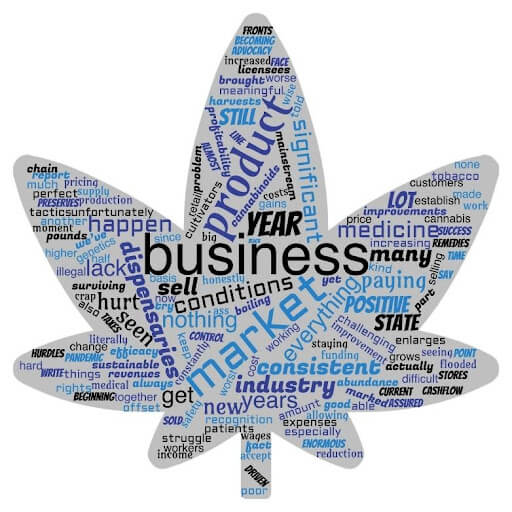
- The word cloud on the successes tells a compelling story.
We are very excited that we have now established a baseline of new data that reflects operator sentiment and business conditions. This can help support the narratives with data when having policy discussions at the state and federal levels and to help shape strategy for operators in this space.
“We are delighted on how this initial survey turned out and look forward to surveying the cannabis landscape regularly in the future. We really appreciate the support we received from leading national cannabis organizations such as NCIA.” – Beau Whitney
Committee Blog: What Retailers Can Do To Support Social Equity

 By NCIA’s Retail Committee
Social equity can be boiled down to a way of seeking remedy for the harms caused by the racist war on drugs and to help individuals, families, and communities that have been disproportionately impacted by prohibition. A big part of this is making sure that no one is left behind by the economic developments created by making cannabis legal. As local, state, and federal governments continue to grapple with implementing policies that effectively address this issue, there is a lot the industry can – and should – do to help make sure that the opportunities in regulated cannabis markets are inclusive and equitable, and to help support businesses owned by members of marginalized communities.
As many as 70% of consumers want brands to take a stand on social and political issues. That’s a 66% increase from 2017, according to Sprout Social’s 2019 #BrandsGetReal survey. Customers are more likely to purchase from companies that take a stand on causes aligning with their values and more importantly, companies hold the power to make a difference; even if it’s encouraging people to take baby steps towards a larger solution. Data shows they might already be doing that, because 67% of consumers say brands are raising awareness around just causes, and 62% believe brands are educating them on important topics.
Here are just a few ways that cannabis retailers can help be a part of the social equity solution to economic unfairness created by the failed war on drugs:
Partner with Job Programs
Cannabis arrests or convictions can erect barriers in someone’s life. More specifically, they can affect housing, education, and career prospects. Consider partnering with city, state, and national programs and organizations that are creating pathways to cannabis ownership and employment – including the formerly incarcerated – to create job opportunities for underserved communities.
Expungement Days
Reach out to a local law firm or social justice organization and talk about hosting “expungement days.” Your efforts will help provide free legal measures for expunging low-level cannabis-related convictions. The Last Prisoner Project is a cannabis reformation project seeking to release prisoners currently convicted for cannabis-related crimes and help them assimilate back into society. However, local organizations may often have direct experience with this work in your communities and have well-established relationships with them to help better connect with the people who need these services the most.
Reach out to them and see what they recommend before planning your expungement day. You can also find out more information about expungement efforts nationally at the Collateral Consequences Resource Center.
Create shelf space
Socially conscious companies should show equity and racial justice on your stores’ shelves. Whether it is making a “social equity section” or finding ways to educate budtenders on the merits and stories behind the products, you will be moving sales in the right direction and promoting socially conscious consumer patterns. You can also provide tabling space for brand ambassadors to help promote social equity company products that you carry. This not only helps the brands but also creates greater loyalty to your store.
Find products that are both socially equitable and fit your dispensary’s needs. That way, you push the product because you love the product, not just because it’s trendy. But in doing so, you are contributing to positive social change and acceptance, and driving commerce toward BIPOC-owned companies. Remember, the goal is equity.
Form equitable partnerships for ownership
Are you a retailer, cultivator, or production company? Maybe you’re a vertically integrated, multi-state operation. You might not even touch the cannabis plant at all, but provide services to those who do. No matter who you are in cannabis, find ways to partner with social equity companies and help increase their recognition. Maybe it’s mutually beneficial joint venture projects on brands or another arrangement, but find ways to form fair and collaborative relationships.
Above all, keep it real
In the end, authenticity is key, and to take a stand in a way that inspires customers: your message can’t be filled with empty words. If you’re a company that’s looking for causes to rally behind, keep it in your wheelhouse and make sure your audience will resonate with the partnerships you’re creating.
Retail businesses have the power to become change agents and inspire customers to take action in their own backyards. Seek out opportunities like the ones we mentioned and provide opportunities for wealth generation, education, and social restoration in marginalized communities.
According to statistics, you’ll make a lasting impression on your audience, increase sales, and you’ll be a force for positive social change as you impact lives in your community and beyond. What’s better than that?
Follow NCIA
Newsletter
Facebook
Twitter
LinkedIn
Instagram
News & Resource Topics
–
This Just In
Committee Blog: Access to Capital in the U.S. Cannabis Market Outlook
Member Blog: The Risks of Removing a Regulated Cannabis Market