Taking the Long View – Strategic Facility Design Considerations for the Schedule III Era
In the dynamic landscape of the cannabis industry, regulatory changes can significantly impact how businesses operate and plan for growth. The recent proposal to reschedule cannabis from Schedule I to Schedule III has sparked discussions across the industry, particularly regarding facility design and operational strategies. This blog dives into key insights from the National Cannabis Industry Association’s webinar on “Taking the Long View – Strategic Facility Design Considerations for the Schedule III Era,” highlighting expert advice and practical recommendations for stakeholders navigating these changes.
The webinar, hosted by Brian Gilbert of the NCIA, served as a crucial platform for industry professionals to explore the implications of cannabis rescheduling on facility design and operations. The session focused on four main pillars: understanding tax changes, enhancing operational efficiency, promoting sustainable growth, and implementing practical strategies to navigate regulatory shifts.
Key Takeaways
1. Policy and Tax Implications
The discussion, led by Shawn Cooney of Cloud Farming, Chair of NCIA’s Facilities Design Committee, underscored the potential financial benefits for businesses following cannabis rescheduling (00:03:41). A highlight was the exploration of Section 280E, which could offer substantial tax savings once regulatory changes are implemented. Jeremy Schlicher of Urban Green Design expanded on these insights, offering strategic financial planning advice aimed at leveraging tax incentives to reinvest in facility improvements (00:07:21).
2. Operational Efficiency and Sustainability
Efficiency in energy management emerged as a critical theme throughout the webinar. Experts emphasized the importance of conducting energy audits and adopting efficient lighting and HVAC systems (00:10:18). These measures not only reduce operational costs but also align with sustainability goals crucial for long-term viability in the industry. Practical recommendations tailored to cultivation, manufacturing, and retail sectors were discussed to optimize workflow efficiencies and regulatory compliance (00:15:10).
3. Cultivation Methods and Environmental Considerations
Kim Kannapel of Modern Thermal Design provided invaluable insights into cultivation methods and environmental sustainability. The webinar highlighted the viability of various methods—indoor, greenhouse, and outdoor—each catering to different market segments and regulatory landscapes. The discussion underscored the role of climate and local regulations in shaping cultivation decisions (00:37:28), emphasizing the need for adaptable strategies that prioritize energy efficiency and environmental stewardship.
As Chair of NCIA’s Facility Design Committee, Shawn Cooney brought deep regulatory expertise to the discussion. He emphasized the importance of holistic sustainability practices and compliance with evolving regulatory frameworks. His insights into tax implications and strategic planning resonated with participants seeking clarity on financial strategies post-rescheduling (00:25:32).
Kim Kannapel’s contributions focused on environmental sustainability within cannabis cultivation. Her expertise in optimizing cultivation methods highlighted the interconnectedness of environmental stewardship and operational efficiency. By advocating for adaptive strategies, Kim encouraged businesses to consider long-term environmental impacts when designing and expanding their facilities (00:37:28).
A staunch advocate for the innovative triple bottom line approach, Jeremy Schlicher brings a wealth of knowledge to the discussion on strategic facility design in the cannabis industry. He emphasizes the integration of economic prosperity, environmental stewardship, and social responsibility in every aspect of facility planning and operations. Jeremy’s insights into maximizing operational efficiency through sustainable practices, such as energy audits and efficient HVAC systems, underscore his commitment to reducing environmental impact while enhancing business profitability.
Importance of Participating in the Public Comment Period
Participating in the public comment period is crucial for shaping the future regulatory landscape of the cannabis industry. The Department of Justice’s proposal to reschedule cannabis presents a unique opportunity for stakeholders to voice their perspectives and influence policy decisions. NCIA has launched a dedicated tool to streamline this process, making it easier for industry professionals to submit informed comments.Submit your comment here.
Recap of Episode I & II
Episode I: Understanding Section 280E and its Impact on Cannabis Businesses
In Episode I, the focus was on the financial and tax implications of rescheduling cannabis. Section 280E was a major topic, with discussions centered on how the rescheduling could lead to significant tax savings and the importance of strategic financial planning for businesses to maximize these benefits.
Episode II: Cannabis Rescheduling’s Impact on Research and Safety
Episode II delved into the implications of cannabis rescheduling on research and safety protocols. This session emphasized the potential for increased research opportunities and the necessity for businesses to stay ahead of regulatory changes to maintain compliance and ensure product safety.
Looking Ahead: Preview of Episodes 4 & 5
Episode IV: Navigating Insurance and Risk Management in the Schedule III Era
Join us for the fourth episode of NCIA’s multi-part #IndustryEssentials webinar series, “Navigating Insurance and Risk Management in the Schedule III Era,” led by our Risk Management & Insurance Committee. This session delves into the evolving landscape of cannabis insurance and risk management, highlighting the opportunities and challenges presented by the rescheduling of cannabis to Schedule III.
Date: Tuesday, July 9th, 2024 Time: 3:00 PM EST – 4:00 PM ET
Episode V: Cannabis Manufacturing in the Schedule III Era
Building on the insights from our first four episodes, join us for the fifth installment of NCIA’s #IndustryEssentials multi-part webinar series. This session, led by our expert Cannabis Manufacturing Committee, will focus on the profound impacts and implications of rescheduling cannabis on the manufacturing sector. As we navigate these unprecedented changes, our panel of industry leaders will provide critical insights and practical guidance to help your business adapt and thrive in this new landscape.
Advancing the Industry Together: NCIA’s Mission in Action
The overarching theme of this series is to equip cannabis industry stakeholders with the knowledge and strategies needed to navigate the complex landscape of regulatory changes. By understanding the financial, operational, and research implications of cannabis rescheduling, businesses can better position themselves for sustainable growth and success. Each episode builds on the previous one, creating a comprehensive resource for industry professionals to stay informed and proactive in their planning and operations.
The webinar “Taking the Long View – Strategic Facility Design Considerations for the Schedule III Era,” offered a comprehensive roadmap for stakeholders navigating regulatory changes in the cannabis industry. By addressing tax implications, promoting operational efficiency, and advocating for sustainable growth practices, the session equipped participants with actionable strategies to thrive amidst evolving regulatory landscapes.
Call to Action
As the industry continues to evolve, staying informed and proactive is crucial for cannabis businesses. Explore NCIA’s resources, including upcoming webinars and educational materials, to deepen your understanding of regulatory changes and strategic facility design considerations. Engage with industry peers and experts to share insights and best practices that drive sustainable growth and operational excellence.
For those not yet members, consider joining the National Cannabis Industry Association (NCIA) to unlock unmatched benefits, resources, and access. Membership provides exclusive opportunities to influence industry standards, gain regulatory insights, and network with industry leaders. Join NCIA today to leverage these benefits and stay ahead in the competitive cannabis market.
Beyond the Doorstep: Mastering Risk Management in the Cannabis Delivery Revolution
In the fast-paced world of cannabis retail delivery, where popularity and convenience of home delivery mingles with the complexities of compliance, risk management takes center stage. As experts in the field of cannabis insurance, we recognize that the journey from shelf to doorstep is not just a logistical dance but a tightrope walk of potential hazards. In this blog post, we navigate through the labyrinth of risks in cannabis delivery, honing in on the often-underestimated challenges faced by the delivery workforce.
The Green Route: Cannabis Delivery Takes Center Stage
With the rising demand for cannabis products and the evolving legal landscape, cannabis delivery services have remained the heartbeat of the industry. The convenience of having products delivered directly to the doorstep is undoubtedly a game-changer. Furthermore, in the post-pandemic era, the surge in home delivery services has not only reshaped consumer behavior but has also provided a gateway for a previously untapped market segment—individuals who may feel hesitant to step into a physical cannabis retail store.
Dangers Unseen: The Employee-Side Risks
When it comes to cannabis delivery, the focus often centers on product safety and compliance with intricate regulations. Yet, the risks faced by delivery personnel are equally significant and deserve careful consideration. One of the most common and often unexpected risks is the peril of dog bites. As a seasoned insurance professional, I’ve seen cases where a routine delivery turned into a harrowing experience due to an unforeseen encounter with an aggressive pet.
Dog bites may seem minor, but they can lead to serious injuries, legal complications, and financial ramifications for both the employee and the business. It’s crucial for cannabis delivery businesses to incorporate comprehensive insurance coverage that accounts for these unpredictable scenarios.
On the Road: Navigating the Risks of Car Accidents
Another aspect of risk management in cannabis delivery centers on the transportation process. The potential for car accidents poses a substantial threat to delivery personnel, particularly when navigating through unpredictable traffic conditions. Thus, ensuring the safety and protection of the delivery team is paramount.
As experts in cannabis insurance, we advocate for a holistic approach to risk management that encompasses employee training, vehicle safety measures, and robust insurance coverage. Businesses must be proactive in implementing safety protocols and providing ongoing training to mitigate the risks associated with accidents on the road.
Insurance Solutions: Safeguarding Your Assets
In the world of cannabis delivery, insurance is not merely a legal requirement; it is a strategic investment in the longevity of your business. Tailoring insurance coverage to address employee-side risks is a pivotal step in fortifying your enterprise against unforeseen challenges.
A comprehensive risk management strategy hinges on an all-encompassing liability coverage that explicitly includes incidents like dog bites. It’s crucial to underscore that occurrences such as dog bites are integral components of a robust workers’ compensation policy, underscoring their inclusion within the same framework. This interconnected approach forms the backbone of a well-rounded risk management strategy. Additionally, ensuring that your delivery vehicles are adequately insured acts as a critical safeguard, shielding your business from the financial ramifications of accidents.
Nurturing Growth Through Proactive Risk Management
Overall, the cannabis industry continues to evolve, so too must our approach to risk management. The journey from seed to sale is fraught with uncertainties, and it’s our responsibility as insurance professionals to provide a safety net that extends beyond insurance that meets the minimum legal requirements. By prioritizing employee-side risks in cannabis delivery, businesses not only protect their most valuable assets—their workforce—but also fortify their position in this dynamic market. In the ever-changing landscape of cannabis, let proactive risk management be the compass guiding your business towards a sustainable and secure future.
Elevate Your Cannabis Business with NCIA Membership
Embark on a journey of growth, knowledge, and industry collaboration by becoming a member of the National Cannabis Industry Association (NCIA). As the leading voice of the cannabis industry, NCIA provides unparalleled resources, advocacy, and networking opportunities to businesses navigating the dynamic landscape of cannabis.
Why Join NCIA?
Industry Advocacy: Gain a powerful ally in shaping cannabis policies and regulations at the national level. NCIA actively engages with policymakers to ensure a favorable environment for cannabis businesses.
Educational Resources: Stay ahead in the ever-evolving cannabis space with access to exclusive industry reports, webinars, and educational events. NCIA keeps you informed about the latest trends and best practices.
NCIA Events: Connect with fellow industry professionals, entrepreneurs, and thought leaders at NCIA’s signature events – including the 2024 Stakeholder Summit Series and 12th annual Cannabis Industry Lobby Days. Forge valuable partnerships and stay connected with the pulse of the cannabis community.
How NCIA Membership Enhances Your Risk Management Strategy
In collaboration with industry leaders, NCIA offers insights and resources to strengthen your risk management approach. As a member, you’ll have access to specialized content, webinars, and expert advice tailored to the unique challenges faced by cannabis businesses in the delivery sector.
Join NCIA Today
Elevate your cannabis delivery business with NCIA membership and take a proactive step towards a secure and thriving future. To explore the benefits of membership and join the growing community of cannabis professionals, visit National Cannabis Industry Association. For personalized assistance and insights, feel free to reach out to our dedicated membership team at membership@cannabisindustry.org.
Unlock the full potential of your cannabis business with NCIA – Your Partner in Progress.
Contributing Authors:Stephanie Bozzuto, Cannabis Connect Insurance, Acrisure Partner | Merril Gilbert, Trace Trust | Shay Aaron Gilmore, The Law Office of Shay Aaron Gilmore | Matthew Johnson, AssuredPartners
Navigating the labyrinth of insurance coverage can be daunting for any business owner, especially within the emerging cannabis industry. Questions like “What coverage do I need?” and “How do I ensure my policy covers my exposures?” are common and crucial. The National Cannabis Industry Association’s Risk Management & Insurance Committee is here to guide cannabis business operators in protecting both personal and business assets.
Below are ten key insights and considerations to guide you when purchasing your next insurance policy. Whether you have a policy in place or are exploring multiple policies, it’s crucial to ensure they align with your intended coverage.
Understanding Policy Forms, Endorsements, and Exclusions
Policy forms, endorsements, and exclusions are pivotal during a claim. For instance, some policies sold to cannabis companies in the US have outright ‘cannabis business exclusions’. It’s crucial to read and understand these documents to avoid jeopardizing your business.
Compliance with Protective Safeguards
To ensure theft coverage response in a loss, understand and comply with the protective safeguards on your property insurance policy. For example, non-compliance with a Central Station Alarm Warranty can exclude coverage after a robbery.
Landlord Insurance Requirements
Understand the insurance coverage required by your landlord before signing any contract. If a triple net lease is required, you, as the lessee, will need to insure not only your business but also the building, which can be costly.
Local Insurance Requirements
Each city, state, and county permitting cannabis will have its own insurance requirements, often including general liability, product liability, commercial auto insurance, and workers’ compensation.
Some states have created specific requirements not present in other states (looking at you, Michigan!). Consult with an attorney to fully understand and meet these requirements.
Facility Maintenance
Maintain and update your facilities, especially if they are older than 20 years, to avoid limited property coverage and being forced to buy an “actual cash value” policy versus “replacement cost.” Updates to your HVAC, plumbing, roofing, and electrical systems are well worth the investment.
High-Risk Area Considerations
If your facility is in a high brush area, be prepared for limited property insurance options and a list of exclusions due to tighter wildfire insurance availability. Your insurer may offer expanded coverage if you’re willing to invest in wildfire defense systems.
Evaluating Insurance Companies
Know the financial strength of your insurance company before purchasing. Consider whether the company is admitted or non-admitted and research their reputation and claims experience.
Claims Experience
Inquire about the carrier’s claims handling experience, conditions of coverage, and the duration it takes to receive a payout from a covered loss. If your broker doesn’t have claims experience with a given carrier, feel free to ask someone on the NCIA’s Risk Management & Insurance Committee.
Legal Concepts and Types of Insurance
Understand the legal concepts involved in property and liability insurance and familiarize yourself with the different types of property insurance policies available on the market. For instance – are you purchasing an admitted or a non-admitted insurance policy? Are you on an ‘all risk’ or a ‘named perils’ coverage form?
Grasping Liability Insurance Distinctions
Liability insurance is crucial, acting as “third-party” coverage, contrasting with “first-party” coverage like property insurance, which protects against damage to one’s own assets.
Duty to Defend vs. Duty to Indemnify
Understanding the difference between the duty to defend and the duty to indemnify is vital. The former is broader, obligating the insurer to defend the insured in lawsuits, even if allegations are baseless. The latter only kicks in if the insured is found legally liable for damages.
Defense Inside/Outside the Limits
One should also inquire about defense inside versus defense outside the limits of a liability policy. A policy with ‘defense outside’ considers all legal costs separate from the total liability coverage, while legal fees will erode the total liability limit for a ‘defense inside’ policy.
Insurable Interest
An insured must have a direct financial interest in the preservation of the property and be exposed to monetary loss as an immediate and proximate result of its destruction. The interest must not be contingent or expectant. Interest in anything not founded on an actual right to the property is uninsurable.
Scope and Importance in Cannabis Industry
The scope of liability insurance, covering legal costs and payouts, is essential, especially in the cannabis industry, where legal landscapes and associated risks are continuously evolving. Adequate coverage is paramount to mitigate potential financial losses due to unique legal challenges and risks, such as product liability claims.
Conclusion
The world of business insurance, especially in the cannabis sector, can be quite complex. However, with the insights provided here, you can navigate your policy purchasing process with confidence and ensure your business is fortified against potential risks. By understanding policy forms, adhering to safeguards, and adapting to local regulations, you can lay a resilient foundation for your business’s growth and success.
The proactive approach advocated by the National Cannabis Industry Association’s Risk Management committee emphasizes the importance of informed decision-making. By evaluating an insurer’s claims experience, comprehending legal nuances, and staying attuned to industry developments, you can empower your business with robust protection, ensuring a resilient foundation for growth and success.
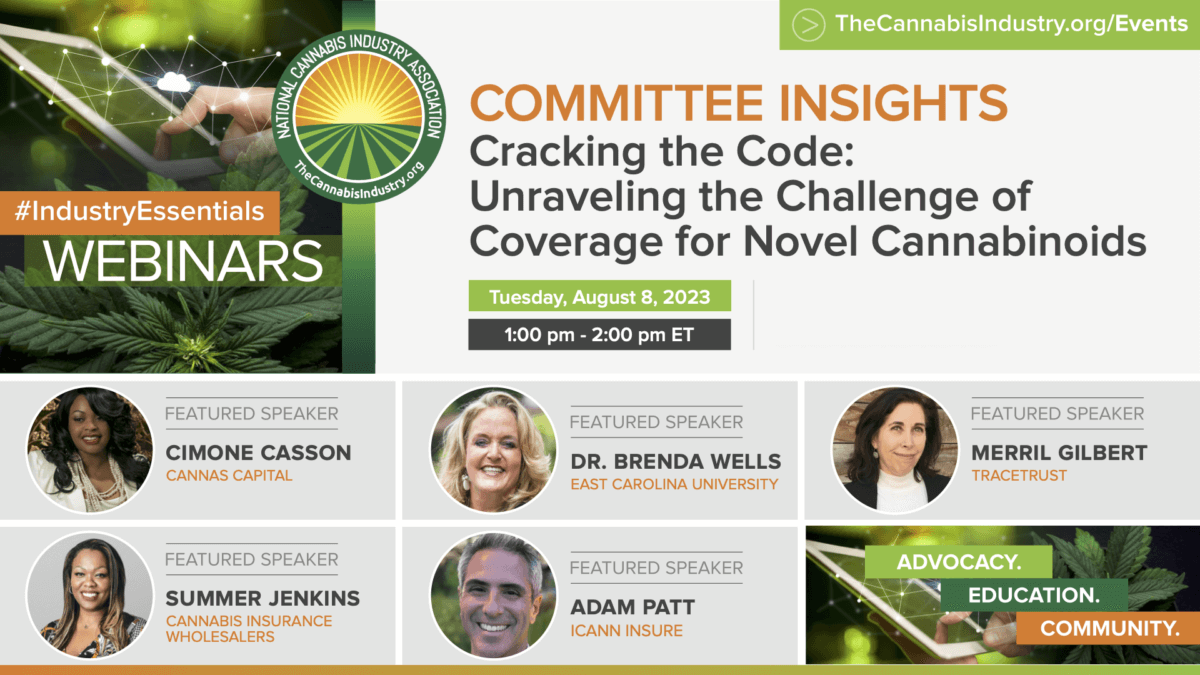
Cracking the Code – Unraveling the Challenge of Coverage for Novel Cannabinoids | 8.8.23 | Committee Insights
NCIA’s #IndustryEssentials webinar series is our premier digital educational platform featuring a variety of interactive programs allowing us to provide you timely, engaging and essential education when you need it most.
In this edition of our Committee Insights series, originally aired on August 8, NCIA’s Risk Management & Insurance Committee explored why insurance for novel cannabinoids can be such a challenging code to crack. Our discussion will help you navigate through liability and legislative loopholes, offering a clearer understanding of your exposure, while considering the patchwork of federal and state requirements.
In case you missed it, in conjunction with this session they’ve also released the third edition of their “Risk Management and Insurance Manual” specifically exploring this subject, which is available for download on NCIA’s website here: https://bit.ly/3OvGtag
You’ll leave with a better understanding of how unravel the complexities of insuring novel cannabinoids and equipped with the knowledge needed to make informed decisions regarding your insurance coverage. Whether you’re a cannabis business owner, a risk manager, an insurance professional, or anyone with an interest in this topic, this webinar will provide you with practical takeaways to safeguard your products, operations, and workforce.
Tune in as we crack the code to safeguard your products, operations and workforce!
Committee Blog: The New Licensee Insurance Checklist – Part 1
by NCIA’s Risk Management and Insurance Committee David Rahn, S2S Insurance Specialists
If you have a business in the cannabis industry, especially one that’s either newly operational or still in the pre-revenue stages, these businesses should have some sort of risk management plan put in place. Insurance is the cornerstone for any risk management plan if you want your business to recover after a financial or physical loss.
There are many types of insurance products to consider and it’s important for the business owner to have a knowledgeable Insurance broker who can help obtain tailored policies for your business. It’s important to consider the following questions below when seeking insurance for your business:
What types of insurance do I need?
When should I be getting insurance for my business?
What kind of claims are common in the cannabis industry?
What information does my insurance broker need to help me get an insurance quote?
Which types of insurance do I need?
Depending on your needs discussed with your insurance broker, all businesses should at least have some sort of property & casualty coverage. Whether the size of your business is starting in your own home, or you have a commercial or industrial space, it would be paramount to explore General Liability and Commercial property insurance, as well as Product Liability Insurance:
General Liability
A General Liability Insurance policy indemnifies against risks that nearly all business owners face. General Liability is the most critical basic coverage your business needs to protect you from a variety of claims including bodily injury, property damage, personal injury, and other situations that may arise including slander, libel, copyright infringement, and more.
Commercial Property
Commercial Property Insurance not only protects your place of business, but also its contents, including office furniture, computers and inventory, from common perils such as fire, lightning, explosion/implosion, riots, strikes and terrorism.
Product Liability
Product Liability Insurance is designed to protect your cannabis company from claims that can happen anywhere along the supply chain, including product contamination, mislabeled products, false advertising or defective products.
Once you have those three policies secured, additional types of insurance would include:
Crop Coverage
Crop Insurance is specifically designed to protect cannabis and hemp growers from natural disasters such as wildfires, hurricanes/heavy winds, and flooding/water damage. However, it can also cover incidents like theft, explosions, vandalism, and other unpredictable and uncontrollable events that result in an “interruption of service.”
Cyber Liability
Any business that has an online presence or stores customer data electronically needs Cyber Defense and Data Breach Insurance to protect yourself from legal liability and hefty fines. Given the vast amount of information that cannabis retailers and distributors are required by law to collect from customers, coupled with the fact that this is a rapidly growing industry with evolving regulations, the unfortunate reality is that cannabis businesses are prime targets for cybercrime.
Directors & Officers Insurance
Directors and Officers (D&O) Liability Insurance protects corporate directors and officers, as well as their spouses and estates, from being personally liable in the event your company is sued by investors, employees, vendors, competitors, customers, or other parties, for actual or alleged wrongful acts in managing the company.
When should I be getting insurance for my business?
It is very important to understand the right time to get your insurance. As always, it is important for you to build a good relationship with a knowledgeable insurance broker who can help you find the right time to buy insurance.
General Liability/Commercial Property
When Business owners rent or lease commercial property for their business, in the lease agreement, landlords almost always have an insurance clause stating the minimum limits the client needs to have on their GL policy in order to move in and conduct businesses. Usually around the same time you get your lease agreement is around the same time you should be considering GL and property insurance, so you know you are covered right when you move in and before your start business.
Product Liability/Crop
If you have a product-facing business, it is important to secure these policies before your product comes off the assembly line. As for Crop insurance, make sure you get your policy before you start planting and harvesting.
Cyber Liability
Typically before you launch your web presence and begin business transactions is the best time to secure your policy.
As your business grows and scales while you bring on outside investment, that’s the time when you should be considering your D&O and other management liability coverages.
What information does my insurance broker need to find an insurance quote?
It is important to always be honest and upfront with your insurance broker, especially when shopping for quotes. Your underwriting information needs to be accurate for you to obtain proper insurance coverage. You do not want to be underinsured or overinsured and pay for policies that you don’t need. A good place to start is with your business plan and projected revenues because that will help the insurance broker determine what products you may need. A well thought out business plan is the first step in being prepared in finding the right insurance.
Committee Insights | 8.16.22 | Cannabis Consumption Lounges & the Next Wave of Hospitality Disruption
In this edition of our NCIA Committee Insights series originally aired on Tuesday, August 23, 2022 members of Risk Management & Insurance Committee convened a panel of cannabis regulators and legal experts alongside leading event and hospitality operators to provide cannabusiness professionals the inside scoop on new regulations being adopted to manage/establish cannabis consumption establishments.
Dive deep into the ins & outs of Michigan’s cutting edge regulatory structure and learn from those operating in the space across the country with our panel of experts.
Learning Objectives
• Review of leading edge regulatory framework providing a model for MI consumption lounges
• Highlight the license structure for temporary events – how do consumption, sales and/or both formats function within this framework?
• How have these regulations evolved since first adoption?
• Review dram shop liability and offer an educationally lensed analysis
• Discuss how that may or may not be a good framework to apply to cannabis?
New Risk Management and Insurance Committee Manual: Introduction to Cannabis Insurance
The cannabis industry is one of the fastest-growing industries in the U.S., maturing at more than 25% annually. As the cannabis industry continues to emerge and flourish from state to state, there remains uncertainty as to the immediate future of federal legislation to remove cannabis from the schedule of controlled substances.
The cannabis industry will continue to experience the convergence between state and federal government regulations until a uniform regulatory and compliance framework can be established. Fundamental services such as banking, financing, and insurance, along with IRS 280E tax regulations, will continue to burden state-regulated cannabis businesses. And, with the industry still in its relative infancy, emerging and shifting regulatory backdrops create risks to these businesses.
Cannabis businesses can manage these risks in a variety of ways. Perhaps the foremost among them are the procurement of appropriate insurance coverage. While just a few years ago, insurance coverage options for cannabis operators were incredibly limited, today there are dozens of insurance carriers serving the industry.
Cannabis operators have to be proactive in developing a risk management program that conforms to local and state compliance and security requirements. As the industry continues to evolve, we will need to be more diligent in controlling and managing risk.
To assist with this process, NCIA’s Risk Management & Insurance Committee (RMIC) is pleased to provide the first in a series of Insurance Manuals that will help guide you through the various coverages and definitions used in the cannabis insurance industry. This first edition of the RMIC Insurance Manual will outline the basic and entry level knowledge base for the cannabis insurance industry, and explore the various insurable risks attributed to the cannabis supply chain. Future additions will dive deeper into more specific insurance topics.
NCIA’s Risk Management & Insurance Committee is a multidisciplinary group of risk management professionals convened to draw on expertise and experiences of professionals dedicated to the cannabis community. Primary contributors for the first installment of the Insurance Manual include:
The disadvantages of receiving a third-party audit are apparent – it takes a lot of time to build a cannabis safety and quality program that meets audit requirements, and the costs of an audit can be relatively expensive. Additionally, if your company decides to use an external consultant to help develop your cannabis safety and quality program, it can add even more costs to the equation. So why bother getting a third-party audit at all if it is not mandatory? If the ethical response of “it’s the right thing to do” does not resonate, consider these more practical responses.
Legal Protection
Note that the lack of legal requirements for cannabis cultivators and manufacturers does not offer protection from legal action, and defending against litigation can be expensive even if a company prevails.
Brand Protection
If a consumer becomes ill (or worse) from ingesting or inhaling one of your company’s products, the negative public backlash and decline in consumer confidence can damage both your company’s bottom line and the industry as a whole.
Insurance Benefits
Insurance companies evaluate cannabis businesses based on their history and their current safety programs they have in place (e.g. GMPs, Recall Programs, Supplier Approval Programs, etc.). Whether or not a company has programs like these in place can influence the costs of their insurance. Additionally, third-party audits give cannabis businesses a verification record that their safety and quality programs are operating as intended. This verification record could help that company when dealing with insurance claims made from recalls or other adverse events.
Marketing Benefits
Enhance your company’s marketability by becoming certified to a third-party audit standard. For example, the new CSQ Standard lists all their certified locations on their website. This database creates a network of cannabis businesses who all meet industry requirements. Cannabis retailers will be able to search this public database and determine to do business with a cultivator or manufacturer based on their compliance with the CSQ Standards.
Self-Regulation
By proactively self-regulating, the cannabis industry can mitigate the possibility for high-profile recalls or outbreaks that might prompt regulators, such as the FDA, to establish mandatory and imposing regulations for the industry. Mandatory regulations could have a more burdensome effect and even be more costly than self-regulation with third-party audits.
Self-regulation is always preferable to mandatory regulation, and evidence of this is found in the alcohol industry’s self-regulation of marketing and advertising, as well as the video gaming industry’s self-regulation of video game ratings by the Entertainment Software Rating Board (ESRB). While third-party audits are not mandatory in every region, a voluntary and proactive approach that includes third-party auditing of cannabis cultivators and manufacturers will keep consumers safe and protect your company’s bottom line. All while avoiding adverse incidents that would initiate further scrutiny of the cannabis industry or prompt mandatory regulations.
To ensure that the industry is self-regulating properly, there are five proposed principles for self-regulation through third-party auditing.
A set of transparent and specific standards created by industry stakeholders that includes a public comment period.
External oversight through accreditation bodies, benchmarking organizations, and other external committees to ensure no disproportionate power or voting authority.
A public database in which individuals can search what companies are compliant with the requirements.
Transparent procedures for stakeholders to file complaints and provide feedback on the standards and their enforcement.
Periodic assessments and reviews to determine if the goals of the standards are being met.
In addition to setting sound principles for industry self-regulation, it is also important to highlight things that could potentially go wrong with self-regulation. The following three practices are often associated with the failure of a self-regulating system.
Weak standards that do not apply globally and permit unsafe practices.
The absence of transparency or weak oversight can undermine the objectives of the self-regulating system.
Industry leaders neglect to be part of the movement towards self-regulation.
For this reason, I urge industry leaders to sign a commitment to provide the safest and highest quality products possible and volunteer to be part of the movement of self-regulation of the cannabis industry through independent third-party audits.
Tyler Williams is the founder and Chief Technical Officer of Cannabis Safety & Quality (CSQ). Over the years, Tyler has diligently worked with various industry stakeholders and conducted sample audits on several cannabis cultivators and manufacturers to ensure the CSQ audit requirements meet the needs of this new and booming industry. Tyler currently sits on the Policy Council and the Cannabis Manufacturing Committee for the NCIA.
Before founding CSQ, Tyler was the Vice President of Operations for ASI, one of the leading food safety auditing, training, and consulting companies in the U.S. In this position Tyler was responsible for the certification process of over 3000+ audits annually and managed ASI’s employees and contracted auditors around the world. In addition to managing the day-to-day operations of ASI, Tyler also trained and consulted several different major food and beverage companies around the world to help improve their food safety practices.
In 2019, Tyler started a non-profit organization called Show Me Food Safety. This organization provides resources to small food manufacturers and growers in Missouri to help improve their food safety practices and get on the shelves of local grocery stores.





 by NCIA’s Risk Management and Insurance Committee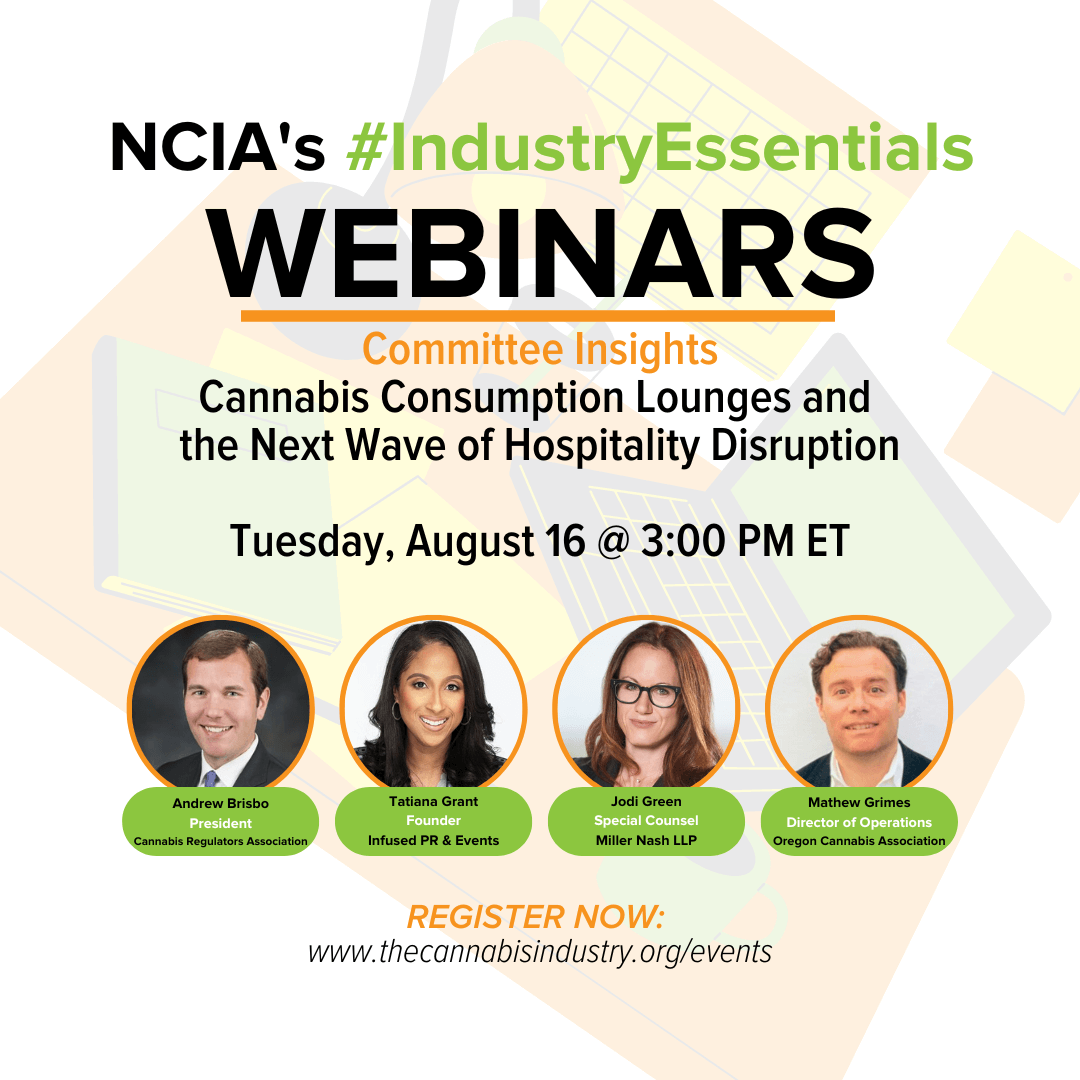


Follow NCIA
Newsletter
Facebook
Twitter
LinkedIn
Instagram
News & Resource Topics
–
This Just In
Committee Blog: Access to Capital in the U.S. Cannabis Market Outlook
Member Blog: The Risks of Removing a Regulated Cannabis Market