Member Blog: How to Master the Cannabis Retail Landscape
The cannabis industry is thriving, but with exciting opportunities come significant challenges. For dispensary owners and cannabis wholesalers, staying competitive means understanding and adapting to a rapidly evolving market.
The Competitive Cannabis Dispensary Landscape
The cannabis retail market is booming like never before. According to Statista, the global legal marijuana market was valued at an impressive $17.5 billion in 2019 and is projected to reach approximately $73.6 billion by 2027. This rapid growth presents both exciting opportunities and intense competition. In fact, with over 7,000 dispensaries operating across the United States alone, simply offering high-quality products is no longer sufficient to capture consumer interest and loyalty.
A recent report from BDSA, a leading cannabis market research firm, underscores that consumer preferences are continuously evolving. Factors such as changing regulations, the emergence of new consumption methods, and heightened awareness of wellness trends all contribute to this dynamic environment. Retailers must not only stay ahead of current trends, but also be adaptable and responsive to shifts in consumer behavior to maintain relevance in the market.
In such a competitive and fast-paced landscape, understanding your customers’ needs and preferences is paramount. This means actively engaging with your customers, gathering feedback, and leveraging data to inform product offerings and marketing strategies. By doing so, cannabis retailers can cultivate stronger relationships with their customers, ensuring they remain a trusted choice in an ever-evolving industry.
The Importance of Driving Customer Loyalty
In a competitive market, driving customer loyalty isn’t just beneficial—it’s essential for long-term sustainability and growth. Research from Harvard Business Review has shown that increasing customer retention rates by just 5% can lead to remarkable profit increases ranging from 25% to 95%. This statistic highlights the critical importance of nurturing relationships with customers. Loyal customers not only make repeat purchases, contributing to steady revenue streams, but also become passionate brand advocates. Their positive word-of-mouth can significantly enhance brand reputation, drawing in new clientele who trust the recommendations of their peers.
Furthermore, according to a comprehensive study by Zendesk, a staggering 95% of customers share their negative experiences with others, while almost half take to social media to publicly broadcast their dissatisfaction. This underscores the importance of addressing customer service issues promptly and effectively. On the flip side, research indicates that more than half of consumers are likely to make additional purchases after a positive interaction with a brand. This illustrates that exceptional customer service can create a virtuous cycle of loyalty and repeat business.
For cannabis retailers, where competition is fierce and customer choices are plentiful, delivering exceptional customer service can significantly impact the bottom line and foster long-term success. By investing in customer experience strategies, retailers can not only retain existing customers, but also cultivate a loyal customer base that propels growth and enhances brand loyalty in an ever-evolving market landscape.
Practical Next Steps for Improving Customer Loyalty
Unfortunately, there is no straightforward or single answer on how to drive customer loyalty. However, there are many things that you can implement within your business, including employee education, that will help you along the way.
Free Resources
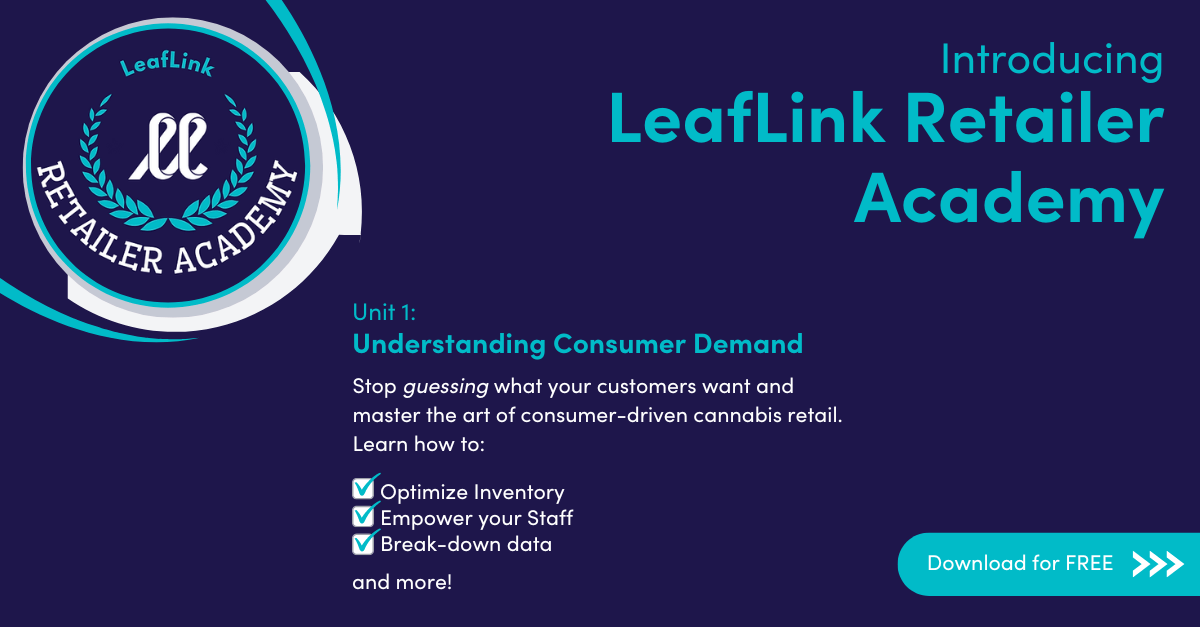
LeafLink’s Retailer Academy is a freeresource designed to empower cannabis retailers to excel in a rapidly changing landscape. Retailer Academy offers comprehensive training modules and resources that cover essential topics such as customer engagement, inventory optimization, and marketing strategies.
By providing valuable insights and best practices, the Retailer Academy equips dispensary owners with the tools they need to enhance customer loyalty and drive business growth, ensuring they thrive in an increasingly competitive market. Whether you’re just starting out or looking to refine your approach, LeafLink’s Retailer Academy is your partner for success in the cannabis retail world.
Unit 1 of LeafLink’s Retailer Academy teaches you how to gather and analyze customer data effectively. Stop guessing what your customers truly want – Unlock data-driven insights to skyrocket sales.
Here’s what you’ll learn with the FREE eBook.
Optimize Inventory: Stock exactly what your customers crave, eliminating stagnant products.
Empower your Staff: Transform your team into customer insights experts.
Find Nuggets in Reviews: Extract valuable trends and feedback from social media and online reviews.
Master Active Listening: Build staunch customer loyalty through communication.
Easily Break-Down Data: Learn to simply analyze customer data and generate actionable insights.
Wrapping up
The cannabis retail landscape is competitive, but with the right strategies, you can thrive. LeafLink’s Retailer Academy offers the tools and insights you need to grow your business, drive customer loyalty, and stay ahead of the curve.
By understanding your customers, optimizing your inventory, and empowering your team, you can create exceptional experiences that foster loyalty and boost profits. Don’t just survive in the cannabis market—thrive with LeafLink’s Retailer Academy.
The road to opening a licensed cannabis business is a long one. You have managed to navigate through a competitive and complex licensing process. You have convinced your local community to give your company a shot. You have beautified the area surrounding your business. You have secured your supply chain, and you even opened a special account at a cannabis bank to deposit all that cash. You have hired armed security, and even though you are paying the company 3X what you’re making, it’s okay because you and your staff are safe. You even survived the facility build-out, and hopefully, you have about six months of capital. What an accomplishment. Bravo! You did it! Wait… you need a team to help you operate this beast. Time to hire!
I heard someone say, ‘Great things in business are never done by one person. They’re done by a team of people.’ I would guess that if you have made it to the finish line, you’re likely to already have a team. Now it’s time to expand that team. As if the odds aren’t already stacked, in the fast-paced world of cannabis retail, turnover rates are hitting a staggering 55% within a year, per headset.io as of November 2023. I learned about this very early on when I began my research. I needed to know why and what I could do to avoid more than half my staff quitting within the first year. There were some common factors that led to employee attrition. I was a bit surprised to hear that pay wasn’t a top factor. What I learned was budtenders, in particular, didn’t feel the company provided any kind of staff development. Many instances described a poor management staff, and many felt unappreciated and overworked.
When we started this thing, it was important to make sure we could create opportunities for others. I’ve worked for both big and small businesses, some corporate and some non-corporate. I have had some good managers and some bad ones. I learned something from each job I’ve held. I vowed to make sure my staff never looked at our managers and our company and put us in the bad category. Trust is earned, and leadership can never be forced. I opened doors on April 22nd, and we hired 21 part-time employees. I will follow up in 12 months to see if I beat the odds. I’ve done it before.
It was through the NCIA network I met Carlo, and he had me go through a workshop. What I learned was, first, we needed to ask ourselves: What are our principles at Banyan Tree? My team is amazing, and we have been together so long we trust in each other’s expertise to maintain a harmonious environment. We want to make sure the staff feels the same way. So collectively, we created a list of principles. Next, we posted the job position. The response was overwhelming. Within 24 hours, we had close to 500 applications. We narrowed that down to 50. We scored the candidates based on their work experience and the video response they provided, aligning with our principles. Next, we scheduled the interviews. We called each candidate to share what they could expect during the interview. We sent them the list of our principles. We would be conducting the interview using the S.T.A.R. method: Specific, Task, Action, Result. That means the questions we ask will all be related to their work experience. We expect the answers you give to describe an experience that uses the S.T.A.R method response. It really helps us get to know the candidates during the interview, and you can tell someone is being genuine when they can recall an experience they had while working at previous jobs. There were about 21 of those interviews that went on for a full hour. We hired 21 amazing people. They all feel like they are part of something special. It’s my job to keep my promise.
It’s important to continue developing and educating the staff to help them get better at their skill. It is necessary to provide them with the tools they need to perform their job. Stuff like scanners and POS systems and card readers need to work. Technical issues disrupt the flow, but that’s controllable. Communication and trust are key. Without it, you’re doomed. Appreciation and praise go a long way. We need customers to stay in business, but we can’t do business without staff. My philosophy is that my employees are everything. As long as they love their job, our guests are going to reap the benefits.
Navigating the Confusing, Crowded World of Cannabis Payments
When you’re a cannabis retail operator looking for electronic cannabis payment solutions you’re faced with a baffling array of options and it’s hard to pick out the ones you can trust and the ones that you should avoid at all costs. Every potential vendor is going to tell you that their solution is the best (trust me!) so you need to understand the basic landscape of cannabis payment solutions in order to know what questions to ask. There’s a lot of solid vendors out there that only want to help the industry but there are, sadly, those out there that prey upon a lack of familiarity with the crowded, confusing payments landscape to push solutions that are at best unsustainable and at worst fraudulent.
ACH transactions are a way for a person or a business to do direct bank money transfers.
These transactions are conducted on a computer network run by NACHA, the National Clearinghouse Association. Since these don’t run over the networks run by the credit card companies like Visa or Mastercard – known as “payment rails” – these transactions don’t violate their rules. While NACHA hasn’t officially made a statement either way about cannabis, their actions suggest they don’t have an issue processing these transactions over their network.
The downside with many ACH solutions is that they aren’t necessarily convenient for the buyer. Because a customer or patient can’t just pull out a bank card they are often required to download an app and provide banking details like account and routing numbers. This isn’t necessarily an issue from the second purchase forward, but this can be a bit of a pain for a customer or patient trying to use an app for the first time if they’re not expecting to have to go through an account onboarding process that might take several minutes. The upside to this is that there are platforms that allow the buyer to upload funds via ACH to an eWallet, which, after the initial transaction, will enable them to make instant purchases. Platforms also allow the buyer to automatically replenish their eWallet via ACH, allowing them to always have funds to make purchases. These purchases can also be combined with a store’s loyalty points program.
Questions to ask about ACH solutions:
What does a customer or patient need to do to use the solution?
How long does it normally take for the funds to transfer, allowing a user to make purchases?
Are there any contactless platforms that allow a buyer to purchase the product for delivery or curbside pickup?
Do you need additional hardware to display a single-use QR code specific to the transaction?
Cashless ATMs and PIN Debit solutions are among the most common electronic payment methods that allow customers to directly use cards.
To discuss the issues that go along with any card-based solution we need to take a step back and talk about how payments are processed. As previously mentioned, every credit card company has a set of rails used by merchants to process a sale over their network. Each transaction is sent as a packet of information that broadly contains the following information: name of business, location of business, any additional merchant information, and merchant category code (MCC).
Every transaction has to be associated with a four digit MCC used by the merchants to indicate the nature of the business and the transaction. The code that’s traditionally been used by cashless ATMs and PIN Debit solutions is 5912, reserved for pharmacies and “cannabis (where legal to do so)”. This is what’s used in Canada where credit cards are an option but it’s not an acceptable option in the US because the major credit card networks have clarified that their rails cannot be used for the purchase of marijuana. They do so by prohibiting activities associated with “controlled substances, or recreational/street drugs” (VISA) or even more broadly “any Transaction that is illegal” (Mastercard) in their operating agreements.
It’s important to note that you can’t just randomly choose an alternative MCC because miscoding constitutes fraud. You may remember a few years ago that California-based delivery company Eaze was prosecuted in 2019 for using MCC codes associated with things like “carbonated drinks, green tea, face creams and other products” in an attempt to obscure the fact that the network was being used for the direct purchase of marijuana.
It should be noted however that there are a few ATM networks out there that aren’t directly owned by the big credit card companies like NYCE, Allpoint, Star, and Moneypass. These companies have been relatively quiet regarding the use of their networks for the purchase of marijuana products, so there is an argument to be made that if card transactions are sent over those rails they’re not violating any operating rules, but anecdotally we’ve heard that some of these networks aren’t necessarily cannabis friendly and, as private companies, they’re able to change their mind (for or against) whenever they wish.
Questions to ask about Cashless ATMs and PIN Debit solutions:
What MCC code is the payment processor using?
What network is being used to process the transaction?
Credit cards are notoriously off-limits to cannabis because of the very public positions taken by the major card networks but that doesn’t stop companies from popping up offering credit card processing for cannabis purchases. Let’s clarify here at the outset – there is no way to directly purchase marijuana with a credit card in the United States with a credit card from American Express, Visa, Mastercard, or Discover.
So, with necessity being the mother of invention, some companies are trying out a new strategy to get credit card processing into dispensaries legally. Among them are solutions that take advantage of another MCC code: 6051. This code is associated with the purchase of “liquid and cryptocurrency assets” and some enterprising payment providers are using it to set up a structure where a customer isn’t “technically” buying marijuana. Instead they are “buying” what’s called a “stablecoin”, a form of cryptocurrency whose value is pegged 1:1 to the US dollar.
Questions to ask about cryptocurrency or stablecoin solutions:
What MCC code is the payment processor using?
What stablecoin is being leveraged?
How is the stablecoin preserving its value?
What will the offramping of funds from a crypto wallet to my DDA account look like to my bank?
Cannabis retail operators are faced with serious business and legal considerations when determining the payment processing solution provided to patients and customers. What solution will be the easiest for the customer? Is the solution compliant?
The cannabis industry’s evolving legal and regulatory landscape is challenging, especially with bad actors seeking to implement non compliant make-shift payment solutions intended to capitalize off of cannabis businesses seeking efficient and effective cannabis payment solutions. It is essential that you do your due diligence on cannabis payment solutions presented to your business to confirm that it will not cause an issue for you, the business and its patterns and customers. We hope that this article outlines considerations that will allow you to protect your business and its patients and customers.
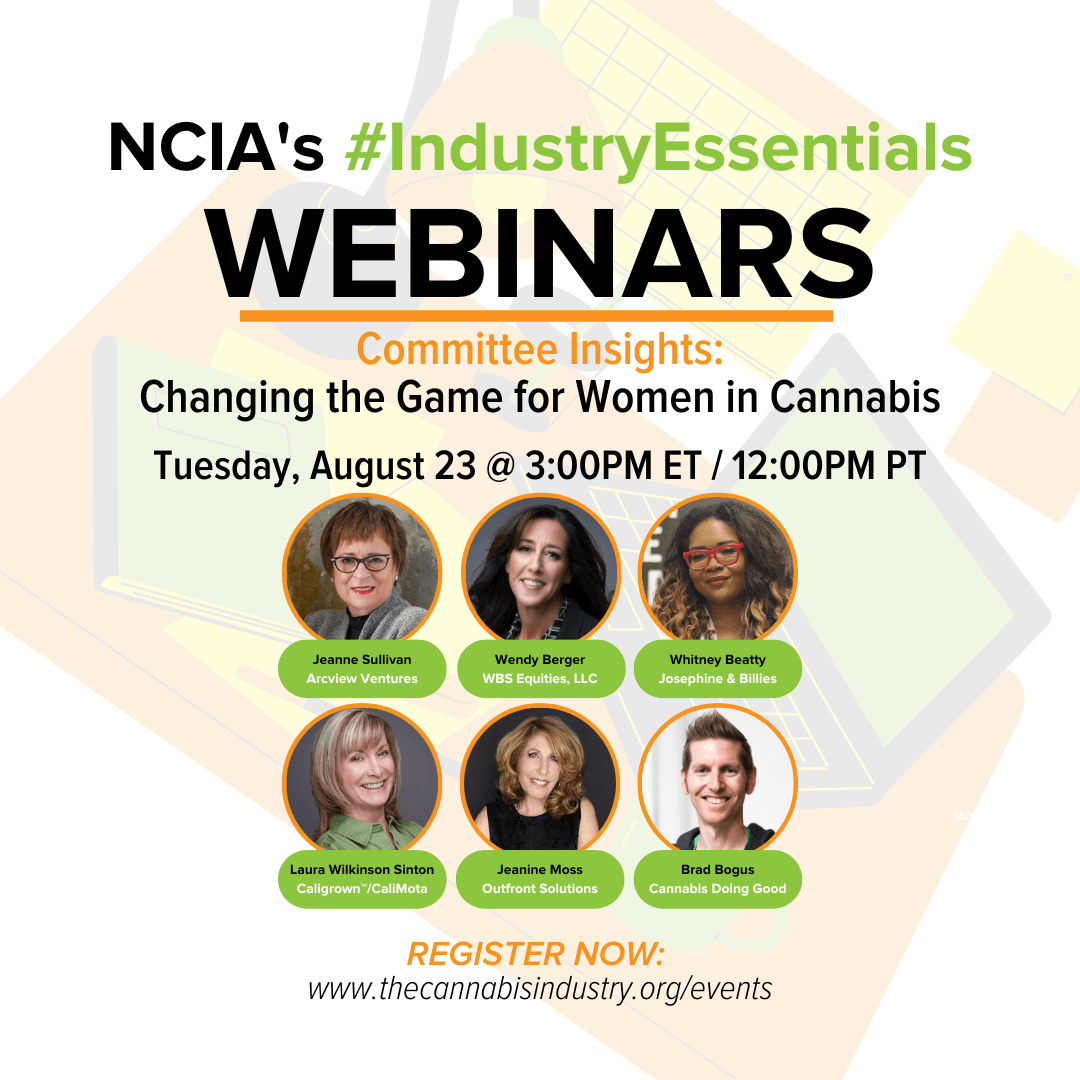
Committee Insights | 8.23.22 | Changing the Game for Women in Cannabis
In this edition of our NCIA Committee Insights series originally aired on Tuesday, August 23, 2022 members of NCIA’s Retail Committee convened an all-star panel of leading investors, entrepreneurs and C-Suite executives alongside retail and marketing experts to discuss how the time to “move the needle” for women in cannabis is gone… It’s time to change the game.
Female executive representation in cannabis has shrunk to 22% in 2021 from 36% in 2019 (below the average 30% in mainstream businesses). Learn how to advance women and tap into the single greatest market opportunity for legalization and sales. Tune in now to get actionable solutions to implement today and get your business and our industry back on track.
Learning Objectives:
• Discover the definition of a female-friendly cannabis retail experience
• Get a suite of actionable solutions to increase success and profitability
• Learn the best career paths in cannabis for female candidates
• Learn where male dispensary buyers are missing the mark
• Identify opportunities across the supply chain to attract women
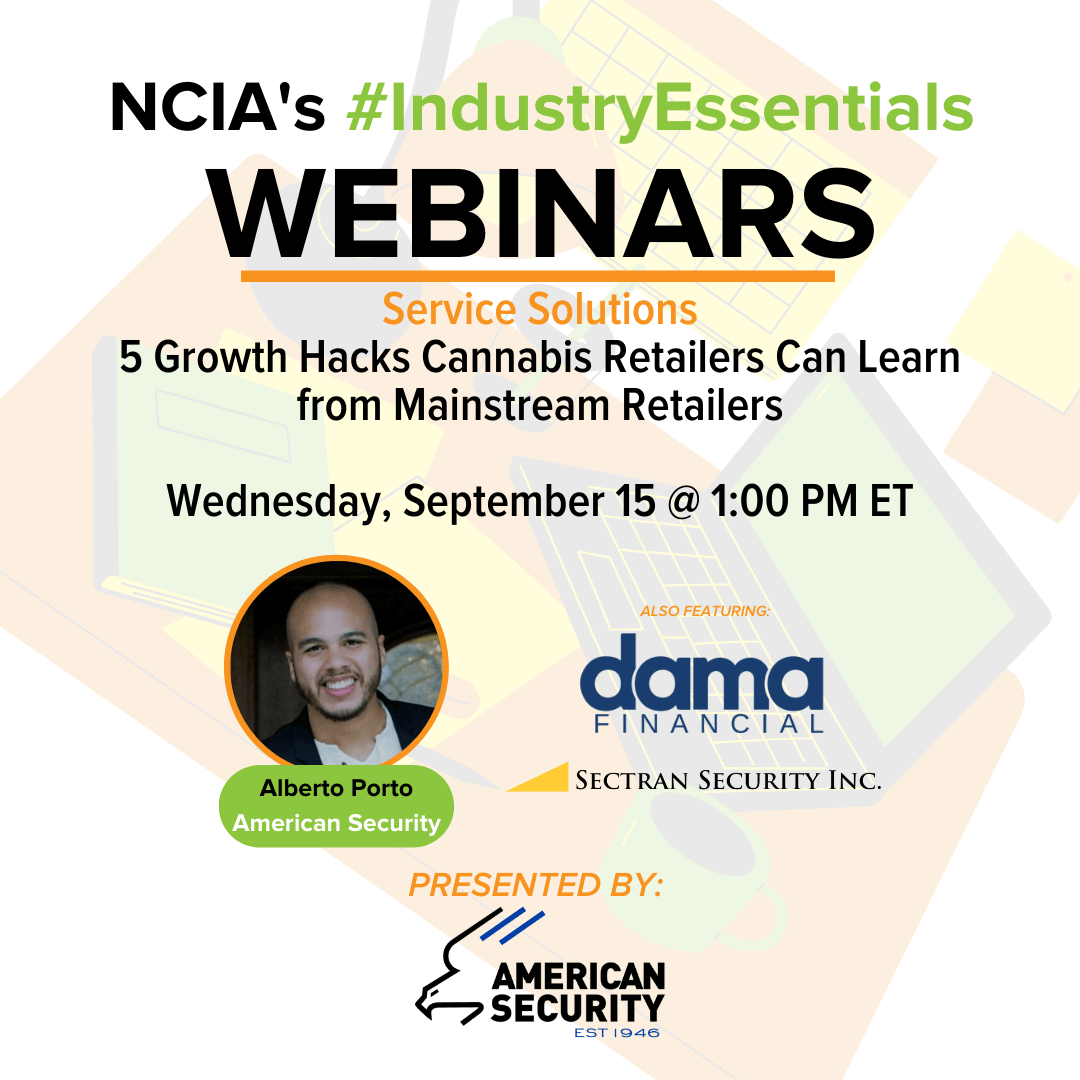
Service Solutions | 9.15.21 | 5 Growth Hacks Cannabis Retailers Can Learn from Mainstream Retailers
NCIA’s Service Solutions series is our sponsored content webinar program which allows business owners the opportunity to learn more about premier products, services and industry solutions directly from our network of established suppliers, providers and thought leaders.
In this edition originally aired on Wednesday, September 15, 2021 we were joined by American Security Services, a leader in home & business safe solutions for 75 years, to discuss cash management problems facing the cannabis industry today and what retailers have discovered as a solution.
In this session you’ll hear from operator-owners in cannabis retail and their financial partners about the growth hacking tips helping them grow greener profits, faster. Still UNbanked? This session will give you the tools you need to make decisions about your cash and asset management today and in the future.
In this session, you will learn:
• How to improve operational efficiencies at the point of sale through end-of-year financials.
• How to get provisional credit from the bank and increase cash flow.
• How to select the right Cannabis-friendly financial partners.
• How to identify hidden threats to your bottom line and overcome those threats with technology.
• How to set the bar for compliance safety and security that will last you the next 30 years.
Speakers:
Albert Porto, National Sales Manager, Smart Safes, American Security
Rony Ghaby, Director of Operations, Sectran Security
Steve Morss, Chief Cash Operations, Dama Financial, Cannabis Banking
Committee Blog: Successful Retail Outcomes of SAFE Banking
By NCIA’s Retail Committee
Have you ever wondered where or how a cannabis retail business banks? You should know that it’s complicated because of federal prohibition. So what do you do? Some are finding workarounds and loopholes, others are able to obtain services with smaller financial institutions for exorbitant costs, while many others struggle to maintain an expensive, risky, and dangerous cash-only ecosystem.
The 2020 elections set the creation of four new regulated state cannabis markets in motion, and four more state legislatures followed suit in the first half of 2021, making the last year arguably one of the most consequential and momentous periods for the cannabis industry and policy reform.
However, cannabis is still illegal at the federal level, classified as a Schedule I substance under the Controlled Substances Act, despite state-level regulated cannabis markets in more than half the country. This prevents banks from doing business with cannabis companies because of fear of prosecution or reputational risk, as these businesses aren’t viewed as legal under outdated federal laws.
The cannabis industry is optimistic about the future, though, thanks to an increasing interest in cannabis, public safety, and economic development in Congress. Lawmakers in both chambers are actively debating comprehensive legislation to remove cannabis from the schedule of controlled substances and regulate it federally while repairing some of the harms caused by prohibition, but there are also incremental reforms in play that have a track record of success in the House as well as bipartisan support. Chief among them is the Secure and Fair Enforcement (SAFE) Banking Act, which would provide safe harbor for financial institutions that wish to work with state-legal cannabis businesses and allow them to provide services to the industry without fear of prosecution. This legislation originally passed the House in 2019 and was the first piece of standalone cannabis policy reform legislation ever to receive a vote or be approved by a full chamber vote.
Since then, cannabis banking has been approved in the House three more times in various forms, mostly recently when it passed the SAFE Banking Act again – and with record bipartisan support – earlier this year. The bill is now awaiting consideration in the Senate, but has yet to be taken up by the Senate Banking Committee.
So, what does the SAFE Banking Act mean for retail cannabis businesses?
Loans, capital markets, and credit card processing are common interests for cannabis companies. Access to traditional lending is particularly important for small businesses that usually lack connections to angel investors and venture capital. However, some of the benefits of this legislation are of special interest to cannabis retailers. Check out what some of the Retail Committee members are considering to be important aspects of broadened access to banking and financial services:
Safety
“As a retail cannabis business operator, safety is of our top priorities as it directly affects our staff, our patrons, and our bottom line,” said Larina Scofield, director of retail operations at Lucy Sky Cannabis Boutique dispensary chain in Colorado and vice-chair of NCIA’s Retail Committee. “We are required to operate as a predominantly cash business in a high-risk industry that can sometimes lead to criminal targeting; this can put not only our business at risk but also the potential individuals on-site if a targeted crime were to take place.
“There is also no doubt that operating a cannabis business is costly, due in part to the fact that we do not receive the same benefits and protections that other businesses have; cannabis companies are also subject to higher fees in order to get similar services, if those services are available at all. Lucy Sky is fortunate enough to have banking and armored services, as well as a cashless ATM service to allow for safer money handling, but this does not come without a price… a high price. Our company pays top dollar every year in order to have banking and secured payment delivery (something that is not seen in traditional businesses), in order to provide safety for our business and to the individuals who frequent our facilities.
“SAFE Banking would mitigate that and allow for retail cannabis companies to operate without having to “constantly look over their shoulders” so to speak. It would provide an enormous sense of security in an already high-risk business, it would allow for small business owners to receive proper funding to allow for safer operations, and it is truly crucial in the progression of the industry as a whole.”
Less Cash on Premise
“Less cash during COVID-19 is always a plus. The goal is to limit contact, and we all know cash is constantly being passed from person to person. There are plenty of studies highlighting how many germs really are on physical cash. Researchers found plenty of questionable microbes on $1 bills in a more recent study. In a world where we are all concerned about our physical health, the time is now to reduce physical cash in cannabis businesses. Or at least, give people the choice to go cashless if they want to. Let’s also not forget the security benefits of carrying less cash on the premises”, said Byron Bogaard, CEO of Highway 33, a cannabis dispensary in Crows Landing, California, and chairperson of NCIA’s Retail Committee.
Contactless Delivery for Retail
“Golden State Greens had a spike in deliveries during the COVID pandemic but were still forced to collect cash and signatures from customers. When online orders can process card transactions we can make a true contactless delivery where both payment and signature are managed from the customer’s device. This will increase the safety of our drivers by maintaining safe distancing practices and allow new types of deliveries to drop boxes or to customers’ homes similar to Amazon,” said Gary Strahle, chief growth officer for California dispensary Golden State Greens.
Beyond these major issues, there are a number of potential outcomes that could impact retailers as well.
Revamping the relationship between cannabis businesses and banks will likely trigger higher competition for banking services, resulting in lower fees. This would clearly benefit small businesses but could also have an impact on the frequency and nature of mergers and acquisitions in the cannabis space.
Regulatory frameworks will certainly change, and outstanding litigations will most definitely become more complex. Chargebacks from credit transactions will be a constant problem, due to the level of surveillance and data collection they will more easily be disputed.
Better access to banking also positions technology companies for success, as there will be a high demand for mobile wallets, online ordering, and automatic recurring memberships. We can’t predict everything, and there might be more hurdles to cross than we realize, but the technologically-agile retailer may benefit most. Studies show that most of the Top Fortune 500 Companies use software platforms such as Salesforceto manage their enterprise, however many of the canna-specific solutions are missing much of the integration and scalability needed to immediately handle broadly increased access to the banking system.
Speak your voice.
The SAFE Banking Act is critical to the cannabis industry’s success, and your voice will tip the scales. Reach out to your members of Congress, especially your Senators, and tell them what safe banking means to you as a cannabis retailer. Remember, policy needs to support logic over emotion. Emotions are important, but remind Senators of the logic behind implementing safe banking solutions for cannabis businesses:
Reducing the risk of robbery & theft with less cash on the premises
Supporting the demand cannabis businesses receive, which in turn supports the local and national economy and helps minimize the unregulated market
Reduce pathogen transmission by limiting physical cash transaction
If your senator already supports the SAFE Banking Act, please politely ask them to prioritize this legislation in the current session.
Committee Blog: What Retailers Can Do To Support Social Equity
Social equity can be boiled down to a way of seeking remedy for the harms caused by the racist war on drugs and to help individuals, families, and communities that have been disproportionately impacted by prohibition. A big part of this is making sure that no one is left behind by the economic developments created by making cannabis legal. As local, state, and federal governments continue to grapple with implementing policies that effectively address this issue, there is a lot the industry can – and should – do to help make sure that the opportunities in regulated cannabis markets are inclusive and equitable, and to help support businesses owned by members of marginalized communities.
As many as 70% of consumers want brands to take a stand on social and political issues. That’s a 66% increase from 2017, according to Sprout Social’s 2019 #BrandsGetReal survey. Customers are more likely to purchase from companies that take a stand on causes aligning with their values and more importantly, companies hold the power to make a difference; even if it’s encouraging people to take baby steps towards a larger solution. Data shows they might already be doing that, because 67% of consumers say brands are raising awareness around just causes, and 62% believe brands are educating them on important topics.
Here are just a few ways that cannabis retailers can help be a part of the social equity solution to economic unfairness created by the failed war on drugs:
Partner with Job Programs
Cannabis arrests or convictions can erect barriers in someone’s life. More specifically, they can affect housing, education, and career prospects. Consider partnering with city, state, and national programs and organizations that are creating pathways to cannabis ownership and employment – including the formerly incarcerated – to create job opportunities for underserved communities.
Expungement Days
Reach out to a local law firm or social justice organization and talk about hosting “expungement days.” Your efforts will help provide free legal measures for expunging low-level cannabis-related convictions. The Last Prisoner Project is a cannabis reformation project seeking to release prisoners currently convicted for cannabis-related crimes and help them assimilate back into society. However, local organizations may often have direct experience with this work in your communities and have well-established relationships with them to help better connect with the people who need these services the most.
Reach out to them and see what they recommend before planning your expungement day. You can also find out more information about expungement efforts nationally at the Collateral Consequences Resource Center.
Create shelf space
Socially conscious companies should show equity and racial justice on your stores’ shelves. Whether it is making a “social equity section” or finding ways to educate budtenders on the merits and stories behind the products, you will be moving sales in the right direction and promoting socially conscious consumer patterns. You can also provide tabling space for brand ambassadors to help promote social equity company products that you carry. This not only helps the brands but also creates greater loyalty to your store.
Find products that are both socially equitable and fit your dispensary’s needs. That way, you push the product because you love the product, not just because it’s trendy. But in doing so, you are contributing to positive social change and acceptance, and driving commerce toward BIPOC-owned companies. Remember, the goal is equity.
Form equitable partnerships for ownership
Are you a retailer, cultivator, or production company? Maybe you’re a vertically integrated, multi-state operation. You might not even touch the cannabis plant at all, but provide services to those who do. No matter who you are in cannabis, find ways to partner with social equity companies and help increase their recognition. Maybe it’s mutually beneficial joint venture projects on brands or another arrangement, but find ways to form fair and collaborative relationships.
Above all, keep it real
In the end, authenticity is key, and to take a stand in a way that inspires customers: your message can’t be filled with empty words. If you’re a company that’s looking for causes to rally behind, keep it in your wheelhouse and make sure your audience will resonate with the partnerships you’re creating.
Retail businesses have the power to become change agents and inspire customers to take action in their own backyards. Seek out opportunities like the ones we mentioned and provide opportunities for wealth generation, education, and social restoration in marginalized communities.
According to statistics, you’ll make a lasting impression on your audience, increase sales, and you’ll be a force for positive social change as you impact lives in your community and beyond. What’s better than that?
Mid-Year Update on 280E and its Impact on the Cannabis Retail Sector
by Beau R Whitney, NCIA’s Chief Economist
The first half of the year was a strong one for cannabis revenues. After a strong first quarter, with $5.9 billion in revenue, cannabis retailers are experiencing continued growth in Q2 with preliminary results coming in at $6.2 billion to $6.5 billion.
If this trend remains in the second half of the year, the cannabis retail sales are projected to be $24.5 to $25 billion for the year. This would reflect another cycle of 35% year-over-year growth.
Source: Whitney Economics, Leafly
Strong growth in the first half of the year, does not necessarily mean huge profits for the cannabis industry.
While the industry has seen strong growth over the past year, this does not necessarily mean that the industry as a whole is in good shape. Retailers are struggling to make profits due in a large part to federal taxation. IRC 280E does not allow entities conducting business in federally illicit trade, such as cannabis, to write off common and ordinary deductions from their federal taxes. As a result, cannabis operators pay significantly more taxes than other businesses. This has long been an issue with the cannabis industry and organizations such as NCIA has been working tirelessly to address this, but as long as it remains a federal policy it will be negatively impacting the industry.
Cannabis retailers are taking the brunt of federal tax policy.
With over $12 billion in first-half revenues, cannabis retailers will be on the hook for $1.2 billion in federal taxes for the first half of the year alone. This is $756 million more than what “normal” businesses would pay. Cannabis retailers are forecasted to pay over $1.5 billion more in taxes in 2021 and, when combined with the rest of the supply chain, will pay over $2.2 billion in additional taxes in 2021.
280e Example of Impact on Retail
Normal Business
280E Business
Comment
Retail mid-Year Revenue
$12,000,000,000
$12,000,000,000
Based on data from Whitney Economics
Cost of Goods Sold (COGS = 50%)
$6,000,000,000
$6,000,000,000
Ordinary and Necessary Expenses (30%)
$3,600,000,000
$3,600,000,000
Not allowed under 280e
Real Pre-Tax Profit w/o 280e
$2,400,000,000
$2,400,000,000
Taxable Profit
$2,400,000,000
$6,000,000,000
Big difference in taxable rates
Fed Tax @21% *
$504,000,000
$1,260,000,000
Retailers pay 150% more
Effective tax rate
21.0%
52.5%
Some effective tax rates approach 60%-70%
Net Annual Profit (Before State Tax and Debt Service)
$1,896,000,000
$1,140,000,000
A difference of $201,000 per year per retailer
Source: Whitney Economics *Assumes taxed at C-corporation rates
The effective tax rate is forecasted to increase with corporate tax increases.
The effective tax rate increases significantly for retailers and in many cases exceeds 60% to 70%. The level of additional taxes that cannabis operators pay, over the course of the next five years, will increase by an average of $630 million per year for the industry if the business tax rates increase from 21% to 28%. Depending on how corporate tax policy negotiations are settled, things may go from bad to worse for cannabis retailers.
Cannabis retailers are struggling to make ends meet.
Based on sales data from 2020, there were over 7,550 licensed cannabis retailers in the U.S. with each retailer generating an average of $2.4 million per year. This is right around the amount of revenue required to be a sustainable retail business. In 2021, there have been roughly 1,000 more retailers licensed and even with an increase in sales, retailers are only forecasted to average $2.7 million per year.in sales. In fact, in 13 states, retailers are not projected to average the $2.4 million per year to remain viable. While retailers in some states may be OK, other retailers are not able to make ends meet.
What do these numbers tell us?
IRC 280E will reduce cannabis retailers cash flow by $200,000 in 2021 and that $200,000 would go a long way in shoring up the finances and provide retailers with the breathing room they need to remain viable. 280E reform would allow retailers to pay for health care for more employees, hire more workers and expand their business. However, in the current environment, many cannabis operators will continue to struggle.
The key message here is that retailers are under duress due to 280E and policy reform in the area of federal taxes may make the difference between success and failure. The time for reform is now, before it is too late.
Learn more in a recent NCIA Fireside Chat webinar with an all-star panel of accounting experts and operators to dive deep into all things 280E.
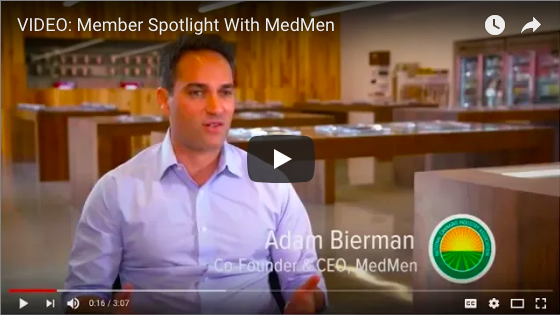
VIDEO: Member Spotlight With MedMen
In this month’s NCIA member spotlight, we visit with MedMen at their Santa Ana, CA, dispensary location. MedMen has grown to more than 18 storefront locations across California, Nevada, and New York, and currently employs more than 800 people. Co-founder and CEO Adam Bierman, along with co-founder Andrew Modlin, launched the company nearly a decade ago. Watch this video to learn more about MedMen.
“I don’t think we can expect to ever live out something like this again in our lifetime.”
– Adam Bierman, MedMen CEO and Co-founder






 By NCIA’s Retail Committee

 by Beau R Whitney, NCIA’s Chief Economist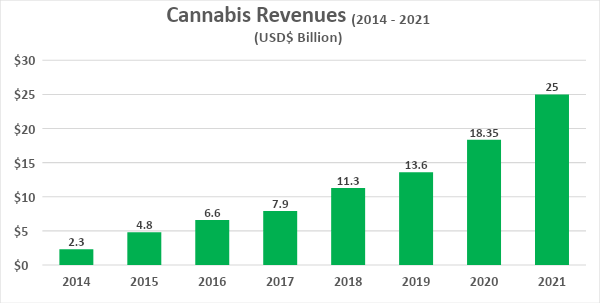
Follow NCIA
Newsletter
Facebook
Twitter
LinkedIn
Instagram
News & Resource Topics
–
This Just In
Member Blog: What Consumers Really Want in a Pre-Roll
Member Blog: The Evolving Cannabis Legal & Regulatory Landscape in 2026