Member Blog: How to Navigate the Cannabis Payment Landscape in 2023
With the recent crackdown on cashless ATMs in the U.S. for cannabis payments, dispensaries have been scrambling to find alternatives to this banking system. As more consumers nowadays prefer to pay by credit or debit cards, or another form of digital payment, dispensaries must offer convenient forms of making payments to their customers. But until there is federal legalization in the U.S., the cannabis payment landscape will continue to be marred by complications. This complete guide on cannabis payment processing can help you navigate the hurdles better and set your dispensary up for success with the best digital payment solutions. But continue reading for some quick tips on handling cannabis payments in 2023.
Reduce Cash Transactions and Risks
Cash may still be king in the cannabis industry, but it comes with many risks. And in this highly regulated industry, compliance must remain the priority for dispensaries. Cash also limits your ability to retarget or upsell to customers. By reducing cash transactions, you can avoid the following risks:
Cash theft by robbers, employees, or customers.
Mistakes in daily cash counts and accounting.
Inventory compliance issues due to untraceable cash.
Encourage the Use of Digital Payments
With digital payments, instant reporting capabilities give cannabis retailers a better understanding of business performance. Also, providing customers with a modern and convenient shopping experience is a competitive advantage in the cannabis industry. There are significant advantages to encouraging the use of digital payments:
Improved dispensary experience for customers.
Increased safety and security for everyone.
Easy Banking, Tracking, and Reporting.
Maximize the Benefits of Going Cashless
The most important benefit of going cashless is that you’ll see a massive increase in sales and revenue. When a customer is not limited by the amount of cash on their person, they always tend to buy more, and budtenders are better equipped to upsell. Most dispensaries using cashless payment solutions witness:
Minimum 25% increase in average transaction value.
Increased customer loyalty and retention.
Overall improved operations with data insights.
Choose a Compliant Payment Solution
There are quite a few cannabis cashless payment solutions out there, but not all can provide you with the enhanced safety, security, and compliance needed for cannabis retail. Ensure that you choose a multichannel payment solution that integrates seamlessly with your cannabis POS and complies with all laws and regulations. A dispensary cashless payment solution must offer the following:
PIN Debit Payment: The most compliant solution.
ACH Electronic Transfer: No-cost direct payments.
Integration with loyalty and gift card programs.
Implement Cannabis eCommerce and Delivery
To provide customers with the most convenient and efficient way to purchase cannabis products, dispensaries should also consider implementing eCommerce and delivery services. This allows customers to browse and buy products online, with the added convenience of home delivery. Implementing such services also helps reduce cash transactions, as customers can pay digitally if you have a compliant cannabis payments solution.
Set up an eCommerce website by using a cannabis-specific eCommerce platform that integrates seamlessly with your POS system.
Use cannabis-specific delivery software to set up compliant delivery services or outsource to third-party delivery companies.
Dispensaries must have a robust digital payment system that complies with all regulations, which can only be achieved by using a cannabis-specific payment processing system that integrates with your eCommerce platform and POS system.
Bonus Tips
Here are a few more tips for navigating the cannabis payments landscape:
Consider implementing a loyalty program to encourage repeat customers and increase sales.
Ensure that your payment processing system can handle high volumes of transactions to avoid delays or downtime.
Stay up-to-date with the latest regulations and compliance requirements for cannabis payments to avoid any legal issues.
Offer multiple payment options to customers, such as debit and credit cards, ACH transfers, and mobile payments, to provide greater flexibility and convenience.
Conclusion
The cannabis industry is rapidly evolving, and dispensaries must adapt to the changing payment landscape to remain competitive. By reducing cash transactions, encouraging digital payments, and implementing cannabis eCommerce, dispensaries can offer customers a convenient and safe way to purchase cannabis products while complying with state and federal regulations.
Offering the convenience of digital payments increases dispensary profits, enhances the customer experience, and elevates your dispensary business beyond the limitations of cash only. With a truly transparent and compliant cannabis cashless payment solution, you can facilitate faster check-out at your dispensary with simple, frictionless, and secure digital payments. Dive into Cova Software’s free cannabis payments processing guide to learn more.
Gary Cohen is the CEO of Cova Software, the fastest growing technology brand in the cannabis industry. Cohen’s focus has been driving the company’s overall strategy, including its vision, go-to-market plan, and strategic development. Since joining the cannabis industry in 2016 and launching Cova commercially in 4q17, Cohen has led Cova to dominate the enterprise sector for dispensary Point of Sale, while forging client relationships with hundreds of single-store retailers across North America.
With Cova’s cannabis POS and its excellent integrations with eCommerce and delivery services, the online order automatically pops up for the budtender to tender the sales, and the POS system updates inventory once payment is approved. Cova offers multiple eCommerce solutions to choose from, as per your needs and budget, and you can legally sell cannabis online stress-free while staying compliant with strict government regulations.
Committee Blog: Four Elements of Compensation Strategy in High-Growth (Cannabis) Companies
by Fred Whittlesey, Founder and President, Cannabis Compensation Consultants Member, NCIA Human Resources Committee
with assistance from
Kara Bradford, Co-Founder & CEO, Viridian Staffing Chair Emeritus, NCIA Human Resources Committee
All high growth companies face the same challenge: Hiring high-quality people at a feverish pace, while dealing with all of the issues that come with that including recruiting, onboarding, training, and of course, compensation.
The cannabis sector (more than just an “industry”) has another layer of challenges rarely seen when finding and hiring the employees needed for the explosive growth underway:
Diverse segments (to use a financial reporting term) often under a common entity, or
Multiple entities housing those distinct businesses, and
Diverse occupational categories either within a common entity or spread across multiple entities.
The cannabis product lifecycle, like any consumable product, spans agriculture, processing, packaging, branding, distribution, and direct sales. A fully vertically-integrated company might employ, within a single corporate entity, agricultural workers, lab workers and extraction specialists, manufacturing workers, distribution teams, and dispensary employees. That is a challenging environment for compensation plan design.
For example, agricultural workers, including agricultural managers, virtually never receive equity compensation as an element of their pay package. Biochemists, particularly when coming from a biopharma company, expect significant equity compensation. Retail dispensary managers, no equity. VP of sales, equity.
Now, imagine those jobs and people are spread across multiple entities. Maybe the overall corporate structure is a C Corp over some LLCs. Or, like in Arizona, a nonprofit corporation with a Management Services Agreement with a C Corp which directs money through an LLC.
Or in British Columbia which, like the U.S., prohibits alcohol and cannabis sales in the same stores or from the same company, but has owners that operate in both businesses. And the stores are next door to each other. Budtender vs. sommelier? Employees talk.
But perhaps the most compelling reason to consider a broad spectrum of compensation alternatives is unique to cannabis: The non-deductibility of compensation expenses that cannot be characterized as cost of goods sold — Tax Code Section 280E. More than in any other industry, using forms of compensation that avoid incurring a nondeductible compensation expense can have a direct and immediate impact on business financial performance.
Compensation Strategy
Complex cannabis companies have to mold their pay programs to fit this broad array of entities, lines of business, and types of jobs, under an unfavorable tax environment.
There are four, and really only four, types of compensation for employees (and independent contractors, and members of the Board of Directors, and consultants). Each of the four has many forms, but there are four types of things a company can do to pay — and hopefully continue to pay — an employee. This is a useful framework for thinking about compensation.
Cash
Wage, salary, performance incentives or bonuses, commission, 401(k) contribution (yes, a cannabis company can have a 401(k)), profit sharing, retention bonuses. Every employee will receive one or more of these forms cash payments. All require cash changing hands from the company to or on behalf of the employee.
The most common cash compensation arrangement is a base salary plus bonus as a percentage of salary that is typically dependent upon the performance of the individual, team, and/or company. Many companies have a 10% of base salary target. In the cases of budtenders and delivery drivers, tips (essentially a customer-paid commission) are common as compensation as well. Companies in some locations, such as California, continue to pay trimmers at piece rates (pay by unit production).
Goods and Services
I casually call this category “stuff” — a company gives people stuff as part of their compensation. Healthcare coverage, life insurance, job training, a laptop and a phone in the traditional model. But this category includes much more than traditional “employee benefits” — from free food to use of the company vacation home to sabbaticals, these meet employees’ needs while keeping them focused on, and sometimes physically at, work. Sometimes this free stuff is not taxable income to the employee (healthcare coverage, free food at work) and sometimes it is taxable (free gym membership). Be informed in your creativity here. Local regulations in many jurisdictions are dictating benefits coverage above the federally-mandated level.
Securities
This is by far the most complex form of compensation, and more so for cannabis companies. Whether it’s stock options, restricted stock, restricted stock units, or member interests (in an LLC) — the question is which entity is granting the compensation, and whether they are allowed to grant it to an employee in a different entity. We are beginning to see companies that compensate employees with cryptocurrency which is viewed as a “security” by both the IRS and SEC. Given the increasing social justice emphasis in the cannabis sector, equity compensation is the form of pay that truly levels the playing field across all income levels.
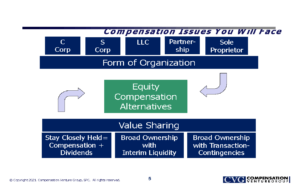
The choice of equity compensation will be driven by the form of organization and ownership philosophy.
Time and Place
Before COVID-19, companies in all industries were increasingly emphasizing this form of compensation. In the 1980’s, there was no “casual dress” and “working from home” was unheard of. An employee reported to the workplace at the assigned time, and there was no “flextime.” Over the past few years, companies were already experimenting with paid parental leave, unlimited vacation time, and employee-choice work location. Now, for many companies and many jobs, WFH is the model. Not for growers and not for budtenders (yet). But time and place can be highly valuable cash-free (sort of) equity-free forms of compensation.
And then…
Hiring is only half the battle. Retention of employees in the cannabis sector is as challenging as hiring. Companies need to be creative with the same four tools to retain employees. But you can’t wait until they give notice of resignation, because then it’s too late.
Your employee retention compensation program starts at the employee’s date of hire, because it is the same program.
Member Blog: The Ultimate List of Must-Have Cannabis POS Hardware
by Heidi Orpilla, Digital Content Specialist at Star Micronics
The cannabis industry is booming – and it’s expected to continue doing so. According to Grand View Research, the global legal marijuana market is expected to reach $66.3 billion by the end of 2025, and each year brings new legalization across the world.
Whether you’re in the business of opening a cannabis business yourself or are looking to provide cannabis point of sale (POS) solutions to your customers, it’s important to understand the critical role cannabis POS hardware has and how to determine which products are right for your business.
Must-Have Cannabis POS Hardware
Receipt Printers
Receipt printers are extremely important in the cannabis market. When it comes to cannabis, proof of legal purchase is key – and there’s no better way to provide it than with a receipt printer. In some places, like Canada, it is illegal to possess cannabis deemed illicit, and without proof of purchase, all cannabis is assumed to be illicit. Carrying that illicit cannabis could result in a $5,000 fine or a five-year prison sentence! In the US, laws vary greatly by state and must also be carefully obeyed.
Along with providing proof of purchase, it’s important to note that depending on your region, receipts must also contain other information, like store name and address, product category/name, and the appropriate tax code/identifier.
Label Printers
Next on the list is another kind of printer: the label printer. An important part of seed-to-sale tracking, printed labels have an important role in the entire cannabis production and retail process. Seed-to-sale tracking is a key requirement in cannabis regulatory models, and refers to the process of tracking plants and their byproducts from planting all the way through to the plant’s sale.
Custom Cannabis Labels
As mentioned above, labels are incredibly important for the cannabis industry. It’s critical to ensure your cannabis labels come pre-printed with official, state-required universal symbols. These pre-printed cannabis labels are available in various sizes for all recreational markets.
Scales
Yet another critical piece of cannabis POS hardware is the scale – but not just any scale will do. First, you must ensure the scale you are considering is legal to use in your state and NTEP-certified. Being certified means that the scales are ensured to charge the correct amount for the product being weighed. Another great feature to look for is a scale that is integrated directly into the POS. Why? Reduced risk of human error that is associated with standalone scales that cannot integrate with the POS.
To make the process of adding a scale to an existing system a simple process, look for scales which are compatible with Windows, iOS, and Android. It’s almost important to seek scales that include a waterproof and dust-proof cover, as well as Bluetooth, USB, and serial interfaces.
Cash Drawers
Chances are you’re aware that the cannabis industry is currently predominately powered by cash. While marijuana is legal in many parts of the country, it remains illegal under federal law, which means dispensaries’ access to credit card processing options is slim. Thus, a reliable, high volume cash drawer is key! Be sure to look for a cash drawer made of durable steel that’s available in colors to match the rest of your POS.
Scanners
Scanners are an important part of the entire seed-to-sale process, from back-end warehouse operations to scanning products at the point of purchase. Important features to look for are connectivity options and a design/color that matches the existing POS, if applicable.
Tablet POS Stand
As we discussed above, dispensary aesthetics are extremely important, not only from a branding and customer experience perspective but also to legitimize the business to outsiders and newcomers. A great place to tie in style is at the POS, and an easy way to do that is by incorporating a sleek, space-saving POS stand into your arrangement. Choosing a stand that features clean cable management is an added bonus.
Self-Service Kiosks
Dispensaries are sometimes limited to how many people they can allow inside at one time because budtenders need to be able to pay special attention to customers, and make sure they are recommending the right products. Some dispensaries are using kiosks to allow waiting customers to pick out what they want on screen, take the slip to the budtender, and simply just collect and pay for their items.
Value-Added Marketing Services
Just like other businesses, cannabis dispensaries need to advertise, but what sets them apart is that they must adhere to strict advertising laws. For example, in multiple states including California and Colorado, over 70% of cannabis advertisement audiences must be over the age of 21.
An easy way to ensure marketing efforts are being communicated only to the intended audience is by printing those promotions on your receipts. By leveraging receipt marketing tools – some of which can be provided by certain receipt printer manufacturers as a value-added service – dispensaries can create custom promotions from templates which increase customer engagement and retention and can be used to promote sales, new products, loyalty programs, and more.
The POS as a Dispensary’s Backbone
In the cannabis industry, accuracy, a professional aesthetic, and responsible marketing are of utmost importance. When properly implemented, the POS can become a dispensary’s backbone to success. By choosing the correct printers, scales, labels, cash drawers, and value-added marketing services, cannabis industry professionals can focus more on growing and selling and spend less time worrying.
Heidi writes for and manages the blog and social media at Star Micronics, a point of sale manufacturer that specializes in POS printing – and more – for the cannabis industry and beyond. Star Micronics offers a full portfolio of cannabis point of sale hardware including receipt printers, cash drawers, NTEP-certified Class II scales, label printers, mobile printers, tablet POS stands, and more. A true one-stop shop, Star provides all the hardware solutions a dispensary could need, from front of house dispensary sales to labeling and weighing product during curation. Additionally, Star has integrations with approximately 85% of all cannabis POS software on the market today.
Guest Post: Banking Access – The Struggle Is Real for CannaBusiness Owners
By Luke Ramirez, Walking Raven LLC
Bank accounts — normally, the most basic thing a business does when starting out is start a business checking account. Those of us in the cannabis industry, however, are very well aware of the struggle to get even basic banking while openly violating federal law. It has been an issue for cannabis companies for years; NCIA’s own Taylor West recently spoke about the banking challenges cannabis companies face in a Huffington Post article, stating, “It’s the biggest problem we have.”
Luke Ramirez, Walking Raven LLC Photo courtesy of Kim Sidwell
As an owner and operator of a retail marijuana center and cultivation warehouses, with a company, Walking Raven, which has been kicked out of more than seven banks in the last five years (including the loss of personal bank accounts), I can personally attest that this could be the most difficult part of running a cannabis company. Although there are pricey alternatives out there, the security risk of transferring and storing large amounts of cash invites crime from the criminal underworld, severely increasing your safety liability as a company. An additional burden comes with the very high cost of time it takes to manage all this cash and pay basic bills, such as power, water, and other utilities. In my company alone, we estimated a cost of over $13,000 in 2014 simply from the time it took to handle our cash.
NCIA has been an outstanding resource for myself and many other of my colleagues in tackling the banking issue. NCIA’s supportive network of other cannabis professionals has given me the advice and contacts I need to operate my business successfully, including banking. If you’re having issues with banking, I suggest that you reach out to your colleagues in NCIA for reputable ideas, or join NCIA if not already a member.
Thankfully, for the industry as a whole, the issue has been covered by the media and brought to light to the general public in much more depth in the last year since adult-use cannabis sales began on 1/1/2014; even Playboy Magazine covered the issue of banking in the cannabis industry last summer. In Colorado, Governor John Hickenlooper, who opposed the legalization of cannabis, asked the federal government to help Colorado with cannabis banking issues. In Washington State, the only other state to allow adult-use cannabis sales in 2014, the Liquor Control Board has also taken steps to help cannabis companies obtain banking, by making publicly available the sales activity of licensed growers, sellers, and processors.
Because of this exposure and the efforts of Colorado’s and Washington’s public officials, there have been major recent steps toward “above-table” banking for cannabis companies. On November 19th of last year, regulators in Colorado granted a charter to a credit union that hopes to work with cannabis companies; the union is now waiting upon an issuance of a master account number from the Federal Reserve to allow it to enter the country’s electronic banking system. In addition, there have recently been creditable solutions offered by one of NCIA’s own board members. While it is yet to be seen if these solutions are long-term, we are closer than we ever have been before to normalized banking.
A budtender at the Walking Raven shop
While we continue to wait for a mainstream solution for every cannabis company, dispensary owners and cultivators should:
Leverage their networks and gain contacts that can provide banking contacts. I recommend joining NCIA and taking advantage of the group’s reputable network if you have not done so already.
Avoid any kind of activity that could be construed as money laundering and therefore put your business in serious jeopardy. This kind of activity includes lying about the nature of your business to a bank, or using your personal accounts for a large amount of business activity.
Look into security companies that offer to handle your cash and eliminate the safety liability of using large amounts of cash. They are expensive, but may be well worth the cost for your business.
Once you obtain banking, avoid “obvious” cannabis transactions. Use cash to pay any vendor that has an obviously cannabis-related name that you must write a check out to.
When using cash, make sure to save all invoices, and get signed receipts from vendors and signed pay-stubs from employees; this will leave a much-needed paper trail in the event of an audit or investigation.
Luke Ramirez is owner and managing director of Walking Raven, LLC, a sustaining member of NCIA. Luke was also recently elected to NCIA’s Board of Directors. Luke has actively been in the cannabis industry since 2009. Since taking control of his company’s operations in 2011, he has changed the entire culture of the shop and successfully completed the process of converting all 3 licenses from medical to retail. Within his organization, he is responsible for all finance management, staffing, compliance reporting, marketing/inventory control, and public relations, among other things. Luke has been featured on many media outlets, such as CNBC, national CBS, and numerous local news stations. He is also actively involved in multiple cannabis trade organizations, lobbying efforts, and advocacy groups.
Guest Post: Plane-ly Legal – Carrying Large Sums of Cash on Commercial Airline Flights
By Luigi Zamarra, CPA
Due to the banking challenges facing our industry, many business owners are working with large sums of cash. Sometimes this cash must be transported: brought to the location where payment is agreed to be made. Sometimes this requires boarding a commercial airline flight with a large sum of cash in your carry-on baggage. (I do not recommend putting cash into your checked baggage.) You should not worry.
While working with a client to plan dividend distributions to their investors, the client expressed his concern that TSA would not allow anyone to board a domestic flight with large sums of cash. This did not seem correct to me for a variety of reasons, so I decided to look into the issue further. Please remember that U.S. currency is “legal tender for all debts, public and private” and there is no law that states that VISA, MasterCard, and the big banks must be in the middle – and get a piece of the action – of every transaction. We have the right to conduct all of our business in cash if we choose, and making such a choice should not subject us to suspicions. As an industry, we should be united in defending our rights to use cash, and we should reject any assertion that using cash implies criminal activity.
It is important to draw a distinction between domestic flights and international flights. On international flights, you must file FinCEN Form 105 with the U.S. Treasury if you are either entering or leaving the U.S. with more than $10,000 of cash currency. This rule does not apply to domestic flights, either intrastate or interstate. On domestic flights, there is no limit; you are legally entitled to fly with as much cash as you see fit, and you are not required to file any form with U.S. Treasury.
It is also very important to understand that TSA is not a law enforcement agency. TSA personnel are not trained in the legal procedures of collecting evidence or conducting investigations, so such actions must be conducted only by law enforcement. TSA’s mission is to “protect the transportation system to ensure freedom of movement of people and commerce.” According to TSA policy, (a) “screening may not be conducted to detect evidence of crimes unrelated to transportation security,” and (b) “traveling with large amounts of currency is not illegal.”
Unfortunately the TSA has engaged in mission-creep recently by searching for cash and engaging in interrogation when cash is found. If you find yourself being questioned by TSA about why you are carrying cash and where you got the cash, you are entitled to refuse to answer these questions. You should state, quietly but assertively, that such information is confidential and that such questions are outside of the TSA purpose and mission. You should also remind the TSA official that such questions are beyond TSA authority, since they are not permitted to investigate evidence of crimes unrelated to transportation security and since there is no danger to air safety from a briefcase of $100 dollar bills. Finally, remind the TSA official that traveling with large amounts of currency is not illegal.
Luigi Zamarra, CPA, has been a member of NCIA since 2013. Luigi CPA is an accounting firm located in Oakland, CA, that helps all types of businesses and individuals with tax planning, tax compliance, and tax dispute services. Luigi specializes in the medical marijuana industry. He helps these businesses comply with IRC Section 280E so as to balance tax cost against audit examination risk.



 Gary Cohen is the CEO of Cova Software, the fastest growing technology brand in the cannabis industry. Cohen’s focus has been driving the company’s overall strategy, including its vision, go-to-market plan, and strategic development. Since joining the cannabis industry in 2016 and launching Cova commercially in 4q17, Cohen has led Cova to dominate the enterprise sector for dispensary Point of Sale, while forging client relationships with hundreds of single-store retailers across North America.
 by Fred Whittlesey, Founder and President, Cannabis Compensation Consultants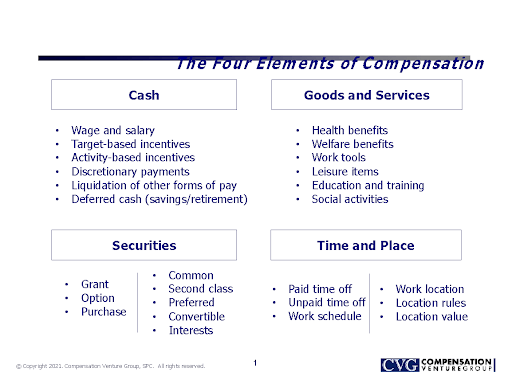





Follow NCIA
Newsletter
Facebook
Twitter
LinkedIn
Instagram
News & Resource Topics
–
This Just In
Member Blog: What Consumers Really Want in a Pre-Roll
Member Blog: The Evolving Cannabis Legal & Regulatory Landscape in 2026