Update from NCIA’s Diversity, Equity, and Inclusion Program

by Mike Lomuto, NCIA’s DEI Manager
Our DEI Program has a lot to share and celebrate as we gear up for Spring, when we hope to hit the road with our Equity Workshop Tour.
Keep reading for all the highlights and wins to start 2023.
But first, I want to remind you that today is the LAST DAY to throw down sponsorship dollars as part of our Lobby Days DEI Delegation.
ALL Lobby Days sponsorship dollars raised during the month of February directly fund our DEI Delegation.
This allows us to provide travel stipends as part of our commitment to DEI at NCIA. Our delegation consists of some of our organization’s most engaged and knowledgeable social equity policy advocates.
This is one of NCIA’s most important functions. It’s imperative we get it in the win column so that our report back in May/June’s newsletter is one of success for our DEI efforts.
Reach out NOW to MikeLomuto@thecannabisindustry.org to help us reach our goal.
February Highlights of our DEI Program:
NCIA’s Global Majority Caucus Launches
February marked the momentous launch of NCIA’s Global Majority Caucus.
Made up of Global Majority leaders from across the organization – Board Members, Committee Leadership, Equity Members serving on committees, and leaders of DEI Program initiatives.
The purpose of the GMC is to galvanize our Global Majority voices and impact at the nation’s oldest and most established cannabis trade association.
I am humbled by the voices that were present last week and completely inspired by what we will continue to accomplish together.
Together, we will continue to advocate for greater Diversity, Equity, and Inclusion in our industry as we push toward federal legalization, and the more equitable rollout of the myriad of state cannabis programs.

Bringing minority (aka Global Majority) perspectives to the forefront of the industry
Join us for the live recordings every Monday at 1 pm ET on LinkedIn Live
Subscribe on your favorite podcast platforms, and catch up on the first few episodes of the new season, featuring NCIA Board Vice Chair Chris Jackson, NCIA Board Member Rebecca Colett of Calyxeum, and Dr Mila Marshall (Vice Chair of the Education Committee)
Upcoming guests include:
- NCIA Board Member Ben Larson of Vertosa, Chris Jensen and Tiffany Watkins (DEIC Chair and Vice Chair), Kay Villamin (SRC Chair), Keyston Franklin (BFSC Chair), and Michael Webster (host of the Power Hour)
February featured TWO Catalyst Conversations (our DEI-focused webinar series)

Catalyst Conversation: Gain an Edge & Impact – Community Benefit Agreements
Featuring Gary Little and Doug Kelly, who are blazing trails in Chicago, alongside NCIA committee members Ace Castillo and Shannon Vetto
For cannabusinesses looking for how to “crack the code” of doing well AND good. We discuss how to create positive community impact AND excel as a business as a result
Catalyst Conversations: What’s Hot for 2023?
Featuring NCIA Committee members Vanessa Valdovinos, Keyston Franklin, and Jim Makoso, as well as new Board Member Amy Larson
Especially relevant for newer leaders in the cannabis space, seeking insights into how to succeed and gain lasting power, based on the opportunities 2023 presents.
New York Social Equity Roundtable Submits Public Comments, co-signed by a dozen partnered organizations
Since Spring of last year, we have been building coalition through conducting an ongoing roundtable discussion, consisting of multiple National and New York based cannabis social equity and industry organizations to assess and provide feedback regarding rules and regulations. Big thank you to the participating orgs, including: Minorities for Medical Marijuana (M4MM), Social Equity Committee Co-Chairs of NYC/Hudson Valley Cannabis Industry Association (NYCCIA/HVCIA), NYC NORML, Black and Brown Economic Power in Cannabis (BB EPIC), JustUS Foundation, Unified Legacy Operators Council (UNLOC), Minority Cannabis Business Association (MCBA), Social Equity Empowerment Network (SEEN), The Hood Incubator,The People’s Ecosystem (TPE), Etain, legacy operators, and social equity cannabis business owners.
On February 13th, we submitted our latest round of public comments, in a common effort to assist the New York Office of Cannabis Management in its mission to create an equitable and inclusive cannabis industry for New York State.
DEI Committee leader Raina Jackson served as Lead Author, with support from fellow NCIA committee members Mark Slaugh, Adrian Adams, Stephanie Keeffe, and Osbert Orduna.
Get a glimpse into the impact our Equity Scholarship Program is having

The first Equity Member Spotlight blog of the year is up!
“it isn’t hard for me to find a BIPOC leader within NCIA who shares experiences similar to mine. That has made this a motivating and pleasurable experience.”
– Michael Diaz-Rivera, Owner of Better Days Delivery; Colorado State Rep of M4MM
The Equity Workshop Tour is tentatively (based on sponsorship) set for stops in New York, Chicago, and Detroit, synced up with our Industry Socials. More to come. Sponsorship opportunities are available.
To join NCIA through our Equity Scholarship Program, apply here:
https://thecannabisindustry.org/ncias-social-equity-scholarship-program/
Member Blog: As a Leader, You’re in the Business of Talent. That Means Your Top Priority Should Be Your People.

By Charlena Berry, Cannabis Business Growth
The following is adapted from Breaking the Stigma.
As a leader (especially a leader in the cannabis industry), you’re in the business of talent — identifying it, hiring it, developing it, and retaining it. Your top priority should thus be your people.
The first place to look to see if you have a people problem in your company is employee turnover. You can’t (and shouldn’t want to) completely avoid turnover, as it’s natural for some employees to move on and, occasionally, you will make hiring mistakes and need to let people go.
However, if you have high employee turnover — say, as high as 20 to 30 percent over the course of a year — it’s a sign you have an illness in your company. While this figure may seem low, traditional retailers aim for an even lower turnover rate. To calculate turnover, divide the number of employees that left the company by the total number of employees. For instance, if 30 employees out of 100 employees leave in the course of a year, your turnover is 30 percent.
If your employees don’t want to work at your store, do you think they’re going to create the kind of environment that customers want to shop in? Probably not. And if a good portion of your employees are in training and don’t yet know what they’re doing, is that going to create a delightful customer experience? Again, probably not.
The good news is that there are steps you can take — which I’ll share with you here — to reduce turnover and prioritize your people. Ultimately, by implementing some or all of these strategies, you’ll be able to offer your people the greatest possible experience. That will benefit not just them, but your organization and your customers as well.
Adopt the Leadership Mindset
Many factors can contribute to turnover. If you’re not offering compensation and perks that are on par with other cannabis retailers in your area, for instance, you’re likely to lose employees.
The biggest factor, though, is leadership. You might have heard the saying before that people don’t leave companies, they leave managers. If your management team makes employees miserable or doesn’t make them feel valued, they’ll leave.
If, on the other hand, you adopt the leadership mindset and take the time to train managers to form a personal connection, be curious, empower, develop, and inspire your employees, they’re more likely to stay because those elements create a rewarding, enjoyable work environment.
Promote From Within
It’s also critical that you establish a practice of promoting from within. If your employees don’t see any growth opportunities within your company, they will be forced to leave to progress in their careers.
Promoting from within also just makes good business sense. Who knows your store and your company culture better than the people who already work there? When you promote an employee to a leadership position, they can hit the ground running.
Especially as you scale, promoting from within is key to implementing a seamless customer experience across multiple locations. When a role is empty, it disrupts the continuity of operations. Imagine a ship whose captain is swept overboard. You need a second-in-command ready to step up and fill the role.
Focus on Diversity, Inclusion, and Equity
As you hire and build paths to leadership positions for your employees, keep diversity, inclusion, and equity in mind. With the long history of people of color being disproportionately impacted by the war on drugs, the very least we can do as retailers is ensure we are being fair and creating opportunities in our hiring and promoting practices.
Plus, diversity leads to better business results! McKinsey & Company found that companies in the top quartile for ethnic and cultural diversity in executive teams outperformed those in the bottom quartile by 36 percent.
Understand When to Let People Go
As unpleasant as it can be, the final aspect of managing the talent of your company is understanding when to let people go. Every employee is a representation of your company and contributes to the customer experience. You can’t afford to have subpar employees when you could put someone incredible in that role — someone who will make a difference in terms of how customers think and feel about you.
If a team member isn’t living up to the expectations of a role, you need to provide clear, regular feedback about what needs to change. Employ your curiosity and ask leading questions to try to mold them into the role: Why do you do things that way? Have you thought about other ways to do it? What if you tried x or y?
If after several months, they’re still failing to meet expectations, they’re probably not a good fit for the role. At that point, you can either try to find a different role for them if you think they could still make a valuable contribution or let them go. You can’t expect people to magically know everything they need to know and perform well in a role without guidance and training, but you also can’t expect everyone to be a good fit.
Turnover is Expensive
Bottom line, turnover is expensive, both financially and culturally. Every time an employee leaves, you have to pay the costs of onboarding and training a new employee. According to Gallup, that cost can range from one-half to two times the employee’s annual salary.
It’s far cheaper — and results in a better customer experience — to retain and develop your current employees. Turnover also damages your company culture. When you have many empty positions or many new employees in training, it increases the pressure and stress on your veteran employees. It can trigger a wildfire of employees leaving, which lowers morale and disrupts team dynamics.
As a leader, it’s easy to get caught up in the minutiae — emails to answer, decisions to make, spreadsheets to review. Those tasks are important, but the area where you can have the most impact is in people’s development. When you put people first, it’s like dropping a rock into a still pond, spreading ripples throughout the company.
 For more advice on actionable strategies you can implement that put your people first, you can find Breaking the Stigma on Amazon.
Charlena Berry is the author of Breaking the Stigma: Racism, Lies, the Opioid Endemic, and Inviting Grandma to the Dispensary. In this book, she exposes lies that created the stigmas associated with cannabis, and how these stigmas must be addressed to see continued growth in the marketplace. She then outlines a framework that provides key strategies for retailers to implement to improve the customer experience and increase profitability.
Writing from her experiences in the industry, Charlena is a global cannabis business executive and the founder of Cannabis Business Growth, a premier cannabis business consulting firm. Prior to that, she spent more than a decade in Supply Chain and Retail Operations for Fortune 500 companies like Whirlpool and Office Depot/Office Max. She also serves as the Chief Operating Officer for The Cake House, a chain of dispensaries in Southern California.
Equity Member Spotlight: Puff Couture LLC – LaVonne Turner

 NCIA’s editorial department continues the Member Spotlight series by highlighting our Social Equity Scholarship Recipients as part of our Diversity, Equity, and Inclusion Program. Participants are gaining first-hand access to regulators in key markets to get insight on the industry, tips for raising capital, and advice on how to access and utilize data to ensure success in their businesses, along with all the other benefits available to NCIA members.
Tell us a bit about you, your background, and why you launched your company.
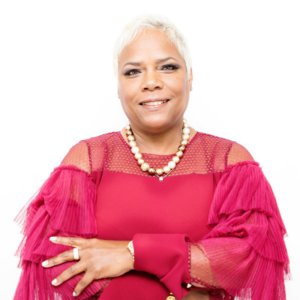 I am LaVonne Turner, President of PUFF COUTURE LLC. Before my interest in cannabis, my career was focused on marketing, communications, public relations, event management, and community advocacy. After working for non-profit and for-profit organizations, I became increasingly interested in public policy and community advocacy to help the underprivileged and unrepresented. I hold a bachelor’s degree in executive leadership/marketing, a master’s in public administration, and currently working on a master’s degree in clinical mental health counseling. I am a block club president and serve on a couple of boards and committees. I have spent many years mentoring children and youth.
My journey into the cannabis industry as an entrepreneur started when my mother began experiencing debilitating pain, and her only relief was prescribed medication. While I still haven’t found the right product to deal with her pain, I have taken great interest in the industry and the incredible products born from seeds. I plan to open a microbusiness and consumption lounge in Detroit, MI, that serves aromatic, exotic strains and infused products.
What unique value does your company offer to the cannabis industry?
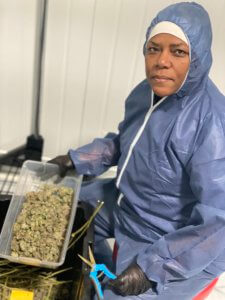 PUFF COUTURE LLC is a minority-woman-owned cannabis company slated to open a microbusiness and consumption lounge in Detroit. We want to bring a sophisticated community-driven cannabis business that offers a contemporary atmosphere for clients. It will convey the importance of the cannabis flower by providing a chilled environment for clients to consume unique, flavorful, and aromatic cannabis. PUFF COUTURE will support mental health counseling, volunteerism, public policy, and minority representation in the cannabis industry, especially among women. According to a recent special report by MJBbizDaily Women and Minority Report, only 3.8% of Blacks or African Americans are cannabis business owners, the percentage of minority women in Michigan is even smaller; our responsibility is to open doors for future female entrepreneurs and people of color.
What is your goal for the greater good of cannabis?
PUFF COUTURE LLC would like to change the face of cannabis through participation and contributions to critical public issues that affect the community values of our clients and neighbors, as well as giving back through donations and mentoring. The organization will support issues affecting women who suffer from traumatic situations through our community advocacy campaign. Still, there will be plenty of time for spoken word, intimate art shows, parties, etc. PUFF COUTURE will take care of our people, support the cannabis industry, and create an atmosphere of excitement.
What challenges do you face in the industry, and what solutions would you like to see?
A few years ago, I couldn’t get anyone to advise me or take the time to mentor me. However, after many no’s, I have been blessed to partake in the City of Detroit’s Homegrown cannabis program and training by the Detroit Cannabis Project. LUME’s Vice President of Retail Operations, Michael Dowdell, has taken the time to speak with me and allowed me to observe the business sales and operations of one of the company’s recreational and medical stores. That first opportunity let me know I could continue to grow in the cannabis industry given a chance.
I have continued to expand my knowledge about cannabis, staffing, and cultivation through a mentorship provided by one of the award-winning co-owners of Oak Canna, LLC/CannaBoys, Jason Tueni. Mr. Tueni has devoted a great deal of time to educating me about caring for the flowers at every growth stage. I am currently interning at the cultivation center, which allows me to see everything first-hand, e.g., flowers, business, human resources, all aspects of creating and running a successful microbusiness and consumption lounge. These types of opportunities should be more readily available. I often hear people complain about not having access to mentors, which I completely understand. I joined the CRA DEI workgroup and from there was able to make a connection to LUME and Mr. Dowdell, who by the way is African American, and I asked for the opportunity. I did the same thing with Mr. Tueni. I was at a Weedmaps event and started talking to people and let them know I was looking for a mentor and from there, introductions were made. We met a few times for two to three hours, a couple of months after, and I asked if I could intern at the cultivation center and he said yes. We continue to meet, although not as often, and I see him on a regular basis. Hopefully, when the time is right, we will partner on a project.
Both of these events have provided a great deal of information for me in preparation for my future cannabis venture and I won’t stop reaching out for more knowledge and advice. Knowing how mentorship has helped me, I will continue to look for opportunities to build my business and while doing so pay it forward by mentoring future Detroiters interested in the cannabis industry. As important is my need to stay involved in public policy and community advocacy.
Why did you join NCIA? What’s the best or most important part about being a member of the Social Equity Scholarship Program?
I joined the NCIA to learn and network. Through the social equity scholarship, I serve on the DEI Committee and am also serving on the Cannabis Regulatory Agency-DEI Workgroup for the state of Michigan. The weekly social equity meetings held by the DEI Director are informative and build camaraderie among social equity entrepreneurs. The added weekly conversations help push to get to the finish line. I believe many social equity members will have an opportunity to work together in the future.
I look forward to growing with the National Cannabis Industry Association.

Follow NCIA
Newsletter
Facebook
Twitter
LinkedIn
Instagram
News & Resource Topics
–
This Just In
Member Blog: What Consumers Really Want in a Pre-Roll
Member Blog: The Evolving Cannabis Legal & Regulatory Landscape in 2026