Member Blog: Protect Your Cannabis Intellectual Property to Stay Competitive in a Changing Landscape
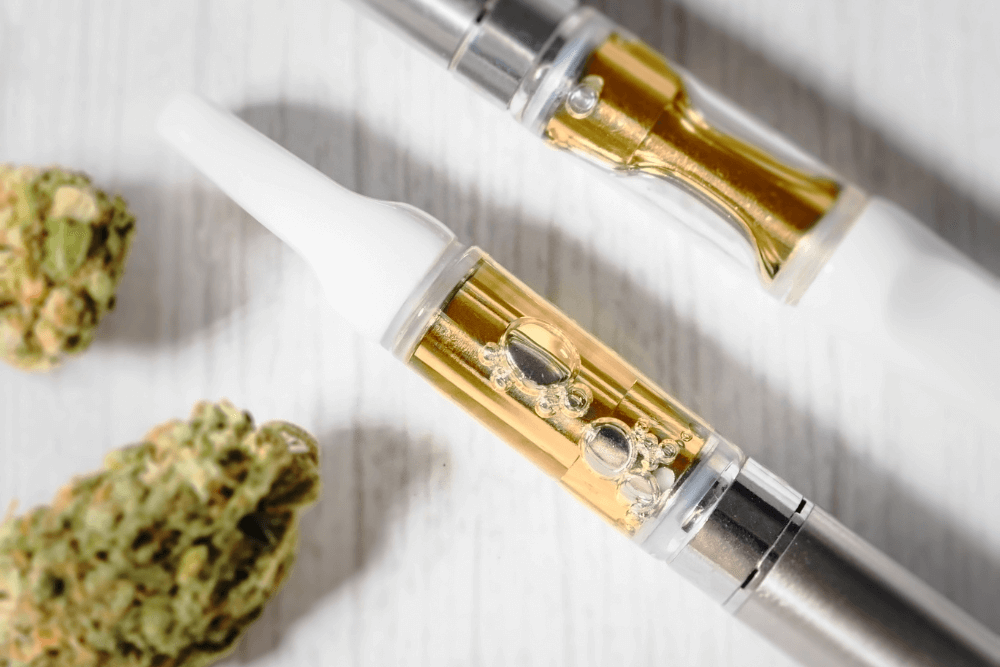
In 2021, massive China-based e-cigarette manufacturer Shenzhen Smoore Technology Limited (the parent company of CCELL) initiated a proceeding before the US International Trade Commission (ITC) in which it alleged that Advanced Vapor Devices (AVD) and 37 other vape hardware companies infringed upon its patents.
After roughly a year and a half of legal proceedings, the ITC ruled that the vape hardware companies did not infringe on CCELL’s intellectual property related to ceramic core vape cartridges. This was a victory for not only the US cannabis vaping sector but the cannabis industry as a whole.
From our perspective, CCELL’s litigation appeared as an attempt to drain competitors’ resources and eliminate competition. By refusing to stand aside, we were ultimately vindicated by the ITC’s ruling.
The Implications of CCELL’s ITC Proceeding
CCELL alleged that AVD and the other respondents had infringed upon three of its patents. However, the ITC ultimately ruled that one of CCELL’s patents was improperly obtained and the respondents’ products did not infringe on the other two patents. The ITC also determined that CCELL failed to establish a “domestic industry,” which is required for ITC claims since such proceedings are designed to protect US interest in fair trade.
The more worrisome part is that, had CCELL been successful in proving its allegations, the ITC would have barred the importation of the infringing products, resulting in CCELL gaining a stranglehold on ceramic core vaporization technology. This would have had a far-reaching impact on the broader vape industry. By eliminating the competition, CCELL would have placed itself in a position to control the market, pricing, and timing of new product releases. Inevitably, customers would have faced the prospect of higher prices and slower innovation cycles—both natural results of decreased competition.
We firmly believe consumers deserve the innovation, variety, quality, and fair pricing that competition brings. In our view, the industry is large enough to handle fair competition. Commercial success should come as a result of offering better products, service, and prices—not from using litigious tactics to drain competitors’ resources.
How the Vape Industry Fought Back
Our response to the lawsuit involved deep intellectual property (IP) research and engaging the right advisors, without whom we could not have succeeded while shouldering the burden of the litigation. During the litigation, we continued to capture further market share, gain clients and support our current clients by doubling down on our strategy of creating high-quality products and delivering exceptional customer service.
Operating from a cannabis-centric perspective that does not appreciate a bully in the industry, we put together a joint defense group, including The Blinc Group and Greentank, among others. After all, we are competitors—not enemies.
Together, we’re able to cooperate on policy reform, laws and lobbying that benefit the entire industry and prevent monopolies. All while maintaining healthy competition that promotes innovation. When push came to shove, the vape industry proved that cannabis companies could successfully work together in the industry’s best interest.
A Catalyst to Focus on IP Now
The ITC case should be a wake-up call to cannabis companies to focus on developing and protecting their own intellectual property. Developing and owning IP grants companies a competitive advantage in the marketplace that protects their novel inventions.
Companies outside of cannabis certainly understand this. Merely securing a cannabis-related patent does not violate any federal laws. Companies in other industries (pharma, agriculture, CPG, etc.) can and already have started to gain a toehold in cannabis through their IP.
If anything, the ITC case is a preview of things to come. If cannabis companies don’t get ahead of the curve, they may find themselves as the targets of successful infringement proceedings. Worse, this could result in them being unable to bring certain products to market.
Some of these cases will be valid—companies deserve to reap the rewards of real innovation arising from investments in R&D. Some will be trolling. Yet others will be similar to our situation, where a well-capitalized company uses its resources to put competitors through the wringer. To be clear, earning and enforcing patents is, for the most part, good practice. Patents incentivize innovation and stimulate healthy competition by rewarding parties who create novel inventions. Those patents encourage competitors to come up with their own innovations. If a technology is unavailable because it’s patented, competitors are forced to invest more in their own R&D to create their own innovations. This becomes a flywheel as all companies try to out-innovate each other, ultimately benefiting consumers. But it is critical to not abuse the process and not allow others to do so either. Healthy competition promotes true innovation. And that benefits all of us.
IP will be a key factor in shaping the industry’s future. Despite the multitude of present-day challenges our industry faces, it is crucial for companies to prioritize investment in IP if they are aiming for longevity. Many companies look at the costs associated with IP as an operating expense, while it would more appropriately be viewed as an investment. You must devote the resources now to have differentiated, innovative and proprietary products in the future.
Committee Blog: Protect Against Corporate Identity Theft with Trademark Rights
A company’s brand is its identity. Branding elements – names, logos, colors, graphics, slogans – are how customers recognize a product or service as coming from a particular source. Done properly, brands can be as recognizable to consumers as a person’s face, name, and voice. In some cases, brands may be some of the most valuable assets a company may own. Protecting physical assets is common in the cannabis industry, but how do companies protect intangible assets, like their identity? Fortunately, there are bodies of intellectual property law designed to provide legal protections against others from using brand elements that are too close to your own. To take advantage of these protections, however, cannabis companies must understand how each one works and develop a branding strategy that leverages intellectual property laws.
This is the second article in a 3-part series about cannabis IP. The first article focused on patent law and can be found here. The series will culminate with a Q&A-based webinar on April 19th at 1:00 Eastern. Advance questions can be sent to paul@thalo.io.
Mechanisms of Brand Protection
Brands are protected most prominently by legal domains known as trademark and trade dress. Trademarks include a company’s name, logos, and slogans, as well as those of any individual products. In some instances, trademarks may also include recognizable elements like colors (UPS’s brown) and sounds (NBC’s chimes). Trade dress is a similar concept to trademarks, but applies to the distinct appearance of a product or its packaging. Trade dress can even be used to protect the unique look and feel of a retail establishment, such as a restaurant or dispensary.
Both trademark and trade dress is intended to reduce confusion in the marketplace as to the origin of a product or service. The idea is that the public is best served when they can reliably determine which company to associate with each product. Reliable product-company association increases quality accountability, facilitates safety controls, allows consumers to form powerful brand loyalty.
Companies that avail themselves of trademark and trade dress laws gain access to a set of tools to legally fence off others from using branding that is likely to confuse customers about the source of a product. And, unlike other forms of intellectual property, trademark rights can last indefinitely and even strengthen over time. Some of these rights arise automatically just by using a mark, others must be sought out through registration.
Principles to Consider When Selecting a Brand
Every company should consider trademark principles from day zero, when first selecting a name. U.S. trademark rights only apply to marks that are “distinctive,” meaning they are capable of distinguishing things bearing the mark from goods and services offered by others. The more distinctive a mark is, the stronger protections provided by trademark law. Names that merely describe the goods or services are non-distinctive and are typically not eligible for trademark protection.
There are five general categories along the spectrum of distinctiveness – fanciful, arbitrary, suggestive, descriptive, and generic – arranged from strongest to weakest.
Fanciful marks words that were invented specifically to serve as a trademark, such as Xerox or Nvidia. Because these words have no other meaning than to identify the source of goods or services, they are the most distinctive category of trademark and receive the greatest protections.
Arbitrary marks are the second most distinctive category of mark and include words that have alternative meanings, but only meanings in contexts unrelated to the goods or services being sold. These include Apple computers, Lotus cars, and Bicycle playing cards.
Suggestive marks are less distinctive than Fanciful and Arbitrary marks, but still considered sufficiently distinctive to receive trademark protection, though registration may be more difficult. Suggestive marks imply a quality or characteristic of the good or service the mark is used in connection with. Some examples of suggestive marks would include: Microsoft, a portmanteau of microprocessors and software; ChapStick, for a stick-shaped balm used on chapped lips; and Netflix, which is suggestive of an internet-based video service.
Descriptive marks simply describe the goods or services being offered and are, therefore, not distinctive. In some cases, however, descriptive marks can acquire distinctiveness and achieve a “secondary meaning” as a source-identifier through long-term use (usually +5 years), heavy advertising, or pervasive adoption. Examples of Descriptive Marks would include: International Business Machines (IBM Computers); Best Buy retail stores; and Sports Illustrated magazine.
Generic marks are terms that broadly identify the product or service being offered. Generic marks are so non-distinctive that they are not eligible for trademark registration, even if secondary meaning can be shown. The idea is that these marks are so fundamental to the product that it would be detrimental to consumers and the marketplace to allow a brand to have exclusive use of the term in connection with the goods. “Escalator” and “Dumpster” were once brand names but, because they were used widely to refer to all mechanized stairways and trash receptacles regardless of manufacturer, they lost all trademark distinctiveness.
Parody Does Not Apply – Avoid Famous Brands
A surprising number of cannabis companies have used trademarks that reference or parody famous brands. Gorilla Glue, Girl Scout Cookies, and many others have been used as names for cannabis products. Companies have used packaging that resembles well-known products such as Life Savers and Sour Patch Kids. This is a bad idea. While this practice seems to be increasingly limited to unregulated markets, a recently published (and ill-advised) application for the mark and logo MCWEED for apparel shows that not everyone has received the message:
Registration and Scope of Protection
Some trademark rights are established as soon as a trademark is used in commerce. But to obtain the full scope of legal protections available, trademark owners must register their marks, preferably federally. Federal registration stakes a claim to a nationwide priority date, increases protections available, increases potential damages, and embodies a definities property that can accrue value.
All trademark registrations begin as applications. Trademark applications must, among other things, identify the mark, the applicable dates of use. Applicants must also describe the goods and/or services the mark is (or will be) used with and select one or more classes from an international menu of product classifications. The classes selected and the description of the products can greatly affect the scope and validity of a registration, so it is important to consult with an experienced trademark attorney.
These applications are examined by the U.S. Patent & Trademark Office to ensure they meet the statutory requirements. Typically, the USPTO completes examination within about 6 months, but currently the office is experiencing some delays and it is commonly taking 7-10 months for an application to be evaluated. If the examining attorney identifies any problems, they may issue rejections, to which the applicant will have an opportunity to respond.
If the USPTO approves the application, it will be published for 30 days (expandable to 180 days) to allow other trademark owners to oppose registration of the mark. Sophisticated trademark owners can set up alerts to be notified when any similar applications are published that may be concerning. At the close of that period the mark is recorded in the federal register and the trademark registration is complete.
A qualified trademark attorney can help guide you through the process and provide counseling concerning how to maximize your chances of registering your trademark without prejudicing your rights. Trademark application fees run $250-$350 per class of goods or services and a trademark attorney will typically charge a few hundred to a few thousand dollars, depending on their experience and the level of pre-application clearance. While trademark mills and self-guided applications are available, there are many pitfalls to avoid while preparing and prosecuting a trademark application, and applicants should be wary of attempting to navigate the process without legal guidance.
Applicants should also be aware that many companies mine the USPTO database to send unsolicited offers to trademark applicants. While these offers can look official and typically include some deadline to respond, they are usually scams. Nevertheless, it can be helpful to have an attorney review any correspondence relating to the trademark application to ensure that no important correspondence from the USPTO is missed.
Embrace the Zone of Expansion
There are a lot of benefits to registering trademarks, but registration is not available in all instances. Under federal law, registrations cannot be issued that cover goods or services that are federally illegal. But the same mark can be registered for other, legal products, and the trademark rights will extend to a reasonable “zone of expansion,” covering products that the trademark owner could reasonably branch out to in the future. This allows a brand owner to obtain the benefits of federal trademark registration and use it to provide some umbrella protection for their cannabis brands.
One option is to sell branded accessory products, such as apparel or smoking accessories, for which a trademark registration will pass muster. It is debatable, however, whether cannabis products are within the zone of expansion of t-shirts.
Another option is to develop one or more low-THC hemp products under the same brand as high-THC cannabis products. At least one case is already working its way through the courts where a trademark owner is claiming that cannabis edibles are within the zone of expansion of a line of hemp-infused, low-THC edibles. Edible IP, LLC and Edible Arrangements, LLC v. MC Brands, LLC and Green Thumb Industries, Inc., (Case No. 20-cv-05840). Though that approach is also not without its pitfalls, as discussed below.
A final option that every cannabis company should consider is state trademark registration. State registration requirements are typically governed by state law and, therefore, state trademark registrations can often be obtained for cannabis products. State registrations are more limited than federal registrations, but can be a powerful tool in the current landscape of cannabis IP.
Products with CBD Can Be Trademarked, But You Can’t Trademark “CBD” Products
Companies that produce hemp products do not have the same problem with federal illegality as companies with high-THC products. Federal registration is available for trademarks that are used on hemp and hemp products. However, as most hemp companies should know, the advertising of cannabidiol or “CBD” is regulated by the Federal Drug and Cosmetic Act (“FDCA”), 21 U.S.C. §§ 321(g)(1), 331(d) and 355(a). Because CBD is the active ingredient in an FDA-approved drug (Epidiolex®), the FDCA prohibits marketing CBD products (absent a New Drug Application or Abbreviated New Drug Application). Though that may change. As of now, however, the USPTO will refuse to register marks that identify the goods as “CBD.” In re AgrotecHemp Corp., Serial No. 88979905 (issued Feb. 10, 2022) (finding that PUREXXXCBD for plant extracts should be refused registration).
Notably, the AgrotechHemp decision went further than previous USPTO decisions in that it also criticized the issuance of registrations for marks used on products “derived from hemp.” This may signal a crackdown on all hemp-related registrations, or it may be limited to registrations that explicitly identify the goods as containing “CBD.”
Where’s the Value in Trademarks?
It may come as no surprise that brands can be incredibly valuable assets. In some cases, a company’s brand can make up a significant portion of its balance sheet and brand-centric companies can fetch a premium when they are acquired, known as “goodwill.” Increasingly, specialized lenders are even willing to use secured IP as financing collateral. Nonetheless, the real value for many trademark owners is non-monetary.
When many people think about intellectual property, they recall headlines of jury verdicts with huge damages that can reach into the billions of dollars. The reality is that, absent intentional copying, trademark cases rarely result in large-dollar awards. More often, successful trademark suits result in an injunction preventing further infringement and some relatively minimal damages. The primary value of trademark rights is the ability to control your brand and how consumers perceive your brand in the marketplace. Trademark rights give you the tools to define your brand as a unique identity and preserve that identity in an increasingly crowded industry.
Committee Blog: Protecting Innovations in Cannabis Technology
The Role of Patents in the Industry, Now and in the Future
Paul Coble is an intellectual property attorney and Chair of NCIA’s Cannabis Manufacturing Committee; Scott Seeley is an intellectual property attorney with Eastgate IP and is Organizer of the Cannabis Manufacturing Committee
Competition in the cannabis industry has always been fierce. To date, most competition has focused on securing licenses and sales territory. But, as markets saturate and the green pastures are all claimed, the battlefronts must shift. Cannabis companies now look to collect non-geographic assets, such as market share, profitability advantages, and a durable brand presence.
Intellectual property law provides mechanisms to capture and monetize these intangible assets. Assets that give a company a competitive advantage can build value into a business beyond its balance sheet. Well-crafted IP portfolios not only deter freerider copying, but are also valuable assets that can be sold, licensed, or provide incentive for investment or acquisition by larger entities. Businesses with a strong IP strategy are able to maintain their edge over their competitors by protecting their investments in technology and marketing to discourage competitors from utilizing their newfound developments or improperly capitalizing on their brand recognition.
Ignoring cannabis IP not only leaves this value on the table, but exposes the business to unnecessary risk. As in all other industries, cannabis companies must recognize that competitors have IP portfolios that may need to be avoided or licensed. Modern competition requires solidifying your own rights as well as understanding the rights of others.
Intellectual property is often broadly broken out into four major categories. Each category is tailored to protect different forms of intangible assets:
This blog post overviews patents, and how patents can be used by cannabis businesses to protect their technological advancements. This is the first of a 3-part series about cannabis IP. The series will culminate with a Q&A-based webinar on April 19 at 1:00 PM ET. Advance questions can be sent to paul@thalo.io.
What are Patents?
Patents protect technological advancements and can be used to exclude others from making, using, importing, or selling a claimed technological innovation.
Patents are often used by businesses to build walls around technologies they develop to temporarily prevent competitors from using the same advantages. Companies also use patents to build portfolios of technology that can be sold or licensed like any other asset, or used to bolster their valuation for acquisition or investment opportunities.
But patents are not just used to block competition, they can also be a tremendous source of information about technological developments in the field. While patent discovery tools are admittedly lacking at the moment (GooglePatents is a good place to start), the details in a patent can often short-circuit months or years of work. Of course, depending on the patent claims, you may need to license the patent in order to use that information. But that type of information-for-licensing-rights exchange, with the right mentality on both sides, is the foundation of an efficient industry.
Here are just a few examples of the cannabis technology that may be patent eligible:
Cannabis Strains
Formulations for Extracts, Topicals, Tinctures, Vape Liquid, Edibles
Vaporizer Design
Cartridge Design
Extraction Methods
Manufacturing and Processing Methods
There are three types of patents that can be used to protect cannabis technology: Utility, Design, and Plant. These types of protection are not mutually exclusive and sometimes can be combined to form a more comprehensive protection strategy.
Utility Patents
Utility patents are the most popular type of patent, offering the broadest and strongest form of protection. Utility patents last 20 years from the date of filing and are good for protecting nearly any new technological innovation including formulations for extracts, topicals, tinctures, or edibles, new vaporizer designs, new improvements to processing or manufacturing methods, and similar developments. Utility patents can also be used to protect new cannabis genetics, at least theoretically. As discussed below, however, there are several practical barriers to patenting cannabis genetics.
A significant benefit of utility patents is that they can protect the actual function of an innovation, rather than just the outwardly recognizable features or the specific implementation. This aspect of protection sets utility patents apart from other forms of protection like design patents and copyright, which are limited non-functional aspects.
Design Patents
Design patents protect an item’s unique ornamental appearance. Design patent protection is sometimes easier to obtain than utility patents because design patents only protect the look of an item, not how it works. So design patents do not protect against someone selling a functionally identical device with a different outward appearance. This narrower protection also lasts only 15 years instead of 20.
Nevertheless, design patents can be a strong tool to protect products that have a novel and distinct design aesthetic. They can cover the visual appearance of vaporizer batteries or cartridges, retail packaging, even unique dispensary displays. In some cases, design patents can be effectively combined with trademark and trade dress protections to create a highly defensible brand style.
Patenting Cannabis Strains
The most common questions about cannabis patents usually relate to patenting strain genetics. Newly developed strains can be protected by both utility and plant patents, with varying rights and requirements. Cannabis strains may also, theoretically, receive pseudo-patent protection under the Plant Variety Protection Act of 1970 (“PVPA”). As noted below, however, current practical realities make PVPA protection unattainable for most cannabis strains.
Both plant and utility patents can protect cannabis strains, but they do so very differently. Utility patents cover newly invented compositions of matter and, therefore, can be used to prevent copying a novel genetic sequence. These patents literally cover specific sequences of DNA base pairs. A key requirement of utility patents is that the applicant must enable others to make and use the same invention once out of patent. While it may be possible to meet the enablement requirement with a transgenic breeding or CRISPR gene editing, the more common method of enabling plant gene patents is with a biological deposit of seeds or other propagation material with a public organization. So long as cannabis remains federally illegal, it can be difficult or impossible to make the deposit within the U.S. Some applicants have had success making the seed deposit at foreign centers, but the growth of cannabis genetic patents has been slowed by these requirements. When cannabis is eventually descheduled, the practical barriers to genetic patents will fall and that may trigger a rush by more companies to seek patents for their proprietary cannabis strains.
Plant Patents
Another form of patents, plant patents, can protect new plant varietals that have been reproduced asexually. Although cannabis plants are relatively easy to reproduce asexually via cloning or cutting, one disadvantage of this form of protection is that plant patents only cover genetically identical copies, reproduced asexually from the claimed plant. That means to infringe a plant patent, one must physically clone the patented plant–a narrow base for an infringement claim.
Plant Variety Protection Act
The last vehicle that can protect a new cannabis strain is the Plant Variety Protection Act that was designed specifically to protect sexually reproducing plants, such as cannabis.
The PVPA, however, comes along with a strict requirement that at least 3,000 seeds of the claimed plant species be deposited with the U.S. Department of Agriculture in Fort Collins, CO. The USDA will not accept any deposits for plants that are classified as controlled substances, including cannabis. Meaning that, for the time being, PVPA protection is unavailable for cannabis plants that do not qualify as hemp (less than 0.3% d9-THC).
The Process – How to Get a Patent
All patents start as applications which must be examined and approved by the U.S. Patent & Trademark Office (“USPTO”) to become granted patents. The application process, from start to finish, can last 1-5 years and cost anywhere between a few thousand to tens of thousands of dollars.
The examination involves a review of the patent application, as well as related literature published before your application was filed (also called “prior art”). An examiner with technical expertise in the application’s field will search for prior art and determine whether the application meets all statutory requirements. Most notable of those requirements are that the invention must cover eligible subject matter and be sufficiently inventive to warrant a patent.
The prosecution process typically involves letters back-and-forth between the inventor and the Patent Office. It is often thought of as a negotiation — nearly all patent applications receive at least one rejection. The applicant is given an opportunity to change what the patent covers or explain why the rejection was wrong. Only if and when the Examiner is satisfied that all statutory requirements are met will the application be allowed to issue as a patent.
How will Patents Shape the Cannabis Industry?
Like it or not, patents are rapidly becoming a major force in the cannabis industry. The cannabis industry is in a unique position to determine the role intellectual property will play, but one thing is certain: cannabis IP cannot be ignored. Some companies, like Canopy Growth, Nextleaf, and various pharmaceutical companies, are aggressively developing patent portfolios and high-stakes patent litigation is already underway. Additionally, holding companies known as “non-practicing entities” have been formed to purchase valuable patents covering key aspects of cannabis cultivation, manufacturing, and consumption.
But these forces do not have to dominate the industry. Patents were originally designed to promote scientific advancement, not inhibit it. When the IP rights of others are respected and technology is licensed widely at reasonable rates, intellectual property can cut years and millions of dollars from research budgets. Some industries have found success with patent cooperatives and similar pooled-patent arrangements. The future may see some combination of patent licensing with blockchain technology, NFTs, or decentralized autonomous organizations (DAOs).
We will continue the discussion as to what an enlightened approach to intellectual property could look like in the cannabis industry in our webinar scheduled for April 19 at 1:00 PM Eastern. Please send any advance questions to paul@thalo.io.
Member Blog: The Hidden Gem of Licensing and Endorsement Deals in Cannabis
Sitting here on July 14, 2021, the Senate Majority Leader of the United States Chuck Schumer just introduced legislation to (among other things) federally legalize cannabis. Yet, despite the Senate’s official entrance into the path to legalization, many states, businesses, and importantly here, athletes and celebrities, or “talent,” continue to behave as if legalization has already occurred. Side note – it has in many states!
Talent throughout the country have engaged in a variety of licensing and endorsement deals within the cannabis industry, ranging from Martha Stewart, Keith Haring, Bob Marley, Seth Rogan, Berner, Travis Scott, Rick Ross, “Sugar” Sean O’Malley, Jonathan Adler, to Gary Payton. A common theme among talent newly entering the space seems to be a default to the plant itself, i.e., partnering with cannabis producers to either endorse or license intellectual property (“IP”) to create cannabis strains and products. Here, I would like to first describe what licensing and endorsement deals are and then discuss a hidden gem of the cannabis licensing and endorsement space. That is, talent partnering with cannabis ancillary businesses, meaning, businesses that sell cannabis accessories and products but do NOT ‘touch the plant.’
Before I dive into a discussion of cannabis accessories, it is important to quickly outline “licensing and endorsement deals.” At a high level, a licensing deal is the process of an individual granting another party the right to use his or her name, image, and likeness, for a particular purpose, in exchange for certain consideration (payment). For example, publicly-traded cannabis accessory distributor Greenlane (NASDAQ: GNLN), where I serve as the Associate General Counsel, has remitted consideration to the owner of the artist Keith Haring’s IP, to use images of his artwork on a line ofsmoking accessories. A licensing deal allows an owner of IP to capitalize on its value by finding the right partner who can harness the IP in a way to create a profitable outcome. It allows an IP owner to find a partner with the production and distribution capacity and operational know-how that an IP owner likely does not possess. In a licensing deal, the end consumer is often under the impression that the end product is coming directly from the IP owner, which can add huge value to the talent’s brand; whether the talent is alive or deceased. This perception for the end consumer can be different with endorsement deals where there is usually a clear delineation between the talent and brand.
An endorsement deal is where talent is used to create awareness for a particular product or service; this can be seen in commercials, Instagram or Twitter posts, and public appearances. Unlike a pure licensing deal, an endorsement deal will commonly make it clear that the product being endorsed is not coming from the talent directly, but that he or she is merely promoting the underlying product in exchange for consideration. Nevertheless, despite the distinction, licensing deals and endorsement deals often merge into one and the same. For instance, Greenlane’s cannabis accessory house brand and retail arm Higher Standards did a licensing and endorsement deal with UFC MMA fighter “Sugar” Sean O’Malley. In this deal, Higher Standards secured a license to use Sugar Sean’s IP to create alimited-edition water pipe and promote this water pipe using his IP on all of its promotional mediums. As part of the deal,Greenlane also caused Sugar Sean to promote the Higher Standards brand on his social media platforms through a select number of posts and mentions. This is a prime example where talent and brands will often dip their toes into a deal that incorporates both a licensing and endorsement component.
So, now that I have established what a licensing and endorsement deal looks like, I want to shift to a discussion of the benefits of working with cannabis accessories. For clarity, cannabis accessories can include rolling trays, roach clips, rolling papers, vaporizers, water pipes, jars, grinders, lighters, packaging, and in certain cases, clothing. So, why should talent focus on licensing and endorsement deals with cannabis accessories?
Cannabis accessories can allow for a unique form of creative control for talent. Talent can create a product from scratch, like an ashtray, jar, or water pipe, and have a direct impact on the structural design. Additionally, accessories can be sold in a plethora of different locations. Unlike cannabis products, accessories can be found in department stores, headshops, smoke shops, convenience stores, clothing stores, and upscale interior design boutiques. In addition to the broad array of available doors, accessories can also allow certain talent to enter the cannabis space in a way that more closely aligns with their primary non-cannabis-focused brand. A great example of this is Greenlane’s licensing deal with iconic designer Jonathan Adler. It would be impossible for Jonathan Adler to partner with a plant-touching product and still be able to sell those products in his stores throughout the world. By partnering with Greenlane, Jonathan Adler is able to enter the cannabis space while maintaining his traditional brand and his ability to sell theseproducts in his interior design boutiques.
An additional appeal of the cannabis accessory space is timing, flexibility, and speed. While talent could quickly endorse an already developed and cultivated cannabis strain or other plant-touching product, the process could be timely. In contrast, to go back to the Sugar Sean example, Greenlane and Sugar Sean were able to move swiftly and nimbly to promote a line of water pipes for a launch in direct correlation to an upcoming fight. The deal moved quickly and highlighted the maneuverability and flexibility of working with accessories. Often, a template or mold for a product is already developed, with the talent’s unique branding and direction the last piece of the puzzle. For plant-touching products, talent may want to be a part of the cultivation process; focused on taste and effect on consumers. This process will usually take a bit more time and can present far more variables and regulatory concerns and limitations.
Ultimately, there are fascinating and innovative deals to be made for both plant-touching and non-plant-touching products, but moving forward, I believe the hidden gem of cannabis endorsement and licensing deals is with the non-plant-touching cannabis accessories.
Dan Shapiro is the Associate General Counsel at Greenlane Holdings, Inc. (NASDAQ: GNLN), one of the largest global sellers of premium cannabis accessories and CBD products. Prior to joining Greenlane, Dan worked at CAA in the Sports Business & Legal Affairs division. Dan is the Founder and Inaugural Chair of the Cannabis Division of the American Bar Association Forum on Entertainment and Sports Industries and a member of the National Cannabis Industry Association’s States Regulations Committee.Dan is a member of the New York Bar and Authorized House Counsel in Florida, and holds a JD from Cardozo Law School where he served as the President of the Cardozo Sports Law Society, and a BA from The George Washington University.
Committee Blog: Future-Proofing Cannabis Manufacturing Processes – Part 2
by NCIA’s Cannabis Manufacturing Committee
Despite prohibition, the cannabis industry is not behind the curve of sustainability progress. While other industries were inventing modern Cloud-based quality control/distribution systems and making stuff out of plastic, cannabis producers were maximizing yields per watt and creating stronger concentrates in attempts to get the most out of their value streams while staying under the radar. Now all industries are racing towards a more sustainable future and the cannabis industry has the opportunity to show that it can be a good example, even a leader in sustainability. Regardless if it is in preparation for competition or regulation, now is the time to start building more sustainable, energy-efficient, and overall lower footprint businesses.
As the manufacturing branch of the cannabis industry paves its way into the future, the processes involved need to be made environmentally sustainable and best practices need to be shared and standardized to ensure product safety and industry longevity. Collecting and sharing data from manufacturing facilities is the ideal way to achieve these sector goals.
Environmental sustainability is a multi-discipline effort. Experts in engineering, emissions, air quality, worker health and legal matters should be relied on for educating and guiding businesses into a more sustainable future.
The Data Vacuum Is Holding Back Environmental Sustainability Advancements
While cultivation is one of the main focuses of the cannabis sustainability effort, manufacturing procedures are also prime targets for sustainable advancements. Due to the nature of the organic chemical processes used to produce consumables, some of the materials and practices could have a negative impact on both worker and environmental health if not addressed and handled properly. As a best management practice, regulated cannabis manufacturers typically operate closed-loop systems, which greatly reduce certain dangers, but this can require other more energy-intensive systems. As these relatively new processing techniques are being pioneered, we need more data to understand how they can be made more efficient and sustainable. For various reasons — such as intellectual property concerns — advancements in sustainable practices are often not shared and therefore not visible to potentially become a standard process that ensures product and consumer safety.
Cannabis Science Outpacing Regulations
The scientific improvements for manufacturing cannabis into consumer products in high demand have outpaced regulations. From process design and equipment to processing material sourcing, the manufacturing branch of the cannabis industry has much to offer the future of sustainable cannabis products. In many jurisdictions today, regulators have hastily opted for vertical, prescriptive regulations which have left many manufacturing operations without the leeway required to innovate more sustainable process strategies. Even more businesses with the legal leeway simply do not want to push the envelope in today’s regulatory climate. More forward-thinking, regulation-savvy equipment manufacturers have begun focusing on lower energy-use in their newer products as a selling point. The industry as a whole could be making progress much faster if regulators focused on performance standards for manufacturing facilities.
Strategies inspired by building and process heat recovery offer dozens of basic possibilities when it comes to implementation in a cannabis manufacturing facility. Using the energy released during solvent condensation for solvent evaporation is a prime example. Connecting liquid-cooled equipment with the building’s central plant system is another. These are big ideas that could be implemented in different ways with different efficiencies. Intelligent use of insulation, exhaust recirculation, odor mitigation, ventilation minimization, demand-control ventilation for providing makeup air, etc. could also make significant differences. Data collected from actual operating facilities experimenting with different strategies will be the best guide going forward in determining what the best energy saving strategies are.
Cannabis Extraction Processes and Air Quality
In an effort to prevent unnecessary Volatile Organic Compounds (VOC) emissions it is important to maintain proper solvent transfer and storage, perform extraction equipment inspections, and ensure a maintained inventory and handling of solvents on site are a part of a facility’s standard operating procedures. Best practice for extraction and post-processing dictates the use of butane, propane, CO2, ethanol, isopropanol, acetone, heptane, and pentane as solvents to encourage safe consumer products.
Carbon filtration is also the best management practice for controlling cannabis terpenes (VOCs) and odor emissions. It is important to install properly engineered molecular filtration systems (aka carbon scrubbers) that are sized appropriately for a facility’s ‘emission load’ and don’t exceed the maximum cfm rating for air circulation through the filter. To prevent VOC and odor breakthrough, it is imperative to inspect and conduct regular maintenance of HVAC systems and carbon filters. A standardized method for measuring the lifespan of carbon is by using a Butane Life Test, which equips manufacturers with the data to know how to manage their carbon replacement schedule effectively, minimizing unnecessary carbon waste. Additionally, processors can conduct air sampling to detect and measure VOC and odor levels in their facilities and the data can be used to validate the impact of control technologies further protecting worker and environmental health.
Proper VOC and cannabis odor control from manufacturing processes helps reduce community odor complaints and improve neighborhood relations. It also improves public and environmental health by reducing local ozone concentrations. Proper emissions control when running cannabis manufacturing processes and handling chemicals helps to shift the industry at large toward sustainable and environmentally conscious business practices.
Preparing Your Business for the Next Stage
Cannabis manufacturers are seeing big changes on the horizon. Increased legalization brings increased competition and inevitable M&A activity. Whether a business aspires to compete on the world stage or to be acquired in one of the coming green waves, there are actions that can be taken today to help cannabis manufacturers maximize their value to both customers and potential acquirers.
One of the most important assets a company can have — both to compete effectively and to attract purchasers — is intellectual property. Intellectual property, or IP for short, is the term for an intangible asset that has been afforded certain legal protections to solidify the asset into a commodity that can be bought, sold, and licensed. IP can have a negative connotation in some circles, mostly resulting from misconceptions in the law but also rooted in IP abuses by unscrupulous “trolls.” In reality, IP is an important tool to help companies protect their hard work and, when properly deployed, intellectual property can increase transparency into cannabis manufacturing processes and open new avenues of scientific advancement.
Intellectual property broadly covers a number of different types of rights. Patents protect new inventions like processes, machines, compositions of matter, ornamental designs, and plant genetics. Patents can grant relatively broad rights to these ideas, but with substantial additional costs and scrutiny.
Similarly, copyright can protect creative works, like writings, drawings, and sculptures. But many do not recognize that copyright can also protect compilations of data that have been creatively selected or arranged. Data and algorithm copyrights are relatively nascent, but they promise to play a large role in the intellectual property landscape of the future cannabis industry.
Another sect of intellectual property, trademarks, is all about protecting a brand: the names, logos, slogans, and overall look that tells customers that a good or service is from a particular company. Federal trademark registration is unavailable for federally illegal goods and services, but that does not mean that federal trademark protection is unavailable to cannabis brands. Many companies are using the zone-of-expansion doctrine baked into federal trademark law to set up registrations on related legal products (smoking/vaping devices, clothing, and even CBD edibles) that can be expanded to cover THC products when federally legal.
The nuances and requirements of these property rights — along with other IP rights like trade secrets and trade dress — are highly fact-specific, so involve a good IP attorney to guide your strategy from the start.
Towards A More Sustainable Future
Now is the time to start building more sustainable, energy-efficient, and overall lower carbon footprint businesses and the emerging legal cannabis industry is well-positioned to be the leader. If manufacturers are incentivized to safely share processing data directly or through emerging data collection and tracking platforms, the industry will make major advancements towards more environmentally sustainable practices. Environmental impact areas, such as air quality, energy, water, soil waste, and community all need to be considered by the manufacturing arm of the cannabis industry. Regulators can help push the industry forward by reducing negative impacts in these areas though focusing on performance standards for manufacturing facilities and their processes. Lastly, understanding that IP, including trademarks, can in fact increase transparency into cannabis manufacturing processes and open new avenues of scientific advancement will help position operators for M&A activity coupled with proper legal representation. These factors work together to protect the environment and communities, as well as future-proof manufacturing operations setting up the rest of the cannabis industry for longevity and federal legalization.
Webinar Recording: Protecting Your Cannabis Brand
As the cannabis industry emerges from start-up to major economic player, the protection of intellectual property becomes all the more critical. This expert panel will discuss the options available to protect trademarks at the state and federal level, how to apply for and obtain a federal patent, and how to protect designations of origin (much like we protect Champagne or Bordeaux in France). The panelist will draw upon their professional expertise, as well as their practical experience in applying for and successfully receiving trademark and patent protections. A white paper summarizing the author’s recommendations will be released this summer by NCIA’s Policy Council.




 Dan Shapiro is the Associate General Counsel at
 by NCIA’s Cannabis Manufacturing Committee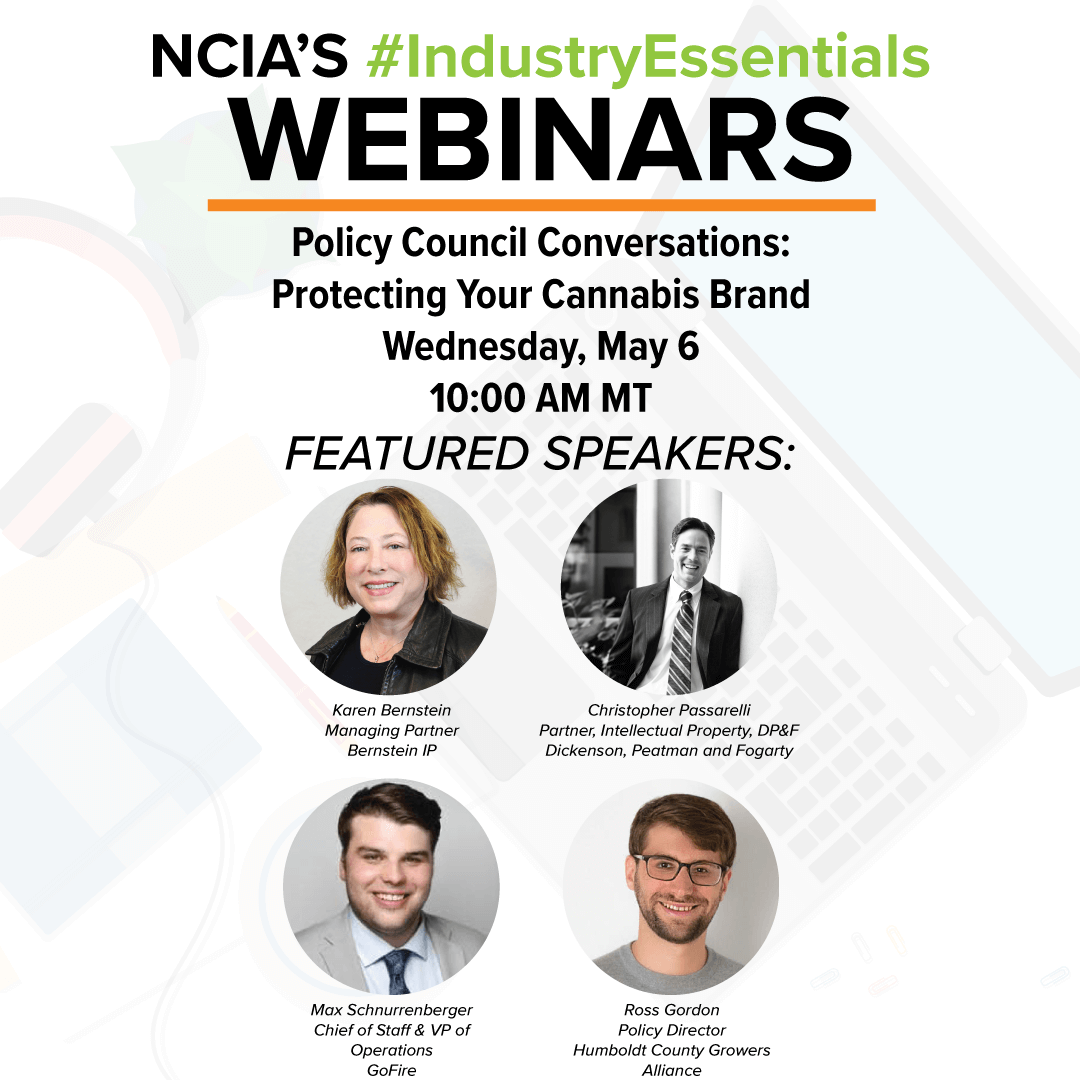
Follow NCIA
Newsletter
Facebook
Twitter
LinkedIn
Instagram
News & Resource Topics
–
This Just In
Member Blog: What Consumers Really Want in a Pre-Roll
Member Blog: The Evolving Cannabis Legal & Regulatory Landscape in 2026