Social Equity Members Head to D.C. to Lobby for A More Inclusive Industry
by Mike Lomuto, NCIA’s DEI Manager
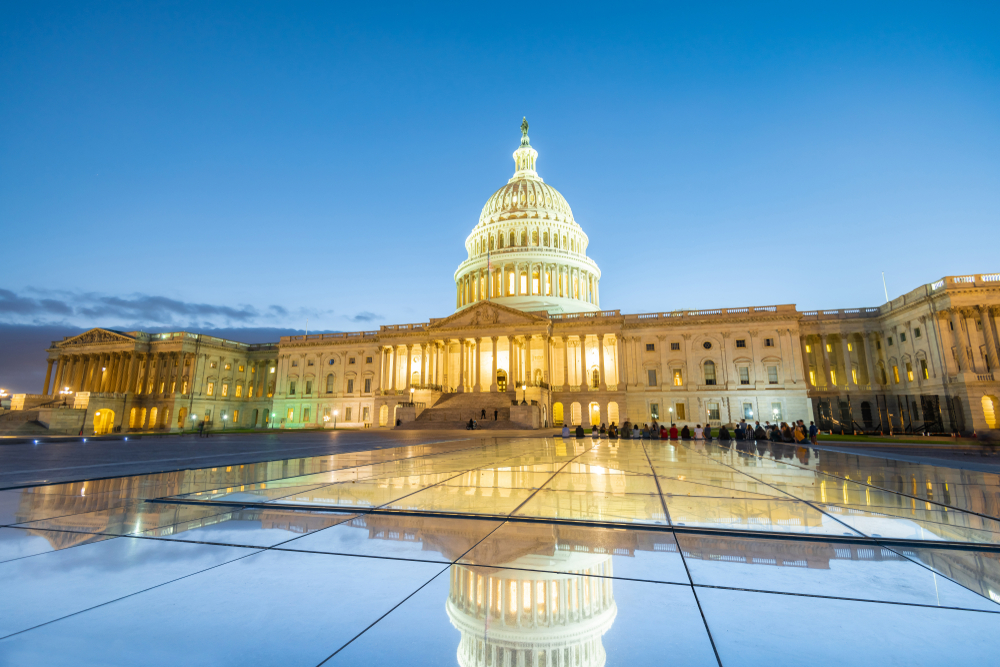
NCIA is proud to announce that for the first time, thanks to the support of our members, we have awarded nine Lobby Days Equity Scholarships to support our Social Equity members with travel expenses to attend NCIA’s Lobby Days in Washington, D.C., on September 13-14. These Social Equity applicants and operators from around the country are leaders and active contributors to NCIA’s Sector Committees, our DEI Initiatives (particularly policy-related ones), and to advocacy efforts in their local and/or state municipalities.
Lobby Days provides the opportunity for NCIA members to come together to advocate for the issues most important to small cannabis businesses — from SAFE Banking to federal de-scheduling — and to share their personal stories with national lawmakers.
Our delegation includes:
Dr. Adrian Adams, Ontogen Botanicals CBD
Ambrose Gardner, Elev8
LaVonne Turner, Puff Couture
Michael Diaz-Rivera, Better Days Delivery
Osbert Orduña, The Cannabis Place
Raina Jackson, Purple Raina
Toni MSN, RN, CYT, Toni
We asked our DEI delegation why attending Lobby Days was important to them. Here are some of their responses:
 “I want our elected officials to hear my story which gives a voice to so many others, who like me, grew up in areas that have disproportionately borne the brunt and weight of cannabis enforcement. Children and young adults, whose only crime was being poor and of color, faced the indignity of being stopped and frisked hundreds of times. Now after paying the ultimate entry price, we can not get in the door of the cannabis industry because of a lack of banking and lending opportunities that continue to shut us out of the cannabis market.
The de-scheduling of cannabis, the passing of SAFE Banking, or the repeal of IRC 280E all would immediately increase the opportunities for small cannabis businesses like mine to have a true opportunity for success, growth, and economic empowerment of our communities.”
– Osbert Orduña, The Cannabis Place
 “As the industry grows and moves towards federal legalization, our elected officials must hear constituents’ voices. It’s important that my energy, face, and voice are present, representing the need for safe banking, health equity, and policies that support federal legalization. As states continue to legalize adult recreational cannabis usage, there will be an increased need for cannabis health equity to address the social, political, and economic conditions in underserved communities.
I’m committed to increasing awareness of the importance of education, employee retention, and community wellness in these communities.”
– Toni MSN, RN, CYT, Founder of Toni
NCIA’s Education Committee & Health Equity Working Group
 “I have begun to work on lobbying at a local level. Federal legalization, descheduling, decarceration, social equity, health equity, and safe banking are some of the areas that I would like to learn how to lobby for at the national level.”
– Michael Diaz-Rivera, Owner/Operator, Better Days Delivery
 “We should not stop at using the SAFE Banking Act merely to provide legal and regulatory protection for financial institutions. That will enable, but not ensure, increased banking services for minority-owned cannabis and hemp companies.
As the regulatory gaps between state and federal governments are addressed, there must be mechanisms to prevent predatory practices while opening access to capital.”
– Dr. Adrian Adams, Ontogen Botanicals CBD
It is important to the NCIA, and its membership for Main Street Cannabis to continue to develop in as diverse, equitable, and inclusive a manner as we can achieve. As the industry has thus far failed at creating tangible Social Equity, it’s important to ensure our efforts this September to include these voices and the communities they represent.
This is where the DEI delegation comes in.
As the official DEI delegation, the Lobby Days Equity Scholarship recipients will provide a foundational understanding of matters related to DEI in the industry for all NCIA members present at Lobby Days. The DEI delegation will ensure that there are members present speaking up on matters of DEI from within an important national trade association and within the context of Main Street Cannabis.
NCIA’s Government Relations team has organized a full day of meetings with Lawmakers and their Offices. New citizen lobbyists will receive online training before the event and are grouped together with experienced industry leaders who can help them find their voice. There will be an opening networking reception for all attendees, and a closing event featuring some of NCIA’s most important allies in Congress.
We are still accepting sponsorships to fully fund Lobby Days Equity Scholarships to ensure our recipients have their travel and lodging expenses covered while in Washington, D.C. Contact MikeLomuto@TheCannabisIndustry.org for more information.
Let’s keep building a better industry together, as we bring our voices to Washington, D.C.
Member Blog: How Technology Can Ensure An Equitable Cannabis Industry

by Walter Moore, Cognitive Harmony Technologies CEO
The multi-billion dollar cannabis industry is coming to a town near you. With new states passing adult-use legislation every day, it’s only a matter of time before businesses begin opening their doors nationwide.
In states such as New York, the first cannabis business licenses (CBLs) are being given to people who were impacted by the war on drugs and hemp farmers. The effort is a first-of-its-kind approach that is admirable in theory – a positive step toward righting the wrongs that have persistently and unfairly affected people of color – but still leave the door open for challenges in practice.
Simply put, the barrier for entry is too high for most individuals due to the complex and convoluted CBL application process. Between sifting through and submitting thousand-plus page documents and potentially spending hundreds of thousands of dollars to create a perfect, compliant application, new business owners are fighting an uphill battle against multi-state operators (MSOs) who have moved across the country as legalization opens state by state and have the process (and hundreds of thousands dollars needed to afford a dedicated application consulting firm) down to a science.
Legislators may have noble intentions in offering a head-start to people affected by the war on drugs in an effort to correct past wrongdoings and create a distribution of ownership that looks like the people most affected, but if the necessary regulatory framework of the application process is encumbered with more compliance to receive equity benefits, it will be even harder to complete a competitive application – leaving many potential new business owners without a license and the well-oiled machines known as MSOs first in line.
Not to mention the fact that the application process often plays out over years. States will frequently take half a year to review an application and only provide roughly 10 days to fix any deficiencies.
Technology is The Way
While the odds may seem stacked, the technology to close the gap exists and many CBL applicants are finding out how to compete against large MSOs and established players in the market. As someone who experienced everything that goes into the application process, and what is wrong with it, first-hand when I began my career in cannabis, I’ve realized that the only way to effectively compete is by working smarter. Through technology we can create greater access and a level playing field.
There are several key areas where technology (i.e. “working smarter”) is already paving the way for true social equity while applicants embark on submitting a cannabis business license. Document generation, telepresence, language processing, machine learning, artificial intelligence and augmented reality are among areas of interest that savvy CBL applicants can implement into their strategy. By normalizing standard operating procedures (SOPs) across verticals and jurisdictions, companies can provide contextual SOPs directly in front of a user with a simple QR code. Imagine a world where a dispensary employee can access SOPs directly from each piece of equipment or area of a facility with minimal effort simply by scanning a QR code with their tablet.
A Cannabis Industry for All
Laws that benefit a more equitable industry surely help, but in a new industry where the gap between the have and have-nots is already wide and growing rapidly, more steps need to be taken by regulators to eliminate the pay-to-play mistakes that have infested other state cannabis policies such as in my home state of Illinois. In Illinois, there wasn’t a fair cap on the number of CBL submissions for a company, leaving businesses with the most money with an opportunity to submit over 40 times and flood the application pool.
Thankfully, I’m pleased that regulators in New York and New Jersey are doing a better job in this regard, avoiding these unfair situations, but I foresee a highly political zoning situation in New York. Historically, companies that can afford to pay lobbyists and other influential people to get the deals and contracts done, are more successful. I’m not sure what short-term regulatory solution exists for this age-old, persistent issue.
It’s encouraging to see the cannabis legalization movements around the country paired with well-meaning equity and restorative justice initiatives. However, there is still a high barrier to entry presented by the extensive and convoluted cannabis business license application process. Only through advances in technology will this barrier be taken down.
 Walter Moore Cognitive Harmony Technologies CEO & CTO, is an accomplished software architect, financial engineer, and entrepreneur residing in the south suburbs of Illinois. He specializes in architecting elegant, compliant, and scalable solutions to complex regulatory environments in the AdTech, FinTech, Digital Assets, and Cannabis industries. He has a Masters of Science in Financial Engineering and undergraduate degrees in Theoretical Physics and Applied Mathematics.
Walter started Cognitive Harmony Technologies in order to support social equity teams and bring change to an industry which has historically whitewashed the past injustices served in its former prohibition, something which he has experienced firsthand in prior decades. As a cannabis business license owner, Walter knows just how difficult it is to put together a competitive application. He developed the CHT platform in order to help lower the barrier of entry for others willing to put in the hard work of assembling an application, but who would otherwise be priced out of the competition.
About Cognitive Harmony Technologies
At Cognitive Harmony Technologies, our proprietary CHT Accelerator platform is paving the way for true social equity in the CBL application process by developing a meticulous roadmap to create a complete and competitive automated application much like tax preparation software generates tax returns, providing live-support, and offering access to a helpful network of architects, realtors and a range of connections. Additionally, we offer this for a fraction of the cost of what the hundred-thousand-dollar consulting firms that multi-state operators employ, and in some cases it is completely free. Cutting-edge technology is the best tool that an everyday, aspiring entrepreneur can leverage to break into the industry, and make the cannabis sector’s leadership as representative and diverse as the consumers.
Our mission is to open the doors for equitable cannabis business ownership by making the application process easy as filing personal income taxes online. The CHT Accelerator streamlines the entire application process into one easy-to-use software platform so you can create a complete and competitive application. Follow us on LinkedIn or visit our website.
Follow NCIA
Newsletter
Facebook
Twitter
LinkedIn
Instagram
News & Resource Topics
–
This Just In
Member Blog: What Consumers Really Want in a Pre-Roll
Member Blog: The Evolving Cannabis Legal & Regulatory Landscape in 2026