Summer Recess & Cannabis Progress: Cannabis News from the Capitol and Expectations for the August Break
by Michelle Rutter Friberg, NCIA’s Director of Government Relations
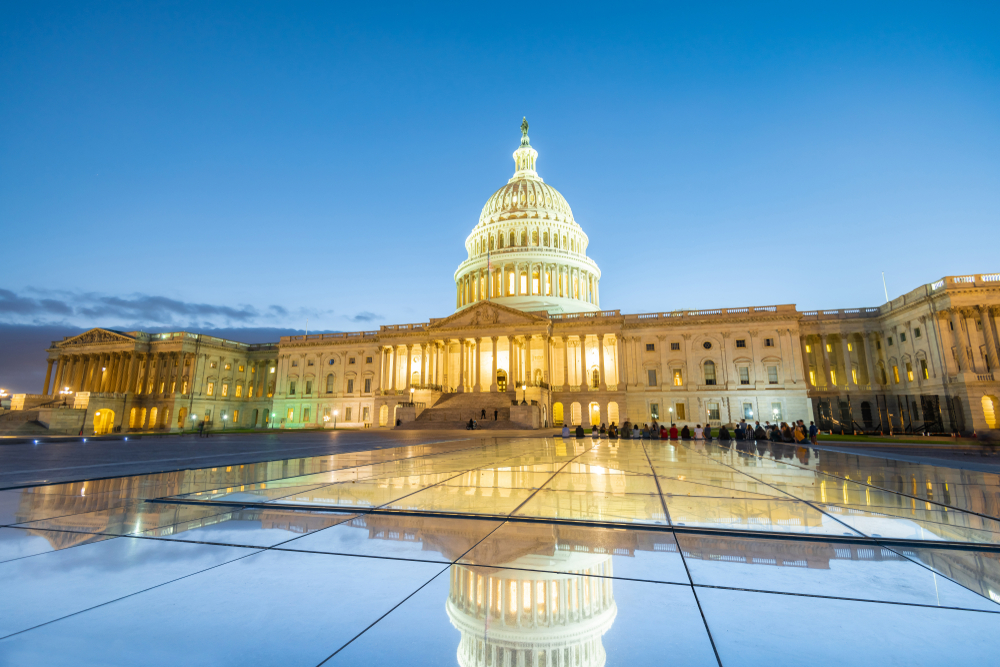
After NCIA’s 11th Annual Cannabis Industry Lobby Days concluded in May, cannabis news from Washington, D.C. has been relatively slow. Curious about what’s next before August recess begins? Keep reading to see what may happen ahead of the break and for a recap on where we’re at now.
SAFE Banking
Last month, just before NCIA’s Lobby Days, the Senate Banking, Housing, and Urban Affairs Committee held a hearing titled “Examining Cannabis Banking Challenges of Small Businesses and Workers”. Witnesses included the bill’s lead sponsors, Senators Jeff Merkley (D-OR) and Steve Daines (R-MT), as well as Ademola Oyefes (International Vice President and Director of Legislative and Political Action Department, United Food and Commercial Workers International Union [UFCW]), Michelle Sullivan (Chief Risk & Compliance Officer, Dama Financial), Dr. Kevin Sabet (President/CEO, Smart Approaches to Marijuana [Project SAM]); and Cat Packer (Vice Chair, Cannabis Regulators of Color Coalition).
My takeaways from the hearing: no new talking points from Project SAM, surprised by DAMA’s comments (they’ve since walked their testimony [which many saw as opposition to the bill] back), and most importantly of all: the real need for SAFE so that we can stop talking about access to financial services and start talking about legalizing and regulation cannabis in a smart and equitable way.
As for what’s next? Banking Committee Chairman Sen. Sherrod Brown (D-OH) recently shared that SAFE Banking would be scheduled for a markup after a few other bills received theirs. The good news? That process has begun. The bad news? Still no formal news on when SAFE’s markup will be. I’m expecting it to be after the Fourth of July break but before members leave D.C. for their annual, month-long August recess.
Appropriations
For years, advocates have looked to the appropriations process as a way in which to enact cannabis reform at the federal level.
In 2014, a provision that protected medical cannabis patients, programs, and businesses from federal interference (known as the “Rohrabacher-Farr” amendment) was included in the federal budget and became law. Since then, the provision has been included in appropriations bills and remains the law of the land.
NCIA has (and continues to) lobby on behalf of expanding this provision to include adult-use businesses and to also use the appropriations process to enact other reforms like allowing Washington, D.C. to commercialize adult-use cannabis sales.
House GOP negotiators heightened the stakes earlier this week when they announced they would mark up their FY2024 spending plans to levels lower than the budget caps set as part of a deal struck between President Biden and Speaker Kevin McCarthy (R-CA). This will undoubtedly make the already contentious budget-process even more volatile.
Maryland
On July 1, adult-use cannabis sales will begin in Maryland. Cannabis became legal for those over 21 in Virginia in 2021, while D.C. legalized cannabis for adults via Initiative 71 in 2014 (but have been unable to begin sales due to congressional interference). Legal sales in the District’s neighboring states means that members of Congress will surely be more exposed to the benefits of regulation.
So, while it’s been relatively quiet in D.C. in June, stay tuned in July for a possible first-ever Senate markup of SAFE Banking! As always, NCIA will continue to advocate on behalf of your business and keep you updated on the latest.
Member Blog: Creative Promotion Ideas To Increase The Footfall In Your Dispensary
With the legalization of cannabis in several states, the demand for cannabis-infused products continues to rise. This has led to a surge in the number of dispensaries across the US.
According to recent reports by statistics, there are over 5500 legal dispensaries catering to the growing customer base.
Perhaps, it won’t be wrong to say that the competition level in this industry is fierce. And that’s why you, as a dispensary owner, have to find ways to set yourselves apart and attract footfall to your store.
The question arises: How can you make your dispensary stand out from the rest?
Well, in this article, we will explore creative promotion ideas that can help you boost your dispensary and drive success. So, let’s get started!
Listing Your Dispensary
One of the first steps to promote your dispensary is to ensure it is listed in all the relevant directories and online platforms. This includes popular review websites, local business directories, and cannabis-specific platforms.
Of course, the laws concerning cannabis businesses vary from state to state, so it’s crucial that you adhere to them.
Let’s suppose you have a dispensary in Maryland. In that case, your target customers will probably search online for the best maryland dispensaries and then visit them. They may even place their order online to get the products delivered to their doorstep.
However, if you haven’t registered yourself for these listening sessions, you’ll likely lose potential customers and, thereby, sales.
To avoid such a situation, you must list your dispensary as soon as possible. It’ll increase your chances of being discovered by customers and help you boost your customer base.
Nevertheless, make sure to provide accurate and up-to-date information, such as your address, contact details, and business hours. Also, ensure your patients have medical cards before you sell them any product, and your products have less than 0.03% THC in them.
Create Engaging Social Media Campaigns
Social media platforms like Facebook, Instagram, and Twitter are no longer mere mediums to connect and communicate. These have become powerful tools to promote businesses, including dispensaries.
You can use these platforms to share updates about new products, educational content about cannabis, and any special promotions or events you have planned. In addition, you can encourage target customers to follow your pages and engage with your content by offering incentives such as exclusive discounts or giveaways.
Regardless of the platform you use, each has a few guidelines that adhere to the regulations of specific states. It’s essential to familiarize yourself with these guidelines to avoid legal issues. Some general principles that you can follow include:
No Misleading Claims: It’s important to provide accurate information about your products and services. Avoid making any exaggerated or misleading claims about the benefits or effects of cannabis.
No depiction of consumption: In some states, it is prohibited to depict cannabis consumption in any form. So, be mindful of this when creating visual content for your social media campaigns.
No Image That Might Appeal To Children: Cannabis products can only be sold to people over the age of 21. In order to maintain a professional and responsible image, you must avoid using cartoons, animals, or any other picture that may attract kids.
The key here is to be transparent, informative and focused on building a positive reputation for your dispensary within the boundaries of the law.
Also, be consistent on social media. Regularly post relevant content and respond promptly to comments and inquiries. It’ll help create a positive and trustworthy online presence for your dispensary.
Loyalty Programs
Loyalty programs are a great way to reward and retain customers who regularly visit your dispensary. These programs encourage them to make frequent purchases to get discounts and special perks. At the same time, it makes them feel special, creates a sense of appreciation, and builds a robust relationship with your store.
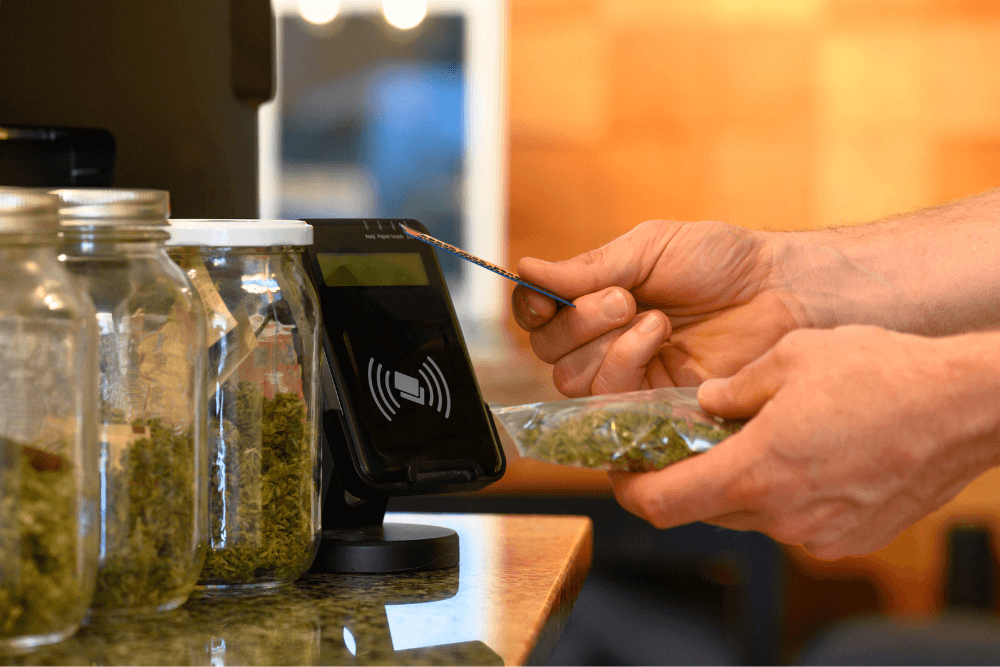
For example, you can start a loyalty program called “Green Leaf Rewards.” When customers sign up for the program, they receive a loyalty card or a digital account. Every time they purchase at your dispensary, they earn points that collect over time.
Once they reach a certain number of points, let’s say 100, they become eligible for various rewards. These rewards could include discounts on future purchases, exclusive access to new product releases, or free merchandise.
Apart from point-based systems, you can also include referral rewards. This means that when a customer refers a friend to your dispensary, the existing customer and the referred friend receive a reward.
This not only incentivizes your loyal customers to spread the word about your dispensary but also attracts new customers eager to take advantage of the referral benefits.
Hosting Educational Workshops
Last but not least, there are several myths and misconceptions surrounding the use of cannabis. This makes it important to provide accurate information to the public. And hosting educational workshops can be an effective way to bust these myths and offer valuable insights to your target audience.
You can present scientific facts and research findings to help attendees understand the potential benefits and risks associated with cannabis use. Also, emphasize the importance of responsible consumption and the legal guidelines in place to ensure safety.
You can even invite industry experts to your workshops to beat the competition and boost your business credibility. These experts may include healthcare professionals, researchers, or experienced individuals with in-depth knowledge of cannabis. Make sure to foster an open and non-judgmental atmosphere, ensuring that everyone’s perspectives are respected.
Even so, it’s important to note that these workshops are not meant to encourage cannabis consumption but rather to educate individuals so they can make informed decisions. You must advise them to connect with their healthcare professionals, especially if they use cannabis for medical aid.
To Sum It All Up
Cannabis is a growing industry and highly competitive industry. That’s why it’s essential to differentiate yourself from the competition and build your creditworthiness. Fortunately, with the right mix of creative promotion ideas discussed in this article, your dispensary can become a go-to destination for cannabis enthusiasts, fostering growth and achieving long-term success. So what are you waiting for? Try these promotion strategies right away!
And They’re Off! 118th Congress Begins with Eyes on the House
Photo By CannabisCamera.com
by Michelle Rutter Friberg, NCIA’s Deputy Director of Government Relations
After November’s midterms, a runoff Senate election in Georgia, and last week’s speakership drama, the 118th Congress has finally begun.
Last year was an historic year: from the enactment of the first federal standalone cannabis reform since the adoption of the Controlled Substances Act of 1971 to President Biden’s marijuana reform announcement in the fall. In addition, three states (Rhode Island, Maryland, and Missouri) took action to legalize adult-use marijuana and regulate cannabis. Nearly half of the U.S. population – more than 155 million people – now live in jurisdictions with some form of legalized adult-use marijuana.
At the federal level, members of Congress introduced a wealth of policies aimed to end the antiquated federal cannabis prohibition and address the harm caused by the discrepancies between state and federal laws and regulations. This tremendous bipartisan momentum for cannabis reform sets the stage for a productive 2023 and 118th Congress.
However, as you may have seen or heard on the news, the 118th Congress was off to a slow (to say the least) start as arguments over the Speaker of the House position escalated over the course of the week. After days of negotiations and a multitude of concessions, Rep. Kevin McCarthy (R-CA) eked out a victory in the wee hours of Saturday morning to become Speaker. The contentious and historic fight for the Speakership largely confirmed expectations for this Congress: With House Republicans’ narrow four-seat majority, governing is going to be difficult and messy. This will undoubtedly make cannabis reform a challenge, but one that NCIA is ready to rise to.
The House returned Monday for week two of the 118th Congress, while the Senate remains in recess through January 23, with a few pro forma sessions scheduled over the coming weeks. House Republicans will now move to finalize organizing for the new Congress: the Steering Committee have already begun meeting to determine chairmanships for a number of committees including Ways and Means and Small Business. Once these chairmanships are resolved, the Steering Committee will turn to populating committees with new members – most committees have several openings – and may begin to populate some this week. The exact numbers will be determined by the final ratios between Republicans and Democrats, but we’re expecting a mirror image of the ratios used in the 117th Congress.
All of these decisions will have a substantial impact on cannabis reform, as Leadership and committee chairs determine what legislation is considered. While Republicans’ slim majority in the House brings a number of challenges, it will also undoubtedly provide a number of opportunities for reform and negotiation.
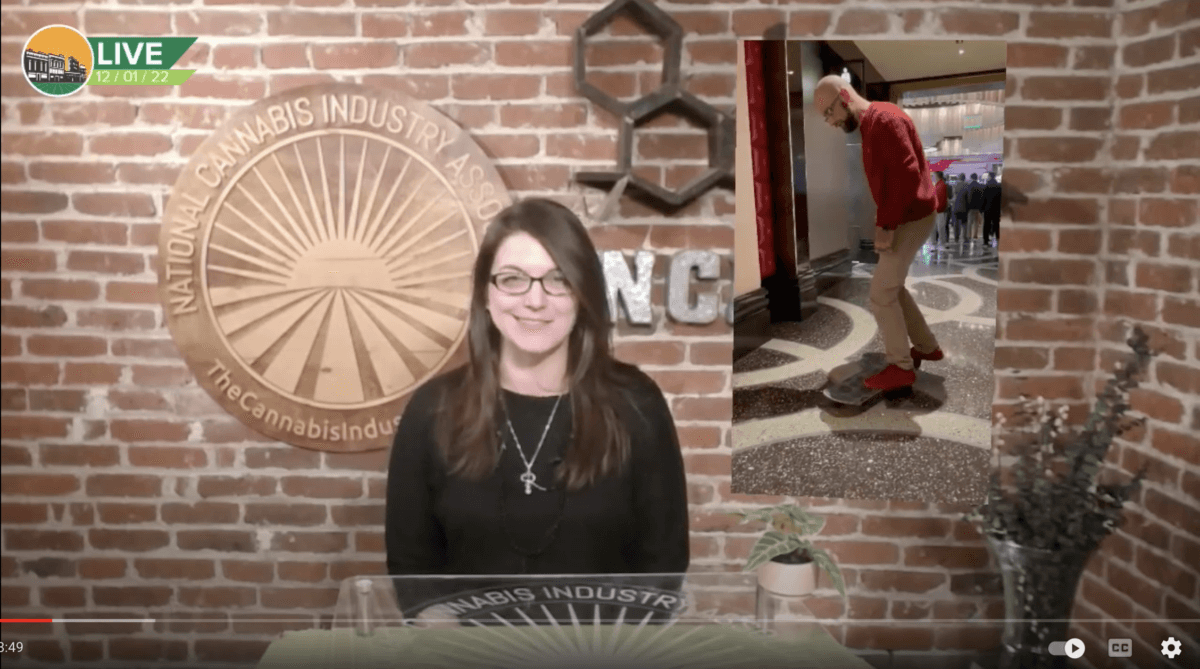
NCIA Director of Communications Bethany Moore checks in with what’s going on across the country with the National Cannabis Industry Association’s membership, board, allies, and staff. We check in on the first-ever cannabis legislation to land on the President’s desk, ask if you saw the NCIA skateboard in Las Vegas, plans for our events next year and so much more. Join us every other Thursday here on Facebook for NCIA Today Live.
Reach thousands of leading cannabis businesses while supporting NCIA’s advocacy work to protect and expand the industry by securing the right sponsorship package for your marketing needs. Contact us at Sponsorships@TheCannabisIndustry.org to learn more
Midterm Election Wins, Losses, and the Lame Duck Session
Photo By CannabisCamera.com
by Michelle Rutter Friberg, NCIA’s Deputy Director of Government Relations
Last week, the long-anticipated 2022 midterm elections (finally) took place. In addition to the usual House and Senate elections, five states voted on cannabis ballot initiatives: Arkansas, Maryland, Missouri, North Dakota, and South Dakota – with only two of those passing successfully. Let’s take a look at what transpired and what it means for the lame duck session and possibly the 118th Congress:
Ballot Initiatives
Voters in Arkansas, Maryland, Missouri, North Dakota, and South Dakota were all faced with a similar question on election day: whether or not to legalize cannabis for adult use. Unfortunately, three of the five initiatives did not gather enough support to pass: Arkansas, North Dakota, and South Dakota.
The results for Maryland’s referendum came in early on election night with a decisive victory: more than 65% of voters cast their ballots in support. They were asked “Do you favor the legalization of the use of cannabis by an individual who is at least 21 years of age on or after July 1st, 2023, in the state of Maryland?” Now that the measure has been approved by voters, it will require the legislature to put forth a bill that will set basic regulations for the adult-use cannabis program.
Missouri voters also approved Amendment 3, which would legalize cannabis for adults 21 and over, as well as impose a six percent tax on recreational cannabis sales and use the revenue to facilitate automatic expungements for people with certain non-violent marijuana offenses on their records. The amendment garnered 53% of the vote.
This gives advocates an increase in the number of representatives and four more Senators from legal states, most notably those from Missouri, who are both avid conservatives and have not supported cannabis reform broadly in the past.
House of Representatives
Although Republicans are still projected to win the House, the margins are shaping up to be narrower than initially predicted. It takes 218 seats to win a majority in the chamber, and as of publication, Republicans hold 212 with a number of districts still yet to be called.
The change in party control means a change in leadership and shake-ups at the committee level. Minority Leader McCarthy is expected to run for Speaker of the House, while Minority Whip Steve Scalise has thrown his hat in the ring for Majority Leader – but there’s much uncertainty and infighting within the caucus.
Senate
Control of the Senate will remain in the hands of Democrats. Over the weekend, Nevada’s Senate race was called for incumbent Catherine Cortez Masto – making Georgia’s runoff election slightly less contentious.
A closely watched Senate race in Pennsylvania flipped in favor of Democrats: legalization advocate John Fetterman (D) defeated TV-personality and New Jersey resident Dr. Oz (R). We continue to closely monitor the races in Alaska and Arizona and what their outcomes may mean for cannabis reform.
Lame Duck Session
The likelihood of a split Congress means that the lame duck session happening between now and January will be jam-packed. In addition to must-pass legislation like the National Defense Authorization Act (NDAA) and a budget/omnibus bill of some type, Democrats will also be focused on other topics like judicial nominations, the debt ceiling, and hopefully the SAFE Banking Act.
Midterm Elections Looking Green
By Madeline Grant, NCIA’s Government Relations Manager
The midterm elections are quickly approaching with less than three weeks away. Not only will the elections determine the balance of power in Congress, but local elections and ballot measures are set to make a big impact across the country. As the midterm elections approach, another 20 million Americans could soon be living in a state where anyone at least 21 years old can legally possess marijuana. There are six states with recreational cannabis legalization initiatives or referendums on the ballot this November: Arkansas, Maryland, Missouri, North Dakota, Oklahoma, and South Dakota. Let’s take a closer look at each state:
Arkansas
Although the Arkansas Board of Election Commissioners rejected the ballot question in August, the state Supreme Court cleared the way for the question to make it to the poll. The Responsible Growth Arkansas campaign submitted about 193,000 signatures- more than double what’s required to qualify the constitutional amendment- in July. If the initiative, Issue 4/ the Marijuana Legalization Initiative, is approved by voters, it would allow adults 21 years and older to legally possess up to an ounce of cannabis. It would implement a 10 percent tax on sales and require the state’s Alcoholic Beverage Control Division to develop rules for businesses, according to Ballotpedia. The initiative does not allow for home cultivation, and it has no provisions to expunge cannabis-related criminal records. For more specifics on what the initiative would accomplish read HERE.
Maryland
When Marylanders head to the polls in November, they will be asked to approve or reject legislation that allows adults 21 and over to possess, use, or grow small amounts of cannabis. If passed, the referendum would open the door to creating a taxed and regulated recreational cannabis industry in the State. State lawmakers have been paving the way for future cannabis legalization when they passed two separate bills in April of this year. House bill 837, which is set to go into effect in July 2023, would allow anyone over the age of 21 to possess up to 1.5 ounces of cannabis, with anything between 1.5 and 2.5 ounces subject to a civil fine of $250 and anything above 2.5 ounces subject to a charge of possession and intent to distribute. The second bill, House Bill 1, established that the question of legalization would be put to voters via a referendum on the November ballot. It’s important to note that this bill does not establish the regulatory framework for the recreational market, and state lawmakers will need to return next session to build out a framework for the cannabis industry if the referendum passes in November. A recent Goucher poll found that 62 percent of residents- including about half of Republicans- support legalizing recreational cannabis, with just 34 percent opposed.
Missouri
After a long battle between the Legal Missouri 2022 and prohibitionists, an initiative to legalize cannabis in Missouri officially cleared for ballot placement this September. Joy Sweeny, who is affiliated with the Community Anti-Drug Coalitions of America (CADCA), filed a lawsuit, alleging that the legalization initiative violated the single-subject rule for ballot measures under the state Constitution and that the signatures were improperly certified, according to Marijuana Moment. Two lower courts dismissed the challenge, so Sweeney sought to bring it directly to Missouri’s Supreme Court, where they would not take the case. Missouri Amendment 3, Marijuana Legalization Initiative (2022) would legalize the purchase, possession, consumption, use, delivery, manufacturing, personal use for adults over the age of 21; allow individuals convicted of nonviolent cannabis-related offenses to petition to be released from incarceration and/or expungement; and exact a 6 percent tax on the sale of cannabis.
North Dakota
The campaign New Approach ND delivered 25,762 signatures to the secretary of state’s office in July 2022. A month later, Secretary of State Al Jaegar’s (R) office approved the measure, certifying that the campaign had submitted enough valid petitions to put the measure before voters, according to Marijuana Moment. The initiative would allow adults 21 and older to purchase and possess up to one ounce of cannabis and grow up to three plants for personal use. The legalization proposal will now be designated as “Measure 1” on the ballot this November.
Oklahoma
Oklahoma’s cannabis reform measure will not be on the November ballot but Governor Kevin Stitt (R-OK) issued an executive order on October 18 setting a special election to determine if legal sales of cannabis should be extended to anyone at least 21 years old or older. Oklahomans for Sensible Marijuana collected far more than 95,000 signatures required to make the November ballot. However, because the contractor hired by the Oklahoma Secretary of State’s office took 48 days to certify the signatures, there wasn’t time for the initiative to be placed on the November ballot. The group unsuccessfully sued the state in hopes of forcing the question. The court said, despite sufficient signatures to qualify for the ballot, the measure was held up by bureaucratic requirements, protest deadlines and a new signature-counting software. Nevertheless, Governor Stitt issued the executive order and Oklahomans for Sensible Marijuana Laws will have less than five months to make their case to voters for why legalization should be extended to anyone at least 21 years old. It’s important to note that when Oklahoma voters legalized medical cannabis in 2018 there was evident opposition from practically every elected official, health care group, law enforcement official, and business organization in the state.
South Dakota
Similar to North Dakota, in May 2022 the secretary of state’s office confirmed that South Dakotans for Better Marijuana Laws (SDBML) turned in a sufficient number of signatures to qualify a cannabis legalization measure for the November ballot.In the 2020 election SDBML’s success at the ballot was overruled by the state Supreme Court as a result of a legal challenge funded by Governor Kristi Noem’s (R) administration. The court ruled that the measure violated a single-subject rule for ballot initiatives. Ironically, Governor Noem made comments pledging to implement cannabis legalization if voters approve the ballot initiative at an event this past August. Some advocates believe she has no choice but to pivot her support now that she is up for reelection. With SDBML’s success this year, South Dakotans will vote on the ballot measure in November.
There is no denying that 2022 is a big year for cannabis policy reform. Although state campaigns have met challenges through the courts, state officials, governors, prohibitionists, law enforcement, and more; it is evident that there is no stopping the voice of the people. As the country gears up for the midterm elections, all of these states will continue to educate and campaign for the recreational passage of cannabis. The 2022 midterm elections come on the heels of President Biden’s announcement to pardon thousands of people convicted of marijuana possession under federal law and review whether marijuana should be in the same legal category as drugs like heroin and LSD. The timing of President Biden’s announcement illustrates an important fundamental change in America’s response to cannabis and the National Cannabis Industry Association is hard at work on Capitol Hill to continue educating Congress.
Committee Insights | 9.28.22 | Cannabis Ballot Initiatives in the November 2022 Election
In this edition of our NCIA Committee Insights series originally aired on Wednesday, September 28, 2022 members of NCIA’s State Regulations Committee convened a panel of government affairs, business development and licensing experts for an in-depth discussion focusing on cannabis ballot initiatives up for a vote this coming November.
They provided a detailed overview on the status of each campaign so that you’ll learn how best to position yourself for success and what you can do to help push these efforts across the finish line. If you’re considering business Arkansas, Maryland, Missouri either of the Dakotas then this session is specifically geared for you.
At the conclusion of the discussion they hosted a moderated Q&A session to provide NCIA members an opportunity to interact with leading minds from the cannabis regulatory and licensing space, join today to contribute to future conversations!
Learning Objectives:
• Provide practical information to NCIA members about the cannabis ballot initiatives and potential new business opportunities.
Sumer Thomas
Director of Regulatory Operations
Canna Advisor
Nicola Batten
CEO & Founder
koLaB Consulting
Larry Luksha
Government Relations & Business Development
Veritec Solutions
Joseph Smith
Senior Managing Associate
Thompson Hine LLP
State of the States – Cannabis Policy Reform in the Current Legislative Sessions
by Morgan Fox, NCIA Director of Media Relations
The last few weeks have seen quite a bit of excitement for the possibility of comprehensive federal cannabis policy reform being closer than it has ever been, but what about the states?
Historically, the vast majority of progress has been made at the state level, and this year is shaping up to be another one full of victories for legalization advocates as state governments struggle to support their economies, create new tax revenue and job sources, and tackle long-overdue criminal justice reforms.
The overwhelming approval by New Jersey voters of a referendum to make cannabis legal for adults last year has put the spotlight firmly on the Northeast and mid-Atlantic regions. With state legislative sessions already underway, a number of states are already prioritizing legalization much more heavily than in years past even as New Jersey lawmakers struggle to pass enacting legislation to carry out the will of the voters in a fair and equitable manner. It is pretty clear that New Jersey’s neighbors don’t want to be left behind when it starts reaping the benefits of regulated cannabis markets.
Early this year, New York’s Gov. Andrew Cuomo released a statement outlining his plan to make cannabis legal in the state, and just recently added amendments that would allow delivery, clarify the tax system, and reduce penalties associated with some cannabis activities. There are still some concerns with this plan, including the amount of funding that would actually go toward repairing the disparate harms caused by prohibition and the lack of legal home cultivation. Regulated cannabis in New York could be worth more than $3.5 billion and create more than 60,000 jobs, making it one of the largest state cannabis markets in the country.
Meanwhile, in Delaware, a legalization bill that was approved in the state House in 2019 is slated to be reintroduced by the sponsor in the coming weeks. This bill would come on the heels of a report released last month by the state auditor which estimated that Delaware could take in $43 million annually with a 20% excise tax, and create more than 1,400 jobs over a five year period. In what seems to be a disturbing trend in some state legislatures this year, this bill is not expected to initially include home cultivation either.
In Connecticut, however, a new adult-use bill has been introduced that would center on restorative justice and social equity in the industry and would allow adults to grow limited amounts of cannabis in their homes. This bill has strong support in the state legislature but may soon have to compete with Gov. Ned Lamont’s proposal, which is expected to be released soon.
Nearby Pennsylvania is likely to consider adult-use legislation this year, with Gov. Tom Wolf (along with the incredibly supportive and newly internet-famous lieutenant governor) urging lawmakers to address the issue and – earlier this month – calling it a priority for his state’s annual budget proposal. Rhode Island lawmakers are expected to consider legalization again this year as well, and with the departure of Gov. Raimondo, it is more likely that the emphasis will shift away from a state-run model and back to regulating private businesses.
Farther South, Virginia made headlines this month by becoming the first state in 2021 to have both chambers of its legislature approve adult-use bills. Lawmakers are committed to ironing out the differences between the two bills this month during an extended session. With Gov. Ralph Northam in full support, Virginia stands poised to become the 16th state overall to make cannabis legal for adults and the first state to do so in the South, and it would be only the third to regulate cannabis through its legislature.
Adult-use legislation has also been introduced in Maryland, with supporters and cosponsors optimistic that it could be passed this year, though lawmakers there are not as far along in the process as their neighbors in Virginia. And in medical news, advocates in South Carolina are taking another shot at passing a medical cannabis bill there.
There are signs of progress from elsewhere in the nation as well. After running out of time in an emergency session last year, New Mexico’s governor and lawmakers wasted no time in getting back to legalization efforts this year. There are currently several bills being considered, and it appears very likely that some form of adult-use will be approved there this year.
This is just a snapshot of the momentum and positive movement we are seeing at the state level this year. If you are interested in up-to-date information about all cannabis-related state legislation in the U.S., please consider subscribing to Marijuana Moment’sbill tracker.
Unfortunately, the news isn’t all good.
In South Dakota, where voters approved both medical and adult-use initiatives in November by wide margins, advocates have suffered a temporary setback on the adult-use front. After a pair of law enforcement officials sued to have the adult-use bill thrown out because it addresses too many issues for a constitutional amendment, a circuit court judge ruled in their favor earlier this month. This situation is extremely disheartening and outrageous: the will of the people was overturned by a judge who was appointed by a governor who not only actively campaigned against the ballot initiative but also paid for the lawsuit to overturn it with taxpayer money! However, supporters have appealed the decision to the state Supreme Court.
In Montana, where voters also passed an adult-use initiative in November, supporters are faced with another lawsuit on similar grounds that was filed by opponents. However, observers are skeptical of that suit being successful, and lawmakers are moving ahead with developing enacting legislation.
And in Idaho, where a medical cannabis initiative was prevented from getting on the ballot last year, prohibitionist lawmakers are moving forward with a bill that would prevent any future legislation to make cannabis or any other currently illegal substance legal. If passed, this bill would be put before the voters in 2022, where it could very well be on the same ballot as a medical cannabis referendum.
Despite efforts to overturn progress and maintain failed and harmful cannabis policies, things are generally looking up and we expect several states to pass laws to stop arresting cannabis consumers and establish legal, regulated marketplaces in the near future.
by Michelle Rutter, Government Relations Coordinator
This year is arguably the most crucial yet for the burgeoning cannabis industry, especially as it relates to policy. Although NCIA primarily advocates for cannabis reform at the federal level, what happens in each individual state is vital to the stances Members of Congress take on our issues.
Members of Congress care deeply about issues that directly affect their specific state or district. It’s imperative that more states enact cannabis reform legislation so that more Members have a vested interest in protecting their constituents. While cannabis reform is sweeping the nation at an almost unprecedented rate, it takes time for politicians in Washington, D.C., to catch up with public opinion back home. If all of the federal lawmakers representing just the 15 states mentioned below were to vote positively on pro-cannabis legislation, it would add up to more than 180 Representatives and nearly 30 Senators.
Take a look below and see what’s coming up next in 2016. Remember that by becoming a member of NCIA, you are adding your voice to the coordinated and unified campaign at the federal level to allow cannabis businesses access to financial services, fix tax section 280E, and ultimately end federal cannabis prohibition.
The United States of Cannabis
Arizona activists remain ahead of schedule and have nearly gathered the 150,000 signatures needed to put the state’s Campaign to Regulate Marijuana Like Alcohol initiative on the November 2016 ballot. (The campaign ultimately aims to collect 230,000 in order to insure against signature drop-off.) It’s estimated that Arizona’s adult-use market could be worth up to $480 million.
With a multi-billion-dollar cannabis industry in California alone, passing an adult-use legalization initiative in the state is vital to ending federal prohibition. The most prominent full retail initiative gathering signatures for the November 2016 election is the Adult Use of Marijuana Act, which is backed by billionaire Sean Parker and the Marijuana Policy Project.
Legalize Maine and the Marijuana Policy Project have joined forces to legalize adult-use cannabis in 2016. Legalize Maine has already collected 80,000 signatures. Only 61,000 signatures are necessary to place the measure on a statewide ballot, but the organization’s goal is 95,000, to insure against drop-off. The deadline to submit signatures is February 1st.
Last August, a pair of cannabis advocacy groups separately filed paperwork to get adult-use legalization on the 2016 ballot in Massachusetts. The state recently confirmed that a measure to legalize recreational cannabis next year has enough valid signatures to force the legislature to consider the measure. If the legislature decides to pass, then the campaign will have to collect another 10,792 signatures to formally make the November ballot.
There’s no question that adult-use legalization will be on the ballot this year in Nevada. Initiative Petition 1, which would tax and regulate marijuana similarly to alcohol, has been certified for the 2016 ballot. Backers had previously collected nearly 200,000 signatures to either force legislators to enact their initiative or put it on the ballot. When state lawmakers abstained from voting on the issue, the measure was automatically forwarded to this year’s ballot for a popular vote.
In Florida, the group United for Care received clearance from the state Supreme Court for a 2016 ballot measure that would legalize medical marijuana. The group nearly succeeded in legalizing medical marijuana in 2014, garnering 58% of the vote but falling barely short of the state’s constitutionally mandated 60% margin needed to pass,
The nation’s capital continues to debate cannabis. In December’s federal budget bill, the taxation and regulation of marijuana in Washington, D.C., was blocked by Congress again, though possessing and gifting cannabis remains legal in the city.
This month, Hawaii will begin accepting applications for medical cannabis businesses. The bill signed into law last summer opens the door for up to 16 dispensaries on the islands.
It was recently announced that Illinois saw approximately $1.7 million in medical cannabis sales during November and December of 2015. There are already petitions being circulated in the state that would expand the law’s qualifying conditions.
Maryland will award cannabis cultivation, processing, and dispensary licenses this summer. Industry advocates were pleased with the amount of interest the state’s program garnered: more than 1,000 applications were submitted.
Officials in Michigan have approved language for three different adult-use cannabis legalization initiatives for the 2016 ballot. In order to have the best chance of passing, it’s important for these groups to coalesce behind one initiative.
At the end of 2015, New Hampshire began issuing medical marijuana cards to qualifying patients. It’s expected that the state will open medical dispensaries in 2016.
After a long and arduous journey, New York’s medical cannabis program became operational this month. The cannabis industry expects the program and the law’s qualifying conditions to expand this year.
In the first week of 2016, Oregon began accepting adult-use cannabis business license applications. The state has no limit on how many licenses they will decide to award.
Vermont may become the first state to legalize adult-use cannabis through the legislative process in 2016. The proposed bill would allow for up to 86 storefronts and five different business license types.
Bonus: Election 2016 – Yes, We Canna
As we all know, a new president will be elected this November, and with that a new administration will assume power next January. It is very crucial that Congress pass more pro-cannabis legislation before then.
It’s probable that Attorney General Loretta Lynch will be replaced in 2016 or early 2017. This is important because it is the Department of Justice that enforces and prosecutes federal marijuana laws.
Another possibility for 2016 is that the acting head of the Drug Enforcement Administration, Chuck Rosenberg, could be replaced as well. Rosenberg is notorious for his gaffe last year when he called marijuana “probably” less dangerous than heroin.
On New Year’s Eve, officials from the Substance Abuse and Mental Health Services Administration posted a notice on the Federal Register that calls for a report “presenting the state of the science on substance use, addiction and health” to be released in 2016. Industry advocates are hopeful that this report could be the first sign of re- or de-scheduling cannabis from the Controlled Substances Act.
During 2016, NCIA will continue working with D.C.-based public affairs firms Heather Podesta + Partners, and Jochum Shore & Trossevin PC to magnify our efforts to address the industry’s top federal priorities: access to basic banking services and fair federal taxation.
In addition to NCIA’s lobbying and advocacy efforts, NCIA exists to connect and educate our members on all facets of the cannabis industry. Our industry supports tens of thousands of jobs, tens of millions in tax revenue, and billions in economic activity in the United States.Our core mission is to ensure that our members are treated like businesses in any other American industry. Join NCIA today to get involved and be a part of the cannabis revolution!



 By Madeline Grant, NCIA’s Government Relations Manager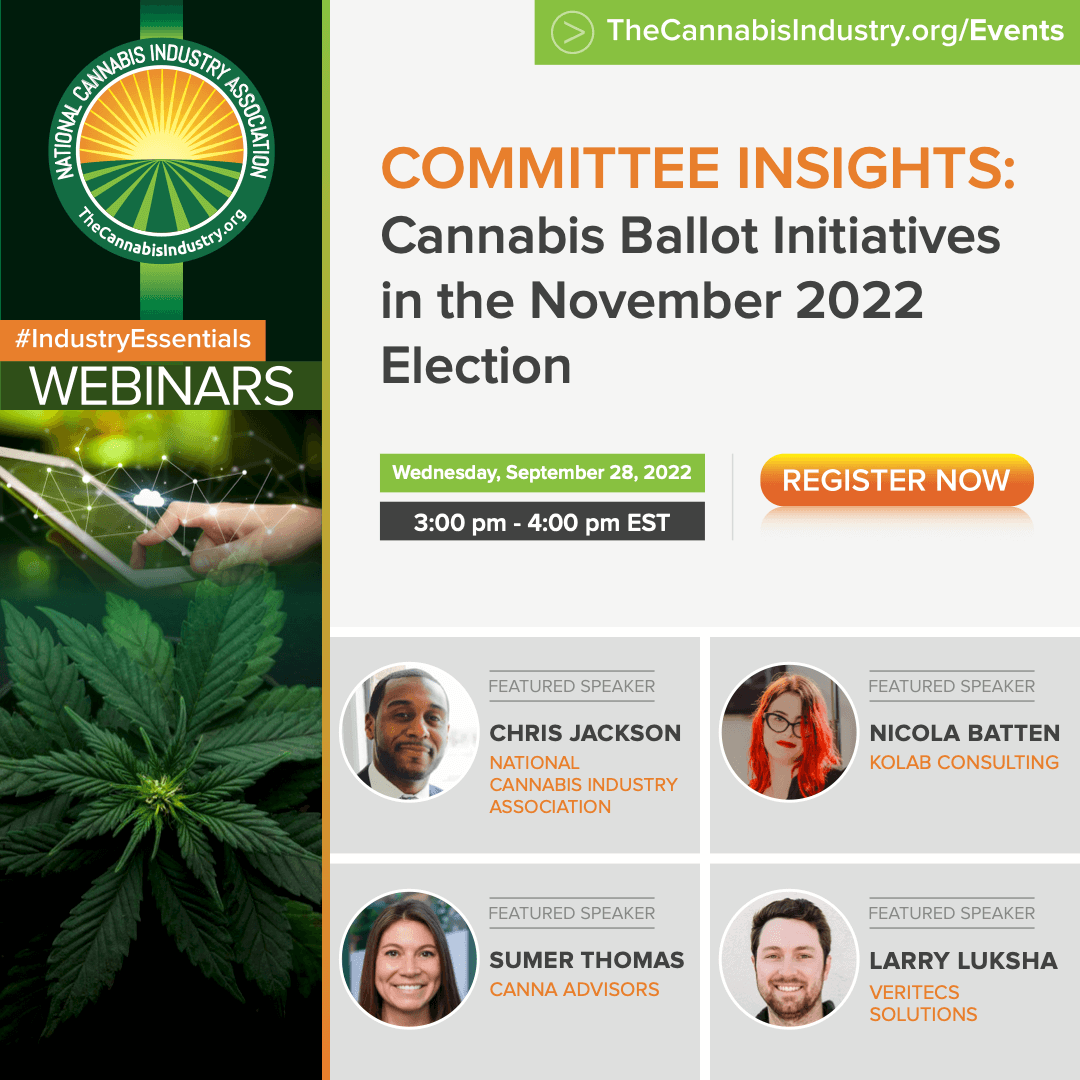

 The last few weeks have seen quite a bit of excitement for the possibility of comprehensive federal cannabis policy reform being closer than it has ever been, but what about the states?
Follow NCIA
Newsletter
Facebook
Twitter
LinkedIn
Instagram
News & Resource Topics
–
This Just In
NCIA Applauds Reintroduction of SAFE Banking Following Lobby Days
Beyond Rescheduling: Inside NCIA’s 14th Annual National Cannabis Industry Lobby Days