Midterm Elections Looking Green
 By Madeline Grant, NCIA’s Government Relations Manager
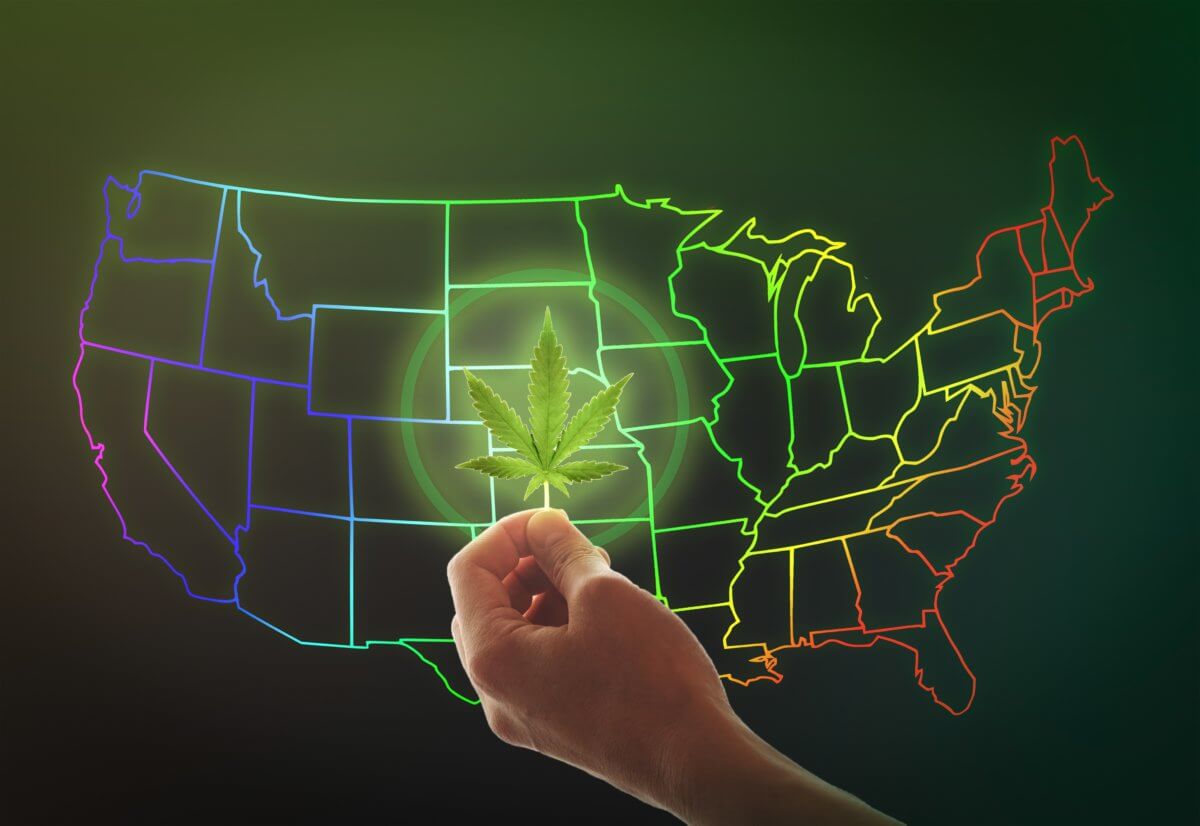
The midterm elections are quickly approaching with less than three weeks away. Not only will the elections determine the balance of power in Congress, but local elections and ballot measures are set to make a big impact across the country. As the midterm elections approach, another 20 million Americans could soon be living in a state where anyone at least 21 years old can legally possess marijuana. There are six states with recreational cannabis legalization initiatives or referendums on the ballot this November: Arkansas, Maryland, Missouri, North Dakota, Oklahoma, and South Dakota. Let’s take a closer look at each state:
Arkansas
Although the Arkansas Board of Election Commissioners rejected the ballot question in August, the state Supreme Court cleared the way for the question to make it to the poll. The Responsible Growth Arkansas campaign submitted about 193,000 signatures- more than double what’s required to qualify the constitutional amendment- in July. If the initiative, Issue 4/ the Marijuana Legalization Initiative, is approved by voters, it would allow adults 21 years and older to legally possess up to an ounce of cannabis. It would implement a 10 percent tax on sales and require the state’s Alcoholic Beverage Control Division to develop rules for businesses, according to Ballotpedia. The initiative does not allow for home cultivation, and it has no provisions to expunge cannabis-related criminal records. For more specifics on what the initiative would accomplish read HERE.
Maryland
When Marylanders head to the polls in November, they will be asked to approve or reject legislation that allows adults 21 and over to possess, use, or grow small amounts of cannabis. If passed, the referendum would open the door to creating a taxed and regulated recreational cannabis industry in the State. State lawmakers have been paving the way for future cannabis legalization when they passed two separate bills in April of this year. House bill 837, which is set to go into effect in July 2023, would allow anyone over the age of 21 to possess up to 1.5 ounces of cannabis, with anything between 1.5 and 2.5 ounces subject to a civil fine of $250 and anything above 2.5 ounces subject to a charge of possession and intent to distribute. The second bill, House Bill 1, established that the question of legalization would be put to voters via a referendum on the November ballot. It’s important to note that this bill does not establish the regulatory framework for the recreational market, and state lawmakers will need to return next session to build out a framework for the cannabis industry if the referendum passes in November. A recent Goucher poll found that 62 percent of residents- including about half of Republicans- support legalizing recreational cannabis, with just 34 percent opposed.
Missouri
After a long battle between the Legal Missouri 2022 and prohibitionists, an initiative to legalize cannabis in Missouri officially cleared for ballot placement this September. Joy Sweeny, who is affiliated with the Community Anti-Drug Coalitions of America (CADCA), filed a lawsuit, alleging that the legalization initiative violated the single-subject rule for ballot measures under the state Constitution and that the signatures were improperly certified, according to Marijuana Moment. Two lower courts dismissed the challenge, so Sweeney sought to bring it directly to Missouri’s Supreme Court, where they would not take the case. Missouri Amendment 3, Marijuana Legalization Initiative (2022) would legalize the purchase, possession, consumption, use, delivery, manufacturing, personal use for adults over the age of 21; allow individuals convicted of nonviolent cannabis-related offenses to petition to be released from incarceration and/or expungement; and exact a 6 percent tax on the sale of cannabis.
North Dakota
The campaign New Approach ND delivered 25,762 signatures to the secretary of state’s office in July 2022. A month later, Secretary of State Al Jaegar’s (R) office approved the measure, certifying that the campaign had submitted enough valid petitions to put the measure before voters, according to Marijuana Moment. The initiative would allow adults 21 and older to purchase and possess up to one ounce of cannabis and grow up to three plants for personal use. The legalization proposal will now be designated as “Measure 1” on the ballot this November.
Oklahoma
Oklahoma’s cannabis reform measure will not be on the November ballot but
South Dakota
Similar to North Dakota, in May 2022 the secretary of state’s office confirmed that South Dakotans for Better Marijuana Laws (SDBML) turned in a sufficient number of signatures to qualify a cannabis legalization measure for the November ballot. In the 2020 election SDBML’s success at the ballot was overruled by the state Supreme Court as a result of a legal challenge funded by Governor Kristi Noem’s (R) administration. The court ruled that the measure violated a single-subject rule for ballot initiatives. Ironically, Governor Noem made comments pledging to implement cannabis legalization if voters approve the ballot initiative at an event this past August. Some advocates believe she has no choice but to pivot her support now that she is up for reelection. With SDBML’s success this year, South Dakotans will vote on the ballot measure in November.
There is no denying that 2022 is a big year for cannabis policy reform. Although state campaigns have met challenges through the courts, state officials, governors, prohibitionists, law enforcement, and more; it is evident that there is no stopping the voice of the people. As the country gears up for the midterm elections, all of these states will continue to educate and campaign for the recreational passage of cannabis. The 2022 midterm elections come on the heels of President Biden’s announcement to pardon thousands of people convicted of marijuana possession under federal law and review whether marijuana should be in the same legal category as drugs like heroin and LSD. The timing of President Biden’s announcement illustrates an important fundamental change in America’s response to cannabis and the National Cannabis Industry Association is hard at work on Capitol Hill to continue educating Congress.
Make sure to stay informed as we head towards the lame duck session via our newsletter and social media platforms and don’t forget to register for NCIA’s upcoming 11th Annual Cannabis Industry Lobby Days in May 2023! If you’re interested in learning more about our policy work please reach out to madeline@thecannabisindustry.org.
From The Ballot Box: Post-Midterm Election Analysis
by Michelle Rutter, NCIA Government Relations Manager
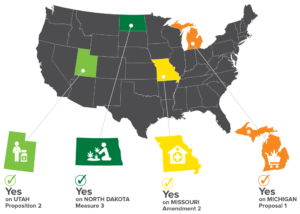
Last night, Americans all over the country let their voices be heard at the ballot box. Voters in Michigan cast their votes for the legalization of adult-use cannabis, increasing momentum of our movement. At the same time, voters in Missouri and Utah were successful in legalizing medical cannabis, becoming the 32nd and 33rd states to do so, and despite significant hurdles.
 MICHIGAN
Appearing on the ballot as Proposal 1, this initiative passed by a whopping 55% and made Michigan the first state in the Midwest to legalize adult-use cannabis for those over the age of 21. The proposal outlined an excise sales tax of 10%, which will be levied on sales at retailers and micro-businesses, and then be allocated to local governments, K-12 education, and road and bridge maintenance. In the future, municipalities will be given the authority to to ban or limit cannabis businesses and establishments within their boundaries. Michigan’s prominent Midwest location, as well as the size of the projected adult-use market, make it a game-changing initiative to watch for cannabis reform. Michigan is the only adult-use state that also gave it’s electoral votes to President Trump in the 2016 election.
NORTH DAKOTA
In North Dakota, Measure 3, or the Marijuana Legalization and Automatic Expungement Initiative, appeared on the ballot and failed by only receiving 40% of the vote. This measure would have made cannabis legal in the state of North Dakota for people 21 years of age or older and, unlike other initiatives, also created an automatic expungement process for individuals with convictions for a controlled substance that has been legalized. Advocates and policy organizations were initially stunned when the campaign submitted enough signatures to appear on the ballot, and immediately recognized the importance of a staunchly, dependably conservative state choosing to legalize the adult-use of cannabis. Both of the candidates who ran for Senate in the state, Rep. Kevin Cramer (R) and Sen. Heidi Heitkamp (D) stated that they opposed the measure.
UTAH
In Utah, the Medical Marijuana Initiative (Proposition 2) appeared on the 2018 ballot and passed with 53% of the vote. This initiative legalized the medical use of marijuana for individuals with qualifying medical illnesses such as epilepsy, HIV, and and multiple sclerosis, among others. In October, the proponents and opponents of the measure, Mormon church leaders, and elected officials met to discuss the possibility of passing a medical cannabis law through the state legislature– regardless of the result for Proposition 2, which it was determined, would remain on the ballot. State lawmakers plan to hold a special session to work out details for how to make Utah the next medical cannabis state. Utah is a perfect example of a traditionally conservative state choosing to reform their cannabis laws to be more compassionate — Utah has given its electoral votes to Republican presidents in every election since 1968.
MISSOURI
In Missouri, three separate medical cannabis initiatives appeared on the ballot last night– including two proposed constitutional amendments and one statutory measure– with Amendment 2 triumphing with 65% of the vote. The other two medical cannabis initiatives failed. The winning Amendment 2, backed by New Approach Missouri, was favored by national advocacy groups such as NCIA, MPP, and NORML. The initiative legalized cannabis for medical purposes, creates a licensing system for cultivation, testing, and dispensing of medical cannabis and sets up a 4% tax on cannabis sales. State tax revenue garnered will be spent on healthcare services for veterans. Voters in Missouri also elected Josh Hawley (R) to replace sitting Sen. Claire McCaskill (D). Interestingly, Amendment 2 received over 300,000 more votes than Senator-elect Hawley — proving that cannabis is a winning issue across partisan lines.
OUTLOOK: 2019 AND THE 116TH CONGRESS
 These stunning victories have implications in Washington, D.C. and set the stage for federal reform in the 116th Congress. In addition to the ballot initiatives that were passed last night, Democrats took control of the House of Representatives, while Republicans maintained their control of the Senate. While this development surely means that cannabis policy will progress further than ever in the House, it also means that anything passed through that chamber will face significant hurdles in the more conservative Senate.
HOUSE
This year’s midterm election was one of the most highly anticipated in modern American history.
Last night, the House of Representatives switched from a Republican majority to a Democratic majority: as of Wednesday morning, Democrats held 220 seats, while Republicans held 194.
Republican leadership in the House of Representatives over the last two years has blocked even popular reforms such as banking access from receiving hearings or votes.
With a Democratic majority in the House of Representatives, cannabis legislation will likely move at an unprecedented rate. Because Democrats have traditionally been more friendly to cannabis reforms, there is the possibility that hearings will be held, bills will move through committees, and even possibly be voted on and passed on to the Senate.
Most, if not all, of last night’s House races will have implications for cannabis policy in the 116th Congress. Notable cannabis opponent and chairman of the powerful Rules Committee Pete Sessions was defeated in a stunning victory by Colin Allred, who has stated his clear support for medical cannabis. At the same time, cannabis advocates saw the loss of longtime cannabis champion Rep. Dana Rohrabacher (R-CA), marking the end of an era. While the loss of Rep. Rohrabacher will be felt by many, his challenger Harley Rouda has stated his unequivocal support for adult-use cannabis.
SENATE
As polls indicated prior to Election Day, Republicans maintained their control of the Senate, and in fact strengthened their majority. As of Wednesday morning, Republicans had gained two members in the Senate, holding a total of 51 seats, with three races still in play. While the Democrat-controlled House of Representatives may be able to move pro-cannabis amendments and legislation through that chamber, anything that moves on to the more conservative Senate will face significant hurdles.
One of the most closely watched Senate races in the country was in Nevada, where sitting Sen. Dean Heller (R) faced Rep. Jacky Rosen (D). While Sen. Heller has signaled his support for cannabis reform in the past, he currently does not co-sponsor any pro-cannabis legislation in the Senate. Rep. Rosen, however, is a co-sponsor of multiple bills in the House, including the SAFE Banking Act (H.R. 2215), the Small Business Tax Equity Act (H.R. 1810), and the STATES Act (H.R. 6043), among others. In addition, Rep. Rosen replied to an NCIA candidate survey and stated, “I was proud to support Nevada’s marijuana ballot initiative in 2016 and our state has already seen the positive impacts of this industry, including thousands of jobs and millions of dollars in tax revenue.”
With more on the line than ever before, political donations and investments in our industry are vital. NCIA’s political action committee (NCIA-PAC) is proud to have donated to 41 of the winning candidates on election night.
The 116th Congress will arrive in Washington, D.C. in January. With the change in leadership in the House of Representatives, cannabis policy and reforms will be able to advance in a way never seen before. At the same time, any pro-cannabis bills or amendments sent to the Senate will still face challenges, but as recent elections have proved, anything is possible.
Follow NCIA
Newsletter
Facebook
Twitter
LinkedIn
Instagram
News & Resource Topics
–
This Just In
Committee Blog: Budtenders Make or Break Your Business – A No-Nonsense Guide to Cannabis Retail Staffing
Member Blog: Guaranteeing the First Loan