Midterm Election Wins, Losses, and the Lame Duck Session
Photo By CannabisCamera.com
by Michelle Rutter Friberg, NCIA’s Deputy Director of Government Relations
Last week, the long-anticipated 2022 midterm elections (finally) took place. In addition to the usual House and Senate elections, five states voted on cannabis ballot initiatives: Arkansas, Maryland, Missouri, North Dakota, and South Dakota – with only two of those passing successfully. Let’s take a look at what transpired and what it means for the lame duck session and possibly the 118th Congress:
Ballot Initiatives
Voters in Arkansas, Maryland, Missouri, North Dakota, and South Dakota were all faced with a similar question on election day: whether or not to legalize cannabis for adult use. Unfortunately, three of the five initiatives did not gather enough support to pass: Arkansas, North Dakota, and South Dakota.
The results for Maryland’s referendum came in early on election night with a decisive victory: more than 65% of voters cast their ballots in support. They were asked “Do you favor the legalization of the use of cannabis by an individual who is at least 21 years of age on or after July 1st, 2023, in the state of Maryland?” Now that the measure has been approved by voters, it will require the legislature to put forth a bill that will set basic regulations for the adult-use cannabis program.
Missouri voters also approved Amendment 3, which would legalize cannabis for adults 21 and over, as well as impose a six percent tax on recreational cannabis sales and use the revenue to facilitate automatic expungements for people with certain non-violent marijuana offenses on their records. The amendment garnered 53% of the vote.
This gives advocates an increase in the number of representatives and four more Senators from legal states, most notably those from Missouri, who are both avid conservatives and have not supported cannabis reform broadly in the past.
House of Representatives
Although Republicans are still projected to win the House, the margins are shaping up to be narrower than initially predicted. It takes 218 seats to win a majority in the chamber, and as of publication, Republicans hold 212 with a number of districts still yet to be called.
The change in party control means a change in leadership and shake-ups at the committee level. Minority Leader McCarthy is expected to run for Speaker of the House, while Minority Whip Steve Scalise has thrown his hat in the ring for Majority Leader – but there’s much uncertainty and infighting within the caucus.
Senate
Control of the Senate will remain in the hands of Democrats. Over the weekend, Nevada’s Senate race was called for incumbent Catherine Cortez Masto – making Georgia’s runoff election slightly less contentious.
A closely watched Senate race in Pennsylvania flipped in favor of Democrats: legalization advocate John Fetterman (D) defeated TV-personality and New Jersey resident Dr. Oz (R). We continue to closely monitor the races in Alaska and Arizona and what their outcomes may mean for cannabis reform.
Lame Duck Session
The likelihood of a split Congress means that the lame duck session happening between now and January will be jam-packed. In addition to must-pass legislation like the National Defense Authorization Act (NDAA) and a budget/omnibus bill of some type, Democrats will also be focused on other topics like judicial nominations, the debt ceiling, and hopefully the SAFE Banking Act.
Midterm Elections Looking Green
By Madeline Grant, NCIA’s Government Relations Manager
The midterm elections are quickly approaching with less than three weeks away. Not only will the elections determine the balance of power in Congress, but local elections and ballot measures are set to make a big impact across the country. As the midterm elections approach, another 20 million Americans could soon be living in a state where anyone at least 21 years old can legally possess marijuana. There are six states with recreational cannabis legalization initiatives or referendums on the ballot this November: Arkansas, Maryland, Missouri, North Dakota, Oklahoma, and South Dakota. Let’s take a closer look at each state:
Arkansas
Although the Arkansas Board of Election Commissioners rejected the ballot question in August, the state Supreme Court cleared the way for the question to make it to the poll. The Responsible Growth Arkansas campaign submitted about 193,000 signatures- more than double what’s required to qualify the constitutional amendment- in July. If the initiative, Issue 4/ the Marijuana Legalization Initiative, is approved by voters, it would allow adults 21 years and older to legally possess up to an ounce of cannabis. It would implement a 10 percent tax on sales and require the state’s Alcoholic Beverage Control Division to develop rules for businesses, according to Ballotpedia. The initiative does not allow for home cultivation, and it has no provisions to expunge cannabis-related criminal records. For more specifics on what the initiative would accomplish read HERE.
Maryland
When Marylanders head to the polls in November, they will be asked to approve or reject legislation that allows adults 21 and over to possess, use, or grow small amounts of cannabis. If passed, the referendum would open the door to creating a taxed and regulated recreational cannabis industry in the State. State lawmakers have been paving the way for future cannabis legalization when they passed two separate bills in April of this year. House bill 837, which is set to go into effect in July 2023, would allow anyone over the age of 21 to possess up to 1.5 ounces of cannabis, with anything between 1.5 and 2.5 ounces subject to a civil fine of $250 and anything above 2.5 ounces subject to a charge of possession and intent to distribute. The second bill, House Bill 1, established that the question of legalization would be put to voters via a referendum on the November ballot. It’s important to note that this bill does not establish the regulatory framework for the recreational market, and state lawmakers will need to return next session to build out a framework for the cannabis industry if the referendum passes in November. A recent Goucher poll found that 62 percent of residents- including about half of Republicans- support legalizing recreational cannabis, with just 34 percent opposed.
Missouri
After a long battle between the Legal Missouri 2022 and prohibitionists, an initiative to legalize cannabis in Missouri officially cleared for ballot placement this September. Joy Sweeny, who is affiliated with the Community Anti-Drug Coalitions of America (CADCA), filed a lawsuit, alleging that the legalization initiative violated the single-subject rule for ballot measures under the state Constitution and that the signatures were improperly certified, according to Marijuana Moment. Two lower courts dismissed the challenge, so Sweeney sought to bring it directly to Missouri’s Supreme Court, where they would not take the case. Missouri Amendment 3, Marijuana Legalization Initiative (2022) would legalize the purchase, possession, consumption, use, delivery, manufacturing, personal use for adults over the age of 21; allow individuals convicted of nonviolent cannabis-related offenses to petition to be released from incarceration and/or expungement; and exact a 6 percent tax on the sale of cannabis.
North Dakota
The campaign New Approach ND delivered 25,762 signatures to the secretary of state’s office in July 2022. A month later, Secretary of State Al Jaegar’s (R) office approved the measure, certifying that the campaign had submitted enough valid petitions to put the measure before voters, according to Marijuana Moment. The initiative would allow adults 21 and older to purchase and possess up to one ounce of cannabis and grow up to three plants for personal use. The legalization proposal will now be designated as “Measure 1” on the ballot this November.
Oklahoma
Oklahoma’s cannabis reform measure will not be on the November ballot but Governor Kevin Stitt (R-OK) issued an executive order on October 18 setting a special election to determine if legal sales of cannabis should be extended to anyone at least 21 years old or older. Oklahomans for Sensible Marijuana collected far more than 95,000 signatures required to make the November ballot. However, because the contractor hired by the Oklahoma Secretary of State’s office took 48 days to certify the signatures, there wasn’t time for the initiative to be placed on the November ballot. The group unsuccessfully sued the state in hopes of forcing the question. The court said, despite sufficient signatures to qualify for the ballot, the measure was held up by bureaucratic requirements, protest deadlines and a new signature-counting software. Nevertheless, Governor Stitt issued the executive order and Oklahomans for Sensible Marijuana Laws will have less than five months to make their case to voters for why legalization should be extended to anyone at least 21 years old. It’s important to note that when Oklahoma voters legalized medical cannabis in 2018 there was evident opposition from practically every elected official, health care group, law enforcement official, and business organization in the state.
South Dakota
Similar to North Dakota, in May 2022 the secretary of state’s office confirmed that South Dakotans for Better Marijuana Laws (SDBML) turned in a sufficient number of signatures to qualify a cannabis legalization measure for the November ballot.In the 2020 election SDBML’s success at the ballot was overruled by the state Supreme Court as a result of a legal challenge funded by Governor Kristi Noem’s (R) administration. The court ruled that the measure violated a single-subject rule for ballot initiatives. Ironically, Governor Noem made comments pledging to implement cannabis legalization if voters approve the ballot initiative at an event this past August. Some advocates believe she has no choice but to pivot her support now that she is up for reelection. With SDBML’s success this year, South Dakotans will vote on the ballot measure in November.
There is no denying that 2022 is a big year for cannabis policy reform. Although state campaigns have met challenges through the courts, state officials, governors, prohibitionists, law enforcement, and more; it is evident that there is no stopping the voice of the people. As the country gears up for the midterm elections, all of these states will continue to educate and campaign for the recreational passage of cannabis. The 2022 midterm elections come on the heels of President Biden’s announcement to pardon thousands of people convicted of marijuana possession under federal law and review whether marijuana should be in the same legal category as drugs like heroin and LSD. The timing of President Biden’s announcement illustrates an important fundamental change in America’s response to cannabis and the National Cannabis Industry Association is hard at work on Capitol Hill to continue educating Congress.
Committee Insights | 9.28.22 | Cannabis Ballot Initiatives in the November 2022 Election
In this edition of our NCIA Committee Insights series originally aired on Wednesday, September 28, 2022 members of NCIA’s State Regulations Committee convened a panel of government affairs, business development and licensing experts for an in-depth discussion focusing on cannabis ballot initiatives up for a vote this coming November.
They provided a detailed overview on the status of each campaign so that you’ll learn how best to position yourself for success and what you can do to help push these efforts across the finish line. If you’re considering business Arkansas, Maryland, Missouri either of the Dakotas then this session is specifically geared for you.
At the conclusion of the discussion they hosted a moderated Q&A session to provide NCIA members an opportunity to interact with leading minds from the cannabis regulatory and licensing space, join today to contribute to future conversations!
Learning Objectives:
• Provide practical information to NCIA members about the cannabis ballot initiatives and potential new business opportunities.
Sumer Thomas
Director of Regulatory Operations
Canna Advisor
Nicola Batten
CEO & Founder
koLaB Consulting
Larry Luksha
Government Relations & Business Development
Veritec Solutions
Joseph Smith
Senior Managing Associate
Thompson Hine LLP
State of the States – Cannabis Policy Reform in the Current Legislative Sessions
by Morgan Fox, NCIA Director of Media Relations
The last few weeks have seen quite a bit of excitement for the possibility of comprehensive federal cannabis policy reform being closer than it has ever been, but what about the states?
Historically, the vast majority of progress has been made at the state level, and this year is shaping up to be another one full of victories for legalization advocates as state governments struggle to support their economies, create new tax revenue and job sources, and tackle long-overdue criminal justice reforms.
The overwhelming approval by New Jersey voters of a referendum to make cannabis legal for adults last year has put the spotlight firmly on the Northeast and mid-Atlantic regions. With state legislative sessions already underway, a number of states are already prioritizing legalization much more heavily than in years past even as New Jersey lawmakers struggle to pass enacting legislation to carry out the will of the voters in a fair and equitable manner. It is pretty clear that New Jersey’s neighbors don’t want to be left behind when it starts reaping the benefits of regulated cannabis markets.
Early this year, New York’s Gov. Andrew Cuomo released a statement outlining his plan to make cannabis legal in the state, and just recently added amendments that would allow delivery, clarify the tax system, and reduce penalties associated with some cannabis activities. There are still some concerns with this plan, including the amount of funding that would actually go toward repairing the disparate harms caused by prohibition and the lack of legal home cultivation. Regulated cannabis in New York could be worth more than $3.5 billion and create more than 60,000 jobs, making it one of the largest state cannabis markets in the country.
Meanwhile, in Delaware, a legalization bill that was approved in the state House in 2019 is slated to be reintroduced by the sponsor in the coming weeks. This bill would come on the heels of a report released last month by the state auditor which estimated that Delaware could take in $43 million annually with a 20% excise tax, and create more than 1,400 jobs over a five year period. In what seems to be a disturbing trend in some state legislatures this year, this bill is not expected to initially include home cultivation either.
In Connecticut, however, a new adult-use bill has been introduced that would center on restorative justice and social equity in the industry and would allow adults to grow limited amounts of cannabis in their homes. This bill has strong support in the state legislature but may soon have to compete with Gov. Ned Lamont’s proposal, which is expected to be released soon.
Nearby Pennsylvania is likely to consider adult-use legislation this year, with Gov. Tom Wolf (along with the incredibly supportive and newly internet-famous lieutenant governor) urging lawmakers to address the issue and – earlier this month – calling it a priority for his state’s annual budget proposal. Rhode Island lawmakers are expected to consider legalization again this year as well, and with the departure of Gov. Raimondo, it is more likely that the emphasis will shift away from a state-run model and back to regulating private businesses.
Farther South, Virginia made headlines this month by becoming the first state in 2021 to have both chambers of its legislature approve adult-use bills. Lawmakers are committed to ironing out the differences between the two bills this month during an extended session. With Gov. Ralph Northam in full support, Virginia stands poised to become the 16th state overall to make cannabis legal for adults and the first state to do so in the South, and it would be only the third to regulate cannabis through its legislature.
Adult-use legislation has also been introduced in Maryland, with supporters and cosponsors optimistic that it could be passed this year, though lawmakers there are not as far along in the process as their neighbors in Virginia. And in medical news, advocates in South Carolina are taking another shot at passing a medical cannabis bill there.
There are signs of progress from elsewhere in the nation as well. After running out of time in an emergency session last year, New Mexico’s governor and lawmakers wasted no time in getting back to legalization efforts this year. There are currently several bills being considered, and it appears very likely that some form of adult-use will be approved there this year.
This is just a snapshot of the momentum and positive movement we are seeing at the state level this year. If you are interested in up-to-date information about all cannabis-related state legislation in the U.S., please consider subscribing to Marijuana Moment’sbill tracker.
Unfortunately, the news isn’t all good.
In South Dakota, where voters approved both medical and adult-use initiatives in November by wide margins, advocates have suffered a temporary setback on the adult-use front. After a pair of law enforcement officials sued to have the adult-use bill thrown out because it addresses too many issues for a constitutional amendment, a circuit court judge ruled in their favor earlier this month. This situation is extremely disheartening and outrageous: the will of the people was overturned by a judge who was appointed by a governor who not only actively campaigned against the ballot initiative but also paid for the lawsuit to overturn it with taxpayer money! However, supporters have appealed the decision to the state Supreme Court.
In Montana, where voters also passed an adult-use initiative in November, supporters are faced with another lawsuit on similar grounds that was filed by opponents. However, observers are skeptical of that suit being successful, and lawmakers are moving ahead with developing enacting legislation.
And in Idaho, where a medical cannabis initiative was prevented from getting on the ballot last year, prohibitionist lawmakers are moving forward with a bill that would prevent any future legislation to make cannabis or any other currently illegal substance legal. If passed, this bill would be put before the voters in 2022, where it could very well be on the same ballot as a medical cannabis referendum.
Despite efforts to overturn progress and maintain failed and harmful cannabis policies, things are generally looking up and we expect several states to pass laws to stop arresting cannabis consumers and establish legal, regulated marketplaces in the near future.
Voters in New Jersey, Arizona, South Dakota, and Montana legalized adult-use cannabis sales during November’s election. So, what comes next?
Last month, Americans in four states voted to legalize adult-use cannabis.
If you’re an adult over 21 in Arizona, New Jersey, South Dakota, or Montana, theoretically, you’ll be able to consume and purchase cannabis legally in 2021.
To many Americans, the end of cannabis prohibition in these states looks like a sudden act of voter mobilization. But industry insiders know it took years of work by activists, business people, and lawmakers to make legalization possible.
Before adults can legally purchase and consume cannabis, lawmakers in each state must outline rules and regulations, and dispensaries must go through intense licensing processes before opening their doors to the public.
The process won’t happen overnight.
In some newly legal states, it could take close to a year to iron out the details. And in the past, it’s taken even longer.
Take Massachusetts, for example. Voters cast their ballots in favor of legalization in 2016, but the first dispensary didn’t open until 2018.
Maine’s citizens also voted in support of legal weed in 2016, but it took four years for the first dispensary to open. The first two retailers – SeaWeed and Theory Wellness – opened on October 8 of this year.
“It has taken four years to move from referendum to retail sales since Mainers narrowly approved the legalization of recreational cannabis at the ballot box in 2016. Legislative rewrites, gubernatorial vetoes, a change in state administration, and then the impact of COVID-19 pandemic have combined to make Maine’s rollout the slowest in U.S. history.” – Portland Press Herald
Lawmakers in New Jersey are trying to speed things up. Democratic Senator Nick Scutari wants to move quickly to pass legislation modeled off a 2019 legal cannabis bill he sponsored. Still, legislators are fighting over the details. New Jersey’s Medical Marijuana licensing policies force applicants to pay large sums to compete for a limited number of licenses, allowing big businesses with deep pockets and holdings in other legal states to make millions.
Some New Jersey lawmakers are trying to keep the same from happening when adult-use dispensaries open their doors by prioritizing local businesses.
Arizona lawmakers anticipate legal cannabis sales to begin as early as March. The state plans to prioritize licenses for owners “from communities disproportionately impacted by the enforcement of previous marijuana laws.” Arizona’s 123 medical marijuana dispensaries will have the first opportunities to apply for adult-use licenses in January after the Arizona Department of Health Services writes the rules.
Entrepreneurs in South Dakota and Montana are ready to apply for dispensary licenses, but they, too, will have to wait.
In South Dakota, lawmakers say dispensaries will be open and selling legal adult-use cannabis by July 1. In Montana, people should be able to legally purchase cannabis on October 1, barring any bumps in the road.
Have we reached a tipping point?
The public’s view of cannabis is changing. One in three Americans now live in a state with legal weed, and, according to a recent Gallup poll, 68% of Americans support federal cannabis legalization. So, have we reached a tipping point?
That’s hard to say.
Thirty-six states now have a legal medical cannabis system. When sales begin in Arizona, New Jersey, South Dakota, and Montana, more than twenty states will have fully legalized cannabis. And while federal cannabis reform might be a defining aspect of the incoming administration’s legacy, legalization is mostly dependent on congress, and it’s still unclear which party will control the Senate next year.
Democratic leaders have pledged to end federal cannabis prohibition. If the Democratic party wins Senate control, full legalization is almost a certainty. But if Republicans maintain their Senate majority, the Republican party’s past approach to cannabis doesn’t indicate their leaders are ready to support far-reaching reform. Still, federal cannabis legalization isn’t outside the realm of possibility, even with a Republican-controlled Senate.
Only time will tell.
And again, regardless of what happens politically, it’s obvious America’s opinion of cannabis isn’t what it once was.
Oprah asked former President Obama if he and Michelle indulged in “pizza, pot, or alcohol” on election night in a recent televised interview. When a television icon casually asks a former President if he smoked weed with the former first lady, you know attitudes are changing.
Could federal cannabis legalization be the key to healing our COVID-ravaged economy?
This year, COVID-19 slowed the progress of cannabis legalization for individual states, but the pandemic could help push federal legalization forward next year. Here’s why.
A federally legal cannabis industry would accelerate America’s economic recovery.
The pandemic has had a catastrophic impact on many industries, and while a lot of employees will return to work, many jobs will be forever lost. The longer it takes for people to find employment, the longer it will take for the economy to recover.
The end of federal cannabis prohibition would create thousands of new jobs and reverse the pandemic’s adverse economic impact.
Here’s a point to consider: according to estimates from New Frontier Data, America’s legal cannabis market could be worth nearly $30 billion by 2025 – and that’s without federal legalization. If government officials choose to end federal prohibition next year, the estimates will increase dramatically.
For cannabis dispensaries, cultivators, cannabis-adjacent businesses (like cannabis marketing agencies), and American citizens, a nationwide end to prohibition would be life-changing.
But again, what the immediate future holds is anyone’s guess.
Aaron Rosenbluth is Hybrid Marketing Co‘s Content Director, and he loves to write blogs. He’s written so many blogs that he’s lost count. And beyond his skills as a copywriter and storyteller, he’s an obsessive reader and researcher. Aaron writes on subjects ranging from cannabis to collaboration, social equity to HR software, interior design to cybersecurity. His words attract, engage, educate, and convert. Btw, Aaron hates the phrase “content is king” (even though content is king – and queen).
Hybrid Marketing Co is a Denver-based branding and marketing agency that specializes in building custom strategies that supercharge growth and drive revenue. Working with brands and businesses across the U.S. and Canada, Hybrid’s partners run the full-spectrum of the cannabis world including dispensaries, manufacturers, cultivators, and ancillary businesses. Visit hybridmarketingco.com to learn more about the Hybrid approach.
Election Night 2020: Victories For Sensible Cannabis Policies
by Morgan Fox, NCIA’s Director of Media Relations
While the country waits for the outcomes of national elections that could very well impact the future of cannabis policy reform advocacy, we do have a LOT to be happy about today!
Last night, adult-use and medical ballot initiatives SWEPT the elections, passing in every state in which they were considered!
Voters in Arizona, Montana, New Jersey, and South Dakota all passed measures making cannabis legal and regulated for adults. South Dakota also approved a medical cannabis initiative by an even greater margin, and was joined by Mississippi where an overwhelming majority of voters not only supported medical cannabis but chose the much more comprehensive of two competing options.
You can learn more about these initiatives here and how they fared in the elections here.
There are a lot of important milestones and lessons to observe from these historic results.
First, let’s talk about New Jersey. Roughly two thirds of voters in the state approved this ballot measure, which was referred to them after lawmakers were unable to pass similar legislation last year. This is a big jump in ballot approval margins; before now, the most popular legalization referendum was in California, which approved Proposition 64 in 2016 with 57% of the vote. That’s a 10% margin increase in just four short years! The large population and huge market potential (more than $1.5B by 2025) are sure to have a major impact on the industry. Regionally, passage of this initiative is certain to add urgency to adult-use cannabis regulation efforts in states like New York, Pennsylvania, Connecticut, Delaware, and Rhode Island.
South Dakota also set a record by becoming the first state to approve an adult use law before having an established medical cannabis system, and in a very conservative state no less! Voters supported both medical and cannabis initiatives despite strong opposition from the governor and other officials.
In Arizona, after voters narrowly defeated a legalization initiative in 2016, a significant swing brought a 10% increase in support resulting in passage. This long-overdue change is especially important because Arizona is the only state where simple possession is a felony and nearly 15,000 people are arrested every year.
So what does this mean for future reform efforts?
First and foremost, the passage of the adult use initiatives means nearly 34% of Americans now live in states with laws making cannabis legal and regulated for adults. These four states account for roughly 60,000 marijuana arrests every year, mostly for simple possession. Congressional representation of states where cannabis is legal for adults will increase by 29 representatives and eight senators. This doesn’t guarantee their support for cannabis legislation, but it certainly increases the chances.
Second, passage of cannabis policy reform initiatives in conservative states like Mississippi, Montana, and South Dakota should send a signal to Republican lawmakers in Congress that this is an issue that they can support, and one which they will face political consequences for impeding. The fact that all three of these states had multiple cannabis-related issues on the ballot and voters were not swayed or confused is a testament to the will for change in these areas and a growing understanding of the issue.
Long story short: more and more states will continue to enact sensible, modern cannabis policies in the coming years, and every state that does so will help add to the chorus of voices from the public and in Congress calling for an end to outdated federal prohibition policies.
Possession:Adults 21+, 1 ounce flower or 5 grams concentrate
Home cultivation:YES, adults 121+ may have up to 6 plants in an enclosed locked location out of public view.
Licenses:
Issue no more than one marijuana establishment license per 10 pharmacies;
Issue no more than two marijuana establishment licenses in counties that contain no registered nonprofit medical marijuana dispensaries;
Issue no more than one marijuana establishment license in counties with one nonprofit medical marijuana dispensaries; and
Issue 26 licenses, notwithstanding the other limits, to entities qualified under the Social Equity Ownership Program.
Social Equity: Department of Health Services would be required to establish a Social Equity Ownership Program to promote cannabis business ownership and employment for individuals from communities disproportionately impacted by the enforcement of previous marijuana laws.
Proposition 207 would establish a fund called the Justice Reinvestment Fund (JRF). Revenue in the JRF would be allocated as follows:
35 percent to local public health departments in proportion to the county’s population for the purpose of providing justice reinvestment programs or giving grants to nonprofits to provide justice reinvestment programs within the county’s area.
35 percent to DHS to provide grants to nonprofits to provide justice reinvestment programs in the state.
30 percent to DHS “for the purpose of addressing important public health issues” that affect Arizona.
Taxes & Revenue:
Transaction Privilege Tax (currently 5.6%)
Specific 16% excise tax (non-medical)
Revenue from the excise tax and license fees would be deposited into the Smart and Safe Arizona Fund. First, revenue would be used to implement and enforce marijuana regulations. The remaining revenue would be allocated as follows:
33.0 percent for community college districts;
31.4 percent for municipal police and fire departments, county sheriff departments, and fire districts;
25.4 percent for the state’s Highway User Revenue Fund;
10.0 percent for the new Justice Reinvestment Fund; and
Alternative 65A – Rep. John Thomas “Trey” Lamar and Rep. Brent Powell
Possession:
Initiative 65 – Qualifying patients may purchase/possess up to two and a half (2.5) ounces every 14 days
Alternative 65A – Undefined, no explicit protections
Home Cultivation: NO
Licensing:
Initiative 65 – TBD by Dept. of Health; no limits on number of treatment centers; may not be located within five hundred (500) feet of a pre-existing school, church, or licensed child care center
Alternative 65A – Undefined
Social Equity: None explicitly included in either initiative.
Taxes & Revenue:
Initiative 65 – Dept. of Health may authorize taxes up to the level of the state sales tax (currently 7%); revenue to be used for special operating fund and may not revert to state general fund
Ballots: Initiative 190 Marijuana Legalization Initiative (adult use), CI-118 Allow for a Legal Age for Marijuana Amendment
Summary:
Initiative 118 would allow legislation or a citizen initiative to set the legal age limit for possession at an age higher than the state definition of adulthood (18 years old).
Initiative 190 would regulate cannabis for adults age 21 and older.
Possession: Adults 21+, up to one ounce of flower or 8 grams of concentrate
Home Cultivation: YES, up to four (4) plants per adult, maximum eight (8) per household.
Licensing:
The Department of Revenue shall develop rules and regulations regarding licensing of providers, marijuana-infused products providers, and dispensaries for adult use. For the first 12 months, only existing medical cannabis licensees may apply. Provider licenses are established in tiers based on canopy size and also include micro-business licenses. Applicants must have resided in Montana for at least one year prior and may not have been convicted of a felony involving fraud, deceit, or embezzlement or for distribution of drugs to a minor within the past 5 years. Cannabis businesses may not be located within 500 feet of a school or place of worship unless permitted by the local jurisdiction.
Social Equity: Persons convicted of behavior permitted by Initiative 190 may apply for resentencing or expungement.
Taxes & Revenue:
Specific sales tax – 20%
Revenue will be used to fund operating costs of regulation as well as to support conservation efforts, substance abuse treatment and education, veterans programs, local governments, the general fund, and other programs. More information is available here.
2020 Marijuana Ballot Initiatives – Time to Make History!
by Madeline Grant, NCIA’s Government Relations Manager
With the election coming up just around the corner, 2020 could be another big year for our movement. It is imperative that we all head to the polls, send in our mail-in ballots and make our voices heard in this monumental election. This week I will briefly go over each ballot initiative that has officially qualified for the November ballot. As we continue to get closer to the election, I will get into detail about what each ballot initiative does for each state. 2020 has been a year of uncertainty and as we approach the election it is our duty as U.S. citizens to get out and vote and as members of the cannabis industry, it’s important that we support the expansion of markets by donating to initiative campaigns.
Without further ado please see marijuana ballot initiatives below:
More information provided by the Marijuana Policy Project here.
Nebraska – Medical marijuana ballot initiative is no longer happening due to the Nebraska Supreme Court deeming the legalization of medical marijuana on the November ballot as unconstitutional. Following over 180,000 signatures by Nebraskans in support of the measure, the Supreme Court decided to not include the vote on November’s ballot on the day before the deadline. The justification of unconstitutionality came from Nebraska’s single-subject rule for a ballot measure, which bans multiple issues into yes-or-no questions for voters to address.
It is more important than ever to get out and vote. Our government relations team works hard in our nation’s Capital to achieve legislative victories at the federal level; however, achieving legislative victories at each state is just as important. It is through each successful ballot initiative at the state that provides the proof and support for legislative change and policy reform at the federal level. States are moving forward; therefore, we must be on Capitol Hill. We must keep fighting the good fight and get out and show our support for cannabis policy reform.
Are you interested in any of these states or want to learn more about one of these ballot initiatives? If so, please feel free to reach out to me to set up a meeting to discuss the information in more detail or contact the campaigns directly to find out how you can support them.
2018 NATIONAL CANNABIS INDUSTRY FORECAST
Michelle Rutter, NCIA
by Michelle Rutter, NCIA Government Relations Manager
With the beginning of 2018, we start another election year. Multiple states in the midwest are running medical cannabis ballot initiatives, while Vermont is set to become the first state to legalize adult-use cannabis through the state legislature. In Washington, D.C., policy moves at a slower pace, but with Attorney General Jeff Sessions in office, it’s important to remain vigilant. Let’s take a look at what may happen in cannabis policy across the country:
MEDICAL CANNABIS POLICY
UTAH
The Utah Patients Coalition (UPC) is leading a 2018 ballot campaign to establish a medical cannabis program. The initiative seeks to protect terminally and seriously ill patients with specific debilitating medical conditions, including HIV/AIDS, PTSD, and chronic pain, among others. In addition, the initiative allows for caretakers to administer medical cannabis and would issue four types of licenses if passed: cultivation facilities, processing facilities, independent testing laboratories, and dispensaries.
The Chairman of the Senate Finance Committee, Orrin Hatch (R-UT) has introduced a medical cannabis research bill, and has even said on the Senate floor that medical cannabis can be an alternative to opioids. Passing the 2018 ballot initiative in his home state of Utah will be critical to furthering advocates’ work at the federal level.
A recent poll done by the Salt Lake Tribune found that 3 in 4 Utahns support legalizing medical cannabis. The campaign must collect 113,143 signatures from registered voters in order to qualify for the ballot. As of October 2017, the coalition had already garnered 20,000 signatures.
MISSOURI
A group called New Approach Missouri has formed and is in the process of collecting signatures for a proposed constitutional amendment to their state constitution that would legalize medical cannabis. The initiative would create a statewide system for production and sale of medical cannabis and provides for limited and regulated patient cultivation. Interestingly, the initiative levies a four percent retail tax, but all revenue in excess of the cost of regulating the medical cannabis program will go towards Missouri’s veterans.
New Approach Missouri must to collect 160,199 valid signatures from registered voters in order to be placed on the ballot. As of December 2017, the campaign had collected roughly 100,000 signatures. A poll done in 2015 showed that 85% of Missourians support implementing a medical cannabis program.
OKLAHOMA
Oklahomans for Health is the proponent of the upcoming state question SQ788, which would create a medical cannabis program. Obtaining a state-issued medical marijuana card would require a board-certified physician’s signature, though there are no specific qualifying conditions. The measure would enact a seven percent tax on marijuana sales, with revenue financing regulatory costs. Any surplus would be distributed: 75% to the General Fund to be used for education, and 25% to the Oklahoma State Department of Health to be used for drug and alcohol rehabilitation.
The initiative has already qualified, and will appear on the ballot in November 2018. Polling data is scarce, however, a 2013 poll showed that 71% of Oklahomans supported legalizing medical cannabis.
SOUTH DAKOTA
A group known as New Approach South Dakota is behind an effort to legalize medical cannabis in 2018. The group was also hoping to submit signatures to legalize adult-use cannabis, but was unsuccessful. The measure would set an excise tax on marijuana that would include a $50 per ounce tax on cannabis flower for buyers, and would have other taxes apply to buying immature plants and other parts of the cannabis plant.
In November 2017, New Approach South Dakota submitted roughly 15,000 signatures to qualify for the ballot- that’s just 1,000 more than required. The state hopes to review submitted ballot initiatives in the coming months.
ADULT-USE CANNABIS POLICY
MICHIGAN
The Coalition to Regulate Marijuana Like Alcohol has officially submitted ballot language to the State of Michigan that would legalize consumption and possession of marijuana for adults 21 and over in Michigan. The proposal enacts an excise tax on marijuana at the retail level in addition to the standard state sales tax and provides for state regulators to grant business licenses for cultivators, processors, testing facilities, secure transporters, retail stores and microbusinesses.
In November 2017, the Coalition to Regulate Marijuana Like Alcohol turned in more than 360,000 signatures to qualify for the ballot– that’s 100,000 signatures beyond the 252,000 required by the state. Polling done in early 2017 showed that 57% of Michiganders would support legalizing cannabis.
VERMONT
Vermont is poised to make history and become the first state to legalize adult-use cannabis through the state legislature in early 2018. In December 2017, Vermont House Speaker Mitzi Johnson (D) said, “It will be up for a vote in early January. I expect that it likely will pass in early January.”
The state came incredibly close to passing language that would have legalized adult-use cannabis back in 2017, however, the legislature was unable to make changes Governor Phil Scott (R) requested before the session ended. The Governor has since stated that he is “comfortable” with signing legalization legislation.
OHIO
The group that unsuccessfully ran a ballot initiative in 2015 to legalize cannabis in Ohio is making a comeback in 2018. In December 2017, a team announced that they will work to place a cannabis legalization measure on the ballot in 2018. Known as the Regulate Marijuana Like Alcohol Amendment, the measure would allow people over the age of 21 to purchase and use cannabis legally. The amendment would also create a taxed and regulated cultivation, processing, and sales system.
Valid signatures from 305,592 registered voters are required before July 4, 2018, in order to qualify the measure for the ballot.
NEW JERSEY
Unlike New Jersey’s Governor Chris Christie (R) , Governor-Elect Phil Murphy (D) is setting a positive tone on cannabis in the state. Murphy has advocated for legalization multiple times, and even made one of his campaign promises to legalize adult-use cannabis in his first 100 days in office.
Democrats in the state legislature have already introduced multiple bills to tax and regulate adult-use cannabis, predicted to be worth more than $1 billion in the state. The full legalization bill currently being considered is S3195, sponsored by state Senator Nicholas Scutari (D). Sen. Stephen Sweeney (D), the state senate’s president, has already promised to pass the bill within the first three months of Murphy’s administration.
Recent polling shows that over 60% of New Jersey residents support legalizing cannabis.
CANNABIS DECRIMINALIZATION
VIRGINIA
In November 2017, voters in Virginia elected Ralph Northam (D) as their next Governor. Northam made cannabis decriminalization a centerpiece of his gubernatorial campaign, and has even spoken about the hemp cultivation and the medical benefits of cannabis.
Virginia lawmakers considered but did not act on decriminalization legislation during the 2017 session. However, with the State Crime Commission conducting a study on the effects of decriminalization in the state at the request of the Republican Senate majority leader, advocates remain hopeful in 2018.
FEDERAL CANNABIS POLICY
While 2018 is shaping up to be a busy year for cannabis policy at the state level, things will likely move slowly in Washington, D.C. NCIA will be working to ensure language protecting medical cannabis patients (the Rohrabacher-Blumenauer amendment, formerly known as the Rohrabacher-Farr amendment) remains in federal law. NCIA will also be lobbying to expand that language to apply to adult use states (McClintock-Polis amendment) and to include a banking amendment that would allow cannabis businesses access to financial services (Heck amendment).
As leadership in both houses of Congress continue to negotiate the final version of the tax reform bill, there will be opportunities next year for Congress to make additions and changes on future individual tax legislation. NCIA will be looking at any possible avenues to have 280E legislation be included in future bills if the opportunity arises. Action on the cannabis banking bill is unlikely in 2018, however, NCIA will continue to advocate for a committee hearing, gather more cosponsors on HR 2215: The SAFE (Secure and Fair Enforcement) Banking Act, and work to identify a Republican lead sponsor for the bill in 2019.
NCIA will also be working to ensure that the Cole Memo remains in place. Attorney General Jeff Sessions has recently said that the Department of Justice will be reviewing current memos, and that “Guidance documents can be used to explain existing law… but they should not be used to change the law or to impose new standards to determine compliance with the law… This Department of Justice will not use guidance documents to circumvent the rule-making process, and we will proactively work to rescind existing guidance documents that go too far.” While Attorney General Sessions is very clearly personally opposed to cannabis, it’s important to note that personal feelings are not official Justice Department policy.
In addition, NCIA is working behind the scenes to educate the Trump Administration on cannabis policy, maintain the Cole Memo, protect cannabis patients and consumers, and make positive remarks regarding medical cannabis in 2018.


 By Madeline Grant, NCIA’s Government Relations Manager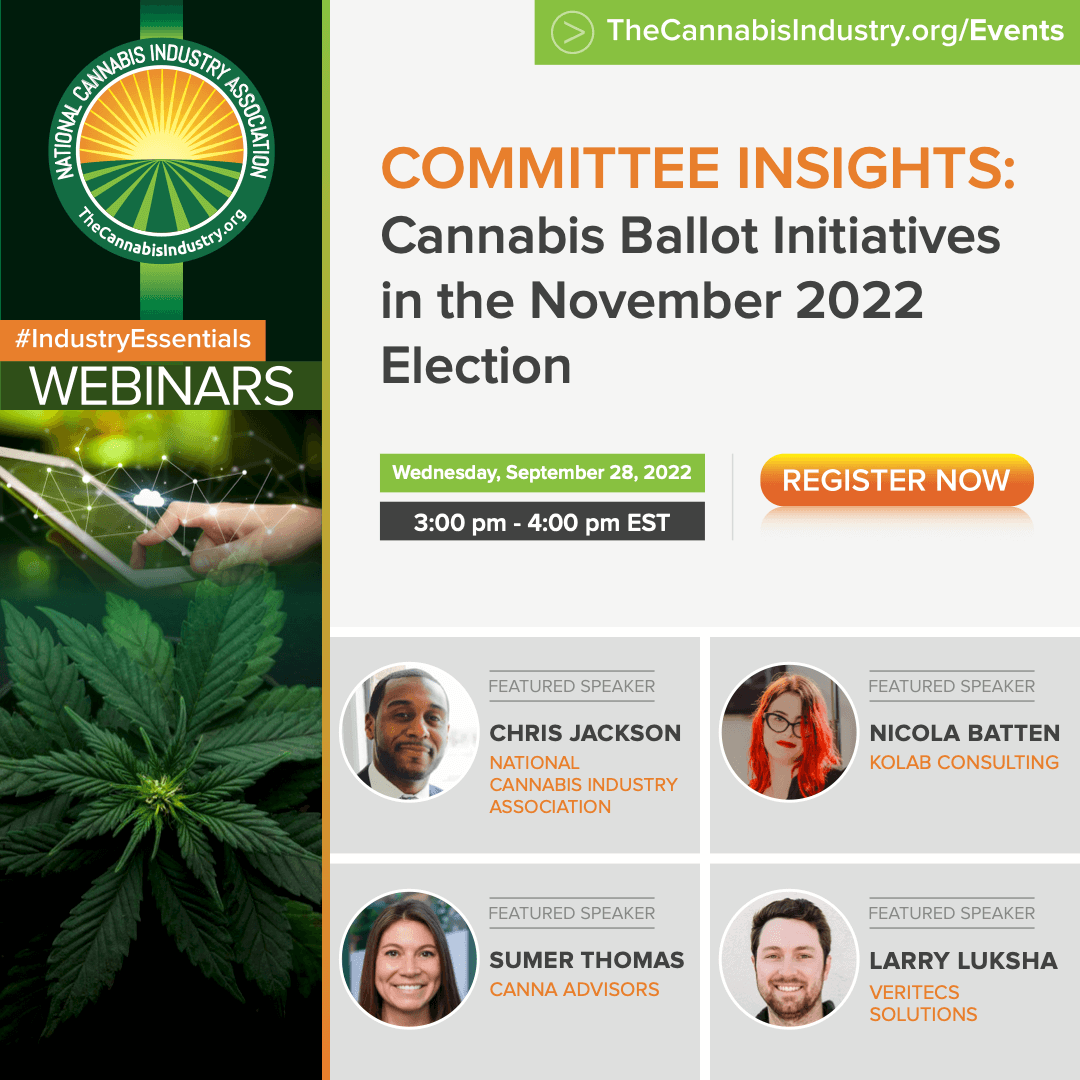

 The last few weeks have seen quite a bit of excitement for the possibility of comprehensive federal cannabis policy reform being closer than it has ever been, but what about the states?
 Aaron Rosenbluth is

Follow NCIA
Newsletter
Facebook
Twitter
LinkedIn
Instagram
News & Resource Topics
–
This Just In
Committee Blog: Budtenders Make or Break Your Business – A No-Nonsense Guide to Cannabis Retail Staffing
Member Blog: Guaranteeing the First Loan