NCIA’s Safe Vaping Task Force Latest News And Recommendations

by Andrew Kline, NCIA’s Director of Public Policy
In response to the recent wave of vape-related illnesses, NCIA’s Policy Council has formed a Safe Vaping Task Force. The purpose of the task force is to unify the industry by communicating clearly in response to press reports and state/federal governmental actions, and by clearly articulating the state-legal cannabis industry’s obligation to act with integrity as responsible actors. The task force is publishing summaries of recent developments and the cannabis industry’s response, producing and publishing a white paper on safe vaping, unifying the industry’s response, and engaging federal and state/local governments as appropriate. Members of the task force include medical doctors, scientists, cannabis license holders, and relevant ancillary businesses.
Here’s the latest about safe vaping from the news this past week:
- As of October 22, 2019, 1,604 (up from 1,479) lung injury cases associated with the use of vaping products have been reported to CDC from 49 states (all except Alaska), the District of Columbia, and 1 U.S. territory. 34 deaths (up from 33) have been confirmed in 24 states. The CDC is updating this information every Thursday. The good news is that it appears that illnesses and deaths are slowing down. The bad news is that we still don’t know the proximate cause and the federal government has not communicated a timeline by which we will have better information.
- Since the specific compound or ingredient causing lung injury is not yet known, the CDC continues to recommend refraining from the use of all vaping products. NCIA’s Safe Vaping Task Force is hopeful that the CDC and FDA will act swiftly to ascertain the proximate cause of the vaping problem, expose and address those specific issues head-on, and communicate clearly the specific dangers to the American consumer.
- Although cannabis has only been legal in Massachusetts for less than a year, the state is already putting on the breaks. Massachusetts is the first state to ban the sale of all vape products, unleashing a major financial blow to the state’s marijuana businesses and sending consumers to the dangerous, unregulated and untested illicit market. Massachusetts Gov. Charlie Baker secured approval from the Public Health Council to issue an emergency regulation to maintain the statewide retail ban on the sale of all vaping products. A local judge simultaneously issued a ruling allowing for medical cannabis patients to purchase crushed flower for use in vaporizers. The emergency regulation keeps the vaping ban in place while also creating a three-month timeline for rulemaking and public hearings.
- California lawmakers are also considering an outright ban of all vape products, including nicotine and THC. This potential action comes on the heels of Charlie Baker, Governor of Massachusetts, banning all vaping products for four months.
- Marijuana became legal for adults over 21 in Colorado in 2014, yet even with 5 to 6 years of regulatory experience, Colorado has not banned all vape products. Instead, Colorado has conducted public hearings to determine what specific products or ingredients should be banned, based on scientific evidence. Colorado is in the final stages of finalizing permanent rules for adoption of a prohibited ingredients list (due Nov 5). It should also be noted that Colorado has not attributed any deaths to THC vaping, an indication that the state regulatory regime is working.
- A judge in Utah ruled on Monday that the state cannot immediately ban flavored e-cigarette products. The state had justified emergency restrictions on flavored nicotine by arguing that they were a gateway to vaping THC products. This leaves the state with a 120-day rule-making process.
NCIA Task Force Recommendations
- NCIA’s Safe Vaping Task Force believes that a more thoughtful approach based on science, like the one undertaken by Colorado, will yield better results for policymakers and patients alike.
- NCIA continues to advocate for descheduling, federal oversight, regulation, and standardized testing.
- NCIA recommends that manufacturers avoid untested additives and flavorants.
- NCIA recommends that when creating novel formulations, manufacturers conduct a scientific analysis that leverages the knowledge base of other inhalation products.
Andrew Kline is the Director of Public Policy for the National Cannabis Industry Association and Chair of the Policy Council’s Safe Vaping Task Force.
Committee Blog: Vaping-Related Illness – Applying Lessons Learned From The E-cig Market

by Ramon Alarcon, Wellness Insight Technologies, Inc.
NCIA’s Cannabis Manufacturing Committee
THE ISSUE
In recent weeks, a growing number of respiratory illness cases associated with nicotine or cannabis vaporizer cartridges have been reported, leading to increasing concern among cannabis cartridge consumers, regulators, and medical experts. The vast majority of these reports are linked to cartridges that were produced and obtained in the illicit and unregulated market, or that were adulterated by consumers. The small number of cases that have so far been associated with legal cannabis products have not shown definitive links to those specific products.
Furthermore, similar cases of respiratory illness have not been reported in Europe, where the regulations governing vapor products are different. Even if, as we suspect, it is confirmed that the source of the current problem is limited to illicit-market products, there are valuable lessons to be learned to ensure the future safety of licensed vapor products and preserve our ability to promote vapor products as a viable and beneficial method of consuming cannabis.
Although cannabis vaporizers and nicotine e-cigs are not the same, there are important commonalities that we can learn from given that the nicotine e-cig market has been around for over a decade. First, it is essential to acknowledge the differences. Although some people view all vaping through the same lens, vaping cannabis and nicotine are as different as drinking alcohol and coffee. The formulations are vastly different in their chemical compositions, and usage patterns of cannabis consumption are far less intensive than those of nicotine e-cigs, which tend to be used many times throughout the day. Notwithstanding those differences, the principles of operation are the same; a heating element is generally used to aerosolize a stored liquid without combustion.
THE RISK
Moreover, in both cannabis and nicotine cartridges, the target active ingredient is typically combined in formulation with other organic compounds. These include glycerol (VG) and propylene glycol (PG) that are more commonly used in nicotine-containing cartridges and dictate the viscosity of the liquid. And flavorants, typically terpenes in the case of cannabis, are included in the formulation to provide particular taste and aroma characteristics.
Nicotine e-cigs have had numerous public health concern moments, some real and some manufactured, but one particular issue is especially illustrative to cannabis manufacturers. In the early days of e-cigs, some smaller e-cig manufacturers added diacetyl to their formulations in order to create flavored e-liquids with buttery notes. Those manufacturers assumed diacetyl to be safe because it is classified as GRAS (Generally Recognized As Safe) by the FDA (we eat it on our popcorn for goodness sake). Nevertheless, that GRAS classification was provided for ingestion, not inhalation. In fact, diacetyl had already been discovered to cause bronchiolitis obliterans, also known as “popcorn lung,” in popcorn factory workers in the early 2000s. And although no one was reported to have been hospitalized or died, the discovery of diacetyl in nicotine vapor products cast a cloud over the entire e-cig industry, even for those companies who employed scientists, practiced good product stewardship and developed internal lists of ingredients that led them to only include ingredients that had low inhalation toxicity risk profiles. This example illustrates that it is in our interest to ensure that all cannabis vapor product manufacturers understand that compounds that are characterized as GRAS are not necessarily safe for inhalation purposes and that an additional level of risk analysis must be performed.
THE SOLUTION
We must ensure vapor product safety because the potential of cannabis vapor products to deliver the necessary medicine to patients without the harmful byproducts of combustion must not be undermined by industry missteps or the loss of public trust. Again, using nicotine e-cigs as an example, we know that vaporization can eliminate the byproducts of the combustion of plant materials. In one study, approximately 1,000 times less harmful chemicals like carbon monoxide, formaldehyde, and acetaldehyde were measured in e-cig vapor when compared to combusted cigarette smoke¹. Designed with the proper materials, protocols, and formulations, nicotine vapor products can have a very low-risk profile relative to combusted cigarettes. In fact, one nicotine vapor product has been evaluated as low risk enough to have been approved by the MHRA (UK equivalent of the FDA), thus adding to the evidence that, generally speaking, vaporization can be considered safer than combustion. Of course, confirmatory studies need to be done with cannabis but combined with the ability of vapor products to deliver fast-acting, precise doses of formulations that can be tailored to an individual’s needs, the importance of vaporized cannabis as a low-risk method of consumption is real.
With this in mind, we, as an industry, must develop standards and best practices. Doing so will build consumer trust while also providing guardrails that still allow for innovation. Other industries have done precisely this, including the fragrance and food additive industries. Moreover, if we do not develop our standards and only react to state regulations, which can tend to lag, we run a higher risk of similar problems in the future. A few simple principles can be applied to this problem.
- Test what goes into your body. In the case of vapor products, that is the vapor. In other words, we should test the aerosol, not just the liquid that goes into the cartridge. Labs in the e-cig industry already do this type of testing, and the methods can easily be adapted to cannabis products.
- We should develop a list of analytes that have low inhalation toxicity risk profiles.
- Stick close to what nature gave us. People have been smoking cannabis for thousands of years, and we have not seen similar health problems. As a matter of fact, we can say that the risk profile for cannabinoids and terpenes in the amounts typically consumed via smoking cannabis is low². However, we do know that some compounds that naturally occur in cannabis can pose a safety risk at high enough concentrations. So until we have more data on inhalation toxicity for all terpenes and minor cannabinoids, we should practice caution when creating novel formulations. In other words, try to remain close to the amounts found natively in the plant in order to preserve the same risk profile.
- Whether or not required by state regulations, be transparent, and list all ingredients. This will not only help consumers better understand what ingredients are safe — it will help capture their long term trust.
________________________________________
1 – Rana Tayyarah, Gerald A. Long, Comparison of select analytes in aerosol from e-cigarettes with smoke from conventional cigarettes and with ambient air, Regulatory Toxicology and Pharmacology (July 31, 2014)
2 – Pletcher, et al., Association Between Marijuana Exposure and Pulmonary Function over 20 Years, 307 JAMA 173 (Jan. 2012).
What The Cannabis Industry – And Congress – Can Do To Help The Vaping Illness Outbreak
 by Morgan Fox, NCIA Director of Media Relations
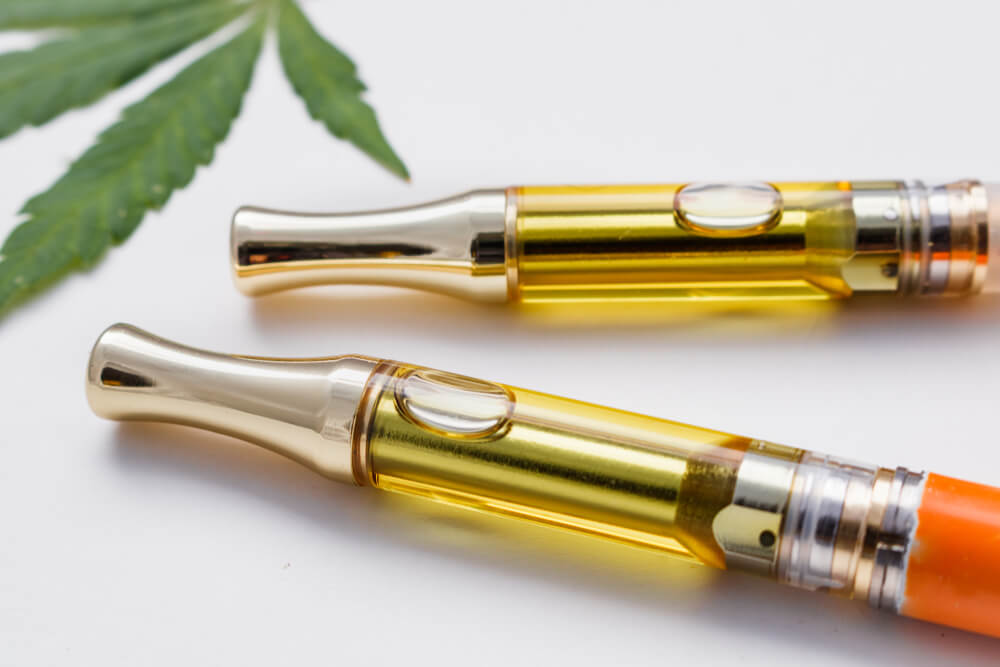
In recent weeks, the reports of mysterious respiratory illnesses tied largely to unregulated cannabis vaping products, as well as some other products including nicotine vapes, have turned from a trickle into a steady flow. The most recent count is at over 1000 cases, including more than a dozen deaths. One of the most troubling aspects of this outbreak is that it is still unknown what exactly is causing these illnesses. Early research seems to be pointing to additives or thickening agents as the most likely culprit, but other causes are being explored such as the presence of pesticides and fungicides that create dangerous byproducts, faulty delivery devices, problematic consumption patterns, and pre-existing medical conditions.
One thread seems to tie all these cases together: almost all of them involved untested products that were produced and purchased on the illicit market.
At its roots, however, is the same thing that has caused most of the other problems associated with cannabis: prohibition.
Outdated federal policies are responsible for the existence of the underground market for this popular substance in the first place. Their dominance over this medically beneficial plant for nearly a century continues to block research, discourages states from regulating cannabis and making it legal for adults, prevents the federal government from establishing uniform safety standards or providing guidance to states that are implementing sensible policies, and make it harder for legal businesses to displace illicit operators around the country. This is in addition to the suffering and harm caused by the criminal enforcement of these policies, which disproportionately impacts low-income communities and people of color.
Unfortunately, some governmental agencies are glossing over these facts. Last month, Massachusetts instituted a four-month ban on all vaping products, and on Friday the Food and Drug Administration issued a warning urging people to stop consuming any vape products containing THC, despite THC itself and legal products generally not being implicated in these cases. Other states and localities are considering total bans as well.
The cannabis industry is deeply troubled by this outbreak, but we are also concerned that reactionary responses to it at the state and federal levels could make the problem even worse. Preventing the sale altogether of regulated and quality-controlled cannabis products could easily drive more consumers to purchase potentially dangerous products from the illicit market. The lack of competition from legal, licensed producers and retailers could also embolden irresponsible underground operators to drastically increase production in order to meet demand, as well as cut corners even further and make their products even more unsafe. Such reactions are a common response to tragedies like this, but they often cause more harm than good in the long run.
Rather, states should be reviewing their regulations regarding testing and labeling and should be in close contact with federal and state medical authorities so that they can incorporate the latest information into their regulatory response. Producers should also be reexamining their methods and avoiding the use of any additives that have so far been linked to these cases.
At the federal level, the best way to help fix this issue, as well as prevent further outbreaks from happening at all, is to end prohibition.
On October 3rd, NCIA delivered a letter to every member of Congress signed by more nearly 800 business leaders, advocates, and policy experts, which urges them to immediately work to remove cannabis from the Controlled Substances Act and work to regulate the substance at the federal level. This letter references a paper produced by NCIA’s Policy Council released on October 1 that suggests a regulatory framework for various cannabis products through existing federal agencies, most notably the FDA and the Alcohol and Tobacco Tax and Trade Bureau (TTB).
The letter closes with: “It is clear that the American public wants quality-controlled cannabis products made available for adults and patients. The recent news is, unfortunately, yet another reminder that there is no time to waste. Our industry wants to provide the products voters demand with a tireless focus on improving consumer safety. While state regulators and licensed businesses appear to be doing an excellent job at keeping potentially dangerous products out of the legal market, federal descheduling and regulation will allow more research and help states continue to improve their regulatory activities and oversight, as well as provide universal standards for safety. We are ready to work collaboratively with federal lawmakers, the same way we have at the state level for over a decade. Please let us know how we can help move the ball forward on descheduling legislation. Lives are literally at stake.”
That pretty much says it all. It is up to members of the legal cannabis industry to continue to prioritize consumer safety and do everything in their power to make sure they are going above and beyond state regulatory requirements in this area. But it is ultimately up to Congress to end prohibition, regulate cannabis intelligently, and help us replace the illicit market to the greatest extent possible. With your support, we can continue to work with lawmakers every day to help make this a reality.
Follow NCIA
Newsletter
Facebook
Twitter
LinkedIn
Instagram
News & Resource Topics
–
This Just In
NCIA Applauds Reintroduction of SAFE Banking Following Lobby Days
Beyond Rescheduling: Inside NCIA’s 14th Annual National Cannabis Industry Lobby Days