Equity Member Spotlight: Osbert Orduña – The Cannabis Place
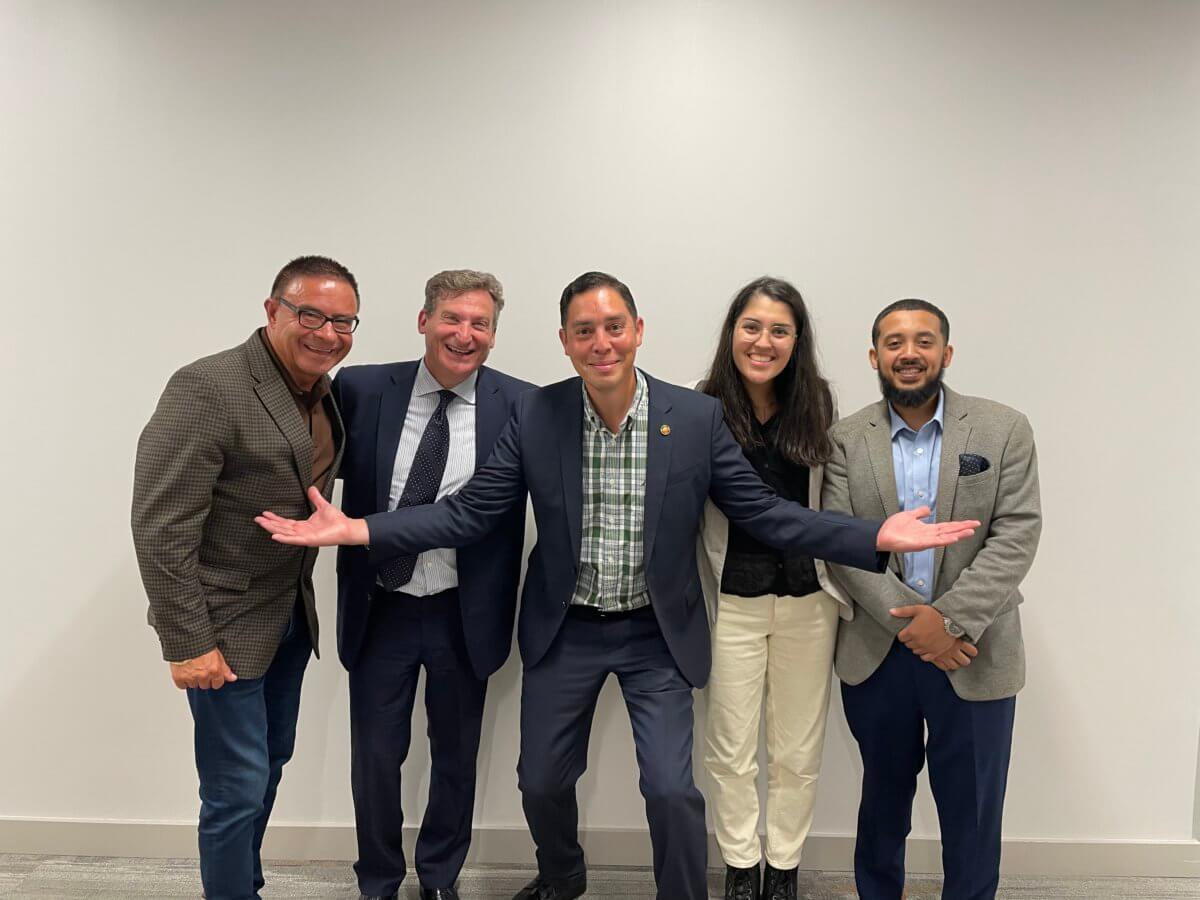
 NCIA’s editorial department continues the Member Spotlight series by highlighting our Social Equity Scholarship Recipients as part of our Diversity, Equity, and Inclusion Program. Participants are gaining first-hand access to regulators in key markets to get insight on the industry, tips for raising capital, and advice on how to access and utilize data to ensure success in their businesses, along with all the other benefits available to NCIA members.
Tell us a bit about you, your background, and why you launched your company.
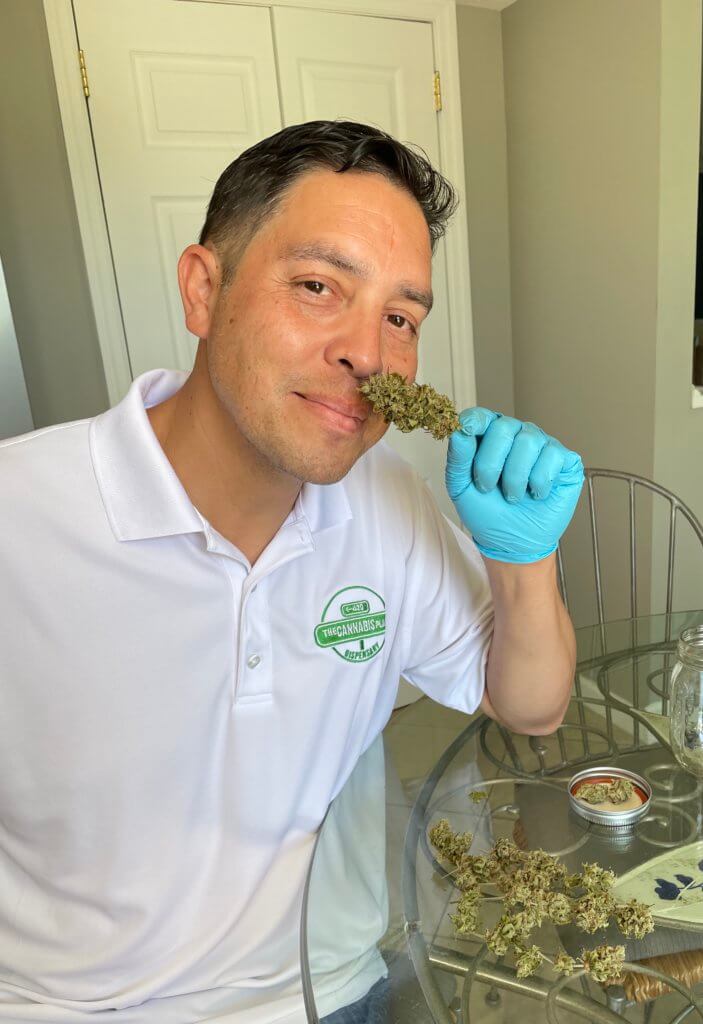 I am a first-generation Latino of Colombian descent, Spanish was my first language and my dad spent most of my youth incarcerated. I grew up in NYC Public Housing projects, and I have first-hand knowledge of the indignity of what it feels like to personally be stopped and frisked nearly 100 times which is what happened to me as a kid and young adult for doing nothing else than being a poor Latino growing up in the hood. I was an Education Opportunity Fund scholar and the first in my family to go to college, where I received a degree in business, and a graduate certificate in law. I earned the designation of Disabled Veteran while serving in Iraq with the United States Marine Corps, and I am also a 9/11 first responder. I retired after a career in public service, and have worked as an entrepreneur for over 10 years, and know what it takes to start a business from scratch, without a rich uncle, generational wealth, or rich financial backers.
In late 2020 and early 2021, I had the opportunity to visit 50 non-MSO recreation and medical dispensaries in five states on the east and west coast. I wanted to learn more about dispensaries and best practices across the industry, but my trip opened my eyes to a different reality. Forty-nine of the dispensaries were owned by white males and one was owned by a white female, not one owner looked like me or shared a similar background. None of these dispensary owners had been stopped and frisked hundreds of times for no other reason than just because they lived in an area with historically high rates of arrests and enforcement from over-policing. Yet they were now engaged in an industry that seemed to exclude us. My trip left me sad but determined to enter the cannabis market so that people who look like me who came from the struggle of the streets, and were collateral damage in the war on drugs could have a chance. I was determined to create a positive example for Latinos and others to follow.
What unique value does your company offer to the cannabis industry?
The Cannabis Place offers a unique value proposition which is our commitment to launching as a union cannabis dispensary on day one. As of yet, we are the only dispensary in the state of New Jersey and the nation to propose this. By launching our business as a unionized shop we are being a partner to our Jersey City, NJ community. Our value proposition promises that we will be a responsible and proactive member of the community that provides union career opportunities with true living wages that will empower our team members to provide upward mobility for themselves, their families, and the greater community. Furthermore, we are engaged as a Workforce Development partner with Cornell University, the Workforce Development Institute, and Hudson County (NJ) Workforce Development Board. With these partnerships, we will develop standardized training modules that will be utilized to train prospective dispensary workers and provide opportunities for those seeking cannabis careers in this new and emerging industry.
Our mission: To provide high-quality cannabis to clients with a consistent product and first-class service they can trust. To build our brand on the core values of client service and care, while maintaining the highest standards of quality, integrity, and community outreach.
What is your goal for the greater good of cannabis?
As the CEO of The Cannabis Place, our primary goal for the greater good of cannabis is to advocate and support a proactive approach to adult-use by providing a local and safe environment to dispense cannabis products. We operate as a social impact cannabis brand and are dedicated to providing consistent access to safe and reliable cannabis products that are ethically grown and sourced. Our aim is to launch the first unionized cannabis dispensary in New Jersey, leading by example, and demonstrating to other businesses that true success is based on placing people over profits.
Our goals are as follows:
- Be an accelerator for generational wealth-building opportunities among our employees from the community
- Be a reliable source for cannabis education and awareness
- Utilize our Community Impact grants to assist and support outreach in areas that have been disproportionately impacted
Our advocacy at The Cannabis Place is based on workers rights, especially organization, fairness and quality healthcare. We believe that it should be easier for people in all job fields to organize. At The Cannabis Place we support the implementation of legislation that will raise the minimum wage floor for all workers in our community, to provide for true living wages that place people over profits. Workers in all industries deserve more from the moment they are hired. Like many others I grew up as part of the working poor, in public housing with limited minimum wage job opportunities, without healthcare and with minimal alternatives to life on the streets. At The Cannabis Place we believe that by providing our workforce with union careers with true living wages and full benefits, our team members, their families and their communities will feel the immediate difference of financial stability, long-term growth, and the impact of upward financial mobility to help them support their family and to build a better life.
What kind of challenges do you face in the industry and what solutions would you like to see?
 Latinos are consistently underrepresented in terms of business owners throughout all industries. Now when you focus specifically on cannabis and look at a national level, just 5.7% of all license types are held by the Hispanic community. I have seen challenges in the cannabis industry in two key areas, access to capital and the real estate market. It takes money to make money so if you grew up poor, without generational wealth, no rich uncle, no hedge fund connections or oligarchs to call on, how do you raise funds to have the millions that are needed to launch a dispensary or grow? Next and along the same lines is real estate. A lot of landlords won’t lease to cannabis businesses but unfortunately, our experience has been that again a predatory market exists where cannabis rental rates are 2 to 10 times the normal lease rates for the area. The other option is to buy a commercial parcel which brings us back to issue #1 – access to capital. I am ever the optimist, and I see the Latino community growing in the legal cannabis industry as entrepreneurs, c-suite members, and as leaders in the industry bringing our unique insight and sabor to the industry while creating opportunities for generational wealth for our community. In order to get there, we need to bridge the gap through social equity grants and loans that can help Hispanic cannabis entrepreneurs raise enough capital to start their business, and receiving financial education is also crucial for Hispanic entrepreneurs in multiple phases of the cannabis business planning timeline.
Why did you join NCIA? What’s the best or most important part about being a member through the Social Equity Scholarship Program?
We are a Disabled Veteran and Latino-owned company with a core focus on community impact through social impact so the ability to be a Social Equity Scholarship recipient in an organization like the NCIA, a group who are actually dedicated to ensuring that small cannabis businesses have a seat at the table in Washington, D.C. and beyond, was super important to us. We look forward to learning new information and utilizing networking opportunities to help us grow and succeed in the cannabis industry.
The fact that NCIA is leading change to protect the legal cannabis industry, advocate for our state laws, advance federal policy reforms, and to make this a more inclusive and prosperous space by working together to defend the responsible cannabis industry. Creating more opportunities for small businesses rather than just the wealthiest few is the most important thing for us as members of the Social Equity Scholarship Program.
The Cannabis Place 420 Corp is the first ever Disabled Veteran and Minority Owned Business enterprise to successfully navigate the Jersey City, NJ municipal cannabis dispensary approval process in this new and emerging cannabis market.
Member Blog: How Technology Can Ensure An Equitable Cannabis Industry

by Walter Moore, Cognitive Harmony Technologies CEO
The multi-billion dollar cannabis industry is coming to a town near you. With new states passing adult-use legislation every day, it’s only a matter of time before businesses begin opening their doors nationwide.
In states such as New York, the first cannabis business licenses (CBLs) are being given to people who were impacted by the war on drugs and hemp farmers. The effort is a first-of-its-kind approach that is admirable in theory – a positive step toward righting the wrongs that have persistently and unfairly affected people of color – but still leave the door open for challenges in practice.
Simply put, the barrier for entry is too high for most individuals due to the complex and convoluted CBL application process. Between sifting through and submitting thousand-plus page documents and potentially spending hundreds of thousands of dollars to create a perfect, compliant application, new business owners are fighting an uphill battle against multi-state operators (MSOs) who have moved across the country as legalization opens state by state and have the process (and hundreds of thousands dollars needed to afford a dedicated application consulting firm) down to a science.
Legislators may have noble intentions in offering a head-start to people affected by the war on drugs in an effort to correct past wrongdoings and create a distribution of ownership that looks like the people most affected, but if the necessary regulatory framework of the application process is encumbered with more compliance to receive equity benefits, it will be even harder to complete a competitive application – leaving many potential new business owners without a license and the well-oiled machines known as MSOs first in line.
Not to mention the fact that the application process often plays out over years. States will frequently take half a year to review an application and only provide roughly 10 days to fix any deficiencies.
Technology is The Way
While the odds may seem stacked, the technology to close the gap exists and many CBL applicants are finding out how to compete against large MSOs and established players in the market. As someone who experienced everything that goes into the application process, and what is wrong with it, first-hand when I began my career in cannabis, I’ve realized that the only way to effectively compete is by working smarter. Through technology we can create greater access and a level playing field.
There are several key areas where technology (i.e. “working smarter”) is already paving the way for true social equity while applicants embark on submitting a cannabis business license. Document generation, telepresence, language processing, machine learning, artificial intelligence and augmented reality are among areas of interest that savvy CBL applicants can implement into their strategy. By normalizing standard operating procedures (SOPs) across verticals and jurisdictions, companies can provide contextual SOPs directly in front of a user with a simple QR code. Imagine a world where a dispensary employee can access SOPs directly from each piece of equipment or area of a facility with minimal effort simply by scanning a QR code with their tablet.
A Cannabis Industry for All
Laws that benefit a more equitable industry surely help, but in a new industry where the gap between the have and have-nots is already wide and growing rapidly, more steps need to be taken by regulators to eliminate the pay-to-play mistakes that have infested other state cannabis policies such as in my home state of Illinois. In Illinois, there wasn’t a fair cap on the number of CBL submissions for a company, leaving businesses with the most money with an opportunity to submit over 40 times and flood the application pool.
Thankfully, I’m pleased that regulators in New York and New Jersey are doing a better job in this regard, avoiding these unfair situations, but I foresee a highly political zoning situation in New York. Historically, companies that can afford to pay lobbyists and other influential people to get the deals and contracts done, are more successful. I’m not sure what short-term regulatory solution exists for this age-old, persistent issue.
It’s encouraging to see the cannabis legalization movements around the country paired with well-meaning equity and restorative justice initiatives. However, there is still a high barrier to entry presented by the extensive and convoluted cannabis business license application process. Only through advances in technology will this barrier be taken down.
 Walter Moore Cognitive Harmony Technologies CEO & CTO, is an accomplished software architect, financial engineer, and entrepreneur residing in the south suburbs of Illinois. He specializes in architecting elegant, compliant, and scalable solutions to complex regulatory environments in the AdTech, FinTech, Digital Assets, and Cannabis industries. He has a Masters of Science in Financial Engineering and undergraduate degrees in Theoretical Physics and Applied Mathematics.
Walter started Cognitive Harmony Technologies in order to support social equity teams and bring change to an industry which has historically whitewashed the past injustices served in its former prohibition, something which he has experienced firsthand in prior decades. As a cannabis business license owner, Walter knows just how difficult it is to put together a competitive application. He developed the CHT platform in order to help lower the barrier of entry for others willing to put in the hard work of assembling an application, but who would otherwise be priced out of the competition.
About Cognitive Harmony Technologies
At Cognitive Harmony Technologies, our proprietary CHT Accelerator platform is paving the way for true social equity in the CBL application process by developing a meticulous roadmap to create a complete and competitive automated application much like tax preparation software generates tax returns, providing live-support, and offering access to a helpful network of architects, realtors and a range of connections. Additionally, we offer this for a fraction of the cost of what the hundred-thousand-dollar consulting firms that multi-state operators employ, and in some cases it is completely free. Cutting-edge technology is the best tool that an everyday, aspiring entrepreneur can leverage to break into the industry, and make the cannabis sector’s leadership as representative and diverse as the consumers.
Our mission is to open the doors for equitable cannabis business ownership by making the application process easy as filing personal income taxes online. The CHT Accelerator streamlines the entire application process into one easy-to-use software platform so you can create a complete and competitive application. Follow us on LinkedIn or visit our website.
Member Blog: As Professionals in the Cannabis Industry, It’s Our Responsibility to Unmask the 4 Big Lies

By Charlena Berry, Cannabis Business Growth
The following is adapted from Breaking the Stigma.
The vast majority of U.S. adults support the legalization of cannabis, with 60 percent supporting legalization for medical and adult use, and 31 percent supporting medical use only. Only 8 percent say it should not be legal for use by adults in any scenario. These numbers are promising for those of us in the industry, but behind the numbers, many stigmas still exist.
Breaking the stigma against cannabis is the responsibility of each and every individual currently working in the cannabis industry. In particular, for those of us working in retail, we are on the front lines of changing the criminal and negative perceptions associated with cannabis.
As front-line workers, it is important to understand how the stigma against cannabis came about and how it has harmed not just the cannabis industry and cannabis users, but our entire country. We’ve all been lied to. These Big Lies have shaped our beliefs about race, cannabis, and addiction, and it’s time to unmask these Big Lies for what they are: lies.
#1: Black Men Are Dangerous
The lie that Black men are inherently dangerous extends far, far back into our country’s history, but we’re going to start in the 1930s, with a man named Harry J. Anslinger. Anslinger became the commissioner of the Federal Bureau of Narcotics in 1930.
Anslinger initially spent most of his time chasing down bootleggers. When Prohibition ended in 1933, he suddenly found himself out of a job. For the Federal Bureau of Narcotics to continue to have purpose — and receive the funding that paid his salary — Anslinger had to find a new bogeyman to prosecute.
He chose marijuana, a term that itself has racist roots and was a way to otherize cannabis as a “Mexican drug.” At this time, cannabis was not regulated in any way in the United States, so he first had to make it illegal. In order to do that, he needed people to fear it. He figured, why not link it to something people already fear: Black people — particularly Black men.
And so, the propaganda began. Anslinger sparked a national anti-cannabis movement by tying cannabis usage to the Black community and other marginalized groups.
Obviously, Anslinger didn’t invent racism, but his propaganda propagated and amplified it. In short, Anslinger used the lie that Black men are dangerous to help make cannabis illegal, and then he weaponized cannabis against minority communities.
To this day, people of color are disproportionately impacted by the war on drugs. In fact, though Black and white people use cannabis at similar rates, a Black person is 3.64 times more likely to be arrested for possession. And, as industry professionals, we need to understand the racist roots behind the stigma of cannabis and do our part to elevate those groups disproportionately and unfairly impacted by the war on drugs.
#2: Cannabis Is Dangerous
Using fear of Black men, Anslinger convinced people that cannabis was dangerous. The idea that cannabis makes people dangerous is ludicrous to me. I grew up during the war on drugs, and I bought into many of the lies. I truly believed cannabis was bad, but never once did I think of cannabis users as dangerous.
As a child, I spent time around both alcoholics and cannabis users, and the difference was clear to me. Drunk people were violent, abusive, and dangerous. High people were safe, normal, and most importantly not violent.
However, in the drug education I received, I learned that all drugs are fundamentally bad, with no differentiation. Cannabis, meth, heroin, LSD, cocaine — they were all grouped together. And even when people acknowledged that cannabis was less harmful and addictive than harder drugs, they emphasized that it was still incredibly dangerous because it was a “gateway drug.”
Today, despite all the evidence that cannabis is safe for most people, the lie persists. Cannabis is classified as a Schedule I drug, meaning it has “no currently accepted medical use and a high potential for abuse.” Other Schedule I drugs include heroin and meth.
As a country, it’s long past time that we focused our attention on true dangers. As a cannabis retailer, it’s important to recognize that even though you know cannabis is not dangerous, your customers might not.
#3: Opioids Are Safe
Because of the lie that cannabis is dangerous, it was not normalized (or legal) as a method of pain management. There was a need for pain management, though, and so in 1996, Purdue Pharma, under the direction of the Sackler family, developed and patented OxyContin.
It was hailed as a miracle drug that took all the pain away, as if by magic. Magic often comes at a cost, though, and in this case, the cost was hundreds of thousands of American lives — more than five hundred thousand, to be specific.
Within a few years, evidence emerged that the drug was addictive and led to overdose deaths. While we were all being told that cannabis was the gateway drug, Purdue Pharma was flooding our country with the real gateway drug—opioids. They funded research studies that supported the use of OxyContin, and Richard Sackler put intense pressure on sales managers to sell more.
This Big Lie has harmed hundreds of thousands of Americans. Opioids destroy lives, and the ripples extend beyond the addict alone. An entire generation of children will be shaped by addiction and the absence of their parents.
You may not be personally connected to the Opioid Endemic, but as a cannabis retailer, you are in the business of pain management. By understanding this Big Lie and providing people with an alternative to addictive opioids, you could literally save lives.
#4: Addiction Is the Addict’s Fault
I understand the impulse to blame addiction on the addict. An addict’s struggles with addiction can be enough to tear their loved ones apart inside. You want to scream, “Why can’t you just quit?” But blaming addiction on the addict makes as much sense as blaming someone for having cancer, asthma, or migraines.
Who is responsible for addiction, then? The people who caused the Opioid Endemic, people like the Sackler family. As Patrick Radden Keefe puts it in Empire of Pain, “Prior to the introduction of OxyContin, America did not have an opioid crisis. After the introduction of OxyContin, it did.”
So, if you want to blame someone for addiction, blame the Sacklers. Blame Big Pharma. Blame the people who knew this drug was addictive but lied to us, told us it was safe, and pumped it into our communities.
Every single person I know who got addicted received their first pill or hit from a trusted source. This is how the Opioid Epidemic started. It didn’t start with irresponsible drug dealers on the street. It started between patients and doctors. Opioids moved through our world via trusted sources.
Cannabis and opioids are very different drugs. Cannabis is far safer than many people realize. Due to the nature of cannabis, I do not believe cannabis retailers will be creating addicts the way Purdue Pharma did, but it’s still important to understand this Big Lie because some of your customers may have struggled with addiction and need compassion from you.
The Consequences of These Lies
These Big Lies are all connected. Without racism, cannabis wouldn’t have been stigmatized. Without the stigma against cannabis, we would have had a nonaddictive alternative to opioids. Without the lies that opioids are safe and that addicts are to blame for addiction, hundreds of thousands more people would still be alive today.
When it comes to breaking the stigma, you are on the front lines. In knowing the truth about where the stigma came from and why it’s so harmful, you can begin to change it.
One customer at a time, you can begin to undo the Big Lies and share the reality of cannabis.
 For more advice on how to undo the Big Lies and share the Big Truths of cannabis, you can find Breaking the Stigma on Amazon.
Charlena Berry is the author of Breaking the Stigma: Racism, Lies, the Opioid Endemic, and Inviting Grandma to the Dispensary. In this book, she exposes lies that created the stigmas associated with cannabis, and how these stigmas must be addressed to see continued growth in the marketplace. She then outlines a framework that provides key strategies for retailers to implement to improve the customer experience and increase profitability.
Writing from her experiences in the industry, Charlena is a global cannabis business executive and the founder of Cannabis Business Growth, a premier cannabis business consulting firm. Prior to that, she spent more than a decade in Supply Chain and Retail Operations for Fortune 500 companies like Whirlpool and Office Depot/Office Max. She also serves as the Chief Operating Officer for The Cake House, a chain of dispensaries in Southern California.
Committee Blog: Social Equity Perspectives on Interstate Commerce – Part 1
by Mark Slaugh, iComply LLC
NCIA’s Diversity, Equity, and Inclusion Committee
As the debate heats up on “how” rather than “if” cannabis legalization will happen, social equity and comprehensive reform are at the forefront of the minds of national legislators and advocates. Historically, people chose to legalize cannabis as a method of legitimizing the illicit cannabis market. Beyond the message that “Black Lives Matter,” the issue of the federal legalization of marijuana means, fundamentally, that the federal government must spearhead meaningful policies in diversity, equity, inclusion, and social justice, to balance the scales of injustice during prohibition and early legalization efforts by the States.
Further, the Biden Administration’s priority of respecting the sovereignty and self-governance of tribal nations means federal trust and treaty responsibilities may finally be met by regularly having meaningful consultations with tribal nations to create federal policy. Thus, the inclusion of tribal nation’s representatives is imperative when creating federal policy to ensure their rights are secure and there is parity amongst states and tribes.
Any descheduling or legalization framework must hold a social equity objective that is clear at the core of its function: To create as much NEW generational wealth for the most number of those disparaged from participating in the legal cannabis industry because of the socioeconomic impacts of more than 80 years of federal marijuana prohibition and due to the barriers to entry created amid state regulatory regimes.
Sadly, as written currently, all proposed federal bills fail to meet this critical objective.
As soon as the federal government deschedules marijuana, it falls under Congress’ constitutional purview to regulate interstate commerce. Marijuana included. This is likely the ONLY opportunity available for those impacted by the war on marijuana to balance the scales of historic injustice, by providing an opportunity to participate in cannabis business ownership in a meaningful and valuable way.
If social equity is not adequately addressed in a federal act, it would require a secondary bill to tax and regulate interstate commerce activities. This would waste precious time and open a door to unregulated and taxed activities until congressional consensus and control are established. We have seen mistakes like this lead to disaster already amid state markets who leapt before ensuring a safety net. It also would NOT guarantee that social equity would be addressed in a second bill under new congressional, senate, or executive purview.
More importantly, the projected market cap of the U.S. cannabis industry is projected to be $85B by 2027 and was $18B in 2020. To put that number in perspective today, the largest tobacco company’s market cap is $95.6B – that’s over 5x the market cap of the whole cannabis industry. Similarly, the largest beverage distribution company has a $45.5B market cap – or over $2.5x of the current cannabis industry cap.
Both of these “big businesses” are in the cannabis industry already and they are preparing for federal legalization. The moment cannabis is de-scheduled, it quickly becomes an “extinction event” for social equity unless guardrails are put in place in the first Federal Act to offer social equity a fighting chance.
To avoid needless delay, to leverage effective taxation and regulation, to protect social equity from rapid market consolidation and control, and to spearhead well-thought-out and innovative ideas to address the inequities of the cannabis industry, the National Cannabis Industry Association’s Diversity Equity and Inclusion Committee (DEIC) presents these considerations to amend any proposed federal act – in order to preserve key concepts central to addressing interstate commerce and the short-falls of previously enacted social equity programs.
The Problems with Current Social Equity Programs
In analyzing the social equity programs undertaken at municipal and state levels so far, the NCIA’s DEIC has found multiple shortcomings in achieving the goal of generating new generational wealth for as many people who have been systematically discriminated against during the prohibition era of cannabis.
Namely, the following major issues continue to prevail:
- Social equity applicants who are unqualified or do not participate meaningfully in the ownership or operation of the cannabis business. This can be because of the following reasons:
- A lack of experience or expertise in business skills necessary to operate
- A lack of experience or expertise in regulated cannabis operations
- Fear of continued persecution and distrust related to trauma from being victimized by the war on drugs.
- Based on the fact cannabis arrests have and still disproportionately affected BIPOC community members.
This causes many traditional, large, and privileged Multi-State Cannabis Operators (MSOs), in addition to established market entrants (Tobacco and Alcohol) as well as Special Purpose Acquisition Funds (SPAC’s) – collectively referred to as “mega players” – to decide to “take the wheel and drive” the cannabis licensing process and to put the social equity operator in the proverbial “back seat.” Another issue that remains unaddressed and underlies challenges in successful social equity programs is that:
- Social equity operators do not have access to financing to meaningfully contribute to capital or operating expenditures to partnerships with cannabis companies who have capital and expertise.
- This is certainly in large part due to generational prohibition and lack of access in being underprivileged.
- Prohibition also impacts financing which systematically discriminates against the disprivileged; regardless of their interest to participate in the cannabis industry.
- These individuals were prohibited from entering the legal market (when barriers were lower) and were initially labeled as “undesirables” because of past criminal history. This gave the cannabis industry and culture away to people who never suffered a day in the war on drugs.
The lack of access to education, experience, and wealth often drives the existing “mega players” who “hold the keys” to expertise and wealth, to justify operating agreements that contain provisions that make the social equity licensee’s position dilutable in the event they cannot meet their operating or fiduciary duties. Which brings up the third underlying problem in social equity programs which is connected to the above factors:
2. Attracting and grooming social equity candidates to qualify for licenses only to then leverage the applicant out of the licenses, is often how “mega players” skirt around social equity provisions. The justification in doing so is due to the above two factors and is justified as “what is best for business” by traditional operators expanding their footprint through social equity licensing.
In the social equity conversation, these partnership agreements are often referred to as “predatory operating agreements” which refer to the manner in which many “mega player” operators, knowing social equity applicants cannot bring education, experience, or money to the table, systemically target and groom qualified social equity applicants into delusions of wealth participation in cannabis only to obtain a license and then proceed into diluting the social equity partner – rather than educating them, providing them experience, or helping them obtain the wealth to contribute as equals.
Mega players, multi-licensed cannabis businesses, and vertical cannabis businesses may also engage in “social equity colonialism” in which they create “incubator programs” to educate, train, possibly fund, or partner with social equity entrepreneurs only to have them compete against one another in “pitch competitions” in which the mega player can cherry-pick the most controllable or affordable operator or otherwise leverage them to benefit including using taxpayer funds granted by the state or through discounts on licensing and/or taxes. Too often, the intent is to “tokenize” social equity operators, rather than empower them as equals.
Whether intentional or not, the impact of reducing social equity applicant participation after using them to obtain social equity licensing is a commonplace practice and shortfall of the programs analyzed by the DEIC.
To solve these problems, the DEIC acknowledges that the motivation for those in power to remain in power does not incentivize them to provide a truly equitable partnership simply because a program exists to do so. To address these diluting agreements, we recognize that the Government must play a role in addressing the underlying factors which justify the behavior driving “predatory operating agreements” and “social equity colonialism”.
Indeed, federal legalization and the regulation of interstate commerce with social equity at the forefront may be the last opportunity to address the harms caused by prohibition nationwide and the inequity of governments refusing to address social equity in cannabis. Similar to the Civil Rights Act of 1964, the victims in the war on cannabis cannot depend solely on state and local governments to address social equity.
Over the next two parts of this series, we will outline a framework of components that may be amended or included in a federal legalization bill to resolve the problems in social equity identified and to provide a comprehensive reform for permitting interstate commerce and addressing the inequity prevalent in the cannabis industry.
Read more in Part 2 and Part 3 of this blog series.
Member Blog: The Responsibility of Cannabis Companies to Further Equality

By Lissa Lawatsch, CLS Holdings
Currently, in the cannabis industry, we find ourselves in a unique position. We are at an important crossroads of policy changes, advocacy efforts, and business opportunities. Within the dynamics of cannabis legalization, certain people seized new market openings, while others scramble to get a foothold in the business.
As legal cannabis continues to normalize, we must ask ourselves whether the industry affords everyone equal opportunities. While certain U.S. states have established social equity programs within their cannabis laws, many people don’t feel it is enough to correct the current imbalances.
Entrepreneurs and professionals alike are asking essential questions about our responsibility to minorities in cannabis. This movement is an excellent opportunity for cannabis businesses to help shape the industry’s future in a way we can be proud of.
The Consequences of the War on Drugs
The imbalances of equality in cannabis can be traced back to the War on Drugs. Since the War on Drugs was enacted in 1971 by President Nixon, it has had detrimental impacts on minority communities.
Increased drug arrests in minority populations are not the result of increased drug use. The nonprofit Brookings Institution tells us, “All along, one consistent target for the nation’s cannabis laws [in the War on Drugs] were communities of color. Despite cannabis usage rates between whites and non-whites being similar, Black Americans were arrested for cannabis offenses at a rate of nearly 4:1, compared to whites.”
For many, it is difficult to comprehend how impactful these cannabis convictions have been on minorities. Many families have suffered for a generation due to the head of household going to prison for cannabis crimes. In these unfortunate situations, there is no opportunity to spread the intergenerational wealth enjoyed by most families.
Status of Social Equity in the Cannabis Industry
From the outside looking in, it is easy to assume the cannabis industry offers equal opportunities. However, if you peer just beneath the surface, you will find several elements at play that keep minorities from starting cannabis businesses. Due to these factors, only 1 in 5 cannabis businesses today is owned by minorities.
In nearly all cannabis markets in the U.S. states, strict laws prevent people with drug convictions from applying for business licenses. Yet, we have already established that far more minorities than whites get arrested for cannabis. This fact immediately creates a lopsided pool of applicants that favors white people as the winners of cannabis business licenses.
Another factor that has led to imbalances in the cannabis industry is that white people are better off financially than minorities. This can be a real handicap, as cannabis businesses are costly to start. To illustrate, MJBizDaily gives us the following cannabis business startup costs:
- $2,500,000 – Vertically integrated dispensary
- $500,000 – Cannabis processing facility (MIP)
- $312,000 – Stand-alone retail dispensary
As can be seen, it takes serious capital to finance a new cannabis business. Yet, many minorities do not have access to this sort of funding. This fact is partially attributable to the damage done in minority communities by the War on Drugs.
State Mandated Social Equity Programs in Cannabis
The early pioneers of legal cannabis did not anticipate the social inequalities that would arise in the industry. However, as places like Washington and Colorado have had functioning industries for over five years, we can now take a more granular perspective on the market.
As imbalances in social equity are now recognized across the industry, individual U.S. states are enacting legislation to help “level the playing field” for minorities. The states taking meaningful steps for social equity in cannabis include New Jersey, Virginia, California, Illinois, Massachusetts, Michigan, Maryland, Ohio, and Pennsylvania.
The breadth and scope of social equity programs in cannabis vary from state to state. To illustrate, California has established an initiative that provides financial support and training to minority cannabis business owners. Also, Michigan, Illinois, and Massachusetts have put controls on the application process to give minorities better chances to win licenses.
Charitable Efforts & Business Groups
While state-mandated social equity programs are a big step forward in cannabis, there is still a lot of work to do. To this end, modern cannabis professionals have taken it upon themselves to start dialogues about social equity. Even more, these people have branched out to join nonprofit groups and business organizations which promote social change in cannabis.
Some noteworthy groups include:
- Last Prisoner Project
- Minority Cannabis Business Association (MCBA)
- Veterans Cannabis Project
- Women Grow
Last Prisoner Project is a particularly impactful nonprofit that seeks to overturn unjust cannabis convictions. Their team is composed of lawyers and legal experts – the organization also enjoys support from such cannabis icons as Jim Belushi and Steve DeAngelo. For their part, Women Grow spreads the message of equality in cannabis by empowering females. They are focused on connecting different women in the cannabis space to create powerful alliances.
Company Ethics and Hiring Practices
To truly affect change in the social fabric of cannabis, businesses must also take proactive measures within their operations. By promoting racial sensitivity within your business, you help plant the seeds of change in your employees and customers.
To help your employee team better appreciate people from other backgrounds, we recommend enrolling them in diversity training. According to Cornell University, “An organization is only as good as its culture — and abiding that culture is not only a role for HR, it’s every manager’s and employee’s responsibility.” Diversity training is a great way to promote equality within your company culture. Specific training programs also educate your HR department on non-discriminatory hiring practices.
Summary
In the few short years that we have had legal cannabis, the industry has taken some fantastic strides. While it seems that the fight for legalization has finally swung in the right direction, there is still a good deal of work to do concerning social equity.
It is going to take a concerted effort to equalize opportunities for minorities in the cannabis industry. This process starts with addressing unjust cannabis convictions on a societal scale, and cannabis business HR departments must embrace these changes.
 Lissa Lawatsch currently serves as the General Manager of CLS’ Nevada retail subsidiary, Oasis Cannabis Dispensary. A Colorado native and graduate of Metropolitan State University of Denver, Ms. Lawatsch has served the Las Vegas market for 18 years. With 20 years of VP-level experience in the banking and finance sector, Ms. Lawatsch synthesized her business acumen with her passion for cannabis to effectively launch and manage several brands and retailers in the Nevada market for the last 5 years.
Member Blog: Social Equity In Illinois

by Shawnee Williams, Recruiter & Account Manager at Illinois Equity Staffing
Recently, we had the pleasure of joining a webinar hosted by NCIA in which they discussed the state of the Illinois market. The #IndustryEssentials presentation covered topics such as Illinois House Bill 1438, social justice reform, licensing and social equity.
Social equity just so happens to be a topic near and dear to my heart and is something we advocate for in everything we do in the industry. So let’s talk about it. What exactly is social equity and why is Illinois always in the social equity conversation? Well, social equity came about as an answer, if you will, to the many unfair statistics we see in the industry as a whole. What statistics, you ask? Well, 80% of the cannabis industry is owned by white males, even though minorities are four times as likely to be arrested for cannabis-related offenses. Social equity is an intentional effort to lessen the gap and provide all people the opportunity to operate and work in the cannabis industry.
One misconception people tend to have is that social equity is diversity. This couldn’t be further from the truth. By definition, a diverse team is a team of people that represents differing racial and ethnic backgrounds, religious beliefs, sexual orientation, gender, disabilities, and military status. Diversity is about pulling together a well-rounded team to be more successful in solving the customers’ needs.
Social equity is purely about socioeconomic barriers. While that may be written in cannabis regulations differently depending on the state, here in Illinois, a social equity cannabis organization is defined as:
- A cannabis organization that is at least 51% or more owned by individuals who hold social equity status.
- OR a cannabis organization that has at least 51% or more of employees who hold social equity status.
How do we determine if a person holds social equity status here in Illinois? The Illinois Department of Commerce and Economic Opportunity (DCEO) surveyed census records to determine what areas had poverty levels 20% above the national average, what areas had 20% or more of families on food assistance programs and what areas that had schools with 75% or more of their students on the free lunch program. These particular areas were then surveyed for the prevalence of high drug-related arrests and this map was created.
If you type in an address and the address is covered in blue, that means that area is a disproportionately impacted area or “DIA”. Now there’s yet another layer to social equity; the war on drugs. If you received a charge, conviction, or arrest related to cannabis in Illinois, that now is expungable under the new Illinois bill you have social equity status. But wait, there’s more. If you have a parent, spouse, or child who received a charge, conviction, or arrest, that means you have been affected by the War on Drugs and also have social equity status.
Families who weathered the trauma of the war on drugs saw it in lost opportunities, barriers to entry, and constant judgment because of possessions, distribution, or consumption of a plant that is now legal in the state of Illinois. Far too often, these charges affected people already living in disproportionately impacted areas.
So what are the rules?
For principal officers applying for licenses:
You must have lived in a DIA for at least five years and have two forms of identification proving this, including, state ID, driver’s license, pay stubs, voter registration cards, utility bills, or anything else the state may deem acceptable forms of residency.
You, your parent, your spouse, or your child has a charge, conviction, or arrest that is now expungable under the bill. This too must be proven with proper documentation of such arrest, charge, or conviction.
For employees:
You must currently live in a DIA and have two forms of identification proving this, including state ID, driver’s license, pay stubs, voter registration cards, utility bills, or anything else the state may deem acceptable forms of residence.
You, your parent, your spouse, or your child has a charge, conviction, or arrest that is now expungable under the bill. This too must be proven with proper documentation of such arrest, charge, or conviction.
While this all sounds very complicated, it is an effort by the state of Illinois to balance the scales. HB1438, although not perfect and never claimed to be, strives to right the wrongs of the war on drugs. While social equity holds 25% weight in the application process, we’re yet to see how it will be regulated for licensees in operation. With that said, many organizations in Illinois intend to keep those scales balanced and celebrate the most equitable cannabis market yet.
 Rashaunah “Shawnee” Williams is the co-founder at Illinois Equity Staffing, a minority, disabled and woman-owned business based in Chicago, that supports the cannabis industry in education, job placement, human resources, payroll and compliance. While a south suburban native, Shawnee has also lived in Florida, Tennesee, Missouri, Nebraska, Louisiana, Oklahoma and California. She holds a bachelor’s and master’s degrees in business and has worked in industries such as entertainment, recruiting, tech, higher education, marketing and sales.
Shawnee and her business partner Lynette Johnson founded Illinois Equity Staffing because they understood the barriers to entry for lower and middle class people, minorities and women in the cannabis industry. Both having the Corporate America background, Shawnee and Lynette, understand the pain points of this population, as they both grew up in disproportionately impacted areas and are minority women. It’s this perspective that has allowed Illinois Equity Staffing to bridge the gap and create a more equitable cannabis industry in Illinois.
Shawnee also brings another unique perspective to IES, as she suffers from Lupus and Sjogren’s Syndrome, two disabilities that involve the immune system. As a Black woman suffering from two autoimmune diseases, Shawnee advocates for those with debilitating diseases seeking more knowledge on alternative and holistic approaches to symptoms causes by autoimmune diseases. She also is an advocate for those suffering from disabilities that seek to find more uplifting, supportive and progressive employers.
The cannabis industry has the opportunity to show older, more traditional industries the areas of opportunity to improve and to be more responsible. As such, Shawnee Williams and the team at Illinois Equity Staffing seek to be a leader in promoting a more socially equitable and diverse industry within the cannabis space in Illinois and nationally.
Member Blog: Legal Cannabis in Illinois – Expanded Possibilities For All
by Payal Shah, Cannabis Insight Collective
Today, Governor Jim Pritzker of Illinois signed the historic House Bill 1438, The Cannabis Regulation and Tax Act, into law, ending prohibition for recreational cannabis usage across the state, and making it the 11th state where cannabis is legal. I, along with so many others in Illinois, and around the United States, am just as excited as the Governor.
“The state of Illinois just made history, legalizing adult-use cannabis with the most equity-centric approach in the nation. This will have a transformational impact on our state, creating opportunity in the communities that need it most and giving so many a second chance.” – Governor Pritzker, IL
This is a game-changer for the state of Illinois and its constituents. Public health, education, and tourism are just a few of the areas that are expected to emerge victoriously by being some of the beneficiaries of the $170 million dollars in expected tax revenue in early years.
But to me, what’s even more extraordinary is the fact that within IL’s legalization law is a visionary plan that will serve as inspiration to advance the nation’s social equity movement in this industry.
With the end of cannabis prohibition, we see the beginning of the end to the “war on drugs” as we know it, one that shrouded lower-income and traditionally Latinx and African-American communities in an unjust and unfair light.
The ACLU states that people in the United States use and sell marijuana at roughly the same rate regardless of their race, yet a black person is almost four times more likely than a white person to be arrested for marijuana possession nationwide. In addition, roughly 13,000 people were deported or separated from their communities and families in 2013 alone for drug-related offenses.
Even the word marijuana itself can be considered negative and racist, based on a longstanding theory that narcotics agents in the 1930s chose a word of Mexican-Spanish origin over the more scientific word cannabis when crafting drug laws, making it sound more sinister and associated with a certain community.
The equitable measures put into place in Illinois’ cannabis legalization law are unprecedented when it comes to making sure the end of cannabis prohibition will result in brighter days for the masses, not just a select few.
A FAIR SHOT FOR ALL
New processing and cultivation licenses will be issued in mid-2020, with growers from communities negatively impacted the most by cannabis prohibition getting priority within the application process.
A SECOND CHANCE
Up to 770,000 people in Illinois qualify to have their marijuana convictions expunged from their criminal record, healing past wounds and providing access to new opportunities that weren’t available in the past because of past marijuana laws.
OPPORTUNITY FOR GROWTH
One quarter of cannabis taxes collected will fund a grant program that will invest in minority communities impacted most negatively by cannabis prohibition, driving cannabis business opportunities, by offering assistance and mentorship.
Even 2020 candidate Senator Kirsten Gillibrand shared her comprehensive plan to legalize marijuana on a Federal level immediately if she becomes president. In that plan, social equity is also the primary focus on the path to legalization.
“The unfair enforcement of our current marijuana laws is a continuation of the institutional racism that has defined our criminal justice system for decades… We’re talking about entire lives, families, and communities being derailed: felony convictions make it much harder to get and keep jobs, access financial loans, exercise the right to vote, travel abroad, and receive social and housing benefits.” – Senator Kirsten Gillibrand
And just recently, Chicago-based Cresco Labs launched its Social Equity & Educational Department (SEED), an initiative aimed at promoting inclusion, equality and community engagement, through community outreach, educational support and incubators for veteran, minority and women-owned businesses.
“Our SEED initiative is designed to ensure that all members of our society have the skills, knowledge and opportunity to work in and own businesses in this industry….the SEED initiative consists of impactful programs and actionable solutions-based approaches that we believe will help make the cannabis industry a highly inclusive force for job creation.” – Charlie Bachtell, CEO, Cresco Lab
I also believe in a fair and equitable cannabis industry that unites as one to fix the damage done within certain communities as a direct result of cannabis prohibition. The National Cannabis Industry Association, along with the Minority Cannabis Business Association, are helping to shape laws and create a roadmap for local governments to address social equity issues right from the start of legalization.
“It is fitting that the Land of Lincoln is moving forward with such extensive measures to reverse the damage done to people of color and low-income communities by the government’s senseless war on cannabis consumers. We cannot continue to pursue legalization without considering restorative justice, and Illinois is definitely starting on the right foot in this regard,” said Aaron Smith, executive director of the National Cannabis Industry Association (NCIA).
And as further fuel to ignite the social equity movement, with the end of prohibition in sight, we’re also seeing exponential growth in all sectors of cannabis business. And with that growth comes a highly qualified talent boom in cannabis, with executives from all industries making the move to join and imagine an exciting new space together, from all perspectives. One exciting space that cannabis businesses can look to Corporate America for inspiration is within Corporate Social Responsibility programs.
Corporate Social Responsibility programs, or CSR, is a way for companies to conduct their business in a manner that is ethical, while taking their social, economic and environmental impact, along with the consideration of human rights, into account. It can be a win-win situation for all parties involved – through CSR programs, businesses can benefit society while boosting their own brands. Most have probably heard of Tom’s Shoes, and their popular “One for One” CSR program, which donates a pair of shoes for every pair bought. General Electrics donated over $38 million to community and education programs in 2016. Disney has a “VoluntEARs” program, which allows all of their employees to use a portion of their hours towards volunteer efforts.
With so many new brands coming into the market following legalization, it’s important that they find a way to stand apart and above the competition, while delivering a relevant brand experience. In order to do that successfully, brands need to stand for something, something that matters to people. And what we’re hearing from legislators and constituents alike is that social equity in the cannabis industry matters a lot. It’s a space for us, as responsible cannabis business owners paving a path forward, to come together and share not only the secrets of their success, but also to share the gains with the entire cannabis community, in order to lift everyone up – to right the wrongs of the failed war on drugs.
The possibilities are limitless, just like the new frontier of cannabis. I look forward to seeing how we all grow together.
 Payal Shah is founder and CEO of the Cannabis Insight Collective. She’s spent the last two decades in strategic planning, working in leadership roles within global advertising agencies, on blue-chip clients including Proctor & Gamble, Microsoft, Walmart, Kelloggs, and Porsche.
Her experience is focused on understanding how cultural paradigm shifts and trends impact and influence people, their behaviors and brand choices. Her knowledge is grounded in creating and cultivating online panels, or Collectives, of all sizes and shapes, to address a variety of challenges for various clients. This background, along with a compassion and conviction for the cannabis industry, inspire her to be an advocate to drive the cannabis industry forward.
Cannabis Insight Collective is a living, breathing online community of people across the United States, brought together by their connection to the cannabis industry. We exist to uncover cultural, category and consumer trends and insights within the category by tapping into our proprietary Collective, and working with people directly to answer questions that brands are struggling to answer.
At Cannabis Insight Collective, we are committed to supporting social equity in the cannabis market, and treating everyone fairly and respectively, through a number of Corporate Social Responsibility business initiatives:
- The Cannabis Insight Collective panel will be representative of the entire United States population to ensure a representative voice is heard.
- A percentage of CIC’s revenue will be donated to the advancement and mentorship of minority-owned cannabis businesses.
- CIC will continue to advocate to establish new and existing laws that make sure the cannabis industry is fair and equitable.
Follow NCIA
Newsletter
Facebook
Twitter
LinkedIn
Instagram
News & Resource Topics
–
This Just In
Committee Blog: Access to Capital in the U.S. Cannabis Market Outlook
Member Blog: The Risks of Removing a Regulated Cannabis Market