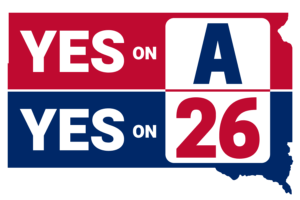
Voters in New Jersey, Arizona, South Dakota, and Montana legalized adult-use cannabis sales during November’s election. So, what comes next?
Last month, Americans in four states voted to legalize adult-use cannabis.
If you’re an adult over 21 in Arizona, New Jersey, South Dakota, or Montana, theoretically, you’ll be able to consume and purchase cannabis legally in 2021.
To many Americans, the end of cannabis prohibition in these states looks like a sudden act of voter mobilization. But industry insiders know it took years of work by activists, business people, and lawmakers to make legalization possible.
Before adults can legally purchase and consume cannabis, lawmakers in each state must outline rules and regulations, and dispensaries must go through intense licensing processes before opening their doors to the public.
The process won’t happen overnight.
In some newly legal states, it could take close to a year to iron out the details. And in the past, it’s taken even longer.
Take Massachusetts, for example. Voters cast their ballots in favor of legalization in 2016, but the first dispensary didn’t open until 2018.
Maine’s citizens also voted in support of legal weed in 2016, but it took four years for the first dispensary to open. The first two retailers – SeaWeed and Theory Wellness – opened on October 8 of this year.
“It has taken four years to move from referendum to retail sales since Mainers narrowly approved the legalization of recreational cannabis at the ballot box in 2016. Legislative rewrites, gubernatorial vetoes, a change in state administration, and then the impact of COVID-19 pandemic have combined to make Maine’s rollout the slowest in U.S. history.” – Portland Press Herald
Lawmakers in New Jersey are trying to speed things up. Democratic Senator Nick Scutari wants to move quickly to pass legislation modeled off a 2019 legal cannabis bill he sponsored. Still, legislators are fighting over the details. New Jersey’s Medical Marijuana licensing policies force applicants to pay large sums to compete for a limited number of licenses, allowing big businesses with deep pockets and holdings in other legal states to make millions.
Some New Jersey lawmakers are trying to keep the same from happening when adult-use dispensaries open their doors by prioritizing local businesses.
Arizona lawmakers anticipate legal cannabis sales to begin as early as March. The state plans to prioritize licenses for owners “from communities disproportionately impacted by the enforcement of previous marijuana laws.” Arizona’s 123 medical marijuana dispensaries will have the first opportunities to apply for adult-use licenses in January after the Arizona Department of Health Services writes the rules.
Entrepreneurs in South Dakota and Montana are ready to apply for dispensary licenses, but they, too, will have to wait.
In South Dakota, lawmakers say dispensaries will be open and selling legal adult-use cannabis by July 1. In Montana, people should be able to legally purchase cannabis on October 1, barring any bumps in the road.
Have we reached a tipping point?
The public’s view of cannabis is changing. One in three Americans now live in a state with legal weed, and, according to a recent Gallup poll, 68% of Americans support federal cannabis legalization. So, have we reached a tipping point?
That’s hard to say.
Thirty-six states now have a legal medical cannabis system. When sales begin in Arizona, New Jersey, South Dakota, and Montana, more than twenty states will have fully legalized cannabis. And while federal cannabis reform might be a defining aspect of the incoming administration’s legacy, legalization is mostly dependent on congress, and it’s still unclear which party will control the Senate next year.
Democratic leaders have pledged to end federal cannabis prohibition. If the Democratic party wins Senate control, full legalization is almost a certainty. But if Republicans maintain their Senate majority, the Republican party’s past approach to cannabis doesn’t indicate their leaders are ready to support far-reaching reform. Still, federal cannabis legalization isn’t outside the realm of possibility, even with a Republican-controlled Senate.
Only time will tell.
And again, regardless of what happens politically, it’s obvious America’s opinion of cannabis isn’t what it once was.
Oprah asked former President Obama if he and Michelle indulged in “pizza, pot, or alcohol” on election night in a recent televised interview. When a television icon casually asks a former President if he smoked weed with the former first lady, you know attitudes are changing.
Could federal cannabis legalization be the key to healing our COVID-ravaged economy?
This year, COVID-19 slowed the progress of cannabis legalization for individual states, but the pandemic could help push federal legalization forward next year. Here’s why.
A federally legal cannabis industry would accelerate America’s economic recovery.
The pandemic has had a catastrophic impact on many industries, and while a lot of employees will return to work, many jobs will be forever lost. The longer it takes for people to find employment, the longer it will take for the economy to recover.
The end of federal cannabis prohibition would create thousands of new jobs and reverse the pandemic’s adverse economic impact.
Here’s a point to consider: according to estimates from New Frontier Data, America’s legal cannabis market could be worth nearly $30 billion by 2025 – and that’s without federal legalization. If government officials choose to end federal prohibition next year, the estimates will increase dramatically.
For cannabis dispensaries, cultivators, cannabis-adjacent businesses (like cannabis marketing agencies), and American citizens, a nationwide end to prohibition would be life-changing.
But again, what the immediate future holds is anyone’s guess.
Aaron Rosenbluth is Hybrid Marketing Co‘s Content Director, and he loves to write blogs. He’s written so many blogs that he’s lost count. And beyond his skills as a copywriter and storyteller, he’s an obsessive reader and researcher. Aaron writes on subjects ranging from cannabis to collaboration, social equity to HR software, interior design to cybersecurity. His words attract, engage, educate, and convert. Btw, Aaron hates the phrase “content is king” (even though content is king – and queen).
Hybrid Marketing Co is a Denver-based branding and marketing agency that specializes in building custom strategies that supercharge growth and drive revenue. Working with brands and businesses across the U.S. and Canada, Hybrid’s partners run the full-spectrum of the cannabis world including dispensaries, manufacturers, cultivators, and ancillary businesses. Visit hybridmarketingco.com to learn more about the Hybrid approach.
Election Night 2020: Victories For Sensible Cannabis Policies
by Morgan Fox, NCIA’s Director of Media Relations
While the country waits for the outcomes of national elections that could very well impact the future of cannabis policy reform advocacy, we do have a LOT to be happy about today!
Last night, adult-use and medical ballot initiatives SWEPT the elections, passing in every state in which they were considered!
Voters in Arizona, Montana, New Jersey, and South Dakota all passed measures making cannabis legal and regulated for adults. South Dakota also approved a medical cannabis initiative by an even greater margin, and was joined by Mississippi where an overwhelming majority of voters not only supported medical cannabis but chose the much more comprehensive of two competing options.
You can learn more about these initiatives here and how they fared in the elections here.
There are a lot of important milestones and lessons to observe from these historic results.
First, let’s talk about New Jersey. Roughly two thirds of voters in the state approved this ballot measure, which was referred to them after lawmakers were unable to pass similar legislation last year. This is a big jump in ballot approval margins; before now, the most popular legalization referendum was in California, which approved Proposition 64 in 2016 with 57% of the vote. That’s a 10% margin increase in just four short years! The large population and huge market potential (more than $1.5B by 2025) are sure to have a major impact on the industry. Regionally, passage of this initiative is certain to add urgency to adult-use cannabis regulation efforts in states like New York, Pennsylvania, Connecticut, Delaware, and Rhode Island.
South Dakota also set a record by becoming the first state to approve an adult use law before having an established medical cannabis system, and in a very conservative state no less! Voters supported both medical and cannabis initiatives despite strong opposition from the governor and other officials.
In Arizona, after voters narrowly defeated a legalization initiative in 2016, a significant swing brought a 10% increase in support resulting in passage. This long-overdue change is especially important because Arizona is the only state where simple possession is a felony and nearly 15,000 people are arrested every year.
So what does this mean for future reform efforts?
First and foremost, the passage of the adult use initiatives means nearly 34% of Americans now live in states with laws making cannabis legal and regulated for adults. These four states account for roughly 60,000 marijuana arrests every year, mostly for simple possession. Congressional representation of states where cannabis is legal for adults will increase by 29 representatives and eight senators. This doesn’t guarantee their support for cannabis legislation, but it certainly increases the chances.
Second, passage of cannabis policy reform initiatives in conservative states like Mississippi, Montana, and South Dakota should send a signal to Republican lawmakers in Congress that this is an issue that they can support, and one which they will face political consequences for impeding. The fact that all three of these states had multiple cannabis-related issues on the ballot and voters were not swayed or confused is a testament to the will for change in these areas and a growing understanding of the issue.
Long story short: more and more states will continue to enact sensible, modern cannabis policies in the coming years, and every state that does so will help add to the chorus of voices from the public and in Congress calling for an end to outdated federal prohibition policies.
2020 Senate Races To Watch
by Michelle Rutter Friberg, NCIA’s Deputy Director of Government Relations
Photo By CannabisCamera.com
As you may have heard by now, Election Day is just around the corner! Let me take this opportunity to remind you to vote, to do so safely, and come up with an election plan! If you need help determining if you’re registered, or need more information about anything election-related, you can click here for some great resources.
Over the last two years, NCIA and the cannabis industry have had some success in Washington, D.C.: passing the SAFE Banking Act out of the House, passing the MORE Act out of committee (we expect a full House vote during the lame duck session!), and even getting the language of the SAFE Banking Act included in three proposed COVID-19 relief packages. But, the same challenge has remained: the upper chamber of Congress, the Senate.
This year, there are 35 Senate seats up for election, and the results will impact cannabis policy for years to come (remember, Senate terms last for six years). Let’s take a look at three races that could not only impact cannabis policy, but the makeup of the Senate as a whole.
Arizona
Incumbent: Sen. Martha McSally – Republican
Challenger: Mark Kelly – Democrat
The Details: Senator Martha McSally, Mark Kelly, and seventeen other write-in candidates are running in this year’s special election in Arizona. The winner will fill the rest of the 2017-2022 term that former Sen. John McCain (R) won in 2016. You may remember McSally’s name– that’s because back in the 2018 general election, McSally ran for Arizona’s other Senate seat and lost to Kyrsten Sinema (D) 47.6% to 50.0%. After the 2018 election, interim Sen. Jon Kyl (R) announced his resignation and Gov. Doug Ducey (R) announced McSally as Kyl’s replacement in December 2018. Easy to keep up with, right?!
On Cannabis: This year, Arizonans will vote on Proposition 207, which would legalize adult-use cannabis in the state. During a debate in October, the candidates were asked about the initiative. Mark Kelly responded, “I think I’m gonna vote yes. It has some provisions in there to decriminalize it and address some incarceration rates for marijuana offenses — I think that’s good. I think there’s a funding source there. So I’m probably gonna vote yes.” When asked if he’d support removing marijuana as a Schedule 1 narcotic were such federal legislation to come before him, Kelly replied, “Based on my vote here in Arizona, I would seriously consider removing it.”
Senator McSally, on the other hand, has been essentially silent and inactive on this issue since assuming office. Last month, when asked about the initiative, McSally said “I’ll let the Arizona voters decide that [Proposition 207].” During her time as a Congresswoman prior to being appointed to the Senate, McSally voted against several cannabis-related appropriations amendments. She has not co-sponsored any cannabis-related legislation in the Senate.
Colorado
Incumbent: Sen. Cory Gardner – Republican
Challenger: Former Governor of Colorado, John Hickenlooper – Democrat
The Details: This race is one of the most contested in the country– both the Democratic Senatorial Campaign Committee (DSCC) and the National Republican Senatorial Committee (NRSC) have added it to their election target lists. The previous three U.S. Senate elections in Colorado—2016, 2014, and 2010—were decided by margins of 5.7, 1.6, and 1.7 percentage points, respectively. Gardner was first elected in 2014 after defeating incumbent Mark Udall (D) 48.2-46.3%.
On Cannabis: Sen. Gardner has long been touted as one of the most pro-cannabis Republicans in the Senate. He has sponsored and co-sponsored a number of cannabis bills, including the STATES Act and the SAFE Banking Act. However, Sen. Gardner has been unable to convince his colleagues to bring SAFE Banking up for a committee vote, or even have a simple hearing on the STATES Act. That being said, if Republicans retain control of the Senate, but Gardner loses his seat, it may have adverse consequences for the cannabis industry.
During his time as governor, Hickenlooper actively opposed cannabis legalization, even going so far as to unsuccessfully campaign against the state’s marijuana legalization ballot referendum. He then went on to implement it after voters approved the measure. During his last year as governor, he also vetoed proposals to add autism as a medical marijuana qualifying condition, to increase flexibility for investments in the cannabis industry, and to allow dispensaries to operate tasting rooms. But Hickenlooper has come a long way since then– his campaign website states, “As U.S. Senator, I will fight to remove cannabis from classification as a Schedule I drug.” Plus, he even responded to an op-ed penned earlier this year by NCIA’s own Social Media Manager, Vince Chandler, tweeting, “Yes, I support decriminalizing & descheduling marijuana. Colorado set the gold standard, and I’m eager to work with you and Colorado’s cannabis industry and entrepreneurs to get this done in Washington.”
Montana
Incumbent: Sen. Steve Daines – Republican
Challenger: Former Governor of Montana, Steve Bullock – Democrat
The Details: Incumbent Sen. Daines was first elected in 2014 with 58% of the vote. Bullock was first elected Governor of Montana in 2012 with 49% of the vote to his opponent’s 47%. His margin increased in 2016 when he won 50% to 46%. That same year, Donald Trump (R) won Montana in the presidential election with 56% of the vote to Hillary Clinton’s (D) 36%.
Both the National Republican Senatorial Committee and the Senate Majority PAC, a Democratic PAC, have targeted the race. Prior to announcing his bid for Senate, Bullock joined the crowded Democratic presidential field before dropping out in 2019.
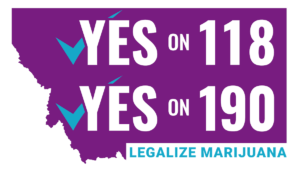
Implications: This year, there are two cannabis-related initiatives on the ballot in the Treasure State. Montana I-190, the Marijuana Legalization Initiative, is on the ballot and would legalize the possession and use of marijuana for adults over the age of 21, impose a 20% tax on marijuana sales, require the Department of Revenue to develop rules to regulate marijuana businesses, and allow for the resentencing or expungement of marijuana-related crimes. The second initiative, Montana CI-118, the Allow for a Legal Age for Marijuana Amendment, would amend the Montana Constitution to allow for the legislature or a citizen initiative to establish a minimum legal age for the possession, use, and purchase of marijuana, similar to the regulation of alcohol in the state constitution.
While neither Senate candidate has weighed in on the state’s cannabis initiatives, we do have some understanding of their views on the issue– Sen. Daines has consistently voted in favor of appropriations amendments related to hemp, medical cannabis, and banking. In 2015, he co-sponsored an industrial hemp bill. It’s important to note that all of these votes were more than three years ago. On the other hand, while running for president last year during July 2019, Bullock stated, “I think this [cannabis legalization] should be left up to the states. I think the federal government should get out of the way and this is a state-by-state decision.”
Now, remember to get out there and VOTE! Here at NCIA, we’ll be analyzing other initiatives, candidates, and what it all means for you and your business as we get closer to the election, and doing the same once we get the results!
Possession:Adults 21+, 1 ounce flower or 5 grams concentrate
Home cultivation:YES, adults 121+ may have up to 6 plants in an enclosed locked location out of public view.
Licenses:
Issue no more than one marijuana establishment license per 10 pharmacies;
Issue no more than two marijuana establishment licenses in counties that contain no registered nonprofit medical marijuana dispensaries;
Issue no more than one marijuana establishment license in counties with one nonprofit medical marijuana dispensaries; and
Issue 26 licenses, notwithstanding the other limits, to entities qualified under the Social Equity Ownership Program.
Social Equity: Department of Health Services would be required to establish a Social Equity Ownership Program to promote cannabis business ownership and employment for individuals from communities disproportionately impacted by the enforcement of previous marijuana laws.
Proposition 207 would establish a fund called the Justice Reinvestment Fund (JRF). Revenue in the JRF would be allocated as follows:
35 percent to local public health departments in proportion to the county’s population for the purpose of providing justice reinvestment programs or giving grants to nonprofits to provide justice reinvestment programs within the county’s area.
35 percent to DHS to provide grants to nonprofits to provide justice reinvestment programs in the state.
30 percent to DHS “for the purpose of addressing important public health issues” that affect Arizona.
Taxes & Revenue:
Transaction Privilege Tax (currently 5.6%)
Specific 16% excise tax (non-medical)
Revenue from the excise tax and license fees would be deposited into the Smart and Safe Arizona Fund. First, revenue would be used to implement and enforce marijuana regulations. The remaining revenue would be allocated as follows:
33.0 percent for community college districts;
31.4 percent for municipal police and fire departments, county sheriff departments, and fire districts;
25.4 percent for the state’s Highway User Revenue Fund;
10.0 percent for the new Justice Reinvestment Fund; and
Alternative 65A – Rep. John Thomas “Trey” Lamar and Rep. Brent Powell
Possession:
Initiative 65 – Qualifying patients may purchase/possess up to two and a half (2.5) ounces every 14 days
Alternative 65A – Undefined, no explicit protections
Home Cultivation: NO
Licensing:
Initiative 65 – TBD by Dept. of Health; no limits on number of treatment centers; may not be located within five hundred (500) feet of a pre-existing school, church, or licensed child care center
Alternative 65A – Undefined
Social Equity: None explicitly included in either initiative.
Taxes & Revenue:
Initiative 65 – Dept. of Health may authorize taxes up to the level of the state sales tax (currently 7%); revenue to be used for special operating fund and may not revert to state general fund
Ballots: Initiative 190 Marijuana Legalization Initiative (adult use), CI-118 Allow for a Legal Age for Marijuana Amendment
Summary:
Initiative 118 would allow legislation or a citizen initiative to set the legal age limit for possession at an age higher than the state definition of adulthood (18 years old).
Initiative 190 would regulate cannabis for adults age 21 and older.
Possession: Adults 21+, up to one ounce of flower or 8 grams of concentrate
Home Cultivation: YES, up to four (4) plants per adult, maximum eight (8) per household.
Licensing:
The Department of Revenue shall develop rules and regulations regarding licensing of providers, marijuana-infused products providers, and dispensaries for adult use. For the first 12 months, only existing medical cannabis licensees may apply. Provider licenses are established in tiers based on canopy size and also include micro-business licenses. Applicants must have resided in Montana for at least one year prior and may not have been convicted of a felony involving fraud, deceit, or embezzlement or for distribution of drugs to a minor within the past 5 years. Cannabis businesses may not be located within 500 feet of a school or place of worship unless permitted by the local jurisdiction.
Social Equity: Persons convicted of behavior permitted by Initiative 190 may apply for resentencing or expungement.
Taxes & Revenue:
Specific sales tax – 20%
Revenue will be used to fund operating costs of regulation as well as to support conservation efforts, substance abuse treatment and education, veterans programs, local governments, the general fund, and other programs. More information is available here.
2020 Marijuana Ballot Initiatives – Time to Make History!
by Madeline Grant, NCIA’s Government Relations Manager
With the election coming up just around the corner, 2020 could be another big year for our movement. It is imperative that we all head to the polls, send in our mail-in ballots and make our voices heard in this monumental election. This week I will briefly go over each ballot initiative that has officially qualified for the November ballot. As we continue to get closer to the election, I will get into detail about what each ballot initiative does for each state. 2020 has been a year of uncertainty and as we approach the election it is our duty as U.S. citizens to get out and vote and as members of the cannabis industry, it’s important that we support the expansion of markets by donating to initiative campaigns.
Without further ado please see marijuana ballot initiatives below:
More information provided by the Marijuana Policy Project here.
Nebraska – Medical marijuana ballot initiative is no longer happening due to the Nebraska Supreme Court deeming the legalization of medical marijuana on the November ballot as unconstitutional. Following over 180,000 signatures by Nebraskans in support of the measure, the Supreme Court decided to not include the vote on November’s ballot on the day before the deadline. The justification of unconstitutionality came from Nebraska’s single-subject rule for a ballot measure, which bans multiple issues into yes-or-no questions for voters to address.
It is more important than ever to get out and vote. Our government relations team works hard in our nation’s Capital to achieve legislative victories at the federal level; however, achieving legislative victories at each state is just as important. It is through each successful ballot initiative at the state that provides the proof and support for legislative change and policy reform at the federal level. States are moving forward; therefore, we must be on Capitol Hill. We must keep fighting the good fight and get out and show our support for cannabis policy reform.
Are you interested in any of these states or want to learn more about one of these ballot initiatives? If so, please feel free to reach out to me to set up a meeting to discuss the information in more detail or contact the campaigns directly to find out how you can support them.
Five Reasons Why NCIA’s Industry Socials Were A Huge Success
At the end of 2018, NCIA’s events team looked ahead at how to make our line-up of 2019 events even better and respond to an increasingly popular demand for more networking opportunities. As a team we dreamed up how to make a B2B networking series that was not only delivered maximum ROI, but was super fun and fit the cannabis industry culture.
Ultimately, we devised what might be the magic elixir of networking events. Artsy venues, delicious drinks and food, live local music, old-school Nintendo, giant Jenga and Connect Four. We even threw in a raffle-wheel contest to win limited edition NCIA merchandise. The result? NCIA’s January Industry Socials were a total hit. Although there are many, here are the top five reasons why NCIA’s Industry Socials were a huge success.
1. Impressive Attendees
Throughout January, Industry Socials kicked off with a West Coast Tour in Seattle, WA, Portland, OR, Las Vegas, NV, Salt Lake City, UT and Phoenix, AZ. We were excited (and a bit nervous) about the turn-out for the Utah Industry Social in Salt Lake City, since the exciting passage of Utah’s Proposition 2 happened only a few months before the event. As NCIA’s Aaron Smith remarked “we’re excited to bring our world-class industry events to new markets like Utah, and later this year in Missouri, North Dakota, and Texas!”
Overall, January’s Industry Socials turned out about 500 impressive cannabis industry professionals and advocates, representing 250 current NCIA member companies! Even better? We saw more than 75 attendees in the brand new Utah market!
2. Incredible Feedback
The post-event survey results are in and they are stellar! The majority of survey respondents reported that they would highly recommend the event series to a friend or colleague.
More than 50% of survey respondents said they made between 11-20 new contacts at the event and that at least three of these contacts were potential sales deals.
When asked what the biggest return on investment of the event was attendees stated:
“Getting to know our local business community.”
“The low key but targeted exposure in our local market.”
“Continued relationship building and network expansion.”
“We gained a lot of insight into the industry and where we fit as a company… the insights we gained were invaluable.”
“Foot in the door to get involved in rule making and learning about the application process in Utah.”
Kyle Rooney from Have A Heart, Sustaining Members with adult-use dispensaries in four states, says that “attending NCIA’s new Industry Socials is a chance to network in a more personal and low-key environment. National conferences are great, but these events provide a platform to talk to people in the regions that you want to connect with.”
RizePoint, who became members of NCIA just a week before the event in Salt Lake City, attended with several team members. Ed McGarr, RizePoint’s Vice President of Sales and Marketing says, “We began working with cannabis companies last year to advise on food safety, quality control and management for adult-use and medical cannabis edible products. NCIA’s Industry Socials provide a forum for us to connect with the industry and learn from them, as well as gain new business contacts. The event was priceless relative to networking and establishing ourselves further in the cannabis industry. It was refreshing that NCIA helped to establish the networking opportunities in a new, emerging market like Utah.”
3. Innovative Networking and Entertainment
Introducing a retro arcade station including Super Mario and PAC-MAN at our Industry Socials was the brilliant idea of our events team. Now that we know how fun it was, we’re seriously considering having it as an NCIA event standard.
But seriously, we now know that a cash bar is not the only way of lubricating conversation and community building. Adding fun games like Nintendo, giant Jenga and Connect Four is another way cannabis industry professionals can “connect” in an authentic, fun, and meaningful way. If more networking happened while playing a competitive game of PAC-MAN, the business world would be a much better place.
Additionally, at every event we had talented local DJ sets and interactive activities like a raffle-wheel and Polls Everywhere with cannabis industry trivia. As a value-added complimentary activity at our Nevada Industry Social, attendees had the opportunity to participate in two private tours of the world’s only immersive cannabis museum, Cannabition!
4. Our Sponsors and Partners
From helping us spread the word, to investing in NCIA’s Industry Socials, none of these amazing events could have happened without the help of our sponsors and partners.
Lastly, a huge thank you to our promotional partners: Growers Network, Cannabis Collaborative Conference, Utah Patients Coalition, Epilepsy Association of Utah, Marijuana Policy Project and TRUCE Utah.
5. Setting the Stage for 2019 Events
To kick off 2019 with a successful inaugural event series sets the stage for an incredible year of NCIA events. We are looking forward to hosting the next tour of Industry Socials in new cities and markets again in April and August.
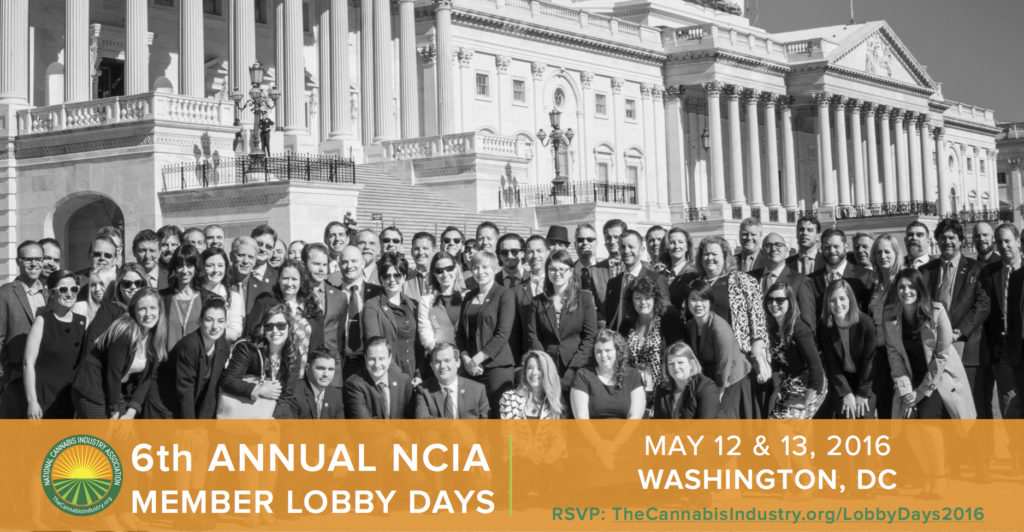
But, you don’t have to wait until April to attend more NCIA events. NCIA’s March Cannabis Caucus series is kicking off soon, followed by the most impactful cannabis industry advocacy event of the year – NCIA’s 9th Annual Cannabis Industry Lobby Days.
Lastly, thank you to our nearly 2,000 member-businesses and to all event attendees for supporting NCIA’s mission. NCIA’s event revenues support the work we are doing to lobby at the federal level on your behalf on Capitol Hill and to build public support for the cannabis industry.
If you were at the January Industry Socials, be sure to check out our Facebook album and tag yourself!
Your 2016 Cannabis Ballot Initiative Rundown
Michelle Rutter, NCIA
by Michelle Rutter, NCIA’s Government Relations Coordinator
In November, five states will vote on legalizing adult-use cannabis for individuals over 21 – Arizona, California, Maine, Massachusetts, and Nevada – while an additional four states will vote on medicinal cannabis reform – Arkansas, Florida, Montana, and North Dakota. All nine initiatives differ slightly from one another and each has its own unique language.
Below are NCIA’s quick summaries of each of the initiatives. Read up, then visit the campaign sites for more information and how you can help make 2016 another success in the fight to end marijuana prohibition.
ADULT-USE
ARIZONA
The Campaign to Regulate Marijuana Like Alcohol (Proposition 205) legalizes the possession and consumption of marijuana by persons who are over 21 and levies a 15% tax on the sale of cannabis, which would then be allocated to education and healthcare in the state. This would create an estimated $113 million in new tax revenue.
– Allows local governments to regulate and limit cannabis businesses
– If passed, Arizona’s cannabis market is projected to surpass $1 billion within three years
The Adult-Use of Marijuana Act (AUMA) (Proposition 64) legalizes the possession and consumption of marijuana by persons who are over 21 and enacts a 15% sales tax, as well as a cultivation tax of $9.25 per ounce of flowers and $2.75 per ounce for leaves.
– Estimated $1.4 billion in revenues within the first year of a fully operational market
– Written to prevent licenses for corporate or large-scale cannabis businesses for five years, which is in order to deter “unreasonable restraints on competition by creation or maintenance of unlawful monopoly power”
California has the largest state cannabis market (medical or adult-use) in the country, estimated at $2.7 billion in 2016.
The Campaign to Regulate Marijuana Like Alcohol (Question 1) legalizes the possession and consumption of marijuana by persons who are over 21 and enacts a 10% sales tax in addition to the state’s 5.5% sales tax. The first $30 million in tax revenue from cannabis sales would be used for school construction, with any additional revenue allocated to the General Fund.
– Medical cannabis will not be subjected to the 10% sales tax
– Caps the number of cannabis stores and cultivators until 2019 and 2022, respectively
The Campaign to Regulate Marijuana Like Alcohol (Question 4) legalizes the possession and consumption of marijuana by persons who are over 21 and creates a Cannabis Control Commission of three members appointed by the state Treasurer, which would generally administer the law governing cannabis use and distribution, promulgate regulations, and be responsible for the licensing of commercial cannabis establishments. It also creates a Cannabis Advisory Board of 15 members appointed by the Governor.
– Enacts an excise tax of 3.75%, in addition to the state sales tax
– A city or town could impose a separate tax of up to 2%
The Campaign to Regulate Marijuana Like Alcohol (Question 2) legalizes the possession and consumption of marijuana by persons who are over 21 and designates the Nevada Department of Taxation to issue licenses to cannabis retailers, suppliers, testing facilities, and distributors.
– Gives local governments control over cannabis business locations, and forbids businesses to operate near schools, childcare facilities, houses of worship, and certain community facilities.
– Enacts a 15% excise tax on wholesale sales of cannabis, in addition to the existing sales tax which would apply to the retail sale of cannabis
– Revenue generated from these taxes would be used to support K-12 education
There are two competing initiatives on the 2016 ballot: the Arkansas Medical Cannabis Act (AMCA) and Arkansas Medical Marijuana Amendment of 2016 (AMMA), known as Issue 7 and Issue 6, respectively. The main differences lie in patient card fee limits, the organizations that would implement the program, the distribution of sales tax revenue, and whether certain patients could cultivate their own medicine. As of October 2016, Issue 7, the Arkansas Medical Cannabis Act (AMCA) was struck from the ballot. The initiative will still appear on the ballot, but the results will not be counted.
Arkansas Medical Cannabis Act (AMCA):
– Sets a cap on the fees required to get dispensary and cultivation licenses and the fees required for patient cards
– Assigns the Arkansas Department of Health to set rules for patient cards, medical conditions that qualify a patient for medical marijuana use, and operating rules for dispensaries and cultivators
– Requires that all sales tax revenue goes back into the medical marijuana program
– Permits qualified cardholders to purchase medical cannabis from non-profit compassion centers
– Allows patients and their caregivers to cultivate up to 10 cannabis plants at home provided they take steps to ensure it is secure
Arkansas Medical Marijuana Amendment (AMMA):
– Sets a cap on the fee required to acquire a dispensary or cultivation license, but no limit on the cost for patient card fees;
– Assigns the Arkansas Department of Health to set rules for patient cards and medical conditions that qualify a patient for medical marijuana use, and the Arkansas Alcoholic Beverage Control to establish operating rules for dispensaries and cultivators;
– Divides sales tax revenue, assigning 10% to the medical marijuana program, 10% to the Skills Development Fund, 30% to the state’s General Fund, and 50% to the state’s Vocational and Technical Training Special Revenue Fund
The Florida Right to Medical Marijuana Initiative (Amendment 2) allows medical use of cannabis for individuals with debilitating medical conditions as determined by a licensed Florida physician and allows caregivers to assist patients’ use of medical cannabis.
– Mandates that the Department of Health shall register and regulate centers that produce and distribute cannabis for medical purposes shall issue identification cards to patients and caregivers.
– Constitutional amendments on the ballot in Florida must garner at least 60% in order to pass. This is why the medical cannabis amendment on the ballot in 2014 failed, despite receiving 58% of the vote.
Montana is voting to amend their dysfunctional medical cannabis program that has basically been regulated out of existence. The initiative amends the Montana Marijuana Act of 2011 and renames it the “Montana Medical Marijuana Act” (I-182).
– Allows providers to hire employees to cultivate, dispense, and transport medical cannabis, and repeals the limit of three patients for each licensed provider.
– Repeals the requirement that physicians who provide certifications for 25 or more patients annually be referred to the Board of Medical Examiners.
– Removes the authority of law enforcement to conduct unannounced inspections of medical marijuana facilities and requires annual inspections by the State
The North Dakota Medical Marijuana Initiative will be Initiated Statutory Measure 5 on the ballot and is also known as the North Dakota Compassionate Care Act, which creates a state-regulated medical marijuana program for patients with specified debilitating conditions and written certifications from their doctors. Registered patients could obtain medical cannabis from a licensed non-profit compassion center, and if the patient lives 40+ miles away, they are permitted to cultivate a limited amount of cannabis for their medical use.
This year it’s more important than ever to make sure you’re registered to vote and get to the ballot box on November 8th. If you live in one of the nine states with a ballot initiative, cast your vote for ending prohibition or allowing patients access to medicine. Otherwise, don’t forget to cast your ballot for candidates at the local, state, and federal level who support cannabis reform to ensure that 2017 is the industry’s biggest year yet!
2016: What’s Next?
by Michelle Rutter, Government Relations Coordinator
This year is arguably the most crucial yet for the burgeoning cannabis industry, especially as it relates to policy. Although NCIA primarily advocates for cannabis reform at the federal level, what happens in each individual state is vital to the stances Members of Congress take on our issues.
Members of Congress care deeply about issues that directly affect their specific state or district. It’s imperative that more states enact cannabis reform legislation so that more Members have a vested interest in protecting their constituents. While cannabis reform is sweeping the nation at an almost unprecedented rate, it takes time for politicians in Washington, D.C., to catch up with public opinion back home. If all of the federal lawmakers representing just the 15 states mentioned below were to vote positively on pro-cannabis legislation, it would add up to more than 180 Representatives and nearly 30 Senators.
Take a look below and see what’s coming up next in 2016. Remember that by becoming a member of NCIA, you are adding your voice to the coordinated and unified campaign at the federal level to allow cannabis businesses access to financial services, fix tax section 280E, and ultimately end federal cannabis prohibition.
The United States of Cannabis
Arizona activists remain ahead of schedule and have nearly gathered the 150,000 signatures needed to put the state’s Campaign to Regulate Marijuana Like Alcohol initiative on the November 2016 ballot. (The campaign ultimately aims to collect 230,000 in order to insure against signature drop-off.) It’s estimated that Arizona’s adult-use market could be worth up to $480 million.
With a multi-billion-dollar cannabis industry in California alone, passing an adult-use legalization initiative in the state is vital to ending federal prohibition. The most prominent full retail initiative gathering signatures for the November 2016 election is the Adult Use of Marijuana Act, which is backed by billionaire Sean Parker and the Marijuana Policy Project.
Legalize Maine and the Marijuana Policy Project have joined forces to legalize adult-use cannabis in 2016. Legalize Maine has already collected 80,000 signatures. Only 61,000 signatures are necessary to place the measure on a statewide ballot, but the organization’s goal is 95,000, to insure against drop-off. The deadline to submit signatures is February 1st.
Last August, a pair of cannabis advocacy groups separately filed paperwork to get adult-use legalization on the 2016 ballot in Massachusetts. The state recently confirmed that a measure to legalize recreational cannabis next year has enough valid signatures to force the legislature to consider the measure. If the legislature decides to pass, then the campaign will have to collect another 10,792 signatures to formally make the November ballot.
There’s no question that adult-use legalization will be on the ballot this year in Nevada. Initiative Petition 1, which would tax and regulate marijuana similarly to alcohol, has been certified for the 2016 ballot. Backers had previously collected nearly 200,000 signatures to either force legislators to enact their initiative or put it on the ballot. When state lawmakers abstained from voting on the issue, the measure was automatically forwarded to this year’s ballot for a popular vote.
In Florida, the group United for Care received clearance from the state Supreme Court for a 2016 ballot measure that would legalize medical marijuana. The group nearly succeeded in legalizing medical marijuana in 2014, garnering 58% of the vote but falling barely short of the state’s constitutionally mandated 60% margin needed to pass,
The nation’s capital continues to debate cannabis. In December’s federal budget bill, the taxation and regulation of marijuana in Washington, D.C., was blocked by Congress again, though possessing and gifting cannabis remains legal in the city.
This month, Hawaii will begin accepting applications for medical cannabis businesses. The bill signed into law last summer opens the door for up to 16 dispensaries on the islands.
It was recently announced that Illinois saw approximately $1.7 million in medical cannabis sales during November and December of 2015. There are already petitions being circulated in the state that would expand the law’s qualifying conditions.
Maryland will award cannabis cultivation, processing, and dispensary licenses this summer. Industry advocates were pleased with the amount of interest the state’s program garnered: more than 1,000 applications were submitted.
Officials in Michigan have approved language for three different adult-use cannabis legalization initiatives for the 2016 ballot. In order to have the best chance of passing, it’s important for these groups to coalesce behind one initiative.
At the end of 2015, New Hampshire began issuing medical marijuana cards to qualifying patients. It’s expected that the state will open medical dispensaries in 2016.
After a long and arduous journey, New York’s medical cannabis program became operational this month. The cannabis industry expects the program and the law’s qualifying conditions to expand this year.
In the first week of 2016, Oregon began accepting adult-use cannabis business license applications. The state has no limit on how many licenses they will decide to award.
Vermont may become the first state to legalize adult-use cannabis through the legislative process in 2016. The proposed bill would allow for up to 86 storefronts and five different business license types.
Bonus: Election 2016 – Yes, We Canna
As we all know, a new president will be elected this November, and with that a new administration will assume power next January. It is very crucial that Congress pass more pro-cannabis legislation before then.
It’s probable that Attorney General Loretta Lynch will be replaced in 2016 or early 2017. This is important because it is the Department of Justice that enforces and prosecutes federal marijuana laws.
Another possibility for 2016 is that the acting head of the Drug Enforcement Administration, Chuck Rosenberg, could be replaced as well. Rosenberg is notorious for his gaffe last year when he called marijuana “probably” less dangerous than heroin.
On New Year’s Eve, officials from the Substance Abuse and Mental Health Services Administration posted a notice on the Federal Register that calls for a report “presenting the state of the science on substance use, addiction and health” to be released in 2016. Industry advocates are hopeful that this report could be the first sign of re- or de-scheduling cannabis from the Controlled Substances Act.
During 2016, NCIA will continue working with D.C.-based public affairs firms Heather Podesta + Partners, and Jochum Shore & Trossevin PC to magnify our efforts to address the industry’s top federal priorities: access to basic banking services and fair federal taxation.
In addition to NCIA’s lobbying and advocacy efforts, NCIA exists to connect and educate our members on all facets of the cannabis industry. Our industry supports tens of thousands of jobs, tens of millions in tax revenue, and billions in economic activity in the United States.Our core mission is to ensure that our members are treated like businesses in any other American industry. Join NCIA today to get involved and be a part of the cannabis revolution!
by Michelle Rutter, Government Relations Coordinator
As we look forward to 2016, there’s much on the horizon for the cannabis industry. NCIA remains dedicated in its effort to pass banking and tax legislation through Congress that would provide immediate relief to cannabis-related businesses all over the country.
In addition to the federal advocacy that NCIA engages in every day, there will be at least five states seeking to legalize and regulate adult-use cannabis via the ballot initiative process: Arizona, California, Maine, Massachusetts, and Nevada. It’s also likely that Florida will have another ballot initiative relating to medical cannabis, and it’s possible that other states will move forward with cannabis reform through ballot initiatives or legislative processes. What happens over the next twelve months will be crucial in shaping the future of the legitimate and responsible cannabis industry.
While 2015 was a milestone year for cannabis reform, that same momentum will be necessary in order to continue moving the conversation forward with Congress in Washington, D.C. The Rohrabacher-Farr medical cannabis amendment earned more that 60 Republicans votes. For the first time ever, there are multiple pro-cannabis bills that have been introduced in the U.S. Senate. Continued progress is vital in garnering more national support for cannabis reform, so make sure your interests are heard through national advocacy, education, and community with NCIA.
The timeline below lays out some of the highlights from a busy year in cannabis industry advocacy. We look forward to more exciting milestones with your help in 2016!
*Click on the “Full Screen” button (with the four arrows) at the bottom of the image to expand its size.
NCIA Member Profile: The Giving Tree Wellness Center
This month, NCIA checks in with Lilach Power, Managing Director at The Giving Tree Wellness Center based in Phoenix, Arizona. The Giving Tree Wellness Center has been a member of NCIA since September 2013, taking an holistic approach in supporting their clients by offering a range of medical marijuana products along with alternative healing methods, including massage and acupuncture, to promote the best quality of life possible through both their North Phoenix and Mesa locations.
Cannabis Industry Sector:
Medical Cannabis Providers
NCIA Member Since:
2013
How do you uniquely serve the cannabis industry?
Lilach Power, Managing Director at The Giving Tree Wellness Center
When Gina and I started our business, we had a vision of creating a safe and inviting environment for patients, and I think we have succeeded. We have beautiful spa-like stores that are very inviting. We do not have the traditional pot shop that I think a lot of people think of when they envision a dispensary. There are no bars, bullet-proof glass or tiny bank windows. This is truly a place to get help and find quality medicine.
We understand that patients might be intimidated coming to a dispensary at first, so we like to make them as comfortable as possible. We have private consultation rooms where patients can really sit down and be comfortable discussing their medical issues and see what options we have for them. We encourage patients to schedule one-on-one consultations with our patient consultants or with our medical director (my business partner, Gina Berman, M.D.). We never up-sell or push patients to buy anything. Our goal is only to find the ideal medicine for each patient. We never rush patients – whether they are a first timer, or this is their hundredth visit.
Gina Berman, M.D. of The Giving Tree Wellness Center
The Giving Tree takes pride in its local community philanthropic endeavors. We participate in two big fundraising events annually. Our next one is on April 11th, the Take Steps for Crohn’s and Colitis walk. We match all donations and I am proud to say many vendors have been participating, so we are getting the industry involved in our community as well. Our other big annual event is the breast cancer Walk for the Cure in the Fall. In addition, we raise money and hold canned food drives during the holiday season to help local folks in need.
Realizing that there are patients for whom the cost of this medicine is a burden, we started our own program for discounted medicine for patients on SNAP or long-term disability. We also deliver for patients with physical hardship, with no delivery charge.
Why should patients looking for medical cannabis services go to The Giving Tree Wellness Center?
Service and quality: We have an elite team of patient consultants (PCs) and we are patient-focused. Our PCs are truly passionate and have a fund of knowledge – I am so proud every time I walk into the dispensary and see how much they really care. Our patients really do become part of The Giving Tree Family.
Our medicine: We grow a majority of the medicine we offer. We stress quality over quantity and grow strains based not on their yield but on the merits of their quality and variety. We do not use pesticides, and we always use an independent, third-party lab to test all our medicine. We definitely have learned a lot during this process and our goal is to make each harvest better than the last. We are proud each time we harvest and cure and see our medicine on the menu.
The Giving Tree Wellness Center – Arizona
Can you give us some insight into the medical cannabis community in Arizona, where it’s been and where it’s headed?
Arizona is a really unique cannabis community. There are not many medical marijuana dispensaries operating and there won’t ever be, per statute. That really takes the competition out of the equation for the most part and we can really just focus on creating and maintaining a well-regulated and upstanding industry where the focus is truly just on the patients.
Also, as time goes on and more and more Arizonans are helped by cannabis, our communities will hopefully embrace us as offering a much-needed service instead of being thought of as the criminal-laden underbelly of the cities. The regulated stores are dramatically different than any black market operation. I think this will become more apparent as time goes on as more people in the community are exposed to state-regulated dispensaries.
We see the need for an organization to bring us all together and represent us on the national stage. There is no other organization that does that. We see the importance in supporting it, becoming part of it, and hopefully being more involved in the future. It is the only way to move our industry forward.
If you are a member of NCIA and would like to contribute to the NCIA blog, please contact development officer Bethany Moore by emailing bethany@thecannabisindustry.org.

 Aaron Rosenbluth is Hybrid Marketing Co‘s Content Director, and he loves to write blogs. He’s written so many blogs that he’s lost count. And beyond his skills as a copywriter and storyteller, he’s an obsessive reader and researcher. Aaron writes on subjects ranging from cannabis to collaboration, social equity to HR software, interior design to cybersecurity. His words attract, engage, educate, and convert. Btw, Aaron hates the phrase “content is king” (even though content is king – and queen).

 It is more important than ever to get out and vote. Our government relations team works hard in our nation’s Capital to achieve legislative victories at the federal level; however, achieving legislative victories at each state is just as important. It is through each successful ballot initiative at the state that provides the proof and support for legislative change and policy reform at the federal level. States are moving forward; therefore, we must be on Capitol Hill. We must keep fighting the good fight and get out and show our support for cannabis policy reform.





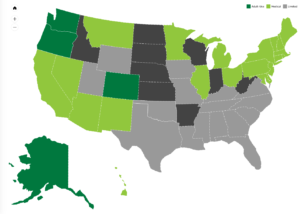 MEDICAL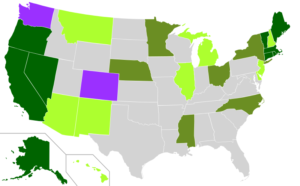



Follow NCIA
Newsletter
Facebook
Twitter
LinkedIn
Instagram
News & Resource Topics
–
This Just In
How THCa Vapes Are Changing Consumer
Announcing NCIA’s 2026-2028 Board of Directors