Webinar Recording: Good Manufacturing Practices in the Age of COVID-19
Tune in to this webinar recording from Wednesday, April 15, 2020. As the realizations of the Coronavirus sink in, one thing is certain – cannabis companies need to be leveraging good manufacturing practices, otherwise known as GMPs. GMPs are the practices required in order to conform to the guidelines recommended by the Food and Drug Administration (FDA). The FDA is the public health agency in the United States that controls the authorization and licensing of the manufacture and sale of food and beverages, cosmetics, pharmaceutical products, dietary supplements, and medical devices. While many companies in cannabis are already following these guidelines, some are not.
This panel explores the GMPs themselves, how companies can become compliant, how GMPs can be amplified to make certain that we are preventing the spread of COVID-19, and whether there are extra precautions that should be taken to keep cannabis consumers safe.
Panelists:
Andrew Kline, Director of Public Policy National Cannabis Industry Association
Haley Brandsgard, Senior Quality and Compliance Manager Mary’s Brands
Alena Rodriguez, Managing Director Rm3 Labs
Trevor Morones, Founder Control Point
Jen Komerda, Quality Assurance Manager Wana Brands
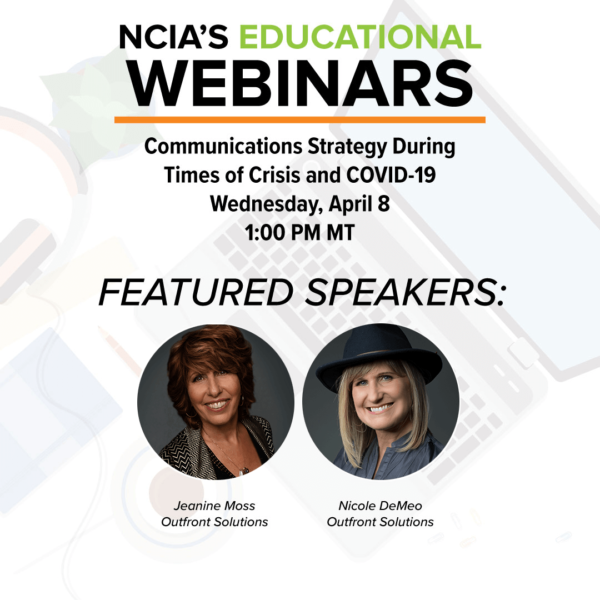
Webinar Recording: Communications Strategy During Times of Crisis and COVID-19
In case you missed it, watch this webinar recording from April 8. With the cannabis industry customer acquisition and service models disrupted by the pandemic, it’s critical to understand that what you do today will affect your business now and have a large impact on your future. Adjusting communications to focus on brand and strengthening bonds with existing customers will help you minimize damage and promote future growth.
In this webinar, crisis experts Jeanine Moss (Chair of NCIA’s Marketing and Advertising Committee) and Nicole DeMeo of Outfront Solutions will outline immediate and practical steps you can take to address crises before, during, and after they’ve occurred. They will provide specific recommendations for the cannabis value chain including cultivators, manufacturers, distributors, retailers, and ancillary businesses. Learn how to build trust and brand loyalty in times of crisis with customers, employees, directors, shareholders, and vendors so you come through with a strong platform for growth and knowing you’ve done all that you can for your stakeholders.
Member Blog: A COVID-19 Guide For Cannabis Entities
As the fallout from COVID-19 ripples through the economy, cannabis businesses are once again faced with a plethora of conflicting information and uncertainty. As counsel to the NCIA and in service to its membership, Wykowski Law has put together a guide to the most common issues facing cannabis businesses in the wake of COVID-19. The guide focuses on national issues and focuses in on some issues specific to California.
Please check out the guide for more details, but here is a quick rundown of what you need to know as a cannabis business in the age of COVID-19:
As we’ve unfortunately become accustomed to, cannabis has largely been left out of relief efforts, particularly where the federal government is concerned. Like with anything cannabis, this means that we have to dig deeper and be more creative to survive.
What sort of help can cannabis businesses get from SBA, PPP, and EIDL? Are there alternatives?
Generally, the Feds are not going to let MRBs touch these funds. But don’t despair. There are potential alternatives at the state level (in California at least) including CalCAP, IBank, and JSLP. Of course, these programs present their own challenges for MRBs, but they do not categorically rule out lending to the cannabis industry.
What about taxes and tax relief?
Unfortunately, when it comes to the Feds we continue to live under the spectre of 280E which makes so many of the tax credits and relief potentially unavailable. There may be some strategies to take advantage of some of these programs, but they are largely dependent on your individual situation. Check with your tax expert!
Some of these regulations just aren’t practical during a pandemic. Are we really expected to comply?
There’s good news and bad news on that front. In California regulatory agencies are making some allowances including regulatory variances and allowing curbside pickups. But you have to get approval. Double (and triple) check what sort of regulatory relief your state is offering before deviating from any SOPs.
The bad news is that as an essential service in the age of COVID-19, many cannabis businesses are subject to additional health and safety requirements. California OSHA for instance has put out stricter standards for all businesses and we expect there might be more to come due to the nature of cannabis.
Times are tough, but not hopeless. And, all of the above is just the tip of the iceberg. The full guide goes into deeper detail. Of course, the information you obtain here and in the linked guide is meant to be informational only and is not, nor is it intended to be, advice legal or otherwise. For that you will need to talk to your lawyer and/or accountant.
Henry Wykowski is the founder of Wykowski Law a national cannabis law firm based in San Francisco that has represented the industry since its inception and successfully defended it in multiple landmark cases.
Member Blog: ‘New Normal’ Dictates Label And Packaging Printer Review
by Gary Paulin, VP of Sales and Client Services at Lightning Labels
In a world of uncertainty, reliability and timeliness rule
COVID-19 is altering the landscape in ways unimagined a few weeks ago. With new realities, fears and uncertainties running rampant, it’s time for cannabis and CBD manufacturers and purveyors to recheck their label and packaging protocols right along with products. When it comes to printing and fulfillment, it’s wise to stay as “close to home” as possible.
“Close to home” encompasses two major areas in label/packaging custom printing: They are country of origin and centralized process control.
Country of origin is fairly straightforward. If at all possible, it’s a good time to be “made in the USA.” The uncertainties and disruptions in a number of foreign countries, complicated by the pandemic, make custom label printing abroad a dicey proposition at best.
Centralized process control has to do with how printing, fulfillment, and shipping are managed. The more that is done under one roof, the better. While shipping requires using an outside third party in most cases, everything else can be completed in-house.
Brokering printing and/or fulfillment to outside entities can present a version of the same problem that occurs with foreign countries. Anything done out-of-house is more subject than ever to delays and disruption. Even after COVID-19 subsides, this is a lesson to be learned well going forward.
Summed up, develop, manage and reinforce a reliable supply chain where getting high-quality cannabis labels and packaging printing quickly and economically is Job #1.
Cannabis and CBD companies wanting to confirm that they’re getting the best quality, price and turnaround time consistently and reliably can review options below. Everyone deserves a predictable, quality-driven and customer service-obsessed printer all the time. Right now, it’s even more important with the added pressures stemming from COVID-19 and resulting stressors.
Review factors within and beyond a printer’s control.
Make sure that what’s claimed in the way of processes and workflow is actually practiced. To confirm validity, this is a great time to conduct a virtual tour of the facility to see it in full operation. Video call platforms that make this easy and efficient have proliferated. Don’t hesitate to ask your printer for a tour. As an essential business, printers can remain open to handle all needed functions. So, the virtual tour of operations should show some level of normalcy. Account/sales/customer service teams, however, are likely working from home — so ask to have them chime in on a video conference. That way, you can see the plant in action and assess how well the remote employees are performing in their new “offices away from the office.”
Besides confirming claims, doing a virtual tour will provide insights about workforce stability and morale. Optimally, it’s pretty much business as usual. However, if there are signs of low morale or lagging productivity, check it out further.
Also check to see that operations numbers match up to expectations. Are printing and fulfillment stations manned as expected? How is staffing matching current demand, which for some label and packaging printers may actually be surging?
If something seems askew, such as a printer claiming healthy volume when the plant is almost deserted, keep asking questions. These may be early drops of rain on the windshield, portending a coming storm.
Conduct a problem-solving and contingency-planning meeting with your printer.
In addition to assessing what’s going well, address what could go wrong and how the printer will handle it. As COVID-19 impact has shown, there well may be challenges ahead that—under normal circumstances—wouldn’t be considered high priority. Now, on top of potential twists and turns in the regulatory and various jurisdictional environments, there’s the added challenge of a pandemic.
In cannabis and CBD, the focus for the foreseeable future may well be on increasing versus faltering product demand. How a printer can be nimble and scale to coming challenges on all fronts will likely dominate a variety of discussions for awhile.
Other contingencies may involve direct impact of COVID-19 itself. How well can a printer backstop employees who get sick? How will this be done? Will it be primarily substituting present employees, already well familiar with the company and operations, who have capabilities crossing a number of areas? Or, will new people need to be brought in? If so, where will they come from? What other ways can printers maintain productivity amid these challenges?
Look for present performance in readily documentable areas.
Is turnaround consistent with previous orders? How is the quality? What about customer service availability and timeliness? Are you dealing with the same people as before? Are people acting consistently with pre-pandemic expectations? (If not, you may want to give a bit of grace, as everyone is dealing with unusual stresses.) If everything is essentially business as usual, and you’re getting everything you want and are accustomed to, that’s a win. If there are problems, find out why and problem-solve with the printer. Even if it involves a problem beyond direct printer control, such as a shipping snafu, it deserves troubleshooting for workarounds.
Obviously, this is not an exhaustive list — but it will help ensure that product manufacturers and purveyors continue to get the quality, turnaround, and price they deserve. If there’s an issue that may be COVID-19 related, and the label/packaging printer has been a longtime stellar performer, consider figuring out a solution before going elsewhere. If, however, there’s a systemic, attitude or customer-service problem that looks to be long-term, look for another printer that checks the right boxes.
Gary Paulin is VP of Sales and Client Servicesat Lightning Labels, a Denver-based custom label printer that uses state-of-the-art printing technology to provide affordable, full-color custom labelsand custom stickers of all shapes and sizes. Contact: sales@lightninglabels.com; 800.544.6323 or 303.481.2304.
Webinar Recording: Communications Strategy During Times of Crisis and COVID-19
Watch this recent webinar recording from April 8, 2020. With the cannabis industry customer acquisition and service models disrupted by the pandemic, it’s critical to understand that what you do today will affect your business now and have a large impact on your future. Adjusting communications to focus on brand and strengthening bonds with existing customers will help you minimize damage and promote future growth.
In this webinar, crisis experts Jeanine Moss and Nicole DeMeo of Outfront Solutions will outline immediate and practical steps you can take to address crises before, during, and after they’ve occurred. They will provide specific recommendations for the cannabis value chain including cultivators, manufacturers, distributors, retailers, and ancillary businesses. Learn how to build trust and brand loyalty in times of crisis with customers, employees, directors, shareholders, and vendors so you come through with a strong platform for growth and knowing you’ve done all that you can for your stakeholders.
Member Blog: How to Launch Online Ordering and Dispensary Procedures During COVID-19
The growing coronavirus outbreak in North America has affected businesses of all sizes and sectors, including cannabis dispensaries. Many states have categorized medical dispensaries and retail cannabis stores as essential businesses. But it’s extremely important that any cannabis retailer choosing to stay open during this time take extra precautions to keep their staff and customers safe while still staying compliant with local and emergency laws.
COVID-19 Plan
5 Steps to Get Started With Online Ordering and Delivery Service
Use technology to stay compliant and make your vision come to life
You will have to rely more on retail technology while human interaction and in-person sales are not possible. Online ordering, delivery, line queuing, and no-touch ID verification policies will all require reliable tech. Check with your current POS if they have a workaround to facilitate the new process and integration with an online ordering platform.
Re-design your store layout
Change your store layout to further limit exposure. Take all of the products out of display cases and instead use that space to store fulfilled online orders. Use ropes or another barricade to ensure a six-foot distance between customers and sales counters. Install sneeze guards in front of checkout stations. Use tape or signage to mark where customers should be standing (six feet apart).
Develop operating procedures
These changes will require an update to your operating procedures. You will need a few employees dedicated to packing online orders and another employee on the floor ensuring customers are far enough apart and surfaces are consistently sanitized. If employees are feeling sick, require them to stay home. Some dispensaries are even taking the temperature of employees before every shift.
Train & protect your staff
Be sure to limit the number of customers in the store at a time, so there is ample distance (3-6 feet) between people. Protect your employees and customers with the following equipment:
Touchscreen-friendly gloves for employees
Alcohol swabs for any surface customers touch at the POS
Hand sanitizer
Masks
Lysol or other CDC-approved antibacterial cleaning spray
Faai Steuer is VP of marketing at Cova Software, the fastest-growing cannabis retail POS in North America. An entrepreneur at heart, she has a passion for growing startups and building brands. With 20 years of marketing experience in CPG and retail tech, she lends her knowledge and best practices to help cannabis entrepreneurs in the U.S. and Canada open their first store and grow their business through vital thought leader content.
Cova is an award-winning, seed-to-sale compliant POS with an intuitive design and robust tech platform, making it the most reliable cannabis POS system on the market. Cova helps dispensaries simplify compliance, raise the customer experience bar, and increase revenue through automated compliance capability, express check-out app, and integrated delivery solutions. Learn more at www.covasoftware.com.
Webinar Recording: A Spring Federal Policy and Government Relations Update
In this webinar from the morning of Friday, March 27 at 10:00 AM MT, NCIA’s Director of Public Policy, Andrew Kline, presents an update focused on federal cannabis policy issues taken up by NCIA’s Policy Council, including vaping illnesses, highlights of the findings from the Illicit Market Summit, and comments to be submitted to the DEA and NIDA. We also explore the COVID-19 responses across the United States.
Michelle Rutter Friberg, NCIA’s Deputy Director of Government Relations, shares information about how to stay politically active on behalf of cannabis policy reform while still practicing physical distancing during the COVID-19 pandemic. We explore the impact that COVID-19 is having on small cannabis businesses, plus an update on the action and movement we’ve seen in Congress, including a recent letter sent regarding Small Business Administration loans for cannabis businesses.
Speakers
Michelle Rutter Friberg
Deputy Director of Government Relations, National Cannabis Industry Association
Michelle Rutter Friberg is deputy director of government relations for the National Cannabis Industry Association. Prior to working for NCIA, Michelle was a research analyst at a government affairs firm in Washington, D.C., where she analyzed and tracked legislation on numerous issues. Michelle graduated from James Madison University in 2012, receiving her Bachelor of Arts degree in Political Science with a minor in History. During her studies, she held a year-long internship with Virginia House of Delegates member Tony Wilt (R). There, she communicated with constituents, businesses, and government officials alike, facilitating meaningful conversations. Michelle was also a member of a pre-law fraternity where she planned events and hosted social functions that sought to encourage long-lasting professional and personal relationships with members. A native Virginian, Michelle currently resides in the Washington, D.C. neighborhood of Capitol Hill.
Andrew Kline
Director of Public Policy, National Cannabis Industry Association
Andrew Kline is NCIA’s Director of Public Policy. In this new role established in early 2019 at NCIA, Andrew leads NCIA’s substantive public policy efforts, striving to prepare and protect the state-legal cannabis industry. He will also lead NCIA’s Policy Council, a group of NCIA members focused on influencing federal and state public policy. Kline most recently served as President of the National Association of Cannabis Businesses (NACB), the first self-regulatory organization for the high-growth cannabis industry. At the NACB, Andrew led the creation of national standards for the state-legal cannabis industry, oversaw its standards governance board, and led day to day operations and strategic planning. Kline has a deep and celebrated background in public policy, law enforcement, and coalition creation/management. He is renowned for his ability to create solutions to complex domestic and global public policy issues that appeal to both private and public constituencies.
NCIA’s Human Resources Committee hopes that you and all your employees are healthy during this outbreak. Many states continue considering cannabis-related business as ‘essential,’ so the HR Committee met to discuss ways NCIA member companies could navigate the impact of the COVID-19 outbreak on our cannabis businesses to help ensure you and employees minimize your risk of spreading and contracting the virus in the workplace.
We are confident that our fellow member companies strive to create a safe and healthy work environment for their employees, but we have brainstormed a few extra precautions cannabis companies may want to consider during this outbreak.
One of the best resources we have seen thus far are the WHO guidelines put in place for workforces.
Some additional best practices we have seen from dispensaries, processing facilities, and cultivation sites are as follows:
Time Login/Logout
Consider using an app so employees can login/logout on their own phones versus signing in/out, using a time punch system, or everyone logging in/out on the same computer system.
Cash Handling
We know that cash handling & computers being used by multiple people is a concern for many employees. Consider purchasing gloves for employees to use. If gloves aren’t available due to medical personnel needing these supplies at this time, offer additional breaks so employees can wash their hands between each transaction with a customer.
Product Packaging Handling
If you’re in a state where customers are allowed to touch the product packaging or sample containers, consider also having gloves available for customers to use. You should also have some form of cleaning wipes available to wipe down packaging, sample containers, etc. after each customer has touched them, along with wiping down cabinet tops between each customer. Seeing as these supplies are sometimes not available at this time, consider putting up a notice stating that in order to keep customers safe during these times, only Store Employees will be handling product packaging.
Safe Distancing
For retail stores, you may want to even consider installing plastic/glass barriers (think similar to what we had back in the medical days or you see at banks) in order to keep employees/customers safe. For Producer/Processer cannabis companies, you should try to keep employees at the 6-foot minimum distance. If you’re not already operating in multiple shifts, you may want to consider doing this as well so you can continue regular production but space out workers so they feel safer in this environment.
Hand Washing
Add additional hand sanitizer stations and consider hiring additional staff and/or appointing one of your current staff members to wipe down all surfaces every 30 minutes.
Thermometers
Consider purchasing thermometers for each employee so they can check their temperature multiple times/day.
Curbside Pickup or Appointment-Based Purchasing
Consider adding to your website a mechanism for customers to pre-order online with curbside pickup, or to schedule an appointment to visit your store. This can help to keep the number of customers in your store at any given time relatively low, while maintaining consistent business throughout the day.
Encourage Delivery
While not all states have delivery available, those that do should try to encourage its use. This will help limit contact between your workers and customers.
We are sure our fellow members will have plenty of other valuable suggestions, so we encourage you to share your best ideas in the comments section of this blog post, on NCIA’s Facebook page, so we can all work together to keep our cannabis community safe during these times.
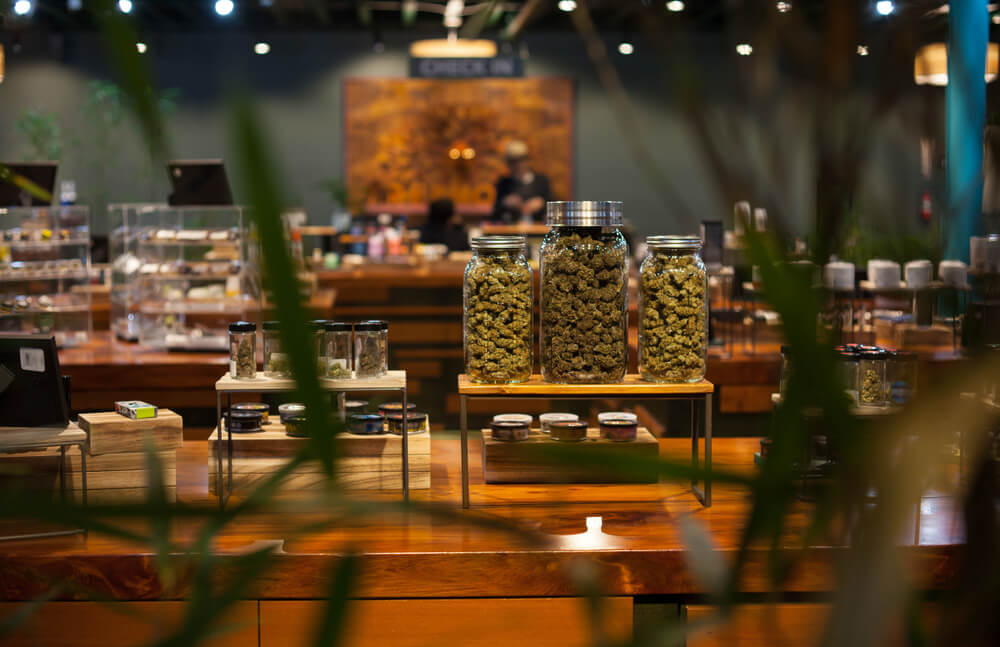
Member Blog: Protecting Your Cannabis Dispensary During The Coronavirus Outbreak
Amidst the coronavirus outbreak, cannabis dispensaries across the U.S. are posting record sales numbers. Many people are stocking up on what they consider to be the essentials. While we are always excited when our clients see increased sales, we need to emphasize the following:
Do not trade a short-term jump in revenue for the long-term damage you can do to your customers, employees, and community by continuing to operate your business as usual. It is NOT business as usual for most Americans right now, and precautions need to be taken by dispensaries that are continuing to operate.
Be ahead of the curve. Be proactive with the measures we outline below rather than just responding to coronavirus restrictions when you are required to. It shows that you put your customers and staff’s health ahead of profit… Which you should be doing anyway. Being the first in your market to voluntarily adopt these precautions is newsworthy, and you may be rewarded with some media coverage if you spin it right.
Cannabis is a medical necessity for many of your customers, whether they do their actual shopping on the rec or medical side. And your employees are depending on their jobs to continue to support their families during this very difficult time. That’s why we encourage dispensaries to continue to serve their customers and staff but to do everything in their power to reduce the risk of spreading COVID-19. And while there is no way to eliminate the risk entirely while continuing to operate, there are many things you can do to reduce the risk of spreading the virus amongst your staff and customers.
Encourage online ordering
If your dispensary is in a market that offers online ordering, offer incentives to encourage customers to do this. Make sure you send e-blasts and text messages advertising the incentive, and include a pop up on your website promoting it.
Offer curbside pickup or delivery
If you’re in a state that allows it, like Michigan, offer curbside pickup. Many places already offer delivery. Either of these are far better options than allowing people into your store, and should be encouraged with an incentive. If you need to beef up your delivery staff, remember that there are many, many folks in the service industry that are now desperately looking for work as restaurants and bars are closed down. If you’re in a market that allows curbside pickup, delivery, and/or order ahead, then considering shutting down in-store purchases completely.
Limit the number of people in your waiting room and/or store
Social distancing is the mandate across the entire country, so reducing the number of people physically in your dispensary at any one time is critical. Consider a “call-back” service, similar to how many restaurants operate their seating. Customers give you their name and phone number and are added to a list. They can then go wait in their car until you call them to come into the store to make their purchase. It slows down the customer flow but will drastically reduce the number of people in close proximity.
Require hand-sanitizing before entering the store
This one is simple! In most states, dispensaries have the right to refuse service to anyone for any reason. Have an employee stationed at the door and require customers to apply hand-sanitizer before entering the premises. Refuse service to anyone that won’t use the hand-sanitizer.
Rotate staff on “round-the-clock” cleaning
Every business that remains open should be conducting a deep cleaning multiple times per day. Critical to that is sterilizing the “problem spots” that are most commonly touched by customers and staff inside your store. Light switches, door handles, credit card terminals, ATM buttons, and computer keyboards. If you have a location and staff large enough to support it, then consider round-the-clock cleaning of the interior.
Shut down your store
Drastic times call for drastic measures.Pro-actively closing down your cannabis dispensary even before it’s required by law may be the best option for some business owners. In certain markets, it may be the only responsible choice. Consider the fallout and permanent damage to your business if a customer or employee is infected, gets seriously ill, or dies because of an interaction they had in your store.
It’s important to keep in mind that this jump in sales and/or complete closure are only temporary. Regardless of what you do with your dispensary, consider the long-term implications of your business choices.
When things do return to normal, how will your stakeholders view your actions or inactions?
If you must close your dispensary, keep your community close and engaged. Consider offering formal and informal virtual events, merch giveaways, contests, or educational webinars. There are lots of streaming and collaboration tools available, including many that are free or nearly free.
Johnathan McFarlane is the Director of Strategy at Hybrid Marketing Co. Hybrid Marketing Co is a Denver-based branding and marketing agency that specializes in building custom strategies that supercharge growth and drive revenue. Working with brands and businesses across the U.S. and Canada, Hybrid’s partners run the full-spectrum of the cannabis world including dispensaries, manufacturers, cultivators, and ancillary businesses. Visithybridmarketingco.comto learn more about theHybridapproach.
We have plans in place with several of our clients to maintain their brand visibility if a total shutdown is necessary. We are offering completely free continuity-planning sessions for any cannabis business that is worried about their future.
A Message For Our Members About COVID-19
As the coronavirus pandemic becomes more severe and containment measures increasingly disrupt our normal lives, I’m sure many of us share the same concerns. Will my loved ones and I be safe and healthy? What will happen to my job or business? What does the future look like?
In periods of such uncertainty, I always look to family. Not just my own, but my NCIA family – our staff and valued members who have stood with us through so many challenges. I know that together, we can all get through any struggle.
Perhaps just as importantly, I rely on NCIA’s core values to guide me in difficult times.
First and foremost, we have a responsibility to promote the health and safety of our communities by doing whatever is necessary to halt the spread of the virus.
For the past several days, NCIA’s staff has been working remotely in Washington, D.C., Denver, and California. And we are proudly advocating for federal relief for the industry, still pushing for Congressional reforms as much as possible under the current limitations, and continuing to build inclusive coalitions across the country.
And we are educating state policymakers on the need for consumers, especially patients, to obtain clean and tested cannabis from legitimate sources for the duration of the coronavirus response. NCIA and our allies are reaching out to state governments, urging them to declare cannabis businesses “essential” as early as possible and to take measures to facilitate safe access. You can help us by personalizing this template letter and sending it to your governor.
We understand the frustration and fear that many of our members may be feeling as we move forward into unknown territory. However, our industry is used to weathering the worst of storms and thriving in the harshest environments. The number one priority for everyone should be to minimize the duration and impact of this horrible situation that is costing lives.
As such, we are urging all our members to do the following, as applicable to you or your businesses:
Please strictly adhere to all federal, state, and local health guidance. This is essential for slowing the spread of the virus as soon as possible.
Prioritize patient access. At a time when the healthcare system is already overburdened, it is vital for our most vulnerable neighbors to be able to get the medicine that works best for them.
Limit in-person retail operations to maximize social distancing and utilize alternative service options. We should try to go above and beyond official guidance, as well as encourage things like delivery, online ordering, drive-thru, and curbside pickup where available.
Implement additional cleaning and sanitary practices at every level. This industry is already a great example of cleanliness, but we can always do better.
Encourage telework to the greatest extent possible. There are many ways to make this easier in the modern workplace, and it is quickly becoming the norm during the pandemic.
If you can, please consider contributing to local efforts to assist those most in need in your communities. Coronavirus is affecting everyone, but some are feeling the impact much more than others. Generosity and compassion will help us all get through this together and come out stronger.
In order to protect the safety of our staff, event partners, and members, we have postponed our 10th Annual Cannabis Industry Lobby Days — originally scheduled for May — to September 15-17. We are committed to providing the value embodied by the affected events to our members later this year, and in the meantime, we will be creating new digital opportunities to learn, network, advocate, and make your businesses stand out.
We continue to monitor all our other events including the Cannabis Business Summit in San Francisco, and will be in touch in the days ahead with any updates.
NCIA is confident that the industry will rise to this occasion and continue to grow and thrive. Because that is exactly what we do best! We persevere and overcome obstacles that seem insurmountable. And we assure you that NCIA will continue to represent the industry in our nation’s capital and offer support to help you get through the weeks and months ahead.
In health and unity,
Aaron Smith
Executive Director and Co-founder
National Cannabis Industry Association
How To Stay Politically Engaged in the Age of COVID-19
Photo By CannabisCamera.com
by Michelle Rutter Friberg, NCIA’s Deputy Director of Government Relations
Over the last few weeks, life in America has changed, and will remain so for the foreseeable future. However, even though most of us are practicing social distancing and working from home, there are still ways to remain politically engaged during this election year. Whether you use these tips to talk to members of Congress about COVID-19 or cannabis legislation, we encourage you to continue to communicate with your elected officials.
Here are a few ways you can do that from the comfort (and safety) of your own home:
Call your legislators
In the age of technology, we are lucky to have so many different ways to communicate with each other. Arguably, one of the most effective ways to contact your representatives and senators is by calling their offices. You can check out NCIA’s website for some do’s and don’t’s of calling, and if you need your elected officials’ contact information, you canfind it here. Pro-tip: try calling your legislators’ district offices – they are usually less inundated with calls than their D.C. counterparts.
Go old school: write a letter (or an email)
Sometimes it’s nice to be able to sit with your thoughts and write them down – plus, it’s also a great way to pass some time while at home. Put those skills to work and consider writing your elected officials a letter or an email. Remember to always keep it professional, but also be sure to include your personal story.
Stay informed: read the news, a book, or listen to a podcast
As citizens, we all have a duty to stay informed, and this is a great time to delve into some new content! You can settle in with your favorite cannabis product and a good book (politics, history, or whatever you like!), or hop online to check out the news or go down a Wikipedia rabbit hole. If reading isn’t your thing, try searching for a new podcast – we recommend NCIA’s Cannabis Industry Voice. One rule, though – always make sure whatever you’re consuming is from a reliable source.
While no campaigns are knocking on doors right now, there are still opportunities to get involved with one and help out from home. With 2020 being an election year, it’s important to remember that you don’t have to volunteer to help with the presidential race, either – you can help a local or state candidate, or a member of Congress. You can volunteer for the RNC, or if you’d prefer, help out the DCCC. Making phone calls for a candidate is also a great way to get some social interaction!
Follow your elected officials on social media
Once you’ve identified who your elected officials (or candidates) are, find them on Facebook, Twitter, and Instagram. Not only is this another great way to get in touch with them, it’s also a way to stay informed as many of them are holding virtual town halls and “live” sessions. When interacting with these accounts, always remember to remain respectful.
Here at NCIA, we are all encouraged by our members and their dedication to patients, consumers, and overall public health, and we will continue to serve and advocate for you, even during these difficult times. COVID-19 will not last forever, and we will soon be back in the halls of Congress talking to members and their staff about the importance of reforming our outdated cannabis policies. Until then, stay home, stay safe, and stay healthy!






 Faai Steuer is VP of marketing at Cova Software, the fastest-growing cannabis retail POS in North America. An entrepreneur at heart, she has a passion for growing startups and building brands. With 20 years of marketing experience in CPG and retail tech, she lends her knowledge and best practices to help cannabis entrepreneurs in the U.S. and Canada open their first store and grow their business through vital thought leader content.


 Johnathan McFarlane is the Director of Strategy at Hybrid Marketing Co.


Follow NCIA
Newsletter
Facebook
Twitter
LinkedIn
Instagram
News & Resource Topics
–
This Just In
NCIA Applauds Reintroduction of SAFE Banking Following Lobby Days
Beyond Rescheduling: Inside NCIA’s 14th Annual National Cannabis Industry Lobby Days