Member Blog: Four States Legalized Cannabis in November – Here’s What That Means for the Industry

By Aaron Rosenbluth, Director of Content at Hybrid Marketing Co.
Voters in New Jersey, Arizona, South Dakota, and Montana legalized adult-use cannabis sales during November’s election. So, what comes next?
Last month, Americans in four states voted to legalize adult-use cannabis.
If you’re an adult over 21 in Arizona, New Jersey, South Dakota, or Montana, theoretically, you’ll be able to consume and purchase cannabis legally in 2021.
To many Americans, the end of cannabis prohibition in these states looks like a sudden act of voter mobilization. But industry insiders know it took years of work by activists, business people, and lawmakers to make legalization possible.
Before adults can legally purchase and consume cannabis, lawmakers in each state must outline rules and regulations, and dispensaries must go through intense licensing processes before opening their doors to the public.
The process won’t happen overnight.
In some newly legal states, it could take close to a year to iron out the details. And in the past, it’s taken even longer.
Take Massachusetts, for example. Voters cast their ballots in favor of legalization in 2016, but the first dispensary didn’t open until 2018.
Maine’s citizens also voted in support of legal weed in 2016, but it took four years for the first dispensary to open. The first two retailers – SeaWeed and Theory Wellness – opened on October 8 of this year.
“It has taken four years to move from referendum to retail sales since Mainers narrowly approved the legalization of recreational cannabis at the ballot box in 2016. Legislative rewrites, gubernatorial vetoes, a change in state administration, and then the impact of COVID-19 pandemic have combined to make Maine’s rollout the slowest in U.S. history.” – Portland Press Herald
Lawmakers in New Jersey are trying to speed things up. Democratic Senator Nick Scutari wants to move quickly to pass legislation modeled off a 2019 legal cannabis bill he sponsored. Still, legislators are fighting over the details. New Jersey’s Medical Marijuana licensing policies force applicants to pay large sums to compete for a limited number of licenses, allowing big businesses with deep pockets and holdings in other legal states to make millions.
Some New Jersey lawmakers are trying to keep the same from happening when adult-use dispensaries open their doors by prioritizing local businesses.
Arizona lawmakers anticipate legal cannabis sales to begin as early as March. The state plans to prioritize licenses for owners “from communities disproportionately impacted by the enforcement of previous marijuana laws.” Arizona’s 123 medical marijuana dispensaries will have the first opportunities to apply for adult-use licenses in January after the Arizona Department of Health Services writes the rules.
Entrepreneurs in South Dakota and Montana are ready to apply for dispensary licenses, but they, too, will have to wait.
In South Dakota, lawmakers say dispensaries will be open and selling legal adult-use cannabis by July 1. In Montana, people should be able to legally purchase cannabis on October 1, barring any bumps in the road.
Have we reached a tipping point?
The public’s view of cannabis is changing. One in three Americans now live in a state with legal weed, and, according to a recent Gallup poll, 68% of Americans support federal cannabis legalization. So, have we reached a tipping point?
That’s hard to say.
Thirty-six states now have a legal medical cannabis system. When sales begin in Arizona, New Jersey, South Dakota, and Montana, more than twenty states will have fully legalized cannabis. And while federal cannabis reform might be a defining aspect of the incoming administration’s legacy, legalization is mostly dependent on congress, and it’s still unclear which party will control the Senate next year.
Democratic leaders have pledged to end federal cannabis prohibition. If the Democratic party wins Senate control, full legalization is almost a certainty. But if Republicans maintain their Senate majority, the Republican party’s past approach to cannabis doesn’t indicate their leaders are ready to support far-reaching reform. Still, federal cannabis legalization isn’t outside the realm of possibility, even with a Republican-controlled Senate.
Only time will tell.
And again, regardless of what happens politically, it’s obvious America’s opinion of cannabis isn’t what it once was.
Oprah asked former President Obama if he and Michelle indulged in “pizza, pot, or alcohol” on election night in a recent televised interview. When a television icon casually asks a former President if he smoked weed with the former first lady, you know attitudes are changing.
Could federal cannabis legalization be the key to healing our COVID-ravaged economy?
This year, COVID-19 slowed the progress of cannabis legalization for individual states, but the pandemic could help push federal legalization forward next year. Here’s why.
A federally legal cannabis industry would accelerate America’s economic recovery.
The pandemic has had a catastrophic impact on many industries, and while a lot of employees will return to work, many jobs will be forever lost. The longer it takes for people to find employment, the longer it will take for the economy to recover.
The end of federal cannabis prohibition would create thousands of new jobs and reverse the pandemic’s adverse economic impact.
Here’s a point to consider: according to estimates from New Frontier Data, America’s legal cannabis market could be worth nearly $30 billion by 2025 – and that’s without federal legalization. If government officials choose to end federal prohibition next year, the estimates will increase dramatically.
For cannabis dispensaries, cultivators, cannabis-adjacent businesses (like cannabis marketing agencies), and American citizens, a nationwide end to prohibition would be life-changing.
But again, what the immediate future holds is anyone’s guess.
 Aaron Rosenbluth is Hybrid Marketing Co‘s Content Director, and he loves to write blogs. He’s written so many blogs that he’s lost count. And beyond his skills as a copywriter and storyteller, he’s an obsessive reader and researcher. Aaron writes on subjects ranging from cannabis to collaboration, social equity to HR software, interior design to cybersecurity. His words attract, engage, educate, and convert. Btw, Aaron hates the phrase “content is king” (even though content is king – and queen).
Hybrid Marketing Co is a Denver-based branding and marketing agency that specializes in building custom strategies that supercharge growth and drive revenue. Working with brands and businesses across the U.S. and Canada, Hybrid’s partners run the full-spectrum of the cannabis world including dispensaries, manufacturers, cultivators, and ancillary businesses. Visit hybridmarketingco.com to learn more about the Hybrid approach.
Member Blog: How to Launch Online Ordering and Dispensary Procedures During COVID-19

by Faai Steuer, VP of marketing at Cova Software
The growing coronavirus outbreak in North America has affected businesses of all sizes and sectors, including cannabis dispensaries. Many states have categorized medical dispensaries and retail cannabis stores as essential businesses. But it’s extremely important that any cannabis retailer choosing to stay open during this time take extra precautions to keep their staff and customers safe while still staying compliant with local and emergency laws.
COVID-19 Plan
5 Steps to Get Started With Online Ordering and Delivery Service
Review local laws and identify your strategy
It’s not easy to quickly change the way you operate your cannabis business, but it can be done. Look to see how other industry leaders across the country are handling this moment. Check if your state allows for online ordering and in-store express pick up, curbside pick-up, delivery, and drive-thrus here.
Use technology to stay compliant and make your vision come to life
You will have to rely more on retail technology while human interaction and in-person sales are not possible. Online ordering, delivery, line queuing, and no-touch ID verification policies will all require reliable tech. Check with your current POS if they have a workaround to facilitate the new process and integration with an online ordering platform.
Re-design your store layout
Change your store layout to further limit exposure. Take all of the products out of display cases and instead use that space to store fulfilled online orders. Use ropes or another barricade to ensure a six-foot distance between customers and sales counters. Install sneeze guards in front of checkout stations. Use tape or signage to mark where customers should be standing (six feet apart).
Develop operating procedures
These changes will require an update to your operating procedures. You will need a few employees dedicated to packing online orders and another employee on the floor ensuring customers are far enough apart and surfaces are consistently sanitized. If employees are feeling sick, require them to stay home. Some dispensaries are even taking the temperature of employees before every shift.
Train & protect your staff
Be sure to limit the number of customers in the store at a time, so there is ample distance (3-6 feet) between people. Protect your employees and customers with the following equipment:
- Touchscreen-friendly gloves for employees
- Alcohol swabs for any surface customers touch at the POS
- Hand sanitizer
- Masks
- Lysol or other CDC-approved antibacterial cleaning spray
Sign up for a free webinar on March 31: How to launch an online ordering and delivery program during COVID-19.

 Faai Steuer is VP of marketing at Cova Software, the fastest-growing cannabis retail POS in North America. An entrepreneur at heart, she has a passion for growing startups and building brands. With 20 years of marketing experience in CPG and retail tech, she lends her knowledge and best practices to help cannabis entrepreneurs in the U.S. and Canada open their first store and grow their business through vital thought leader content.
Cova is an award-winning, seed-to-sale compliant POS with an intuitive design and robust tech platform, making it the most reliable cannabis POS system on the market. Cova helps dispensaries simplify compliance, raise the customer experience bar, and increase revenue through automated compliance capability, express check-out app, and integrated delivery solutions. Learn more at www.covasoftware.com.
Committee Blog: California Social Consumption Leads the Way

by Debby Goldsberry, Magnolia Wellness
NCIA State Regulations Committee – Social Consumption Subcommittee Co-chair
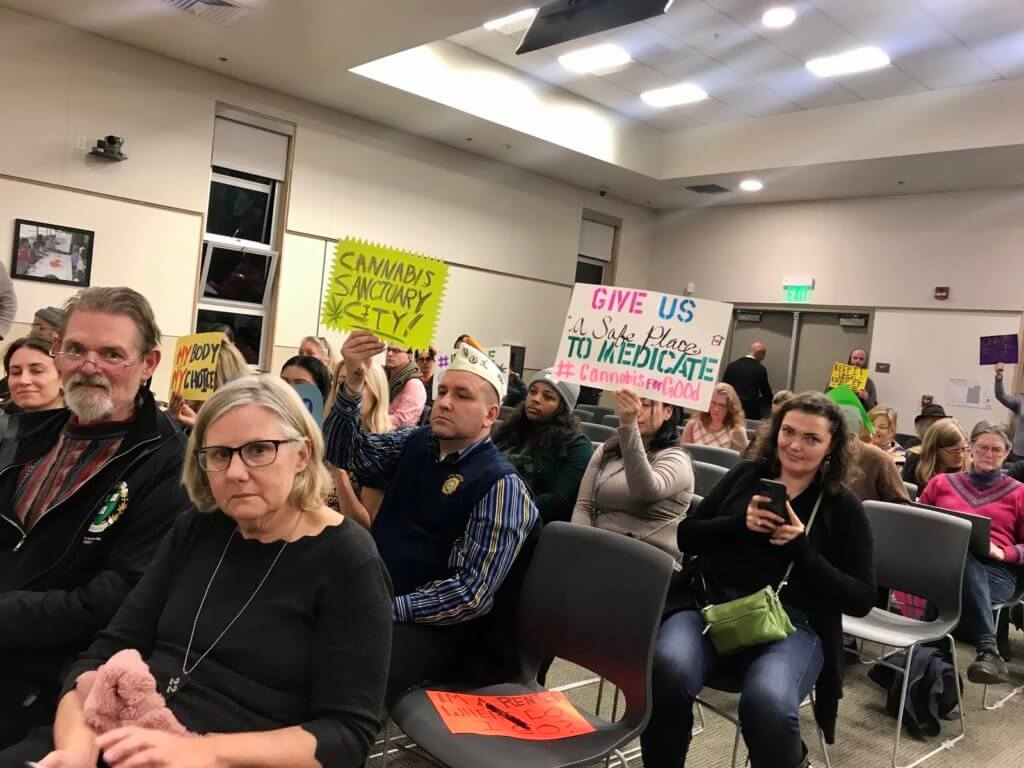
It was January 28, 2020: It’s a full house at the Berkeley City Council meeting, with comprehensive changes to the city’s marijuana regulations on tonight’s agenda. The biggest issue, with supporters of both sides attending, is the vote to consider legalizing cannabis consumption at specially designated licensed dispensaries.
The proposal to allow smoking, vaporizing, and consumption of edible goods is supported on one side by a phalanx of marijuana advocates and dispensary operators, and on the other side, it’s the city Health Department and Berkeley’s famously NIMBY neighbors. This conflict runs deep; cannabis users want dignified, legal facilities where they can gather and use marijuana, and several dispensary neighbors and the health department want this idea squashed, full stop.
Fact is, people have long gathered together to share cannabis, as shown by an extensive recorded history of use. This spans from ancient Sumerians, who built huts and vaporized cannabis on burning coals inside, to underground marijuana smoke-ins in the 70s and 80s, to now, where cities are licensing legal cannabis consumption facilities for adults.
California is helping lead the United States consumption lounge movement. For example, California’s Bureau of Cannabis Control (BCC) regulations (Section 5025) explicitly contemplate the possibility of consumption lounges, stating that “this section shall not be interpreted to prohibit cannabis consumption on the premises of a licensed retailer or licensed microbusiness authorized to engage in retail sales,” as long as they are locally licensed and approved.
Already, numerous California cities have created licenses for this, including Oakland, San Francisco, Emeryville, West Hollywood, Palm Springs, and Santa Rosa.
The state law also created Temporary Cannabis Event Licenses, where onsite consumption is allowed at festivals like the High Times Cannabis Cup and the Emerald Cup. Yes, with city or county and state permission, it is possible to throw your cannabis dream event, but there are a limited number of locations in only a handful of places that allow these uses (including my hometown, Oakland). This makes it hard to get these licenses, and the costly and complicated regulations are hard to meet once you have one. Anyone hosting a Temporary Cannabis Event can expect to interact closely with the BCC regulators, who will surely attend to ensure compliance.
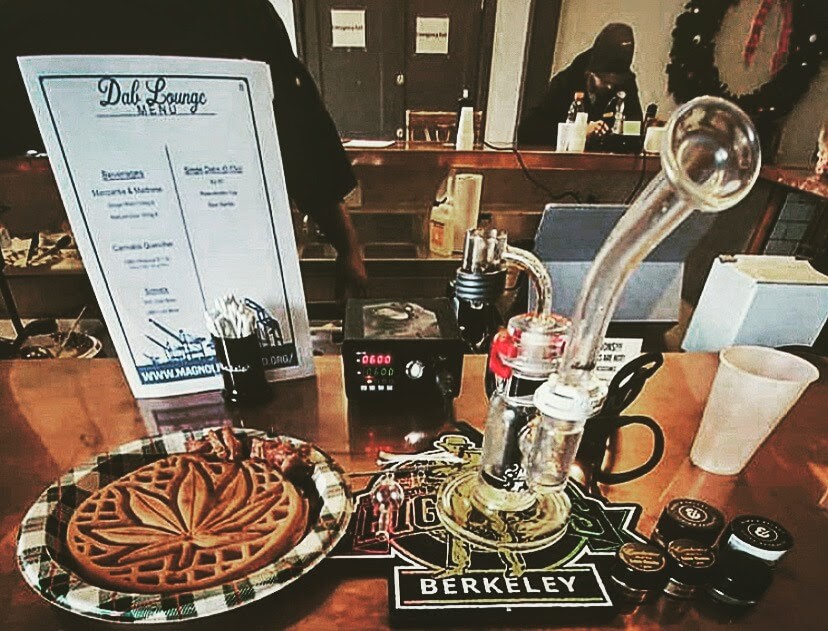
Cannabis consumption facilities are nothing new in California. They have long existed, ever since Dennis Peron opened his first dispensary in San Francisco in the early-1990s. His famous location on Market Street was five stories high, literally, as each floor contained tables, couches, and chairs where patrons could hang out and consume cannabis. When the Compassionate Use Act of 1996 passed, collective dispensaries started opening across the state, despite federal illegality and the occasional raid because of it (Dennis was raided by the feds and forced to close in 1998).
I opened my first cannabis consumption lounge at Berkeley Patients Group in 1999, which was long before it was legal to do so. This was under the cover of tolerance provided by Proposition 215; after all, not even dispensaries were actually made legal by this groundbreaking initiative. That didn’t happen until the state legislature passed the aptly named SB 420 in [year], after which most cities grandfathered in their existing cannabis dispensaries. (Not all, though. Some municipalities used this transition as an excuse to ban dispensaries, or to close existing ones, during long periods of regulatory contemplation.) Berkeley allowed onsite consumption until the early 2010s, when the local regulatory processes changed. Hence, the City Council vote tonight to decide the fate of onsite consumption here once again.
Now, I own Magnolia Wellness dispensary in Oakland, where local regulations have allowed cannabis consumption at specifically licensed dispensaries since 2017. Magnolia’s Dab Bar and Vapor Lounge was the first legal consumption lounge in the East Bay. We have café style tables, a gorgeous full, copper top bar, glass dab rigs with e-nails, Vapexhale and Volcano vaporizers, and a variety of tasting events where people can try samples. Unfortunately, Oakland’s dispensary law only allows vaping, edibles, and topicals, limiting smoking to additionally permitted outdoor patios, none of which currently exist. (Full disclosure: I also co-own Hi Fidelity dispensary in Berkeley, too.)
San Francisco, on the other hand, has more than a dozen shops where cannabis smoking, vaping, and edibles consumption are all allowed. SPARC, one of the first lounges in the city, has tasteful tables and chairs right in the main dispensary, where volcano vaporizers can be used onsite. Vapor Room, a few blocks away, is a smaller neighborhood joint, with a handful of seats for people to sit and enjoy smoking or vaping. According to owner Martin Olive, it was a costly HVAC system, at a near six-figure expense, that allowed his facility to host its cannabis smoking patrons. Moe Greens, the latest licensed lounge to open in the city, took four long years to get licensed, but is now a beautiful facility, with cushy booths for smoking and a counter service dab bar with top-of-the-line e-nails and dab rigs for patrons to use.
West Hollywood is the biggest news on the California consumption lounge scene, as the city recently licensed 16 facilities for on-site consumption. Half of these facilities will allow retail sales and consumption, while the others are allowed to sell only single-use items, designed to be consumed café style, while patrons are on-site. This plan has been controversial, though, because in issuing these licenses, the city took permits away from several of the long-existing dispensaries, re-issuing them to new operators. The ensuing lawsuits and legal battles will surely play out through 2020.
There is another big problem in West Hollywood: the state law does not match up with their rather forward-looking ideas for cannabis cafes. For example, cannabis cannot be blended into café food and served on the spot, as the city imagined when creating this law; Cannabis can only be sold pre-packaged and tested, per BCC regulations. Furthermore, state-licensed cannabis businesses are not allowed to sell anything but cannabis products (and a shortlist of branded items like mugs, lighters, and pipes). In other words, they can’t sell non-infused foods or beverages like coffee, soda, or tea (or, since we are talking West Hollywood, kombucha and smoothies).
Until state law changes, the plan is stuck in limbo, with facilities looking for creative workarounds to allow food and beverage service.
So, despite the West Hollywood ordinance passing in late 2018, only one facility has opened there, and even this has hit roadblocks. In fact, they recently re-branded after only a short time in business, from Lowell’s Café to the Cannabis Café, after a regulatory crackdown hit the Lowell’s brand hard. It remains to be seen when the other 15 cannabis lounges will open there.
Back in Berkeley, staff from the Health, Planning, Police and Economic development offices joined forces with the Berkeley Cannabis Commission to present the City Council with a comprehensive plan to update the city’s cannabis ordinance. Diverging opinions meant that the agenda contained competing proposals on several of the ten proposed ordinance changes, with the Cannabis Commission leading efforts to create progressive changes, and the Health Commission stuck on the old trope, “we need more research.”
Elizabeth Greene, City of Berkeley Senior Planner, explained to Council that these proposals have been in development since 2017, with the goal of expanding the rules to protect the entire cannabis supply chain, from seed to sale. This includes development of two new license types, cannabis consumption lounges and non-retail dispensary licenses.
“State law allows for consumption lounges as part of a retail license, as these are the only facilities open to the public,” Greene says. “Currently, consumption lounges are not permitted in the City of Berkeley.” Her presentation made it clear that city staff recommended cannabis lounges be permitted, despite the worries of the Health Commission, whose representative commented that “legalization is new,” despite that cannabis sales have been regulated by the city for around 20 years.
Long time senior advocate, and ICANN dispensary owner, Sue Taylor spoke eloquently in support of the proposal to allow lounges. “Seniors need a place to learn about cannabis, how to use it and dosing, and you could do that in a vape lounge. I can’t go into their homes, but I can provide this education at a lounge,” says Taylor. “It’s not like a bar; at a bar, you just get sicker. A vape lounge helps people.”
Ultimately, the City Council agreed. By 11:30 PM, Mayor Jesse Arreguín called the vote, with the Council unanimously approving the entire proposal. Supporters filled the room with cheers, and long-time advocates like myself reflected on the fact that, yes, hard work and determination do pay off. Together, we may just end prohibition, once and for all — and have some fun, too.
Member Blog: Cannabis Dispensary Inventory Management Done Right – Best Practices

by Ben Curren, Founder of GreenBits
Discover how state-of-the-art technology can help your dispensary thrive.
Many first-time dispensary owners do not come from a retail background. The cannabis industry is full of entrepreneurs running into long-established retail processes for the first time.
Although the cannabis industry is new, many of the processes upon which it relies are not. Sales, marketing, and administration operate on the same foundations no matter what you are selling, from apples to zucchinis.
Inventory management is one of those ever-present aspects of retail. Every business that sells physical goods has to keep track of its stock, perform inventory audits, and synchronize inventory movement across multiple systems in order to operate.
Cannabis dispensary owners have additional demands to meet. They must implement solid strategies for meeting compliance needs, including comprehensive seed-to-sale tracking. Managing all of these demands while running a successful business can be overwhelming.
Automated Processes Improve Inventory Management
Optimization is the key to responding to the many demands of operating a retail store in a highly regulated industry. In the retail environment, there are never enough assets and resources to get every job done – certain processes need to be automated in order to free up time for higher impact work.
Inventory management is one of those critical-but-time-consuming activities that is ideally suited to process development and automation. Since cannabis dispensaries already have to report on every purchase and transaction that takes place in the dispensary environment, the data is already there.
Yet without a tailor-made technological solution, cannabis dispensaries find themselves spending valuable employee-hours manually entering inventory data into their systems. This necessarily takes time away from other, equally important processes.
Enhance Inventory Management in the Dispensary
Dispensary owners who invest in process development and automation quickly find that the retail service industry already offers many solutions to the kinds of problems they face. Streamlined cannabis dispensaries use these technologies to solve a broad range of problems:
- Inventory Categorization. A well-organized inventory is key to success in any retail environment. Dispensary owners that know which products sell best can place those products in the spotlight, further enhancing profits by focusing on their most successful lines.
- Automated Data Entry. Manual data entry takes time and produces little value. If there is one readymade way to improve retail efficiency across the board, eliminating manual data entry and freeing up employees to focus on more valuable work is the first step to take.
- Inventory KPIs. Key performance indicators (KPIs) help business owners identify opportunities to make better purchasing decisions, improve cash flow, and ultimately boost profitability. Dispensary owners that track data like inventory turnover are better-suited to make sound business decisions. More on these below.
- Automated Tracking. Tracking inventory movement through the retail environment is another time-consuming process that, although necessary, produces little value. Implementing automated solutions helps to streamline the process and lets dispensary owners put more energy into value-driving initiatives.
- Accurate Reordering. Dispensary owners that know when products are running low can reorder in time to prevent costly and embarrassing stockouts. This is key to maintaining a professional image in a regulated industry like cannabis.
- Streamlined Stocktake. Stocktaking plays a critical role in financial management. In order to know how much money the dispensary is really making, owners need to calculate how much liquidity is frozen in stock.
- Active Inventory Synchronization. Dispensaries that wish to synchronize their stock with a website database or an app like Leafly or Weedmaps needs to have a solid inventory system in place. Developing active inventory synchronization is key to selling products through multiple channels.
Which Key Performance Indicators Should You Track?
There are many different types of key performance indicators that relate to inventory management. Some of them are more important than others, but navigating the world of cannabis retail requires gathering enough data to calculate any of them when needed:
- Weeks-on-Hand. This KPI correlates to the efficiency with which the dispensary moves stock. If the figure is too high, it means that inventory is not selling at the same rate that new goods are coming in. This results in lower profitability due to storage fees and liquidity problems.
- Inventory Turnover Rate. This is a ratio that shows how many times the dispensary sold and replaced specific goods during a particular time period. This also tells dispensary owners how fast inventory is selling.
- Time-to-Receive. This metric shows how efficient dispensaries stock retrieval processes are. It measures the average time it takes for employees to validate incoming stock, add it to the inventory record, and shelve it in the appropriate place.
- Shrinkage. In a highly regulated industry like cannabis, shrinkage is dangerous. Dispensary owners need to be vigilant in recording any discrepancies between recorded inventory and actual physical inventory. Employers who catch discrepancies early can account for shrinkage before regulators come into the picture.
- Cost of Carrying Inventory. Holding products in stock costs money. This KPI helps dispensary owners calculate how much capital they spend holding and storing inventory on an annual basis. It allows owners to identify dead and slow-moving stock.
- Days to Sell Inventory. This KPI measures how long it takes to sell products in stock. When the number is high, it indicates inefficient inventory movement. When it is too low, stockouts become a risk. Every industry has its own average days-to-sell figure, cannabis included.
Maximizing dispensary efficiency requires gathering this data and acting on the insights it offers. This is only possible with specialized dispensary point-of-sale (POS) systems that adhere to the industry’s rigorous compliance standards on a state-by-state basis.
Invest in a Purpose-Built Point-of-Sale Solution
It takes more than drive and ambition to implement efficient inventory management in the dispensary environment. Dispensary owners need to deploy technological solutions that address the unique nature of the regulated cannabis industry.
This means investing in a POS system that auto-populates inventory database fields, consolidating sales data into a compliance-ready format. Dispensaries that collect high-quality sales data are able to manage growth while empowering their employees to continuously improve.
 Ben Curren is the Founder of Green Bits, the nation’s leading retail management and compliance platform for the legal cannabis industry. Founded in 2014, Green Bits helps legal cannabis retailers run compliant, operationally efficient and growing stores. The platform serves more than 1,000 cannabis retailers across 13 states and processes more than $3 billion in sales annually through its point-of-sale platform. In 2008, Ben co-founded Outright, an accounting program used by businesses for freelancers and consultants, that web-hosting company GoDaddy acquired in 2012. Ben is a frequent commentator in national outlets about tech, trends, business issues, and state and federal policy and regulation in the legal cannabis industry.
Green Bits provides smart management solutions that help cannabis retailers maximize performance and make better business decisions. Our robust retail platform – with automated state-by-state compliance, inventory control, and personalized insights – enables owners, managers, and budtenders to run, protect, and grow their businesses with ease. The company serves more than 1,100 cannabis retailers across 13 states and processes more than $3.5B in cannabis sales annually. Visit Green Bits for industry resources.

Follow NCIA
Newsletter
Facebook
Twitter
LinkedIn
Instagram
News & Resource Topics
–
This Just In
Committee Blog: Access to Capital in the U.S. Cannabis Market Outlook
Member Blog: The Risks of Removing a Regulated Cannabis Market