Puff, Pass, Prosper: The Insider’s Guide to Operating a Consumption Lounge | 12.20.23 | Committee Insights
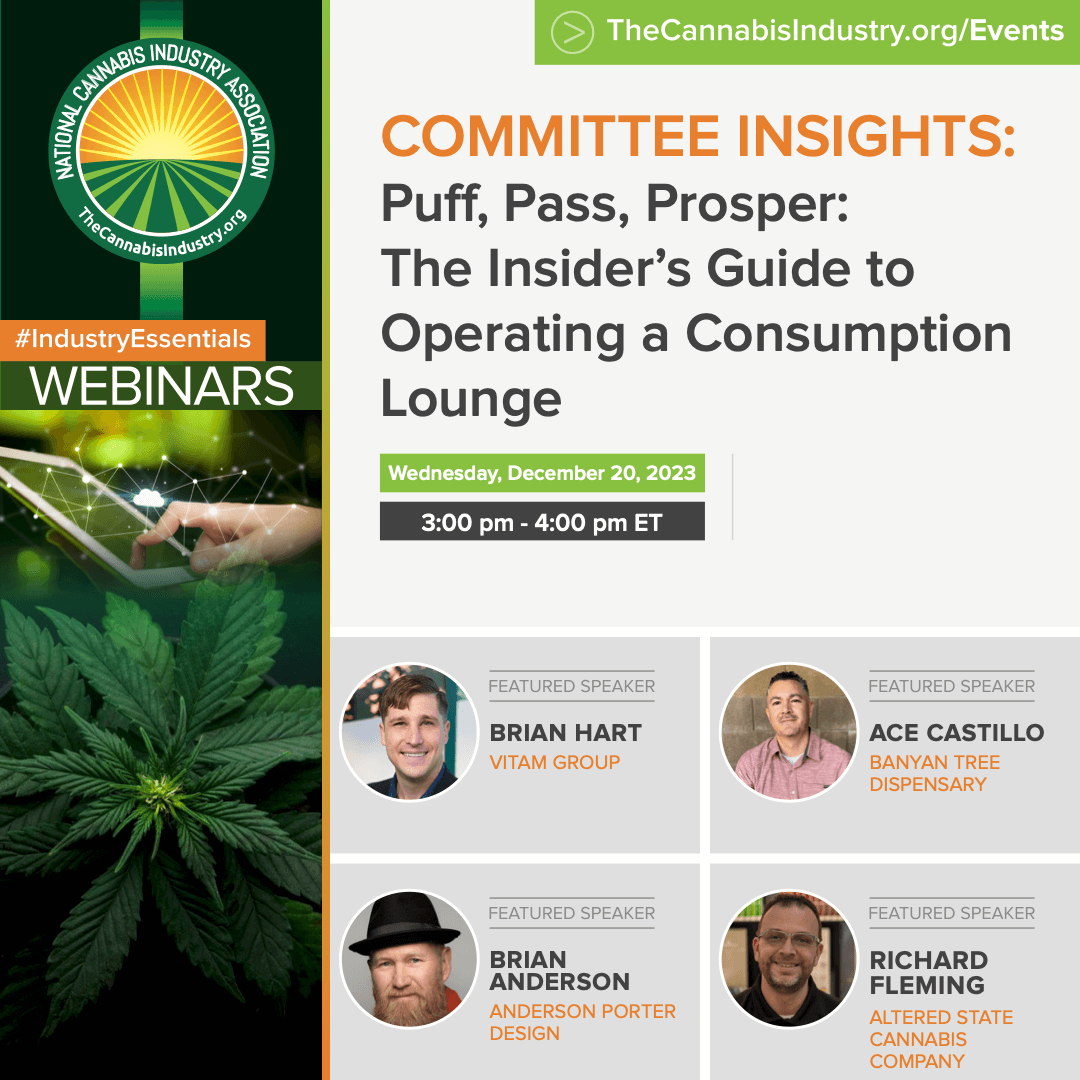
The cannabis landscape is experiencing a swift evolution, with one particularly captivating facet garnering considerable attention—cannabis consumption lounges. In a recent webinar titled “Puff Past, Prosper: The Insider’s Guide to Operating a Cannabis Consumption Lounge,” (or Designated Consumption Establishment) hosted by the National Cannabis Industry Association (NCIA), industry luminaries and entrepreneurs convened to exchange experiences, insights, and forward-looking perspectives on the future of cannabis consumption spaces.
NCIA Voices: Insights from Industry Leaders
Brian Hart, a panelist and member of NCIA’s Retail Committee, serving as moderator kicked off the conversation by introducing himself, shedding light on his background in the cannabis industry. Notably, Hart is venturing into the world of hemp beverages with his latest project, Vitam Group. His insights into the challenges of starting a cannabis-related business added a valuable entrepreneurial perspective to the discussion. Another panelist, Brian Anderson, an architect with 29 years of experience and Founding Partner of Anderson Porter Design, shared his extensive involvement in various facets of the cannabis space, including cultivation, manufacturing, and retail. Anderson’s emphasis on the design and architecture of consumption lounges brought a unique angle to the conversation. Richard Fleming, the founder and CEO of Altered State Cannabis Company, provided a glimpse into his journey from the legacy caregiver market to plans for a designated consumption establishment. Fleming’s personal story exemplified the transformative power of the cannabis industry. Ace Castillo, the founder and CEO of Banyan Tree Dispensary in Fresno, California, brought a regional perspective to the discussion. His journey from operating a dispensary under Prop 215 to his current ventures highlighted the evolution of the industry and the importance of enhancing customer experiences in consumption establishments.
Legal Considerations and Operational Challenges
The webinar delved into the intricate legal considerations and operational challenges associated with consumption lounges. The panelists emphasized the diverse landscape of rules and regulations across states and localities, with licensing requirements varying significantly. Federal challenges, including 280E taxes, posed additional hurdles for cannabis businesses.
State-Specific Insights
The discussion took a deep dive into the Californian market, where the Department of Cannabis Control does not directly regulate consumption lounges. Instead, local jurisdictions play a crucial role in granting licenses. The complexity of navigating both local and state regulations was highlighted, shedding light on the intricacies of the Californian cannabis landscape.
Insights into Cannabis Consumption Lounges
The panelists provided valuable insights into the definition and various forms of consumption lounges, ranging from health and wellness spaces to venues hosting diverse events. The panel stressed the importance of defining the underlying business model, reflecting the diverse approaches to operating such establishments.
Customer Experience and Community Building
Creating a positive customer experience emerged as a central theme, with an emphasis on dynamic and engaging environments. Brian Anderson suggested incorporating community spaces and rooms for rent, contributing to the overall positive atmosphere. The concept of consumption lounges as community spaces was explored, highlighting the potential for meaningful social connections.
Urban Environments and Cultural Shifts
Brian Anderson, leveraging his architectural background, provided insights into the demand for community spaces in urban environments. The discussion touched on the cultural shift in the perception of cannabis, emphasizing the role of consumption lounges in normalizing cannabis use. The positive social activity aspect of cannabis was underscored as a key contributor to changing societal perceptions.
Advocacy for Equal Treatment and Responsible Consumption
Advocacy for equal rights and privileges for cannabis consumers compared to alcohol consumers was a recurring theme. The panelists emphasized the responsibility of stakeholders in promoting responsible cannabis consumption. The importance of destigmatizing cannabis through collective efforts was highlighted, with designated consumption establishments playing a pivotal role in this cultural shift.
Community Engagement and Benefits
Engaging with the local community emerged as a critical factor for the success of cannabis-related businesses. Dispelling stereotypes and contributing positively to local economies were emphasized as essential components. The concept of community rooms and public benefits was discussed, showcasing the potential positive impact of cannabis businesses on the broader community.
Funding Challenges and Insurance Considerations
The challenges faced by social equity applicants in securing funding for their businesses were acknowledged. Richard Fleming shared insights into the difficulties of obtaining insurance coverage for consumption lounges, stressing the need for comprehensive coverage and collaboration with underwriters.
Conclusion
In conclusion, the NCIA webinar provided a comprehensive exploration of the complexities, challenges, and opportunities associated with cannabis consumption lounges. The webinar illuminated the legal intricacies, operational considerations, and cultural impacts of consumption lounges. It underscored the importance of responsible consumption, community engagement, and advocacy for equal treatment. As the cannabis industry continues to evolve, the webinar served as a compass, guiding stakeholders toward a positive and inclusive future.
In the spirit of collaboration and collective responsibility, the webinar left participants with a renewed sense of purpose. The journey toward destigmatizing cannabis and integrating consumption lounges into mainstream culture requires ongoing dialogue, engagement, and a commitment to positive change. As we bid farewell to the NCIA’s final #IndustryEssentials educational webinar of 2023, the stage is set for the industry to continue prospering, adapting, and shaping a future where cannabis consumption lounges are not just spaces of leisure but catalysts for positive societal transformation.
Unlock the Full Story: Watch the Full Webinar on NCIA’s YouTube Channel Today
To experience the complete coverage and immerse yourself in the nuances of operating a cannabis consumption lounge, we encourage you to watch the full webinar video on our official NCIA YouTube channel. Whether you’re an industry professional, an aspiring entrepreneur, or simply curious about the evolving cannabis landscape, this webinar offers a comprehensive guide to the challenges, opportunities, and cultural impacts associated with designated consumption establishments.
Unlocking Opportunities: Join NCIA for the 2024 Stakeholder Summit Series
As we wrap up our exploration of cannabis consumption lounges, we invite you to become an active participant in shaping the future of the cannabis industry. Joining the National Cannabis Industry Association (NCIA) offers an array of benefits, including exclusive access to invaluable networking opportunities, educational resources, and a vibrant community of industry professionals.
Why Join NCIA?
- Networking Opportunities: NCIA provides a platform for you to connect with like-minded individuals, industry leaders, and experts in the cannabis space. Networking is a powerful tool for staying informed, discovering new opportunities, and fostering collaborations.
- Educational Resources: Stay ahead of industry trends, legal developments, and best practices with access to exclusive educational resources. NCIA’s commitment to industry education ensures that you are well-equipped to navigate the evolving landscape of the cannabis market.
- Advocacy and Representation: By joining NCIA, you contribute to a unified voice advocating for the cannabis industry. NCIA actively engages in policy discussions, lobbies for favorable regulations, and works towards creating a conducive environment for cannabis businesses to thrive.
NCIA’s 2024 Stakeholder Summit Series
Looking forward, NCIA is thrilled to announce the 2024 Stakeholder Summit Series, a collection of events taking place across four different markets throughout the first quarter of 2024 leading up to the 12th annual Cannabis Industry Lobby Days. These summits are designed to provide deep insights, foster meaningful connections, and address the critical issues facing the cannabis industry.
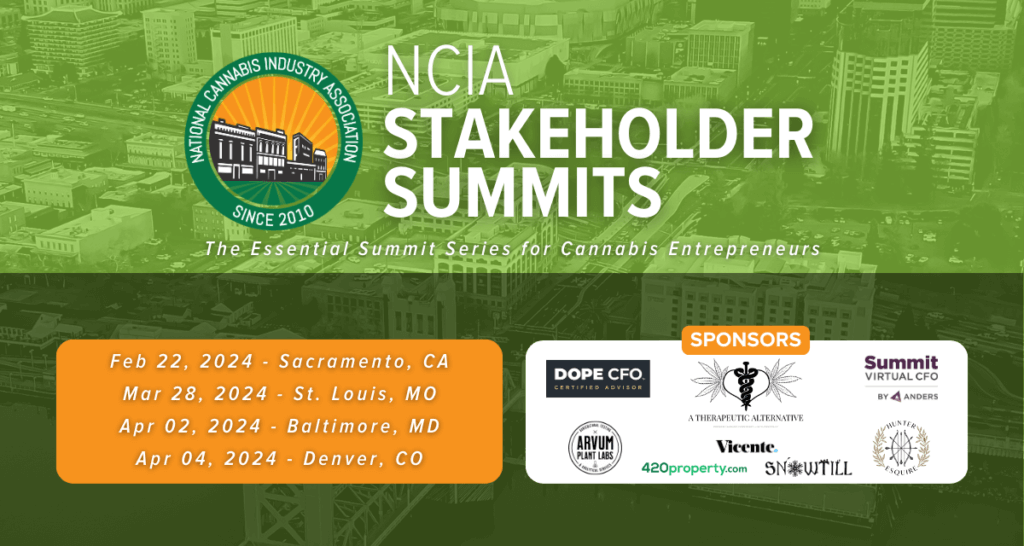
- Membership Perks: NCIA members enjoy complementary access to all events based on their membership level.
- Exclusive Pricing: Take advantage of discounted pricing on all sponsorship opportunities through the end of the year.
- Registration Deadline: Prices for sponsorship opportunities are set to increase on January 1, 2024. Act now to secure your spot at the 2024 Stakeholder Summit Series.
How to Join NCIA
Becoming a member of NCIA is a straightforward process:
- Visit the NCIA Membership Page to explore membership options.
- Choose the membership level that aligns with your needs and aspirations.
- Complete the online application to kickstart your journey as an NCIA member.
Act Now to Secure Your Spot
If you are passionate about the cannabis industry, committed to fostering positive change, and eager to stay at the forefront of industry developments, now is the perfect time to join NCIA. By becoming a member, you not only invest in your professional growth but also contribute to the collective strength of the cannabis community.
Don’t miss out on the opportunity to attend the 2024 Stakeholder Summit Series, connect with industry leaders, and gain insights that will propel your cannabis-related ventures. Act before the sponsorship pricing deadline on January 1, 2024, to lock in exclusive rates and maximize your visibility at these transformative events.
Join NCIA today and embark on a journey of knowledge, connection, and advocacy within the dynamic landscape of the cannabis industry. Your participation matters, and together, we can shape a future where the cannabis community thrives and prospers.

Follow NCIA
Newsletter
Facebook
Twitter
LinkedIn
Instagram
News & Resource Topics
–
This Just In
Member Blog: What Consumers Really Want in a Pre-Roll
Member Blog: The Evolving Cannabis Legal & Regulatory Landscape in 2026