State-Level Insights: Momentum Builds Across Our Nation
By Sadaf Naushad, NCIA Intern
Although the action-packed April must come to an end, the fight for cannabis reform never stops! With U.S. Senators delaying the much-anticipated introduction of the Cannabis Administration and Opportunity Act (CAOA) last month, Congress has a lot of work to do.
In the meantime, a congressional bicameral bipartisan committee is considering the Secure and Fair Enforcement (SAFE) Banking Act as an amendment to the House’s U.S. Innovation and Competition (COMPETES) Act.
Now let’s focus on action occurring within the states. State-level updates help provide us with insights on cannabis reform progress at the federal level. As more state constituents vote in favor of cannabis initiatives, reformation support overall increases within the United States. Efforts to reform cannabis policies at the state level encourage members of Congress at the federal level to enact legislation.
Let’s take a look at this week’s state-level insights:
New York
As the legal cannabis market is set to launch later this year, New York lawmakers intend to ensure that a sufficient supply of marijauna exists. Last month, state regulators voted to allow conditional marijuana cultivation licenses to several hemp businesses. Regulators also established that adults with prior cannabis convictions, along with family members who have previously faced criminalization, would receive the first round of adult-use cannabis retailer licenses – ahead of present medical marijuana businesses. This week, lawmakers recently approved a second round of applications for recreational cannabis cultivators. Additionally, the Cannabis Control Board (CCB) passed amended regulations granting medical marijuana patients to grow their own plants for personal use.
Delaware
A Delaware House Committee approved a bill that would terminate 50 years of cannabis prohibition and criminalization. For the second time in history, Delaware’s District 24 Representative Ed Osienski (D) introduced House Bill 371, legislation legalizing cannabis possession and gifting. The legislation is attached to a companion measure that would build a regulatory framework for the market. Its two-piece model comes after the House defeated a prior measure in March that incorporated both components.
South Carolina
An eight-year attempt to legalize medical marijuana in a largely conservative state abruptly came to an end on the House floor Wednesday. South Carolina’s District 13 Representative and House Leader John McCravy (R) ruled that the Session 124 measure comprises an unconstitutional tax increase, thereby ceasing further consideration of the bill. According to Representative McCravy, since the bill contains a tax on medical cannabis, lawmakers should have introduced the bill in the House under the state constitution’s article for legislation that raises revenue. The bill’s sponsor, U.S. Senator Tom Davis (R), is rapidly seeking other ways to keep the issue active as the session concludes.
Missouri
In preparation for the 2022 midterm elections, a Missouri House Committee approved a GOP-led joint resolution seeking to place cannabis legalization on the November ballot. Missouri’s District 98 Representative Shamed Dogan (R) sponsored an amended version of the legislation, in which The Special Committee on Criminal Justice passed in a 7-2 vote. The amended bill eliminated provisions that would remove the state’s current separate medical marijuana program and set regulations regarding taxation in the legal market. Under the amended resolution, marijuana offenses would be removed from the Missouri criminal statute, permitting adults to possess, use and sell cannabis without facing penalties.
Washington
State officials Lieutenant Governor Denny Heck (D), Attorney General Bob Ferguson (D), Treasurer Mike Pellicciotti (D) and Governor Jay Inslee (D) sent a letter to congressional leaders, outlining the urgency of passing the Secure and Fair Enforcement (SAFE) Banking Act. With Washington being one of the first states to legalize cannabis, lawmakers remain frustrated at the industry’s lack of access to essential financial services stemming from federal prohibition.
New Jersey
Last month the state attorney general’s office released a controversial document detailing how New Jersey’s marijuana laws currently authorize police to use cannabis when not working. This week, New Jersey lawmakers introduced a string of bills designed to encourage employers to penalize workers from consuming cannabis off duty in compliance with state law. Punishable workers specifically include law enforcement officers and first responders. Now, three new bills exist that intend to enforce restrictions on such activity for particular employees. New Jersey’s 6th Legislative District Representative Louis Greenwald (D) aims to amend state statute to contain the following provisions: penalizing police for using cannabis, conducting random drug tests and the right to refuse job applicants due to lawful cannabis use. Although Representative Greenwald’s bill targets police officers, two other measures presently remain that would also impose employment-based restrictions on lawful marijuana use.
Ohio
The Coalition to Regulate Marijuana Like Alcohol (CTRMLA) filed a lawsuit to keep cannabis legalization on Ohio’s November 2022 ballot. In December 2021, CTRMLA turned in petition signatures to Ohio’s secretary of state’s office, but the office deemed the signatures insufficient. To advance the legislative review of their measure, CTRMLA turned in additional petitions on January 13, 2022. According to the state statute, however, a ballot petition must be submitted “no less than ten days prior to the commencement of any session of the general assembly.” The session commenced on January 19, falling outside of that ten-day certification window. As a result, CTRMLA contacted Franklin County Court of Common Pleas, requesting a ruling on a prospective challenge concerning the timing of the group’s initial signature submission to Ohio for the reform proposal.
Stay tuned for more updates on cannabis policy reform. If you are interested in learning more about NCIA’s government relations work and how to get involved please reach out to Madeline@thecannabisindustry.org.
The Illicit Cannabis Market Puts Consumers At-Risk and Is an Existential Threat to the State-Legal Cannabis Industry
by Andrew Kline, NCIA Director of Public Policy
Photo By CannabisCamera.com
The illicit market is not working for anyone. The illicit market puts consumers at risk by offering untested, unregulated, and dangerous products, including “vape cartridges” filled with additives that are not intended for inhalation. These illicit vape products alone have caused 2,768 injuries and 64 deaths to date nationally. Pop-up dispensaries are selling illicit, unregulated, and untested products to unwitting consumers. Unscrupulous people are unlawfully selling cannabis products over the internet in violation of state and federal law, and online platforms are enabling the illicit market by advertising for illegal online and brick and mortar stores. Counterfeit and ready-to-fill packaging is being sold with fake lab results, batch numbers, and barcodes. Illegal growers are causing serious environmental harms. Even illicit market operators with the best intentions still put consumers at risk when they sell untested products produced in unregulated facilities.
And these illicit operators pose an existential threat to the regulated markets that voters have demanded. Operators are laying out significant funds for licenses and compliance to compete against an illegal, untested, unregulated, untaxed marketplace. Law enforcement is playing whack-a-mole. Consumers are often unaware of which operators are legal, particularly where illegal operators often have a veneer of legitimacy or have stolen the intellectual property of these regulated businesses to gain consumer trust. We need to make certain that reliable and safer products (tracked, tagged, and tested) are being sold in the regulated market. Trust in the safety of the supply chain is key here, with laboratory testing, traceability, and safeguards (eg: ability for recalls) as mandatory prerequisites.
On February 19, 2020, NCIA, along with NCIA’s Policy Council, former Boston Police Commissioner Ed Davis, and Commissioner Britte McBride, public safety appointee on the Massachusetts Cannabis Control Commission, partnered to facilitate an important discussion with law enforcement, advocates, and industry stakeholders seeking solutions to the illicit cannabis market. The summit brought together federal, state and local law enforcement; state regulators, cannabis entrepreneurs and multi-state operators, ancillary technology companies, and social equity experts. The purpose of the summit was to dialogue about the illicit cannabis market with the goal of developing recommendations on resources, policies, best practices, and public-private partnerships to share information.
Here are some key takeaways:
First, the cannabis industry needs to help law enforcement find alternatives to arrest and incarceration. Some states have been creative in their approach to combating the illicit market, by locking doors and shutting off electricity and water, levying fines, and prosecuting tax evasion. It is essential that we rely most heavily on alternatives to arrest and prosecution so that we don’t perpetuate the myriad problems associated with the “war on drugs.”
Second, the industry must better define the illicit market. The illicit market looks very different in Idaho than it does in Colorado. In Idaho, all sales are illegal and diversion from legal states into Idaho is a serious problem. In Colorado, state regulators are concerned about unsafe products being manufactured and sold outside of the state regulatory regime. So, we need to take a hard look at the products that are causing the most significant problems (injuries and deaths) and focus our attention on the most serious of those cases. Until we prioritize what we deem to be illicit market activity, it will be difficult to prioritize limited law enforcement resources.
Third, the industry needs to definitively determine the root cause of the illicit market. We know that three probable causes of illicit market activity are: (1) lack of legal access to cannabis and cannabis products and (2) price disparity between legal and illicit markets, largely due to high taxes of legal products, and (3) a lack of economic opportunities in marginalized communities causing people to turn to illicit sales. But, what are other causes and effects?
Fourth, the industry needs a forum for collaboration with law enforcement. The middle of a crisis is not the time to develop relationships.
Fifth, the industry needs a pathway for illicit market operators to enter the legal market. We can’t displace the illicit market unless we create a pathway for previous illicit market entrepreneurs to enter the legal market. That means that states must create realistic pathways to enter the regulated market for legacy illicit market actors. There are an increasing number of potential models here, from the states such as Massachusetts (which has led on attempting to prioritize social equity during license application processes) and Illinois (which made such pathways a key point in the legislation to create a legal market) to industry groups such as the Minority Cannabis Business Association (which has published recommendations for state regulators intent on incorporating social equity requirements into their licensee applications).
Sixth, law enforcement has competing demands and needs help prioritizing cases. What are the most egregious cases that warrant criminal arrest and prosecution? What are the cases that warrant automatic expungement? And what do we do with the cases that fall in between?
Finally, the industry needs to speak with one voice and start rowing in the same direction. The industry needs national messaging from states that have a regulated market to help dispel myths and prepare warnings for responsible use. We need to share information on packaging and labeling, testing, universal symbols, etc., nationally. And most significantly, the industry needs to start speaking with one voice and work to bring legacy businesses into the regulated market. NCIA’s Policy Council is committed to continuing efforts to create a safe place for everyone in the industry to begin that dialogue.
Andrew Kline is the Director of Public Policy for the National Cannabis Industry Association and leads NCIA’s Policy Council. He can be reached at Andrew@TheCannabisIndustry.org

 By Sadaf Naushad, NCIA Intern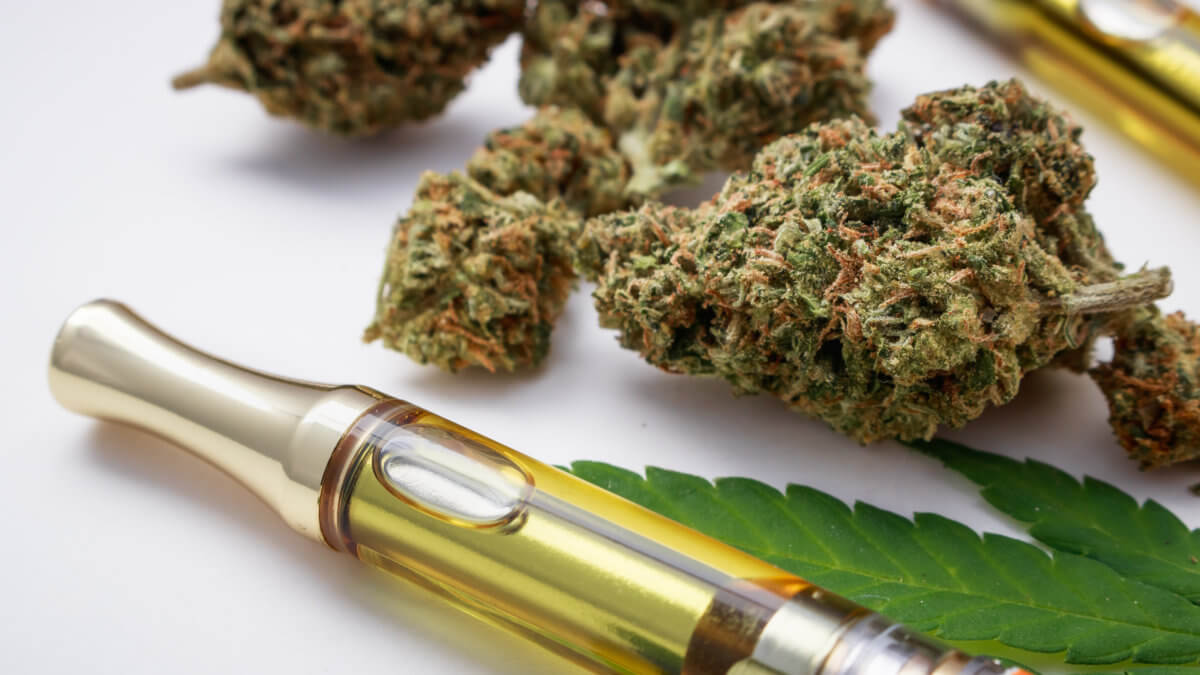

Follow NCIA
Newsletter
Facebook
Twitter
LinkedIn
Instagram
News & Resource Topics
–
This Just In
Committee Blog: Access to Capital in the U.S. Cannabis Market Outlook
Member Blog: The Risks of Removing a Regulated Cannabis Market