Member Blog: What I Learned from Serving as an NCIA Committee Officer
The National Cannabis Industry Association (NCIA) is a business-member organization of professionals from every sector of the legal cannabis industry, from seed to sale. I finished my tenure as Chair of the NCIA Education Committee (EC) in December 2023. I joined the EC in October of 2019 as a committee member and sequentially served as committee Organizer, Vice Chair, and Chair. I now have colleagues and friends in the cannabis industry due to networking through the EC, NCIA’s other 13 committees, and my participation in NCIA conferences, regional events, and Lobby Days.
People in the cannabis industry have a passion for their work that is unlike any other I have seen. NCIA members are professionals in their field, working as medical doctors, Ph.D.s, accountants, lawyers, insurance agents, and marketing gurus, among others. Among these professionals, I felt seen and supported.
As a committee, the members were encouraged by the NCIA staff to pursue our interests and direction for the committee. There was no NCIA agenda for our work. As NCIA members, we were free to choose our path for committee projects.
As an officer, I had access to the other NCIA committee officers in our monthly all-committee call. Each committee reported their work-in-progress and announced finished projects in the form of webinars, blog posts, or white papers. The content of the website is driven by the members, and much of the content is publicly available. It takes an army to deliver cannabis products to consumers, and that army forms at NCIA.
I have listened in awe to NCIA members articulate their knowledge, and others have written beautifully. NCIA has a strong voice in Washington for the mission of federal legalization of cannabis. NCIA members write talking points on their areas of expertise and freely share cannabis knowledge for the betterment of the industry. Members have an opportunity to shape policy at the state, federal, and international levels.
Before NCIA, I was not aware of the reality of the steps for passing legislation in Washington. I have learned about the long process and have been encouraged to use my own voice, from contacting my state and federal legislators to participating in lobbying organized by NCIA at their annual Lobby Days in Washington. I walked from congressional to senate office to office with a team to talk with staffers. I found the staffers open to the conversation about legalizing cannabis, and I learned from a few of them. Approaching a lawmaker as a member of NCIA carries more weight than being a lone concerned citizen.
The cannabis industry has businesses struggling to remain afloat, and membership revenue has declined. If your company is not an NCIA member, ask yourself if you are willing to lose your opportunity to shape the future of the cannabis industry. Then, sign up for membership and make a difference.
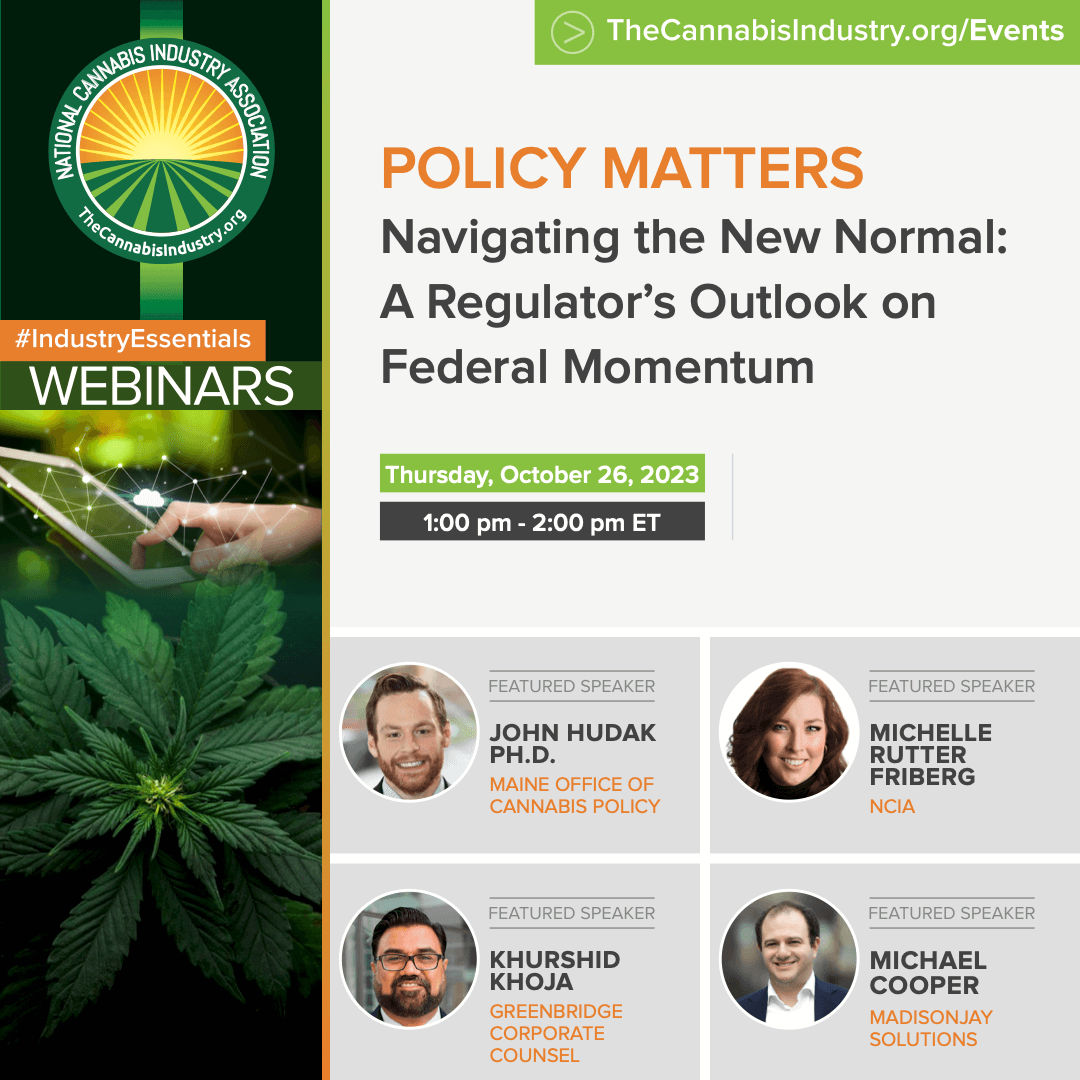
Navigating the New Normal: A Regulator’s Outlook on Federal Momentum | 10.26.23 | Policy Matters
Welcome to the second edition of our new Policy Matters series, dedicated to unraveling the intricate world of regulatory and policy dynamics within the cannabis industry. In the previous edition of Policy Matters, we had the privilege of hosting Will Tilburg from the Maryland Cannabis Administration, who shared his perspectives into the strategic aspects of designing a thriving cannabis market while meeting regulatory standards. This month, we continue our exploration into the world of cannabis policy, focusing on the potential implications of federal cannabis reform and recommended preparations for various stakeholders, including regulators, industry players, and the public.
In this #IndustryEssentials webinar series, we aim to provide Main Street cannabis operators valuable insights from regulators, industry experts, and advocates to keep you informed about the latest developments and challenges in the ever-evolving cannabis landscape. This article provides a comprehensive summary of the discussions, speaker highlights, and key takeaways from the event, continue reading and view the full recording below.
John Hudak: A Transition from Academia to Public Service
Our guest speaker for October’s edition of “Policy Matters”, John Hudak, serves as the Director of the Office of Cannabis Policy in Maine, a role he took on after serving as a senior fellow at the Brookings Institution. His background is an interesting blend of academic expertise and hands-on experience in state government and he touched on how this transition reflects his strong commitment to public service and his desire to implement real-world policies.
Hudak emphasized the challenges of engaging with industry stakeholders and regulators, even from a state perspective. He highlighted the importance of good public policy that not only benefits the cannabis industry but also safeguards the well-being of the people of Maine. His insights underscored the need for a balanced approach in crafting cannabis policies that are in the best interest of all stakeholders.
The Significance of Cannabis Rescheduling
The recent rescheduling recommendations of cannabis was discussed as great momentum in the right direction on the path to federal cannabis reform. While it wasn’t expected to lead to full descheduling, rescheduling still represents a positive step forward. This shift in classification may offer some much-needed tax relief for an industry that has faced considerable financial challenges, especially for smaller businesses.
The change in cannabis classification may also prompt a reevaluation of state-level business deductions, aligning them more closely with federal tax codes. Additionally, it was noted that the optics of President Biden initiating the rescheduling process were noteworthy, given his history on drug policy. However, it was emphasized that federal legalization should only occur when the government is well-prepared to manage the potential repercussions to avoid any undesirable outcomes.
Congressional Challenges to Federal Cannabis Reform
Michelle Rutter Friberg, NCIA’s Director of Government Relations, joined the discussion this month, shedding light on the challenges related to congressional action or inaction in the context of federal cannabis reform. She raised concerns that Congress might view its work as done if rescheduling takes place and that the historical difficulty in reaching a consensus on various issues within Congress poses a potential threat to further federal cannabis reform.
Years of congressional inaction have led to market consolidation, impacting small businesses and creating disparities within the industry. These insights highlighted the inherently political nature of the current reform process. Michelle also mentioned President Biden’s campaign promise to reform cannabis policies, which continues to influence the ongoing debate.
Balancing Politics and Cannabis Policy
Khurshid Khoja, NCIA’s Policy Co-Chair & Co-Host of Policy Matters, contributed his perspective to the discussion, recognizing that rescheduling is indeed a positive step as it acknowledges the medical uses of cannabis. He emphasized that the cannabis industry would welcome any form of tax relief that may come with rescheduling. The speakers collectively explored the fears and expectations related to rescheduling and its potential impact on the industry. They also discussed the importance of cautious regulation and research-backed medical claims while stressing the importance of protecting small businesses and ensuring they are not left behind during the reform process.
John Hudak shared further insights into the importance of collaboration between federal and state regulators with the challenges of shared jurisdiction between federal and state authorities being highlighted, particularly concerning public health and safety. Hudak emphasized the need for guidance or regulations from the Food and Drug Administration (FDA) to provide clarity for both regulators and the industry. The benefits of standardization in labeling and packaging across states were also discussed, with an emphasis on reducing burdens for small cannabis businesses.
Hudak’s approach to preparing Maine for federal legalization differs from how other states might approach it. Rather than rushing to issue new rules or guidance based on assumptions, he emphasized the importance of crafting contingency plans. Such plans would allow states to be ready for various scenarios post-federal legalization, rather than being caught flat-footed. He explained that they are considering unknown, known, and nearly guaranteed aspects of federal legalization to ensure they are well-prepared.
Hudak cited the importance of labeling standards, as these are among the regulatory aspects that are likely to be implemented. Drawing from past experiences with federal reforms, such as the Affordable Care Act and HIPAA, he illustrated the significance of state preparation and the impact it has on successful implementation.
Audience Question and Opportunities for Industry Engagement
An audience question by Tucker Holland (principal of Blooming Member Entourage Cannabis, an Oregon infused product manufacturer) raised the necessity of federal descheduling leading to federal re-regulation. The question emphasized that states already regulate their individual markets, and there was interest in exploring a pathway where federal responsibility might be pushed to the states.
In response, the speakers discussed the complexities of the issue and the need for effective collaboration between state and federal regulators. While the specifics of such collaboration remain a work in progress, the role of state regulators remains pivotal in shaping the future of cannabis regulation.
Conclusion
In conclusion, the insights shared during this Policy Matters webinar shed light on the complexities and challenges associated with federal cannabis reform. From the significance of rescheduling to the impact of taxation and market consolidation, the conversations between the panelists highlighted the need for cautious and well-informed policies. The discussions also underscored the importance of industry engagement and active participation in shaping federal regulations. This is a pivotal moment for the cannabis industry, and it is clear that industry stakeholders have a role to play in influencing the path forward.
The journey towards federal cannabis reform is an ongoing process, and it’s imperative that industry stakeholders, advocates, and regulators work together to navigate the challenges and opportunities that lie ahead. With your commitment to informed and balanced policies, we can continue to move forward, fostering an environment that benefits all members of the cannabis community. Join NCIA today to be a part of this influential movement.
Watch the Full Discussion on YouTube
If you’re eager to dive deeper into this insightful conversation, we encourage you to watch the full webinar on NCIA’s official YouTube channel. This video provides an opportunity to absorb every detail, gain a comprehensive understanding of the issues discussed, and explore the valuable insights offered by our panel of experts.
The Path Forward
As the cannabis industry continues to evolve and adapt, staying informed and engaged remains crucial. Opportunities like the NCIA’s committee applications, industry events, and educational sessions provide avenues for individuals and businesses to get involved and make their voices heard.
Last month, we had the opportunity to gain valuable insights from Will Tilburg of the Maryland Cannabis Administration, shedding light on the challenges and successes of of launching an adult-use cannabis market in record time. This month, we’ve explored the critical topic of preparing for federal cannabis reform, its potential implications for various industry stakeholders and the nuanced aspects surrounding it.
Stay tuned for future editions of Policy Matters, where we’ll continue to tackle the most pertinent issues in the cannabis industry, providing you with valuable insights and fostering dialogue on the policies that shape the future of cannabis in the United States. Your voice in the development of common sense policy matters, and together, we can make a difference.
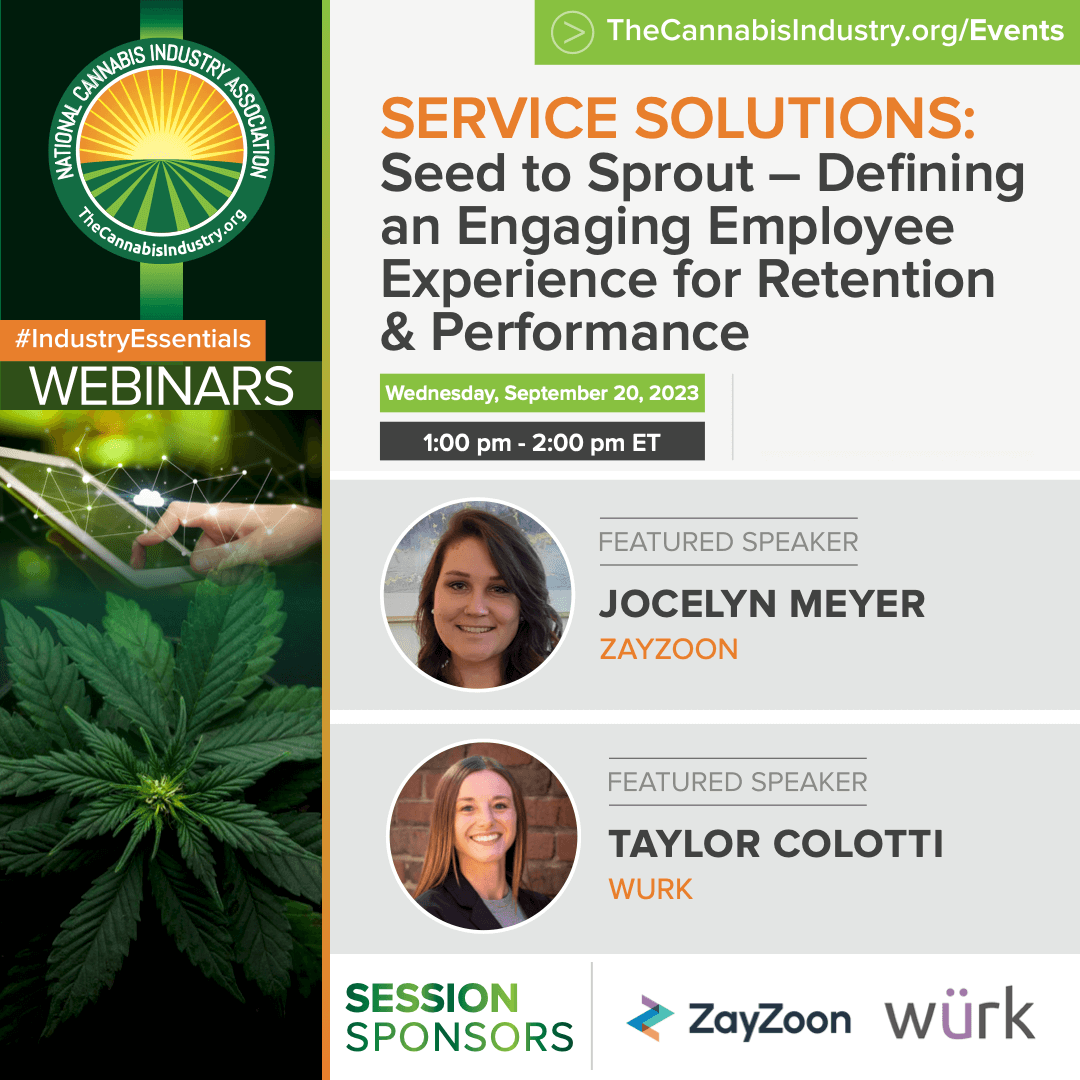
Service Solutions | 9.20.23 | Seed to Sprout – Defining an Engaging Employee Experience for Retention & Performance
In this thought-provoking #IndustryEssentials webinar, we delve into a crucial topic for cannabis businesses: “Defining an Engaging Employee Experience for Retention & Performance”
In the ever-evolving landscape of the cannabis industry, businesses face unique challenges, including high turnover rates and low employee engagement. These issues can have a significant impact on a company’s bottom line. Did you know that replacing an entry-level worker can cost up to 50% of their salary, while for high-level workers, this figure can skyrocket to 400%?
In this webinar, we explore how prioritizing the employee experience is not only a strategy to maintain your workforce but also a means to provide a quality work-life balance for your staff. Our expert speakers discuss the value of the employee experience, immediate strategies for improvement, top trends to incorporate into your strategy, and how to develop a framework for success.
Whether you’re a seasoned cannabis industry professional or just beginning your journey, this webinar provides valuable insights that can transform your approach to employee engagement. NCIA’s #IndustryEssentials webinar series is your premier source for timely, engaging, and essential education when you need it most.
Stay connected with NCIA for more insightful webinars and industry updates. Subscribe, like, and hit the notification bell to never miss our valuable content. Join us in redefining the employee experience and boosting your business’s success. Watch the full webinar now and take the first step towards a more engaged and productive workforce.


Follow NCIA
Newsletter
Facebook
Twitter
LinkedIn
Instagram
News & Resource Topics
–
This Just In
How THCa Vapes Are Changing Consumer
Announcing NCIA’s 2026-2028 Board of Directors