Although the concept of state-legal cannabis has been around in some shape or form since 1996, cannabis remains illegal to consume in most public places. In other words, legal cannabis consumption remains relegated to back alleys, derailing efforts to “normalize” cannabis use. Tourists visiting popular cities where weed is legal are caught in the unenviable Catch-22 of being able to purchase, but not publically consume, the product. And those who attempt to use cannabis in public still face criminal penalties in some states, with minorities three times more likely to be targeted for arrest, perpetuating racial disparities at a tremendous social cost.
Enter the cannabis lounge. Cannabis lounges — also known as “consumption lounges,” cannabis cafes, or some variation on that theme — are in simplest terms the cannabis equivalent of a bar or restaurant. Depending on state and local regulations, lounges offer users the chance to congregate in a public place and smoke a joint, try out a $500 gravity bong, or sip on a cannabis drink. With any luck, consumers may enjoy their cannabis with a snack or dinner, but mixing with alcohol is typically not allowed.
As with any “new” risks, some cities, states, and insurers are… concerned. Despite some obvious tax and social benefits, detractors cite a host of reasons to prevent lounges from coming to a city near you, including at the forefront: fears of public nuisance (odors, theft, and disruption) and overconsumption — especially because most states insulate cannabis cafes from liability for harm caused by obviously intoxicated or underage users, unlike dram shop laws for alcohol.
As another NCIA member recently pointed out, even in states that do allow cannabis cafes, regulatory bodies continue to struggle with how to shape the laws and regulations governing lounges to afford adequate consumer protection while allowing businesses to thrive. Moreover, without a better understanding of the regulatory landscape, some insurers — whose business model hinges on the ability to accurately price a risk — may be unwilling to play in this new cannabis lounge market.
A Sampling of State Approaches to Cannabis Lounges
Alaska led the country in 2019 in licensing on-site consumption. A handful of states and localities have followed Alaska’s guide, and more are anticipated to join this year, including Michigan and New York. We compare a few regulatory schemes below and also consider the impact of dram shop legislation on risks faced by the industry.
California
California, governed on the state level by the Medicinal and Adult Use Cannabis Regulation and Safety Act, delegates to localities the right to open consumption lounges. Put simply, cities have to affirmatively “opt in” to allow lounges. With a few contingencies — including that patrons must be 21 or older and no alcohol or tobacco can be sold on premises — “a local jurisdiction may allow for the smoking, vaporizing, and ingesting of cannabis or cannabis products on the premises of a” licensed retailer. SeeBPC § 26200(g).
To date, only a few localities have opted in to allow cannabis lounges, including San Francisco, Oakland, and Palm Springs. West Hollywood, in efforts to create an epicenter for canna-tourism, plans to allow up to 16 lounges within its jurisdiction. Because state law provides little regulatory guidance for lounges, localities generally provide more specific guidance. As an example, West Hollywood’s local municipal code requires security guards on site, as well as within a two-block radius surrounding the business during operation, and allows the sale of cannabis to an individual “in an amount reasonable for onsite consumption.” West Hollywood Municipal Code §5.70.041. Only one lounge is currently open in West Hollywood, the Artist Tree’s Studio Cannabis Lounge, which offers not only lounge access but cannabis yoga, live music, and comedy shows, along with a revolving selection of local art. The Woods, another West Hollywood dispensary with a soon-to-open courtyard lounge space, is also slated to open in 2022.
Although California law significantly limits third-party liability for alcohol-related accidents, it does not afford cannabis owners the same protection. For example, California Civil Code §1714explicitly states that furnishing alcohol “is not the proximate cause of injuries resulting from intoxication,” which has essentially absolved bars, restaurants, party hosts, and most others of potential liability for selling or furnishing alcohol to customers and guests with an exception for liability arising from the furnishing of alcohol to an “obviously intoxicated minor.” SeeCalifornia Business & Professions Code § 25602.1. Without similar protections for cannabis lounges, injured parties could attempt to sue under a negligence theory if a business or employee serves an intoxicated patron who causes harm.
Colorado
As of January 1, 2020, local jurisdictions in Colorado can opt-in to the state’s cannabis hospitality business license regime (Colo. Rev. Stat. § 44-10-609), and as of March of 2022, the City of Denver has approved cannabis hospitality businesses for operation. Denver operators include the first social equity applicant in Denver approved for a hospitality license, the Tetra Lounge, although from its website Tetra Lounge’s website describes itself as “a private lounge,” requiring a monthly or annual membership fee and a liability waiver to gain access.
As to dram shop liability, although Colorado law authorizes damages against a licensee for willfully and knowingly selling or serving alcoholic beverages to a visibly intoxicated person, the Colorado Legislature caps liability at $150,000 (Colo. Rev. Stat. § 12-47-801 (3)(II)(c)). This damages cap improves (i.e., reduces) the ISO hazard grade, resulting in the improvement of insurance options available for liquor liability. The legislature has not adopted the same or a similar damages cap on liability for cannabis consumption establishments.
Nevada
In June 2021, Nevada’s Governor signed Assembly Bill 341 into law, authorizing the Nevada Cannabis Compliance Board (“CCB”) to license and regulate consumption lounges across the state, subject always to local approval. The State plans to issue up to 65 lounge licenses (40-45 for lounges attached to existing dispensaries, 20 for independent lounges) with 10 reserved for social equity applicants.
Most recently, on June 28, 2022, the CCB voted to unanimously approve a host of regulations for cannabis consumption lounges. Nevada’s extremely detailed state regulations prohibit the sale of “single use cannabis products” with more than 3.5 grams of “usable cannabis” and 10 mg of THC for edibles; prohibit the removal of any cannabis products from a lounge; require a mitigation plan for impaired driving and detailed employee training for overconsumption; and require consumer education and warnings to customers, among other things. As with other states, Nevada allows local jurisdictions to prohibit consumption lounges and to implement more stringent regulations than state law.
Unlike other states, however, Nevada law carves out protections for cannabis lounge operators just as it does for alcohol. Nevada law already protects businesses that serve or sell alcoholic beverages from injuries inflicted by an intoxicated person. And while any person who knowingly furnishes an alcoholic beverage to any person under 21 years of age is guilty of a misdemeanor, the law provides only for criminal penalties, not civil liability. The Nevada Supreme Court has repeatedly refused to impose responsibility on vendors selling alcohol absent a legislative provision. SeeSnyder v. Viani, 885 P.2d 610 (Nev. 1994) (holding consumption is the proximate cause of alcohol-related injuries and dismissing the negligence claim against a tavern owner for alcohol service). The same rules will apply to cannabis operators.
Illinois
Over two years after full legalization of adult-use commercial cannabis in Illinois, cannabis lounges in Illinois are still relatively rare, with the first Chicago-area marijuana consumption lounge opening on April 20, 2022. Like other states, the State of Illinois does not directly license lounges, but it allows local governments to opt in.
Illinois creates a cause of action against sellers for injury by an intoxicated person. § 235 Ill. Comp. Stat. 5/6-21. The standards for liability under the Illinois dram shop law include: (1) sale of alcohol to any person who, while intoxicated, causes injury, and (2) any person owning, renting, leasing, or permitting the occupation of any building or premises with knowledge that alcoholic liquors are to be sold therein, severally or jointly, along with the person selling or giving liquor. In Illinois, the Dram Shop Statute provides the exclusive remedy for alcohol related injuries. See Charles v. Seigfreid, 65 NE.2d. 154 (Ill. 1995). The Statute also provides stringent limitations on recovery of damages. There is no equivalent in Illinois for cannabis entities.
The Takeaway for Business Entities and Insurance Providers
As with cannabis law generally, lounge operators face a patchwork of state and local regulations that vary tremendously by jurisdiction. In most places, cannabis lounge owners are not protected by dram shop/gram shop laws that otherwise insulate bars and restaurants from liability for overconsumption. This means that companies must be vigilant in protecting themselves from liability by instituting compliance and risk-management procedures.
In some instances, such as California’s West Hollywood, which has far fewer safeguards and guidelines than Nevada, operators are largely left to their own devices in implementing adequate risk transfer and risk management, compliance, employee training, and consumer education to limit risk of liability. While the West Hollywood municipal code requires lounges to limit cannabis sales of cannabis “in an amount reasonable for onsite consumption,” the “reasonableness” standard is rife with ambiguity and could lead to disputes regarding liability and assumption of risk if a patron overconsumes.
Evaluating and preventing overconsumption and intoxication will be particularly difficult for cannabis when: patrons have varying experience levels with cannabis; products can be sold in more than a single serving, and no specific consumer education is required. Thus, even in locations that have more stringent regulatory oversight, companies would be wise to consult with experienced counsel and consultants to avoid or limit potential risks associated with regulatory uncertainty, civil liability, and government penalties for non-compliance.
This brings us full circle to the question of insurance. Even in the states that allow consumption lounges, very few insurance companies provide coverage for on-site consumption (although some do). If an exclusion prohibits coverage, the company may not have coverage for important and sometimes catastrophic events, such as property damage by fire, theft/robbery, cyber events, sexual harassment or discrimination claims by employees or others, and bodily injuries to, or caused by, patrons (on and off premises).
Most existing property, general liability, products liability, and other insurance policies — including those written for the cannabis industry — expressly exclude coverage for on-site consumption or bodily injury caused by intoxication. In fact, some existing cannabis insurance companies include a “health hazard” exclusion in their policies, which exclude coverage for any bodily injury arising in any way from the use of cannabis, including any health injury. Cannabis insurance policies may also exclude coverage for intentional or illegal acts, which some insurers may try to apply to any claim involving cannabis on the basis that the sale of cannabis violates federal law (the Controlled Substances Act), even if it is state legal.
For current licensees that are planning to open an attached or adjacent consumption space, current insurance policies may not cover injuries arising in the lounge space. Further, any failure to identify a change in business type could prompt an insurance carrier to deny coverage for subsequent claims based on a theory of misrepresentation.
In closing, cannabis owners should attempt to negotiate separate and/or broader coverage that carves out coverage for their cannabis-related activities, including on premise consumption, with their current insurer or seek to obtain coverage from a different carrier. Experienced insurance coverage counsel can assist with identifying reputable insurance brokers and negotiating policies that provide such coverage. Because of the limited options, companies would be wise to begin the process of identifying experienced insurance coverage advisors at the beginning of their licensing journey.
Member Blog: Nevada and Las Vegas Cannabis Market Analysis
The state of Nevada has always been a unique place to do business. Not only is its economy fueled almost entirely by tourism, but its population is located almost exclusively within a few key urban centers. These factors influence nearly every type of business opportunity in Nevada – including cannabis.
While Nevada’s economic and geographic constraints are unique in themselves, the type of tourist industry found here is one of a kind. Las Vegas is famously known as “Sin City.” It is a place where people flock from around the globe to indulge their vices, such as gambling and clubbing.
As a microcosm of Nevada itself, the Nevada cannabis industry has its own set of challenges and opportunities.
Overview of the Nevada Cannabis Industry
Nevada boasts both medical and adult-use cannabis markets. The state voted to legalize medical cannabis back in 2000, although their first medical dispensary did not open until 2015. While the medical cannabis space in Nevada began with a crawl, the adult-use industry has been quite different.
Nevada voted to legalize adult-use cannabis in late 2016, with the first adult-use dispensary opening mid-2017. Nevada has both medical and recreational dispensaries, although certain stores service both customer bases.
One of the more exciting facets of the Nevada cannabis market has to do with home cultivation. Its unique program allows people 21+ years old to grow at home if they live more than 25 miles from a dispensary. Nevada put these rules in place to accommodate citizens living in rural areas who cannot access dispensaries.
Since Nevada’s legalization, cannabis has become a big business. Here are some statistics for the 2019-2020 fiscal year in the Nevada cannabis industry:
Total Sales: $684,959,149.00
Cannabis Taxes: $105,180,947.00
Licensing & Application Fees: $5,212,557
Nevada sales are ahead of other new adult-use recreational markets such as Illinois and Massachusetts to put these numbers in perspective. Nevada falls short compared to more established industries such as Colorado and Washington, but it holds promise for massive growth.
What is Unique About the Las Vegas Cannabis Market?
The tourism industry in Las Vegas makes for a unique market. Adult-use market regulations coupled with the global renown of the city lead to an environment where out-of-state visitors greatly influence cannabis sales.
The structure of a cannabis market directly influences business opportunities. In medical cannabis, qualifying conditions and patient counts dictate potential market growth. Conversely, adult-use markets are only limited by people’s age.
The interesting thing about the Las Vegas market is that anyone over 21-years can legally purchase cannabis – this includes out-of-state visitors. According to the Las Vegas Conventions and Visitors Authority website, the city saw 42,523,700 visitors in 2019 alone. These people spent over $10 billion in Las Vegas that year. Within these billions of dollars in tourist money lies an excellent opportunity for adult-use operators in Nevada.
Another fact worth noting is that people flock to “Sin City” to partake in activities inaccessible in other U.S. states. Cannabis fits nicely into this package of taboo activities that can only be done in Las Vegas, NV.
Is it Hard to Open a Cannabis Business in Las Vegas?
While the tourist money in Las Vegas makes for a very intriguing adult-use market, it is not easy to acquire a cannabis business license. Unfortunately, Nevada has put a cap on the number of licenses available in the state, making it much more difficult to enter than other adult-use states like Colorado.
There are five types of business licenses in the Nevada cannabis industry:
Cultivation Facility
Distributor
Product Manufacturing Facility
Testing Facility/Laboratory
Retail Store
It’s worth noting that both the medical and adult-use markets offer these same business licenses. Similarly, the licensing cap in the state includes both verticals.
As of early 2021, the state of Nevada awarded 132 dispensary licenses. However, these licenses did not go to 132 different operators. Certain businesses acquired multiple licenses, with some able to open as many as seven retail stores. While Nevada has issued 132 retail licenses, there are only 80 dispensaries operational at this point.
The licensing situation in Nevada is frustrating for local investors and outside interests alike. Namely, because studies show that the Nevada economy could support as many as 1,283 more dispensaries than it has issued licenses for. Aggravation mounts with a lack of expansion opportunities in the area.
The state of Nevada only accepts additional cannabis business license requests during “application periods.” These short windows are scheduled by the Nevada Cannabis Compliance Board and stay open for just ten days. However, there has not been an application opportunity since 2018, and it doesn’t appear there will be one anytime soon. As such, it appears that plant-touching opportunities in Nevada are limited to current license holders.
Where is the Most Opportunity in Nevada Cannabis?
While many believe there is ample room for new players in the Nevada cannabis market, the state does not agree at this point. As a result, if you are looking to get involved in the Nevada industry, you are well-advised to look into ancillary business models instead of plant-touching businesses.
With such promise in the Nevada market, you can rest assured that those cannabis companies that have won licenses will be extremely busy. Ancillary operators can take advantage of this climate by developing models that operate in the business-to-business (B2B) vertical. To help plant-touching companies in Nevada, both product-based and service-based ancillary businesses could prove profitable. Examples of product-based companies include business management software and cultivation technology, while service-based businesses work in marketing, staffing, and consulting.
Opening an ancillary cannabis company in Nevada gives you the ability to enter the market by circumventing the licensing process. Even more, you don’t have to worry about application fees, compliance mandates, and other stressors faced by plant-touching companies. You also have the option to operate across state and national borders if you so desire.
Summary
There is no doubt that the Nevada cannabis industry is one-of-a-kind. While there is a good deal of excitement surrounding the market, many feel it hasn’t even come close to reaching its potential. To this end, the adult-use market in Nevada was only 1.5 years old when the COVID-19 pandemic struck. The financial blow of the pandemic was cataclysmic in Las Vegas, as the tourism industry dropped to 50% below average in 2020.
With the pandemic on the downswing in 2021, there is an unmistakable air of excitement across the globe. Some economists feel that we are about to enter a new “roaring 20’s” period, where people celebrate by spending travel money that was unusable during COVID-19. With this celebratory outlook on the near feature, there is no doubt Sin City will see its share of visitors. With the casinos and hotels full again, maybe we will finally see what the Nevada cannabis market can really do.
Dr. Monaco is the Director of Laboratory Operations for CLS Holdings’ newly opened approximately $4 million laboratory, and is responsible for all day-to-day operations inside the North Las Vegas facility. Dr. Monaco brings over 8 years of licensed & regulated cannabis experience, starting back in 2012 when medical marijuana first opened in Arizona, he has held numerous positions, with escalating responsibilities year over year. He graduated from the University of Arizona College of Pharmacy, in Tucson, Arizona, with a Doctor of Pharmacy in 2010.
There’s been a lot of positive press lately about the success of the cannabis industry in Nevada, and with good reason. The cannabis industry contributed more than $110 million dollars in FY19 to state coffers and is poised to overtake the mining industry in annual tax contributions; all of this in just its second year of operations. But while the tax-generating retail industry continues to steam ahead, much of the business and opportunity in the balance of the industry remains on hold (since early October). The responsible moratorium has largely been erased from public awareness by the intervening holiday season and the ongoing success of tax collections over projections.
Unfortunately, while this suspension was necessary in light of the surrounding circumstances, its indefinite duration has created market instability at a time when cannabis-friendly markets are competing for business and tax dollars. Regrettably, this uncertainty has made Nevada look more like the nearly paralyzed California market. The time has come to complete the necessary work, end this moratorium and let the critical behind-the-scenes elements of our nationally leading industry get back to work.
For those that don’t recall, the present moratorium was announced by the Nevada Department of Taxation on October 17, 2019 following the recommendations of a task force initiated by the Governor. The launch of the task force was in response to two scandals: one involving the awarding of retail licenses earlier in the year and the second being the discovery that the foreign nationals identified in a national campaign finance scandal (involving former New York Mayor Rudy Giuliani), had sought to invest in and seek influence over the local cannabis industry.
Few can argue the need for a regulatory pause given the state of affairs last October, and I believe the Governor’s response was the single most effective way to stifle inappropriate corporate activity. By the simple administrative step of freezing all pending and future license transfers, the state was able to get the lawyers involved in these transactions to shut them down. The final step in almost any merger or acquisition transaction became temporarily unlawful. There’s no need for a police force when every lawyer in the industry can be deputized.
This Friday will mark ninety days since the moratorium was put into place, and would be a fine time to release this de facto suspension of all mergers, acquisitions, sales, financing, etc. After a decade and a half of practice in transactional law, I can tell you that the “invisible hand” of the market that most of us rely upon to guide capitalism isn’t invisible to the people in the transactional trenches. If the machinery behind the scenes is seized up for too long, inevitably, even the very of the supply chain (i.e. retail) will suffer.
Many capital rich companies, who only recently became comfortable with the cannabis space, are looking to deploy resources into the cannabis industry. The mechanisms to do so, and to create the jobs and economic development desired by the state and its taxpayers, are restricted to mergers, acquisitions and equity investment. Capital markets are not static. They are as dynamic as the cultures they serve and forcing them all to the sidelines for an extended period owing to the misdeeds of a small number of them, is painting with too broad a brush. It is perhaps due to the recent legality of the cannabis industry and its vestigial stigma that a transactional moratorium has been tolerated for as long as it has. It is difficult to imagine a comparable capital markets freeze in any other industry.
In the ten years I have called Las Vegas home, I have watched our city and, indeed, our state, transform from side show to main event – as we are no longer content to ride shotgun to California’s success. We Nevadans have proven capable of, and even better equipped for, leading in multiple industries, including cannabis.
To that end, we are, or certainly should be, capable of completing an “extended review” of the license transfer process as well as developing a “more thorough and appropriate vetting process” in ninety days. Ostensibly, freezing all pending transfers was undertaken to ensure that those aspiring licensees were subject to such “more thorough” process. It is difficult to imagine, however, how this process could presently be incomplete. If anything, as the state is writing the rules as it goes, it makes sense to at least unlock the “pending” transfers and provide some guidance as to the expected timeline for future transfer approvals.
We spent most of 2019 advising clients to avoid cannabis transactions in California, as the regulatory structure there is widely agreed to be in disarray. During most of that time, we were able to credibly suggest Nevada as an alternative market, free from such chaos, and capable of sustaining robust merger and acquisition activity without issue. However, as large and popular adult-use markets (e.g. Chicago, IL; Detroit, MI) open and expand, and agriculturally experienced markets expand into hemp and CBD production, we are left to advising clients that their dollars are better spent elsewhere.
However, there is still time to start the new year and new decade with a local cannabis market that is looking to lead and provide prototypical regulatory and compliance guidance, as it was prior to last October. If we don’t, we can’t expect other cannabis-legal states or businesses choosing between them to wait for us to figure it out. And when federal legalization undoubtedly arrives, the loss of time in developing the Nevada market will no longer be treated trivially.
Glenn H. Truitt, Esq. is the Managing Partner of Ideal Business Partners, a boutique multi-disciplinary professional firm focusing on serving businesses in the cannabis, hemp and CBD spaces. He is a graduate of the U.S. Naval Academy and Stanford Law School, is licensed to practice in California and Nevada and has been practicing for 15 years.
Committee Blog: Ending The Ban On Interstate Commerce (Part 1)
Oversupply and shortages, high prices and lack of choice for patients and consumers, illicit markets, tainted products, and the inability to access banking and capital all plague the burgeoning cannabis industry. While cannabis advocates and industry leaders are working on each of these problems, there is one solution that would ease the burden on all of them. Allowing for interstate trade between states with legal cannabis markets would improve each of these issues while supporting the individual solutions to each that the industry has been working on. This is the first post in a series that explores the benefits and barriers to setting up a legal framework for interstate trade, even before wholesale legalization at the federal level.
Since the beginning of legal, adult-use cannabis, when Colorado and Washington passed the first ballot measure allowing for adult-use, the industry was guided by the Cole Memo, which laid out the parameters for the federal government staying out of the states’ cannabis experiments. Among other things, the Cole memo stated that the DEA could crackdown on cannabis moving from states with well-regulated systems to states that do not allow cannabis. This statement has been interpreted conservatively to mean that no cannabis should cross state lines for any reason, ever, based on the fact that at the federal level, cannabis is still a Schedule I drug under the Controlled Substances Act.
Today, there are 10 states which have legalized adult-use, another 19 which allow for medical use, and six more which allow the use of CBD products only. Many of these states share borders, and producer states could serve several nearby markets without ever entering a state that does not allow cannabis in any form. Furthermore, the Cole Memo, which was rescinded by Jeff Sessions in 2018, has not been replaced by any guidance whatsoever. This means that each U.S. Attorney’s office is free to set their own enforcement priorities around state-legal cannabis activities, and there is no official overriding policy at the DOJ on interstate trade between states with medical or adult use. Corresponding guidance from FinCEN, however, remains in effect and similarly discourages the transfer of cannabis between states.
Cannabis markets vary widely from state to state with regard to the underlying market dynamics and challenges that they face. Some states produce too much while other states experience shortages. Meanwhile, new states pass legislation or have voter initiatives that allow medical or adult-use every year without any infrastructure in place to supply that state’s demand. In each new legal market, the vast majority of demand had long been met through illicit market supply, and generally from outside of the state’s boundaries.
The artificial boundaries around cannabis markets have far-reaching impacts for local economies, patient access, illicit market activity, and social equity. Later posts in this series will take a deep dive into each of these issues, and in this post, we will look at how this has impacted states, the industry, and consumers so far.
Lessons Learned:
Washington State chose to take the strictest possible reading of the Cole Memo, and insist that not only must cannabis not cross state lines but also sources of funding must come from within the state. Combined with their high capitalization requirement for licenses, the result was a disaster from an equity standpoint: only wealthy and well-connected individuals in the state (which are overwhelmingly white males) were able to even attempt a license. This decision was based substantially on the fact that interstate trade was not allowed.
In Oregon, which has an ideal growing climate and a long tradition of exporting cannabis (albeit in the illicit market), the artificial boundaries created by the ban on interstate trade lead to a massive oversupply for its small population, which crippled the industry and tanked many small businesses. Despite the fact that Oregonians consume more cannabis per capita than any state, their climate and culture have led to growing massive quantities of world-class cannabis that cannot reach patients and consumers, even in neighboring states that might have under-supply issues. The result is that hundreds of small, mom-and-pop shops and family farms have gone out of business, eradicating millions of dollars of local capital, and accelerating mass consolidation of the industry into the hands of a few foreign corporations. Meanwhile, in medical markets like Illinois and Michigan, patients have had sporadic access to quality cannabis-based medicines.
When Nevada originally launched, due to the influence of local liquor distributors, it was almost impossible to get products to market, and the state’s dispensaries sold out on the first day of sales. After ironing out some of the kinks, sales are going strong, but the practice of growing thirsty plants indoors in the desert is of dubious value when the same plant can be grown with a fraction of the inputs in northern California and southern Oregon.
California’s legal system is a perfect example of how over-regulation fuels illicit market activity. Because of the structure of their regulatory framework and high taxes, the state is served by only 800 licensed dispensaries, whose prices are double and triple those found on the illicit market for similar products. This has led to the emergence of thousands of “pop-up” or unlicensed dispensaries, selling untested products tax-free in a thriving illicit market. The booming illicit market in California has also led to massive wholesale markets of hardware, branded packaging, and flavoring and cutting agents (all technically legal) to supply the illegal operators with everything they need to look legitimate. This is a major contributing factor to the wide-spread vaping related illness cases popping up all over the country, as many illicit market operators purchase their supplies in downtown Los Angeles.
The ban on interstate trade promises to continue to create new and novel problems as well. If New York, the 4th most populous state in the union, legalized adult-use (which seems likely in the near future), and interstate trade were still banned, it would require a massive investment, on the order of billions of dollars, to create enough indoor and greenhouse grow facilities to supply the demand created by its 19 million inhabitants. The recent legalization of hemp under the last Farm Bill has created a number of legal dilemmas as well, as some individual states that do not recognize any difference between hemp and cannabis flower have seized products and arrested individuals taking hemp legally grown in one state to a market where it is legal to sell.
Some suggest that these issues will be sorted in local markets, and in each state individually this approach might seem to make sense. When you add these problems together, though, a much more elegant, efficient, and obvious solution emerges: let states that have always exported cannabis send it to states that have always imported it. A set of different and seemingly unconnected problems become each other’s solutions.
Historically, people across the country have consumed cannabis, and the vast majority of it was grown in a few locations that are particularly well-suited to the plant. It is highly likely that a fully-matured nationwide legal market (one which must account for not only interstate, but also international competition) will ultimately be best served by the same general market dynamics. The only question is: how long will we allow the artificial market boundaries around each state to decimate local capital, curb access for patients and consumers, encourage investments that are attractive short-term but disastrous long-term, and prop up the illegal markets that pose a public health risk?
Interstate trade between states that allow some form of legal cannabis would provide much-needed relief on a number of fronts for cannabis businesses, and could be structured in such a way to support social equity efforts. With a little guidance on enforcement and thoughtful programs and agreements between states, there is a path to legal interstate commerce even before cannabis is removed from the Controlled Substances Act. The state of Oregon has already passed legislation allowing for the export and import of cannabis products provided that the Federal Government allows it. This could be either through legislation such as the proposed Blumenauer/Widen State Cannabis Commerce Act, or though DOJ enforcement guidance (whether from the Attorney General or the relevant local U.S. Attorney’s). There are multiple paths that can lead to the end of banned interstate trade, and it seems increasingly inevitable that we will see legal cannabis trade across state borders in the near future. For most operators in the cannabis industry, and for all patients and consumers, this will be a good thing, and can’t come soon enough.
Gabriel Cross is a Founder and CEO at Odyssey Distribution, LLC, a distributor for locally-owned craft cannabis producers and processors in Oregon. Gabe worked in the sustainable building industry for a decade before starting Odyssey and brings his experience with sustainability and systems thinking to his work in the cannabis industry. Odyssey manages logistics, sales and marketing for boutique producers so they can focus on creating great craft cannabis products for the Oregon market.
VIDEO: Member Spotlight – Silver State Wellness
Get to know NCIA members Silver State Wellness in this month’s video spotlight. We speak with co-founder Ed Bernstein and general manager Emmett Reistroffer to learn more about their state-of-the art infused product manufacturing facility based in Las Vegas, Nevada. Their facility produces both medical and adult-use brands ranging from edible products, topicals, and infused beverages including beer, coffee, and tea. Silver State Wellness has also formed a joint venture agreement with Dixie Elixirs & Edibles, a Dixie Brands, Inc. company. Hear about how IRS Tax Code 280E and lack of access to banking impacts their business.
If you’re not yet a member of the National Cannabis Industry Association, log on today and join the movement.
VIDEO: Member Spotlight – Silver Sage Wellness
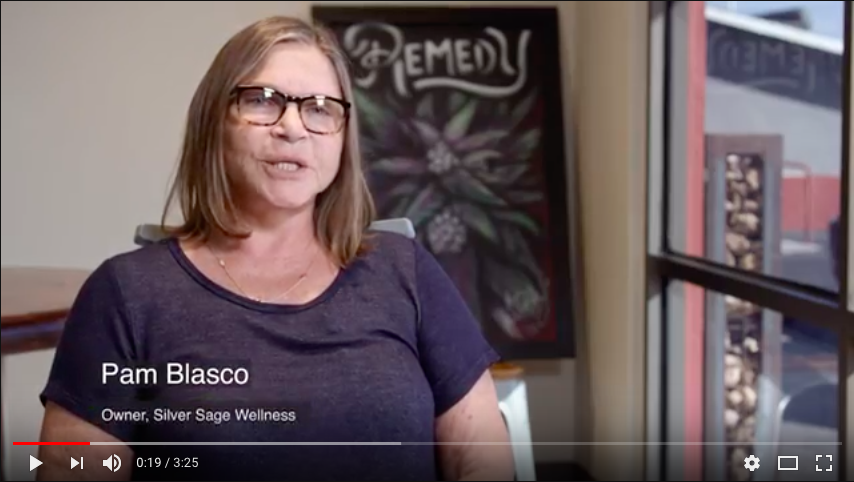
We’re kicking off the month of March with this video spotlight on NCIA members Silver Sage Wellness based in Las Vegas, Nevada. Meet husband-and-wife team Jim and Pam Blasco, special-needs patient advocates with a powerful story about how cannabis changed their lives, as well as the challenges they experience running a cannabis dispensary in the face of unfair tax burdens caused by Section 280E of the IRS Tax Code.
Five Reasons Why NCIA’s Industry Socials Were A Huge Success
At the end of 2018, NCIA’s events team looked ahead at how to make our line-up of 2019 events even better and respond to an increasingly popular demand for more networking opportunities. As a team we dreamed up how to make a B2B networking series that was not only delivered maximum ROI, but was super fun and fit the cannabis industry culture.
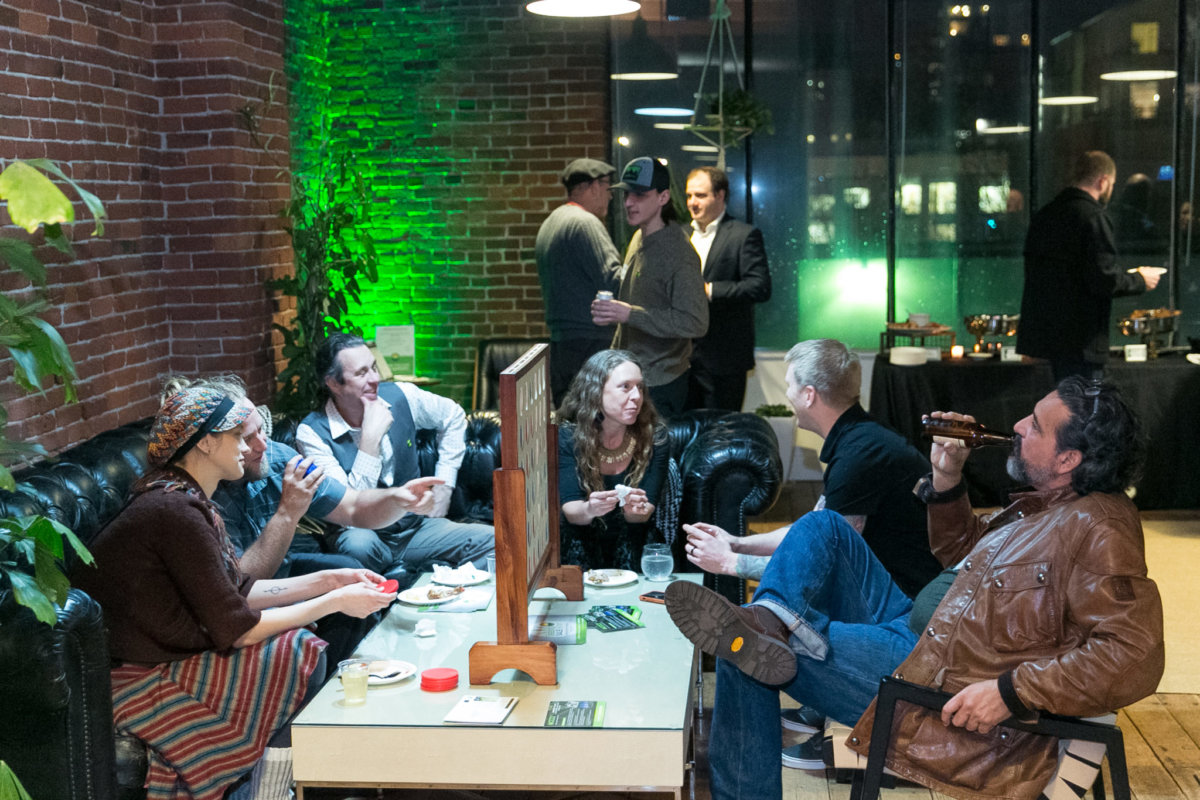
Ultimately, we devised what might be the magic elixir of networking events. Artsy venues, delicious drinks and food, live local music, old-school Nintendo, giant Jenga and Connect Four. We even threw in a raffle-wheel contest to win limited edition NCIA merchandise. The result? NCIA’s January Industry Socials were a total hit. Although there are many, here are the top five reasons why NCIA’s Industry Socials were a huge success.
1. Impressive Attendees
Throughout January, Industry Socials kicked off with a West Coast Tour in Seattle, WA, Portland, OR, Las Vegas, NV, Salt Lake City, UT and Phoenix, AZ. We were excited (and a bit nervous) about the turn-out for the Utah Industry Social in Salt Lake City, since the exciting passage of Utah’s Proposition 2 happened only a few months before the event. As NCIA’s Aaron Smith remarked “we’re excited to bring our world-class industry events to new markets like Utah, and later this year in Missouri, North Dakota, and Texas!”
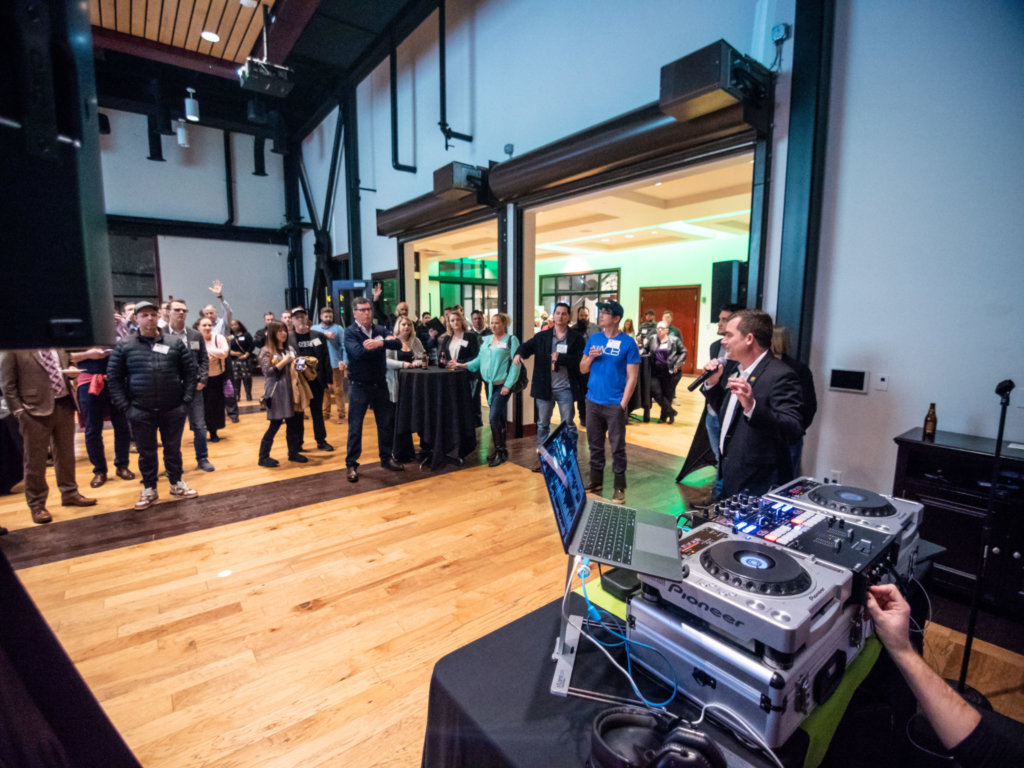
Overall, January’s Industry Socials turned out about 500 impressive cannabis industry professionals and advocates, representing 250 current NCIA member companies! Even better? We saw more than 75 attendees in the brand new Utah market!
2. Incredible Feedback
The post-event survey results are in and they are stellar! The majority of survey respondents reported that they would highly recommend the event series to a friend or colleague.
More than 50% of survey respondents said they made between 11-20 new contacts at the event and that at least three of these contacts were potential sales deals.
When asked what the biggest return on investment of the event was attendees stated:
“Getting to know our local business community.”
“The low key but targeted exposure in our local market.”
“Continued relationship building and network expansion.”
“We gained a lot of insight into the industry and where we fit as a company… the insights we gained were invaluable.”
“Foot in the door to get involved in rule making and learning about the application process in Utah.”
Kyle Rooney from Have A Heart, Sustaining Members with adult-use dispensaries in four states, says that “attending NCIA’s new Industry Socials is a chance to network in a more personal and low-key environment. National conferences are great, but these events provide a platform to talk to people in the regions that you want to connect with.”
RizePoint, who became members of NCIA just a week before the event in Salt Lake City, attended with several team members. Ed McGarr, RizePoint’s Vice President of Sales and Marketing says, “We began working with cannabis companies last year to advise on food safety, quality control and management for adult-use and medical cannabis edible products. NCIA’s Industry Socials provide a forum for us to connect with the industry and learn from them, as well as gain new business contacts. The event was priceless relative to networking and establishing ourselves further in the cannabis industry. It was refreshing that NCIA helped to establish the networking opportunities in a new, emerging market like Utah.”
3. Innovative Networking and Entertainment
Introducing a retro arcade station including Super Mario and PAC-MAN at our Industry Socials was the brilliant idea of our events team. Now that we know how fun it was, we’re seriously considering having it as an NCIA event standard.
But seriously, we now know that a cash bar is not the only way of lubricating conversation and community building. Adding fun games like Nintendo, giant Jenga and Connect Four is another way cannabis industry professionals can “connect” in an authentic, fun, and meaningful way. If more networking happened while playing a competitive game of PAC-MAN, the business world would be a much better place.
Additionally, at every event we had talented local DJ sets and interactive activities like a raffle-wheel and Polls Everywhere with cannabis industry trivia. As a value-added complimentary activity at our Nevada Industry Social, attendees had the opportunity to participate in two private tours of the world’s only immersive cannabis museum, Cannabition!
4. Our Sponsors and Partners
From helping us spread the word, to investing in NCIA’s Industry Socials, none of these amazing events could have happened without the help of our sponsors and partners.
Lastly, a huge thank you to our promotional partners: Growers Network, Cannabis Collaborative Conference, Utah Patients Coalition, Epilepsy Association of Utah, Marijuana Policy Project and TRUCE Utah.
5. Setting the Stage for 2019 Events
To kick off 2019 with a successful inaugural event series sets the stage for an incredible year of NCIA events. We are looking forward to hosting the next tour of Industry Socials in new cities and markets again in April and August.
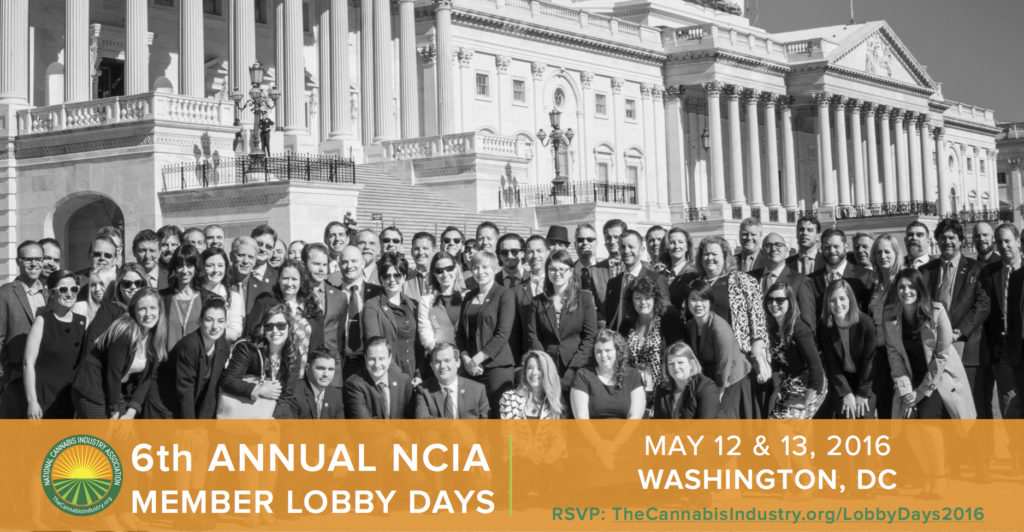
But, you don’t have to wait until April to attend more NCIA events. NCIA’s March Cannabis Caucus series is kicking off soon, followed by the most impactful cannabis industry advocacy event of the year – NCIA’s 9th Annual Cannabis Industry Lobby Days.
Lastly, thank you to our nearly 2,000 member-businesses and to all event attendees for supporting NCIA’s mission. NCIA’s event revenues support the work we are doing to lobby at the federal level on your behalf on Capitol Hill and to build public support for the cannabis industry.
If you were at the January Industry Socials, be sure to check out our Facebook album and tag yourself!
VIDEO: Member Spotlight With MedMen
In this month’s NCIA member spotlight, we visit with MedMen at their Santa Ana, CA, dispensary location. MedMen has grown to more than 18 storefront locations across California, Nevada, and New York, and currently employs more than 800 people. Co-founder and CEO Adam Bierman, along with co-founder Andrew Modlin, launched the company nearly a decade ago. Watch this video to learn more about MedMen.
“I don’t think we can expect to ever live out something like this again in our lifetime.”
– Adam Bierman, MedMen CEO and Co-founder
Video Spotlight: W Vapes
Learn more about NCIA member W Vapes in this month’s video spotlight. The California-based, award-winning vaporizer company focuses on pure, pesticide-free, CO2 extracted, lab-tested oil. Their products are now also available in Nevada.
Your 2016 Cannabis Ballot Initiative Rundown
Michelle Rutter, NCIA
by Michelle Rutter, NCIA’s Government Relations Coordinator
In November, five states will vote on legalizing adult-use cannabis for individuals over 21 – Arizona, California, Maine, Massachusetts, and Nevada – while an additional four states will vote on medicinal cannabis reform – Arkansas, Florida, Montana, and North Dakota. All nine initiatives differ slightly from one another and each has its own unique language.
Below are NCIA’s quick summaries of each of the initiatives. Read up, then visit the campaign sites for more information and how you can help make 2016 another success in the fight to end marijuana prohibition.
ADULT-USE
ARIZONA
The Campaign to Regulate Marijuana Like Alcohol (Proposition 205) legalizes the possession and consumption of marijuana by persons who are over 21 and levies a 15% tax on the sale of cannabis, which would then be allocated to education and healthcare in the state. This would create an estimated $113 million in new tax revenue.
– Allows local governments to regulate and limit cannabis businesses
– If passed, Arizona’s cannabis market is projected to surpass $1 billion within three years
The Adult-Use of Marijuana Act (AUMA) (Proposition 64) legalizes the possession and consumption of marijuana by persons who are over 21 and enacts a 15% sales tax, as well as a cultivation tax of $9.25 per ounce of flowers and $2.75 per ounce for leaves.
– Estimated $1.4 billion in revenues within the first year of a fully operational market
– Written to prevent licenses for corporate or large-scale cannabis businesses for five years, which is in order to deter “unreasonable restraints on competition by creation or maintenance of unlawful monopoly power”
California has the largest state cannabis market (medical or adult-use) in the country, estimated at $2.7 billion in 2016.
The Campaign to Regulate Marijuana Like Alcohol (Question 1) legalizes the possession and consumption of marijuana by persons who are over 21 and enacts a 10% sales tax in addition to the state’s 5.5% sales tax. The first $30 million in tax revenue from cannabis sales would be used for school construction, with any additional revenue allocated to the General Fund.
– Medical cannabis will not be subjected to the 10% sales tax
– Caps the number of cannabis stores and cultivators until 2019 and 2022, respectively
The Campaign to Regulate Marijuana Like Alcohol (Question 4) legalizes the possession and consumption of marijuana by persons who are over 21 and creates a Cannabis Control Commission of three members appointed by the state Treasurer, which would generally administer the law governing cannabis use and distribution, promulgate regulations, and be responsible for the licensing of commercial cannabis establishments. It also creates a Cannabis Advisory Board of 15 members appointed by the Governor.
– Enacts an excise tax of 3.75%, in addition to the state sales tax
– A city or town could impose a separate tax of up to 2%
The Campaign to Regulate Marijuana Like Alcohol (Question 2) legalizes the possession and consumption of marijuana by persons who are over 21 and designates the Nevada Department of Taxation to issue licenses to cannabis retailers, suppliers, testing facilities, and distributors.
– Gives local governments control over cannabis business locations, and forbids businesses to operate near schools, childcare facilities, houses of worship, and certain community facilities.
– Enacts a 15% excise tax on wholesale sales of cannabis, in addition to the existing sales tax which would apply to the retail sale of cannabis
– Revenue generated from these taxes would be used to support K-12 education
There are two competing initiatives on the 2016 ballot: the Arkansas Medical Cannabis Act (AMCA) and Arkansas Medical Marijuana Amendment of 2016 (AMMA), known as Issue 7 and Issue 6, respectively. The main differences lie in patient card fee limits, the organizations that would implement the program, the distribution of sales tax revenue, and whether certain patients could cultivate their own medicine. As of October 2016, Issue 7, the Arkansas Medical Cannabis Act (AMCA) was struck from the ballot. The initiative will still appear on the ballot, but the results will not be counted.
Arkansas Medical Cannabis Act (AMCA):
– Sets a cap on the fees required to get dispensary and cultivation licenses and the fees required for patient cards
– Assigns the Arkansas Department of Health to set rules for patient cards, medical conditions that qualify a patient for medical marijuana use, and operating rules for dispensaries and cultivators
– Requires that all sales tax revenue goes back into the medical marijuana program
– Permits qualified cardholders to purchase medical cannabis from non-profit compassion centers
– Allows patients and their caregivers to cultivate up to 10 cannabis plants at home provided they take steps to ensure it is secure
Arkansas Medical Marijuana Amendment (AMMA):
– Sets a cap on the fee required to acquire a dispensary or cultivation license, but no limit on the cost for patient card fees;
– Assigns the Arkansas Department of Health to set rules for patient cards and medical conditions that qualify a patient for medical marijuana use, and the Arkansas Alcoholic Beverage Control to establish operating rules for dispensaries and cultivators;
– Divides sales tax revenue, assigning 10% to the medical marijuana program, 10% to the Skills Development Fund, 30% to the state’s General Fund, and 50% to the state’s Vocational and Technical Training Special Revenue Fund
The Florida Right to Medical Marijuana Initiative (Amendment 2) allows medical use of cannabis for individuals with debilitating medical conditions as determined by a licensed Florida physician and allows caregivers to assist patients’ use of medical cannabis.
– Mandates that the Department of Health shall register and regulate centers that produce and distribute cannabis for medical purposes shall issue identification cards to patients and caregivers.
– Constitutional amendments on the ballot in Florida must garner at least 60% in order to pass. This is why the medical cannabis amendment on the ballot in 2014 failed, despite receiving 58% of the vote.
Montana is voting to amend their dysfunctional medical cannabis program that has basically been regulated out of existence. The initiative amends the Montana Marijuana Act of 2011 and renames it the “Montana Medical Marijuana Act” (I-182).
– Allows providers to hire employees to cultivate, dispense, and transport medical cannabis, and repeals the limit of three patients for each licensed provider.
– Repeals the requirement that physicians who provide certifications for 25 or more patients annually be referred to the Board of Medical Examiners.
– Removes the authority of law enforcement to conduct unannounced inspections of medical marijuana facilities and requires annual inspections by the State
The North Dakota Medical Marijuana Initiative will be Initiated Statutory Measure 5 on the ballot and is also known as the North Dakota Compassionate Care Act, which creates a state-regulated medical marijuana program for patients with specified debilitating conditions and written certifications from their doctors. Registered patients could obtain medical cannabis from a licensed non-profit compassion center, and if the patient lives 40+ miles away, they are permitted to cultivate a limited amount of cannabis for their medical use.
This year it’s more important than ever to make sure you’re registered to vote and get to the ballot box on November 8th. If you live in one of the nine states with a ballot initiative, cast your vote for ending prohibition or allowing patients access to medicine. Otherwise, don’t forget to cast your ballot for candidates at the local, state, and federal level who support cannabis reform to ensure that 2017 is the industry’s biggest year yet!
2016: What’s Next?
by Michelle Rutter, Government Relations Coordinator
This year is arguably the most crucial yet for the burgeoning cannabis industry, especially as it relates to policy. Although NCIA primarily advocates for cannabis reform at the federal level, what happens in each individual state is vital to the stances Members of Congress take on our issues.
Members of Congress care deeply about issues that directly affect their specific state or district. It’s imperative that more states enact cannabis reform legislation so that more Members have a vested interest in protecting their constituents. While cannabis reform is sweeping the nation at an almost unprecedented rate, it takes time for politicians in Washington, D.C., to catch up with public opinion back home. If all of the federal lawmakers representing just the 15 states mentioned below were to vote positively on pro-cannabis legislation, it would add up to more than 180 Representatives and nearly 30 Senators.
Take a look below and see what’s coming up next in 2016. Remember that by becoming a member of NCIA, you are adding your voice to the coordinated and unified campaign at the federal level to allow cannabis businesses access to financial services, fix tax section 280E, and ultimately end federal cannabis prohibition.
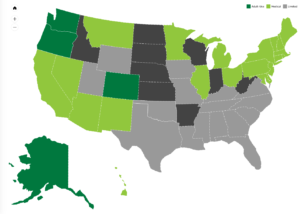
The United States of Cannabis
Arizona activists remain ahead of schedule and have nearly gathered the 150,000 signatures needed to put the state’s Campaign to Regulate Marijuana Like Alcohol initiative on the November 2016 ballot. (The campaign ultimately aims to collect 230,000 in order to insure against signature drop-off.) It’s estimated that Arizona’s adult-use market could be worth up to $480 million.
With a multi-billion-dollar cannabis industry in California alone, passing an adult-use legalization initiative in the state is vital to ending federal prohibition. The most prominent full retail initiative gathering signatures for the November 2016 election is the Adult Use of Marijuana Act, which is backed by billionaire Sean Parker and the Marijuana Policy Project.
Legalize Maine and the Marijuana Policy Project have joined forces to legalize adult-use cannabis in 2016. Legalize Maine has already collected 80,000 signatures. Only 61,000 signatures are necessary to place the measure on a statewide ballot, but the organization’s goal is 95,000, to insure against drop-off. The deadline to submit signatures is February 1st.
Last August, a pair of cannabis advocacy groups separately filed paperwork to get adult-use legalization on the 2016 ballot in Massachusetts. The state recently confirmed that a measure to legalize recreational cannabis next year has enough valid signatures to force the legislature to consider the measure. If the legislature decides to pass, then the campaign will have to collect another 10,792 signatures to formally make the November ballot.
There’s no question that adult-use legalization will be on the ballot this year in Nevada. Initiative Petition 1, which would tax and regulate marijuana similarly to alcohol, has been certified for the 2016 ballot. Backers had previously collected nearly 200,000 signatures to either force legislators to enact their initiative or put it on the ballot. When state lawmakers abstained from voting on the issue, the measure was automatically forwarded to this year’s ballot for a popular vote.
In Florida, the group United for Care received clearance from the state Supreme Court for a 2016 ballot measure that would legalize medical marijuana. The group nearly succeeded in legalizing medical marijuana in 2014, garnering 58% of the vote but falling barely short of the state’s constitutionally mandated 60% margin needed to pass,
The nation’s capital continues to debate cannabis. In December’s federal budget bill, the taxation and regulation of marijuana in Washington, D.C., was blocked by Congress again, though possessing and gifting cannabis remains legal in the city.
This month, Hawaii will begin accepting applications for medical cannabis businesses. The bill signed into law last summer opens the door for up to 16 dispensaries on the islands.
It was recently announced that Illinois saw approximately $1.7 million in medical cannabis sales during November and December of 2015. There are already petitions being circulated in the state that would expand the law’s qualifying conditions.
Maryland will award cannabis cultivation, processing, and dispensary licenses this summer. Industry advocates were pleased with the amount of interest the state’s program garnered: more than 1,000 applications were submitted.
Officials in Michigan have approved language for three different adult-use cannabis legalization initiatives for the 2016 ballot. In order to have the best chance of passing, it’s important for these groups to coalesce behind one initiative.
At the end of 2015, New Hampshire began issuing medical marijuana cards to qualifying patients. It’s expected that the state will open medical dispensaries in 2016.
After a long and arduous journey, New York’s medical cannabis program became operational this month. The cannabis industry expects the program and the law’s qualifying conditions to expand this year.
In the first week of 2016, Oregon began accepting adult-use cannabis business license applications. The state has no limit on how many licenses they will decide to award.
Vermont may become the first state to legalize adult-use cannabis through the legislative process in 2016. The proposed bill would allow for up to 86 storefronts and five different business license types.
Bonus: Election 2016 – Yes, We Canna
As we all know, a new president will be elected this November, and with that a new administration will assume power next January. It is very crucial that Congress pass more pro-cannabis legislation before then.
It’s probable that Attorney General Loretta Lynch will be replaced in 2016 or early 2017. This is important because it is the Department of Justice that enforces and prosecutes federal marijuana laws.
Another possibility for 2016 is that the acting head of the Drug Enforcement Administration, Chuck Rosenberg, could be replaced as well. Rosenberg is notorious for his gaffe last year when he called marijuana “probably” less dangerous than heroin.
On New Year’s Eve, officials from the Substance Abuse and Mental Health Services Administration posted a notice on the Federal Register that calls for a report “presenting the state of the science on substance use, addiction and health” to be released in 2016. Industry advocates are hopeful that this report could be the first sign of re- or de-scheduling cannabis from the Controlled Substances Act.
During 2016, NCIA will continue working with D.C.-based public affairs firms Heather Podesta + Partners, and Jochum Shore & Trossevin PC to magnify our efforts to address the industry’s top federal priorities: access to basic banking services and fair federal taxation.
In addition to NCIA’s lobbying and advocacy efforts, NCIA exists to connect and educate our members on all facets of the cannabis industry. Our industry supports tens of thousands of jobs, tens of millions in tax revenue, and billions in economic activity in the United States.Our core mission is to ensure that our members are treated like businesses in any other American industry. Join NCIA today to get involved and be a part of the cannabis revolution!
by Michelle Rutter, Government Relations Coordinator
As we look forward to 2016, there’s much on the horizon for the cannabis industry. NCIA remains dedicated in its effort to pass banking and tax legislation through Congress that would provide immediate relief to cannabis-related businesses all over the country.
In addition to the federal advocacy that NCIA engages in every day, there will be at least five states seeking to legalize and regulate adult-use cannabis via the ballot initiative process: Arizona, California, Maine, Massachusetts, and Nevada. It’s also likely that Florida will have another ballot initiative relating to medical cannabis, and it’s possible that other states will move forward with cannabis reform through ballot initiatives or legislative processes. What happens over the next twelve months will be crucial in shaping the future of the legitimate and responsible cannabis industry.
While 2015 was a milestone year for cannabis reform, that same momentum will be necessary in order to continue moving the conversation forward with Congress in Washington, D.C. The Rohrabacher-Farr medical cannabis amendment earned more that 60 Republicans votes. For the first time ever, there are multiple pro-cannabis bills that have been introduced in the U.S. Senate. Continued progress is vital in garnering more national support for cannabis reform, so make sure your interests are heard through national advocacy, education, and community with NCIA.
The timeline below lays out some of the highlights from a busy year in cannabis industry advocacy. We look forward to more exciting milestones with your help in 2016!
*Click on the “Full Screen” button (with the four arrows) at the bottom of the image to expand its size.
Cannabis Industry Teaches and Learns in Nevada
NCIA’s 2nd Annual Southwest CannaBusiness Symposium Brings Together Cannabis Industry Leaders in Las Vegas
On Saturday, August 23, NCIA hosted cannabis industry professionals for a day of information-packed sessions at its second annual Southwest CannaBusiness Symposium in Las Vegas, Nevada. Opening remarks featured Aaron Smith, executive director of NCIA, Congresswoman Dina Titus (D-Las Vegas) and Nevada State Senator Tick Segerblom (D-Las Vegas). Comments from the panelists focused on the local political atmosphere, touching on how Nevada, having passed legislation last year to set up a statewide medical program, is currently reviewing applications for licenses for medical marijuana dispensaries and cultivation centers. Additionally the Nevada legislature will consider a full legalization initiative during the 2015 session, although passage would require a 2/3 vote in both chambers. If the measure fails in the legislature, Nevada voters will have a chance to directly vote on legalization as a ballot initiative in 2016. Both Rep. Titus and Sen. Segerblom encouraged attendees to reach out to them and keep an open dialogue so that they can best represent the industry by understanding its needs.
The second panel, titled “Infused Products & Edibles Discussion,” featured experts in the fields of extraction, analytical testing, edible manufacturing, and retailing of infused products. Discussed on this panel were the importance of analytical lab testing to ensure quality products, the basics of different types of extraction methods, how to find your edible niche and establishing a brand, and the importance of educating your customers on the effects of infused products. Featured on this panel were Andy Joseph of Apeks Supercritical, Adam Mintz of Steep Hill Halent Labs, Julianna Carella of Auntie Dolores and Étienne Fontan of Berkeley Patients Group.
After these first two panels, attendees broke for a networking lunch where they could talk one-on-one and meet others already involved or looking to get into the industry. Walking around the conference floor you could hear conversations such as “What are current marketing regulations surrounding the sale of cannabis and infused products like in CO or WA?” and “How are you involved or wanting to be involved in the industry?” as well as lengthy discussions on attendees’ experiences regarding the Nevada application process which ended earlier in the week. Attendees also had the chance to visit sponsor booths to find out more about their products and services. The symposium’s sponsors this year included Eden Labs, MJ Freeway, Steep Hill Halent Labs of Nevada, Apeks Supercritical, HempMeds PX, and the ArcView Group.
Following lunch, the panel “Maintaining Responsible Business Practices” featured several distinct topics regarding establishing a culture of responsible practices within your business. The first topic highlighted the importance of setting standards of practice and self-regulation, especially regarding implementing programs that encourage customers to keep marijuana out of the hands of youth. Other topics included information on managing employees and effective human resource strategies, trademarking and protecting your brand, and an array of sustainable business practices that aid in lowering waste and increasing profits while contributing to a cleaner environment overall. Featured on this panel was Leslie Bocskor of Electrum Partners LLC, Carole Richter of CRichter ~ HR Consulting, LLC, Amanda Conley of Cobalt LLP, and Alex Cooley of Solstice Co-op.
Michael Correia, director of government relations for NCIA, followed to provide a federal update about what’s been happening in Congress. We’ve seen some positive movement within the House of Representatives recently. This past May, for the first time in history, a chamber of Congress passed pro-marijuana legislation. Congressmen Dana Rohrabacher (R-CA) and Sam Farr (D-CA) introduced an amendment to the appropriations bill covering the Department of Justice that limited the Department of Justice and DEA from interfering with states moving forward on medical marijuana. It passed 219-189, with an astonishing 49 Republicans supporting. Currently, the legislation is in the Senate and has Senators Rand Paul (R-KY) and Cory Booker (D-NJ) as co-sponsors. In addition, on July 16th, the House passed a similar amendment that would prohibit the Department of Treasury from penalizing banks that do business with state-compliant marijuana businesses. It passed 231-192, with 45 Republicans supporting it.
Rounding out the update was the mention of a potential upcoming issue that may have large implications for any marijuana cultivators using federal water reserves to grow. The Bureau of Reclamation, which manages water for the federal government, has stated that federal water should not be used for state-legal marijuana cultivation, since marijuana remains federally illegal. Although it is not yet a large issue, and so far the Bureau has only said that they will refer such cases to the Department of Justice, it looms as a potential trouble spot in Colorado and Washington State, and because Nevada gets most of its water from federal sources, it will likely become an issue in that state as well. Currently the Bureau of Reclamation is moving cautiously, and a group of senators have asked the Justice Department to give further legal guidance on this. NCIA will be providing updates on this issue as they are available.
The panel “Effective Messaging for Cannabis Professionals” rounded out the day and focused on tactics to use when talking with the media to communicate your message most effectively. Taylor West, deputy director of NCIA, provided advice focused on talking about a medical use program. She touched on the story of the development of the medical cannabis program in Nevada and the importance of emphasizing passion and compassion for patients. That story includes the quality of your product, your dedicated service, and your compassionate care in providing medicine to patients to improve their lives. Joe Brezny, executive director of the Nevada Cannabis Industry Association, provided advice on speaking with the media about the upcoming Nevada full-legalization measure. He touched on the Nevada Regulate Marijuana like Alcohol campaign messaging, which emphasizes that regulated marijuana is no worse than alcohol, that the marijuana market in Nevada is already present but in a black market run by cartels and drug dealers, and that legalizing and regulating marijuana is proving to work in states that have done so already. His key takeaways were that state-specific messaging is important to make it relevant to the political landscape of that state.
Thanks to everyone who joined us in Las Vegas for another successful event. Make sure you don’t miss any other great educational and networking events we have coming up!

 By Jodi Green, Miller Nash LLP; Shay Gilmore, The Law Office of Shay Aaron Gilmore
 Dr. Monaco is the Director of Laboratory Operations for
  Glenn H. Truitt, Esq. is the Managing Partner of
 Gabriel Cross is a Founder and CEO at




 MEDICAL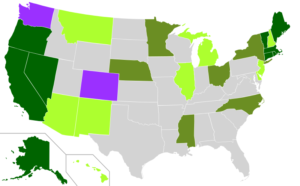
 t year to set up a statewide medical program, is currently reviewing applications for licenses for medical marijuana dispensaries and cultivation centers. Additionally the Nevada legislature will consider a full legalization initiative during the 2015 session, although passage would require a 2/3 vote in both chambers. If the measure fails in the legislature, Nevada voters will have a chance to directly vote on legalization as a ballot initiative in 2016. Both Rep. Titus and Sen. Segerblom encouraged attendees to reach out to them and keep an open dialogue so that they can best represent the industry by understanding its needs.
 regarding the Nevada application process which ended earlier in the week. Attendees also had the chance to visit sponsor booths to find out more about their products and services. The symposium’s sponsors this year included
  moving cautiously, and a group of senators have asked the Justice Department to give further legal guidance on this. NCIA will be providing updates on this issue as they are available.
Follow NCIA
Newsletter
Facebook
Twitter
LinkedIn
Instagram
News & Resource Topics
–
This Just In
NCIA Applauds Reintroduction of SAFE Banking Following Lobby Days
Beyond Rescheduling: Inside NCIA’s 14th Annual National Cannabis Industry Lobby Days