Across the Country – State Cannabis News and Movement
by Madeline Grant, NCIA’s Government Relations Manager
As the deadline to submit feedback for the Cannabis Administration and Opportunity Act approached last week, our Government Relations team worked tirelessly to submit a detailed analysis and recommended improvements on behalf of the legal cannabis industry. The full comments and an executive summary can be downloadedhere.The Cannabis Administration and Opportunity Act (CAOA), submitted in July by Majority Leader Charles Schumer (D-NY) and Senators Cory Booker (D-NJ) and Ron Wyden (D-OR), would remove cannabis from the schedule of controlled substances, create a regulatory structure and federal guidelines for cannabis products and state-legal markets, and is intended to support restorative justice for the people and communities that have been disparately hurt by prohibition while ensuring fair opportunities in legal cannabis markets for small businesses and marginalized communities.
The introduction of the comprehensive draft language was a pivotal moment for the United States Senate and NCIA will continue to do whatever we can to ensure value-driven policies for the cannabis industry. Meanwhile, we continue to see movement at the state level as support for cannabis legalization efforts continues to grow. Here are some important updates happening at the state level.
California
California officials announced that they are soliciting proposals for a program aimed at helping small marijuana cultivators with environmental clean-up and restoration efforts. The California Department of Fish and Wildlife’s (CDFW) Cannabis Restoration Grant program will release applications this fall and remain open through spring 2023. The $6 million in potential funding, which comes from cannabis tax revenue, must go to government agencies, California nonprofits, or Native American tribes who would then work with cultivators on environmental efforts.
New York
The newly inaugurated governor of New York says she wants to “jumpstart” the implementation of cannabis legalization. Governor Kathy Hochul took a major step by making two key regulatory appointments to oversee the state’s cannabis market. Soon after they were quickly confirmed by the Senate during a special session. Former New York Assemblywoman Tremaine Wright (D) will serve as chair of the Cannabis Control Board, and former Drug Policy Alliance (DPA) staffer Christopher Alexander will be the executive director of the state’s Office of Cannabis Management.
Ohio
Ohio activists can begin collecting signatures for a 2022 ballot initiative to legalize marijuana in the state. The Coalition to Regulate Marijuana Like Alcohol (CTRMLA) launched its ballot effort last month. The new initiative is a statutory proposal and if supporters collect 132,887 valid signatures from registered voters, the legislature will then have four months to adopt the measure, reject it, or adopt an amended version. In the case of lawmakers not passing the proposal, an additional 132,887 signatures will be required to place the proposal before voters on the ballot in 2022.
Missouri
Another adult-use legalization proposal has been filed. Legal Missouri 2022 submitted the latest measure to the secretary of state’s office, and it will now go through a review period before potentially being certified.
New Mexico
The Cannabis Control Division announced applications are now open for businesses interested in legal cannabis producers licensed by the state of New Mexico. After an application is submitted, regulators will have 90 days to issue a determination.
Colorado
Colorado voters will decide on an initiative in November that would raise cannabis taxes to fund programs that are meant to reduce the education gap for low-income students. The secretary of state confirmed that the campaign behind the measure collected more than the required 124,632 valid signatures to make the ballot. The measure would give low and middle-income families a $1,500 stipend to have school-aged children participate in afterschool programs, tutoring, and summer learning programs.
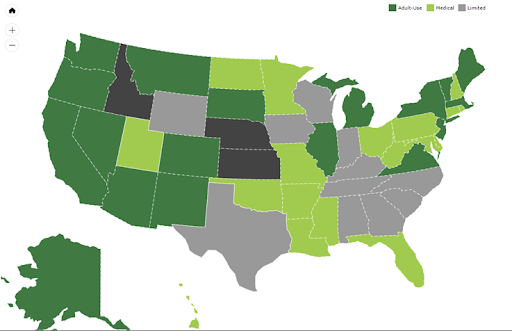
As states continue to legalize medical and adult-use cannabis, be sure to check out our state policy map for updates. Our Government Relations team will continue to educate congressional offices as states move forward. It’s vital to have accurate information and resources for members and Congress and staffers on Capitol Hill. With advancements at the state level, we continue to relay the importance of cannabis legalization at the federal level. Please stay tuned for more updates from our Government Relations team.
Video: NCIA Today – April 9, 2021
NCIA Deputy Director of Communications Bethany Moore checks in with what’s going on across the country with the National Cannabis Industry Association’s membership, board, allies, and staff. Join us every Friday on Facebook for NCIA Today Live.
State Cannabis Policy Update: Can You Keep Up?
By Michelle Rutter Friberg, NCIA’s Deputy Director of Government Relations
Photo By CannabisCamera.com
Last week was an historic one for cannabis policy around the nation. The second largest adult-use market, New York, successfully legalized cannabis and has already been signed into law by Governor Andrew Cuomo (D). New Mexico’s legislature also passed adult-use legislation which awaits Governor Michelle Lujan Grisham’s (D) signature shortly. Lastly, Virginia Governor Ralph Northam (D) signaled that he wants the state’s new adult-use cannabis laws to go into effect sooner than originally anticipated. Keep reading below for a brief summary of what’s happening in each of those states, and what it means for federal policy.
New York
Last week, New York became the 16th state to approve a law creating a regulated adult-use cannabis market when Gov. Cuomo signed the Marijuana Revenue and Taxation Act (MRTA). This legislation would make possession of up to three ounces and limited home cultivation legal and will automatically expunge convictions for behavior that is legal under the new law. Notably, the new law also allows for cannabis consumption almost everywhere that tobacco consumption is allowed.
Equity was at the forefront of New York’s bill: forty percent of tax revenue will be directed toward communities disproportionately impacted by cannabis prohibition, and provisions in the MRTA seek to award half of all business licenses to social equity applicants. The importance of this can’t be overstated: nearly 60,000 people – the majority of whom are people of color – are arrested for marijuana violations in New York every year, the effects of which can permanently damage their ability to obtain employment, housing, and education, among other collateral consequences.
A 2020 report by Arcview Market Research and BDSA projected that the New York cannabis market will be worth more than $1.6 billion by 2025. The state plans to tax cannabis at 9% at the state level with an additional 4% made available to cities and counties, and with additional incremental taxes levied based on the type of product and the amount of THC contained in them.
New Mexico
New Mexico is now poised to become the 17th state to legalize adult-use cannabis upon Gov. Lujan Grisham’s signature. The legislature advanced two measures to the governor’s desk: the first legalizes and regulates cannabis possession, production, and sales for adults over the age of 21, while the second facilitates the automatic review and expungement of the records of those convicted of low-level marijuana offenses.
The state’s Cannabis Regulation Act allows for the possession of up to two ounces of cannabis for adults 21 and over, permits the home cultivation of up to six plants, and, unlike New York’s legislation, prevents local governments from opting out of retail sales. Legal retail sales are scheduled to begin in New Mexico on April 1st, 2022 (no jokes here!).
Marijuana Business Daily projects an adult-use cannabis market in New Mexico could generate $350 million in annual store sales by its fourth year of operation.
Virginia
You’ll remember that back at the end of February, Virginia’s General Assembly convened a special session where they passed adult-use cannabis legislation. The legislation detailed the regulatory and market structures for the state, outlined social equity provisions, repealed criminal penalties for the plant, and, perhaps most importantly, is subject to a second review and vote by the Assembly in 2022. Lawmakers also established a January 1, 2024 enactment date for the law, however, much of this is now in flux thanks to Gov. Northam.
Last week, Northam asked the General Assembly to speed up the legalization of marijuana in the state, making it lawful for an adult to possess up to one ounce on July 1, 2021, instead of waiting until early 2024. Additionally, Northam has proposed a quicker route for expunging marijuana-related incidents from criminal records and allowing home cultivation of up to four plants per household also as of July 1, 2021.
The Governor’s request is in the form of a proposed amendment to the legalization bill the General Assembly passed last month. It’s also important to note that Northam’s proposals include changes to several other aspects of the legislation. One would empower the Cannabis Control Authority — the new regulatory agency that will be created to oversee the industry in the state — to suspend the licenses of businesses that don’t allow workers to organize, pay less than a prevailing wage, or classify more than 10 percent of workers as independent contractors.
The General Assembly will take up these proposals when it reconvenes April 7 for a one-day session to consider any vetoes or amendments Northam has proposed to this year’s legislation.
What’s It All Mean?
Once New Mexico and Virginia’s cannabis legislation is signed into law by their respective governors, nearly 45% of Americans will live in a state with legal cannabis, and it could reach a majority before the end of the year. This has what I like to call a “trickle up” effect for members of Congress, meaning that federal legislators begin to pay much more attention to cannabis-related issues once these policies are passed in their home states. You can certainly expect more members to begin signing onto legislation like the SAFE Banking Act and signaling support for comprehensive legislation like the MORE Act and the upcoming Schumer/Booker/Wyden bill that have yet to be introduced but are highly anticipated. As always, the NCIA team in DC will continue to keep our finger on the pulse to keep you and your business informed!
Momentum Across The Nation – New Mexico, Virginia, and the District of Columbia
By Madeline Grant, NCIA’s Government Relations Manager
We may be barely three months into 2021, but we’ve seen a lot of action in state legislatures already! This week, let’s take a look at three significant state victories in their respective state legislatures: Virginia, New Mexico, and the District of Columbia.
Virginia
The Virginia legislature approved adult-use cannabis legalization this past Saturday in a historic vote. The state of Virginia specifically is a major achievement as it’s the first state in the South to embrace full cannabis legalization. The House passed the measure in a 48-43 vote, and the Senate approved it in a 20-19 vote. It is important to note that not a single Republican voted for the bill in either chamber, but regardless, it passed and this is a major victory for cannabis policy reform.
So, what’s next? Virginia is the 16th state to pass an adult-use cannabis legalization law. Along with Illinois and Vermont, Virginia is the third state to pass legalization to legalize, tax and regulate recreational cannabis through the state legislature.
The Conference Committee established a January 1, 2024 enactment date for the law — this is when regulated sales are scheduled to start. Additionally, lawmakers agreed to establish an independent agency, the Virginia Cannabis Control Authority, to oversee the regulations and govern the adult-use market in Virginia. Adults will be able to possess up to one ounce of marijuana and cultivate up to four plants per household without penalty. The remainder of the bill, which details regulatory and market structure social equity provisions, and repeals criminal penalties, is subject to a second review and vote by the assembly next year. Lawmakers were sure to address issues such as how to prevent large corporations from taking over the cannabis market, how to handle expungement of cannabis offenses, addressing social equity provisions, including prioritizing business licenses for individuals who have been disproportionately impacted by criminal enforcement, and more. This is a big move for Virginia and we are excited to keep a close eye.
New Mexico
Last Friday, Members of the New Mexico House of Representatives approved House Bill 12, to legalize and regulate the use, possession, cultivation, and retail sale of cannabis for adults. House Bill 12 will move to the Senate for further consideration. If passed, the current measure, approved by the House by a 39 to 31 vote, would allow adults to purchase at least two ounces of marijuana and cultivate up to six plants for personal use. Additionally, those convicted of an offense involving up to two ounces of marijuana possession would be eligible for automatic expungement, and those currently incarcerated for these offenses would be eligible for dismissal. House Bill 12 is one of the five competing adult-use legalization measures and specifically addresses social equity and community reinvestment provisions.
So, what’s next? We’ve seen a history of opposing chambers in New Mexico through cannabis legalization efforts in 2019 and 2020. The following day after the vote in the House, the Senate Tax, business Transportation Committee considered three additional measures to legalize and regulate cannabis retail sales. The lawmakers discussed the differences and similarities between the competing cannabis measures and noted the need to reach an agreement on differences before the end of the short legislative session, adjourning for the year on March 20, 2021. We will keep an eye on the Virginia state legislature and actions moving forward.
District of Columbia
We saw movement in D.C. when voters showed support at the ballot box by passing Initiative 71 in 2014, which allows adults in D.C. to grow, possess, and gift marijuana but not sell it. Since then, we’ve seen Congress prevent D.C. from allowing the sale of cannabis by attaching a provision to D.C.’s appropriations bill that precludes the District from using its fund to legalize or regulate cannabis sales. The District’s Mayor, Muriel Bowser, is pushing forward with legalization to legalize cannabis in the District. The Safe Cannabis Sales Act of 2021 was introduced last Friday. It would legalize recreational cannabis sales in the District for people 21 and up. The bill also takes steps to combat the toll cannabis criminalization has taken on communities of color, expunge some marijuana-related offenses from people’s criminal records, funnel sales tax revenue into helping get start-ups off the ground, and creates a new license category for microbusiness and third-party “social equity” delivery services. Additionally, more revenue from cannabis sales would go towards funding organizations in wards 7 and 8, which includes women and minority-owned small businesses opening or expanding restaurants; small grocery stores; and public school after-school programs. D.C. would require cannabis vendors to have their products tested by an independent facility to track their potency and check them for contaminants. Days after Mayor Bowser unveiled her reform proposal, Council Chairman Phil Mendelson introduced a cannabis regulation bill. When comparing the two pieces of legislation there are some key differences surrounding tax rate, revenue, licensing, and expungements. For more details, check out Washington City Paper’s article here.
What’s next? As I mentioned previously, since 2014, Congress has included language in a spending bill that prevents the District from spending any of its funds to create a tax-and-regulate system. Because of this, the District has been stalled in implementing the sale of cannabis. However, now that Democrats control both houses of Congress and therefore the appropriations committees, we are hopeful that this rider preventing cannabis sales in the nation’s capital could be lifted.
According to the latest Gallup poll, 68% percent of Americans support legalizing cannabis, which is up from last year’s 66 percent. With support for full cannabis legalization growing, it’s not particularly surprising to see reform happening in these states. We are watching these states closely as they inch towards cannabis legalization. We see different entities making efforts to reform outdated cannabis laws; such as governors, mayors, advocates, patients, lawmakers, and the overall cannabis community. Together, through dedication and commitment, we will continue to move the ball forward in states and at the federal level.
Please stay tuned for more updates and please make sure to check out NCIA’s State Policy Map where all state updates are housed. As we continue the good fight it’s important to count our victories.
State of the States – Cannabis Policy Reform in the Current Legislative Sessions
by Morgan Fox, NCIA Director of Media Relations
The last few weeks have seen quite a bit of excitement for the possibility of comprehensive federal cannabis policy reform being closer than it has ever been, but what about the states?
Historically, the vast majority of progress has been made at the state level, and this year is shaping up to be another one full of victories for legalization advocates as state governments struggle to support their economies, create new tax revenue and job sources, and tackle long-overdue criminal justice reforms.
The overwhelming approval by New Jersey voters of a referendum to make cannabis legal for adults last year has put the spotlight firmly on the Northeast and mid-Atlantic regions. With state legislative sessions already underway, a number of states are already prioritizing legalization much more heavily than in years past even as New Jersey lawmakers struggle to pass enacting legislation to carry out the will of the voters in a fair and equitable manner. It is pretty clear that New Jersey’s neighbors don’t want to be left behind when it starts reaping the benefits of regulated cannabis markets.
Early this year, New York’s Gov. Andrew Cuomo released a statement outlining his plan to make cannabis legal in the state, and just recently added amendments that would allow delivery, clarify the tax system, and reduce penalties associated with some cannabis activities. There are still some concerns with this plan, including the amount of funding that would actually go toward repairing the disparate harms caused by prohibition and the lack of legal home cultivation. Regulated cannabis in New York could be worth more than $3.5 billion and create more than 60,000 jobs, making it one of the largest state cannabis markets in the country.
Meanwhile, in Delaware, a legalization bill that was approved in the state House in 2019 is slated to be reintroduced by the sponsor in the coming weeks. This bill would come on the heels of a report released last month by the state auditor which estimated that Delaware could take in $43 million annually with a 20% excise tax, and create more than 1,400 jobs over a five year period. In what seems to be a disturbing trend in some state legislatures this year, this bill is not expected to initially include home cultivation either.
In Connecticut, however, a new adult-use bill has been introduced that would center on restorative justice and social equity in the industry and would allow adults to grow limited amounts of cannabis in their homes. This bill has strong support in the state legislature but may soon have to compete with Gov. Ned Lamont’s proposal, which is expected to be released soon.
Nearby Pennsylvania is likely to consider adult-use legislation this year, with Gov. Tom Wolf (along with the incredibly supportive and newly internet-famous lieutenant governor) urging lawmakers to address the issue and – earlier this month – calling it a priority for his state’s annual budget proposal. Rhode Island lawmakers are expected to consider legalization again this year as well, and with the departure of Gov. Raimondo, it is more likely that the emphasis will shift away from a state-run model and back to regulating private businesses.
Farther South, Virginia made headlines this month by becoming the first state in 2021 to have both chambers of its legislature approve adult-use bills. Lawmakers are committed to ironing out the differences between the two bills this month during an extended session. With Gov. Ralph Northam in full support, Virginia stands poised to become the 16th state overall to make cannabis legal for adults and the first state to do so in the South, and it would be only the third to regulate cannabis through its legislature.
Adult-use legislation has also been introduced in Maryland, with supporters and cosponsors optimistic that it could be passed this year, though lawmakers there are not as far along in the process as their neighbors in Virginia. And in medical news, advocates in South Carolina are taking another shot at passing a medical cannabis bill there.
There are signs of progress from elsewhere in the nation as well. After running out of time in an emergency session last year, New Mexico’s governor and lawmakers wasted no time in getting back to legalization efforts this year. There are currently several bills being considered, and it appears very likely that some form of adult-use will be approved there this year.
This is just a snapshot of the momentum and positive movement we are seeing at the state level this year. If you are interested in up-to-date information about all cannabis-related state legislation in the U.S., please consider subscribing to Marijuana Moment’sbill tracker.
Unfortunately, the news isn’t all good.
In South Dakota, where voters approved both medical and adult-use initiatives in November by wide margins, advocates have suffered a temporary setback on the adult-use front. After a pair of law enforcement officials sued to have the adult-use bill thrown out because it addresses too many issues for a constitutional amendment, a circuit court judge ruled in their favor earlier this month. This situation is extremely disheartening and outrageous: the will of the people was overturned by a judge who was appointed by a governor who not only actively campaigned against the ballot initiative but also paid for the lawsuit to overturn it with taxpayer money! However, supporters have appealed the decision to the state Supreme Court.
In Montana, where voters also passed an adult-use initiative in November, supporters are faced with another lawsuit on similar grounds that was filed by opponents. However, observers are skeptical of that suit being successful, and lawmakers are moving ahead with developing enacting legislation.
And in Idaho, where a medical cannabis initiative was prevented from getting on the ballot last year, prohibitionist lawmakers are moving forward with a bill that would prevent any future legislation to make cannabis or any other currently illegal substance legal. If passed, this bill would be put before the voters in 2022, where it could very well be on the same ballot as a medical cannabis referendum.
Despite efforts to overturn progress and maintain failed and harmful cannabis policies, things are generally looking up and we expect several states to pass laws to stop arresting cannabis consumers and establish legal, regulated marketplaces in the near future.
 by Madeline Grant, NCIA’s Government Relations Manager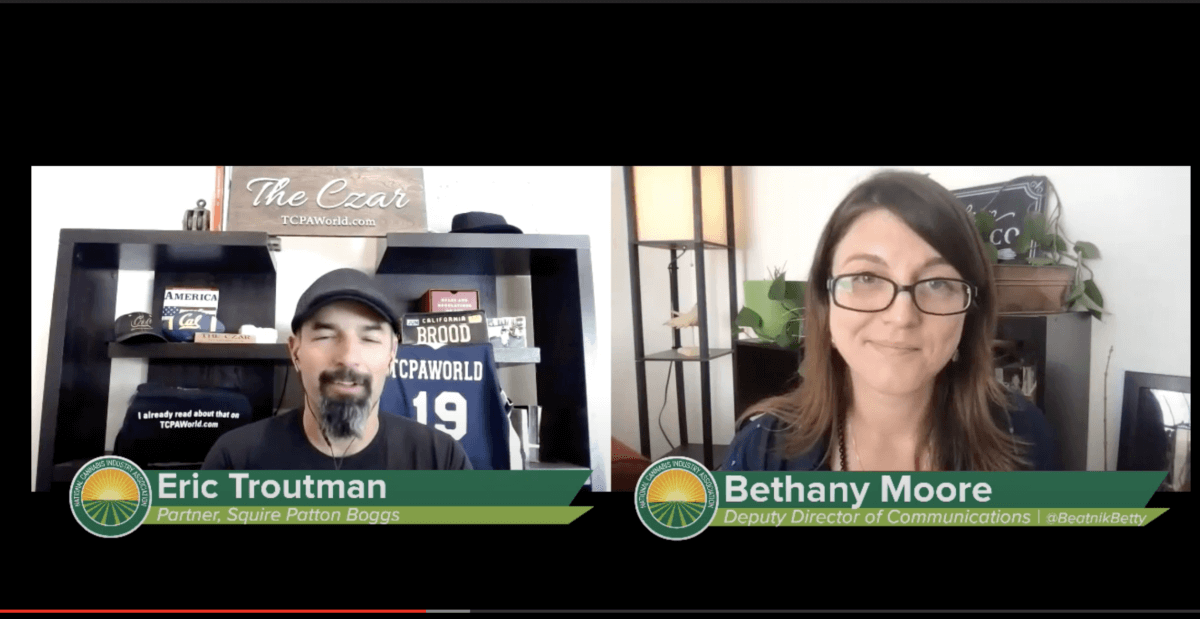



 The last few weeks have seen quite a bit of excitement for the possibility of comprehensive federal cannabis policy reform being closer than it has ever been, but what about the states?
Follow NCIA
Newsletter
Facebook
Twitter
LinkedIn
Instagram
News & Resource Topics
–
This Just In
Member Blog: What Consumers Really Want in a Pre-Roll
Member Blog: The Evolving Cannabis Legal & Regulatory Landscape in 2026