NCIA Only Pro-Cannabis Organization Granted Standing in DEA Rescheduling Proceedings
On November 19, the DEA’s Chief Administrative Law Judge John Mulrooney issued a ruling granting the National Cannabis Industry Association (NCIA) full standing to participate in the upcoming hearings on the agency’s proposed rule to reclassify marijuana from Schedule I to III in the federal Controlled Substances Act.
NCIA was the only party granted standing that supports rescheduling, while all 12 parties in opposition to the proposed change were given the nod to move forward. We are proud to be able to represent the cannabis industry in these important proceedings, which could yield a groundbreaking outcome for the legal cannabis industry should our efforts prove successful.
The hearing will officially commence on January 21, 2025 and conclude during the first week of March. The Administrative Law Judge (ALJ) presiding over the proceedings has stipulated that each Designated Participant (DP) may present one witness that can testify for 90 minutes maximum. According to the schedule outlined by the ALJ, NCIA’s witness will testify on January 29.
NCIA unequivocally supports descheduling marijuana entirely, however, we recognize that the federal government is currently only considering rescheduling. As such, our organization is in favor of a move to Schedule III, but filed a “limited objection” to the proposed rule that focuses mainly on how the DEA could use this opportunity to make currently unscheduled cannabinoids Schedule I (or III).
Quotes from the Judge on NCIA’s limited objection: “cleverly put”, called it “a fine bit of lawyering“, and opined that it was “good to read something so thoughtful“. Our organization would like to highlight the work of policy co-chairs Khurshid Khoja and Michael Cooper, as well as the team at Fox Rothschild for spearheading our crafty argument!
These hearings are the final phase of a process to review and reclassify cannabis that was set in motion by President Biden in October 2022. NCIA has advocated for the legal cannabis industry throughout this process, strongly supporting the move to Schedule III as a critical first step toward ultimately making cannabis legal at the federal level.
Moving cannabis to Schedule III would not only be the first federal acknowledgment of the medicinal value of cannabis, it would eliminate the unjust burden of Tax Code Section 280E on the cannabis industry, allowing all businesses in the sector to take the ordinary business deductions afforded to other industries.
Currently, plant-touching cannabis businesses are collectively overpaying the IRS more than $2 billion annually in excess taxes. This stifles profitability and drives up costs across the entire industry—for licensees and ancillary businesses alike. So there is a lot at stake in the upcoming hearings and NCIA is up to the task of representing the industry and bringing home a big win for regulated cannabis.
I invite anyone interested in a favorable outcome to join our efforts by becoming a member of NCIA now so that we have the resources we need to make the best possible case for the cannabis industry in these proceedings. There are also opportunities for business leaders to pull up a seat at the table and provide input to NCIA during this important process, set up a call with someone on our team to learn more.
Breaking Down the Recent Cannabis Rescheduling Recommendation
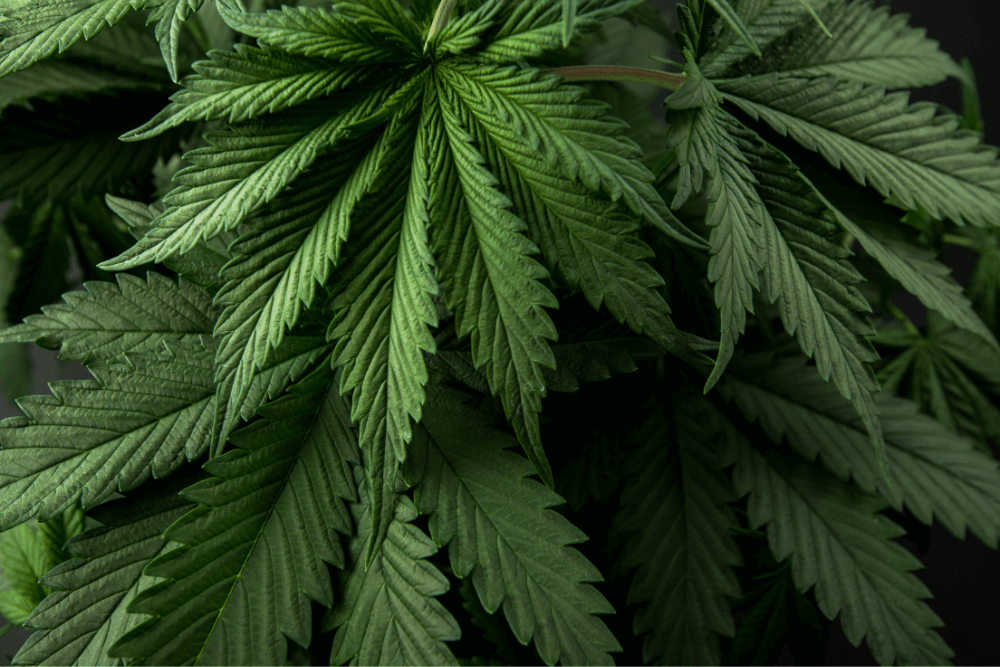
For more than fifty years, the federal government has maintained that cannabis is a Schedule I drug, meaning that it has a high potential for abuse and no accepted medical value. That changed last week (somewhat) when the Department of Health and Human Services (HHS) recommended to the Drug Enforcement Administration (DEA) that cannabis be placed in Schedule III, meaning that it has moderate to low abuse potential, a currently accepted medical use, and a low potential for psychological dependence.
Why now?
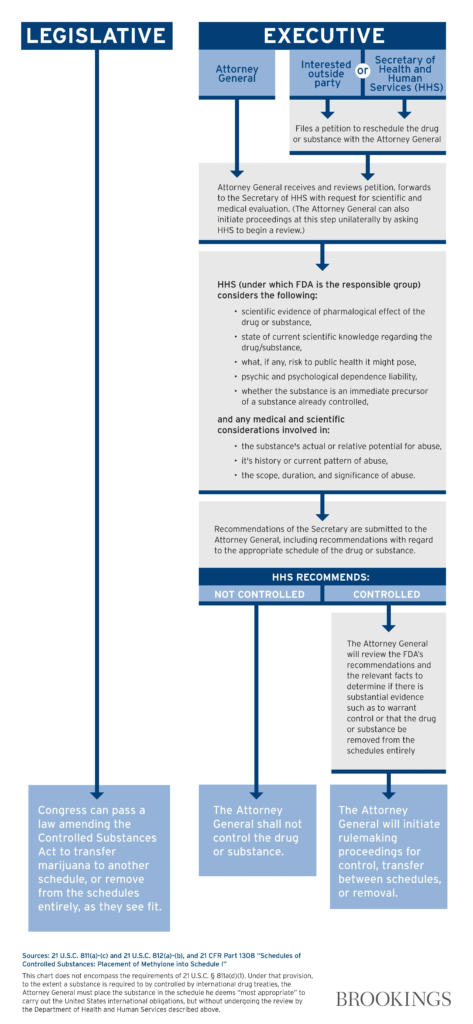
In October 2022, the Biden Administration announced that it would ask the Secretary of HHS and the Attorney General to initiate the administrative process to review expeditiously how marijuana is scheduled under federal law. As the Brookings Institute outlined years ago, the Executive process for rescheduling is much more complex than the Legislative path.
It’s no secret that the presidential election is barely more than a year away, and the President seems to be looking to make good on his campaign promise to reform the nation’s marijuana laws.
What does this mean?
First off, it’s critical to note that HHS’ recommendation to DEA is just that: a recommendation. It is non-binding. The DEA may come to the same conclusion that HHS did, but is not required to.
If cannabis is moved to Schedule III of the Controlled Substances Act, one positive outcome would be that 280E would no longer apply to plant-touching businesses, removing an incredibly punitive and debilitating provision in the tax code.
According to NCIA’s board chair emeritus, Khurshid Khoja, Esq., “…it’s important to remember that rescheduling would not apply the federal Food Drug and Cosmetic Act (FDCA) to marijuana for the first time—it applies right now, and like the federal Controlled Substances Act (CSA), would continue to apply after rescheduling. But absent any statutory authority permitting FDA to do otherwise, the FDCA would continue to apply after descheduling too, just as it does to hemp products.”
Others claim that the shift to Schedule III would have minimal impact on businesses and individuals. Here at NCIA, we’re cautiously optimistic but recognize that moving cannabis to schedule III could have some limited benefit but does nothing to align federal law with the 38 U.S. states which have already effectively regulated cannabis for medical or adult use.
What now?
Now that HHS has made their recommendation, the DEA will begin its scheduling review process.
Many are divided about what a move to Schedule III would actually look like. Yes, there would be the elimination of 280E, but what about enforcement priorities? Interstate commerce? Criminal penalties? There are so many unknowns.
NCIA has previously produced a common sense, workable roadmap for that federal comprehensive reform and provided detailed feedback on legislative efforts. It is time for Congress to follow the will of the American people. Don’t get me wrong, there’s no doubt that this recommendation is a step in the right direction and is long overdue. But we can’t lose sight of the ultimate goal: removing cannabis from the Controlled Substances Act entirely.
Have questions?
Join NCIA on September 14 at 1 pm ET for an engaging webinar where we will unpack all your questions! Register today and don’t miss your chance to hear more about what this means for the cannabis industry and your business.
Member Blog: Is 2021 the Year that Brings Normalcy to Cannabis?
by Jimmy Young, founder of Pro Cannabis Media
Thanks to Democracy and the grassroots efforts of cannabis advocates from coast to coast, there are now 15 holes in the cannabis prohibition wall (legal states), and 36 cracks (medicinal programs). So when will that wall come down and how fast? More importantly, what will the industry look like when the dust settles?
Over the past few weeks, cannabis media pundits from all over the world have chimed in with their predictions for 2021. (Some even pontificated before knowing the results of the Georgia State runoffs in the Senate.)
With President Joe Biden now in the White House and the Democrats controlling both houses of Congress, cannabis advocates are wondering when, and if, we will see federal legalization of cannabis in 2021. Will it succeed or will our dutifully elected politicians do something that will derail the will of the people during this Green Wave of reform?
Already, a Republican congressman from Florida, Greg Steube, decided to file the first draft of reform to a committee that will move cannabis from schedule 1 to schedule 3 on the Department of Justice list of “controlled substances.”
But for many, this does not go far enough. I recently interviewed the Media Relations Director of NCIA, Morgan Fox, who told me, “It’s not something the NCIA or other Cannabis advocacy groups is going to support….we are all focused on de-scheduling, (this draft) it just doesn’t go far enough.”
So what position are lobbyists in Washington, D.C. taking now that their arguments for reform may find a more supportive group to talk to? What is the best thing for the industry? What’s the right thing to do?
I also interviewed Michael Correia, the Director of Government Relations for NCIA, who explained that the target should be for full legalization, but that at the heart of the issue, there is something more important that needs to be dealt with – racism. In my interview with him, he said, “…let’s just stop arresting people for this. Stop arresting people in this war on drugs so no one’s lives are ruined because they’re consuming a natural plant, that 30 plus states have said, Hey, we’re okay with this. There shouldn’t be these differences. So just stopping, arresting these people, and then worrying about what’s the next step?”
Why does he feel so strongly about this? The evidence is overwhelming that law enforcement has used simple possession as a profiling tool to fill our privately run prisons with black and brown people over mere cannabis possession. “The vast majority of these arrests (92%) were for simple possession of the drug. 500,395 of [the 545,602] arrested for cannabis [crimes] were simply found [to be] in possession of cannabis.”
So are you convinced now that cannabis, a plant, is not illegal because it is considered a drug, but rather because of a racist system and the fact it can be used as a means to profile and jail black and brown people? Do you want more evidence of the racial bias in cannabis arrests? Check out this 2020 report on the racial makeup of those simple possession “crimes.”
“A recent report from the ACLU looked at data from 2018 and found that black people were 3.6 times more likely to be arrested for cannabis possession than white people.
This is despite both groups use cannabis at similar rates.
Even in western states with recreational cannabis laws, black people were 1.5-1.8% more likely to be arrested for having cannabis.” Emily Earlenbaugh, Forbes
So what’s the 2021 plan for lobbyists, policymakers, and elected officials? What exactly does this industry look like if one of the following changes happens in the next year or two?
- Cole Memo reinstated
- SAFE Banking
- Rescheduling
- De-scheduling
- The MORE Act
- Science and Research Grants
Each one of those changes is not only positive for this young industry but will have a ripple effect that will impact other industries. The trickle-down effect for any of these changes being implemented will impact the private prison system, banking, and financial markets, big alcohol, big pharma, social equity, expungement of past convictions, interstate commerce, and the international markets.
The cannabis lobbyists know that with Democrats in charge of the direction of the Congress over the next two years, this is their opportunity for serious reform. After all, the House passed a legalization bill, the MORE Act, in December of 2020. In 2019, the previous year, the SAFE Banking Act was also approved by the House, but neither even got to the floor of the Senate because of the then-Majority Leader Mitch McConnell’s anti-marijuana stance.
2021 is now upon us, and “grown-ups are now back in charge in D.C.” However, many advocates I’ve talked with are understandably wary and skeptical about the Federal Government dictating governance of this industry if cannabis is federally legalized and falls under the control of the alcohol and Beverage Commission.
Most cannabis advocates can at least agree that cannabis should be removed from the schedule that was created by the Controlled Substances Act in 1971. This change alone would allow banks to do business with the cannabis industry and allow for the removal of the restrictive 280E tax code that has limited the profit margins of already existing businesses.
Here are some links to other predictions from leading media sources about what cannabis reform democratic control of Congress may lead to:
Marijuana Moment: What The New Democratic-Controlled Senate Means For Federal Marijuana Legalization In 2021
Politico: Democratic-led Senate could clear a path to marijuana legalization
Forbes: Democrats Win The Senate: The Impact On Marijuana Policy
So after reading all this information, here’s what I think will happen over the next four years.
First Year: Cannabis gets removed from the Controlled Substances Act schedule
Second Year: Decriminalization and expungement of cannabis possession crimes with banking reform
Third Year: Interstate commerce
Fourth Year: Full Federal legalization, international export markets open
It’s 2021, the year of the cannabis plant as a political issue is here and reform is as pungent as the odor of this amazing plant. Stay tuned, this will be an ongoing theme in D.C. politics this year as we all hopefully witness another chapter in the historic end to prohibition.
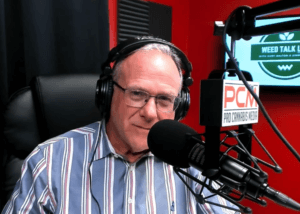 Jimmy Young is the founder of Pro Cannabis Media. An Emmy Award-winning talk show host from New England, and a resident of Massachusetts who holds a medical card after 4 major surgeries in 22 years.
The founder of Pro Cannabis Media is the current host of In The Weeds with Jimmy Young, a weekly podcast distributed over the CLNSMedia.com, site, iTunes, Spotify, Googlecast among others. In July of 2019, he teamed up with the founder of Cannabis.net, Curt Dalton, to host a two hour live monthly Weed Talk Show where the two Massachusetts natives have interviewed some of the biggest names in Cannabis, like Steve DeAngelo, Bruce Linton, and Tommy Chong. Locally local cannabis advocates and representatives from the medical establishment in the Bay State have all appeared on that show that is now being distributed nationwide. Young also produces a weekly news video, called News Dabs, highlighting and commenting on the biggest stories around the world in the emerging cannabis universe.
DEA Rescheduling Announcement: What It Means, And What You Can Do
As the announcement that the U.S. Drug Enforcement Administration (DEA) will reject petitions to “reschedule” marijuana leaked to the press last night, NCIA executive director Aaron Smith issued the following statement calling on Congress to remove marijuana from the Controlled Substances Act:
“DEA’s decision flies in the face of objective science and overwhelming public opinion.”
 “The reality is that half of U.S. states have already passed effective laws allowing patients legal access to medical cannabis, and it is changing lives,”
“Continuing marijuana prohibition forces critically ill people to suffer needlessly, leaves life-changing treatments undeveloped, and keeps patients and providers in limbo between state and federal laws.
“We appreciate the positive step – however small – of opening up a few additional avenues for medical marijuana research. But patients deserve more, and Congress should help them by removing marijuana from the Controlled Substance Act, allowing state programs and medical research to move forward without interference.”
NOW WHAT?
This DEA decision presents an opportunity to elevate the conversations we are having with both the public and Members of Congress. It’s important that we continue to tell our stories about the benefits of state-regulated marijuana industries and the need to end federal marijuana prohibition.
Now, more than ever, is a chance to raise our voices in unison to make our issues undeniably heard.
We encourage you to get involved with Congress at home by attending a town hall meeting, inviting Members of Congress or their staff on a tour of your business, and scheduling meetings with your Member’s district office.
For advice, help, or materials to assist you, please contact NCIA’s Washington, D.C. office by emailing michelle@thecannabisindustry.org.
If your business is not yet a part of the movement, please join NCIA today.
Follow NCIA
Newsletter
Facebook
Twitter
LinkedIn
Instagram
News & Resource Topics
–
This Just In
Member Blog: The Evolving Cannabis Legal & Regulatory Landscape in 2026
How THCa Vapes Are Changing Consumer