Currently, in the cannabis industry, we find ourselves in a unique position. We are at an important crossroads of policy changes, advocacy efforts, and business opportunities. Within the dynamics of cannabis legalization, certain people seized new market openings, while others scramble to get a foothold in the business.
As legal cannabis continues to normalize, we must ask ourselves whether the industry affords everyone equal opportunities. While certain U.S. states have established social equity programs within their cannabis laws, many people don’t feel it is enough to correct the current imbalances.
Entrepreneurs and professionals alike are asking essential questions about our responsibility to minorities in cannabis. This movement is an excellent opportunity for cannabis businesses to help shape the industry’s future in a way we can be proud of.
The Consequences of the War on Drugs
The imbalances of equality in cannabis can be traced back to the War on Drugs. Since the War on Drugs was enacted in 1971 by President Nixon, it has had detrimental impacts on minority communities.
Increased drug arrests in minority populations are not the result of increased drug use. The nonprofit Brookings Institution tells us, “All along, one consistent target for the nation’s cannabis laws [in the War on Drugs] were communities of color. Despite cannabis usage rates between whites and non-whites being similar, Black Americans were arrested for cannabis offenses at a rate of nearly 4:1, compared to whites.”
For many, it is difficult to comprehend how impactful these cannabis convictions have been on minorities. Many families have suffered for a generation due to the head of household going to prison for cannabis crimes. In these unfortunate situations, there is no opportunity to spread the intergenerational wealth enjoyed by most families.
Status of Social Equity in the Cannabis Industry
From the outside looking in, it is easy to assume the cannabis industry offers equal opportunities. However, if you peer just beneath the surface, you will find several elements at play that keep minorities from starting cannabis businesses. Due to these factors, only 1 in 5 cannabis businesses today is owned by minorities.
In nearly all cannabis markets in the U.S. states, strict laws prevent people with drug convictions from applying for business licenses. Yet, we have already established that far more minorities than whites get arrested for cannabis. This fact immediately creates a lopsided pool of applicants that favors white people as the winners of cannabis business licenses.
Another factor that has led to imbalances in the cannabis industry is that white people are better off financially than minorities. This can be a real handicap, as cannabis businesses are costly to start. To illustrate, MJBizDaily gives us the following cannabis business startup costs:
$2,500,000 – Vertically integrated dispensary
$500,000 – Cannabis processing facility (MIP)
$312,000 – Stand-alone retail dispensary
As can be seen, it takes serious capital to finance a new cannabis business. Yet, many minorities do not have access to this sort of funding. This fact is partially attributable to the damage done in minority communities by the War on Drugs.
State Mandated Social Equity Programs in Cannabis
The early pioneers of legal cannabis did not anticipate the social inequalities that would arise in the industry. However, as places like Washington and Colorado have had functioning industries for over five years, we can now take a more granular perspective on the market.
As imbalances in social equity are now recognized across the industry, individual U.S. states are enacting legislation to help “level the playing field” for minorities. The states taking meaningful steps for social equity in cannabis include New Jersey, Virginia, California, Illinois, Massachusetts, Michigan, Maryland, Ohio, and Pennsylvania.
The breadth and scope of social equity programs in cannabis vary from state to state. To illustrate, California has established an initiative that provides financial support and training to minority cannabis business owners. Also, Michigan, Illinois, and Massachusetts have put controls on the application process to give minorities better chances to win licenses.
Charitable Efforts & Business Groups
While state-mandated social equity programs are a big step forward in cannabis, there is still a lot of work to do. To this end, modern cannabis professionals have taken it upon themselves to start dialogues about social equity. Even more, these people have branched out to join nonprofit groups and business organizations which promote social change in cannabis.
Last Prisoner Project is a particularly impactful nonprofit that seeks to overturn unjust cannabis convictions. Their team is composed of lawyers and legal experts – the organization also enjoys support from such cannabis icons as Jim Belushi and Steve DeAngelo. For their part, Women Grow spreads the message of equality in cannabis by empowering females. They are focused on connecting different women in the cannabis space to create powerful alliances.
Company Ethics and Hiring Practices
To truly affect change in the social fabric of cannabis, businesses must also take proactive measures within their operations. By promoting racial sensitivity within your business, you help plant the seeds of change in your employees and customers.
To help your employee team better appreciate people from other backgrounds, we recommend enrolling them in diversity training. According to Cornell University, “An organization is only as good as its culture — and abiding that culture is not only a role for HR, it’s every manager’s and employee’s responsibility.” Diversity training is a great way to promote equality within your company culture. Specific training programs also educate your HR department on non-discriminatory hiring practices.
Summary
In the few short years that we have had legal cannabis, the industry has taken some fantastic strides. While it seems that the fight for legalization has finally swung in the right direction, there is still a good deal of work to do concerning social equity.
It is going to take a concerted effort to equalize opportunities for minorities in the cannabis industry. This process starts with addressing unjust cannabis convictions on a societal scale, and cannabis business HR departments must embrace these changes.
Lissa Lawatsch currently serves as the General Manager of CLS’ Nevada retail subsidiary, Oasis Cannabis Dispensary. A Colorado native and graduate of Metropolitan State University of Denver, Ms. Lawatsch has served the Las Vegas market for 18 years. With 20 years of VP-level experience in the banking and finance sector, Ms. Lawatsch synthesized her business acumen with her passion for cannabis to effectively launch and manage several brands and retailers in the Nevada market for the last 5 years.
Commmittee Blog: NCIA’s Diversity, Equity, and Inclusion Committee Offers Critiques and Recommendations for Illinois Social Equity Dispensary Licensing Process
by NCIA’s Diversity, Equity, and Inclusion Committee
We are NCIA’s Diversity, Equity, and Inclusion Committee (DEIC), comprising experienced professionals representing a diverse range of backgrounds. In response to the early results of the Illinois Adult Use Dispensary application process, and with the interest of supporting Illinois’ Social Equity efforts, we felt compelled to reach out and offer our analysis and recommendations.
While the creation of the Social Equity Program in the Cannabis Regulation and Tax Act and Illinois Department of Financial and Professional Regulations (“IDFPR”) implementation of the licensing scheme was well-meaning and intentioned, the recent litany of lawsuits and outcry from advocacy groups following Illinois’ inaugural issuance of cannabis licenses indicates heavy criticism. As demonstrated thus far, the Social Equity Program appears limited in its ability to capture a sufficient representation of persons most harmed by the War on Drugs in Illinois in business licensure and ownership, or to generate the opportunities for restorative justice and building generational wealth for such persons as hoped.
Our intention with this letter is to state our express desire to lend the expertise and resources of NCIA’s DEIC to support Illinois legislators in crafting Illinois’ licensing and regulatory systems in a manner that reflects the Social Equity Program’s laudable mission of reducing barriers to cannabis business ownership, and establishing a legal cannabis industry that is equitable and accessible to those most harmed by the disparate enforcement of drug-related laws in Illinois. Furthermore, we hope to lend support to local organizations building toward that same goal, and to form a coalition as we all strive to rectify the harmful effects of prohibition and the War on Drugs.
At this time, and pending further collaboration with local officials, NCIA’s DEIC makes the following recommendations for your consideration. For further understanding of the analysis supporting these recommendations, please see the attached report.
For IDFPR to move forward with license scoring and issuance as soon as possible, we suggest the following:
Removing the required possession of premises and overhead to hold on to property (not required of dispensary applications and may bankrupt existing applicants awaiting results)
Ensuring oversight of KPMG (the 3rd-party firm hired by the State of Illinois to score the applications) by persons of color and social equity representatives
Allowing for a documented appeals process internally with KPMG results before issuing them to all applicants
Scrutinizing Operating Agreements in the rubric and gradient to ascertain and avoid predatory or straw-man agreements
Moving forward, reasonable transparency would include knowing what the makeup and process was for KPMG in making their first evaluations, and what the process will look like for the re-scoring to avoid conflicts of interest. Specifically, IDFPR can ensure transparency by making the following information public:
Evaluation Rubric
Composition of the Reviewers
Scoring Process and Determination of Grading
Frequency of KPMG Meetings
KPMG Public Relations Contact
Timeline of Events During the Scoring Process
Lessons Learned and Plan for Improvement on Future Scoring Rounds
For future rounds of applications, we offer these recommendations:
Pre-qualifying social equity applicants for state funding to ensure economic empowerment in the application process
Providing a path forward for those who are not (yet) qualified to operate a cannabis business, but are qualified as social equity applicants
Allowing for 100% Social Equity Applicant owned businesses to qualify for cannabis experience points without partnering with a multi-state operator (“MSO”)
Issuing delivery licenses for social equity operators
We also express our support for the recommendations made by the Cannabis Business Association of Illinois’ Minority Access Committee, in their October 5, 2020, letter to Governor Pritzker. (see here)
Finally, we appreciate the efforts taken by Governor Pritzker, the Illinois legislature, and IDFPR thus far to address disparities in the application process and commend Governor Pritzker for taking leadership on this important issue. Allowing this first generation of applicants to address deficiencies in their applications, as it was originally intended to allow them to do, offers another opportunity to enter the lottery system, which we recognize and appreciate.
Additionally, the commission of a disparity study is commendable and should prove helpful in understanding what went wrong and how to improve. If anything, we hope our expertise and professional experience will assist in this process and in the effort to improve upon the mistakes of the past to achieve a more diverse, inclusive, and socially equitable future.
Thank you for your time and attention to this matter. Please let us know if we can assist in any way.
Sincerely,
The National Cannabis Industry Association Diversity, Equity, and Inclusion Committee
This year, a national outcry against police violence and the impact of COVID-19 on Black and brown communities initiated a reckoning with the legacies of oppression and injustice in the U.S. Along with recognizing our institutionalized and internalized racism, we have started to come to terms with our economic inequality now that the income gap is worse than it has been in 50 years and three families alone control more wealth than 50% of Americans.
As with the rest of the country, the cannabis industry is lived differently based on the intersectionalities of race, class, gender, orientation, (dis)ability, and veteran status. For example, already wealthy, white, male individuals have amassed fortunes in cannabis with roughly 74% of U.S. cannabis businesses owned by men and 81% by whites, according to a 2017 Marijuana Business Daily survey.
After most states designated cannabis “essential” during COVID-19, private individuals, family funds, and pension funds plowed $2.6 billion into corporate cannabis, and multi-state operators posted record sales in the hundreds of millions. Earlier in September, the second cannabis exchange-traded fund (ETF) was announced which involves an investment portfolio of multi-state operators, REITs, and CBD companies. In contrast, Black and brown communities face mass incarceration for that same plant whereby African Americans are four times more likely nationally to be arrested for cannabis offenses than whites, while in states such as Kentucky and Montana, almost 10 times more likely, cited by a 2020 ACLU report.
These economic barriers to entry entrench the lack of representation in cannabis. For most entrepreneurs, the main obstacle to starting a cannabis business is the lack of access to traditional banking. It takes at least $300,000 to open a cannabis retail store, and up to millions of dollars for other cannabis enterprises, according to the 2019 Marijuana Business Factbook. Without traditional banking, most professionals finance their businesses through family wealth or personal contacts – 84% of U.S. cannabis companies are self-funded by founders, and 22% capture additional funding through a Family and Friends Round, cited by that same report. In this system, minority entrepreneurs are at a disadvantage. U.S. median household net worth ranges from $171,000 for white families to $17,600 for African Americans, $20,700 for Latinx, and $64,800 for “Other,” based on a 2016 Federal Reserve Board survey.
In addition to funding challenges, cannabis entrepreneurs must navigate onerous state and local regulations to obtain and maintain licensing. Some states have launched Social Equity Programs to help communities historically targeted by the criminalization of cannabis to now participate in the profits of legalization. However, even Illinois’s Social Equity Program, which is considered the gold standard, awarded only 21 out of its total 75 retail social equity licenses, leaving unclaimed 54 licenses that could have transformed the applicants’ economic circumstances. The 21 finalists were taken from a total pool of 1,667 applicants, which equates to only 1.3%. Low success rates stifle market entry and ensure that corporate, multi-state operators continue to saturate the cannabis space.
Beyond media proclamations, we must actualize an inclusive cannabis industry that reflects and celebrates the rich diversity of our community and provides equal opportunities to all professionals throughout the growth cycles of the market. We must operationalize sustainable businesses that produce unionized jobs and foster generational wealth. To do so, we must not only promote our own professional aspirations, but we must champion our friends’ and colleagues’ pathways into and up the cannabis industry.
While federal legalization remains the ultimate goal, local policies that would articulate a diverse, inclusive, sustainable cannabis industry must include explicitly legalized access to banking and finance, an overhaul of law enforcement and the criminal justice system, and social equity programs that encourage market activity. Until then, we must collectivize our professional resources and knowledge to build a true business community that empowers each of us to achieve our cannabis ambitions.
Rebecca Lee Katz is an attorney at an international law firm and President of Pakaloh LLC, the free business resource for an inclusive cannabis, CBD, and hemp industry. Pakaloh offers three types of membership which are all free, and members may select as many as they choose. Membership is available to 1) “Individuals”, including new and established entrepreneurs and professionals, 2) “Providers of Products”, or plant-touching businesses, and 3) “Providers of Services”, including ancillary services.
A WOC-owned company, Pakaloh provides its members with a comprehensive suite of services, starting with free information and discounts at financial institutions like banks, lenders, and payment processors that work in cannabis. Pakaloh also features free Business Tutorials that cover a range of cannabis topics from accounting to agriculture. These are informative, introductory online videos submitted by members that allow them to reach an audience of potential clients who may need to hire their services. Additionally, members may post and search for job opportunities.
Partner companies also offer discounts for members to use on individual and bulk orders. Members network on the site by accessing directories and sending messages directly to each other. Lastly, Pakaloh curates information on professional and activist organizations and events. Pakaloh is pledged to every community, and comes from pakalolo, an embrace of generations of the founder’s family in Hawai’i. Pakaloh holds true that no matter your roots, each of us aspires toward something greater than ourselves, be it our family, our nation, our cannabis movement.
We Must Hold Ourselves Accountable To Create A Fair Cannabis Industry
by Aaron Smith, NCIA’s CEO and Co-founder
As the nation began grappling with issues of systemic racism and inequality on a massive scale following the death of George Floyd and ensuing civil rights protests across the country, we saw an outpouring of support from members of the cannabis community. It was inspiring to see so many people standing up for justice and recognizing the disproportionate impact that prohibition has had on marginalized communities and Black people in particular.
Words, however, are not enough. Implicit in supporting positive change is the need to reflect on where we can do better – and be better – ourselves, and then taking action.
Since our initial public statement on this national reckoning early this summer, NCIA has started taking the first in what will be an ongoing series of steps to facilitate more diverse representation, participation, and access to opportunities in our industry. We instituted aSocial Equity Scholarship Program to provide complimentary first-year membership and other benefits to licensees and applicants in state and local social equity programs and recently launched the#CatalystConversations webinar series to provide them with valuable information and amplify their voices. We have created a staff position to directly engage staff, membership, and allies to critically analyze and expand upon our progress. And, we are currently establishing an Opportunity Fund to help support and expand our scholarship program, and assist disenfranchised members and the organizations fighting for them. But we still have a long way to go.
As part of our efforts, we are also encouraging cannabis and ancillary businesses to commit to improving diversity, equity, and inclusion in the industry and to hold themselves to those commitments by participating in The Accountability List byCannaclusive.
The Accountability Listgives businesses and organizations the opportunity to show consumers, the industry, and policymakers what they are actively doing to promote fairness and inclusivity in cannabis and beyond. We encourage everyone in the cannabis space to stand up for justice, be honest about where they can improve, and commit to doing so in the most forthright, measurable, and transparent ways possible.
Photo By CannabisCamera.com
Ending cannabis prohibition and improving diversity in the industry is not going to eliminate systemic racism or fully repair all the death and destruction committed in the name of the war on drugs, but together we can make a real difference and help create a better future.
NCIA, our Board of Directors, and I stand firmly in support of people fighting to end racial injustice and ensure a fair cannabis industry with equitable opportunities for all. We hope you’ll stand with us.
Webinar Recording: NCIA Committee Insights – What’s Going On With Social Equity In Illinois?
In case you missed it, watch the recording of this webinar from Wednesday, July 15, 2020.
NCIA’s #IndustryEssentials webinars are our weekly educational series featuring a variety of programs allowing us to provide you timely, engaging and essential education when & where you need it most. The NCIA Committee Insights series showcases content produced in partnership with one of our 15 member-led committees.
? What has taken Illinois so long to announce its first round of Social Equity license winners?
? When Illinois legalized Adult Use on January 1st of this year, it announced itself as a national leader in the fight for Social Equity.
? Is it making the impact it set out to in communities Disproportionately Impacted by the War on Drugs?
Find out directly from stakeholders in Illinois how the program has or hasn’t been working. How will the failings and successes in Illinois thus far impact other Social Equity programs around the nation?
Members of NCIA’s Diversity, Equity, and Inclusion Committee and Special Guests from the Chicago Community spoke on the subject, including:
⭐️ Tahir Johnson, Business Development Manager, National Cannabis Industry Association (Moderator)
⭐️ Christine de la Rosa, CEO & National Co-Founder, The People’s Dispensary
⭐️ Mike Lomuto, Co-Founder, Boost
⭐️ Mark Slaugh, Founder, iComply
⭐️ Rev. Anibal Vega, Social Equity Partner, The People Dispensary Chicago
⭐️ Ron Holmes, Co-Founder, Majority-Minority Group
⭐️ Kay Villamin, Co-founder & Creative Marketing Director, Hush Chicago
⭐️ Michael Malcolm, Founder & Cannabis Consultant, WTF Media; Social Equity Applicant – Chicago
Recently, we had the pleasure of joining a webinar hosted by NCIA in which they discussed the state of the Illinois market. The #IndustryEssentials presentation covered topics such as Illinois House Bill 1438, social justice reform, licensing and social equity.
Social equity just so happens to be a topic near and dear to my heart and is something we advocate for in everything we do in the industry. So let’s talk about it. What exactly is social equity and why is Illinois always in the social equity conversation? Well, social equity came about as an answer, if you will, to the many unfair statistics we see in the industry as a whole. What statistics, you ask? Well, 80% of the cannabis industry is owned by white males, even though minorities are four times as likely to be arrested for cannabis-related offenses. Social equity is an intentional effort to lessen the gap and provide all people the opportunity to operate and work in the cannabis industry.
One misconception people tend to have is that social equity is diversity. This couldn’t be further from the truth. By definition, a diverse team is a team of people that represents differing racial and ethnic backgrounds, religious beliefs, sexual orientation, gender, disabilities, and military status. Diversity is about pulling together a well-rounded team to be more successful in solving the customers’ needs.
Social equity is purely about socioeconomic barriers. While that may be written in cannabis regulations differently depending on the state, here in Illinois, a social equity cannabis organization is defined as:
A cannabis organization that is at least 51% or more owned by individuals who hold social equity status.
OR a cannabis organization that has at least 51% or more of employees who hold social equity status.
How do we determine if a person holds social equity status here in Illinois? The Illinois Department of Commerce and Economic Opportunity (DCEO) surveyed census records to determine what areas had poverty levels 20% above the national average, what areas had 20% or more of families on food assistance programs and what areas that had schools with 75% or more of their students on the free lunch program. These particular areas were then surveyed for the prevalence of high drug-related arrests and this map was created.
If you type in an address and the address is covered in blue, that means that area is a disproportionately impacted area or “DIA”. Now there’s yet another layer to social equity; the war on drugs. If you received a charge, conviction, or arrest related to cannabis in Illinois, that now is expungable under the new Illinois bill you have social equity status. But wait, there’s more. If you have a parent, spouse, or child who received a charge, conviction, or arrest, that means you have been affected by the War on Drugs and also have social equity status.
Families who weathered the trauma of the war on drugs saw it in lost opportunities, barriers to entry, and constant judgment because of possessions, distribution, or consumption of a plant that is now legal in the state of Illinois. Far too often, these charges affected people already living in disproportionately impacted areas.
So what are the rules?
For principal officers applying for licenses:
You must have lived in a DIA for at least five years and have two forms of identification proving this, including, state ID, driver’s license, pay stubs, voter registration cards, utility bills, or anything else the state may deem acceptable forms of residency.
You, your parent, your spouse, or your child has a charge, conviction, or arrest that is now expungable under the bill. This too must be proven with proper documentation of such arrest, charge, or conviction.
For employees:
You must currently live in a DIA and have two forms of identification proving this, including state ID, driver’s license, pay stubs, voter registration cards, utility bills, or anything else the state may deem acceptable forms of residence.
You, your parent, your spouse, or your child has a charge, conviction, or arrest that is now expungable under the bill. This too must be proven with proper documentation of such arrest, charge, or conviction.
While this all sounds very complicated, it is an effort by the state of Illinois to balance the scales. HB1438, although not perfect and never claimed to be, strives to right the wrongs of the war on drugs. While social equity holds 25% weight in the application process, we’re yet to see how it will be regulated for licensees in operation. With that said, many organizations in Illinois intend to keep those scales balanced and celebrate the most equitable cannabis market yet.
Rashaunah “Shawnee” Williams is the co-founder at Illinois Equity Staffing, a minority, disabled and woman-owned business based in Chicago, that supports the cannabis industry in education, job placement, human resources, payroll and compliance. While a south suburban native, Shawnee has also lived in Florida, Tennesee, Missouri, Nebraska, Louisiana, Oklahoma and California. She holds a bachelor’s and master’s degrees in business and has worked in industries such as entertainment, recruiting, tech, higher education, marketing and sales.
Shawnee and her business partner Lynette Johnson founded Illinois Equity Staffing because they understood the barriers to entry for lower and middle class people, minorities and women in the cannabis industry. Both having the Corporate America background, Shawnee and Lynette, understand the pain points of this population, as they both grew up in disproportionately impacted areas and are minority women. It’s this perspective that has allowed Illinois Equity Staffing to bridge the gap and create a more equitable cannabis industry in Illinois.
Shawnee also brings another unique perspective to IES, as she suffers from Lupus and Sjogren’s Syndrome, two disabilities that involve the immune system. As a Black woman suffering from two autoimmune diseases, Shawnee advocates for those with debilitating diseases seeking more knowledge on alternative and holistic approaches to symptoms causes by autoimmune diseases. She also is an advocate for those suffering from disabilities that seek to find more uplifting, supportive and progressive employers.
The cannabis industry has the opportunity to show older, more traditional industries the areas of opportunity to improve and to be more responsible. As such, Shawnee Williams and the team at Illinois Equity Staffing seek to be a leader in promoting a more socially equitable and diverse industry within the cannabis space in Illinois and nationally.
Webinar: NCIA Committee Insights – Illinois Market – What’s Happening and What’s Next
Join us on Monday, May 11 at 1:00 PM MT for this webinar.
How is the 11th state to permit adult-use cannabis doing, and what’s coming next? Want to get your foot in the door? Join us in a lively conversation about Illinois application and licensing.
Considering expansion to Illinois from another market? Learn how Illinois differs from other markets on some key issues. Think it’s essential that states successfully innovate to promote social equity?
We’ll discuss what Illinois is doing well and where the gaps are in regards to their Social Equity program. Join industry thought-leaders from NCIA’s State Regulations Committee as they discuss these crucial topics and more.
Learn about Social Consumption in Illinois, and What’s Coming Next
Compare Illinois Marketing and Advertising Differences
How Illinois is Handling Social Equity
The Illicit Cannabis Market Puts Consumers At-Risk and Is an Existential Threat to the State-Legal Cannabis Industry
by Andrew Kline, NCIA Director of Public Policy
Photo By CannabisCamera.com
The illicit market is not working for anyone. The illicit market puts consumers at risk by offering untested, unregulated, and dangerous products, including “vape cartridges” filled with additives that are not intended for inhalation. These illicit vape products alone have caused 2,768 injuries and 64 deaths to date nationally. Pop-up dispensaries are selling illicit, unregulated, and untested products to unwitting consumers. Unscrupulous people are unlawfully selling cannabis products over the internet in violation of state and federal law, and online platforms are enabling the illicit market by advertising for illegal online and brick and mortar stores. Counterfeit and ready-to-fill packaging is being sold with fake lab results, batch numbers, and barcodes. Illegal growers are causing serious environmental harms. Even illicit market operators with the best intentions still put consumers at risk when they sell untested products produced in unregulated facilities.
And these illicit operators pose an existential threat to the regulated markets that voters have demanded. Operators are laying out significant funds for licenses and compliance to compete against an illegal, untested, unregulated, untaxed marketplace. Law enforcement is playing whack-a-mole. Consumers are often unaware of which operators are legal, particularly where illegal operators often have a veneer of legitimacy or have stolen the intellectual property of these regulated businesses to gain consumer trust. We need to make certain that reliable and safer products (tracked, tagged, and tested) are being sold in the regulated market. Trust in the safety of the supply chain is key here, with laboratory testing, traceability, and safeguards (eg: ability for recalls) as mandatory prerequisites.
On February 19, 2020, NCIA, along with NCIA’s Policy Council, former Boston Police Commissioner Ed Davis, and Commissioner Britte McBride, public safety appointee on the Massachusetts Cannabis Control Commission, partnered to facilitate an important discussion with law enforcement, advocates, and industry stakeholders seeking solutions to the illicit cannabis market. The summit brought together federal, state and local law enforcement; state regulators, cannabis entrepreneurs and multi-state operators, ancillary technology companies, and social equity experts. The purpose of the summit was to dialogue about the illicit cannabis market with the goal of developing recommendations on resources, policies, best practices, and public-private partnerships to share information.
Here are some key takeaways:
First, the cannabis industry needs to help law enforcement find alternatives to arrest and incarceration. Some states have been creative in their approach to combating the illicit market, by locking doors and shutting off electricity and water, levying fines, and prosecuting tax evasion. It is essential that we rely most heavily on alternatives to arrest and prosecution so that we don’t perpetuate the myriad problems associated with the “war on drugs.”
Second, the industry must better define the illicit market. The illicit market looks very different in Idaho than it does in Colorado. In Idaho, all sales are illegal and diversion from legal states into Idaho is a serious problem. In Colorado, state regulators are concerned about unsafe products being manufactured and sold outside of the state regulatory regime. So, we need to take a hard look at the products that are causing the most significant problems (injuries and deaths) and focus our attention on the most serious of those cases. Until we prioritize what we deem to be illicit market activity, it will be difficult to prioritize limited law enforcement resources.
Third, the industry needs to definitively determine the root cause of the illicit market. We know that three probable causes of illicit market activity are: (1) lack of legal access to cannabis and cannabis products and (2) price disparity between legal and illicit markets, largely due to high taxes of legal products, and (3) a lack of economic opportunities in marginalized communities causing people to turn to illicit sales. But, what are other causes and effects?
Fourth, the industry needs a forum for collaboration with law enforcement. The middle of a crisis is not the time to develop relationships.
Fifth, the industry needs a pathway for illicit market operators to enter the legal market. We can’t displace the illicit market unless we create a pathway for previous illicit market entrepreneurs to enter the legal market. That means that states must create realistic pathways to enter the regulated market for legacy illicit market actors. There are an increasing number of potential models here, from the states such as Massachusetts (which has led on attempting to prioritize social equity during license application processes) and Illinois (which made such pathways a key point in the legislation to create a legal market) to industry groups such as the Minority Cannabis Business Association (which has published recommendations for state regulators intent on incorporating social equity requirements into their licensee applications).
Sixth, law enforcement has competing demands and needs help prioritizing cases. What are the most egregious cases that warrant criminal arrest and prosecution? What are the cases that warrant automatic expungement? And what do we do with the cases that fall in between?
Finally, the industry needs to speak with one voice and start rowing in the same direction. The industry needs national messaging from states that have a regulated market to help dispel myths and prepare warnings for responsible use. We need to share information on packaging and labeling, testing, universal symbols, etc., nationally. And most significantly, the industry needs to start speaking with one voice and work to bring legacy businesses into the regulated market. NCIA’s Policy Council is committed to continuing efforts to create a safe place for everyone in the industry to begin that dialogue.
Andrew Kline is the Director of Public Policy for the National Cannabis Industry Association and leads NCIA’s Policy Council. He can be reached at Andrew@TheCannabisIndustry.org
Think about that number for a minute. Ten thousand. Just a handful of years ago, some cannabis conferences were struggling to attract 500 people.
This explosion in the cannabis industry has had a profound effect on our nation:
Tens of thousands of businesses have started – spurring economic growth and creating hundreds of thousands of jobs. According to Leafly, there are now more than 211,000 cannabis jobs across the United States. More than 64,000 of those jobs were added in 2018.
Legal cannabis is currently the greatest job-creation machine in America. The cannabis workforce increased 21% in 2017, gained another 44% in 2018, and is expected to grow another 20% in 2019. Those are record-setting numbers.
Real estate is another sector that is booming thanks to legal cannabis. A recent study led by a by a University of Mississippi economist concluded that legal retail cannabis in Colorado increased housing values. Researchers compared cities that permitted the sale of cannabis with those that did not and found that the availability of recreational cannabis in a given area created strong housing demand and higher increases in property values.
Clearly, legal cannabis is creating jobs, opportunities, and economic growth.
But there is a dark side to the cannabis numbers. According to the American Civil Liberties Union, arrests for cannabis possession account for over half of all drug arrests in the United States. In 2017, 659,700 were arrested in the U.S. for cannabis. Over 90% of those arrests were for simple possession. Moreover, 46.9% of people arrested for drug law violations are Black or Latino, despite making up just 31.5% of the U.S. population. Additionally, over 200,000 students have lost federal financial aid eligibility because of a drug conviction.
As a nation, we must ask ourselves, how does imprisoning someone or taking away their chance at receiving an education because they possessed a small amount of cannabis (or other drug), make our country better, stronger, or greater?
Since this blog is dedicated to numbers, I’ll leave you with this one: It takes 100,000 atoms to become visible to the human eye, and even at that amount, it is only about the width of a human hair.
But it takes far fewer people to make a difference in society. Our last presidential election was won by the candidate that received over 2 million fewer votes, but won the electoral college by having just a few more votes in some key states. Just 0.2 points or about 10,000 votes separated the candidates in Michigan. Only 0.7 points or about 22,000 votes made the difference in Wisconsin.
This is not a time for us in the cannabis industry to be complacent. We have won some hard-fought victories, but there is still much to do, many wrongs to right, and a lot of work ahead.
My hope is that everyone in this amazing industry will share the belief that while we have a lot to be thankful for, we still need to keep moving forward and progressively for a better future.
Get involved. Make your voice heard. And vote.
Enjoy the conference!
CEO Kary Radestock
Kary Radestock, CEO, launched Hippo Premium Packaging in March 2016 offering an array of services to the cannabis market, including: Marketing Strategy, Brand Development, Social Media, Public Relations, Graphic and Web Design, and of course, Printing and Packaging. Radestock brings over 20 years of award-winning print and packaging expertise, and leads a team of the nation’s top brand builders, marketers and print production experts. Hippo works with businesses looking for a brand refresh or an entire brand development, and specializes in helping canna-business get their products to market in the most beautiful and affordable way possible. Radestock’s Creative Collective of talent and experts, allows her to offer world-class solutions to support the unique needs of the Cannabis Industry.
Member Blog: Legal Cannabis in Illinois – Expanded Possibilities For All
Today, Governor Jim Pritzker of Illinois signed the historicHouse Bill 1438, The Cannabis Regulation and Tax Act, into law, ending prohibition for recreational cannabis usage across the state, and making it the 11th state where cannabis is legal. I, along with so many others in Illinois, and around the United States, am just as excited as the Governor.
“The state of Illinois just made history, legalizing adult-use cannabis with the most equity-centric approach in the nation. This will have a transformational impact on our state, creating opportunity in the communities that need it most and giving so many a second chance.” – Governor Pritzker, IL
This is a game-changer for the state of Illinois and its constituents. Public health, education, and tourism are just a few of the areas that are expected to emerge victoriously by being some of the beneficiaries of the $170 million dollars in expected tax revenue in early years.
But to me, what’s even more extraordinary is the fact that within IL’s legalization law is a visionary plan that will serve as inspiration to advance the nation’s social equity movement in this industry.
With the end of cannabis prohibition, we see the beginning of the end to the “war on drugs” as we know it, one that shrouded lower-income and traditionally Latinx and African-American communities in an unjust and unfair light.
The ACLU states that people in the United States use and sell marijuana at roughly the same rate regardless of their race, yet a black person is almost four times more likely than a white person to be arrested for marijuana possession nationwide. In addition, roughly 13,000 people were deported or separated from their communities and families in 2013 alone for drug-related offenses.
Even the word marijuana itself can be considered negative and racist, based on a longstanding theory that narcotics agents in the 1930s chose a word of Mexican-Spanish origin over the more scientific word cannabis when crafting drug laws, making it sound more sinister and associated with a certain community.
The equitable measures put into place in Illinois’ cannabis legalization law are unprecedented when it comes to making sure the end of cannabis prohibition will result in brighter days for the masses, not just a select few.
A FAIR SHOT FOR ALL
New processing and cultivation licenses will be issued in mid-2020, with growers from communities negatively impacted the most by cannabis prohibition getting priority within the application process.
A SECOND CHANCE
Up to 770,000 people in Illinoisqualify to have their marijuana convictions expunged from their criminal record, healing past wounds and providing access to new opportunities that weren’t available in the past because of past marijuana laws.
OPPORTUNITY FOR GROWTH
One quarter of cannabis taxes collected willfund a grant program that will invest in minority communities impacted most negatively by cannabis prohibition, driving cannabis business opportunities, by offering assistance and mentorship.
Even 2020 candidate Senator Kirsten Gillibrand shared her comprehensiveplan to legalize marijuana on a Federal level immediately if she becomes president. In that plan, social equity is also the primary focus on the path to legalization.
“The unfair enforcement of our current marijuana laws is a continuation of the institutional racism that has defined our criminal justice system for decades… We’re talking about entire lives, families, and communities being derailed: felony convictions make it much harder to get and keep jobs, access financial loans, exercise the right to vote, travel abroad, and receive social and housing benefits.” – Senator Kirsten Gillibrand
And just recently, Chicago-based Cresco Labs launched its Social Equity & Educational Department (SEED), an initiative aimed at promoting inclusion, equality and community engagement, through community outreach, educational support and incubators for veteran, minority and women-owned businesses.
“Our SEED initiative is designed to ensure that all members of our society have the skills, knowledge and opportunity to work in and own businesses in this industry….the SEED initiative consists of impactful programs and actionable solutions-based approaches that we believe will help make the cannabis industry a highly inclusive force for job creation.” – Charlie Bachtell, CEO, Cresco Lab
I also believe in a fair and equitable cannabis industry that unites as one to fix the damage done within certain communities as a direct result of cannabis prohibition. The National Cannabis Industry Association, along with theMinority Cannabis Business Association, are helping to shape laws and create a roadmap for local governments to address social equity issues right from the start of legalization.
“It is fitting that the Land of Lincoln is moving forward with such extensive measures to reverse the damage done to people of color and low-income communities by the government’s senseless war on cannabis consumers. We cannot continue to pursue legalization without considering restorative justice, and Illinois is definitely starting on the right foot in this regard,” said Aaron Smith, executive director of the National Cannabis Industry Association (NCIA).
And as further fuel to ignite the social equity movement,with the end of prohibition in sight, we’re also seeing exponential growth in all sectors of cannabis business. And with that growth comes a highly qualified talent boom in cannabis, with executives from all industries making the move to join and imagine an exciting new space together, from all perspectives.One exciting space that cannabis businesses can look to Corporate America for inspiration is within Corporate Social Responsibility programs.
Corporate Social Responsibility programs, or CSR, is a way for companies to conduct their business in a manner that is ethical, while taking their social, economic and environmental impact, along with the consideration of human rights, into account. It can be a win-win situation for all parties involved – through CSR programs, businesses can benefit society while boosting their own brands. Most have probably heard of Tom’s Shoes, and their popular “One for One” CSR program, which donates a pair of shoes for every pair bought. General Electrics donated over $38 million to community and education programs in 2016. Disney has a “VoluntEARs” program, which allows all of their employees to use a portion of their hours towards volunteer efforts.
With so many new brands coming into the market following legalization, it’s important that they find a way to stand apart and above the competition, while delivering a relevant brand experience. In order to do that successfully, brands need to stand for something, something that matters to people. And what we’re hearing from legislators and constituents alike is that social equity in the cannabis industry matters a lot. It’s a space for us, as responsible cannabis business owners paving a path forward, to come together and share not only the secrets of their success, but also to share the gains with the entire cannabis community, in order to lift everyone up – to right the wrongs of the failed war on drugs.
The possibilities are limitless, just like the new frontier of cannabis. I look forward to seeing how we all grow together.
Payal Shah is founder and CEO of the Cannabis Insight Collective. She’s spent the last two decades in strategic planning, working in leadership roles within global advertising agencies, on blue-chip clients including Proctor & Gamble, Microsoft, Walmart, Kelloggs, and Porsche.
Her experience is focused on understanding how cultural paradigm shifts and trends impact and influence people, their behaviors and brand choices. Her knowledge is grounded in creating and cultivating online panels, or Collectives, of all sizes and shapes, to address a variety of challenges for various clients. This background, along with a compassion and conviction for the cannabis industry, inspire her to be an advocate to drive the cannabis industry forward.
Cannabis Insight Collective is aliving, breathing online community of people across the United States, brought together by their connection to the cannabis industry. We exist to uncover cultural, category and consumer trends and insights within the category by tapping into our proprietary Collective, and working with people directly to answer questions that brands are struggling to answer.
At Cannabis Insight Collective, we are committed to supporting social equity in the cannabis market, and treating everyone fairly and respectively, through a number of Corporate Social Responsibility business initiatives:
The Cannabis Insight Collective panel will be representative of the entire United States population to ensure a representative voice is heard.
A percentage of CIC’s revenue will be donated to the advancement and mentorship of minority-owned cannabis businesses.
CIC will continue to advocate to establish new and existing laws that make sure the cannabis industry is fair and equitable.
NCIA’s 9th Annual Lobby Days – Strength in Numbers, Power in Progress
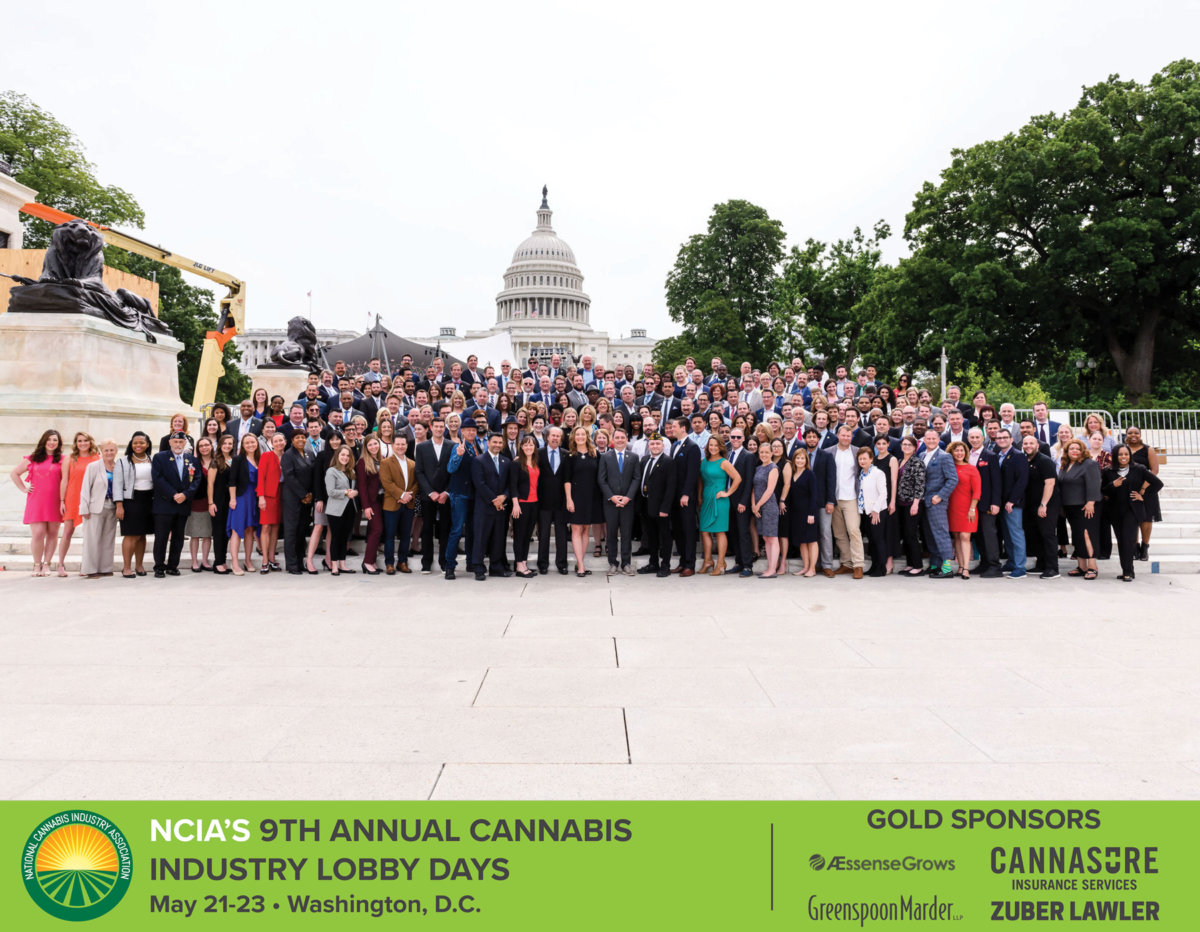
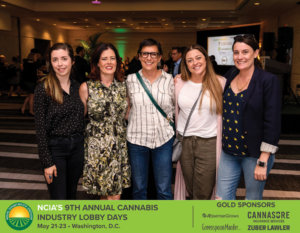
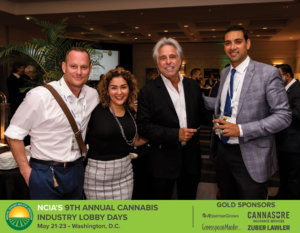
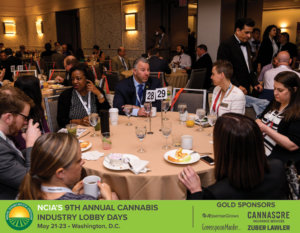
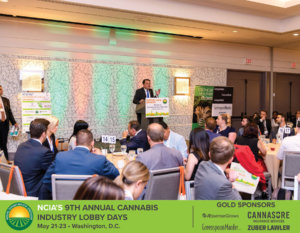
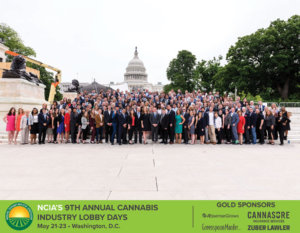
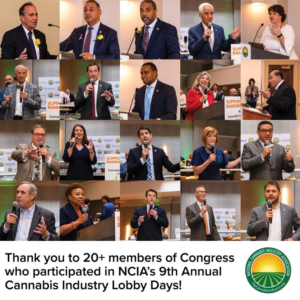
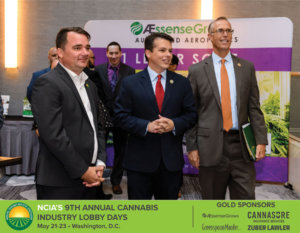
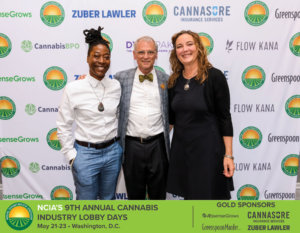
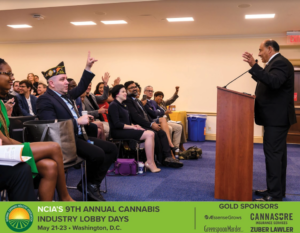
Just two short weeks ago, NCIA hosted our 9th Annual Cannabis Industry Lobby Days. This impactful event brought over 250 NCIA members to our nation’s capital to advocate and lobby on important issues facing our industry like access to financial services, amending IRC Section 280E, and addressing social equity.
Over the course of 48 hours, attendees met with nearly 300 congressional offices to share their stories and experiences, and dropped off informational materials to 200 offices that we did not schedule meetings with. In addition to these meetings, we had two briefings, held a PAC fundraiser, and hosted our first-ever VIP Day for members of our Leadership Circle. Let’s take a look at some of the highlights from this important event:
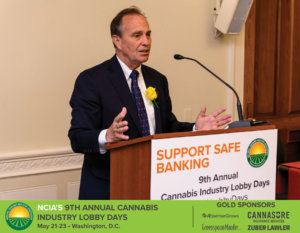
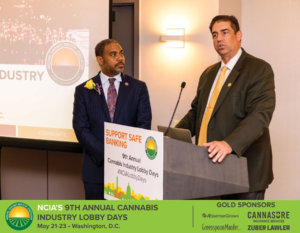
To kick off our first-ever VIP Day, we held a briefing at the House of Representatives entitled “SAFE Banking: Where We Are, and Where We’re Going,” where Congressman Ed Perlmutter (D-CO), the lead sponsor of HR 1595, the Secure and Fair Enforcement (SAFE) Banking Act, kicked off the day. On the panel was Tanner Daniel of the American Bankers Association, Becky Dansky of SARBA, and Gail Rand of ForwardGro, while attendees included NCIA members, congressional staff, and members of the press.
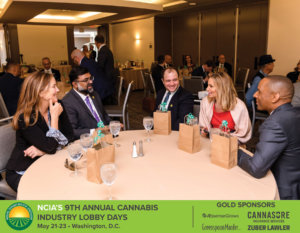
Following the briefing on banking, VIP Day attendees were shuttled to a luncheon featuring Reps. Joe Neguse (D-CO), Katie Porter (D-CA), Gil Cisneros (D-CA), and Steven Horsford (D-NV). All of these members of Congress are freshman who support cannabis reform, and talked about the importance of advocacy and the use of political action committees like the NCIA-PAC that they rely on.
After lunch, VIP Day attendees were shuttled back to Capitol Hill, where teams met personally with members of Congress, committees of jurisdiction, and congressional leadership.
Our first ever VIP Day was a huge success, and we thank the members of NCIA’s PAC Leadership Circle for their dedication to advocacy.
Lobby Days then officially started with a Welcome Reception attended by other advocates in Washington, D.C., NCIA members, and even congressional staff!
The following day, the work really began at our breakfast training. There, attendees met with the groups that they would be in for the day, were taught talking points on various bills and issues, and learned about how to use the app that housed all of their meeting information.
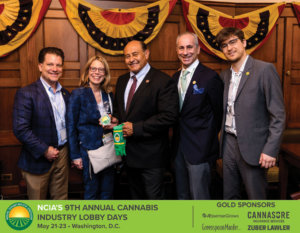
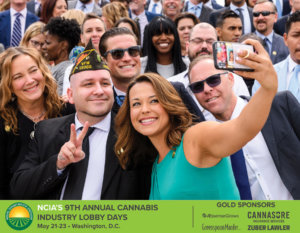
Washington, D.C. is full of great photo ops, so after our breakfast training, all of our attendees shuttled over to the Capitol… and snapped a few selfies, of course!
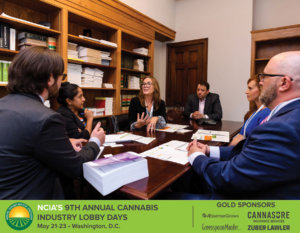
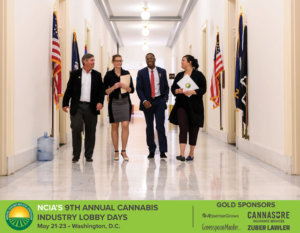
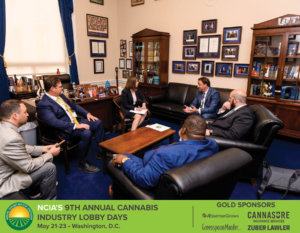
Meetings on Capitol Hill went from 12pm to 4pm. Each of NCIA’s 54 lobbying teams had at least four meetings over that course of time. Some groups were even lucky enough to sit down with members of Congress to talk about the issues that affect them and their businesses the most.
The day concluded with a fundraiser for the NCIA-PAC. This year’s event was wildly successful, as we had 15 members of the House of Representatives (Reps. Porter (D-CA), Charlie Crist (D-FL), Josh Harder (D-CA), Earl Blumenauer (D-OR), Ruben Gallego (D-AZ), Salud Carbajal (D-CA), Jared Huffman (D-CA), Jason Crow (D-CO), Brendan Boyle (D-PA), Diana DeGette (D-CO), Denny Heck (D-WA), Barbara Lee (D-CA), Dina Titus (D-NV), Susie Lee (D-NV), Matt Gaetz (R-FL)) attend and speak, as well as Sen. Jeff Merkley (D-OR).
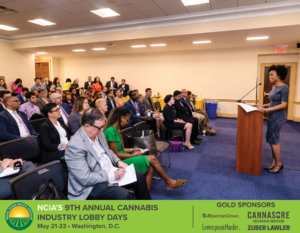
The final day of Lobby Days began with a standing-room-only briefing that focused on NCIA’s new white paper titled “Increasing Equity in the Cannabis Industry” that our Policy Council worked on with the Minority Cannabis Business Association (MCBA). Opening remarks were given by MCBA’s President, Shanita Penny along with the Principal of Greenbridge Corporate Counsel, Board Vice-Chair of the National Cannabis Industry Association, and Co-Chair of the Minority Cannabis Business Association Policy Committee, Khurshid Khoja. We were also joined by two members of the Congressional Hispanic Caucus, Rep. Lou Correa (D-CA), and Rep. Ruben Gallego (D-AZ).
Lobby Days wrapped up with small groups dropping off folders with informational materials to congressional offices that we were unable to schedule meetings with. While some may think these drop-ins are ineffective, they actually prove to be incredibly helpful long after our attendees go home.
The dates for NCIA’s 10th Annual Cannabis Industry Lobby Days have already been chosen, so mark your calendars for our biggest year yet, happening May 19-21, 2020!
Be sure to check out the full photo album from this year’s Lobby Days!
MCBA’s Model Municipal Social Equity Ordinance
Recently, NCIA’s Policy Council contributed toward a larger effort by the Minority Cannabis Business Association (MCBA) to create model social equity legislation for cities across the country. The legislation’s drafting committee started with the basic framework of the RESPECT Resolution introduced by Congresswoman Barbara Lee in 2018. The drafters also “borrowed liberally” from social equity ordinances in development in other cities such as Los Angeles, Oakland, San Francisco, and Sacramento, “attempting to improve upon these pioneering works with the benefit of hindsight.”
Khurshid Khoja, co-chair of the MCBA Policy Committee and Vice Chair of NCIA’s Board of Directors, led the drafting team. “The Model Ordinance is a statement from the communities we represent to the local lawmakers, regulators, entrepreneurs and other stakeholders who are building our nation’s cannabis industry one town at time – social equity is not only possible, it should be the industry standard moving forward. Our work gives those actors the tools they need to make equity a present reality in our industry rather than a lost opportunity.”
“We are grateful to have had the opportunity to assist the Minority Cannabis Business Association with crafting this important model ordinance,” said Aaron Smith, executive director of NCIA. “As we replace prohibition with regulated cannabis programs, it’s important that the communities most adversely impacted by the disastrous war on marijuana have access to the new economic opportunities of the post-prohibition era. Policymakers across the country should look to this model ordinance as the framework for ensuring that their local cannabis market is inclusive and reflective of the broader community.”

 Lissa Lawatsch currently serves as the General Manager of CLS’ Nevada retail subsidiary, Oasis Cannabis Dispensary. A Colorado native and graduate of Metropolitan State University of Denver, Ms. Lawatsch has served the Las Vegas market for 18 years. With 20 years of VP-level experience in the banking and finance sector, Ms. Lawatsch synthesized her business acumen with her passion for cannabis to effectively launch and manage several brands and retailers in the Nevada market for the last 5 years.
 We are NCIA’s Diversity, Equity, and Inclusion Committee (DEIC), comprising experienced professionals representing a diverse range of backgrounds. In response to the early results of the Illinois Adult Use Dispensary application process, and with the interest of supporting Illinois’ Social Equity efforts, we felt compelled to reach out and offer our analysis and recommendations.

 Rebecca Lee Katz is an attorney at an international law firm and President of





Follow NCIA
Newsletter
Facebook
Twitter
LinkedIn
Instagram
News & Resource Topics
–
This Just In
How THCa Vapes Are Changing Consumer
Announcing NCIA’s 2026-2028 Board of Directors