Member Blog: The Importance of Storing Cannabis Properly
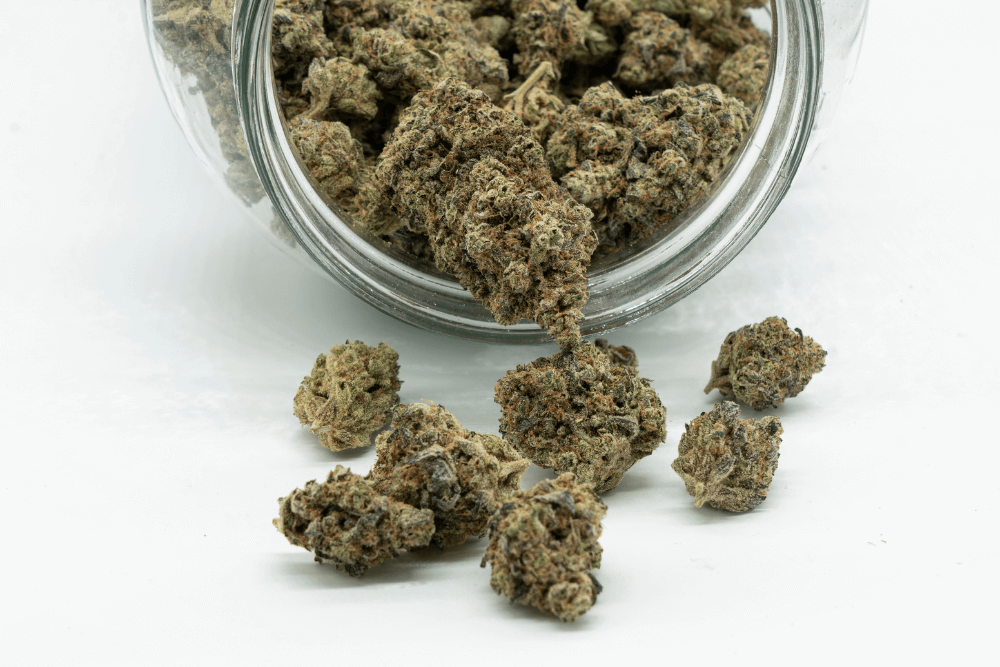
Cannabis is affected by humidity.
Yes, cannabis is definitely affected by humidity. Cannabis plants are sensitive to changes in temperature and humidity levels, both during cultivation and after harvesting.
During cultivation, cannabis plants need a specific range of temperature and humidity levels to thrive. Too much humidity can lead to the growth of mold and mildew, while too little humidity can cause the plants to dry out and become brittle.
After harvesting, cannabis buds need to be dried and cured to preserve their quality and potency. During this process, it is important to control the humidity levels to ensure that the buds dry slowly and evenly. If the humidity levels are too high, the buds can become moldy, while if they are too low, the buds can dry out too quickly and lose their potency.
In addition, the humidity level can also affect the storage of cannabis. If the humidity levels are too high, it can cause the buds to become moldy, while if they are too low, it can cause the buds to become brittle and lose their flavor and potency.
Therefore, it is important to control the humidity levels during the cultivation, drying, curing, and storage of cannabis to ensure that the buds are of high quality, potent, and safe for consumption.
How can dry cannabis lose potency?
When cannabis is dried and cured, it naturally loses moisture. However, if the cannabis becomes too dry, it can begin to lose potency.
This is because the active compounds in cannabis, such as THC and CBD, are stored in the trichomes on the surface of the buds. When the buds become too dry, the trichomes can become brittle and break off, causing the loss of these valuable compounds.
In addition, when cannabis becomes too dry, it can also affect the flavor and aroma of the buds. The terpenes, which are responsible for the characteristic smells and tastes of different strains, can degrade over time if the buds are too dry.
Therefore, it is important to store cannabis at the correct humidity levels to ensure that it stays fresh and potent. The ideal humidity range for storing cannabis is between 59% and 63% relative humidity. If the buds become too dry, you can try to rehydrate them by adding a humidifying device, such as a moisture pack, to the storage container. However, it is important to be careful not to add too much moisture, as this can cause the buds to become moldy or develop other quality issues.
Cannabis potency versus humidity
The potency of cannabis can be affected by humidity levels. When cannabis is stored at a high humidity level, it can cause the breakdown of THC and other cannabinoids, decreasing potency. On the other hand, if cannabis is stored at a low humidity level, it can cause the buds to become dry and brittle, which can also lead to a decrease in potency.
Therefore, it is important to store cannabis in a controlled environment with the appropriate humidity level. This can be achieved using specialized storage containers, such as airtight jars or humidors, designed to maintain a consistent humidity level. It is also important to monitor the humidity levels regularly and adjust as necessary to ensure that the cannabis stays fresh and potent.
Cannabis taste versus low humidity
When the terpenes are lost, the flavor of the cannabis can become harsh, bitter, or stale. This can make the smoking experience less enjoyable and may also indicate a decrease in potency.
If the buds have become too dry, it is possible to rehydrate them by adding a humidifying device, such as a moisture pack, to the storage container. However, it is important to be careful not to add too much moisture, as this can cause the buds to become moldy or develop other quality issues.
Committee Blog: Manufactured Product Safety — Vaporizer Delivery Devices
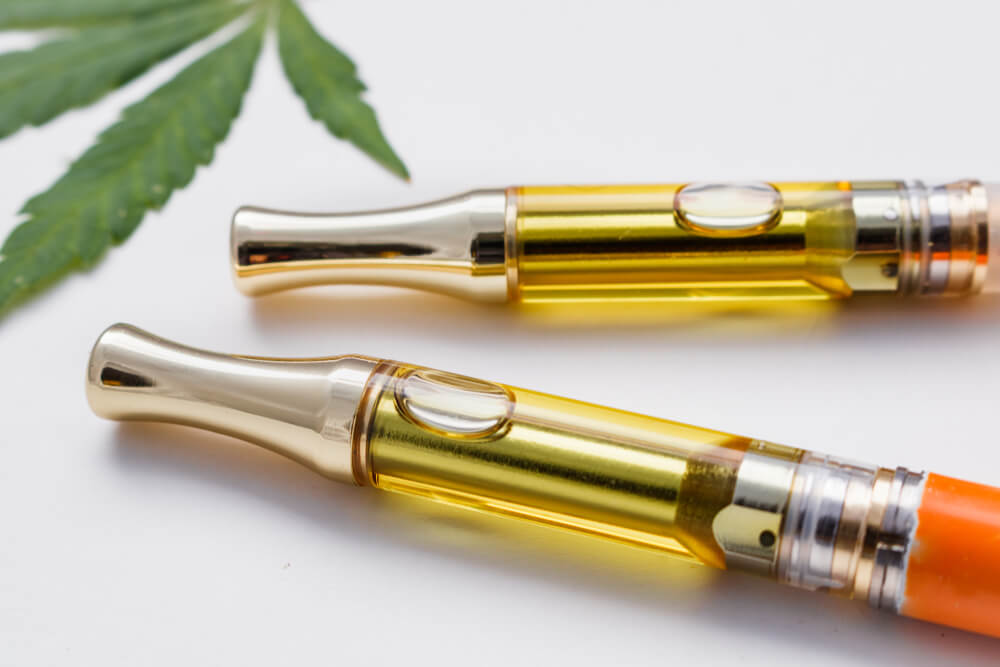
by NCIA’s Cannabis Manufacturing Committee
 Product safety isn’t an endpoint, it’s a journey. That’s what we told you in the 2021 series premiere, and it continues to hold true. In the last post, we revisited the Vaporizer Liquid Formulations portion of the NCIA’s policy council white paper to provide guidance to the industry. This time, we’re republishing the Vaporizer Delivery Devices section below. We’ve learned more about EVALI since its original publication, and while some of the specifics may be a little dated, the principles remain relevant to helping you understand vapor product safety.
Over the course of the next several months, we’ll bring you new content with the following working titles.
The Importance of Testing Vapor Products as a System
Edibles Stability – Microbial Growth Due to Insufficient Packaging
Terpene Limits Across Multiple Product Formats
So, while we wait with bated breath for this exciting new content, enjoy the excerpt below!
Excerpted from The Key To Consumer Safety: Displacing The Illicit Cannabis Market Recommendations For Safe Vaping. Access the full report and citations.
Background
While the technology used to vaporize cannabis extracts have been around for many years, advancements in vaporization technology and supply chains over the past decade have led to widespread adoption and growth of vaporization as a preferred method of cannabis consumption. Vaporizer devices offer the benefits of being discreet, allowing for metered consumption, and eliminating carbon associated with combusting cannabis flower. However, not all vaporizer devices are created equal and manufacturers should develop an understanding of the nuances of different vaporizer devices to ensure the delivery of a safe and high-quality experience. Aside from considering experiential qualities such as taste and the amount of vapor produced, manufacturers should consider at least the following three categories of issues that can present safety risks.
Physical Design Considerations
Vaporizer devices should be mechanically and electrically safe. This starts with relatively basic considerations that include ensuring the device is mechanically sound, does not leak alkaline or heavy metals, and is not configured in a manner that presents a safety hazard. In the early 2010s, there were many reported instances of vaporizer devices exploding. This was primarily due to improper electrical design and battery cell protection. Battery cells that are not protected from drawing current beyond their rated capacity or are allowed to drain too deeply present a safety risk. In fact, this risk led to the development of the UL 8139 standard for e-cigarette battery safety and the FDA recently relaxed its prohibition on e-cigarette battery changes in order to allow manufacturers to comply with this standard. UL 8139 is applicable to vaporizer devices and anyone who sources or develops a vaporizer device for the cannabis market should voluntarily comply.
Contamination by Hardware
Vaporizer device hardware should be tested for the presence of heavy metals. Currently, some manufacturers use Restriction of Hazardous Substances (RoHS) testing or rely on vendor representations that the components and materials being used are certified as FDA food-grade. The California Bureau of Cannabis Control mandated heavy metals testing standards for the three categories of cannabis products, including inhalable cannabis products, starting on December 31, 2018.
Vaporizer device hardware that comes into contact with cannabis formulation should also be free of other contaminants. It is important to consider both contaminants that could be immediately detectable in vaporizer devices as well as those that can be released or created over time. Vaporizer devices are designed using a variety of industrial manufacturing processes, some of which can leave residual oils, biological agents, or other substances in the device. It is important that device manufacturers clean incoming components, assemble them in a clean environment, then store and ship them in a manner that prevents re-contamination. Depending on the nature of the component, one or more of a cleaning bath or ozone treatment may be used for cleaning. After cleaning, assembly of vaporizer components should be performed in a cleanroom environment under appropriate current Good Manufacturing Practices (cGMP). Unfortunately, simply asking a device manufacturer whether it operates in such a manner is not sufficient to be certain that it does. There is no substitute for first-hand inspection of manufacturing processes. While it may not be practical for U.S.-based cannabis manufacturers to maintain a constant presence in the country of manufacture, it is possible to hire local agents who are skilled in audit practices and can perform unannounced inspections to verify that desired practices are implemented within the supply chain.
As noted above, hardware may also introduce contamination into the formulation over time, either through the process of leaching heavy metals or through chemical reaction. Leaching is a process whereby soluble constituents that may be present in materials dissolve into a formulation. A well-known example was the discovery that plasticizers present in certain plastic food and beverage containers were leaching and then being consumed. As a result, new types of plastics were developed for improved food safety. Vaporizer components that contact cannabis formulations may present a similar issue and leaching may be tied to metals, ceramics, plastics, or other materials. In addition to leaching, certain materials may react with cannabis formulations, especially those with high terpene content which tends to be more volatile. Moreover, metal components in contact with formulations may be especially susceptible to leaching and lead to contaminants such as heavy metals in the formulation.
The good news is that it is possible to address this risk of leaching through the use of appropriate base materials and or plating. Base materials such as stainless steel are good candidates because of their low tendency to react with formulations. Plating other materials with corrosion-resistant metals is also possible; however, care must be taken to specify the right material and plating thickness while also ensuring the plating is not damaged during assembly.
With proper material selection and design, it is possible to reduce the risk of such contamination, including through conducting stability tests. In a stability test, a formulation is placed into the vaporizer device for a period of time, then removed and tested for contaminants. A good guide is to design the stability test to align with the desired shelf life of the product. That doesn’t necessarily mean the test needs to be as long as the rated shelf life. Typically, elevated temperature tests are used to determine stability and can cut the duration of the test to 50% or less of the desired shelf life. In addition, by taking measurements at intermediate intervals, stability can be better characterized and the point at which contaminants would exceed their respective limits can be projected.
Device Impact on Formulation: Control the Heat
The most fundamental, yet perhaps the most underappreciated aspect of vaporizer devices is how they vaporize cannabis formulations. Setting aside dry herb vaporizers, all liquid cannabis vaporizers basically work by bringing the formulation into contact with a hot surface in order to heat it and thus create vapor. While this may seem straightforward, there are a number of subtleties that affect the outcome. First, the temperature of the hot surface must be hot enough to heat the liquid, yet not so hot as to cause components of the formulation to degrade into byproducts that could be harmful. In fact, one study demonstrated how changing the voltage, and thus the temperature of an unregulated vaporizer device can affect the production of such degradants. While more advanced vaporizer devices attempt to control vaporization temperature by using heating elements made of specific materials that indirectly measure temperature and regulate the power delivered to the heating element, the majority do not.
Different formulations have different compositions and contain constituents that vaporize and degrade at various temperatures. This means that to fully control vaporization, the vaporizer device must be configured precisely to the requirements of the formulation in use. Second, many vaporizer devices do not heat uniformly. Rather, the heated surfaces heat unevenly, creating hot spots that can locally trigger thermal degradation. Temperature control circuits typically measure an average temperature and do not prevent such hot spots. Finally, the majority of vaporizer devices, whether they contain fiber wicks or ceramic, rely on capillary action to bring the formulation into contact with the heated area or surface. During a puff, capillary action is also what replenishes the formulation at the heated surface, and such capillary replenishment takes time. Depending on the viscosity of the formulation and the duration of the puff, a heated surface that was initially saturated with the formulation can become dry and hot during the course of a puff. Experienced users sometimes refer to this as a “dry hit,” which can be perceived when a cartridge runs dry or during a long puff. Dry hits can result in increased thermal degradation.
Armed with this understanding of the nuances of vaporizer devices, one can appreciate how the common business model of selling cartridges with a universal 510 threaded connection that can be used in conjunction with any number of batteries, any number of power settings, and filled with a variety of formulations makes it difficult to guarantee what is produced during vaporization. In order to understand and control the output of a vaporizer device, the system should be designed, configured, and tested as a whole; cartridge and battery, plus formulation. Closed systems with proprietary connectors and one-piece designs do not face the cartridge-battery mismatch challenge, but should still be tested in conjunction with the target formulation using a reasonable worst-case puff duration. And while new systems under development that employ non-contact heating methods may not present the same temperature control challenges, they too should be validated as a whole.
The Cannabis Manufacturing Committee (CMC) focuses on reviewing existing business practices and state regulations of concentrates, topicals, vaporizers, and edibles, ensuring the manufacturing sector is helping shape its destiny.
Member Blog: Strategies to Reduce Indoor Cultivation Facility Energy Costs

by Jason Magnuson of Mintropy
Indoor cannabis cultivation facilities are complex environments, where a large number of variables interact to create an ideal ecosystem to grow cannabis. The upside of an indoor facility is it allows a year-long growing climate, optimized for each stage of the plant grow cycle. The downside, however, is creating this ideal climate is very energy-intensive.
The total energy costs for indoor cannabis grow operations typically vary between 20%-50% of total operating costs (approximately 120-150 kWh/sq.ft). In comparison, energy use in a typical commercial building environment is approximately 25 kWh/sq. ft. As indoor cultivation facilities increase, they can be a source of strain on electrical grids. A recent study showed indoor cannabis cultivation alone accounted for 4% of the energy grid usage in Denver. (IEEE, 2020)
With that context, any areas we can identify to improve energy efficiencies without introducing a negative impact to the grow environment can have enormous bottom-line impacts for cultivation owners and society at large.
In this article, we are going to be examining two ways we can optimize HVACD systems to improve energy efficiency. When HVACD systems are designed for grow facilities, the primary variables we are looking to influence are the following psychrometric properties: temperature (either wet or dry bulb) and relative humidity. Mechanical engineers will often refer to an information-packed graph called a psychrometric chart shown below.
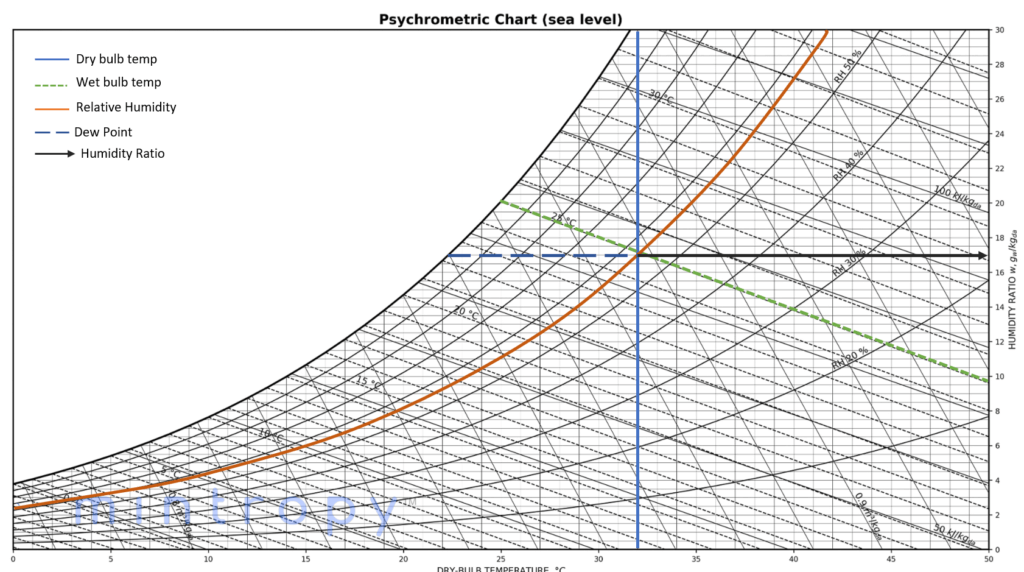
This chart helps to visualize the relationships different properties of air like temperature, humidity (relative and absolute) and dew points along the saturation curve have with each other. This is useful to analyze, as these are direct inputs to a scientific measure often favored by growers called Vapor Pressure Deficit (VPD).
Vapor Pressure Deficit, simply described, compares these variables to determine how much additional room for water vapor there is in the air. This is important as it determines how well cannabis plants can transpire. Controlling transpiration rates help to aid in healthy, robust growth through the plant life cycle. Growers tend to want lower VPD, and thus lower transpiration, early in plant maturity, and increase to higher VPDs, and thus high transpiration, at the flowering stage before harvesting.
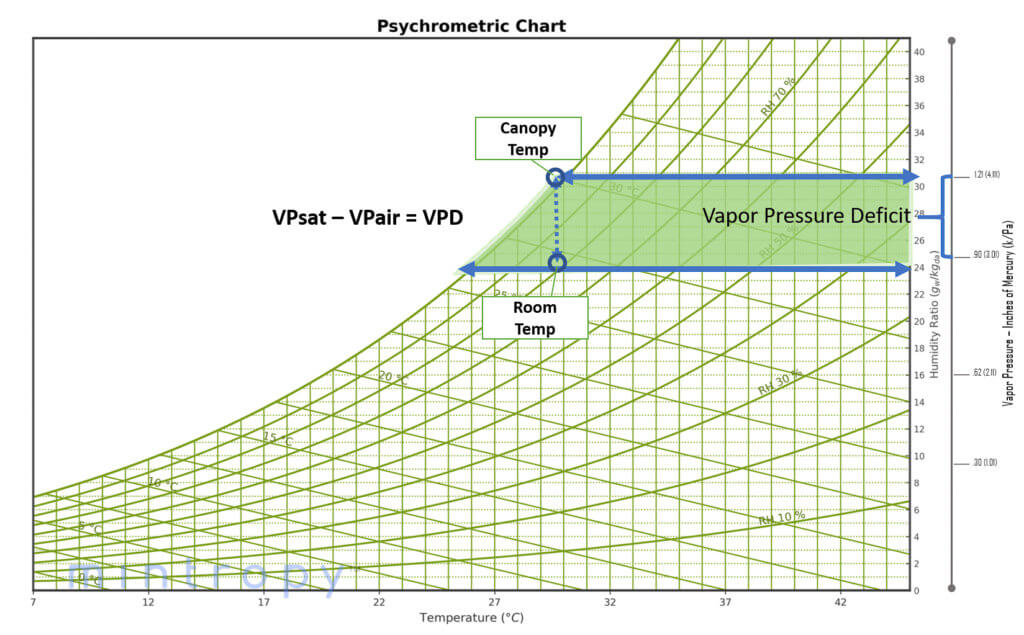
So we know a successful indoor cultivation facility HVAC system will need to control temperature and humidity to ensure the desired VPD values. How can we do that efficiently?
Stand-Alone Dehumidifiers Are Inefficient
A cannabis plant can transpire up to 99% of the water absorbed through its roots. Due to this, we often tell people that designing an Indoor Cultivation Facility is like designing a Data Center with a swimming pool inside. Because of the increased humidity introduced from plant transpiration, we must pay special attention to dehumidification strategies within the grow space. Humid air requires treating significant latent loads in the grow space, requiring additional energy to remove moisture from the airstream. This is one reason HVACD systems can consume up to 50% of the energy budget in a cultivation facility. As previously mentioned, higher humidity levels will lower the VPD in the room, preventing a plant from transpiring effectively to continue healthy growth. To combat this, sometimes stand-alone dehumidifiers are added into the grow room.
While these units can do the job of removing moisture from the room, it is a very energy-intensive process. One of the issues with stand-alone dehumidifiers is that they reject heat back into the grow room, thereby adding additional cooling load onto the main HVAC equipment.
Integral Hot Gas Bypass System
An air handling unit, sometimes called an air handler or AHU, is a piece of equipment that is used to condition and circulate air as a component of a heating, ventilating, and air conditioning system.
The air handler is usually a large metal box that contains a blower, heating and cooling elements, filter chambers, sound attenuators, and dampers. It then connects to ductwork that distributes the conditioned air throughout the space before returning it back to the AHU.
Of particular interest are the units cooling coil and reheat coil. These two components are namely responsible for controlling VPD levels in our grow space. In an Integral Hot Gas Reheat AHU, the cooling coil serves as a dehumidifier, by cooling the air thereby reducing its moisture/latent load (we highly recommend capturing this water for treatment and reuse: read more here). The hot gas reheat capability utilizes heat from grow space and compressor heat to reheat the air before returning to the grow space (without using additional heating energy).
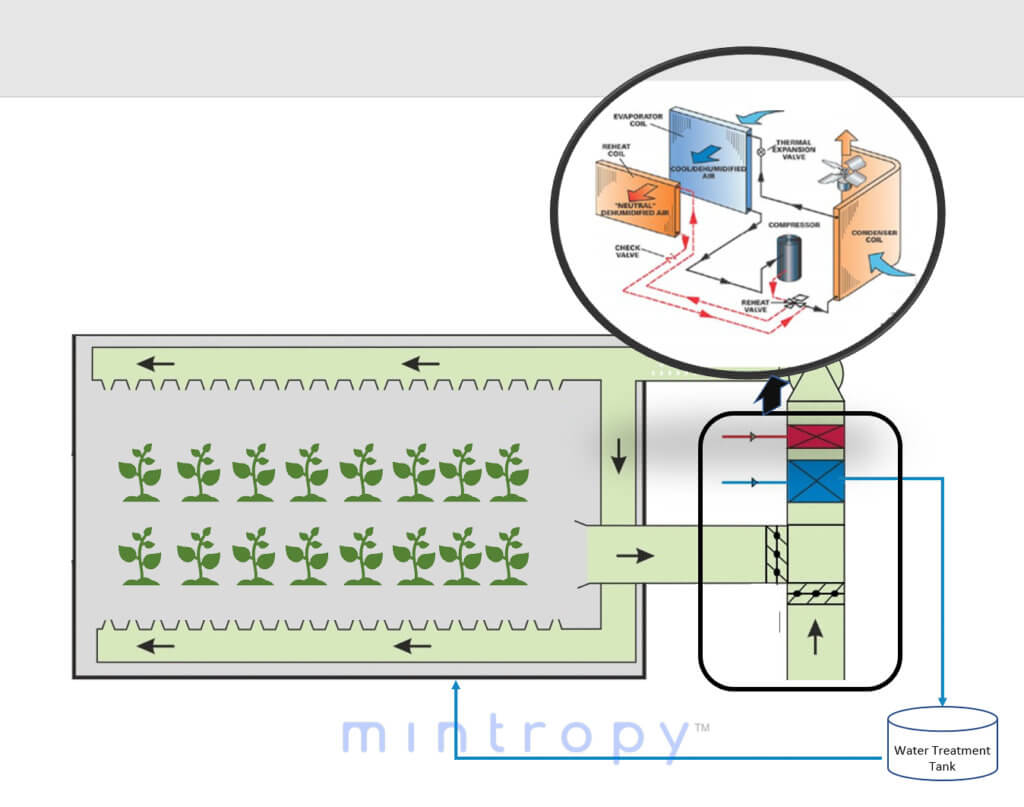
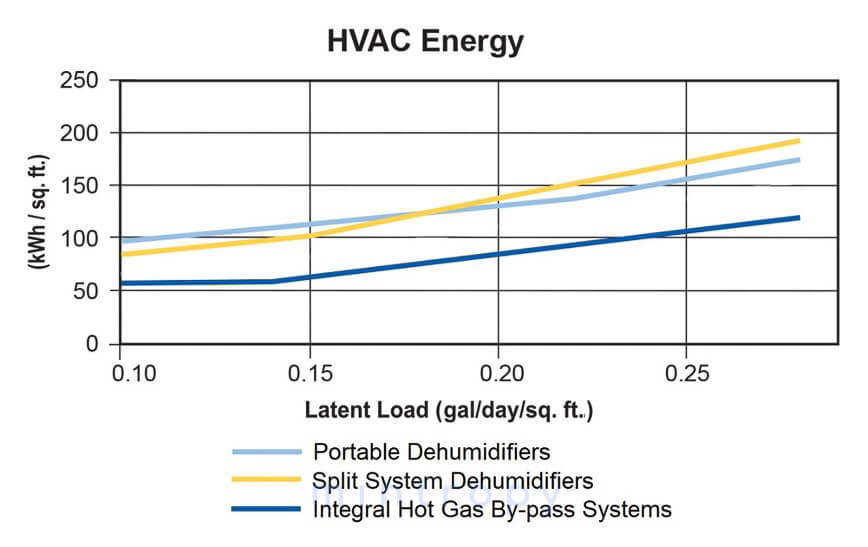
While this may seem like a minor design change, it results in a considerable reduction in energy. As the chart below illustrates, leveraging the Integral Hot Gas Bypass AHU units can result in a 30-35% reduction in HVACD energy when compared with other dehumidification systems. Additional automation capabilities built-into these systems will ensure that the grow room will remain tightly controlled within the desired state points of your grow room to optimize VPD.
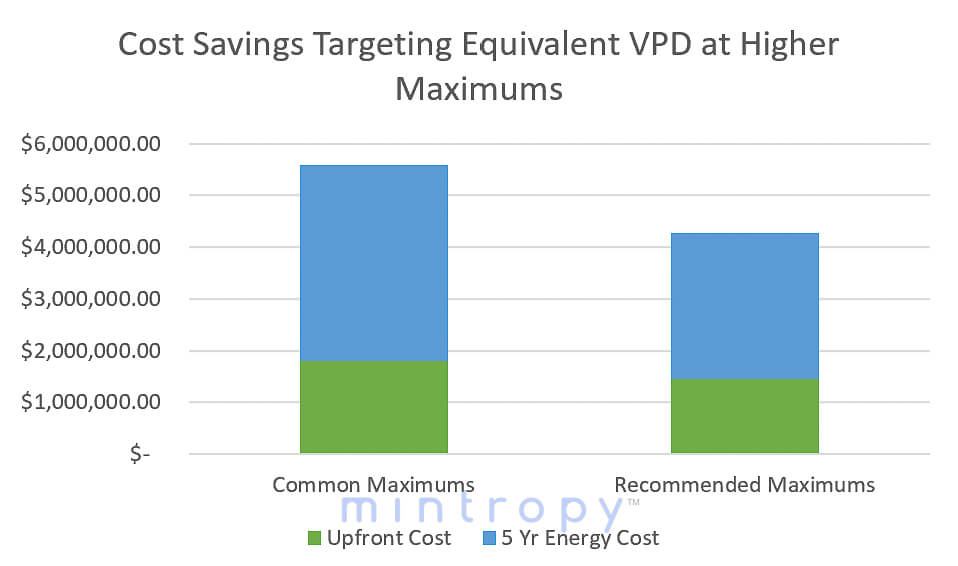
This reduction in energy quickly adds up to reduced utility bills. Despite marginally higher upfront costs as compared to standard HVAC equipment coupled with standalone dehumidifiers, this option results in a lower 5-year system cost than common HVACD systems installed in cultivation facilities, and these savings will only increase over time.
Maintaining Consistent VPD, but at higher Temperature / Humidity Ranges
The second energy-saving measure we would like to discuss goes back to the earlier discussion of VPD. Recall the equation for VPD is
V P sat – V P air = VPD
This is important, as it provides growers the flexibility to fall within desired VPD ranges, but at higher temperature and humidity ranges than typically used. Many growers target maximum temperatures around 70-75F and limit relative humidity to a maximum of 50 percent, but by allowing slightly higher maximum room temperatures of 75-80F, with corresponding relative humidity increases, we can create identical VPDs. The cost-benefit of this small adjustment is considerable. The HVAC system (including cooling and dehumidification) can be sized at roughly 20-30% smaller capacity, reducing the grower’s up-front equipment costs. In addition, the system’s energy consumption and costs during operations will be significantly lower, to the tune of 30-40%. In a theoretical 30,000 square foot facility, this could result in a $1,300,000 savings in the first 5 years.
 Jason Magnuson is the Director of Business Development at mintropy. Mintropy is an MEP (Mechanical, Electrical, Plumbing) Engineering Design firm, with a focus on Indoor Cultivation Facility and Dispensary design. At mintropy, we strive to minimize entropy (minimize disorder) in building systems, by creating innovative and efficient designs to meet our client’s needs. For assistance in your cultivation facility, be it auditing/upgrading existing systems or designing new, reach out to us today.

Follow NCIA
Newsletter
Facebook
Twitter
LinkedIn
Instagram
News & Resource Topics
–
This Just In
Committee Blog: Access to Capital in the U.S. Cannabis Market Outlook
Member Blog: The Risks of Removing a Regulated Cannabis Market