by Michelle Rutter Friberg, NCIA’s Deputy Director of Government Relations
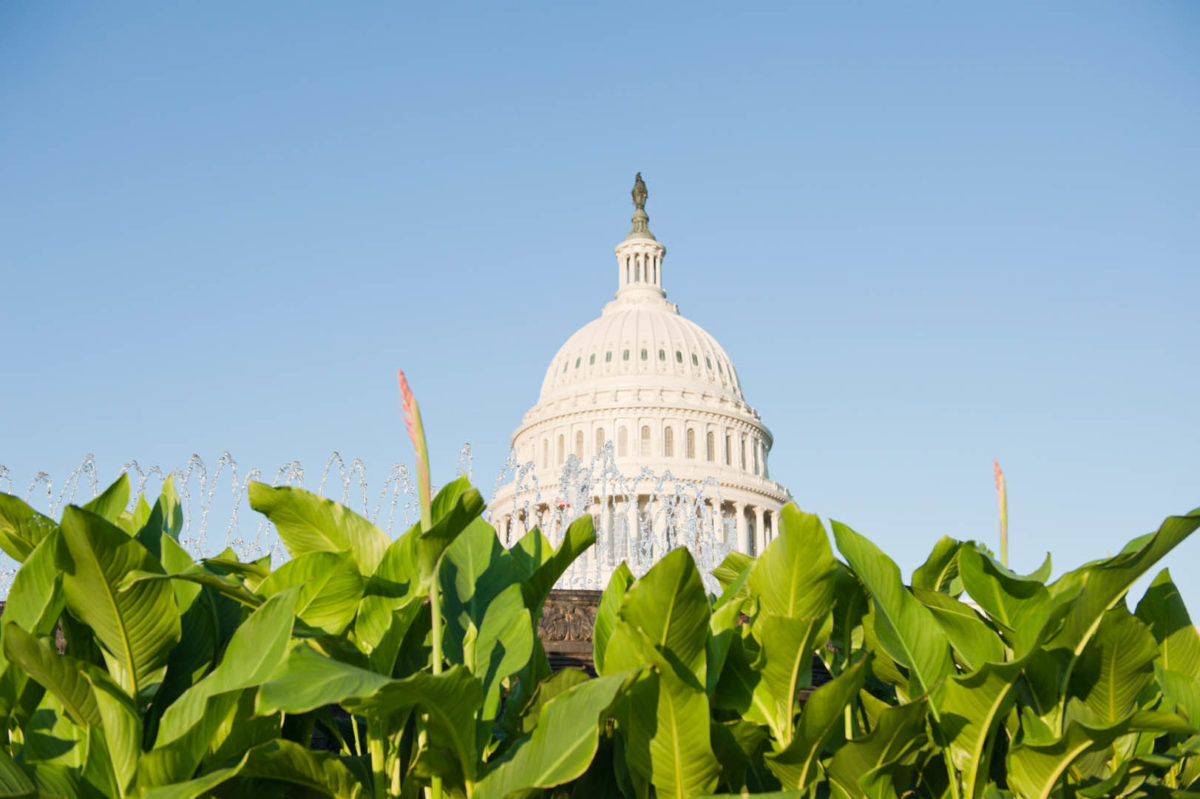
Photo By CannabisCamera.com
You may have seen this week that there were a number of Senate confirmation hearings, and cannabis was a topic of discussion in some! But what are confirmation hearings, and what happened in them this week?
In Article II, Section 2, Clause 2 of the Constitution is the Appointments Clause, which empowers the President to nominate and, with the advice and consent of the Senate, appoint public officials. In layman’s terms, advice and consent essentially means confirmation.
As of publication, cannabis was brought up before two nominees this week: Attorney General nominee Merrick Garland, and Deputy Secretary of Treasury nominee, Adewale Adeyamo.
On Monday, President Biden’s nominee for Attorney General, Merrick Garland, appeared before the Senate Judiciary Committee. Before this, Garland’s position on cannabis was relatively unknown — he had ruled in a 2012 federal lawsuit case over DEA’s denial of a marijuana rescheduling petition and was one of three judges in the U.S. Court of Appeals for the District of Columbia Circuit panel that upheld the denial.
However, Garland’s position on cannabis became more clear this week — at least in how he views the Department of Justice’s role in enforcement and arrest disparities. While before the Senate Judiciary Committee on Monday, Garland was asked about marijuana arrest disparities by notorious cannabis champion Sen. Cory Booker (D-NJ). Sen. Booker asked:
“One big thing driving arrests in our country is marijuana arrests. We had in 2019 more marijuana arrests for possession then all violent crime arrests combined. When you break out that data and segregate along racial lines it’s shocking that an African-American has no difference in usage or selling than someone who is white in America, but their likelihood of being arrested for doing things that two of the last four presidents admitted to doing is three to four times higher than somebody white. Is that evidence that within the system there is implicit racial bias, yes or no?”
Garland responded: “It is definitely evidence of disparate treatment within the system, which I think does arise out of implicit bias. Unconscious bias may be, sometimes conscious bias.”
As Sen. Booker continued to question Garland about bias in the criminal justice system, Garland proactively brought marijuana back up, saying:
“The marijuana example is a perfect example. Here is a nonviolent crime that does not require us to incarcerate people and we are incarcerating at significantly different rates in different communities. That is wrong and it’s the kind of problem that will then follow a person for the rest of their lives. It will make it impossible to get for — to get a job and will lead to a downward economic spiral.”
Garland later continued:
“We can focus our attention on violent crimes and other crimes that put great danger in our society and not allocate our resources to something like marijuana possession. We can look at our charging policies and stop charging the highest possible offense with the highest possible sentence.”
But that wasn’t the only time the likely-soon-to-be Attorney General talked about cannabis. Freshman Senator Jon Ossoff (D-GA) asked Garland about equal justice, and highlighted the fact that “Black Americans continue to endure profiling, harassment, brutality, discrimination in policing and prosecution, sentencing, and incarceration.” While responding as to how his Justice Department would combat this, Garland said:
“One important way I think is to focus on the crimes that really matter, to bring our charging and arresting on violent crime and others that deeply affect our society. And not have such an overemphasis on marijuana possession, for example, which has disproportionately affected communities of color and damaged them far after the original arrest because of the inability to get jobs.”
During the “lightning round” of questions, Sen. Booker brought cannabis up again — this time, about enforcement and the now-rescinded Cole Memo. The Senator asked Garland, “Do you think the guidance in the Cole Memorandum should be reinstated, that the Justice Department respects states’ decisions?” Garland responded:
“I do remember it and I have read it. This is the question or prioritization about resources and prosecutorial discretion. It does not seem to me a useful use of limited resources that we have to be pursuing prosecutions in states that have legalized and are regulating the use of marijuana either medically or otherwise. I don’t think that is a useful use.”
This was, without a doubt, the most “cannabis positive” response from an Attorney General nominee in history! But the Judiciary Committee wasn’t the only one curious about cannabis this week!
Next, we move to the Senate Finance Committee, where Deputy Secretary of the Treasury nominee Adewale Adeyamo was being questioned Tuesday. During this hearing, Sen. Catherine Cortez Masto (D-NV) asked, “Do you believe Treasury should seek to update FinCEN’s 2014 guidance on the Bank Secrecy Act’s expectations for financial institutions that provide services to cannabis related industries, and if so, what changes do you recommend?” Adeyamo responded:
“Senator, I look forward, if confirmed, to talking to my colleagues at Treasury about this important issue and thinking through what changes may be needed and doing this in a way that’s consistent with the agency and the President’s guidance. In doing that I look forward to consulting with you and members of this Committee on our path forward.”
To be blunt, this is a really big deal! These questions show that the upper chamber of Congress is taking cannabis policy seriously, and expects the topic to be taken up by various agencies over the next four years. You can continue to count on the NCIA team to keep you updated, advocate on your behalf, and work with Congress and the Biden Administration to create a flourishing, responsible, diverse, and equitable cannabis industry.
Member Blog: Is 2021 the Year that Brings Normalcy to Cannabis?
Thanks to Democracy and the grassroots efforts of cannabis advocates from coast to coast, there are now 15 holes in the cannabis prohibition wall (legal states), and 36 cracks (medicinal programs). So when will that wall come down and how fast? More importantly, what will the industry look like when the dust settles?
Over the past few weeks, cannabis media pundits from all over the world have chimed in with their predictions for 2021. (Some even pontificated before knowing the results of the Georgia State runoffs in the Senate.)
With President Joe Biden now in the White House and the Democrats controlling both houses of Congress, cannabis advocates are wondering when, and if, we will see federal legalization of cannabis in 2021. Will it succeed or will our dutifully elected politicians do something that will derail the will of the people during this Green Wave of reform?
Already, a Republican congressman from Florida, Greg Steube, decided to file the first draft of reform to a committee that will move cannabis from schedule 1 to schedule 3 on the Department of Justice list of “controlled substances.”
But for many, this does not go far enough. I recently interviewed the Media Relations Director of NCIA, Morgan Fox, who told me, “It’s not something the NCIA or other Cannabis advocacy groups is going to support….we are all focused on de-scheduling, (this draft) it just doesn’t go far enough.”
So what position are lobbyists in Washington, D.C. taking now that their arguments for reform may find a more supportive group to talk to? What is the best thing for the industry? What’s the right thing to do?
I also interviewed Michael Correia, the Director of Government Relations for NCIA, who explained that the target should be for full legalization, but that at the heart of the issue, there is something more important that needs to be dealt with – racism. In my interview with him, he said, “…let’s just stop arresting people for this. Stop arresting people in this war on drugs so no one’s lives are ruined because they’re consuming a natural plant, that 30 plus states have said, Hey, we’re okay with this. There shouldn’t be these differences. So just stopping, arresting these people, and then worrying about what’s the next step?”
Why does he feel so strongly about this? The evidence is overwhelming that law enforcement has used simple possession as a profiling tool to fill our privately run prisons with black and brown people over mere cannabis possession. “The vast majority of these arrests (92%) were for simple possession of the drug. 500,395 of [the 545,602] arrested for cannabis [crimes] were simply found [to be] in possession of cannabis.”
So are you convinced now that cannabis, a plant, is not illegal because it is considered a drug, but rather because of a racist system and the fact it can be used as a means to profile and jail black and brown people? Do you want more evidence of the racial bias in cannabis arrests? Check out this 2020 report on the racial makeup of those simple possession “crimes.”
This is despite both groups use cannabis at similar rates.
Even in western states with recreational cannabis laws, black people were 1.5-1.8% more likely to be arrested for having cannabis.”Emily Earlenbaugh, Forbes
So what’s the 2021 plan for lobbyists, policymakers, and elected officials? What exactly does this industry look like if one of the following changes happens in the next year or two?
Cole Memo reinstated
SAFE Banking
Rescheduling
De-scheduling
The MORE Act
Science and Research Grants
Each one of those changes is not only positive for this young industry but will have a ripple effect that will impact other industries. The trickle-down effect for any of these changes being implemented will impact the private prison system, banking, and financial markets, big alcohol, big pharma, social equity, expungement of past convictions, interstate commerce, and the international markets.
The cannabis lobbyists know that with Democrats in charge of the direction of the Congress over the next two years, this is their opportunity for serious reform. After all, the House passed a legalization bill, the MORE Act, in December of 2020. In 2019, the previous year, the SAFE Banking Act was also approved by the House, but neither even got to the floor of the Senate because of the then-Majority Leader Mitch McConnell’s anti-marijuana stance.
2021 is now upon us, and “grown-ups are now back in charge in D.C.” However, many advocates I’ve talked with are understandably wary and skeptical about the Federal Government dictating governance of this industry if cannabis is federally legalized and falls under the control of the alcohol and Beverage Commission.
Most cannabis advocates can at least agree that cannabis should be removed from the schedule that was created by the Controlled Substances Act in 1971. This change alone would allow banks to do business with the cannabis industry and allow for the removal of the restrictive 280E tax code that has limited the profit margins of already existing businesses.
Here are some links to other predictions from leading media sources about what cannabis reform democratic control of Congress may lead to:
So after reading all this information, here’s what I think will happen over the next four years.
First Year: Cannabis gets removed from the Controlled Substances Act schedule
Second Year:Decriminalization and expungement of cannabis possession crimes with banking reform
Third Year: Interstate commerce
Fourth Year: Full Federal legalization, international export markets open
It’s 2021, the year of the cannabis plant as a political issue is here and reform is as pungent as the odor of this amazing plant. Stay tuned, this will be an ongoing theme in D.C. politics this year as we all hopefully witness another chapter in the historic end to prohibition.
Jimmy Young is the founder of Pro Cannabis Media. An Emmy Award-winning talk show host from New England, and a resident of Massachusetts who holds a medical card after 4 major surgeries in 22 years.
The founder of Pro Cannabis Media is the current host of In The Weeds with Jimmy Young, a weekly podcast distributed over the CLNSMedia.com, site, iTunes, Spotify, Googlecast among others. In July of 2019, he teamed up with the founder of Cannabis.net, Curt Dalton, to host a two hour live monthly Weed Talk Show where the two Massachusetts natives have interviewed some of the biggest names in Cannabis, like Steve DeAngelo, Bruce Linton, and Tommy Chong. Locally local cannabis advocates and representatives from the medical establishment in the Bay State have all appeared on that show that is now being distributed nationwide. Young also produces a weekly news video, called News Dabs, highlighting and commenting on the biggest stories around the world in the emerging cannabis universe.
Committee Blog: Ending The Ban On Interstate Commerce (Part 1)
Oversupply and shortages, high prices and lack of choice for patients and consumers, illicit markets, tainted products, and the inability to access banking and capital all plague the burgeoning cannabis industry. While cannabis advocates and industry leaders are working on each of these problems, there is one solution that would ease the burden on all of them. Allowing for interstate trade between states with legal cannabis markets would improve each of these issues while supporting the individual solutions to each that the industry has been working on. This is the first post in a series that explores the benefits and barriers to setting up a legal framework for interstate trade, even before wholesale legalization at the federal level.
Since the beginning of legal, adult-use cannabis, when Colorado and Washington passed the first ballot measure allowing for adult-use, the industry was guided by the Cole Memo, which laid out the parameters for the federal government staying out of the states’ cannabis experiments. Among other things, the Cole memo stated that the DEA could crackdown on cannabis moving from states with well-regulated systems to states that do not allow cannabis. This statement has been interpreted conservatively to mean that no cannabis should cross state lines for any reason, ever, based on the fact that at the federal level, cannabis is still a Schedule I drug under the Controlled Substances Act.
Today, there are 10 states which have legalized adult-use, another 19 which allow for medical use, and six more which allow the use of CBD products only. Many of these states share borders, and producer states could serve several nearby markets without ever entering a state that does not allow cannabis in any form. Furthermore, the Cole Memo, which was rescinded by Jeff Sessions in 2018, has not been replaced by any guidance whatsoever. This means that each U.S. Attorney’s office is free to set their own enforcement priorities around state-legal cannabis activities, and there is no official overriding policy at the DOJ on interstate trade between states with medical or adult use. Corresponding guidance from FinCEN, however, remains in effect and similarly discourages the transfer of cannabis between states.
Cannabis markets vary widely from state to state with regard to the underlying market dynamics and challenges that they face. Some states produce too much while other states experience shortages. Meanwhile, new states pass legislation or have voter initiatives that allow medical or adult-use every year without any infrastructure in place to supply that state’s demand. In each new legal market, the vast majority of demand had long been met through illicit market supply, and generally from outside of the state’s boundaries.
The artificial boundaries around cannabis markets have far-reaching impacts for local economies, patient access, illicit market activity, and social equity. Later posts in this series will take a deep dive into each of these issues, and in this post, we will look at how this has impacted states, the industry, and consumers so far.
Lessons Learned:
Washington State chose to take the strictest possible reading of the Cole Memo, and insist that not only must cannabis not cross state lines but also sources of funding must come from within the state. Combined with their high capitalization requirement for licenses, the result was a disaster from an equity standpoint: only wealthy and well-connected individuals in the state (which are overwhelmingly white males) were able to even attempt a license. This decision was based substantially on the fact that interstate trade was not allowed.
In Oregon, which has an ideal growing climate and a long tradition of exporting cannabis (albeit in the illicit market), the artificial boundaries created by the ban on interstate trade lead to a massive oversupply for its small population, which crippled the industry and tanked many small businesses. Despite the fact that Oregonians consume more cannabis per capita than any state, their climate and culture have led to growing massive quantities of world-class cannabis that cannot reach patients and consumers, even in neighboring states that might have under-supply issues. The result is that hundreds of small, mom-and-pop shops and family farms have gone out of business, eradicating millions of dollars of local capital, and accelerating mass consolidation of the industry into the hands of a few foreign corporations. Meanwhile, in medical markets like Illinois and Michigan, patients have had sporadic access to quality cannabis-based medicines.
When Nevada originally launched, due to the influence of local liquor distributors, it was almost impossible to get products to market, and the state’s dispensaries sold out on the first day of sales. After ironing out some of the kinks, sales are going strong, but the practice of growing thirsty plants indoors in the desert is of dubious value when the same plant can be grown with a fraction of the inputs in northern California and southern Oregon.
California’s legal system is a perfect example of how over-regulation fuels illicit market activity. Because of the structure of their regulatory framework and high taxes, the state is served by only 800 licensed dispensaries, whose prices are double and triple those found on the illicit market for similar products. This has led to the emergence of thousands of “pop-up” or unlicensed dispensaries, selling untested products tax-free in a thriving illicit market. The booming illicit market in California has also led to massive wholesale markets of hardware, branded packaging, and flavoring and cutting agents (all technically legal) to supply the illegal operators with everything they need to look legitimate. This is a major contributing factor to the wide-spread vaping related illness cases popping up all over the country, as many illicit market operators purchase their supplies in downtown Los Angeles.
The ban on interstate trade promises to continue to create new and novel problems as well. If New York, the 4th most populous state in the union, legalized adult-use (which seems likely in the near future), and interstate trade were still banned, it would require a massive investment, on the order of billions of dollars, to create enough indoor and greenhouse grow facilities to supply the demand created by its 19 million inhabitants. The recent legalization of hemp under the last Farm Bill has created a number of legal dilemmas as well, as some individual states that do not recognize any difference between hemp and cannabis flower have seized products and arrested individuals taking hemp legally grown in one state to a market where it is legal to sell.
Some suggest that these issues will be sorted in local markets, and in each state individually this approach might seem to make sense. When you add these problems together, though, a much more elegant, efficient, and obvious solution emerges: let states that have always exported cannabis send it to states that have always imported it. A set of different and seemingly unconnected problems become each other’s solutions.
Historically, people across the country have consumed cannabis, and the vast majority of it was grown in a few locations that are particularly well-suited to the plant. It is highly likely that a fully-matured nationwide legal market (one which must account for not only interstate, but also international competition) will ultimately be best served by the same general market dynamics. The only question is: how long will we allow the artificial market boundaries around each state to decimate local capital, curb access for patients and consumers, encourage investments that are attractive short-term but disastrous long-term, and prop up the illegal markets that pose a public health risk?
Interstate trade between states that allow some form of legal cannabis would provide much-needed relief on a number of fronts for cannabis businesses, and could be structured in such a way to support social equity efforts. With a little guidance on enforcement and thoughtful programs and agreements between states, there is a path to legal interstate commerce even before cannabis is removed from the Controlled Substances Act. The state of Oregon has already passed legislation allowing for the export and import of cannabis products provided that the Federal Government allows it. This could be either through legislation such as the proposed Blumenauer/Widen State Cannabis Commerce Act, or though DOJ enforcement guidance (whether from the Attorney General or the relevant local U.S. Attorney’s). There are multiple paths that can lead to the end of banned interstate trade, and it seems increasingly inevitable that we will see legal cannabis trade across state borders in the near future. For most operators in the cannabis industry, and for all patients and consumers, this will be a good thing, and can’t come soon enough.
Gabriel Cross is a Founder and CEO at Odyssey Distribution, LLC, a distributor for locally-owned craft cannabis producers and processors in Oregon. Gabe worked in the sustainable building industry for a decade before starting Odyssey and brings his experience with sustainability and systems thinking to his work in the cannabis industry. Odyssey manages logistics, sales and marketing for boutique producers so they can focus on creating great craft cannabis products for the Oregon market.
Looking Back On Ten Years Of Cannabis Reform – The Road Behind, The Struggle Ahead
By Morgan Fox, NCIA Media Relations Director
NCIA’s Media Relations Director, Morgan Fox
August in Washington D.C. means heat, which is probably a big reason why lawmakers take the month off and return to their home states before coming back to confront the issues of the day. With this Congress – which has been more supportive of cannabis policy reform than any in history – out on recess, it seems like a good time to reflect on how far we’ve come as a movement and as an industry, we well as to recognize how much farther we still need to go.
I’ve been working exclusively on cannabis issues for more than a decade, and when I started my first job in the field at the Marijuana Policy Project all those years ago, the landscape looked much different. At the time, there were only a handful of states with effective medical cannabis laws, and no states where it was legal for adults. Opponents would consistently claim that cannabis has no medical value with a straight face, and people would believe them. The nonsensical argument that providing medicine to sick people would somehow lead all teenagers to become addicted to hard drugs often ruled the day and frequently delayed reform efforts. Access to cannabis, even in states with good laws, was limited and hard fought. Cannabis consumption by anyone except the most seriously, visibly ill people was largely portrayed as criminal and immoral.
Now, cannabis is legal for adults in 11 states, D.C., and two territories; 33 states and several territories have comprehensive medical cannabis laws; and nearly every state allows cannabis in some form. Tens of millions of people can now safely access cannabis without fear of arrest. Dozens of states are looking at cannabis policy reform legislation every year, and we can expect to see several ballot initiative campaigns taking place next year.
As more and more states have regulated cannabis in some way, new legal markets have emerged, allowing the industry to grow and thrive in many ways. At the start of my involvement, there were a shockingly small number of cannabis businesses, and the problems they faced were quite different than what we tend to deal with today. Non-existent access to banking was of trivial concern when the threat of raids by armed federal agents was a daily concern. Videos of jack-booted thugs pointing rifles at disabled patients and dragging dozens of plants out of smashed windows were commonplace. Long prison sentences for cultivators and providers were the norm.
New state laws and increasing public acceptance helped to ease the crackdown on the cannabis industry, but the real game changer came in the form of an unexpected federal policy directive. In 2013, Deputy Attorney General James Cole issued a directive to federal prosecutors, telling them not to target businesses or individuals who were in compliance with state cannabis laws. Known as the Cole Memo, this directive did not carry the force of law and did not prevent the enforcement of federal prohibition. Some Department of Justice employees took it more seriously than others. However, it did drastically reduce the number of prosecutions of state-legal cannabis businesses, and gave people enough confidence to really pull out all the stops. Since then, the industry has grown and professionalized by leaps and bounds. Huge trade shows, once unheard-of, are now commonplace and attracting people from a wide range of professions. Businesses no longer hide in the shadows, but are actively competing for exposure. There are now more than ten thousand licensed plant-touching businesses in the U.S., and many thousands more ancillary businesses working in the cannabis space. According to a recent report by Leafly, more than 200,000 jobs have been created by the legal cannabis industry.
One of the most important changes to happen over the years is the increased and deeper focus on justice in the cannabis reform movement, including equity in the cannabis industry. Legalization has always been about freedom and justice, but it has largely been talked about in the general sense of the injustice of criminalizing people for consuming a substance that is objectively safer than alcohol. The disproportionate harms inflicted on people of color and the destructive impact that prohibition has had on entire communities for generations were well known to many, but it wasn’t until the ACLU released its groundbreaking report that these facts started gaining more attention in the public sphere. It has still taken far too long for this issue to come to the forefront of the cannabis policy debate, but things are moving in the right direction. Most modern legalization legislation now contains provisions related to expungement, community reinvestment, and equity in the emerging cannabis industry, and indeed these are now required in order to be taken seriously by voters, activists, and policymakers. But it wasn’t always so.
During the ballot initiative campaign for Amendment 64, which would go on to pass in November 2012 and make Colorado the first state in the nation to regulate cannabis for adults, polling showed that including even a limited provision to expunge minor cannabis convictions would have killed the chances of victory. Fast forward to this year, where legislation to make cannabis legal in New Jersey stalled because it did not go far enough to address the disparate harms caused by the war on cannabis. Illinois, the first state to regulate cannabis through its legislature, included language in its legalization bill which passed earlier this year that will expunge the vast majority of marijuana convictions and will help to ensure that people of color can take advantage of the opportunities being created by the legal cannabis market. And even Congress is starting to come around, with multiple active bills containing restorative justice provisions being considered and a House subcommittee holding a groundbreaking hearing on the issue this summer.
Speaking of Congress, the differences between now and then could not be more stark. Until somewhat recently, there was little appetite for addressing cannabis policy reform, and tremendous opposition from both sides of the aisle. While states continued to pass cannabis legislation, most federal lawmakers wouldn’t go near the subject except to shut it down. Even those whose own states had passed good laws were actively undermining their constituents. In 2014, an amendment was added to the annual spending bill that codified the protections outlined in the Cole Memo, but only for medical cannabis programs. Despite this provision being included in all subsequent budgets, it was never extended to adult use programs. Progress on stand-alone bills related to cannabis was generally slow and did not receive serious consideration in either chamber.
This Congress has been extremely different. Dozens of cannabis bills addressing all sorts of issues have been introduced, often with bipartisan support. Hearings have actually been held and taken seriously in the House and Senate, often with mostly supportive testimony. The SAFE Banking Act, which would provide safe harbor for financial institutions to work with cannabis businesses and increase access to capital for small businesses and disenfranchised communities, has seen unprecedented movement and support this year. In the House, it has 206 cosponsors and was approved with a bipartisan vote in the Financial Services Committee. It now waits to be called for a vote, which it will likely win. In the Senate, despite some lingering opposition, key committee heads and Republican leaders are softening their stances and held an informational hearing on the bill last month. More comprehensive bills such as the Marijuana Justice Act, the FAIR Act and the MORE Act are being given more attention than we’ve ever seen for legislation that would deschedule cannabis. It seems that politicians are finally catching up to public opinion and are more comfortable with supporting reform in the open.
Some of the credit for this can be given to the media. When discussing this topic, I always like to relate a story told to me by my first boss in cannabis policy reform. In the late 2000’s, he called CNN’s newsroom to pitch a story about a new positive cannabis study. He identified himself and his organization at the beginning of the call, which prompted the person on the other end to start laughing so hard they had to put my boss on hold. When they finally returned, they greeted him by saying “OK, Mr. Marijuana. How can we help you?” Needless to say, the story did not get picked up.
For years, we’ve had to deal with a media environment where cannabis policy reform was treated as a joke at best, and as a horrible scourge at worst. Stories were riddled with bad puns (I can’t count the number of times I’ve seen the phrases “blunt truth” or “clearing the smoke” or “hazy proposition” in headlines), or only referred to cannabis as “pot” or something equally stigmatizing. Many of them took prohibitionists at their word as they spewed falsehoods and fear, while giving limited or no space to reformers. Most major media outlets were not even interested in looking at the issue to begin with.
All that has changed. Cannabis is finally being taken seriously, and news organizations are devoting massive resources to covering it and even creating cannabis beats for dedicated journalists. Dozens, if not hundreds, of cannabis-specific publications are now available, with advertisers clambering for space in them. The coverage is much more fair, and the puns are (mostly) gone. Changes in the way the media talks about cannabis have certainly had a positive impact on how the public, and by extension lawmakers, thinks about this issue.
It can be tempting to look at all this progress and pat ourselves on the back for a job well done, and in some senses it is deserved. Tens of thousands of otherwise law-abiding individuals around the country will no longer be saddled with the disastrous consequences of having a criminal record every year. Hundreds of thousands are gainfully employed in an industry that is steadily displacing the illicit market while making cannabis safer and less stigmatized. The federal government is getting closer and closer to making real progress on cannabis issues. Support for legalization is a ubiquitous topic in the 2020 presidential field and has become almost a prerequisite for being considered as a serious candidate. Two-thirds of Americans think cannabis should be legal for adults. All of this is a world away from where we were a decade ago, and the benefits being reaped because of the hard work of advocates are significant.
But we have a long way yet to go.
There are still roughly half a million cannabis arrests in the U.S. annually, mostly at the state level. The majority of states have yet to regulate cannabis for adults, and support for doing so in many of them is still very weak. Advocates and industry leaders need to redouble their efforts to reach out to lawmakers, voters, stakeholders and communities, and work with them to pass sensible cannabis legislation. Even states with relatively good laws still need help: home cultivation is still illegal in Washington state, for example, and Vermont and D.C. do not yet have regulated cannabis markets or legal sales.
State and local restorative justice efforts have had limited success, to put it generously. Funds intended for community reinvestment have been diverted or delayed, and equity programs are sometimes being exploited by predatory operators. High application fees, arbitrary license caps, criminal record bans and other unnecessary barriers of entry are preventing marginalized people from becoming a part of this industry. Decreasing arrests, while vitally important, cannot be the only gain made by disproportionately impacted communities as we continue to reform our cannabis laws.
Despite growing support for change in Congress, cannabis is still a relatively low priority for most federal lawmakers. Without constant pressure on them, reform will come slowly or not at all. NCIA’s in-house federal lobbying team, as well as outreach efforts like our annual Cannabis Industry Lobby Days, help keep this conversation going at the Capitol and sway legislators to our side. Federal legalization is far from inevitable, and we are committed to maintaining and increasing our efforts to make sure it happens.
But we need your help. Now is the time to get involved, get active, and help end prohibition once and for all while we build a responsible, competitive, and inclusive cannabis industry. We still have much work to do, but if the accomplishments of the last decade tell us anything, it’s that we can do this together.
Member Blog: Advice for Surviving and Thriving in the New Era of Legal Cannabis From Those Who Have Climbed The Mountain (Part 1)
The challenges facing companies pioneering a new industry where each state deals with its own issues are numerous. The importance of strategic business planning and the ability to predict future problems are essential to survival.Colorado, Washington, and Oregon have each dealt with their unique issues and challenges but there are also common problems that every cannabis business experiences: burdensome regulation, unfair taxation, and banking prohibition to name a few. Building your company and brand is dependent on your ability to maneuver your company through the obstacles that will arise in your state market while also planning for a future of legal interstate commerce through a change in federal policy. To place your company in a position to be successful, you should understand the past to predict the future.
Quick Summary of Cannabis History
The history of cannabis is long and distorted, however a few basic points of what brought us to the current state of federal prohibition and individual state markets should be noted for context.
Cannabis use as medicine dates back to 2700 BC in China, and has been used throughout history. In 1850, it was added to the U.S. Pharmacopeia. Prior to state and then Federal prohibition, cannabis was an elixir/tincture used in many common household cough/cold syrups and other medications for stomach-aches, asthma, depression, and many others. In the 1930s, cannabis was regulated as a drug in all states, and in 1937, the passing of the Marihuana Tax Act regulated it federally. Then in 1970, the Controlled Substances Act determined cannabis to be a Schedule 1 drug meaning it has no medical benefit and a high risk for abuse. From 1970 to 1996 the manufacture, use, or possession of cannabis was illegal in all fifty states.
CALIFORNIA
In 1996, California became the first state to legalize the medical use of cannabis through Proposition 215. California was the first domino to fall and further background of the early days of California medical cannabis will be addressed in later blogs in this series focusing on California. Over the next twenty years, 37 states have joined California with medically legal cannabis, and nine states have passed and implemented legal “recreational” (now referred to as “adult use”) cannabis programs.
OREGON
Oregon was the second state to pass medical cannabis in 1998 and that was the start of this author’s journey through the cannabis industry. Prior to 1998, Oregon had been a bastion of black market cannabis cultivation due to its climate and wide open spaces especially in rural southern and eastern Oregon. After 1998, the state “protections” offered by medical cannabis state law allowed the cultivation industry to flourish. However, as opposed to California the state was more focused on growing weed and selling it around the country rather than setting up a distribution system to the medical patients of Oregon. This led to some of the early challenges of the medical cannabis program in Oregon. At this time, the Oregon population was relatively small compared to the state’s cannabis production. Oregon was on its way to being one of the largest cannabis producers in the country. But because cannabis was so easily accessible there was little effort put into a healthy distribution system to Oregon patients. Most patients either grew for themselves or had a designated “grower” and that is where I started in the industry.
OREGON: FORMATION OF RETAIL ESTABLISHMENTS
As a nurse who had self medicated with cannabis for ADHD, I began growing for patients because I wanted to provide others with access to the amazing health benefits of cannabis. This was the common way most patients accessed their cannabis. There were no dispensaries when the program started and patients who didn’t have a grower were relegated to barter trade types of acquisition. In 2005, the Oregon Legislature allowed growers to be reimbursed for the cost of production and in 2010, the first dispensaries began to pop up. However, it wasn’t until 2012 that legal retail entities were allowed. This lack of a retail access point for patients was one of the first impediments to the program and allowed states like Colorado and California to take the mantel on progress of a robust program of medical cannabis distribution.
COLORADO
In 2000, Colorado became the sixth state to allow medical cannabis with Amendment 20. Its medical program remained low key until 2010 when the Colorado Medical Marijuana Code was created, which provided for licensing of production and retail establishments. This change was a giant step to the progress of cannabis legalization.
Colorado followed the early model presented in California and began implementing licensed retail establishments for card carrying medical cannabis patients. Retails stores began to flourish and this laid the groundwork for the establishment of the Adult Use program. In 2012, Colorado became the first state to legalize what was originally referred to as recreational cannabis now called “Adult Use” cannabis, which allowed the sales of cannabis to all adults aged twenty-one and older and the boom began. Colorado’s medical program developed into a rapidly growing Adult Use system and with the new federal guidance of the Cole Memo in 2013 canna-businesses began growing rapidly.
COLORADO: SEED TO SALE TRACKING
The primary language of the Cole Memo highlights a “robust tracking system” of all products produced and sold. The Cole Memo did not provide protections for cannabis businesses but provided guidance that helped assure businesses of some safety from federal interference. With the advent and implementation of a tracking system we could now be assured of where products came from and be able to track them back to their origin.
COLORADO: LAB TESTING
Once tracking was in place, lab testing for the safety of the consumer came to the forefront of industry progress. This was one of the first problems Colorado realized it had with its blossoming industry. As opposed to Oregon which required all products sold through its immature dispensary system since 2012, Colorado had not required lab testing of all its products until 2016 after several large quarantines and destruction of unsafe contaminated products. Many Colorado producers struggled with new pesticide regulations and was an early sticking point to growth of the industry. Over the first years of Adult Use cannabis program, Colorado struggled with the infancy of a brand new industry and how to regulate it and consequently, businesses suffered.
Other early challenges that the first legal state dealt with were allowable dosages and changes to dosing, as well packaging changes and the look of products, specifically how or if the products were attractive or marketed to children. The obstacles of a new industry most directly affect the businesses and their bottom lines. These are important points to consider when strategizing your business model and planning for inevitable changes to regulations. The time spent preparing for a system that will change will go a long way to ensuring for success.
WASHINGTON
Now let’s talk about Washington.
Washington was the third state to approve medical cannabis but had problems with implementation due to legislative issues. As multiple pieces of legislation were offered, adopted, and repealed, the lack of clarity prevented the medical cannabis industry from launching. Washington passed its adult use cannabis program at the same time as Colorado in 2012. In Washington, the two major obstacles the industry faced were licensing issues and taxes. A previously existing strong medical program in Colorado allowed for a seamless transition to an adult use program, but that was not present in Washington and this added to difficulties with implementing an adult use program.
Because the industry was just getting off the ground, both states relied on their medical programs as a foundation to the adult use. However, Washington’s medical program was murky and disorganized which lead to complications, Washington also limited licenses and put unfair taxes on the industry. These two factors aided in keeping the black market as the primary driver of the industry, rather than pulling people or businesses into a controlled, tracked, and regulated system.
280E TAX CODE
This provides a nice segue to one of the challenges all cannabis business face: unfair taxes in the 280E tax code. Internal Revenue Code section 280E specifically denies a deduction or credit for any expense in a business consisting of trafficking in illegal drugs “prohibited by Federal law or the law of any State in which such trade or business is conducted” which translates to only “Cost of Goods Sold” as the only deductible expenses. This means administrative costs, executive salaries, marketing and advertising, banking fees, etc., are non-deductible expenses for any cannabis business and subjects them to much higher taxes as most normal business deductions are prohibited. This challenge is one all cannabis businesses deal with and must be factored into financial modeling.
BANKING
While we are on the the subject of taxes and non-allowable deductions, banking is the other major challenge all cannabis businesses face. Due to federal policy around an illegal substance, FDIC insured institutions force canna-businesses to operate in all cash for fear of prosecution under racketeering and money laundering laws. There are a handful of financial institutions, credit unions, or state banks that offer “Enhanced Monitoring Accounts” for cannabis companies. However, they are highly priced and rare. The average cannabis bank account is likely to run $1,000.00 a month, just to have access to banking services, not including additional fees. This $12,000 a year budget line item, while not only expensive, is not a tax write-off per 280E tax code.
One can quickly see from just these two major hurdles or challenges to the industry, normal operations can be difficult. These obstacles are not to be taken lightly; they can be addressed but it must be factored into operating procedures, financial planning/budgeting, and strategic vision.
NOW BACK TO STATE SPECIFIC ISSUES
As Washington and Colorado dealt with its issues, Oregon voted to approve “Adult Use” cannabis in 2014. Using Colorado and Washington as a guide, Oregon implemented their system with more deliberation and vision based on what had been experienced in the first two states. But as was seen with the unique challenges in the first two states, Oregon encountered an entirely different set of problems. Oregon currently faces a massive oversupply problem which has affected all facets of business across the industry. In normal business and supply and demand economics, if an area is oversupplied, business move their products to where the demand is higher or the supply is lower. However, cannabis remains a federally illegal product and therefore interstate commerce remains illegal.
Oregon’s unique problem originated from two main issues:
Oregon had already established itself as a cultivation mecca
The regulatory authority decided against a cap on licenses
This lack of license caps has allowed the number of licensees to explode and thereby allowed the oversupply issue to occur and continue to grow. As stated, this is not a problem exclusive to cultivator/producers. Because of a 75% drop in value, cannabis attorneys, electricians, HVAC, security companies and other ancillary businesses are not getting paid. The oversupplied market and decreased revenue has reverberated across the industry and driven otherwise thriving companies into bankruptcy.
As you can see, each state deals with its unique challenges when implementing its Adult Use cannabis program, while we all deal with some issues that affect us all. The key to thriving… or surviving is to prepare your company to deal with the current challenges shared by us all and predict the challenges that your business will face in your state while preparation is taken for a national and international market.
James Schwartz RN, BSN, LNC, is an experienced medical legal consultant and CEO of CascadeHigh Organics with 20 years experience cultivating legal cannabis. James is a self-described organic minimalist cultivating in the most sustainable manner. James believes in clean cannabis and its use as a wellness drug. His Oregon licensed cultivation, Cascade High, has been featured in Dope Magazine and on the cover of Oregon Leaf’s Sustainability issue (March ‘18). James was featured as the Inaugural Stoner Owner by OR Leaf in Dec 2018. He has articles published by Dope Magazine about Cannabusiness and the Pharmaceutical Industry (May 2017), as well as a medical cannabis article in the Jan. 2019 Healthcare issue of OR Leaf. James is currently on the NCIA Cannabis Cultivation Committee and has presented Cannabis topics to multiple audiences at conferences including Cannabis Science Conference, PDX Hempfest, Cannabiz Convention, CBD Expo and Webinar series, Cannabis Collaborative Conference(CCC), Cannabis Nurse Conference, NCIA and educational industry mixers. His business, legal, medical, and agricultural knowledge provides a unique perspective on the industry. James has lobbied for Cannabis on both the national and state level with Oregon Cannabis Association and is a fierce advocate for the plant and all who use it.
Member Blog: Federal Authorities’ Current Position On Cannabis In 2019
Marijuana is anything but boring. And the politics of cannabis gets more and more interesting by the minute. On the tails of the 2018 Farm Bill signed into law, as we predicted, hemp-derived CBD leads as the most controversial subject in the pot trade. Politicians and lawmakers are divided. Federal government agencies, like state agencies, have separate and distinct enforcement and regulatory authority which lends itself to polar opposite view points.
U.S. Attorney General Nominee William Barr Takes A Favorable 360º Turn
In less than a month since the Act was signed into law, we have the nominated Attorney General William Barr taking a 360 from former U.S. Attorney General Jeff Sessions. In Senate confirmation hearings just recently, newly appointed Attorney General William Barr stated that he would “not go after” marijuana businesses operating in states where cannabis is legal. Barr reasoned that companies relied on the Obama-era Cole Memo (which Jeff Sessions rescinded) that kept federal authorities at bay from criminal prosecutions under Federal law. We are all aware Federal law prohibits the possession and sale of marijuana. A new bill was introduced into Congress last Friday that would revive the relaxed Cole Memo enforcement guidelines.
USFDA Commissioner Scott Gottlieb Announces CBD Product Sales Illegal
In stark contrast, USFDA Commissioner Scott Gottlieb issued a press release statement and didn’t mince words. Gottlieb expressly stated that introducing CBD/THC food products into interstate commerce is illegal “regardless of whether the substances are hemp-derived” – as we predicted and discussed in previous blogs. Despite the FDA’s foreseeable regulatory posture, we continue to believe there remains the open question:
“Can you produce and sell CBD food products – marijuana or hemp-derived – so long as you do not tout its medicinal benefits? A question that has yet to be specifically addressed by lawmakers. Ironically, the states’ legalization of marijuana all began with medical marijuana because of its medicinal benefits as an alternative treatment.”
Commissioner Gottlieb’s FDA Statement does not answer this question.
Stay Tuned – We’re Staying On Top Of Cannabis Politics For You
An experienced corporate litigator having worked in both the private and government sectors, Attorney Robyn Ranke has taken a modern business approach to the cannabis industry and in working with cannabis business startups. Throughout her legal career, Robyn has represented a diverse base of business clientele in a variety of industries involving both complex and novel legal matters. Her diverse experience as a business litigator provides a valuable legal platform from which she is uniquely postured to address the regulatory hurdles, costly pitfalls, unique business transactions, and business litigation risks that confront California cannabis business owners today and into the future as state regulations continue to evolve.
Department of Justice Rescinds Cole Memo: Here’s what to expect
This morning, Attorney General Jeff Sessions announced the Department of Justice’s move to rescind the “Cole Memo” and two additional memos related to marijuana enforcement policy. These memos, issued in 2013 and 2014, have helped to clarify the Department’s response to state-legal cannabis activity.
This is disturbing news for the cannabis industry and the majority of U.S. voters who support legal cannabis. However, the rescinding of this memo does not necessarily mean that any major change in enforcement policy is on the horizon. This has been, and still will be, a matter of prosecutorial discretion.
NCIA’s team in D.C. is working tirelessly to ensure that the administration and the Department of Justice uphold President Trump’s campaign promise to not interfere with state-legal cannabis programs by making sure they understand that regulated cannabis is successfully undercutting the criminal market, while funding important state programs.
At this time, it’s critical the cannabis industry unify to amplify that message so it’s crystal clear. It’s also imperative that Congress take action to align federal legislation with the majority of states, which now allow some form of legal cannabis.
One pressing issue before Congress is Senator Leahy’s appropriations amendment which would prevent the DOJ from using resources to undermine state medical cannabis laws. (The Senate’s version of the Rohrabacher-Blumenauer Amendment in the House.)
Please call your U.S. Senators today and urge them to include the Leahy Amendment in the upcoming Omnibus Appropriations Bill.
Talking points to help guide your call are included on our online action page.
To learn more about NCIA’s advocacy efforts or the NCIA-PAC, please contact NCIA Government Relations Manager, Michelle Rutter by emailing Michelle@thecannabisindustry.org.
And, of course, if your business is not yet a member of NCIA, please join today so that we have the resources we need to prevent any rollback of the progress we’ve made in recent years.

 Jimmy Young is the founder of
 Gabriel Cross is a Founder and CEO at


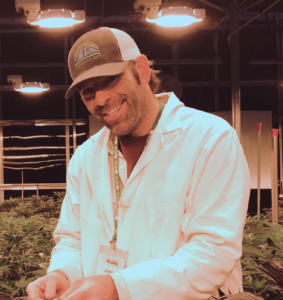 James Schwartz RN, BSN, LNC, is an experienced medical legal consultant and CEO of

Follow NCIA
Newsletter
Facebook
Twitter
LinkedIn
Instagram
News & Resource Topics
–
This Just In
How THCa Vapes Are Changing Consumer
Announcing NCIA’s 2026-2028 Board of Directors