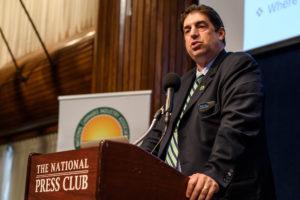
The Hemp Industry needs your help. The 2018 Farm Bill, which made it legal to grow and process hemp, was a big step forward for the larger Cannabis industry. After the bill passed, lots of growers, processors, and manufacturers started building the Hemp Industry. Like any new industry, it’s had its ups and downs. But there are some big roadblocks that Congress can remove to help the Hemp Industry grow and set the stage for better rules around all Cannabis in the future.
2023 is a crucial year for American hemp producers as the 2018 Farm Bill is due to expire. Congress is now drafting a new Farm Bill that will direct our agricultural and food systems for the next half-decade. During this critical period, the NCIA Hemp Committee is working tirelessly to rally support for amendments that will not only benefit the industry but also our customers. Our requests are as follows:
Update the legal definition of hemp to allow for up to 1% Total THC: This would offer critical protection for farmers and processors, as the current legal limit can sometimes be exceeded naturally in the crop growth process, leading to crop loss and financial hardship.
Support the Growth of the Hemp Industry by Encouraging Banking and Lending Services: The Treasury department should provide written guidance for banking and lending services to hemp-related businesses, removing barriers to growth in this burgeoning industry.
Support HR 3755 for Non-consumable Hemp: By recognizing the distinction between consumable and non-consumable hemp products, we can encourage the development of a wide range of industrial applications for hemp, from textiles to building materials.
Prevent Misuse of THC by Teens and Young Adults: This requires comprehensive educational initiatives to provide accurate information about THC and its potential effects. In doing so, we can ensure that the growth of the hemp industry does not inadvertently lead to misuse of THC among young populations.
During the recent NCIA Lobby Days, we had constructive meetings with influential decision-makers, including members of the Agricultural Committee and their staff. Our team left these sessions with a sense of hope and determination, having shared our top four priorities and discussed other important issues. Now, we’re calling on you, the supporters of the Hemp Industry, to make your voices heard and contact your members of Congress to showcase broad support for these initiatives.
“NCIA Lobby Days provides the stage and podium, and you bring the voice. We meet with decision makers (congressional staff) who ARE interested in our real-life scenarios, and it educates them to educate their Senate and House of Representative leaders. Education is power. It (Lobby Days) also provides an environment to meet like-minded people in the cannabis industry, share our stores, learn/educate, and collaborate. I plan to attend each year as it is enlightening and empowering!” Jillian Johnson
How can you help?
Remember, members of Congress are elected to represent the interests of their constituents – that’s you. But they can only effectively do so when they’re fully informed about the issues that matter to you. Your voice is powerful and essential to our democratic process. By speaking up, you can provide important insights and help shape the future of the Hemp Industry.
Previously, in part 1 and part 2 of this series, the DEIC examined the problems inherent in existing social equity programs and the merit for federal social equity in regulating interstate commerce. The DEIC also examined the key components of a proposed framework to address these challenges, how to define social equity federally, and the merit of determining the types and numbers of permits to be issued.
Sadly, as written currently, all proposed federal bills fail to meet the critical objective of creating as much NEW generational wealth for the most number of those disparaged from participating in the legal cannabis industry because of the socioeconomic impacts of more than 80 years of federal marijuana prohibition and due to the barriers to entry created amid state regulatory regimes.
To conclude this policy framework proposal, the DEIC will look at the key considerations for a federal program to ensure it functions as designed and how this framework can create social equity technical assistance, qualification, and a phased approach of implementation to ensure that social equity operators have ample time to qualify, have adequate funded, and are set up for success with an equal starting line in the new interstate commerce industry.
Qualifying Social Equity Operators – Federal Technical Assistance Program
It is imperative that any federal social equity framework helps the industry and their new partners, by ensuring permit holders are qualified in both cannabis and business backgrounds, and by helping them bring financing to the table to start a permitted interstate commerce cannabis business that can be as ready, as quickly as possible, to help import, export, and transport cannabis between the States.
To carry out these provisions in the policy, we recommend that amendments to any federal act include:
Requiring that qualified social equity interstate commerce permit holders:
Have a path to educational qualification (training and development)
Can qualify with equivalent experience
Can pre-qualify for the SBA’s funding once they obtain education or equivalent experience (funds issued upon state licensing approval)
Obtain the majority of initial permits offered for interstate commerce (95%)
In alignment with how long and at what percentage the current industry has been dominating the ownership of licenses
Entities should have 51% or more verifiable ownership and control by a social equity qualified applicant.
Advisory Committee to determine how to verify the 51% social equity ownership
Providing social equity qualified permit holders exclusivity for at least 5 years to ensure the qualifying process takes place equitable to the average time in which the industry developed for adult use without considering social equity.
Mandating laboratory testing as national permitting for interstate commerce to work.
Ensure parity amongst states and tribal nations such that tribe-to-tribe trading and interstate trade routes can be protected.
Avoiding overly limiting interstate commerce permits, but also giving them value by not making them unlimited either.
DEIC suggests 1,500 permits as a starting point divided among the three primary types as a fair balance initially.
These pillars of federal act amendments will proactively resolve interstate commerce concerns that are inherent in descheduling cannabis. Further, pre-qualifying permit holders based on their experience, education, as well as federal financing for their business (contingent on state licensing), will accomplish two primary concerns:
Incentivizes state governments to create social equity licensing regimes that emulate federal efforts
Reduces “predatory” operating agreements that use “token” social equity applicants who do not participate in the business license, contribute little to no financing, and are thereby diluted by existing operators and investors
We believe the U.S. Small Business Administration (SBA) is best to handle collaboration efforts to define this new “Minority Cannabis Business” (MCB) certification program for both program providers on the educational side and for pre-qualifying federal funding for qualified applicants.
Through this qualification, the Alcohol and Tobacco Tax and Trade Bureau (TTB) and (SBA) would issue an interstate commerce permit to be tied to state licenses, and only then would funding be issued to the applicant by the SBA. All funding issued is contingent on obtaining a state licensed facility or partnership with an existing operator in any given state.
Phased Approach:
We believe it is also important that the amendments clearly lay out a multi-phased approach to the rollout of interstate commerce permitting to ensure those most qualified operators proceed first, and to then qualify others with enough time to do so. Encapsulating the proposed amendments, we envision the following steps to ensure a smooth transition that maximizes the opportunity for social equity applicants to succeed:
Initially, establishing the advisory board for the regulatory agencies and mandates to allow for education providers to apply and be approved to provide the educational qualification to social equity applicants. These education providers may also be prioritized based on social equity and curriculum requirements designed in collaboration with cannabis business experts and diversity, equity, and inclusion advocates in cannabis.
For those who lack the experience in operating an interstate commerce permitted business, but who are impacted by the war on cannabis, approved educational programs are invaluable to overcoming the barriers in not knowing how to operate a regulated cannabis business.
Those with experience may qualify, without the need of an educational provider, and each are evaluated for priority licensing according to the following priority:
Applicants with cannabis and business experience (most qualified)
Applicants with legacy experience but limited regulated business experience
Applicants with business experience but limited cannabis experience
Applicants with little cannabis or business experience (least qualified)
If qualified in both, the applicant goes first and can qualify for SBA funding fastest.
If they have limited experience in cannabis or business, then the applicant can take the coursework to qualify and apply for SBA funding.
During this time, it is also crucial to increase community education efforts so that communities impacted most by the war on cannabis can be made aware of the opportunity to qualify, be trained/educated, and approved, and get access to the information necessary to pursue the opportunity along the above pathways.
Provide an education fund for state and municipal governments to promote the benefits of cannabis social equity, responsibilities, and risks of cannabis.
Access to financing is critical for social equity applicants and must be made available through the qualification process for social equity qualified businesses. Once qualified on education or equivalent experience, the SBA may pre-approve funding for qualified applicants. By achieving these qualifications, applicants have access to *reserved* funding appropriated by the federal act. Pre-approved financing in the form of grants and low-interest business debt instruments that are contingent on successful completion of course requirements and other “qualifying” factors for a Minority Cannabis Business is critical to ensuring success for operators and the federal government.
These government loans say how one qualifies and is “pre-approved” so that applicants can negotiate with existing industry license holders as valuable partners and receive federal funding contingent on state licensing approval. The idea is to promote partnership and participation between the existing industry and newly established social equity entrepreneurs while ensuring equal opportunity for social equity operators who do not choose to partner with the industry.
Follow Through
To ensure the program functions as designed and that the advisory committee is provided with as much data as possible to improve upon these suggested amendments, the Diversity Equity and Inclusion Committee (DEIC) recommends a final amendment in the form of a best practices study, along with collected data from participating states, to be instituted and reviewed annually for the first five years and subsequently every three years.
The intention of this study and report is to ensure the enforcement of laws, standards, and programs and to monitor that the activities of social equity operators are in alignment with the intention of the program in benefitting the social equity entrepreneurs permitted, that policies against predatory operating agreements are being enforced, and that policies are truly beneficial to creating social equity in the cannabis industry. The study will provide evidence of the benefits and challenges of the program, as well as possible improvements at federal and state levels.
Conclusion
It seems obvious that unless any social equity partner can “bring more to the table” to balance a “mega player’s” contribution, be educated in all aspects of their chosen field in the industry, recognize predatory agreements, and otherwise be positioned more equally to meaningfully participate in the cannabis industry, social equity programs will continue to fall short of meeting the goal of creating new generational wealth.
History has shown that as long as there’s an opportunity for inequality to be wielded as a weapon for those in power, it will be. No amount of good intention can change that fact.
Social equity requires empowerment opportunities for social equity candidates to bring more to the table as equals with “mega players.” We recognize partnerships can be an ideal path forward when the power dynamics within them are balanced and fair. The DEIC proposes these amendments to any federal act to serve as solutions to the traditional problems of inequality, exclusion, and gatekeeping that once spurred prohibition in the first place and that continue to prevail in the inequity the cannabis industry is still experiencing and to solve the shortcomings of social equity programs thus far.
We recognize that the role for the federal government in these federal act amendments is to even the odds in interstate commerce permitting. Their role is to oversee the fairness in qualifying candidates, to ensure a meaningful value for the permits issued, to give permittees the chance to catch up to the privileged few already in the industry with lockout periods for non-social equity applicants, limited licensing, and to provide access to financing for those traditionally locked out of access to financing or wealth as aa result of systemic oppression caused under prohibition.
Interstate commerce permitting seems like the last true chance for America to atone for 80+ years of marijuana madness and its detriment on our society. It is also the last chance for the industry to search for its soul to balance the impacts prohibition has had on these operators in excluding their participation in legal cannabis initially – born as a result of systemic discrimination overall and colonized on by those with clean records.
In doing so, a more equitable federal act can create the bold ideas and incentive to bring traditional wealth and experience into partnership with underprivileged social equity operators and their expertise/culture to form partnerships that truly represent the intent behind the policies intended for social equity and to create a more diverse, equitable, and inclusive industry for all.
Allied Association Blog: Memories of the Campaign for Prop 215
Scanning my collected newspaper articles from the era for our slideshow has really brought back memories of my early activist days working toward The Compassionate Use Act of 1996, commonly referred to as Prop 215.
The year was 1995…
Those were the days when you had to say “water pipe” not “bong” for fear of being kicked out of a head shop. I once had a pipe shop refuse to carry hemp lip balm citing that it would imply that their pipes were being sold for marijuana use. Even some in the hemp industry were opposed to associating marijuana with hemp. That said, there were supporters of medical marijuana, and some who just needed education.
I was 24 years old and my relationship with the cannabis plant had been purely recreational. Then I made a new friend, Alan Silverman, who introduced me to a community (and career path) that changed my life. He took me to a screening of a new film, “The Hemp Revolution.” It was an eye-opening event with the director in attendance, and notably several Sonoma County businesses selling their industrial hemp wares. I was deeply inspired, not having known the history and multitude of uses of the plant. I joined the hemp industry with the contacts I met that night, distributing their wares to local shops and tabling at festivals and markets. It was more of a public education service than a profitable business, as many were not familiar with the hemp plant and some saw it as an excuse to promote marijuana. I transitioned into a day job with HempWorld, an industry magazine. These were fun years even if we were ahead of our time.
Which comes first?
Alan also told me about a state initiative campaign that was in the planning stages and educated me on the medicinal uses of marijuana. I had previously studied ecology, the idea that our environment has countless symbiotic relationships between lifeforms fascinated me. So, learning about the fiber, oil, and seed of the hemp plant while also gleaning information about medicinal benefits of marijuana just strengthened my impassioned advocacy for both. I felt at the time that consumable marijuana would need to be destigmatized before industrial hemp would ever have a chance.
Allies!
I joined the volunteer group which we at first called “Sonoma County Chapter Californians for Compassionate Use” to match the name of the state-level group behind the current campaign. The term “compassionate use” was not so well known; when I set up our voicemail, the representative thought we were advocating for “Compassionate Youth.”
Being our media liaison, a news reporter from the local TV station called me one morning. The story we had discussed fell through and he asked if there was anything else he could cover. In a few frenzied hours, I was able to find an oncology nurse from a local hospital willing to be interviewed in support of medicinal marijuana. She led me to a medical marijuana patient she knew, who introduced himself to me on the phone by saying, “I’ve been HIV positive for ten years, and I’m fat!” He wanted to be interviewed, too. Enough local activists joined us that afternoon in front of our County Board of Supervisors chambers to fill the camera frame. The nurse requested her interview be conducted apart from the activists, as to not appear a part of our group, which was better optics for our message. She was being brave and outspoken.
We made up small binders with recent news pieces supporting medical marijuana and sent them out to all our local media contacts. We included a commentary published in the Journal of the American Medical Association, an editorial from The Lancet, along with a Universal Press Syndicate piece by William F. Buckley, Jr, and a Cannabis Canada article, “Cannabis Buyers’ Club Flourishes in ‘Frisco,” written by Rose Ann Fuhrman, a fellow local activist and writer. The soon-to-be iconic red cross with overlayed green leaf image was printed for the covers of the binders.
Education was Essential
The cross and leaf image for the movement so effectively portrayed the topic, some of us, while gathering signatures, simply wore 11 x 8.5” signs with this image around our necks to gather attention of potential signers.
All in all, Sonoma County was an easy place to gather signatures on this issue. Rather than approach people individually, I’d stand in a trafficked area and repeat the same spiel, it was along the lines of “Sign the medical marijuana petition, it helps with epilepsy, multiple sclerosis, chemotherapy, glaucoma…” I remember one man who walked right past me into a grocery store parking lot, only to turn around when I verbalized the ailment that affected his family member. Another signer who stood out was attending a concert. He walked up to me in the free speech zone between the parking lot and the venue. Signing his name, he said, “I’m a cop. I’m tired of the hypocrites.”
The local coverage that I was most excited about occurred on Friday, November 1, 1996, four days before the election. Elvy Musikka had been traveling around California speaking in favor of Prop 215. Elvy was interviewed by The Press Democrat newspaper about being one of eight people in the United States who not only could legally smoke marijuana, but also was being provided joints by the federal government. The story ran with a large photo of Elvy smoking a legal joint in my living room. Elvy will be speaking at the Cal NORML conference.
Meeting Dennis
Another inconsistency with what most knew at the time was the existence of the San Francisco Cannabis Buyers’ Club. Founded by Dennis Peron, who also wrote San Francisco’s Prop P, this ground-breaking club was raided by the DEA, but enjoyed great local support. Prop P passed by 80% of San Francisco voters in 1991, basically making marijuana possession and cultivation the lowest priorities for law enforcement. Dennis, who passed away in 2018, is a legend in the world of medical marijuana. I had the unexpected experience of meeting him when Rose Ann and I went to his club to pick up the initiatives for our group to collect signatures. We all had barely begun when informed that the first initiatives had a printing error and needed to be replaced. We had car trouble in the city and Dennis invited us to stay overnight in the club, an historic experience I relish. Dennis will be represented at the 25th Anniversary event via a recorded statement and through his family members, Jeff and Bryan Peron.
It was an exhilarating time for me, I met many truly impressive activists, authors, and businesspeople who were inspired to make the world a better place. I felt I was making the world a better place. Ellen Komp, one of my co-workers from my years with HempWorld, went on to become the Deputy Director for California NORML, she hired me onto the organization in 2017. For the 25th Anniversary of Prop 215 events this week, I will be celebrating with many of the folks who made 215 possible. I hope you’ll join us in honoring the history that launched the modern industry.
Kharla Vezzetti is the Business Membership and Advertising Manager for California NORML, a non-profit, member-supported organization that has been advocating for sensible and fair cannabis laws since 1972. She can be reached at kharla@canorml.org
The PACT Act Final Rule Has Been Released Prohibiting the Mailing of Cannabis/Hemp Vaporization Products. Is Your Business Ready?
By Rachel Kurtz-McAlaine, NCIA’s Deputy Director of Public Policy
After months of delay, the United States Postal Service (USPS) has released its FINAL rule enforcing the Prevent All Cigarette Trafficking (PACT) Act, effective October 21, 2021, and unfortunately, they are indeed applying it to cannabis/hemp vaporization products. The PACT Act has now made it extremely difficult for anything related to vaporization to be mailed, either business to business (B2B) or business to consumer (B2C). Your business could be affected even if you are not mailing out products. Although this is a massive burden on the cannabis/hemp vape industry, there are ways to deal with it. NCIA remains vigilant in making sure the federal government understands this unnecessary hardship to the industry, and making sure our members are fully educated on this issue.
What is the PACT Act?
The Prevent All Cigarette Trafficking (PACT) Act went into effect June 29, 2010, applying strict regulations to the mailing and taxation of cigarettes and smokeless tobacco products, effectively banning the mailing of cigarettes unless authorized by an exception. With the rise of e-cigarettes, especially their popularity among youth, Congress decided that vaporization products should be included in those provisions. On December 27, 2020, Congress modified the definition of “cigarettes” to include Electronic Nicotine Delivery Systems (ENDS), broadly defining ENDS to include nearly all vaporization products, regardless if they contain nicotine or are used for nicotine. Specifically:
“(1) any electronic device that, through an aerosolized solution, delivers nicotine, flavor, or any other substance to the user inhaling from the device; and (2) any component, liquid, part, or accessory of an ENDS, regardless of whether sold separately from the device.”
When the USPS issued their notice of proposed rulemaking, they received more than 15,700 comments, with many expressing frustration with the broad interpretation of ENDS, so the USPS delayed issuing FINAL rules while it considered the practical application to the unique cannabis and hemp industries. NCIA was proud to submit comments with a broad coalition and to issue an action alert to get our members to express their concerns.
In the meantime, the USPS issued a guidance document (“April 2021 Guidance”) (86 FR 20287) to help prepare businesses for the final rule and what documentation will be needed to apply for an exception. The exceptions include:
Intra-Alaska and Intra-Hawaii Mailings: Intrastate shipments within Alaska or Hawaii;
Business/Regulatory Purposes: Shipments between verified and authorized tobacco-industry businesses for business purposes, or between such businesses and federal or state agencies for regulatory purposes;
Certain Individuals: Lightweight, non-commercial shipments by adult individuals, limited to 10 shipments per 30-day period;
Consumer Testing: Limited shipments of cigarettes sent by verified and authorized manufacturers to adult smokers for consumer testing purposes; and
Public Health: Limited shipments of cigarettes by federal agencies for public health purposes under similar rules applied to manufacturers conducting consumer testing.
18 U.S.C. 1716E(b)(2)-(6). These exceptions are the ONLY way to mail these products moving forward. Unfortunately, the USPS was not accepting applications for exceptions until the final rule was published, but now that it has been published, it is time to apply for an exception.
FedEx and UPS have already banned delivering these products, so they are out as an alternative.
How can it affect me?
If you manufacture, sell, or buy vapor products, you will be affected. Manufacturers and distributors who use the mail to get their products to stores for resale (B2B) will have to apply for an exception through the USPS Pricing and Classification Service Center. If you are a business receiving these products, you will have to work with the business that mails it to you to be included in their exception as a recipient. If you are a retailer who delivers vaporization products to consumers via the mail, such as online retailers (B2C), you will also need to apply for an exception. If you buy the end products as a consumer, expect an increase in price because of the extra costs placed on the suppliers.
What should I do?
If your business has ANYTHING to do with the manufacture, delivery by mail, or retail of cannabis/hemp vaporization products, including liquids, batteries, empty cartridges, etc., you should get familiar with this final rule that is in effect as of October 21, 2021. The USPS spends the time addressing potential issues or suggestions from the comments it received, so any questions of why they did something are probably answered there.
You will also want to read the guidance document the USPS issued in the Spring that details if you qualify for an exception and how to apply for it. This will require cooperation between the mailer and the recipient, so make sure you are working with your supplier/retailer to get all the necessary information.
What is NCIA doing?
NCIA remains committed to making sure our members understand all of the legal ramifications and how to continue operations despite this rule. We continue to work with our coalition partners to better understand the effects and best practices, and will share with you as much information as possible to ease the transition via blog posts and webinars.
August Action Alerts for NCIA Members: CAOA and SMS
by Rachel Kurtz-McAlaine, NCIA’s Deputy Director of Public Policy
STOP what you’re doing and ask yourself 2 questions:
Have I read the discussion draft or summary of the Senate bill to legalize cannabis at the federal level and now have an opinion on how NCIA should approach the bill? (Tell NCIA.)
Has my SMS/text messaging service gotten more expensive, become unwieldy with rules, or been taken away altogether? (Tell NCIA.)
If you answered yes to one or both of these questions, please take a quick moment to let us know! Click on the unique link next to the relevant question. If you want to learn more about either issue, keep reading.
Senate Legalization Bill Discussion Draft: Your Thoughts?
We are at the precipice of federal legalization, but as you know, in such a highly regulated industry, how legalization gets implemented can have a significant impact on your business. So it’s important that your voice is heard when these laws and regulations are being discussed. We’ve created this simple form for NCIA members to easily give us feedback on the CAOA. If you’re a committee member, you can provide feedback through your committee as well.
Text Messaging Service Disruptions: the Cannabis Industry Can Fight Back
You may remember reading my article, Text Messaging (SMS) Crackdown Impacting the Cannabis Industry, published back in May, written when we were first learning the scope of the issue. Although many companies seemed to be able to move on with workarounds, we’re hearing even workarounds are disappearing. And even when businesses are still able to operate, they get charged high fees or are severely hampered in what they can do with the messages.
Because this issue has been affecting so many of our members in one way or another, we want to help, but we need to hear from you. This isn’t a law that we can lobby to change, it is a convoluted policy that telecommunications giants are enforcing on their customers, ostensibly to cut down on customers complaining about spam, but in some cases, they are applying blanket bans on cannabis companies.
As an industry, we can fight back. We are organizing a working group to take on the telecommunications giants, including a potential class-action lawsuit. If you want to be part of this or learn more, please email me.
Those workarounds going away, or extremely expensive and cumbersome. It can seem overwhelming to fight back.
At this point, time to organize and use strength in numbers against giant telecommunications companies.
ACTION ALERT: SAFE Banking Act Introduced in the Senate
Today, Senators Jeff Merkely (D-OR) and Steve Daines (R-MT) introduced the Secure and Fair Enforcement (SAFE) Banking Act in the U.S. Senate. This important legislation would provide state-legal cannabis businesses with the broad access to traditional banking and financial services afforded to all other legal businesses in the country — and we need your help to pass it!
NCIA has been building support for banking access for our industry in Congress since the first version of the SAFE Banking Act was introduced in 2013, when it was considered a fringe issue by most members of Congress. The latest version of the SAFE Banking Act was approved by the House three times in the last Congress and had garnered 35 cosponsors in the Senate by the end of 2020. That progress was only possible with the hard work our team in D.C. takes on every day, thanks to the support of our members.
Now, with a Democratic majority in the Senate, we have a unique opportunity to finally get the SAFE Banking Act to the President’s desk to become law! But success isn’t inevitable.
Please contact both of your U.S. Senators and ask that they sign on as co-sponsors of the SAFE Banking Act today.
The legislation already has a long list of bipartisan cosponsors, including U.S. Senators Kyrsten Sinema (D-AZ) Edward J. Markey (D-MA), Alex Padilla (D-CA), Patrick Leahy (D-VT), Richard Durbin (D-IL), Ron Wyden (D-OR), Mazie Hirono (D-HI), Tina Smith (D-MN), Angus King (I-ME), Catherine Cortez Masto (D-NV), Michael Bennet (D-CO), Robert Menendez (D-NJ), Jon Tester (D-MT), Jacky Rosen (D-NV), Kevin Cramer (R-ND), Dan Sullivan (R-AK), Kirsten Gillibrand (D-NY), Elizabeth Warren (D-MA), Chris Murphy (D-CT), Gary Peters (D-MI), Bernie Sanders (I-VT), Brian Schatz (D-HI), Patty Murray (D-WA), Amy Klobuchar (D-MN), Rand Paul (R-KY), Bill Cassidy (R-LA), and Cynthia Lummis (R-WY).
If your Senator(s) are listed above, please make a call to thank them for supporting this important legislation.
The House version of the SAFE Banking Act, H.R. 1996, was introduced last week. Thanks to the support of our members, NCIA will continue to lead the charge to advance this legislation in both chambers.
Thank you for taking action for the SAFE Banking Act and fair cannabis policies.
USPS and Vaping Devices: What You Need To Know
by Madeline Grant, NCIA’s Government Relations Manager
The most recent omnibus that passed into law in December 2020 included a small provision related to vaping devices that could potentially have big implications.
The bill included language related to the Preventing Online Sales of E-Cigarettes to Children Act (the Act). The intent of the Act was to prevent underage smoking by applying the same safeguards already in place for cigarettes and smokeless tobacco products to the online sales of e-cigarettes — a mission we all wholeheartedly support. The Act also amends the Jenkins Act, which generally prohibits mailing of cigarettes to consumers through the United States Postal Service (USPS), to include Electronic Nicotine Delivery Systems (ENDS) and to subject them to the same mailability restrictions.
The Act defined ENDS as any electronic device that, through an aerosolized solution, delivers nicotine, flavor, or any other substance to the user inhaling from the device. The provisions also extend to any component, liquid, part, or accessory of an ENDS, regardless of whether sold separately from the device. Unfortunately, this definition is overly broad, and despite the name, an item can be interpreted to qualify as an ENDS without regard to whether it contains or is intended to be used to deliver nicotine — this means devices used for the vaporization of cannabis or hemp, essential oils, and other aromatics, or even water vaporizers used for babies.
What does this actually do?
Prohibits the mailing of non-nicotine devices to consumers through the USPS
Triggers burdensome and illogical compliance requirements for mailing through common carriers (i.e. requires the labeling of packages as containing nicotine, payment of state tobacco taxes, reporting of consumer data, and more, even if non-tobacco products)
Eliminates USPS exception for B2B mailings for non-nicotine devices, as the form requires tobacco product license information which non-nicotine businesses do not hold
As a result of this Act and subsequent confusion, many common carriers have changed their policies to ban shipments of any vaporization devices and components, nicotine or otherwise
How can you help?
Although the time to submit public comments has passed, you can still make a call to your congressional representative and senators to express your concerns. To find your elected officials you can visit congress.gov, type in your zip code, and this will bring you to your representative photo and information. From there call the Washington, D.C. office, state your name and address, to confirm you are a constituent and discuss the talking points below. Every constituent call can make a difference as staffers log all comments and concerns for the office.
When relaying your concerns, note that this broad interpretation of ENDS was not the intent of the legislation. It creates conflicts with existing regulations (e.g. FDA deeming rules, USPS mailability of hemp products, and state tax guidelines, etc.) and delivers significant unintended consequences.
Ultimately, it means consumers and patients may not be able to receive the state-legal, non-tobacco products they want and could significantly increase costs — all at a time when USPS is already struggling to bring stability to the agency.
Along with a fantastic informal coalition that formed to address this issue, NCIA has submitted comments that ask USPS to clarify that their interpretation of ENDS to not include these additional product categories that were not the intent of the original statute. As a united front, we will continue to educate congressional offices. We will continue to monitor any movement of this legislation and keep our members informed. Please reach out to your elected officials. Of course, if you have any questions please feel free to reach out to Madeline@TheCannabisIndustry.org.
Video: NCIA Today – March 19, 2021
NCIA Deputy Director of Communications Bethany Moore checks in with what’s going on across the country with the National Cannabis Industry Association’s membership, board, allies, and staff. Join us every Friday here on Facebook for NCIA Today Live.
Action Alert: Submit Comments to USPS and Congress about Mailing Vaping Products
It’s time to take action!
A new law could make it illegal for companies like yours to ship vaping products or components to customers — unless the United States Postal Service clarifies the rules.
What You Need To Know
On December 21, 2020, Congress passed the Consolidated Appropriations Act of 2021, which included the Preventing Online Sales of E-Cigarettes to Children Act (the Act). The intent of the Act was to prevent underage smoking by applying the same safeguards already in place for cigarettes and smokeless tobacco products to the online sales of e-cigarettes — a mission we all support. The Act amends the Jenkins Act, which generally prohibits mailing of cigarettes to consumers through the United States Postal Service (USPS), to include Electronic Nicotine Delivery Systems (ENDS) and to subject them to the same mailability restrictions.
The Act defined ENDS as any electronic device that, through an aerosolized solution, delivers nicotine, flavor, or any other substance to the user inhaling from the device. The provisions also extend to any component, liquid, part, or accessory of an ENDS, regardless of whether sold separately from the device. Unfortunately, this definition is overly broad, and despite the name, an item can be interpreted to qualify as an ENDS without regard to whether it contains or is intended to be used to deliver nicotine — this means devices used for the vaporization of cannabis or hemp, essential oils, and other aromatics, or even water vaporizers used for babies.
We share Congress’s concerns regarding the tobacco and nicotine industries. That said, those concerns relate only to specific industries and they do not relate to Non-Nicotine Devices. The youth access problem identified by Congress is specific to certain nicotine products and not state-regulated hemp, cannabis or other products. This is clear when we look at the plain language of the ENDS definition and the legislative history of the Act. Applying the Act to Non-Nicotine Devices is not only illogical and contradictory, but it runs counter to the data-driven, science-backed approaches to youth prevention that make for good policy.
How You Can Take Action
Our friends at HeadCount’s Cannabis Voter Project want to help you make your voice heard! Text CANNA VAPE to 40649 or click the link below to find out how you can take action.
We have teamed up with Cannabis Voter Project to develop a convenient landing page that will allow you, your customers, and the rest of your network to easily submit comments to the USPS and their representatives in Congress: https://p2a.co/FyUcHVr
To maximize effectiveness, please consider the following steps:
In your email and social media posts, have a clear call to action (e.g., “Click here to send to your comments to Congress”)
If using Instagram, use the swipe up feature on Stories to send viewers to the landing page
ACTION ALERT: Congress to Vote on Historic MORE Act
The Marijuana Opportunity, Reinvestment, and Expungement Act (H.R. 3884) is expected to come to a vote in the U.S. House of Representatives in December 2020. NCIA has been building support for this bill in Congress for the last year and now we need your help!
Please call your member of Congress and ask them to vote YES on the MORE Act today!
Look up your congressional representative and contact info by zip code, here.
Reference our congressional scorecard to find out if your representatives are sponsoring NCIA’s priority legislation, including the MORE Act.
Sample script to help guide your call:
Hello! My name is _______________ and I am a constituent of yours in (city, state, zip code). I am calling today to ask that Representative _____________ votes “Yes” on H.R. 3884, the MORE Act, when it comes to the Floor for a vote in December.
This bill would remove cannabis from the Controlled Substances Act at the federal level, leaving marijuana policy up to the individual states. It also creates avenues towards expungement, re-sentencing, and assists those communities that have most been impacted by the failed war on marijuana. Additionally, legal cannabis is a huge economic driver and would help both the federal government and states’ revenue shortfalls during this pandemic.
Thank you for your time today. Again, I hope Representative _____________ will vote “Yes” on H.R. 3884, the Marijuana Opportunity, Reinvestment, and Expungement Act.
*Feel free to tell a personal story if you feel it is relevant or powerful, but remember that staffers are busy so sometimes short and sweet is best!*
Summary of the Marijuana Opportunity, Reinvestment, and Expungement Act of 2019:
The Marijuana Opportunity, Reinvestment, and Expungement Act (H.R. 3884, S. 2227), commonly known as the MORE Act, was introduced in 2019 by House Judiciary Committee Chairman Jerry Nadler (D-NY) and Senator (now Madam Vice President-Elect) Kamala Harris (D-CA).
This bill would:
Decriminalize cannabis federally: The bill removes cannabis from the Controlled Substances Act, leaving cannabis policy up to the states
Allow for expungement of marijuana convictions and arrests, sealing of records, and re-sentencing: Requires federal courts to expunge prior convictions and arrests and seal court records for those not under a current criminal justice sentence and requires courts, on motion, to conduct re-sentencing hearings for those under a criminal justice sentence.
Establish sales tax and “Opportunity Trust Funds”: Authorizes the assessment of a 5% sales tax on marijuana and marijuana products to create an Opportunity Trust Fund, which includes three grant programs:
The Community Reinvestment Grant Program, administered by the Department of Justice, would provide services to the individuals most adversely impacted by the War on Drugs, including job training, re-entry services, legal aid, literacy programs, youth recreation, mentoring, and substance use treatment.
The Cannabis Opportunity Grant Program, administered by the Small Business Administration (SBA), would provide funds for loans to assist small businesses in the marijuana industry that are owned and controlled by socially and economically disadvantaged individuals.
The Equitable Licensing Grant Program, also administered by SBA, would provide funds for programs that minimize barriers to marijuana licensing and employment for the individuals most adversely impacted by the War on Drugs.
Make available SBA programs and services to cannabis businesses: Specifies that the SBA may not negate eligibility for loans and other services based on a business being cannabis related.
Clarify federal public benefits: Prohibits the denial of any federal public benefit (including housing) based on the use or possession of marijuana, or prior conviction for a marijuana offense.
Protects immigrants: Provides that the use or possession of marijuana, or prior conviction for a marijuana offense, will have no adverse impact under the immigration laws.
Provide for data Collection: Requires the Bureau of Labor Statistics to collect data on the demographics of the industry to assess whether people of color and those who are economically disadvantaged are participating in the industry.
Age equity for juveniles: The bill applies equally to juveniles and adults, protecting young people from harmful criminal records.
2020 Senate Races To Watch
by Michelle Rutter Friberg, NCIA’s Deputy Director of Government Relations
Photo By CannabisCamera.com
As you may have heard by now, Election Day is just around the corner! Let me take this opportunity to remind you to vote, to do so safely, and come up with an election plan! If you need help determining if you’re registered, or need more information about anything election-related, you can click here for some great resources.
Over the last two years, NCIA and the cannabis industry have had some success in Washington, D.C.: passing the SAFE Banking Act out of the House, passing the MORE Act out of committee (we expect a full House vote during the lame duck session!), and even getting the language of the SAFE Banking Act included in three proposed COVID-19 relief packages. But, the same challenge has remained: the upper chamber of Congress, the Senate.
This year, there are 35 Senate seats up for election, and the results will impact cannabis policy for years to come (remember, Senate terms last for six years). Let’s take a look at three races that could not only impact cannabis policy, but the makeup of the Senate as a whole.
Arizona
Incumbent: Sen. Martha McSally – Republican
Challenger: Mark Kelly – Democrat
The Details: Senator Martha McSally, Mark Kelly, and seventeen other write-in candidates are running in this year’s special election in Arizona. The winner will fill the rest of the 2017-2022 term that former Sen. John McCain (R) won in 2016. You may remember McSally’s name– that’s because back in the 2018 general election, McSally ran for Arizona’s other Senate seat and lost to Kyrsten Sinema (D) 47.6% to 50.0%. After the 2018 election, interim Sen. Jon Kyl (R) announced his resignation and Gov. Doug Ducey (R) announced McSally as Kyl’s replacement in December 2018. Easy to keep up with, right?!
On Cannabis: This year, Arizonans will vote on Proposition 207, which would legalize adult-use cannabis in the state. During a debate in October, the candidates were asked about the initiative. Mark Kelly responded, “I think I’m gonna vote yes. It has some provisions in there to decriminalize it and address some incarceration rates for marijuana offenses — I think that’s good. I think there’s a funding source there. So I’m probably gonna vote yes.” When asked if he’d support removing marijuana as a Schedule 1 narcotic were such federal legislation to come before him, Kelly replied, “Based on my vote here in Arizona, I would seriously consider removing it.”
Senator McSally, on the other hand, has been essentially silent and inactive on this issue since assuming office. Last month, when asked about the initiative, McSally said “I’ll let the Arizona voters decide that [Proposition 207].” During her time as a Congresswoman prior to being appointed to the Senate, McSally voted against several cannabis-related appropriations amendments. She has not co-sponsored any cannabis-related legislation in the Senate.
Colorado
Incumbent: Sen. Cory Gardner – Republican
Challenger: Former Governor of Colorado, John Hickenlooper – Democrat
The Details: This race is one of the most contested in the country– both the Democratic Senatorial Campaign Committee (DSCC) and the National Republican Senatorial Committee (NRSC) have added it to their election target lists. The previous three U.S. Senate elections in Colorado—2016, 2014, and 2010—were decided by margins of 5.7, 1.6, and 1.7 percentage points, respectively. Gardner was first elected in 2014 after defeating incumbent Mark Udall (D) 48.2-46.3%.
On Cannabis: Sen. Gardner has long been touted as one of the most pro-cannabis Republicans in the Senate. He has sponsored and co-sponsored a number of cannabis bills, including the STATES Act and the SAFE Banking Act. However, Sen. Gardner has been unable to convince his colleagues to bring SAFE Banking up for a committee vote, or even have a simple hearing on the STATES Act. That being said, if Republicans retain control of the Senate, but Gardner loses his seat, it may have adverse consequences for the cannabis industry.
During his time as governor, Hickenlooper actively opposed cannabis legalization, even going so far as to unsuccessfully campaign against the state’s marijuana legalization ballot referendum. He then went on to implement it after voters approved the measure. During his last year as governor, he also vetoed proposals to add autism as a medical marijuana qualifying condition, to increase flexibility for investments in the cannabis industry, and to allow dispensaries to operate tasting rooms. But Hickenlooper has come a long way since then– his campaign website states, “As U.S. Senator, I will fight to remove cannabis from classification as a Schedule I drug.” Plus, he even responded to an op-ed penned earlier this year by NCIA’s own Social Media Manager, Vince Chandler, tweeting, “Yes, I support decriminalizing & descheduling marijuana. Colorado set the gold standard, and I’m eager to work with you and Colorado’s cannabis industry and entrepreneurs to get this done in Washington.”
Montana
Incumbent: Sen. Steve Daines – Republican
Challenger: Former Governor of Montana, Steve Bullock – Democrat
The Details: Incumbent Sen. Daines was first elected in 2014 with 58% of the vote. Bullock was first elected Governor of Montana in 2012 with 49% of the vote to his opponent’s 47%. His margin increased in 2016 when he won 50% to 46%. That same year, Donald Trump (R) won Montana in the presidential election with 56% of the vote to Hillary Clinton’s (D) 36%.
Both the National Republican Senatorial Committee and the Senate Majority PAC, a Democratic PAC, have targeted the race. Prior to announcing his bid for Senate, Bullock joined the crowded Democratic presidential field before dropping out in 2019.
Implications: This year, there are two cannabis-related initiatives on the ballot in the Treasure State. Montana I-190, the Marijuana Legalization Initiative, is on the ballot and would legalize the possession and use of marijuana for adults over the age of 21, impose a 20% tax on marijuana sales, require the Department of Revenue to develop rules to regulate marijuana businesses, and allow for the resentencing or expungement of marijuana-related crimes. The second initiative, Montana CI-118, the Allow for a Legal Age for Marijuana Amendment, would amend the Montana Constitution to allow for the legislature or a citizen initiative to establish a minimum legal age for the possession, use, and purchase of marijuana, similar to the regulation of alcohol in the state constitution.
While neither Senate candidate has weighed in on the state’s cannabis initiatives, we do have some understanding of their views on the issue– Sen. Daines has consistently voted in favor of appropriations amendments related to hemp, medical cannabis, and banking. In 2015, he co-sponsored an industrial hemp bill. It’s important to note that all of these votes were more than three years ago. On the other hand, while running for president last year during July 2019, Bullock stated, “I think this [cannabis legalization] should be left up to the states. I think the federal government should get out of the way and this is a state-by-state decision.”
Now, remember to get out there and VOTE! Here at NCIA, we’ll be analyzing other initiatives, candidates, and what it all means for you and your business as we get closer to the election, and doing the same once we get the results!
It’s Time to Spark the Vote! Calling On All Retailers to Mobilize Customers for the 2020 Election
Despite having been marginalized and underrepresented in the political process for as long as prohibition has been policy, cannabis consumers are quickly emerging as an incredibly diverse and effective voting bloc in American politics. The impact of the cannabis consumer vote on state and local elections is palpable in these unprecedented times. As a beneficiary of this constituency base, we as an industry need to appreciate not just what elections have done to enable our businesses to exist today, but, critically how by lifting the voices of our patrons we are ensuring our own sustainability tomorrow. In fact, the backbone of the cannabis industry is our consumer base. Without consumers, there would be no local reform and, in most cases, no legal state market.
Today, we have hundreds of licensed retail stores across the country, and our industry is finally in a place where we can mobilize our customers nationally for the 2020 election. As retailers, it is now absolutely essential that we ensure cannabis consumers are effectively engaged, which is why we, at Berkeley Patients Group, are proud to join the Spark the Vote Retail Partnership Program. We are calling on every retailer out there to join us.
Spark The Vote‘s Retail Partnership Program is a COVID-safe, cannabis consumer voter registration and mobilization drive. The goal is to leverage the growing number of public-facing cannabis retail networks, and allied businesses to promote the effort through in-store and online customer engagement. The campaign is bringing together hundreds of socially responsible operators from across the country that are committed to supporting public participation in the electoral process. This is an excellent opportunity for our industry to stand out as good corporate citizens by lifting the voices of the communities we serve, and by empowering our employees to support positive social change.
There is no fee to participate as an official retail partner, and his campaign was designed specifically to minimize any staff or operational disruption. The only requirement is to promote get out the vote by displaying a QR code sign (graphic is provided) in a high-traffic, high-visibility location in the store, and highlight content on social media when necessary (language templates are provided). The sign acts as a COVID-safe, contactless voter registration station where a customer can use their phone to scan the code and quickly find out about their registration status, early voting, and other resources on how to participate and promote the democratic process.
In the words of Thomas Jefferson, “We do not have government by the majority. We have government by the majority who participate.”
For more information on Spark the Vote, how your organization can participate in the Retailer Partnership Program, or other partnership opportunities, please contact ben@sparkthevote.org or go to www.sparkthevote.org.
[Sabrina Fendrick, Chief Public Affairs Officer, Berkeley Patients Group; Spark the Vote Advisory Board Member, contributed to this post.]
A Third Round of SAFE Banking, HEROES 2.0 Unveiled
by Michelle Rutter Friberg, NCIA’s Deputy Director of Government Relations
Photo By CannabisCamera.com
It may seem like a while since you got an update on the SAFE Banking Act, but I have some exciting news to share with you!
Yesterday, House Democrats unveiled “HEROES 2.0” which is their latest COVID-19 relief package. If you’ll recall, back in May, the House also passed the initial HEROES Act, which included the text of H.R. 1595, the SAFE Banking Act.
Since HEROES passed the House in May, NCIA has been hard at work (from home!) talking to House and Senate leadership, as well as other key Senate offices about the need to pass this legislation and solve the cannabis banking conundrum. Unfortunately, those talks have been stalled for months as congressional leadership and White House officials struggle to make a deal.
Eager to return home in October with a victory to show, many moderates on both sides of the aisle have been stressing the importance of passing another relief package. As the language was just unveiled late yesterday evening, it’s still unclear how the Senate will react to the bill, and of course, the bill still has to clear the House of Representatives.
You might remember that just days before the first HEROES Act was passed in May, NCIA led ten cannabis advocacy and industry organizations in sending a letter to congressional leadership urging lawmakers to include SAFE in the next pandemic relief package. If the new HEROES 2.0 passes the House, it will mark the third time that the full body has approved the SAFE Banking language.
The language included in both packages is identical to the House-approved version of the bill and would make it easier for financial institutions to work with cannabis businesses that are in compliance with state law, as well as help address serious public health and safety concerns caused by operating in predominantly cash-only environments. The bill would also assist with the financial and practical hardships that are facing cannabis entrepreneurs of color as a result of a lack of access to capital from traditional lending institutions.
Make sure you stay engaged and continue to tell your lawmakers that you are a cannabis voter and that these issues are important to you! Contact your Senators today and ask that they support SAFE Banking as a necessary piece of legislation that can help the tens of thousands of cannabis workers stay healthy by allowing our industry access to legitimate banking and end our cash-only operations.
Want to make sure you hear the latest about what’s happening in cannabis policy? Follow NCIA on social media and be sure to share important information and resources as we release them with your networks, because we’re going to need all of us in this together!
The most important thing anyone can do to make sure SAFE Banking and other important reforms are realized in Congress is to ensure that their cannabis business is a member of NCIA. If you are not yet a member, please support our work by joining today. If you already are a member, thank you for making our advocacy work possible.
Together We Can – Working To Achieve Legislative Victories
by Madeline Grant, NCIA’s Government Relations Manager
Can you believe we are already coming to the end of August? 2020 has certainly not been what we were expecting – but we will persevere together. At NCIA, we want you to know we are here for you through these unstable times and now more than ever we will stand as a united cannabis community. As members of NCIA, we appreciate your dedication and contribution to continue the good fight to reach legislative victories at the state and federal levels. With your dedication to NCIA and our dedication to you, we can continue to achieve success through education and advocacy.
As the Government Relations Manager, I want you to know we are still working continuously in D.C., with a unified message, to achieve legislative victories. Next month, the House of Representatives may vote to make cannabis legal and start repairing the harms caused by decades of failed prohibition policies. As the legislative session draws to a close and what is sure to be one of the most pivotal elections in history nears, there is a renewed effort in Congress to pass meaningful criminal justice reform before the end of the year. And this includes the Marijuana Opportunity, Reinvestment, and Expungement (MORE) Act.
The MORE Act was introduced in the House last year by Rep. Jerry Nadler (D-NY) and already made history when it became the first legislative bill to be approved by the congressional committee (House Judiciary) in November.
This legislation would remove cannabis from the Controlled Substances Act, effectively decriminalizing it at the federal level and eliminating the ongoing conflict with effective regulated state cannabis markets. It would also expunge federal cannabis convictions, remove barriers to research, eliminate the current problems with the 280E tax code and lack of access to banking, promote more diverse participation in the cannabis industry, and establish funds to help undo the harms that have been disproportionately inflicted on marginalized communities by the war on drugs.
Now, a growing chorus of lawmakers are calling for it to receive a floor vote in the House in September, and we need your help!
Pleasecall your member of CongressTODAY and urge them to support the MORE Act and help bring it to a vote this year. When you call your representative’s office explain to them how important the MORE Act is to you and your business. The staffer that answers the phone is there to pass along the message to YOUR representative so the more calls they get the better.
NCIA Lobby Day, May 2017. Photo by Ben Droz
On another note, I’d love the opportunity to chat with you over the phone or zoom to discuss the challenges you are facing in the cannabis community. As we continue to meet with Hill offices virtually, it is important to relay your stories about the difficulties you face within the cannabis industry. Real-life examples help paint the picture of the reality our cannabis businesses face every single day. This is imperative to illustrate just how necessary legislative victories, like the MORE Act, are to us. So, if you have the time please send me an email to Madeline@TheCannabisIndustry.org and I will schedule a time for us.
As we draw closer to the end of this legislative session, the NCIA team will continue to work hard to reach legislative victories. We are nearing the 10th anniversary of NCIA and have come a long way together, from legislative victories in appropriations to the SAFE Banking Act passing the House, and we will continue to reach more legislative success in the halls of Congress. We must not lose hope during these unstable times but propel forward more unified than ever before.
Action Alert: Protect State Cannabis Programs
In the coming days, the House of Representatives will vote on protecting adult-use cannabis businesses, consumers, and state programs from the federal government and we need your help now.
The Blumenauer-Norton-Lee-McClintock amendment states that no funds from the Department of Justice may be used to prevent any adult-use cannabis states from implementing their own laws that authorize the use, distribution, possession, or cultivation of cannabis. While the amendment didn’t make it into the federal budget last year, the House did approve it in a 267-165 vote.
This year, we’re working to increase that vote margin in the House in order to send a strong message to the Senate and the White House.
You can help us send that message by calling your Representative and tell them to VOTE YES on the Blumenauer-Norton-Lee-McClintock amendment to the Commerce, Science, and Justice appropriations bill.
Find your Representative by clicking here and check our Congressional Scorecard to see where your Representative stands on our industry’s issues!
Since 2014, Congress has passed annual spending bills that have included a provision protecting medical cannabis businesses, patients, and programs from undue prosecution by the Department of Justice.
The bipartisan Blumenauer-Norton-Lee-McClintock amendment simply expands those protections to include all state marijuana programs, including the 11 states that have legalized cannabis for adults over the age of 21.
A similar amendment was approved by the House in last year’s appropriations process by a 267-165 vote.
Today, more than one in five Americans reside in a jurisdiction where the adult use of cannabis is legal under state law.
This amendment does not legalize marijuana at the federal level; it simply respects those states that have decided replace prohibition with a system of regulation.
We urge you to VOTE YES on the Blumenauer-Norton-Lee-McClintock amendment to the Commerce, Science, and Justice appropriations bill.
Our industry supports hundreds of thousands of jobs, tens of millions in tax revenue, and billions in economic activity – so please, call and help us protect what we have built together.
From The Hill: The Emergency Cannabis Small Business Health and Safety Act
by Morgan Fox, NCIA’s Director of Media Relations
Legislation to give legal marijuana businesses, which have been declared essential in a majority of states with regulated cannabis markets, access to resources being made available by congressional COVID-19 emergency response packages was introduced in the House of Representatives last week by Rep. Earl Blumenauer (D-OR) and Rep. Ed Perlmutter (D-CO).
The Emergency Cannabis Small Business Health and Safety Act would stop cannabis businesses and those that provide services to them from being excluded from further federal relief funding provided through the Small Business Administration (SBA).
Specifically, this bill would impact the following programs: Paycheck Protection Program (PPP), Economic Injury Disaster Loans (EIDL), and EIDL emergency grants. It would also protect SBA employees from prosecution for administering relief funds to cannabis businesses.
Under current policy, businesses that deal directly with cannabis production and sale, as well as many that provide services to them, are ineligible for most SBA programs. And the definition that the SBA uses to define which ancillary businesses are eligible is very vague. You can find a useful primer on federal relief eligibility from our friends at Vicente Sederberg LLP.
Let’s be clear: the fact that many cannabis businesses have been permitted to remain operating during this difficult time will not be enough to sustain the industry or allow for an effective and timely recovery once this nightmare is behind us. Lack of access to federal funds is just one of the many stressors facing cannabis businesses, which is why it is vital that we become eligible for relief as soon as possible.
Many indirect businesses have not been declared essential and have been forced to close. Cannabis businesses that have remained open must contend with declining sales, supply chain disruptions, onerous tax rates, lack of access to banking services, and the costs incurred by implementing additional health and safety measures to protect employees and customers.
Thankfully, the chorus of voices calling for fair access has been steadily growing. Earlier in April, Rep. Blumenauer and nearly three dozen of his colleagues sent a letter to House leadership urging them to make cannabis businesses eligible for SBA programs. Senators Jacky Rosen (D-NV) and Ron Wyden (D-OR) along with eight co-signers sent a similar letter to Senate leadership last week. They have been joined by cannabis industry advocates, the Marijuana Justice Coalition, the United Food and Commercial Workers International Union, state officials including Colorado Gov. Jared Polis, and others.
NCIA and our allies will continue to put pressure on Congress to treat cannabis businesses fairly during this crisis, but we need your help.
Please email and then call your congressional representatives today and ask them to support the legal (and essential) cannabis industry during this critical time. Talking points and instructions for calling your representatives are available on our website.
“Hi, I am calling/writing today to ask that you co-sponsor Congressmen Blumenauer and Perlmutter’s recently introduced Emergency Cannabis Small Business Health and Safety Act. This important piece of legislation would stop cannabis businesses and those that provide services to them from being excluded from further federal relief funding provided through the Small Business Administration. This current lack of access will undoubtedly lead to unnecessary layoffs, reduced hours, pay cuts, and furloughs for the workers of cannabis businesses who need support the most. As your constituent, I ask and urge that you sign on as a co-sponsor for this Act as soon as possible. Our industry, our businesses, and our employees cannot wait.”
The situation on Capitol Hill is extremely fluid as you might imagine. This bill could move forward as standalone legislation or could be incorporated into the next round of federal relief funds, which is being called CARES 2. Stay tuned for updates and be on the lookout for additional ways you can help us protect our essential industry.
Action Alert: Tell Congress To Include Cannabis In The Next COVID-19 Relief Bill!
While we all continue to do our jobs to flatten the curve in the age of COVID-19, our lobbying team in D.C. has been hard at work on your behalf. We have been working every angle and are exploring any and all opportunities to provide relief for our industry.
The offices of Congressman Blumenauer (D-OR) and Senator Jacky Rosen (D-NV) have taken the lead on sending a letter to congressional leadership asking that they address the exclusion of state-legal cannabis and ancillary businesses from the recently passed CARES Act. But now, we need your help.
In order for these letters to be seriously considered by congressional leadership, we need to get as many members of Congress to sign on as possible. Please consider calling your representative and Senators today and ask them to sign on to the appropriate letter. You can find your member of Congress and how to contact them here.
“Hi, I am calling/writing today to ask that you sign onto Congressman Blumenauer/Senator Rosen’s letter to leadership. This letter asks that state-legal cannabis businesses have access to Small Business Administration programs to ensure they have the financial capacity to undertake the public health and worker-focused measures experts are urging businesses to take. This current lack of access will undoubtedly lead to unnecessary layoffs, reduced hours, pay cuts, and furloughs for the workers of cannabis businesses who need support the most. As your constituent, I ask and urge that you sign on to Congressman Blumenauer/Senator Rosen’s letter as soon as possible. Our industry, our businesses, and our employees cannot wait.“
How To Stay Politically Engaged in the Age of COVID-19
Photo By CannabisCamera.com
by Michelle Rutter Friberg, NCIA’s Deputy Director of Government Relations
Over the last few weeks, life in America has changed, and will remain so for the foreseeable future. However, even though most of us are practicing social distancing and working from home, there are still ways to remain politically engaged during this election year. Whether you use these tips to talk to members of Congress about COVID-19 or cannabis legislation, we encourage you to continue to communicate with your elected officials.
Here are a few ways you can do that from the comfort (and safety) of your own home:
Call your legislators
In the age of technology, we are lucky to have so many different ways to communicate with each other. Arguably, one of the most effective ways to contact your representatives and senators is by calling their offices. You can check out NCIA’s website for some do’s and don’t’s of calling, and if you need your elected officials’ contact information, you canfind it here. Pro-tip: try calling your legislators’ district offices – they are usually less inundated with calls than their D.C. counterparts.
Go old school: write a letter (or an email)
Sometimes it’s nice to be able to sit with your thoughts and write them down – plus, it’s also a great way to pass some time while at home. Put those skills to work and consider writing your elected officials a letter or an email. Remember to always keep it professional, but also be sure to include your personal story.
Stay informed: read the news, a book, or listen to a podcast
As citizens, we all have a duty to stay informed, and this is a great time to delve into some new content! You can settle in with your favorite cannabis product and a good book (politics, history, or whatever you like!), or hop online to check out the news or go down a Wikipedia rabbit hole. If reading isn’t your thing, try searching for a new podcast – we recommend NCIA’s Cannabis Industry Voice. One rule, though – always make sure whatever you’re consuming is from a reliable source.
While no campaigns are knocking on doors right now, there are still opportunities to get involved with one and help out from home. With 2020 being an election year, it’s important to remember that you don’t have to volunteer to help with the presidential race, either – you can help a local or state candidate, or a member of Congress. You can volunteer for the RNC, or if you’d prefer, help out the DCCC. Making phone calls for a candidate is also a great way to get some social interaction!
Follow your elected officials on social media
Once you’ve identified who your elected officials (or candidates) are, find them on Facebook, Twitter, and Instagram. Not only is this another great way to get in touch with them, it’s also a way to stay informed as many of them are holding virtual town halls and “live” sessions. When interacting with these accounts, always remember to remain respectful.
Here at NCIA, we are all encouraged by our members and their dedication to patients, consumers, and overall public health, and we will continue to serve and advocate for you, even during these difficult times. COVID-19 will not last forever, and we will soon be back in the halls of Congress talking to members and their staff about the importance of reforming our outdated cannabis policies. Until then, stay home, stay safe, and stay healthy!
Senate Banking Committee Chairman Gives Cannabis Industry Coal for Christmas
by Michael Correia, NCIA’s Director of Government Relations
NCIA’s Director of Government Relations, Michael Correia
As you may have heard by now, Senate Banking Committee Chairman Mike Crapo (R-ID) issued a very disappointing press releaseabout his opposition to the SAFE Banking Act yesterday. If you recall, the SAFE Banking Act passed the House of Representatives in September with an overwhelming bipartisan majority (321-103) and is waiting for a legislative markup in the more conservative Senate.
In the release, Chairman Crapo said, “I remain firmly opposed to efforts to legalize marijuana on the federal level, and I am opposed to legalization in the State of Idaho. I also do not support the SAFE Banking Act that passed in the House of Representatives. Significant concerns remain that the SAFE Banking Act does not address the high-level potency of marijuana, marketing tactics to children, lack of research on marijuana’s effects, and the need to prevent bad actors and cartels from using the banks to disguise ill-gotten cash to launder money into the financial system.” Perhaps the most alarming change Chairman Crapo suggested was a 2% THC potency cap on products in order for a business to have access to the banking system. This provision alone is unworkable and unacceptable.
Chairman Crapo continued by outlining numerous areas that he believes need to be addressed:
Add public health and safety solutions as a requirement for banks to do business with legally-operating state cannabis companies. Options to consider include THC potency; clear and conspicuous disclosures on products; marketing; effects on minors, unborn children and pregnant women; and age restrictions, among other considerations.
Prevent bad actors and cartels from using legacy cash and the financial system to disguise ill-gotten cash or launder money.
Update 2014 FinCEN rulemaking and guidance regarding marijuana-related businesses, and ensure FinCEN has all of the necessary tools it needs to prosecute money launderers and promulgate rulemakings.
Respect state rights in interstate commerce and banking for institutions who operate in multiple states with different state rules.
Eliminate “Operation Choke Point” and preventing future “Operation Choke Point” initiatives. Under fear of retribution, many banks have stopped providing financial services to members of lawful industries for no reason other than political pressure, which takes the guise of regulatory and enforcement scrutiny.
Unfortunately, Chairman Crapo’s views are out of step with the majority of Americans, and every day that he delays a markup on this legislation is another day that puts public safety at risk. While the Chairman may oppose broader cannabis policy reform, he clearly recognizes the problems created by lack of access to financial services. The SAFE Banking Act already addresses many of the chairman’s concerns, particularly public safety, clarity, and transparency. We’re happy to discuss these items with the Senate Banking Committee in a markup. However, efforts to slow this legislation’s momentum will not fix the underlying problems and will continue to put people at risk.
NCIA will continue to work with industry stakeholders, advocates, the financial services industry, and other coalition partners to address Chairman Crapo’s concerns and reach a conclusion that aids public safety, is good policy, and delivers a positive outcome for the burgeoning cannabis industry. That being said, here is how you can help.
Chairman Crapo is requesting public feedback on the SAFE Banking Act and the concerns that he outlined. Interested? You can submit proposals to Banking Committee staff at submissions@banking.senate.gov. Here are a few important tips to remember:
Be polite. While the Chairman’s opinions may not align with your own, remember that he is the sole person deciding whether or not the SAFE Banking Act will continue on in the legislative process.
NCIA, the American Bankers Association, and many other stakeholders have already provided the committee with relevant information on several of the issues identified by the Chairman including legacy cash, interstate commerce and ‘Operation Chokepoint.’
The SAFE Banking Act is a narrow financial services bill that will increase transparency, accountability, and public safety in communities around the country. It does not legalize marijuana.
The SAFE Banking Act is supported by a wide range of national organizations and state officials, including: National Association of Attorneys General (NAAG), United Food and Commercial Workers (UFCW), Credit Union National Association (CUNA), Independent Community Bankers Association (ICBA), American Bankers Association (ABA), Mid-size Bank Coalition of America (MBCA), National Bankers Association (NBA), Electronic Transaction Association (ETA), Law Enforcement Action Partnership (LEAP), The Real Estate Roundtable (RER), National Association of REALTORS, Safe and Responsible Banking Alliance (SARBA), American Land Title Association (ALTA), American Property Casualty Insurance Association (APCIA), The Council of Insurance Agents and Brokers (CIAB), Reinsurance Association of America (RAA), Independent Insurance Agents and Brokers of America (Big “I”), Wholesale Specialty Insurance Association (WSIA), National Association of Mutual Insurance Companies (NAMIC), Rural County Representatives of California (RCRC), Brinks, Inc., International Council of Shopping Centers (ICSC), National Association of Professional Employer Associations (NAPEA), National Cannabis Industry Association (NCIA), Minority Cannabis Business Association (MCBA), National Cannabis Roundtable (NCR) and the Cannabis Trade Federation (CTF). Additionally, the Mayors Coalition to Push for Marijuana Reform, 38 State Attorneys General, 20 Governors, and 18 State Banking Supervisors have endorsed the legislation.
If your business is not yet a member of NCIA, the best way you can help this effort is by joining today so that our team in D.C. can start the year off stronger than ever in our efforts to move sensible banking reform through the Senate and to the president’s desk. Although this news is not what we wanted for Christmas, NCIA has been and will continue to work tirelessly to pass the SAFE Banking Act. We will continue to advocate for a responsible, safe, legal industry in 2020 and beyond. Happy holidays from NCIA’s D.C. team to you and yours!
Action Alert: YES on Blumenauer-Norton-McClintock Amendment #17
This week, the House of Representatives will vote on protecting adult-use cannabis businesses, consumers, and state programs from the federal government and we need your help now.
The Blumenauer-Norton-McClintock amendment states that no funds from the Department of Justice may be used to prevent any adult-use cannabis states from implementing their own laws that authorize the use, distribution, possession, or cultivation of cannabis.
Today, we need you to call your Representative and tell them to VOTE YES on the Blumenauer-Norton-McClintock amendment (#17) to the Commerce, Science, and Justice appropriations bill.
Find your Representative by clicking here and check our Congressional Scorecard to see where your Representative stands on our industry’s issues!
Since 2014, members of Congress have passed annual spending bills that have included a provision protecting medical cannabis businesses, patients, and programs from undue prosecution by the Department of Justice.
The bipartisan Blumenauer-McClintock amendment simply removes the word “medical” from that provision in order to protect those 11 states that have legalized adult-use cannabis for adults over the age of 21.
We urge you to VOTE YES on Amendment #17 to the Commerce, Science, and Justice appropriations bill, which is the bipartisan Blumenauer-McClintock amendment.
Today, more than one in five Americans reside in a jurisdiction where the adult use of cannabis is legal under state law.
Our industry supports hundreds of thousands of jobs, tens of millions in tax revenue, and billions in economic activity – so please, call and help us protect it.
This site uses cookies. By using this site or closing this notice, you agree to the use of cookies and our privacy policy.
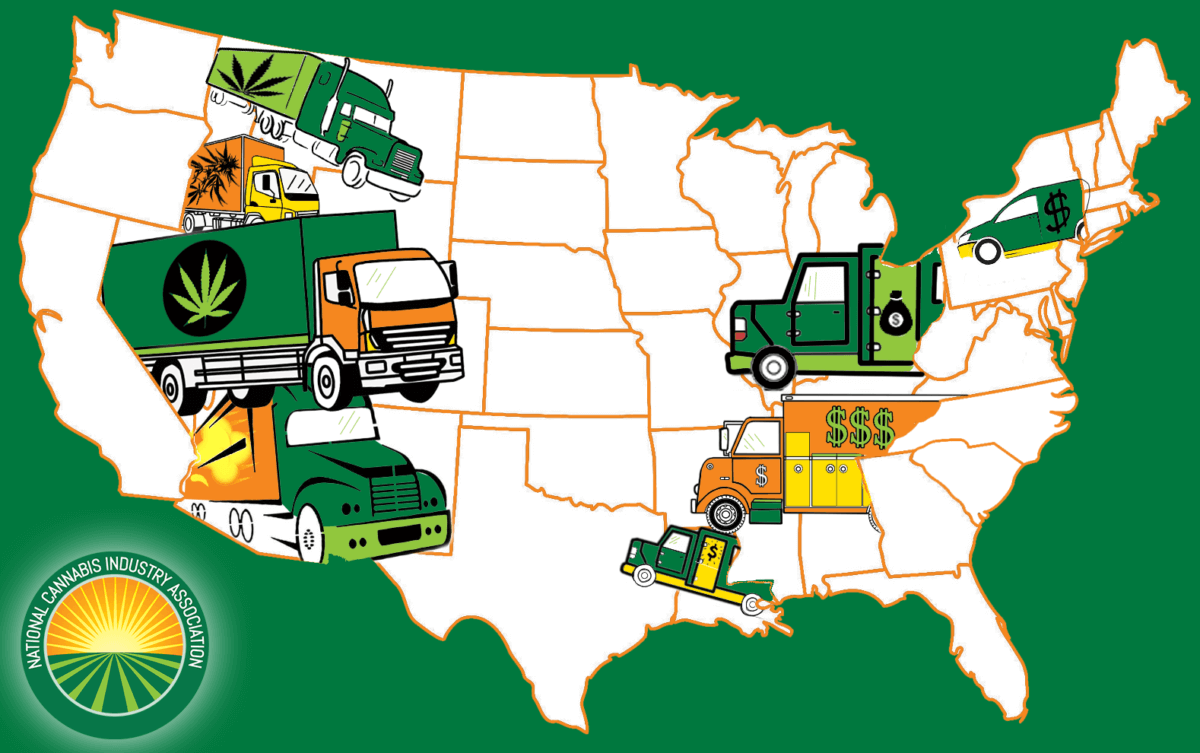
 by Mark Slaugh,

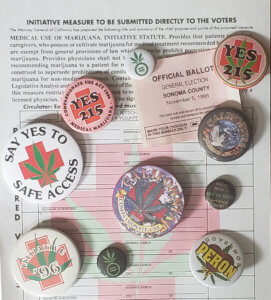
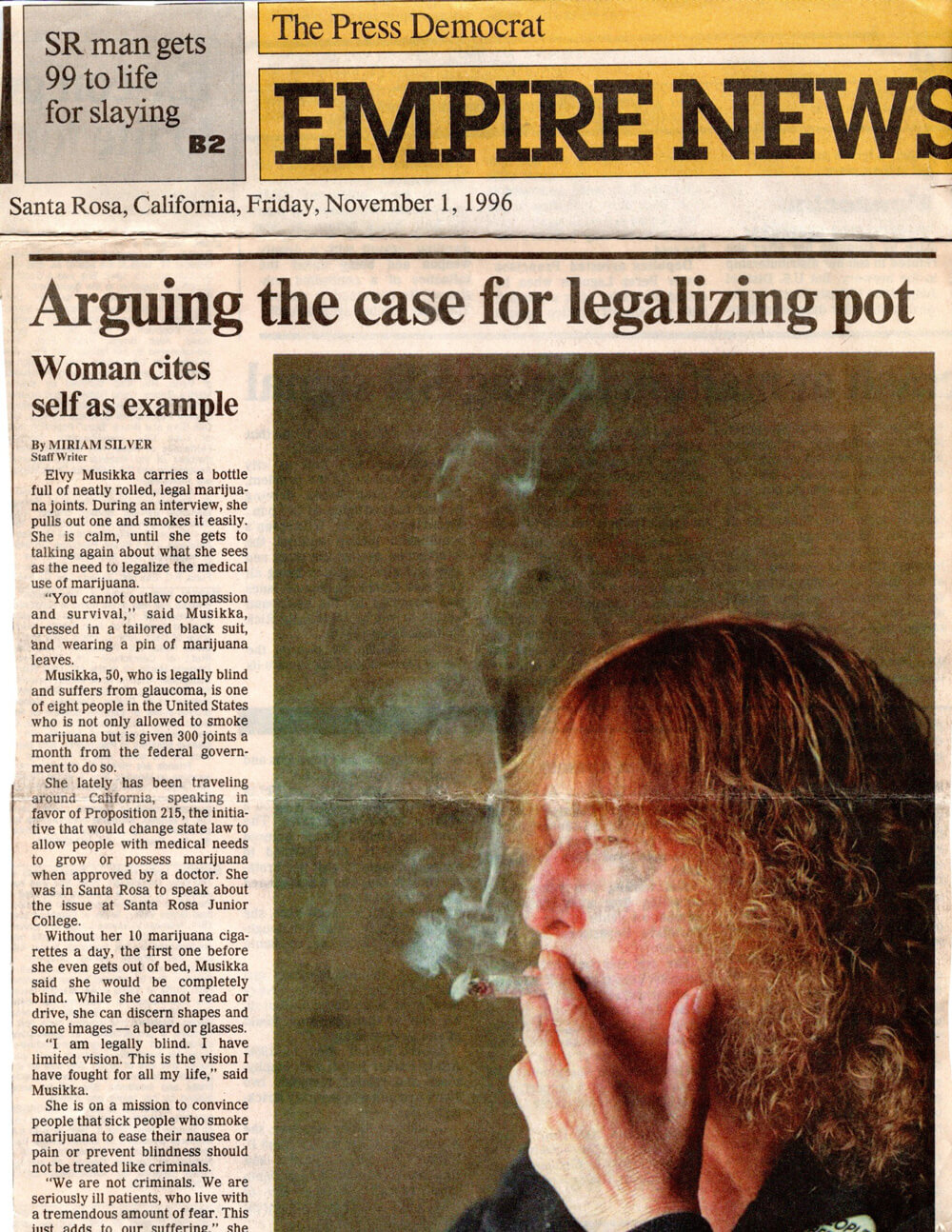 The cross and leaf image for the movement so effectively portrayed the topic, some of us, while gathering signatures, simply wore 11 x 8.5” signs with this image around our necks to gather attention of potential signers.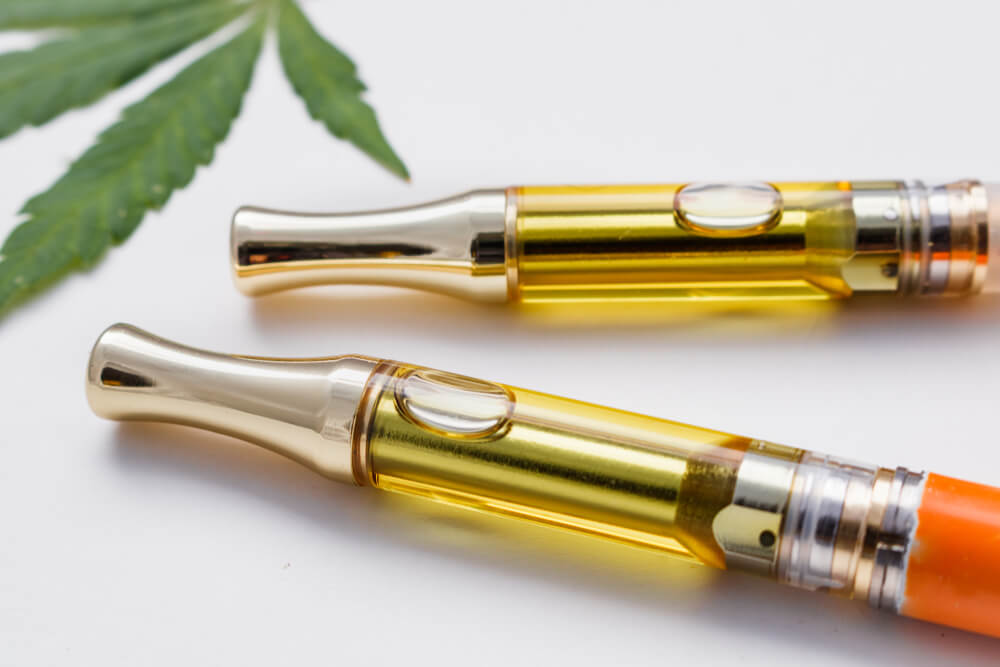
 By Rachel Kurtz-McAlaine, NCIA’s Deputy Director of Public Policy
 The most recent omnibus that passed into law in December 2020 included a small provision related to vaping devices that could potentially have big implications.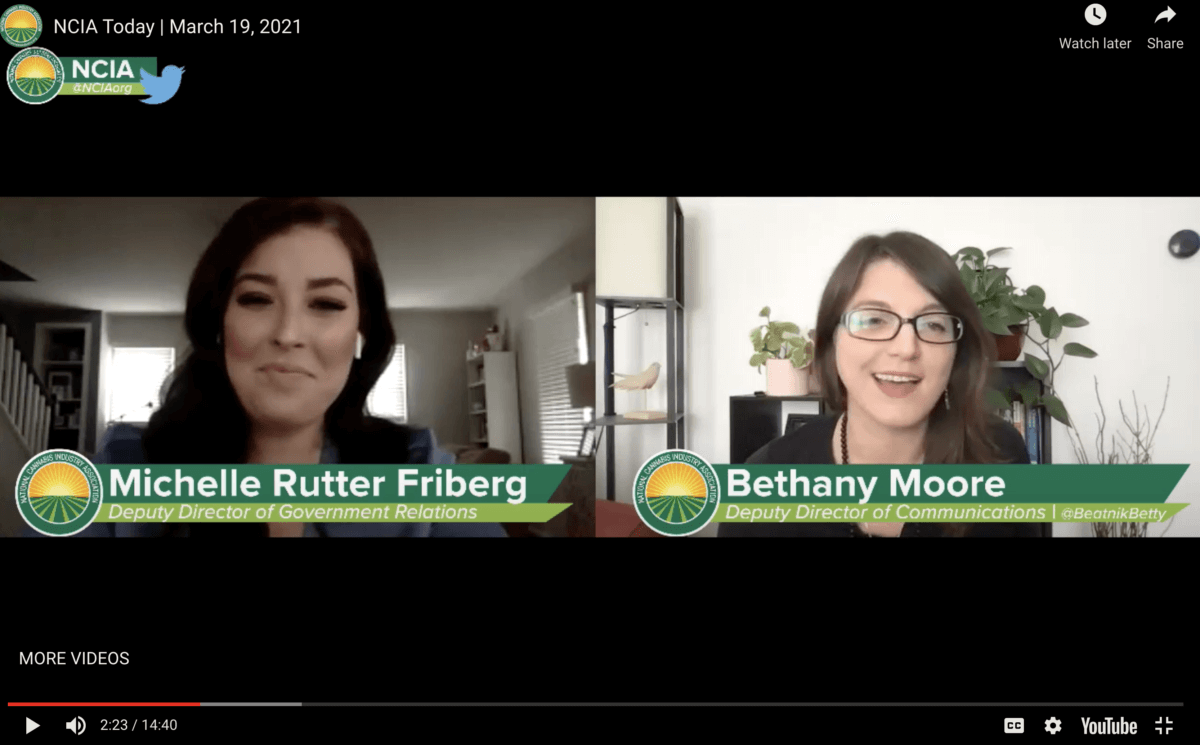
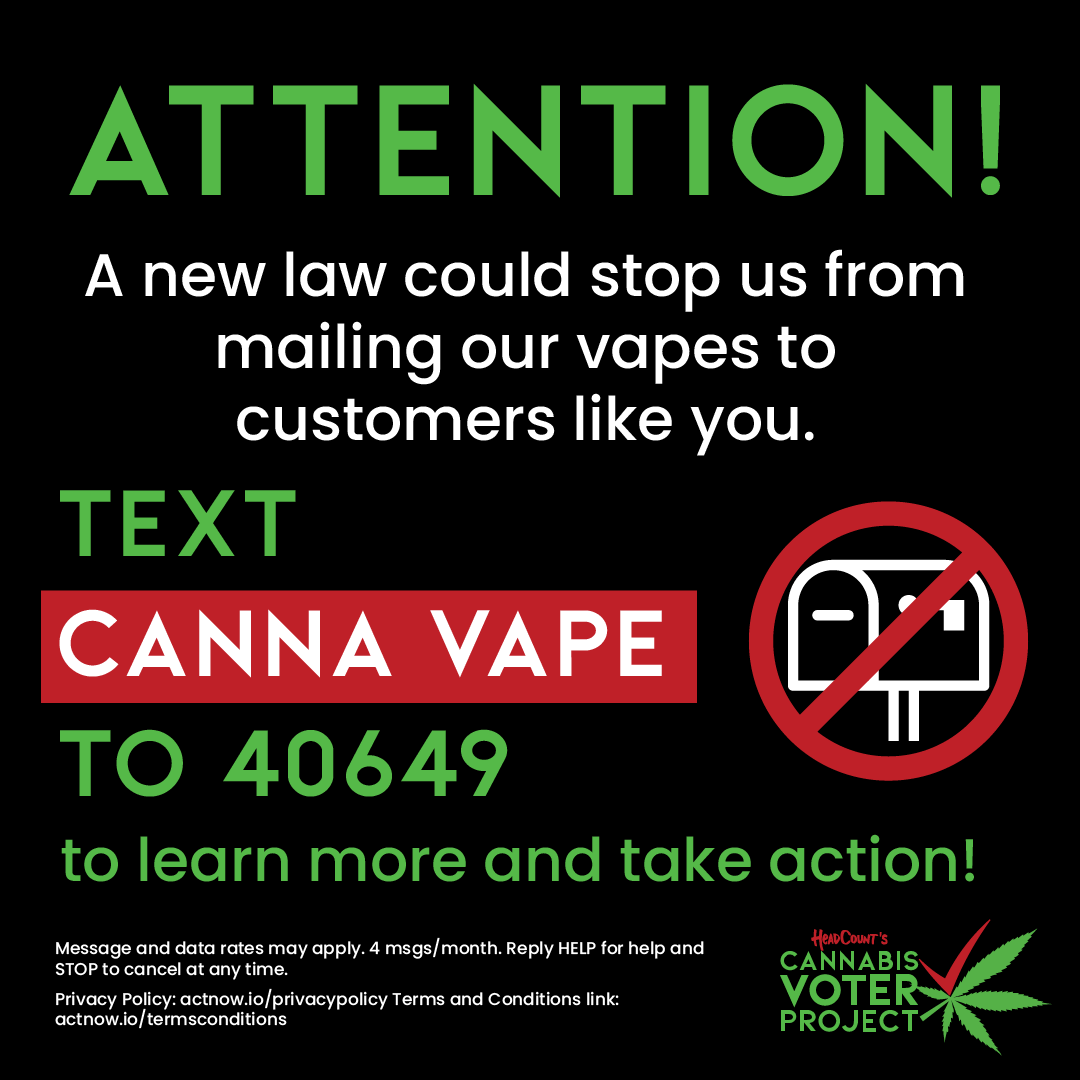

 Legislation to give legal marijuana businesses, which have been declared essential in a majority of states with regulated cannabis markets, access to resources being made available by congressional COVID-19 emergency response packages was introduced in the House of Representatives last week by Rep. Earl Blumenauer (D-OR) and Rep. Ed Perlmutter (D-CO).