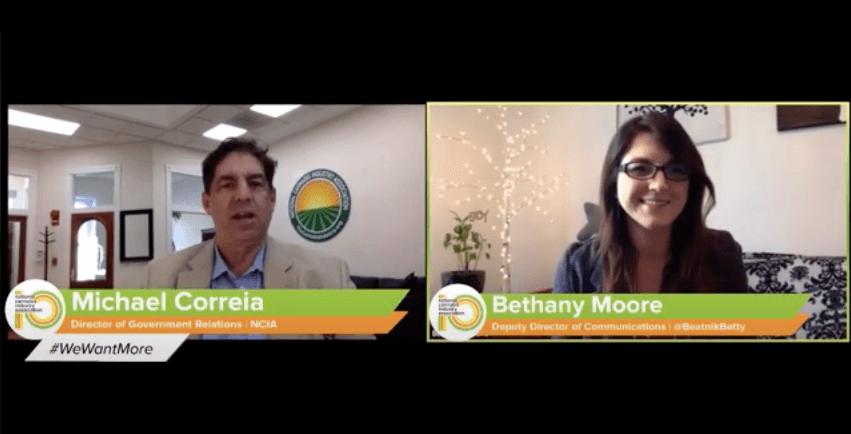
¡Happy Cinco De Mayo! NCIA Director of Communications Bethany Moore checks in with what’s going on across the country with the National Cannabis Industry Association’s membership, board, allies, and staff. Join us every other Thursday on Facebook for NCIA Today Live.
Disposable gloves are standard issue for the medical, food, and yes – cannabis industry. But thanks to COVID and subsequent disruptions in the supply chain, the market for procuring disposable gloves has gone from routine to challenging. In fact, the demand for quality disposable gloves has skyrocketed, more than doubling since the global pandemic’s arrival, thereby creating an unpredictable cycle of availability. Demand for single-use gloves is expected to continue increasing in the coming years, as the health and safety of workforces across multiple industries – including medical, food, and cannabis-related operations – are required and dependent upon their usage.
Let’s examine the factors that have made disposable gloves both scarce… and pricey, as of late.
Global Glove Origination
Approximately 99% of all disposable gloves are manufactured in southeast Asia, most notably Malaysia and Thailand. But for these regions, compared to the U.S., lockdown to prevent the spread of COVID infections has a much more literal meaning. The restricted movement, as well as outbreaks, led to output at 60% of its normal capacity. In addition, most experts agree that there’s clearly a shortage of workers – many of whom were immigrants affected by travel restrictions. It’s estimated that an additional 25,000 workers are needed to restore full production capacity.
Supply and Demand
As the demand for disposable gloves increased globally, it put added stress on manufacturers and the supply of raw materials, driving up prices tenfold compared to pre-COVID levels. Though glove costs have recently dropped, prices have not reached pre-COVID levels.
Cost of Gas
The raw materials of nitrile gloves are primarily petrochemical based, subject to the volatile price swings in the oil and gas industry. Combined with the tenfold increase in shipping costs, disposable glove prices are not likely to continue dropping.
Labor Violations
In the midst of this price spike, one of the top importers, Malaysia’s Top Glove, the world’s largest glove producer, was banned from importing gloves to the U.S. from July 2020 to September 2021, due to conclusive evidence of forced labor. However, this ban did not extend to other countries.
Knockoffs
When the pandemic nearly doubled the demand for disposable gloves and other PPE components, several new manufacturers with little to no industry experience, assisted by dealers with nothing more than a financial incentive, flooded the market with cheap, counterfeit, and reject-quality gloves. Spotting these unscrupulous suppliers can be done by looking for a few common signs, as they’re often given away by their offering of discount or wholesale pricing, especially in bulk. It’s estimated that the market has already absorbed an influx of gloves of a defective and dangerous quality.
Safeguarding Your Operation
Currently, poor quality gloves continue to flood the disposable-use market. In business, it’s human nature to seek the lowest price for inventory, but saving a little now may cost you dearly on the backend. Cost is obviously important, but consistent quality will keep you from having to replace gloves that rip and tear too easily. When sourcing disposable gloves, seek reputable suppliers – those who have a clear ownership origin, quality web presence and active social media accounts. Taking it a step further, you can inquire about factory audits and HACCP compliance certifications. The cannabis industry has already dealt with at least one recall due to glove contamination. And recalls can have negative financial and brand ramifications. Lastly, always remember when dealing with a new vendor – you can conduct your own product trial before ordering.
Steve Ardagh, “The Glove Guy,” is the founder and CEO of Eagle Protect, a disposable glove supplier dedicated to the responsible sourcing of quality products that ensure customer safety and impact reduction, ultimately mitigating customers’ risk. Eagle Protect is the only global PPE supplier that is a Certified B Corporation, a designation that a business has met the highest standards of verified performance, accountability, and transparency. He can be reached at steve@eagleprotect.com.
Continuing Conversations on Capitol Hill
by Madeline Grant, NCIA’s Government Relations Manager
The National Cannabis Industry Association (NCIA) held its very first Virtual Mini Lobby Days with NCIA’s Evergreen Roundtable members. Before the pandemic and closure of our Nation’s Capital, the Government Relations team planned an in-person annual fly-in every spring, the Annual Cannabis Industry Lobby Days, for all NCIA members. For our first Virtual Mini Lobby Days, it was important to facilitate conversations between our Roundtable and Capitol Hill offices. The Evergreen membership tier is for leading businesses looking to make a meaningful investment in shaping policy for the cannabis industry. Evergreen members receive exclusive access to private briefings from members of Congress, inside information from NCIA’s government relations team, and many more opportunities to participate in the national conversation around cannabis policy.
Now more than ever we’ve seen more comprehensive legislation being introduced at the federal level, on both sides of the aisle, so we wanted to focus on meetings with our cannabis champions but also educate all congressional offices on Capitol Hill. We were able to meet with representatives, senators, committee staff, office staff, and much more. Evergreen members were able to share information, stories, and data to Hill offices.
The NCIA team, Monica Gray with Nice Guys Delivery, Khurshid Khoja with Greenbridge Corporate Counsel, and Christina Hollenback with The People’s Ecosystem meeting with Congressman Dave Joyce (OH-14), a co-chair of the Congressional Cannabis Caucus.
As we hopped on our zoom calls, our main focus was education. The Evergreen Roundtable was able to share stories from their personal experiences in the cannabis industry and directly relate these experiences to the importance of cannabis policy reform. The dichotomy around incremental versus comprehensive cannabis policy reform was a central focus in discussion. As around thirty meetings took place throughout the week, the Government Relations team and Evergreen Roundtable caught up with friends, gained valuable insight, and continued to educate Congress. We took this opportunity to show our support and gratitude for all the representatives and senators who constantly support cannabis policy reform. Furthermore, we educated congressional offices with data, testimonials, and research to highlight the necessity for cannabis policy reform at the federal level. There is no doubt that reform is needed for the cannabis community and NCIA will continue to be a resource to all congressional offices.
NCIA’s 9th Annual Cannabis Industry Lobby Days in 2019 May 21-23 2019.
As we monitor the full opening of Capitol Hill, stay tuned for updates regarding NCIA Lobby Days. The Government Relations team is looking forward to our next Mini Lobby Days later this year for all Evergreen members. If you’re interested in learning more or getting involved in our policy work please feel free to reach out to Madeline@TheCannabisIndustry.org.
Equity Member Spotlight: YS Cannabis Delivery Services
NCIA’s editorial department continues the Member Spotlight series by highlighting our Social Equity Scholarship Recipients as part of our Diversity, Equity, and Inclusion Program. Participants are gaining first-hand access to regulators in key markets to get insight on the industry, tips for raising capital, and advice on how to access and utilize data to ensure success in their businesses, along with all the other benefits available to NCIA members.
Tell us a bit about you, your background, and why you launched your company.
Originally from Ecuador, Yadira Elizabeth Silva Leon, I came to the United States when I was only 16 years of age. I graduated with honors from Sheridan High School and Arapahoe Community College in Colorado. Then I graduated from the American Intercontinental University online, with a BA in Business Administration. I own my construction clean-up company, officially named YS Construction Clean Up Services.
As a single mother of two and minority business owner, I started to become more involved in the world of cannabis after two separate accidents, leaving me with a damaged spine. Doctors prescribed medications and pills that began to damage my nervous system and I started to lose sensation in my legs, inhibiting me from taking care of my children. It was around this time that Colorado legalized cannabis, and after becoming legally accessible, I decided to take advantage of the medicinal benefits of cannabis to calm my pain. Cannabis inspired me to begin a new career in the cannabis industry. Serving people who are in pain by bringing their medicine in the comfort of their home in a timely fashion became an interest and passion of mine.
What unique value does your company offer to the cannabis industry?
The health and safety of our patients, customers, and employees is our top priority. We see the future where our company impacts the wellbeing of our drivers and the life of our planet. That is why YS Cannabis Delivery Services was created.
We specialize in transporting cannabis products business to business and business to customer. We also collect empty containers from customers to recycle properly, and return clean, disinfect, and sterile containers for businesses.
What is your goal for the greater good of cannabis?
Securing the life of carriers, and our environment. We are working on a new security system where we use AI (Artificial Intelligence) and VR (Virtual Reality) to deliver cannabis from business to business with efficiency and security. While we are expanding security to protect cannabis shippers and vehicles against prohibited intrusions, we are also making sure plastic containers get to the right place and be recycled properly.
What kind of challenges does the industry face, and what solutions would you like to see?
COVID-19 created many challenges for most industries, but the cannabis industry faced more threatening challenges such as violence and robbery. What we would like to see is the safety of cannabis employees become a priority. That is why we are looking into virtual reality as a security measure.
Why did you join NCIA? What’s the best or most important part about being a member through the Social Equity Scholarship Program?
I joined the National Cannabis Industry Association to collaborate in the development of my company at a national and international level. Because of NCIA, I was able to receive access to the resources my business needed to grow and thrive. I was able to speak with leaders, consultants, and other like-minded professionals.
Member Blog: 2022 Cannabis Supply Chain Concerns Demand Creative Solutions
If there was ever a year that we all learned the importance of the supply chain and its impact on our daily lives, 2021 was it. For anyone who somehow hasn’t realized the effect, take a look at grocery prices the next time you shop. The cost of dairy, produce, and countless other items all highlight a fragment of the ongoing concern across the supply chain.
Heading into 2022, just about every company is pondering a similar question: How do we mitigate current and potential challenges for the next decade?
How did we get here?
The pandemic shined a light on numerous glaring issues and failures in the current supply chain.
COVID-19 spotlighted an aging infrastructure in a way it had never been before. Life moved us all into the 21st century years ago. Yet, U.S. ports remained stuck behind using software better suited in a museum as a relic rather than a relied upon, integral component. Instead of being put out to pasture, we continue to rely on this tech to handle shipping volumes that fail to align with today’s demand. With outdated, turn-of-the-century software, ports could not address the volume of daily imports.
Compounding the issue are manufacturing and inventory programs with zero flexibility or ready-to-implement fail-safes in case of dire situations like the one we’re in today. Companies with non-redundant sites like single-sourced manufacturing for an entire global production perfectly highlight this problem.
Infrastructure is far from the only significant factor. The pandemic upended just about every forecast possible. Furniture and appliance demand surged as people stayed home. Hard goods and eCommerce helped fuel a packaging demand spike, further impacting aged tech at ports. Meanwhile, the auto sector is expected to plummet. But, demand surged while companies slashed manufacturing orders. Meanwhile, tech development is months behind as it attempts to update critical tech infrastructure and other supply chain components.
Over the past two decades, a race to the bottom on production prices led many to offshore manufacturing. Once considered a viable option is now a significant pain point as stability wanes and tariffs increase. Then there are material shortages that halt production. This predicament is well on display for any goods made using materials like paperboard, resin-based materials, dyes, and adhesives.
The pandemic certainly did much of the damage, but domestic factors worsened matters, like the South Texas winter storms in the United States. Adding to the goods strains is the consolidation of manufacturers, limiting supply options during crucial times. This underlying industry concern kneecapped numerous sectors operating with just a few producers.
However, the most significant impact is the shortage of people. The tragic loss of lives, mandatory isolation orders, and full-site shutdowns limited the people power needed to sustain the marketplace. From ports to factories to transportation, every facet of the chain continues to struggle with a lack of people.
What is the current state?
The current state of affairs presents critical concerns. Like the year before, companies must contend with concerns that are substantial enough on their own. When coupled together, they create historical challenges.
Labor shortages continue to affect production. The Omicron variant has been the latest problem, just as optimism returned to many workplaces and organizations. The workforce dearth has once again slowed or stopped progress. Expect delays even when labor returns to full force.
The circumstances leave us in a dire time. Inflation has run rampant, impacting labor, transportation, substrate, and countless other costs. While the times are tough, we can remedy the problems with the right frame of mind and proper implementation.
A World Not Without Hope
The ample amount of adversity offers its slivers of silver linings. One of the brightest bits of optimism is the versatility of options available. Just about anything could be viable.
Think dynamically. Listen, consider, forecast, and plan for the days and years ahead. Success lies within your team and customers. Consider all opinions when planning your next steps. Knowledge is vital to ensuring that these issues never happen again. With insights gathered, find the software, suppliers, and other needed components to make your supply chain thrive.
Now may be a good time to consider production closer to home. If impossible, make sure that your partners match timelines and production plan milestones before beginning any relationship. Sustainability is another concern that can’t be overlooked, even if it often comes at an additional cost. Its importance often clashes with sourcing consumers and other critical points mentioned here. That said, packaging can and must do what it can to reduce its carbon footprint—source from eco-conscious companies with options for recycled and/or recycled materials, alternative substrates, and other sustainable options whenever possible.
We should expect inflation to continue growing for some time despite substrate cost stabilization expected to help to a degree. As such, ask how prepared your company is for the challenges ahead. Evaluate every process component, from production to packaging to branding. Taking time to account for every possible hurdle ahead should best position your company to keep costs at a minimum while creating sustainable, consumer-friendly products that won’t get held up in ports and additional shipping lanes.
While times are tough, we can progress in the right direction. Now is the time to streamline the production process to develop customer-friendly products that puts sustainability into action. It’s a tall task, but creative thinking and proper implementation will work, benefitting us all in the process.
Elizabeth Corbett, VP of Sales for AE Global, is on a mission to build sustainable packaging & supply chain programs for cannabis and CBD companies which honor their brand identity, drive revenue growth, protect the product and do so cost effectively. “CannaBeth”, as she is fondly known, entered the cannabis industry more than eight years ago after spending the first part of her career developing packaging solutions for significant players in the retail and health & beauty markets such as Starbucks, Tiffany and Estee Lauder. Based in Seattle and Miami, Beth is passionate about finding environmentally responsible and sustainable solutions no matter what the form or substrate.
Member Blog: Business SMS Basics for Cannabis
by Matt Hostacky, Regional Sales Manager, Flex IP Solutions/Cannabiz Text
Text messaging is the next wave of communication to customers. 98% of all texts get received. 92% are read within 5 minutes. And 45% receive a response, and if you think that your customers want to engage their favorite businesses this way, you’d be correct. 85% of people polled want text message marketing from their favorite companies.
But how do you get started? How does it work? Are there technology requirements? Etc. Here are some of the common questions we get to help you navigate this great communication tool for your business.
What are the technology requirements? An internet connection and a computer with a web browser are all that is required for most systems.
We’re not tech-savvy, is the SMS system difficult to use or learn?No, most systems are very user friendly and intuitive. Most systems work through your web browser and can be set up and used in minutes with little more than a user guide.
Can I use my existing business phone number? Yes, most platforms support text enabling your 10 digit business number. This helps people recognize who the text is coming from and build brand awareness.
What are some of the common features of an SMS system? Series (drip campaigns), Surveys (polls), Time-Texts (schedule now, send later), Contact Segments (Tags or Identifiers), Compliance tools, Reports, and Keywords (Text “Vegas” for a chance to win a trip to Vegas). Above and beyond these key features you may want to consider having 2-way chat and/or automations capabilities for your business to help answer any questions your patrons may have.
Who can I market to? Existing customers or those that have “opted-in” in some way to receive your promotions and communications. You may have new prospects or customers text a keyword to get opted in for example. However, if you acquire a list of telephone numbers for outbound communications they are considered SPAM under the TCPA and CAN-SPAM acts and you should not message these numbers.
Do I need to stay compliant?And how? Yes. Most systems (or at least the good ones) have some form of compliance automation and tracking to help keep you covered. At a bare minimum you need to have a “please reply stop to opt-out” message in each outbound marketing message.
What are the costs associated with an SMS marketing system? This is probably the hardest thing to compare apples to apples. Typically, an SMS system is a monthly charge either per text or as a package of texts. Some systems lockdown certain features and charge extra for them a’ la carte. Other systems are part of a CRM or POS system and either charge per text or a fee to unlock that feature.
What should my business have in advance of getting started with an SMS system?
1) Make sure you’re collecting phone numbers from your customers today.
2) Have a marketing disclosure statement that customers sign either electronically or physically so you are legally allowed to market to them.
3) Have said customers and phone numbers in or able to be exported to an excel or .csv file so you can upload them as contacts.
4) Have a plan. Don’t just set up a system and start sending texts. Understand why you want to text, how you will text your customers, and what you will be texting your customers.
Compliance
So why is compliance so important? We’ve all received annoying texts we didn’t ask for letting us know we’ve won a cruise or there is a sale on cheap erectile function pills. The FCC and Mobile carriers are already working to put more measures in place to mitigate the number of robo-texts and SPAM that is being sent. This is called 10DLC Campaign Registry. 10DLC Campaign Registry is too much to cover in this blog but you can find out more here 10DLC Campaign Registry.
If you’re soliciting anything to your existing customer base you must have consent, see the TCPA and CAN-SPAM acts. The best practice for this is what is called a “double opt-in”. A double opt-in is having the customers’ consent twice. The first form of consent is typically in some marketing waiver that is signed or checked during the buying process, it’s no different than getting consent to call or email promotions. The second opt-in is during the texting process. Typically, the first text received will have a message that asks the customer to reply “YES” to continue to receive texts. You usually see this with keywords that ask the person to text a word to a specific number, when that happens an automated message will then ask the person to reply with “YES” to continue to receive messages.
Another form of compliance is opting out. You must always have a “please reply “STOP” to stop receiving texts…” message in your messages. The first question you should ask about any SMS/texting solution is if this is built into it, meaning if someone replies back with STOP at any time, does it remove them from your marketing list even if you don’t have the wording in the text? If the answer is no, it’s not a system you want to use. Once again the TCPA and CAN-SPAM acts mandate that you give the consumer a way to opt-out of receiving messages from your business. And you’ll want a system that captures and can report on this as well.
Something to understand is that certain things are still illegal to promote via text, i.e cannabis. Mobile carriers (the companies that transport the SMS messages) like ATT, TMobile, and Verizon have filters that are looking for hot button or trigger words. So words like cannabis, marijuana, weed, edibles, and ganja are going to get flagged. This doesn’t mean that you can’t still use text message platforms. It just means that instead being obvious about what you text out you become a little more vague. Your customers will still know there is a sale on edibles if you say something like “2 for $20 on ABC brand yummy treats this week”.
Compliance doesn’t have to be all doom and gloom. Make it fun. The most successful businesses do an initial promotion or giveaway to get folks to opt-in to their text marketing. Another great tip is to put your business’ name at the front of the text with a colon so everyone knows who the text is coming from. i.e. ACME: Acme widgets on sale this week 20% off! Remember your customers want to hear from you, they want to stay informed of any new products or promotions… that’s why they’re your customers. They just don’t want to be bombarded with SPAM on their personal devices at all hours. So be courteous and make sure the number of text promotions is not too much and are being delivered at appropriate times.
Additional Use Cases
By now most folks are aware of the two most prominent use cases for business texting, 1) marketing and 2) appointment reminders. But there is a wide world of other use cases for texting that you may not have even thought about. And these use cases can help separate your business from others by delivering a “wow” customer experience.
Customer Service
Instead of phone calls, why not answer questions about your product or service using texts? The advantages of using text for customer service are:
Customers don’t have to wait on hold for the next agent
There is always a record for that customer to refer to
Your employees can handle multiple chats at one time unlike voice calls
You can automate answers to the most frequently asked questions.
Sales
Yes, this is different from marketing because marketing is one-way. With two-way texting you can interact with your customers the same as you would in-person or via a phone. Your sales force can provide the presales support that your customers expect but with the convenience of a text or picture message.
Delivery Notices
If you’re in the business of deliveries or in-home service these are a must for a great customer experience. Send pictures of your delivery driver in advance. Let your customers know when their package will be or has been delivered.
Alerts
During the COVID-19 lockdown, almost every business’ processes changed. Masks needed to be worn, social distancing observed, and a lot of businesses went to calling or texting when a customer or patient could be seen. The businesses that had an SMS platform ready to go didn’t miss a beat. There were signs like “Text our main number to let us know you’ve arrived” for things like veterinarian offices, healthcare, retail stores, and restaurants.
Business SMS is still relatively new, but the use cases continue to grow. Communication has moved to a person’s mobile device now and we don’t check or pay attention to email like we used to. People expect real-time alerts and notifications on their phones. Leveraging business SMS in multiple ways can provide a memorable customer experience to your patrons which will, in turn, create repeat customers.
Matt Hostacky, Regional Sales Manager, Flex IP Solutions/Cannabiz Text
Matt Hostacky, an IT and telecommunications industry veteran, takes a consultative approach to solve real-world business challenges with technology solutions. He serves as Regional Sales Manager for FlexIP Solutions Inc., a provider of managed communications services customized for businesses of all sizes and optimized for best value and performance. Hostacky advises customers on communications and collaboration strategies that leverage solutions, such as Cloud PBX, Unified Communications as a Service, Contact Center as a Service, Collaboration as a Service, SIP Trunking, Secure SD-WAN, Business Continuity and Disaster Recovery, and Business Text Messaging.
A Full Plate For Congress – Status Update for SAFE Banking, MORE Act, CAOA, and Veterans
Photo By CannabisCamera.com
by Michelle Rutter Friberg, NCIA’s Deputy Director of Government Relations
I’m not sure if you’ve seen the news, but Congress has had a lot on its plate recently: negotiations over infrastructure, the budget, the debt ceiling, reconciliation, not to mention the ongoing COVID-19 pandemic! And while the path to cannabis reform has been slightly overshadowed by some of these larger issues, for the time being, the NCIA team is continuing to work tirelessly and incessantly on your behalf to enact legislation that would help you and your business. Let’s take a look at some of the more recent developments from Washington, D.C:
SAFE Banking:
Last month, the House passed the language of the SAFE Banking Act for the fifth time via the must-pass National Defense Authorization Act (NDAA). NCIA and our allies on Capitol Hill are always trying to be creative and come up with new, different avenues to advance our policy priorities, and the NDAA was a great opportunity that we were able to take advantage of! NCIA will continue to work with members of the Senate Armed Services Committeeand other stakeholders to push for the SAFE Banking Act to be included in the final bill language. Stay tuned as the NDAA process unfolds throughout the remainder of autumn.
The MORE Act:
Also last month, the House Judiciary Committee passed the MORE Act out of committee by a vote of 26-15 but the bill still has a long journey ahead of it. It’s unlikely that committees like Ways and Means and Energy and Commerce will waive their jurisdiction again, and it’s critical to remember that the chamber actually became slightly more conservative following the 2020 election. Committee schedules are jam-packed right now, however, we continue to meet with those with jurisdiction over the MORE Act and encourage them to take up this important piece of legislation.
CAOA:
The discussion draft of the Cannabis Administration and Opportunity Act (CAOA) was unveiled back in July by Senate Majority Leader Schumer (D-NY), Finance Committee Chairman Ron Wyden (D-OR) and Sen. Cory Booker (D-NJ). In the following month, NCIA worked diligently with our Evergreen Roundtable, board, committees, social equity scholarship members, and others to provide detailed feedback on various topics as requested by the Senators. NCIA continues to be a resource for the Sponsoring Offices and committees of jurisdiction, however, official bill introduction likely won’t happen until early-2022.
Veterans:
Last week, the House Veterans Affairs Committee: Subcommittee on Health held a hearing on a number of bills; among them H.R. 2916, the VA Cannabis Research Act of 2021. While this bill is not a piece of NCIA priority legislation, we applaud the committee, longtime sponsor and ally Congressman Correa (D-CA), and their teams for discussing this important topic. Of note is testimony from Dr. David Carroll, Executive Director at the Office of Mental Health and Suicide Prevention at the Department of Veterans Affairs (VA). His testimony is only about a page long, but the gist is that the VA does not support this bill. I’d also like to highlight the statement Rep. Correa submitted for the record, which you can find here.
Even though Capitol Hill’s bandwidth is stretched, NCIA will continue our work in Washington, D.C. to get these (and other) cannabis provisions enacted into law. Have questions or thoughts? Find me over on NCIA Connect!
Video: NCIA Today – October 1, 2021
NCIA Deputy Director of Communications Bethany Moore checks in with what’s going on across the country with the National Cannabis Industry Association’s membership, board, allies, and staff. Join us every Friday here on Facebook for NCIA Today Live.
Video: NCIA Today – September 17, 2021
NCIA Deputy Director of Communications Bethany Moore checks in with what’s going on across the country with the National Cannabis Industry Association’s membership, board, allies, and staff. Join us every Friday here on Facebook for NCIA Today Live.
Video: NCIA Today – September 10, 2021
NCIA Deputy Director of Communications Bethany Moore checks in with what’s going on across the country with the National Cannabis Industry Association’s membership, board, allies, and staff. Join us every Friday on Facebook for NCIA Today Live.
Committee Blog: Managing Your Workforce During Fall Harvest
It’s that time of year again, the busy fall harvest season. While indoor growers can harvest year-round, the fall can create significant workforce challenges, especially for outdoor producers and processors. Here are three tips to make sure you are ready to go for the fall harvest!
Plan ahead! If you have not already thought through your fall harvest plan, you will want to figure this out immediately. Most cannabis companies need additional workers during harvest season, unless their grow schedule is structured where they are harvesting on a regular basis, depending mostly – if not entirely – on their permanent employees for harvesting, de-leafing, trimming, etc. However, given the increased demand for workers by outdoor growers, even in a normal year, the demand for labor often exceeds the supply, placing added pressure on anyone competing for this talent.
Every fall we receive a rash of calls from producers, who failed to plan ahead, requesting workers that same week, if not the same day. Unfortunately, by this time, nearly all the available labor, especially those with experience and skill, have already been scheduled and committed elsewhere. In rare cases, staffing companies might be able to provide workers if they had another client in the area back out, at the last minute due to a heavily damaged crop or not being ready for harvest at the time they originally projected, however, cannabis growers shouldn’t count on this. A good rule of thumb is to provide at least 2-3 weeks’ notice, minimum, to request your harvest crews during the fall, and the further in advance the better. Many cannabis companies that have struggled in the past with worker shortages during the fall have started locking in their fall staffing as early as spring.
COVID-19 has created an even more significant labor shortage. Before 2020, we saw thousands of workers coming into the United States from other countries to take their ‘vacations’ working on unregulated market farms doing harvest work and trimming and getting paid cash. Due to COVID-19 travel restrictions keeping much of this seasonal labor out of the U.S., the regulated and unregulated market were increasingly forced to compete for the same domestic talent with the unregulated market often winning this battle as they were paying tax-free cash at higher wages, given their relatively lower costs compared to the regulated market. Thus, many cannabis companies ran into situations last year where, unless they were able to pay premium rates for harvest workers, their in-house staff were forced to work a ton of overtime to make up for the shortfall. We hope that in 2021 this won’t be the case, however with COVID-19 numbers rising again, this is something that cannabis companies should plan and budget for just in case.
If your cannabis operations are relatively remote or not within an easily commutable distance from a large population center, you may need to go the extra mile to make it easier for workers and staffing companies to assist you. If nothing else it is essential to take an inventory of nearby resources and be prepared to communicate them easily. For example, if you can’t provide lodging to your seasonal workers, you will want to create a list of local hotels/motels, RV Parks, and campgrounds that offer services. Many of these workers are accustomed to traveling from site to site in RV’s, camping, etc. Create a list of grocery stores, gas stations, and other retail establishments the crews may need to access. If there aren’t any lodging options close to your farm, and you have the means, you might want to consider buying some land nearby and building some basic lodging. We have even seen some cannabis companies open a cafe or restaurant close to their farm when there weren’t any good or healthy options in the area so that workers would have a place to go on their lunch breaks or after work. The more of a positive experience you can provide to these workers, even though they are seasonal, the better. Production will typically be quicker, you may gain a customer and even an ambassador for your product, and that worker may be excited to return for years to come, which will keep you from having to deal with some of the labor shortage issues other producers struggle with.
Have a contingency plan. Many of you already know this, but you should always have a plan B and plan C, maybe even a plan D. 2020 and 21 have definitely been years of fires, hot temperatures, and floods. If air quality is deemed especially poor in your area, due to smoke, many harvest workers won’t be able to work outdoors as worker’s compensation policies won’t cover workers laboring in such conditions and few people will want to. We’ve also noticed an uptick in state governments coming out with restrictions and safety guidelines during times of poor air quality or extreme heat. If you’re in an area that has a fire season, you’ll want to have a plan for workers during this time. Perhaps you will need to have them work indoors when the air quality is poor, focusing on things like bucking, trimming, and packaging; then back outside to continue the harvest when conditions allow.
Given the increase in COVID-19 cases, you’ll definitely want to have SOPs and contingency plans in place in the event your crew is exposed to COVID-19. To be proactive, you should also take precautions to protect workers from exposure before it occurs including having masks and hand sanitizer supplies on hand in abundance. Contingency plans could include having a partnership with a staffing firm to provide workers for your fall harvest or offering overtime and bonus incentives for your regular workers to pick up the slack, if necessary. If you’re working with a staffing company, most crews of harvest workers will have a team lead who is there to assist with any HR-related issues that might come up (i.e., sick workers, injury, etc.). However, if for some reason there is not a team lead assigned for your crew, you’ll want to make sure that the workers have a point of contact at your company for any HR-related issues that come up.
Last but not least, if you’re looking for great, experienced harvest talent, especially when it comes to trimming, you will need to budget for the kind of talent you want. With the most talented crews, you’ll likely need to pay some form of a retainer upfront as many of them have trimmed more seasons than adult-use has been around and have not always been paid for their work. Last year, we typically saw trimmers making $15-$25/hour. This was before bonuses. Companies who want to incentivize things like speed and quality increasingly offer bonuses for the quantity and quality of output. This has resulted in the best workers making nearly $50/hour!
The Godmother of Cannabis Industry Recruiting, Kara Bradford, MBA, MM, is Co-Founder & CEO of Viridian Staffing. Founded in 2013 as the first professional, full-service staffing, recruiting & HR consulting firm in the Cannabis industry, Viridian Staffing has led the way in providing temporary, temp to hire, direct placement & HR outsourcing services. Kara has been an HR professional, specializing in Talent Acquisition, Talent Management, Workforce Planning, Employer Branding, Compliance, Federal/State Employment Laws, and Organizational Design for over 15 years. Her career has spanned multiple Fortune 100 companies & start-ups in a wide variety of industries. More importantly, she has more experience recruiting in the cannabis industry than any other Recruiter globally. Kara has an MBA in Human Resources & Organizational Behavior and is LinkedIn Recruiter Certified. Kara is active in many organizations, including NCIA, The Cannabis Alliance, Women of Weed, etc., and was the Founding Chair of the NCIA’s Human Resources Committee.
Committee Blog: Successful Retail Outcomes of SAFE Banking
By NCIA’s Retail Committee
Have you ever wondered where or how a cannabis retail business banks? You should know that it’s complicated because of federal prohibition. So what do you do? Some are finding workarounds and loopholes, others are able to obtain services with smaller financial institutions for exorbitant costs, while many others struggle to maintain an expensive, risky, and dangerous cash-only ecosystem.
The 2020 elections set the creation of four new regulated state cannabis markets in motion, and four more state legislatures followed suit in the first half of 2021, making the last year arguably one of the most consequential and momentous periods for the cannabis industry and policy reform.
However, cannabis is still illegal at the federal level, classified as a Schedule I substance under the Controlled Substances Act, despite state-level regulated cannabis markets in more than half the country. This prevents banks from doing business with cannabis companies because of fear of prosecution or reputational risk, as these businesses aren’t viewed as legal under outdated federal laws.
The cannabis industry is optimistic about the future, though, thanks to an increasing interest in cannabis, public safety, and economic development in Congress. Lawmakers in both chambers are actively debating comprehensive legislation to remove cannabis from the schedule of controlled substances and regulate it federally while repairing some of the harms caused by prohibition, but there are also incremental reforms in play that have a track record of success in the House as well as bipartisan support. Chief among them is the Secure and Fair Enforcement (SAFE) Banking Act, which would provide safe harbor for financial institutions that wish to work with state-legal cannabis businesses and allow them to provide services to the industry without fear of prosecution. This legislation originally passed the House in 2019 and was the first piece of standalone cannabis policy reform legislation ever to receive a vote or be approved by a full chamber vote.
Since then, cannabis banking has been approved in the House three more times in various forms, mostly recently when it passed the SAFE Banking Act again – and with record bipartisan support – earlier this year. The bill is now awaiting consideration in the Senate, but has yet to be taken up by the Senate Banking Committee.
So, what does the SAFE Banking Act mean for retail cannabis businesses?
Loans, capital markets, and credit card processing are common interests for cannabis companies. Access to traditional lending is particularly important for small businesses that usually lack connections to angel investors and venture capital. However, some of the benefits of this legislation are of special interest to cannabis retailers. Check out what some of the Retail Committee members are considering to be important aspects of broadened access to banking and financial services:
Safety
“As a retail cannabis business operator, safety is of our top priorities as it directly affects our staff, our patrons, and our bottom line,” said Larina Scofield, director of retail operations at Lucy Sky Cannabis Boutique dispensary chain in Colorado and vice-chair of NCIA’s Retail Committee. “We are required to operate as a predominantly cash business in a high-risk industry that can sometimes lead to criminal targeting; this can put not only our business at risk but also the potential individuals on-site if a targeted crime were to take place.
“There is also no doubt that operating a cannabis business is costly, due in part to the fact that we do not receive the same benefits and protections that other businesses have; cannabis companies are also subject to higher fees in order to get similar services, if those services are available at all. Lucy Sky is fortunate enough to have banking and armored services, as well as a cashless ATM service to allow for safer money handling, but this does not come without a price… a high price. Our company pays top dollar every year in order to have banking and secured payment delivery (something that is not seen in traditional businesses), in order to provide safety for our business and to the individuals who frequent our facilities.
“SAFE Banking would mitigate that and allow for retail cannabis companies to operate without having to “constantly look over their shoulders” so to speak. It would provide an enormous sense of security in an already high-risk business, it would allow for small business owners to receive proper funding to allow for safer operations, and it is truly crucial in the progression of the industry as a whole.”
Less Cash on Premise
“Less cash during COVID-19 is always a plus. The goal is to limit contact, and we all know cash is constantly being passed from person to person. There are plenty of studies highlighting how many germs really are on physical cash. Researchers found plenty of questionable microbes on $1 bills in a more recent study. In a world where we are all concerned about our physical health, the time is now to reduce physical cash in cannabis businesses. Or at least, give people the choice to go cashless if they want to. Let’s also not forget the security benefits of carrying less cash on the premises”, said Byron Bogaard, CEO of Highway 33, a cannabis dispensary in Crows Landing, California, and chairperson of NCIA’s Retail Committee.
Contactless Delivery for Retail
“Golden State Greens had a spike in deliveries during the COVID pandemic but were still forced to collect cash and signatures from customers. When online orders can process card transactions we can make a true contactless delivery where both payment and signature are managed from the customer’s device. This will increase the safety of our drivers by maintaining safe distancing practices and allow new types of deliveries to drop boxes or to customers’ homes similar to Amazon,” said Gary Strahle, chief growth officer for California dispensary Golden State Greens.
Beyond these major issues, there are a number of potential outcomes that could impact retailers as well.
Revamping the relationship between cannabis businesses and banks will likely trigger higher competition for banking services, resulting in lower fees. This would clearly benefit small businesses but could also have an impact on the frequency and nature of mergers and acquisitions in the cannabis space.
Regulatory frameworks will certainly change, and outstanding litigations will most definitely become more complex. Chargebacks from credit transactions will be a constant problem, due to the level of surveillance and data collection they will more easily be disputed.
Better access to banking also positions technology companies for success, as there will be a high demand for mobile wallets, online ordering, and automatic recurring memberships. We can’t predict everything, and there might be more hurdles to cross than we realize, but the technologically-agile retailer may benefit most. Studies show that most of the Top Fortune 500 Companies use software platforms such as Salesforceto manage their enterprise, however many of the canna-specific solutions are missing much of the integration and scalability needed to immediately handle broadly increased access to the banking system.
Speak your voice.
The SAFE Banking Act is critical to the cannabis industry’s success, and your voice will tip the scales. Reach out to your members of Congress, especially your Senators, and tell them what safe banking means to you as a cannabis retailer. Remember, policy needs to support logic over emotion. Emotions are important, but remind Senators of the logic behind implementing safe banking solutions for cannabis businesses:
Reducing the risk of robbery & theft with less cash on the premises
Supporting the demand cannabis businesses receive, which in turn supports the local and national economy and helps minimize the unregulated market
Reduce pathogen transmission by limiting physical cash transaction
If your senator already supports the SAFE Banking Act, please politely ask them to prioritize this legislation in the current session.
Member Blog: “Food Safe” Gloves Cause Cannabis Recall
A pesticide-free cannabis producer and processor from Washington was recently forced to issue a recall after the chemical o-Phenylphenol (OPP), traced back to their “food safe” gloves, was found on its products. OPP, listed under California Proposition 65 as a chemical known to cause cancer, was found in the food-safe gloves they were using to handle their crop.
In a statement announcing the recall, the company said, “Nothing ruins your day like testing your product, confident it will be clean, only to find it contaminated with some crazy, toxic chemical. The gloves were the last thing we tested, we just never imagined something sold as food safe could transfer such nastiness. The discovery was just the beginning… recalls are costly in more ways than one.”
Why “food safe” gloves can cause a recall
After initial approval, non-sterile FDA compliant food grade gloves are not subject to ongoing controls to ensure the reliability and consistency of raw material ingredients or quality processes during manufacturing. Opportunity exists for glove manufacturers to use cheap raw materials which lower glove durability and can introduce toxic compounds, which can transfer not only to products handled but also to glove users.
Demand for lower costs from the end-user pressures glove manufacturers to sacrifice quality, and substitute other compounds to meet these demands. This can include increased levels of cyanide, fungicides, inexpensive phthalate plasticizers, or others on the Prop. 65 list of chemicals known to cause cancer.
Steve Ardagh, CEO of Eagle Protect, a specialist glove supplier explains, “People assume ‘food grade’ gloves are clean and toxin free, but that’s not necessarily the case. The actual FDA Compliance does not even require gloves to be tested clean or sanitary which surprises most people. Having tested 25 different brands of gloves, we’ve found everything from feces, fungicides, Staphylococcus, yeast, and mold,” says Ardagh, “due to putrid water sources and unhygienic manufacturing conditions.”
Recalls & brand reputational damage
Single-use gloves, even those FDA compliant, can be a risk to product recalls and brand reputation. Peer-reviewed scientific studies have identified harmful toxins and contaminants in and on single-use gloves. These “food handling” gloves pose risks for companies producing consumer products, especially in industries such as organics and cannabis whose products must be clean if tested.
Staff & consumer risks
In addition, staff wearing contaminated gloves are at risk of absorbing toxins, as are the consumers of products contaminated by gloves. The contaminants have often been identified as causing cancer, and reproductive and hormonal damage.
Mitigating glove contamination risks
Gloves are often purchased with little thought or foresight into their risks. Cost is commonly the determining factor in their procurement decision-making. However, sourcing gloves from established companies who partner directly with glove manufacturers to ensure consistent quality is essential for all cannabis companies. Gloves may seem trivial, but can cause fines up to $200,000, put consumers and staff at risk, and damage brand reputation.
This is especially important currently in the post-COVID world as the glove market is being flooded with counterfeit and reject quality gloves. The new glove suppliers, traders, and brokers who came into the COVID PPE space with little or no experience, with an intention to simply trade and make quick money, are now bailing out of their poor quality junk gloves and dumping them into the U.S. market. Consider the following before purchasing gloves:
Is your glove supplier reputable, with a long history of glove sourcing direct from the manufacturer and proven quality control processes in place?
Can your glove supplier ensure your glove quality is consistently high through documented factory audits, HACCP compliance certifications and quality processes?
Have you undergone a commercial trial of products prior to committing to purchasing to ensure glove quality is consistently high?
After establishing Eagle Protect as an industry leader in New Zealand, where the company supplies approximately 80% of the primary food processing industry, Steve Ardagh relocated with his family to the U.S. in January 2016 and launched Eagle Protect PBC. Steve brought with him Eagle’s values of providing products that are certified food safe, ethically sourced and environmentally better. Steve is driven to keep consumers safe, one high-quality disposable glove at a time, and has been instrumental in developing Eagle’s proprietary third-party Fingerprint Glove Analysis glove testing program.
Eagle Protect, the world’s only glove and PPE supplier to be a Certified B Corporation®. Eagle Protect supplies disposable gloves and protective clothing to the food processing, food service, cannabis, medical and dentistry sectors in both the U.S. and New Zealand.
Eagle is implementing a proprietary third-party glove analysis to ensure a range of their gloves are of consistent high-quality, and free from harmful contaminants, toxins, and pathogens.
Committee Blog: ‘Corporate to Cannabis Crossover’ – An Interview with Portland’s Cannabis Czar, Dasheeda Dawson
by Elise Serbaroli of Strimo, interview conducted May 2021
Elise Serbaroli is a member of the NCIA’s State Regulations Committee, “Informing Local Governments” subcommittee, which aims to bridge knowledge gaps between operators and regulators in the cannabis industry. This is done through interviews with current cannabis regulators in various U.S. states, sharing best practices and lessons learned.
Dasheeda Dawson is a cannabis regulator in Oregon and co-founder of the Cannabis Regulators of Color Coalition (CRCC). As cannabis czar for the City of Portland, she is the highest government official overseeing and advising on cannabis regulation for the municipality. Ms. Dawson brings an incredible breadth of experience to the cannabis space. A self-proclaimed “corporate to cannabis crossover”, she is perfectly positioned to navigate and lead the complexity that is the legal cannabis industry. Before becoming a best-selling author (“How to Succeed in the Cannabis Industry”), she held leadership roles at Victoria’s Secret and Target. Her career is built off of a solid educational foundation, including a Princeton degree (Molecular Biology & African-American studies) and an MBA from Rutgers.
Can you tell us how you got into the cannabis industry?
For the five years prior to formally getting into the industry, I was what you would call a “closeted cannabis consumer/patient.” I have early signs of MS and my mom was actually the one that insisted I give it a try. At the time, I was working at Target in Minnesota. Cannabis was my saving grace for maintaining productivity and overall capabilities. My mom passed away unexpectedly in 2016 and it jolted me out of the standard corporate trajectory I had been on. I ended up moving to Arizona and became a medical cannabis patient there, jumping into the advocacy side of the industry. Arizona legalized adult-use this past November!
From Target to Cannabis Czar! Did you always plan on becoming a regulator?
Certainly not! Straight out of the gate, I got a lot of work as a consultant in the industry, using everything that I had done in my corporate career, including business strategy and supply chain management. I had owned everything for my categories at Target and when you’re the business owner, you lead and oversee the entire cross-functional team. I applied that to the cannabis space as quickly as I could, working for a lot of clients and gaining an entrepreneurial education from working with large cannabis enterprise clients, small operators, multi-state operators, Native American tribes, even government. I gained the truest sense of how NOT to do it. In a corporate role, you usually write a report about what you have learned, insights, etc., and then you move forward. My workbook, now in its 3rd edition, was really built off of those lessons learned.
When COVID hit, my book tour was abruptly stopped overnight! At the same time, I was selected to become the Cannabis Program Supervisor for the City of Portland. I was only the third Black woman at the time to be selected to oversee a cannabis regulatory office. I believe that now there are more, but women and people of color are scarce in these positions. Most of the regulators are white men, many of whom come from another regulatory agency, like liquor or law enforcement. In order to assure that cannabis regulation is equity-centered, you need people at the table that will center equity. This last year has been amazing. I have a lot of runway and support to be exactly who I am, which is the Weed Head (TM). I refuse to be anything else and I’m in a bureau that allows me to do that.
What exactly is a cannabis czar?
On the state level, the Oregon Liquor Control Commission is currently passing legislation to become the Oregon Liquor AND CANNABIS Commission (OLCC), primarily because cannabis is providing substantial revenue for the state. Most of those people are liquor regulators, and they have organized a sub-group, focused only on cannabis. It started off with four people and now there are 50!
As Portland’s cannabis czar, I am a municipality leader, similar to Cat Packer in Los Angeles, and operate independently of the OLCC. Portland represents approximately 40% of the total cannabis revenue for the state and I oversee the entire cannabis program, including regulatory, licensing, compliance, community impact, and equity initiatives for Portland’s medical and adult-use programs.
In the city of Portland, cannabis regulation and oversight was placed in the Office of Community and Civic Life, as opposed to in the Office of Finance and Revenue or the Office of Business Development Services, which is where they license other businesses. This placement is partly due to the idea at the time that the cannabis industry was going to be disruptive to the community. Many individuals were worried about safety for communities. Our office has been trying to decrease the stigma and canna-phobia around the plant, offering education and equity initiatives. We were the first city to have community reinvestment grants tied to our cannabis tax revenue. These grants are administered through the SEED (Social Equity and Educational Development) Initiatives and grant fund.
CRCC and CannRa are two independent organizations, which happened to both launch at the same time. This caused some confusion in the industry. They are not mutually exclusive memberships! In fact, two of our founding members are also founding members of CannRa. The regulators roundtable was the predecessor of CannRa and that association aggregates insights and learnings state by state. The Oregon Liquor Control Commission (state-level) is a member of CannRa.
CRCC centers equity and support of legalization, while also aggregating insights and learnings state by state. If you are a regulator of color, at the state or local level, it makes sense to join the Cannabis Regulators of Color Coalition. We know that legalization is a requirement to start to undo the harm done through the war on drugs.
Centering equity involves re-thinking how we regulate this industry. One challenge is getting people to realize that this is a regulatory agency, like any other government regulatory agency. The Department of Motor Vehicles (DMV), a regulatory agency, gives out licenses and adjusts to assure that no group is precluded from access (adjusting for wheelchairs, visual and hearing impairments, etc.). Yet, in cannabis, we are regulating the industry without dealing with the inequities in the industry. Some of these inequities are directly linked to the historical prohibition of cannabis and the war on drugs, which we define as the racially-biased enforcement of cannabis prohibition.
Supporting equity also includes gender inequities, economic inequities, and disability inequities, to mention a few, that will positively impact everyone in the industry, including and especially patients themselves. Exclusionary practices would not be tolerated if it was an agency like the DMV. With cannabis, we are over-regulating the industry and excluding many people from participating, which is to the detriment of the market and the community. CRCC is focused on equity-centered regulation for the cannabis industry.
What is one thing that you would like to see in the legislation for cannabis businesses at the federal level?
Well, there’s a misconception about the size of companies in this industry. As an industry, we have to be careful about supporting legislation that only benefits large corporations. More than 75% of cannabis businesses have annual revenue of $2 million or less. Compared to small businesses in other industries, for example, in agriculture ($6 million or less) and retail ($14 million or less), cannabis businesses are very small, so everyone needs to push for legislation to benefit these small businesses in whatever regulatory framework is set up on a federal level. This is one step in leading the industry towards a more equitable path.
One aspect of inequity is how cannabis businesses of different sizes are treated. On average, very small cannabis companies have an after-tax rate of 70%, so when you’re going to the table for the regulatory framework, push back on the tax structure, push back on mechanisms that are inherently disadvantageous to small businesses. Surprisingly or not, most Black, Indigenous, or Latinx businesses are also small businesses, so you are positively impacting racial equity.
If you, as a cannabis business, think you’re a big fish, trust me, Big Tobacco, Big Alcohol, Big Pharma, Big CPG (“consumer packaged goods”) – Target has $70 billion in annual revenue – are coming, so a big fish in this cannabis pond is setting itself up to be eaten by much bigger fish and bigger sharks. If we leave back doors open for the larger cannabis businesses, we’re leaving that same back door open for a Walmart or an Amazon. Large corporations are already investigating and supporting cannabis. They plan years in advance for large takeovers and once it starts, it’s a stampede of well-financed, organized strategic efforts.
At a state level, the industry and those who want to support the industry, need to be careful to not overtax the small businesses and to vote to provide a framework of support mechanisms for small cannabis businesses.
What are some examples of frameworks that support or negatively impact small cannabis businesses?
Some of the early legalization efforts required vertical integration. Because of the way the state and local jurisdictions are regulating and taxing, forcing vertical integration is not a small-business-friendly approach to licensing. This was the case in some earlier states, but we’re also seeing newer states like Georgia taking this approach.
By breaking up the licensing into different parts of the supply chain (like California), you open up possibilities for smaller businesses to operate. If the state is giving out micro-business licenses, there should also be a track to grow into a larger size so that there is no ceiling on those businesses’ growth prospects. For example, in New Jersey, advocates fought to amend provisions that failed to create a way to sell out of a micro-license for a growth event.
Everybody has a different opinion depending on which economist you talk to about how you tax up and down the supply chain. I’d like to see states have tiered tax by production weight. Once you start doing it by the percentage of THC, you’re negatively impacting businesses and patients. It’s meant to be a deterrent and is an example of the government intending to overregulate in an area that it doesn’t fully understand. But usually, those penalties wind up impacting the smaller craft businesses. Too many people are assuming that consumption in the adult-use market is just for recreational purposes, but there are plenty of small niche operators aimed at a specific medical community and they are producing small batches, for example, with high THC, but their clientele may be negatively impacted, simply as a function of the way the tax law was written.
Thanks, Dasheeda, for taking the time to speak with us! If readers want to get involved in changing legislation and connecting with regulators, where should they start?
It’s certainly a long and hard process when dealing with big issues and change. For operators, NCIA is a good place to start. There is also the M4MM and the MCBA. Folks should really try to connect with the local- and state-relevant organizations. Building and operating in coalitions can be very powerful. On a national level, be sure that any group you are part of is actually going to D.C. and is having conversations with the legislators, because at the end of the day, whether it’s cannabis or any other business, you need to be involved with influencing the policies that impact your industry. Everything starts with the law and civic engagement.
Elise Serbaroli leads Global Business Development at Strimo, where she provides cannabis businesses with software solutions around inventory management, cost accounting, QA, and compliance. She’s back in the USA after over a decade of experience in Spain, Germany, Switzerland and Ecuador.
Understanding the importance of efficiency, scalability, and profitability, Elise created solutions to financial and legal processes for the R&D team at CPW, a joint venture of two of the world’s largest food companies, Nestlé & General Mills. As a systems coordinator, she gained a deep appreciation for food safety, GMPs and regulatory compliance. Her supply chain software experience builds off of her Business Development role at Tradeshift, the world’s largest network for digital B2B payments.
Video: NCIA Today – April 30, 2021
NCIA Deputy Director of Communications Bethany Moore checks in with what’s going on across the country with the National Cannabis Industry Association’s membership, board, allies, and staff. Join us every Friday here on Facebook for NCIA Today Live.
NCIA’s Allied Associations Program Returns!
by Rachel Kurtz-McAlaine, NCIA’s Deputy Director of Public Policy
Like many of you, NCIA needed to pare down during the pandemic. This has been hard on everyone and we understand first hand the sacrifices. Thankfully cannabis was deemed essential throughout much of the country, which isn’t a surprise to any of us in the industry. But we know that our members still needed to adjust their operations and spend a lot of money trying to stay safe and in operation. Like you, we also needed to adjust.
During this time we weren’t able to oversee our Allied Associations Program, although we maintained our relationships and were able to include many of our Allied Associations and their valuable insight in our webinars. As the number of vaccinations continues to rise and things start opening up, we can’t help but feel hopeful in the future — not to mention a Senate Majority Leader committed to legalization. We want to thank everyone for their patience and announce that we are picking up where we left off on the Allied Associations Program.
What is the Allied Associations Program?
The Allied Associations Program is a network of cannabis trade associations from the local, state, national, and international level designed to harness our collective knowledge and work together to advance the cannabis industry. As the leading national cannabis industry trade association, we felt an obligation to the community to make sure cannabis businesses have strong trade associations to educate and represent them in every way, so we started this complimentary program for other cannabis trade associations.
While the focus of our lobbying efforts is at the federal level, we know what a huge impact state and local policies have on the day-to-day operations of our members. The Allied Associations Program allows us to keep updated about these important issues so we remain a valued resource. It also allows us to keep other associations informed on federal issues and utilize this extensive national network for important federal policy action items.
We encourage our members to learn more about the Allied Associations Program and check out the directory of participating associations. Being part of the Allied Associations Program means the association is providing educational opportunities for their staff and leadership, and networking with other cannabis trade associations from around the country, ensuring they are adding value for their members.
What does this mean for cannabis trade associations?
Current Allied Associations need to check their email for information on the next Allied Associations Program monthly call, and updating any information that has changed via the NCIA member portal. In addition to the return of monthly calls, Allied Associations should be aware of NCIA’s upcoming conferences: our Midwest Cannabis Business Conference in Detroit in September, and the Cannabis Business Summit in San Francisco in December. Allied Associations are visible at our events and important to the planning process.
Cannabis trade associations who would like to learn more about joining should check out our Allied Associations Program page and click on “learn more about the AAP” to get in touch with Rachel Kurtz-McAlaine, our Deputy Director of Public Policy who also manages the program.
Member Blog: Cannabis Compliance Pains and How to Solve Them
Amid increased anxiety and stress resulting from one of the most turbulent years in recent history, Americans everywhere have been turning to cannabis products to help them make it through. Bearing witness to a 71% increase in cannabis product sales nationally, according to industry experts at Leafly, the U.S. cannabis industry grew beyond expectations in 2020.
While dramatic increases in product demand may seem like a cannabis business owner’s dream, maintaining compliance with unstable and unstandardized cannabis regulations can bring on more than a few nightmares. Every state seems to have different guidelines, requirements, and procedures than the next, with some in-state laws differing even between municipalities.
Although maintaining compliance may seem like an unnecessary challenge without an immediately obvious return on investment, the real nightmare for cannabis operators begins once they’re found in violation. Non-compliance consequences usually include huge fines, the temporary loss of business, and even business license forfeiture.
As a cannabis professional, you know that regulatory compliance isn’t optional and instead, an absolutely critical function of every cannabis operation. From cultivators and manufacturers to distributors and retailers, no business in the seed-to-sale supply chain can expect longevity in this industry without a plan that ensures adherence to local, state, and federal laws.
The Most Common Cannabis Compliance Issues
One of the most common complaints regarding regulatory compliance involves the amount of time you have to spend on compliance: maintaining adherence, staff training, and preventing non-compliance violations. Let’s face it, this is a burden that doesn’t seem to directly correspond to a return on investment, particularly if you are a smaller cannabis business operating on thinner margins than some of the big guys. When time is among the most valuable things you have, wouldn’t you rather focus on front-end concerns that yield the more obvious benefits to the bottom line?
Often it’s the level of cannabis regulation complexities that takes so much time and energy to overcome. Without approval and regulation on the federal level, requirements can drastically vary by state, subject to rapid changes by state and local legislatures. Maintaining compliance becomes a more significant challenge if you are a growing business with an eye toward expansion into more than one location in multiple jurisdictions.
Together with medical privacy requirements, food safety, occupational safety, tax regulations, and other conditions, it seems like you’re spending more time investing in learning and implementing compliance initiatives than in product, facilities, or operational investments.
COVID-19 certainly didn’t make any of this easier. These regulations have proven to be the most unstable, with many state and municipal governments behaving inconsistently, seemingly unsure of what they were doing week to week.
On top of existing regulations before the pandemic, many cannabis businesses found ways to quickly adapt to new health regulations, mandatory facility closures, and point of sale changes. Dispensaries once focused on efficient customer service in limited-space shops now have to ensure social distancing, customer turnover, enhanced sanitation, and new capacity limits.
Alleviating Compliance Pains through Preparation
The hard truth of the matter for cannabis businesses moving forward is that regulatory compliance will continue to be one of the most critical leadership focus areas. With more states poised to follow legalization trends in the next few years and lasting changes from an ongoing pandemic, the complaints concerning regulatory compliance are likely to get louder and more frequent.
However, you can meet these challenges through systematic planning and the right cannabis tools to continue growing within the industry while striving for perfect compliance records.
The most impactful steps you can take as a cannabis business include acknowledging the significance and planning for 100% compliance. Not only does compliance protect your business from incurring hefty fines and licensure consequences, but regulations also work to protect the safety of customers and staff.
Regulatory compliance isn’t just about avoiding fines and protecting a business’s finances — it’s about providing a quality product consistently in a safe and secure environment. Tainted products can injure consumers, while children and animals are at risk of accidental consumption resulting from insufficient packaging.
As a cannabis operator, once you adequately acknowledge the implications of maintaining compliance, you can begin developing a plan to make it happen. Depending on the scope and size of your operation, requirements specific can vary from one cannabis business to the next. If you run a cannabis business with front-end sales, for example, you may be required to follow regulations that a delivery-only company would not be required to follow.
Ensuring your compliance plan focuses on the applicable statutes for your business type will save time, energy, and vital resources. Consulting with cannabis compliance experts is an economic investment every cannabusiness owner should make. They’ll teach you about meticulous record-keeping while helping you examine local regulations and understand the requirements specific to your business type.
Vice President of ERP Sales, Frank Nisenboum,is a trusted advisor at c2b teknologies who has guided organizations of all sizes enabling them to establish a technology presence and expand their business through technology. His proven ability to analyze the current and future plans of a company and work with team members to subsequently bring technology solutions to the organization result in improved processes and controls that assure continued growth and profitability.
Frank has worked in the ERP and CRM software selection, sales and consulting industry for almost 25 years. His strong ability to understand, interpret and match the needs of an organization to the right solution make him an asset to all of his clients.
c2b teknologies integration and engineering experts have partnered with leading cannabis industry experts to develop a software solution that provides a complete cannabis operations system. The best-in-class solution not only handles tracking of seed-to-sale activities but encompasses your entire cannabis operations with compliance needs handles along the way. Our passion for solving problems drives us to deliver innovative solutions for everyone we work with. Visit c2btek.com for more information.
Video: NCIA Today – March 19, 2021
NCIA Deputy Director of Communications Bethany Moore checks in with what’s going on across the country with the National Cannabis Industry Association’s membership, board, allies, and staff. Join us every Friday here on Facebook for NCIA Today Live.
Committee Blog: Crafting a COVID-19 Vaccination Policy for Your Cannabis Company
By NCIA’s Human Resources Committee
COVID-19 vaccine policies are just the latest challenge for employers as the world continues to adapt to life after coronavirus. COVID-19 has forced employers to be much more actively engaged in monitoring our employees’ health and your company’s approach to a vaccine policy may continue to reflect the unusually intimate partnership between employers and employees in protecting the health of our communities.
Business owners may be eager for operations to return to normal after nearly a year of intense focus on disruptive business practices made necessary while we responded to the COVID-19 pandemic and its implications for the workplace. While a widely vaccinated public has been promoted as the light at the end of this tunnel, over a third of Americans are reluctant to get the vaccine. This is where employers can make a difference in the trajectory of our national vaccine project by encouraging, and even requiring, employees to be vaccinated. Cannabis industry operators should be especially concerned about crafting a careful approach to vaccine policy as many of our workers have been declared essential throughout the pandemic and we provide services to some of the most vulnerable in our communities including those with chronic illness, the elderly, or those with compromised immune systems. Yet, in many states, cannabis business owners and human resources departments continue to struggle with unclear guidance about when our employees will be able to get the vaccine.
What role do cannabis employers play in vaccination against COVID-19?
Employers will have to navigate a number of competing interests and obligations to craft a sound and responsible vaccine policy. On the one hand, employers are obligated to provide a workplace that is “free from recognized hazards” (OSHA General Duty Clause), i.e. persons infected with the coronavirus. On the other hand, employers are generally more hands-off when it comes to personal health decisions like whether or not to get vaccinated against certain illnesses, and indeed we have an obligation to protect our employee’s privacy and right to refuse vaccination due to a religious objection or medical condition. There is no shortage of advice available to cannabis companies but much of this advice fails to explore the real-world challenges that HR practitioners and business owners will face as they navigate vaccine issues with employees on the ground over the coming months, partly because we are wading into uncharted waters. Below is a brief summary of what information is available to guide employers right now.
Employers must be prepared to take a position on vaccines
The Equal Employment Opportunity Commission has provided guidance for employers navigating their approach to vaccination at the workplace. In general, the EEOC supports employers’ right to encourage or require employees to get vaccinated against COVID-19, as well as take other precautionary measures recommended by the Centers for Disease Control. There is a persuasive business necessity to, at a minimum, encourage employees to get vaccinated against COVID-19, and cannabis companies may find that their employees are relatively prioritized in many state vaccine distribution plans due to the prevalence of designating cannabis workers as essential, though guidance specifically pertaining to cannabis workers is slow-coming and vaccine availability has gotten off to a rocky start with an uncertain supply of vaccines. At least for the time being, multi-state employers will have to continue to adapt to a patchwork of various approaches to state vaccine distribution plans just as they have for managing the workplace throughout the pandemic.
Be ready to accommodate legitimate objections
Employers must also proceed cautiously when responding to employees who refuse vaccination. Some employees who resist vaccination will have a legitimate right to be accommodated due to a sincerely held religious belief or a medical condition that prevents them from taking the vaccine. Employers must be ready with a flexible policy that allows qualified personnel to engage in an interactive process with these employees to discover and document the nature of their objection and then to negotiate a reasonable accommodation. For those positions that have already been eligible for temporary work from home arrangements, for example, an extension of this arrangement might be a reasonable alternative to vaccination. Other accommodations can be made for employees who must interact with the public or their coworkers to perform their essential job functions, such as leave of absence, but how soon such an employee would be excluded from the workplace given the scarcity of vaccine availability and under what conditions this employee would be allowed to return to the workplace are still open questions.
Vaccines remain one of many tools employers have to reduce risk
The Society for Human Resources Management (SHRM) published research earlier this month revealing that the majority of employers plan to encourage but not require their workforce to be vaccinated against COVID-19. This approach seems to dodge some of the more troubling aspects of rolling out a mandatory vaccine program and reflects the reality that many employers can use a combination of other means to reduce the risk of transmitting the virus such as the continuation of work from home policies, virtual services, contactless product delivery, etc. A mandatory program would force a confrontation between those employees who are unwilling to get vaccinated and the company’s managers tasked with tracking vaccination, avoids potential workers compensation claims that might arise from adverse reactions to the vaccine, and provides relief for the potential administrative burden of tracking employees’ proof of vaccination. A voluntary vaccine policy also restores some of the onus for making an informed decision about vaccines on the employee rather than the employer assuming all the responsibility, and potential liability, for forcing a decision to become vaccinated on the workforce. Keep in mind that even under mandatory vaccination policies, some employees will inevitably not get vaccinated and the company will need to work with those individuals on a case by case basis to determine what reasonable accommodations, if any, can be made for those workers. Employers who mandate vaccines as a condition of employment will also likely need to pay for vaccination if there is a cost in the future as well as provide paid time off for employees to go to vaccine appointments. A voluntary policy may make it easier for the employer to be flexible and compassionate toward the varying needs and attitudes of our employees while navigating the continually evolving state of vaccine availability and public health advice.
Expect to adapt to new information
Throughout the pandemic, employers have operated with ambiguity and uncertainty. This (hopefully) final stage of the pandemic will be no different. As we craft our vaccine policies, we should be prepared to deal with the unexpected and adapt to change as new information is available or revised. This is where I believe that cannabis companies have a real advantage. In this industry, flexibility and innovation are essential skills and we as professionals in this industry are well-practiced at pivoting with little notice. I am confident that cannabis operators will rise to the challenge of navigating vaccine distribution while protecting our workers and our customers with the same aplomb that has helped our industry thrive during the challenging last 12 months.
Melissa Hafey is the Director of Human Resources for Blackbird. Blackbird is a software and services company that provides marketing tools and transportation solutions for cannabis operators. Melissa is a passionate advocate for creating meaningful work in rewarding work environments. Her experience includes change management, benefits administration, HRIS implementation, recruiting, workplace diversity initiatives, and human resources management across multiple states including California.
Spring Update from Capitol Hill – SAFE Banking, the MORE Act, and Appropriations
Photo By CannabisCamera.com
by Michelle Rutter Friberg, NCIA’s Deputy Director of Government Relations
It’s hard to believe that somehow it’s March again, but all the while, the NCIA team in D.C. has been hard at work lobbying and advocating on behalf of you and your business. Things are really beginning to warm up and spring into action, so keep reading below for a quick update on where things are at with SAFE Banking, comprehensive reform, appropriations, and more!
SAFE Banking
Bill reintroductions in both chambers have been off to a slow start. Between a new session, most people still working remotely, a delayed organizing resolution in the Senate, and a somewhat contentious COVID relief package that’s finallypassed, members of Congress and their staff have been incrediblybusy. But, now that that’s all behind us, I’d suggest preparing for many cannabis bills to be introduced soon.
Specifically, you can expect the reintroduction of the SAFE Banking Act to happen in both the House of Representatives and the Senate within the next couple of weeks. When the bill was introduced in the House during the 116th Congress, it had over 100 cosponsors. In the Senate, it was introduced with more than 20 — that’s more than a fifth of the entire chamber! The bill later went on to be passed by the entire House of Representatives in September 2019 by a vote of 321-103.
You’ll remember that the SAFE Banking Act addresses urgent public safety concerns by allowing tightly regulated marijuana businesses the ability to access the banking system and make our communities safer. The bill also provides protections from money laundering laws for any proceeds derived from these state-legal marijuana businesses. The bill also includes the Financial Institution Customer Protection Act and protections for hemp and hemp-derived CBD-related businesses, which sometimes still struggle in accessing financial services despite the legalization of hemp in the 2018 Farm Bill.
Don’t expect any big changes, however — the bill this Congress includes minor technical changes to the safe harbor language, strengthened hemp provisions, and other technical updates.
Comprehensive Reform
While SAFE Banking’s timeline is clear, the same can’t completely be said for more comprehensive reform. When I say comprehensive reform, I’m talking specifically about bills that would remove marijuana from the Controlled Substances Act like the MORE Act and the upcoming Schumer-Booker-Wyden bill.
In the House, we are continuing to work with various committees and members to determine the best path forward for the MORE Act and what changes should be made. I wouldn’t be surprised if that bill gets reintroduced sometime this spring, but the process is truly still in flux, so I also wouldn’t be surprised if it was postponed awhile. This will be determined by the lead sponsors’ offices and also by the congressional calendar and how various bills/issues move through the legislative process.
In the Senate, we’re excited to be working with Leader Schumer (D-NY) and Sens. Booker (D-NJ) and Wyden (D-OR) on their new cannabis bill. That bill will draw heavily on provisions from the MORE Act, but will also include expanded language on taxation and smart regulations. Now that the COVID relief bill has passed into law, I think we can expect to see their bill be introduced sometime in the near future.
You’ll also remember that NCIA was one of two industry trade associations invited to the initial meeting with those Senators to discuss this new bill. We’re looking forward to their discussion draft and offering our thoughts.
Appropriations
It’s spring, which means it’s appropriations season here in D.C.! These bills are legislation that “appropriates,” or sets aside, federal funds to be divided between specific federal government departments, agencies, and programs. For a refresh on the history of appropriations, click here, or, if you’re interested in how these provisions relate to cannabis, click here.
While the appropriations amendment that protects medical cannabis businesses, patients, and programs has been in law since 2014, we’ve had difficulty expanding those provisions and passing new cannabis-related amendments due to the formerly-Republican controlled Senate. However, now that Democrats control both houses of Congress, we’re excited to go back to the drawing board and get creative with the appropriations process to help provide some certainty and relief to the cannabis industry.
We’ll be looking at amendments pertaining to adult-use cannabis programs, banking, veterans access, allowing Washington, D.C. to finally implement a functioning 21+ cannabis program — and that’s just scratching the surface!
All of this is to say: things are really springing into action in D.C.! Prepare for many cannabis bills to begin getting reintroduced, and remember that the appropriations process takes months, so stay tuned via our blog, newsletter, NCIA Connect, and the new NCIA Mobile App to remain in the loop and get involved!
Video: NCIA Today Weekly Episode – March 5, 2021
Tune in LIVE on Facebook every Friday afternoon, or catch our now-weekly NCIA Today video updates to hear what’s new in cannabis policy reform and here at NCIA.
This week, we’re catching up on all the action that went down last month, including Senate confirmation hearings and how those could impact cannabis policy reform down the road.
An Important Announcement About NCIA’s Lobby Days
While the NCIA team was hoping to welcome all of our members to Washington, D.C. this spring for our 10th Annual Cannabis Industry Lobby Days, we have made the difficult yet necessary decision of postponing the event until further notice due to the COVID-19 pandemic.
This was not a decision made lightly, as our annual fly-in is an integral part of our government relations efforts on Capitol Hill. However, with congressional buildings being closed to the public, new virus variants, and continued community spread, we believe this is the smartest and safest decision for our members, elected officials, and their staff.
That being said, the NCIA government relations team continues to virtually lobby and “meet” with various stakeholders, coalitions, and congressional personnel to further cannabis policy reform every day, thanks to the financial support of our members. We are working hard to reintroduce priority bills, include the SAFE Banking Act in the next pandemic relief package, and are helping to craft new, exciting, progressive legislation that focuses on de-scheduling cannabis and creating a thriving, diverse, and equitable industry.
Stay tuned via our newsletter, website, and NCIA Connect to learn more about NCIA’s Lobby Days and what’s next. We can’t wait to host all of you back in our nation’s capital, but in the meantime, please stay safe and stay healthy!
Video: NCIA Today – 117th Congress, New Scorecard, DEIC Update, and more!
Host Bethany Moore, NCIA’s Deputy Director of Communications and host of NCIA’s weekly Podcast ‘NCIA’s Cannabis Industry Voice‘ brings you an in-depth look at what is happening across the country in federal cannabis policy reform and with NCIA.
From the top, Bethany discusses the “cautious optimism” bouncing around the D.C. Government Relations office, as the 117th Congress begins to get to work with GR Director, Mike Correia.
We check in with Mike Lumoto, Committee Organizer for NCIA’s Diversity, Equity, Inclusion Committee on the incredible growth they saw in 2020 and the plans taking off in the new year.
Don’t forget to download the new NCIA Mobile App and never miss the latest cannabis news.
Committee Blog: Trust In Cannabis – Why It Matters More Now Than Ever
As a country, the U.S. is experiencing what can best be described as the “age of distrust.” While public distrust in institutions has been escalating for at least a decade, according to the annual Edelman Trust Barometer which has tracked trust in media, governments, businesses, and nonprofits since 2000. Social unrest and a global pandemic have escalated this distrust. Never has the public eyed institutions or businesses with such suspicion.
Meanwhile, in our industry, the vaping crisis of summer 2019 hit our industry below the belt, aided by some bad actors knowingly flooding the illicit market with products that couldn’t meet stringent state testing. That crisis created a crisis of confidence in the overall cannabis industry-leading it into a bleak period which was only partially buoyed by the declaration that dispensaries were considered “essential businesses” during the COVID-19 pandemic, pro-cannabis outcomes in both voting booths and Congress, many thanks to NCIA’s national and local efforts. By supporting NCIA, you’re signaling industry commitment and that you value growing trust within the industry.
Now, against the national backdrop of distrust and a COVID-19 vaccine that offers a glimmer of hope, it’s time to evaluate ourselves and our industry’s actions. Never has it been more crucial for all brands, but particularly our industry, to lean into actions and communications which consistently and powerfully earn the trust of investors and consumers. As an industry, we’re on an important precipice, what we do next will either ensure our credibility or tarnish it for years to come.
Consumers (and therefore investors) are looking at brands in a more holistic manner. Trust will be the single most valuable brand attribute.
Trust is defined on two spectrums: competence and ethics.
For CEOs, CMO’s, and experts in our industry, the time is now to act and communicate from a place of authentically aligned communications. This alignment will require hyper levels of empathy and a constant pulse on the state of affairs affecting your customers. Consumer behavior is in flux now.
The COVID-19 pandemic has changed consumers and now is the time for brands to align. According to the Edelman Barometer special report, Brands Amidst Crisis:
The role of brands in reflecting the consumer’s desire to be viewed as a tastemaker or trendsetter has decreased 9%
Up 38% is spending time with family
86% of consumers expect brands to solve both societal and personal problems, including proper treatment of employees and making product in a domestic market
The only values more important than trust to consumers are price and quality
Because consumer behavior is in flux, it’s never been more important to ensure internal and external values and communications align. Ironically, ensuring alignment supports the flexibility needed to respond quickly to changing behaviors or unexpected upheaval.
Aligned communications means we act internally and externally in a consistent and emotionally intelligent manner that earns trust. It’s not just good for our industry, trust in brands has very real bottom-line implications including increased sales, increased investor opportunities, and reduced customer acquisition costs. In fact, according to Edelman Trust Barometer, high trust consumers have 75% more brand loyalty.
Outstanding packaging and even quality products are the minimum expectations for today’s brands. But even those choices come under scrutiny from consumers if they don’t mirror consumer expectations and lifestyle. Therefore, earning trust starts at the very beginning. The earliest choices are powerful signals to consumers about brand values.
It isn’t enough to simply sponsor a campaign or align with a social movement. While those choices can be powerful quivers in your trust arsenal, it feels and sounds hollow when the brand is suddenly thrusting itself into a conversation without looking at itself first. Consumers are increasingly aware of “trust washing.”
92% of employees expect their employer’s CEO to speak up for issues ranging from income inequality to diversity and training for future jobs. An aligned trust-based strategy starts on the inside. Take a solid look at the ethos and ethics within your own company.
What are your company’s values?
What do you stand for?
How do you signal trust internally and how do you reward it?
Does your internal communication stand for your values?
The reason this internal step is critical is no matter what, your brand ethos is distilled into consumer interactions and communication, whether those communications are with dispensary workers or directly to the consumer, the experience will always stay with the brand. Imagine a dispensary worker making recommendations to a new-to-cannabis buyer, naturally, the dispensary worker has a huge amount of influence on the consumer’s impression of a new brand. And new-to-cannabis buyers are most likely to be loyal to their first brand, assuming the product meets expectations.
Personal experience is the number one way to build trust with consumers. 59% of customers say personal experience matters the most.
What consumer interactions signal trust?
How do you manage poor reviews?
How do you handle customer inquiries?
How does your owned media reflect not only your brand values but those of your customers?
Personal experience is absolutely about product experience and brand interactions. Brand interactions at events will take on more importance in cannabis. Consumers will want to engage in an experiential way with cannabis brands and it won’t be at cannabis events exclusively, consumers will expect to see cannabis brands in all the same places they see alcohol brands, even if sales and sampling aren’t available, which means experiences will need to be multi-sensory and strongly personal. Choose your experiences carefully based on your brand audience and ethos.
Earned media is second only to personal experience incredible trust-building. During the COVID-19 pandemic, trust in publications increased by 7%. Brands should look for opportunities in earned media that reflect their values. Branded content is another area where brands can use the credibility of publications.
Experts are still considered credible sources (52%) and they far surpass celebrities (35%) and influencers (36%). As you consider brand strategies in 2021, take a careful look at who you’re leveraging and what role they play. Choose your experts carefully and ensure they are fully vetted. NCIA’s Marketing and Advertising Committee is developing an “experts directory” of carefully vetted industry professionals, this will be a key resource not only to event organizers, but CEOs and CMOs looking for credible, authentic experts.
Our industry has so much to offer consumers, we provide very real opportunities for consumers to enhance their lives. We have been active on numerous social justice fronts from the very beginning. We may come from a historical place of rebellion, but often, even that rebellion came from a place of empathy and not just income. Consumers today are responding to companies who double down on trust and an aligned brand value system. There’s every reason to think the cannabis industry can do this better than anyone. Together, let’s lean into our values and seed trust not just in our companies, but in our industry.
*All statistics come from Edelman Trust Barometer 2020, unless otherwise noted.
Tara Coomans is the CEO of Avaans Media (formerly known as Primo PR), which has been working with hemp and THC brands and services since 2015 from startup through IPO. Founded in 2008, Avaans Media brings a digitally forward and purpose-driven perspective to public relations. Avaans Media is based in Los Angeles with clients and team members distributed around the country including Washington D.C., New York and Denver.
Coomans is on NCIA’s Marketing & Advertising (MAC) committee and leads the MAC Experts Directory subcommittee for 2021. Coomans is a frequent writer and speaker on public relations, marketing, and social media topics.
Member Blog: A Whole New World On Zoom – 5 Tips To Look And Sound Like A Pro
2020 will be remembered as “unprecedented.” A raging pandemic, a divided country resulting in a contentious election, an economy on the brink, but for cannabis, it was huge. The MORE Act and the SAFE Banking Act pass the U.S. House of Representatives, and the end of prohibition of cannabis is becoming more of a reality than a dream. Throw in five more states using the ballot box to legalize adult use of cannabis, and while 2020 was a nightmare for many, for cannabis, it was monumental. However, for many of you in the now “essential” cannabis industry, there was one development that many in the cannabis industry had to deal with, a fear of being on ZOOM on a daily basis!
Whether you are running educational webinars as part of your marketing efforts to stay in touch with your clientele or creating videos that allow you to control that message to your database. You have probably spent more time on camera over the past 10 months than you ever expected. As humans we are all our own toughest critics when it comes to hearing our voices recorded. (Do I sound like that? I thought I had a good voice. Yuk!)
When it comes to seeing ourselves on camera, we think we all look 10 pounds heavier. Or is it just a bad hair day? Or is the whole world looking at that minuscule zit on my face? The toughest part of getting over a fear of anything is facing it, especially when it’s facing your own image!
The cannabis industry, like so many businesses in the U.S., have had to adapt to a new way of doing business from sales calls externally to communicating with staff internally. The water cooler break for some office politics chit chat, is a thing of the past. Now that our regular commutes have moved from 30 minutes to 3 seconds, working from home has become the norm. That means you better get used to seeing yourself on camera.
So here are a few basic tips for those of you who are regular users of ZOOM, Facetime, Facebook Live, YouTube Live, Stream Yard, Google Hangouts, or WebEx from Cisco.
First some basic lessons about “face-to-face” communication. Eye contact is pretty important, isn’t it? It’s a sign of respect. It’s the single most important connection we can make without touching each other, and since that’s been banned thanks to the “vid,” maintaining eye contact with that little camera is paramount,
When you were younger, did you ever play the staring game? Look into a friend’s eyes. Try to maintain eye contact for as long as you can. Why? When you are on camera, as soon as you avert your eyes, or look at something else, you break your connection with the person you are talking to. This is true whether you are talking on ZOOM or talking to someone face to face.
Tip #1
Make sure your camera is at eye level. Put your device on a shelf, or prop up your laptop on books. In Hollywood, they shoot actors low to high in order to give more of a powerful presence on screen. (Tom Cruise is 5’7” but always appears taller on screen because of this!)
Tip #2
Don’t position your camera with a bright window behind you! That’s called backlighting. Since you are the subject on camera, you should have the most light on you. This is especially true if you have black or brown skin. Get a ring light or a really bright desk lamp and position it behind the camera facing you.
Tip #3
Sound. There are some really good built-in microphones in Apple computers, but even the microphone attached to an external set of earbuds is better than their built-in microphones. High ceilings are a nightmare for sound, empty rooms with no carpet or furniture will make your sound hollow and can create an echo. So find a carpeted room with furniture, and better yet, invest in an external microphone.
Tip #4
The rule of thirds. In any introductory film or graphics course, one of the first things you learn is how to frame your subjects. Each frame in a horizontal 16:9 aspect ratio is divided into 9 cells. Where the vertical and horizontal lines meet is where your focal points should be.
On ZOOM you are the only subject, so sit back in your chair and position the camera so that you fill up 2/3 of the frame with your head and shoulders. The top of your head should be in the middle center cell (2). Your neck and shoulders and arms should be touching 4-5-6 plus 7-8-9.
Tip #5
For those of you who don’t even turn the video on during the ZOOM call: get over it! You are human. You are not a supermodel. People will accept you as long as you can accept yourself.
Now, for those of you who are uncomfortable with their looks and don’t even put your camera on during a ZOOM call, I guarantee that at some point in the morning, you have looked at yourself in a mirror (perhaps even examined the various pores on your face), and after brushing out your bed head hair, you’ve said….OK, good enough, and started your day.
So I ask you if you are your toughest critic, and you’ve already given yourself a passing grade, you should be comfortable enough with how you look on camera.
Remember now that our way of doing business in cannabis has changed, it’s a whole new world of weed and on ZOOM!
A native of Newton Massachusetts and a 1979 graduate of Tufts University, Jimmy Young has over 40 years of experience in commercial television and radio. A former Emmy Award-winning Talk Show host for his sports talk show for kids on NECN in the 90’s, he is one of the rare professionals in that industry who has had success in front of the camera, in production, and in sales management.
The founder of Pro Cannabis Media is the current host of In The Weeds with Jimmy Young, a weekly podcast distributed over the CLNSMedia.com, site, iTunes, Spotify, Googlecast among others. In July of 2019, he teamed up with the founder of Cannabis.net, Curt Dalton, to host a two hour live monthly Weed Talk Show where the two Massachusetts natives have interviewed some of the biggest names in Cannabis, like Steve DeAngelo, Bruce Linton, and Tommy Chong. Locally local cannabis advocates and representatives from the medical establishment in the Bay State have all appeared on that show that is now being distributed nationwide. Young also produces a weekly news video, called News Dabs, highlighting and commenting on the biggest stories around the world in the emerging cannabis universe.
The 117th Congress – What To Watch
Before we dive into what to watch this Congress, we’d like to acknowledge the totally unacceptable and disgusting violence that besieged the Capitol recently. You can read NCIA’s statement on the insurrectionhere.
by Michelle Rutter Friberg, NCIA’s Deputy Director of Government Relations
Photo By CannabisCamera.com
We’re barely halfway through January, and it already feels like so much has happened in 2021! We at NCIA anxiously watched along with the rest of the country to see who would be victorious in the Georgia Senate races and, subsequently, which party would control the U.S. Senate. Both of the Democrats, Rev. Raphael Warnock and Jon Ossoff defeated their Republican opponents and won their races —- ensuring that the Senate will be split 50-50 with Vice President-elect Harris being the tiebreaker.
The 117th Congress has barely begun, but after Inauguration Day on January 20th, things will really take off here in the nation’s capital. Keep reading to see my answers to FAQ’s for the new Congress:
Whatever happened to the SAFE Banking Act?
During the 116th Congress, the SAFE Banking Act (H.R. 1595/S. 1200) became the first cannabis-related bill to be passed by a chamber of Congress. In September of 2019, SAFE came to the House Floor under a suspension of the rules and passed by a whopping 321-103. While the bill had a hearing in the Senate Banking Committee back in the summer of 2019, it never received a markup or moved further than that. In addition to the bill itself, the SAFE Banking Act was also included in not one, but two COVID-19 relief packages passed by the House, colloquially known as HEROES I & II.
This session, the SAFE Banking Act will be back, and with even better chances to pass! The bill will be reintroduced in both the House and Senate in the next 1-2 months and we expect little to no changes to the text. Additionally, we’re also continuing to work with our Hill champions on this issue to see if we can get the language included in the next COVID-19 relief package — something that both President-elect Biden and Democratic leadership has said is pretty much priority number one.
In the meantime, keep an eye out for reintroduction and for how many cosponsors the bill has when it’s dropped — when the 116th Congress ended, SAFE had already passed the House as but also had 33 Senate cosponsors — that’s one-third of the entire chamber!
What’s next for the MORE Act and comprehensive cannabis reform? Is legalization on the horizon?
Cannabis policy ended the year on a high note (no pun intended!) when the Marijuana Opportunity, Reinvestment, and Expungement Act (H.R. 3884), commonly known as the MORE Act, passed out of the House of Representatives by a vote of 228-164.
As I mentioned earlier, all eyes were on the Georgia Senate races as we strategized over what could be possible for the 117th Congress depending on the outcome. With the results in, we now have a better idea about what’s possible with comprehensive reform, but there’s still a lot of unknowns. We know that the MORE Act will be reintroduced sometime in the coming months in both the House and Senate. In the Senate, the lead sponsor was Kamala Harris, who is now Vice President-elect, which means another Senator will have to pick up the torch. I can’t share with you who it’s going to be just yet, but trust me when I say they will be a wonderful lead and are a true champion for cannabis reform!
A reintroduced MORE Act will likely have a good number of edits and changes, but the underlying intent of the bill will be the same: to remove cannabis from the Controlled Substances Act and help repair the harms the war on drugs has done — specifically to communities of color.
We also know that comprehensive reform, in general, has a better chance of advancing given that Democrats now control the Senate. Sen. Schumer (D-NY) was quoted in October as saying if he’s reinstalled as Majority Leader he “will put this bill in play,” and “I think we’ll have a good chance to pass it”, talking about his own bill, the Marijuana Freedom and Opportunity Act (S. 1552).
All of that being said, legalization, or the passage of comprehensive reform is far from a done deal. Legislation requires 60 votes for passage in the Senate, and we have a lot of hard work to do to get to that level of support in the upper chamber. In the House, Democrats have an even slimmer majority now than during the 116th Congress, so we also have to make sure we don’t lose support there.
What about appropriations?
You’ve been involved in cannabis for a long time if you remember when the appropriations process was the only way to get Congress to talk about this issue. But now, with Democrats controlling both chambers, you may be hearing more about these amendments again.
Appropriations bills are legislation in Congress that “appropriates,” or sets aside, federal funds to be divided between specific federal government departments, agencies, and programs. Read more about this process and why it matters for cannabishere.
Over the last few years, the House has continued to pass marijuana-related amendments but were unable to get through the Senate due to Republican control and a “gentleman’s agreement” between the Chair and Ranking Member of the Senate Appropriations Committee. But now, all of that will change.
In the past, appropriations amendments have been introduced that touch on a multitude of issues: research, veterans, medical and adult-use cannabis, hemp, banking… the list goes on! In this session, expect to see cannabis-related amendments included in the final budget. Just remember that budget bills must be passed annually, so anything that comes into law this way must be renewed again next year!
What’s going to happen at the committee level?
If you’re following cannabis policy at the federal level, definitely keep your eyes on what’s happening in various congressional committees. Given who controls both chambers, all of the committees will now be chaired by Democrats, which means you’re going to see a lot of cannabis-related bills come up for hearings and markups. Some I’ll be keeping my eye on, including both chambers’ appropriations, financial services, tax, and judiciary committees.
The opportunities for reforming our outdated cannabis laws have never been brighter than they are right now as we begin the 117th Congress. Bills are going to begin dropping left and right — and that’s because there’s a ton of excitement, enthusiasm, and optimism about what we can accomplish over the next two years.
Want to learn more about what’s possible? Make sure your company is an active member of NCIA and register for our next members-only webinar with our government relations team on Wednesday, January 27, or, if you can’t make it, hop on over to NCIA Connect to chat with us and learn more about what we’re working on in D.C.!
A Message From Our CEO – Farewell 2020
Photo By CannabisCamera.com
In these last few days of the year, I’m as eager as anyone to put it all behind us in the rearview mirror, but I’m also so grateful of what our members have made possible in 2020.
As we close out NCIA’s 10th year as the cannabis industry’s largest and most respected trade association, I’m just in awe of all the progress that has been made for the cannabis industry in spite of so many challenges.
When state governments were first grappling with the response to the pandemic, most deemed cannabis businesses as “essential,” allowing our industry to stay open to serve patients and adult consumers. Just a few years ago, this level of recognition as a vital sector of the economy would have been unthinkable — even to me!
What’s more, legal cannabis sales broke records throughout the months of this pandemic. It should be no surprise that #CannabisIsEssential to getting through a global pandemic.
Although our lobbying operation went virtual this year, NCIA was able to move the ball further than ever in Congress. The House of Representatives ended the year by passing the groundbreaking MORE Act, marking the first time either chamber of Congress has approved legislation to legalize cannabis since its prohibition over 80 years ago.
Public support for sensible marijuana policy and the legal cannabis industry stands at its all-time high. During the most divisive election in modern U.S. history, voters from across the political spectrum support ending prohibition and putting cannabis behind a regulated counter. In fact, adult-use cannabis initiatives garnered more votes than President-Elect Biden in every state where both appeared on the ballot — including the two he decisively won (New Jersey and Arizona). The hundreds of forward-thinking businesses that support our advocacy and education efforts have made this incredible progress possible, in spite of an otherwise dismal year.
It’s been almost ten months since we have been able to host in-person events but NCIA has continued to keep our community connected and informed through our Industry Essentials educational webinar series, Cannabis Caucus (cyber) events, and the Cannabis Business Cyber Summit.
NCIA also launched a second weekly podcast offering, The Cannabis Diversity Report, and celebrated more than 200 episodes of The Cannabis Industry Voice podcast (also top 50 U.S. Business News charts for Apple Podcasts), plus monthly live video updates with NCIA Today. During this temporary break from face-to-face networking, we’ve created several digital sponsorship opportunities for savvy cannabis businesses to elevate their brand while also supporting the work we are doing to advance the industry.
Amidst our national reckoning over systemic racism and police brutality, NCIA launched our Equity Scholarship program which now provides membership benefits to over 100 equity operators. Thanks to the financial support of a growing number of businesses that have stepped up to support social equity in cannabis, this important program will continue to be a priority in 2021 and beyond.
2020 was also a great year to be a member of NCIA. As the only full-service trade association in the cannabis industry, we take pride in providing our members with the resources they need to gain a competitive advantage over the industry’s free-riders and isolated operators.
Over the past year, we’ve expanded our membership benefits with the launch of our exclusive online community, NCIA Connect, as well as significant member-only discounts onSimplifya’s compliance platform.
I take pride that NCIA is the only association in cannabis providing our members with this kind of direct ROI in addition to professional political representation in our nation’s halls of power.
Our members are building the next great American industry. It’s an honor representing them through the thick and thin. Progress takes time but the work we are doing to build support for that industry in the halls of Congress and among the voting public is paying off.
On behalf of the whole team at NCIA, I wish you a happy holiday season and new year! I hope you’re enjoying it safely with those you love. We have even more in store for 2021 as we continue to support our members through advocacy, education, and community, so stay tuned.
With gratitude,
Aaron Smith Co-founder & CEO
P.S. If you are not yet a member of NCIA but somehow read all the way to this point, please take just a couple of minutes more to join today. NCIA membership is a simple investment in the future of your business and our industry.
P.P.S If you are a member, reach out and say hello. I’d love to hear about your plans for 2021 and find out how NCIA can help your business succeed.
Video: NCIA Today – Special Episode with NCIA’s Michael Correia On The Historic MORE Act House Vote
Join NCIA Deputy Director of Communications Bethany Moore and our Government Relations Director Mike Correia for a quick discussion about last week’s historic passage of the MORE Act.
On Friday, December 4, the House of Representatives made history by voting to approve H.R. 3884, the Marijuana Opportunity, Reinvestment, and Expungement (MORE) Act.
The MORE Act would remove marijuana from the federal Controlled Substances Act and work to repair the social and personal harms caused by federal marijuana enforcement. This is the first time since marijuana was made federally illegal that either chamber of Congress has held a floor vote on- or approved- a bill to make the substance legal again.
The final vote count of 228-164 fell mostly along party lines, with five Republicans crossing the aisle to support, and six Democrats voting to oppose.
This monumental victory shows just how far Congress has come over the years. Although this vote more closely aligns the House of Representatives with the majority of voters who overwhelmingly support cannabis legalization, the Senate is a different story.
Senate Race Runoffs in the Peach State
By Michelle Rutter Friberg, NCIA’s Deputy Director of Government Relations
As you’ve probably heard by now, which party controls the Senate won’t be known until January 5 — but those results could quite literally determine if marijuana will become federally legal over the next few years.
In Georgia, no candidate can advance through a primary or a general election system without first earning more than 50% of the votes. If no one does, the top two vote getters advance to a runoff election, ensuring that one will earn the majority of votes cast.
This year, the state’s two Senate races — one regular, the other a special election to fill the remainder of a retired senator’s seat — have gone to a runoff. The first will be between incumbent Sen. David Perdue (R) and Democrat Jon Ossoff; the latter will be between Republican Sen. Kelly Loeffler and Democrat Rev. Raphael Warnock. If Democrats win both seats, the Senate will be tied 50-50, and Vice President-elect Kamala Harris would be the tie breaking vote.
It can’t be overstated that the Democrats have an uphill (but not impossible!) battle ahead. In November, Sen. Perdue garnered 86,000 more votes than Ossoff, while Warnock benefited from the fact that two Republicans — both Sen. Loeffler and Rep. Doug Collins — were on the ballot in his race, splitting the party’s votes.
And of course, it’s 2020, so I would be remiss not to mention the pandemic! The runoff is taking place in an off-election year in (what will likely still be) the middle of a serious surge of COVID-19 cases. On top of that, Republicans historically have a stronger track record of turning out in runoffs in the state.
Despite all of that, Democrats are working hard to turn out the vote and organize early. In addition to relying heavily on both first-time voters and Black voters, Democrats are also hopeful that young voters will be the key to winning the runoff in January. Ossoff recently said:
“There are 23,000 young people here in Georgia who will become eligible to vote just between the November election and this January 5 runoff, and a decade of organizing, much of this work led by Stacey Abrams, has put the wind in our sails here in Georgia. What we’re feeling for the first time in four years is hope.”
As I said before, which party controls the Senate could quite literally be the difference between whether or not cannabis could become federally legal in the next one to two years. Senate Minority Leader Chuck Schumer (D-NY) was interviewed in October and said:
“I’m a big fighter for racial justice, and the marijuana laws have been one of the biggest examples of racial injustice, and so to change them makes sense. And that fits in with all of the movement now to bring equality in the policing, in economics, and in everything else. Our bill is, in a certain sense, at the nexus of racial justice, individual freedom and states’ rights.”
Schumer was referencing the bill he introduced, the Marijuana Freedom and Opportunity Act, which would remove cannabis from the Controlled Substances Act, allowing states to set their own policies. It also includes provisions to help funding to cannabis businesses owned by women and people of color through the Small Business Administration; funding studies on traffic safety, impairment detection technology, and health effects of cannabis; restricting advertising that could appeal to children; and setting aside $100 million over five years to help states develop streamlined procedures for expunging or sealing prior cannabis convictions.
Time is of the essence. Voters must be registered by December 7 in order to participate in the runoff election. If you’re in Georgia, or know anyone who is a resident, please check out the Cannabis Voter Project to learn more and make sure you’re ready to vote. If you can, consider making a donation to the Ossoff campaign or the Warnock campaign. The future of cannabis legalization in this country depends on it!
#CannaBizSummit 2020 – A Look Inside the Live Virtual Event
NCIA’s Annual Cannabis Business Summit & Expo, held virtually as the inaugural Cannabis Business Cyber Summit, was a great success! November 10-12, attendees took part in live programming and interaction, enjoying unmatched access to the cannabis industry’s leading experts, latest research, and most innovative products and services through the Cyber platform.
Our three days of #CannaBizSummit education and experiences, totaling over 150 hours of industry content and 30 exhibiting sponsors, is now available for on-demand viewing through December 10, 2020. Register now to gain access.
Highlights from #CannaBizSummit
On Day 1, keynote speaker and GRAMMY Award-winning musician Carlos Santana gave an inspiring talk, where he discussed the benefits of cannabis, music, and the significant, personal mission behind his cannabis brand, Mirayo. “Mirayo is my being, my light, it honors my mother,” Santana said. On financial success, he says, “For me being profitable is if you have peace and joy, if you don’t have those two things, you are lost.”
The event featured exhibit halls on the first two days, where attendees could source, learn, and live chat with all participating exhibit sponsors. Participating sponsor, MJ Freeway, said, “We were thrilled to have the opportunity to sponsor and participate in NCIA’s Cannabis Business Cyber Summit. The sessions and speakers were impressive, and the platform was engaging. Our team made some new connections and followed up with some old friends.”
Other highlights from Day 1 include a cannabis cooking demo with Chef Travis Petersen and NCIA education sessions, “From Sweets to Scale: Edibles Innovation & Trends for Infused Products,” and “The Social Equity Dilemma: What Lessons Did We Learn from Illinois, and How do we Proceed?”
In the session, “Running for Office & Advocating as a Cannabis Entrepreneur,” Cody Bass of the Tahoe Wellness Center spoke on the importance of getting involved in local and national politics as a cannabis advocate. “We cannot continue to depend on politics as normal and think that things are going to change,” Bass said. “We have to become engaged to a point of not just lobbying, but really start to become the elected that represent our community.”
The CannaVest investment forum was also completely virtual and coincided with the Cannabis Business Cyber Summit, November 10-12. CannaVest included valuable sessions designed with the specific needs of the institutional investor and sophisticated accredited investor in mind. From timely roundtables like, “The Multi-State Operator Roundtable: A Look at Business Plans & Operating Models in a COVID World,” to panel sessions, such as, “M&A and Capital Raising: A Look at the US Public Markets,” there was something at CannaVest for all investment-minded attendees. CannaVest was supported by eight sponsoring companies who met with and showcased their products and services within the Cyber exhibit hall.
On Day 2, 2020 Presidential candidate Andrew Yang joined us as our Cyber Summit keynote speaker. In his powerful discussion, Yang discussed universal basic income, the recent presidential election, cannabis legalization, the ongoing COVID-19 pandemic, and more. “The future is bright,” Yang said. “This is going to be one of the major growth industries over the next number of years. If you keep working, the market will be there for you.” Read this story on Marijuana Moment about Yang’s thoughts shared during his presentation about the prospect of cannabis legalization with Joe Biden as U.S. President.
Day 2 also featured a yoga session, the MediPharm Lab Tour presented by President and Director Keith Strachan, and educational sessions on topics like how to set a higher standard in manufacturing infused products, how to be a marketing leader in the ongoing COVID-19 pandemic, and how to create a circular economy.
Attendees joined NCIA’s co-founder and CEO, Aaron Smith, on the final live day of #CannaBizSummit for a keynote presentation marking the 10th anniversary of the association’s founding and a discussion on where the cannabis industry stands today. Speaking on the success of five states – Arizona, Mississippi, Montana, New Jersey, and South Dakota – in legalizing some form of cannabis use in the recent election, he said: “This could not have happened if not for this legal industry setting an example for the world of what it looks like to replace prohibition with responsible cannabis businesses.”
Attendees also enjoyed valuable sessions featuring panels of experts, such as, “Cannabis Marketing Technology: Are you a Laggard or a Leader?,” “Breaking into New Markets: 4 Steps to Becoming a Successful MSO,” and many more. In “The Michigan Market and Beyond,” attendees heard from the state’s Marijuana Regulatory Agency on important issues impacting the agency. Andrew Brisbo, leader of the Marijuana Regulatory Agency, said, “I think it’s very important to be cognizant of the cost of doing business and not have regulation just for regulation’s sake. We want to make sure that Michigan is in the best position for the future we are seeing.”
All 150+ hours of this exceptional content are now available for viewing through the Cyber virtual platform through December 10, 2020, to all registrants. For those who did not register and attend the live days but are interested in participating, NCIA members and license holders can register through December 10 for free, with non-members paying just $49. A Cyber pass includes access to all recorded content as well as the virtual expo hall where you can visit sponsor booths and download resources for your business.
Thank you again to all those who joined us for our live days of Cannabis Business Cyber Summit. Be sure to save the dates for our 2021 events, where we hope to see you in-person.
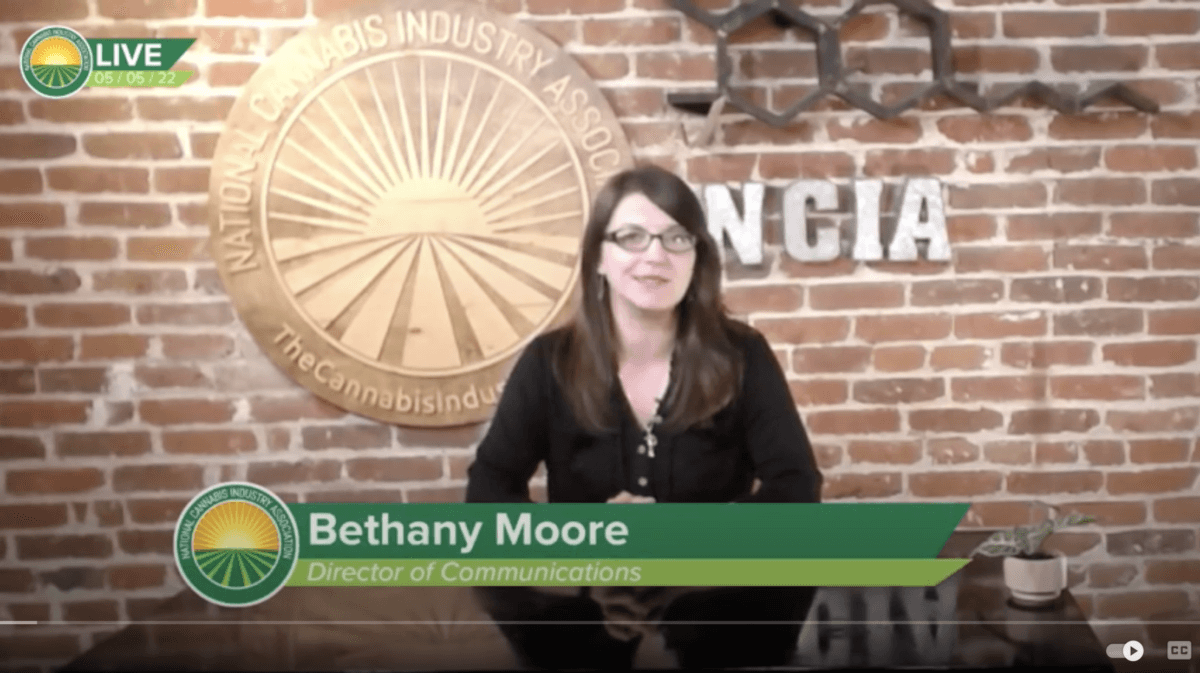
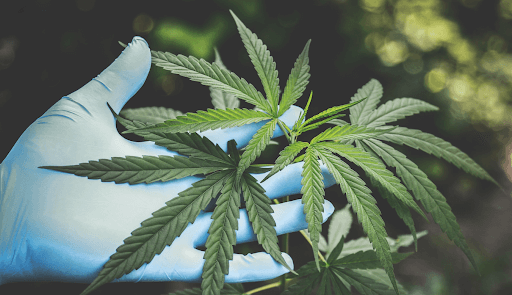
 Steve Ardagh, “The Glove Guy,” is the founder and CEO of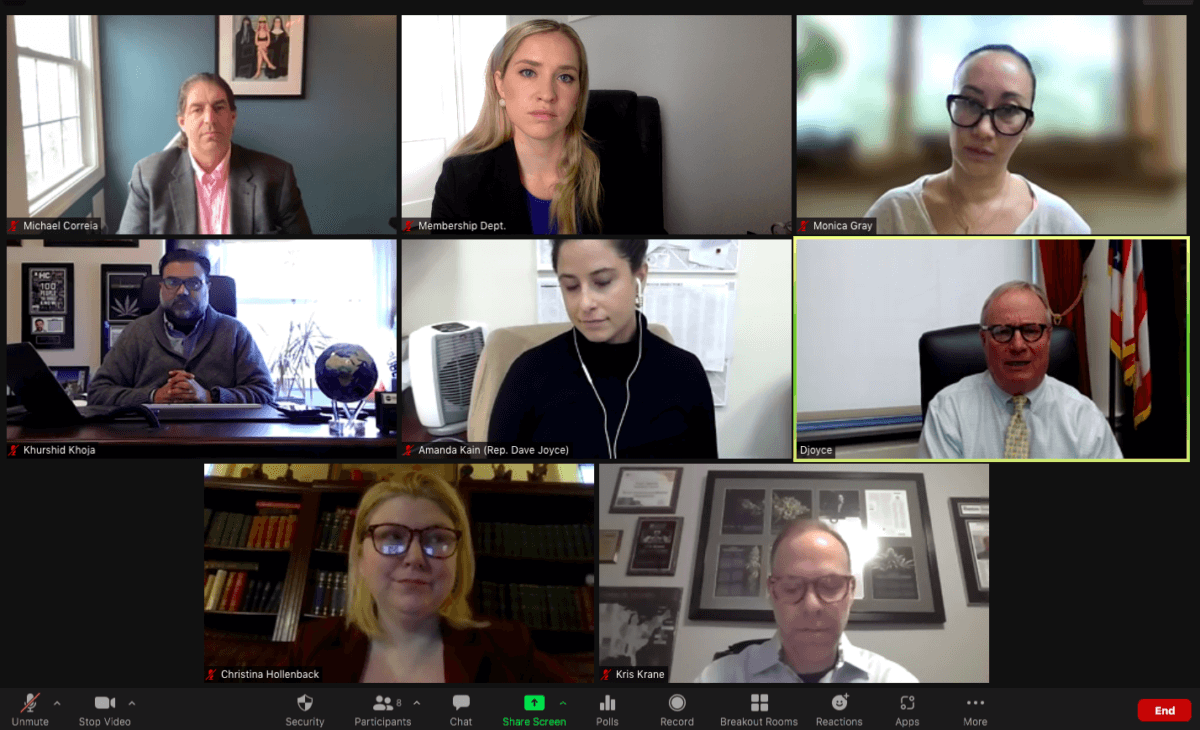
 by Madeline Grant, NCIA’s Government Relations Manager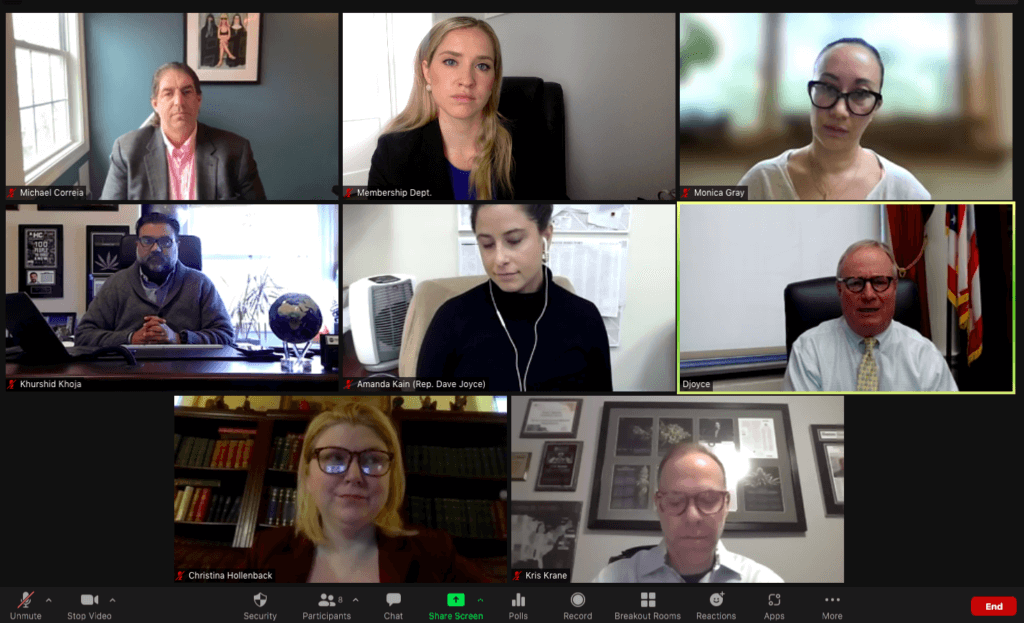
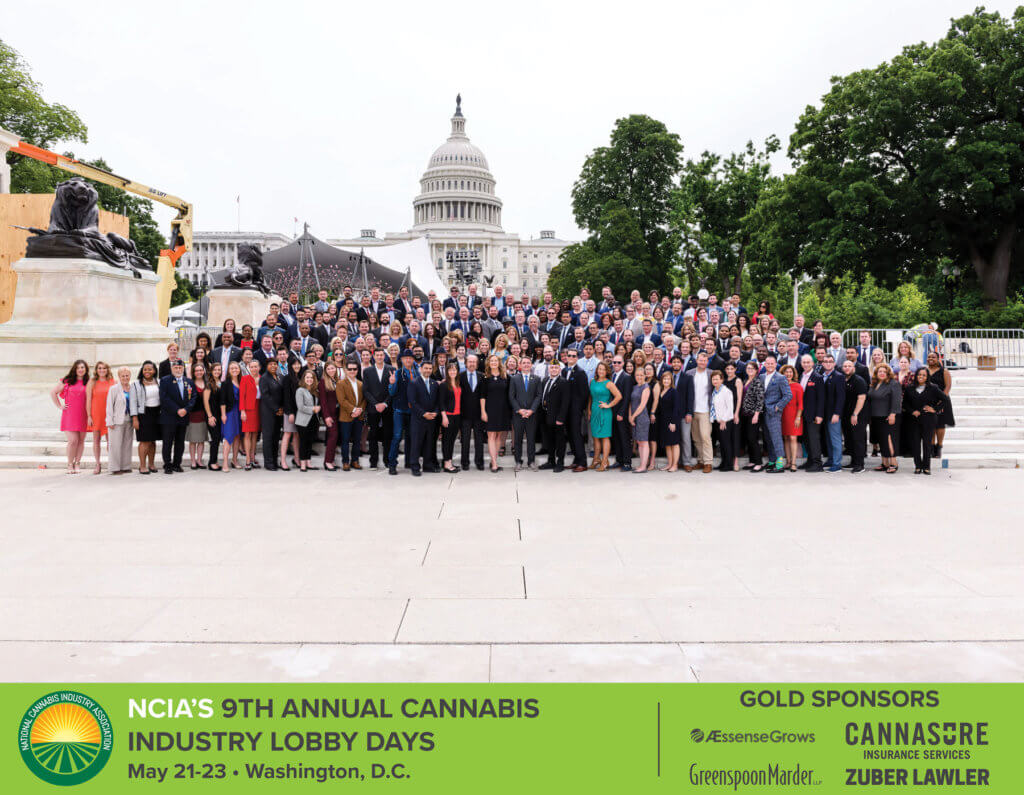
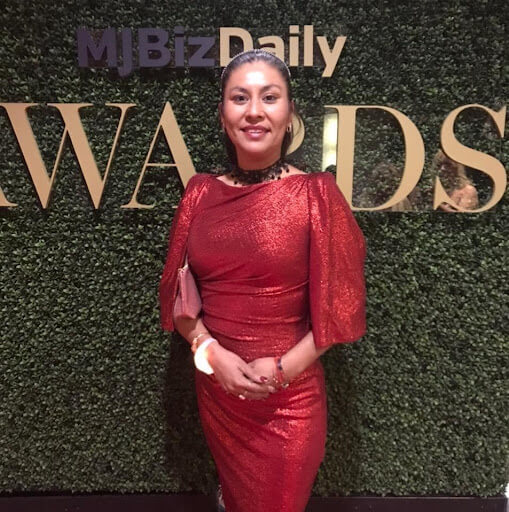


 Elizabeth Corbett, VP of Sales for
 Matt Hostacky, Regional Sales Manager, Flex IP Solutions/Cannabiz Text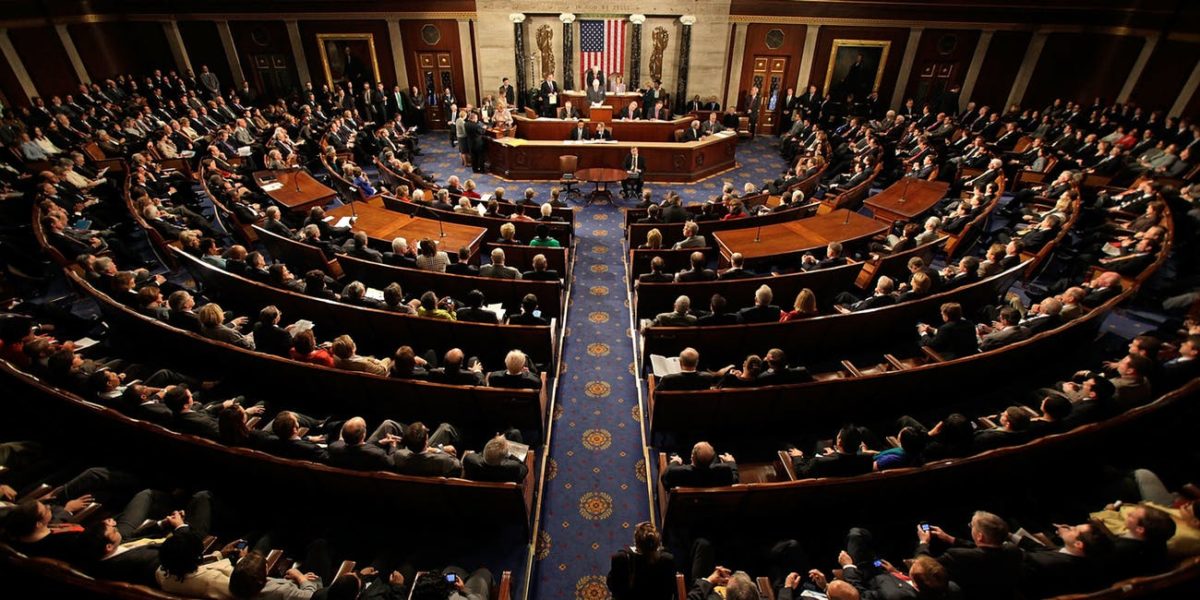

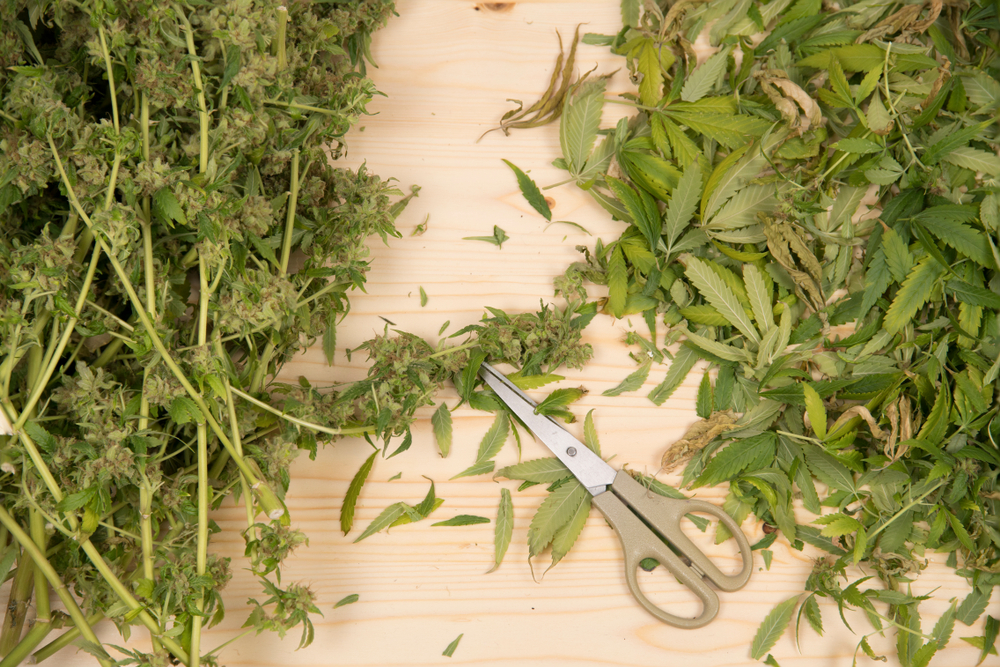
 By Kara Bradford,
  The Godmother of Cannabis Industry Recruiting, Kara Bradford, MBA, MM, is Co-Founder & CEO of
 By NCIA’s Retail Committee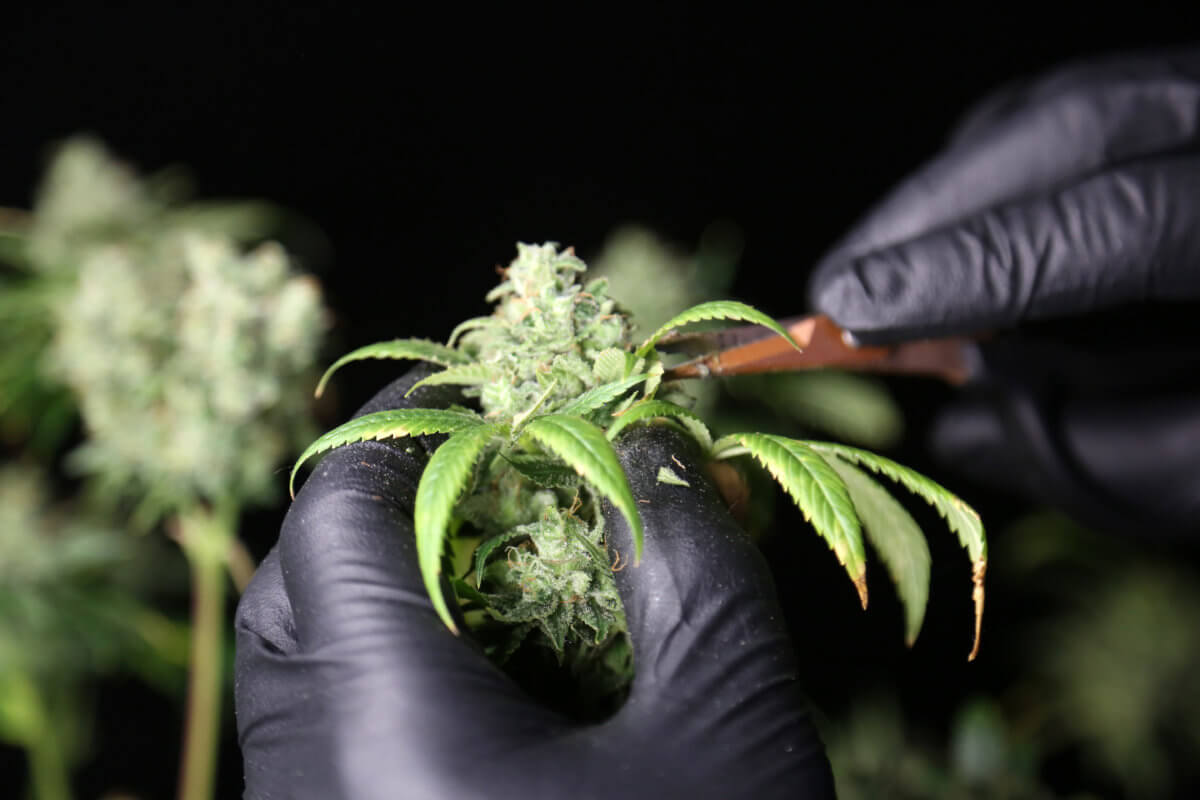
 After establishing Eagle Protect as an industry leader in New Zealand, where the company supplies approximately 80% of the primary food processing industry, Steve Ardagh relocated with his family to the U.S. in January 2016 and launched Eagle Protect PBC. Steve brought with him Eagle’s values of providing products that are certified food safe, ethically sourced and environmentally better. Steve is driven to keep consumers safe, one high-quality disposable glove at a time, and has been instrumental in developing Eagle’s proprietary third-party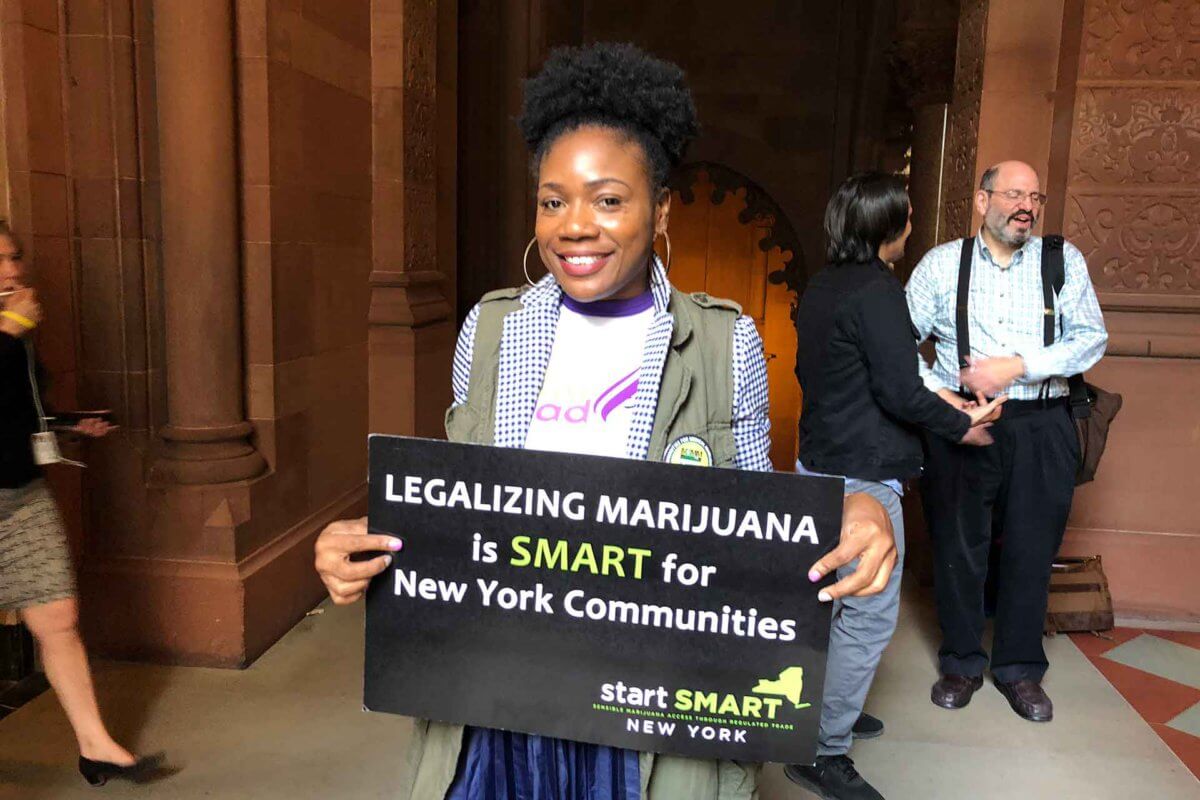
 by Elise Serbaroli of
 Elise Serbaroli leads Global Business Development at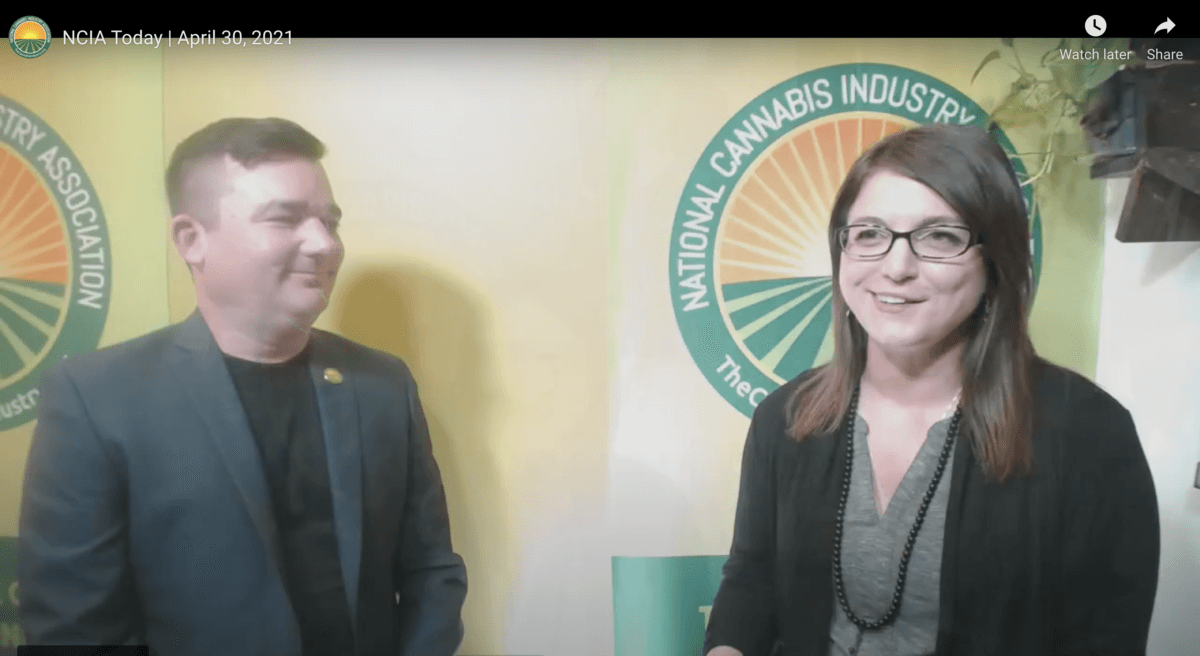

 by Rachel Kurtz-McAlaine, NCIA’s Deputy Director of Public Policy
 Vice President of ERP Sales, Frank Nisenboum,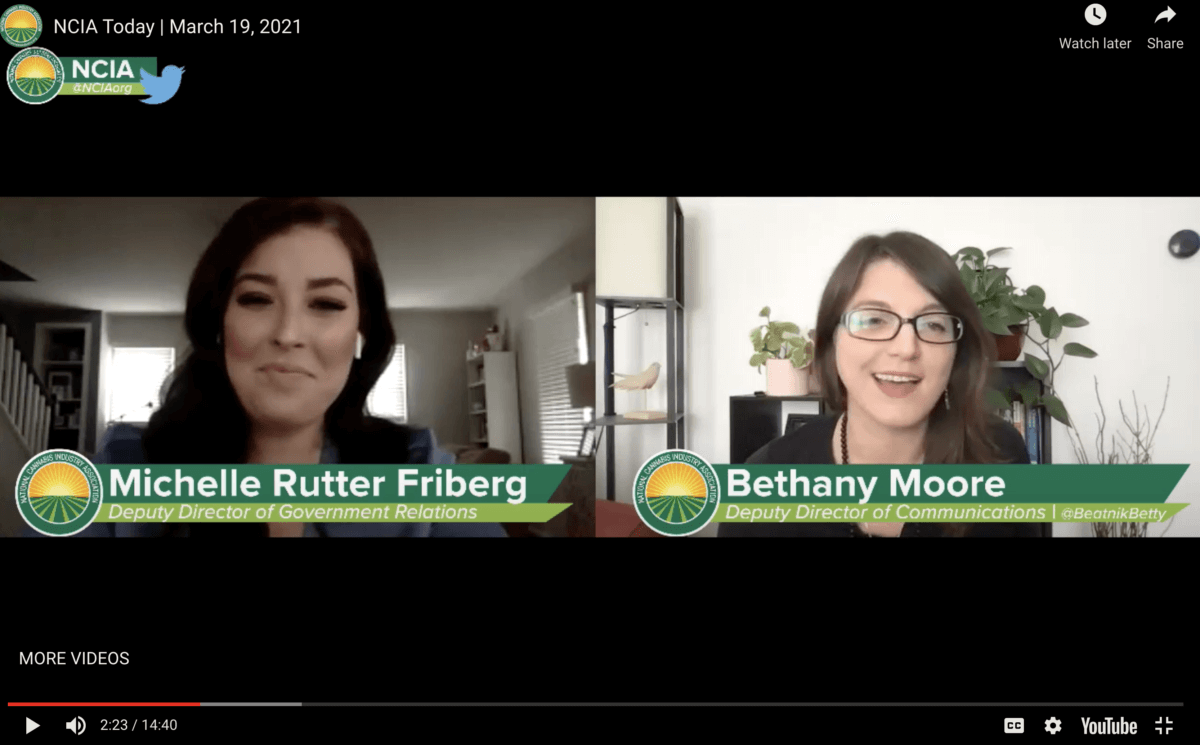

 Melissa Hafey is the Director of Human Resources for Blackbird. Blackbird is a software and services company that provides marketing tools and transportation solutions for cannabis operators. Melissa is a passionate advocate for creating meaningful work in rewarding work environments. Her experience includes change management, benefits administration, HRIS implementation, recruiting, workplace diversity initiatives, and human resources management across multiple states including California.
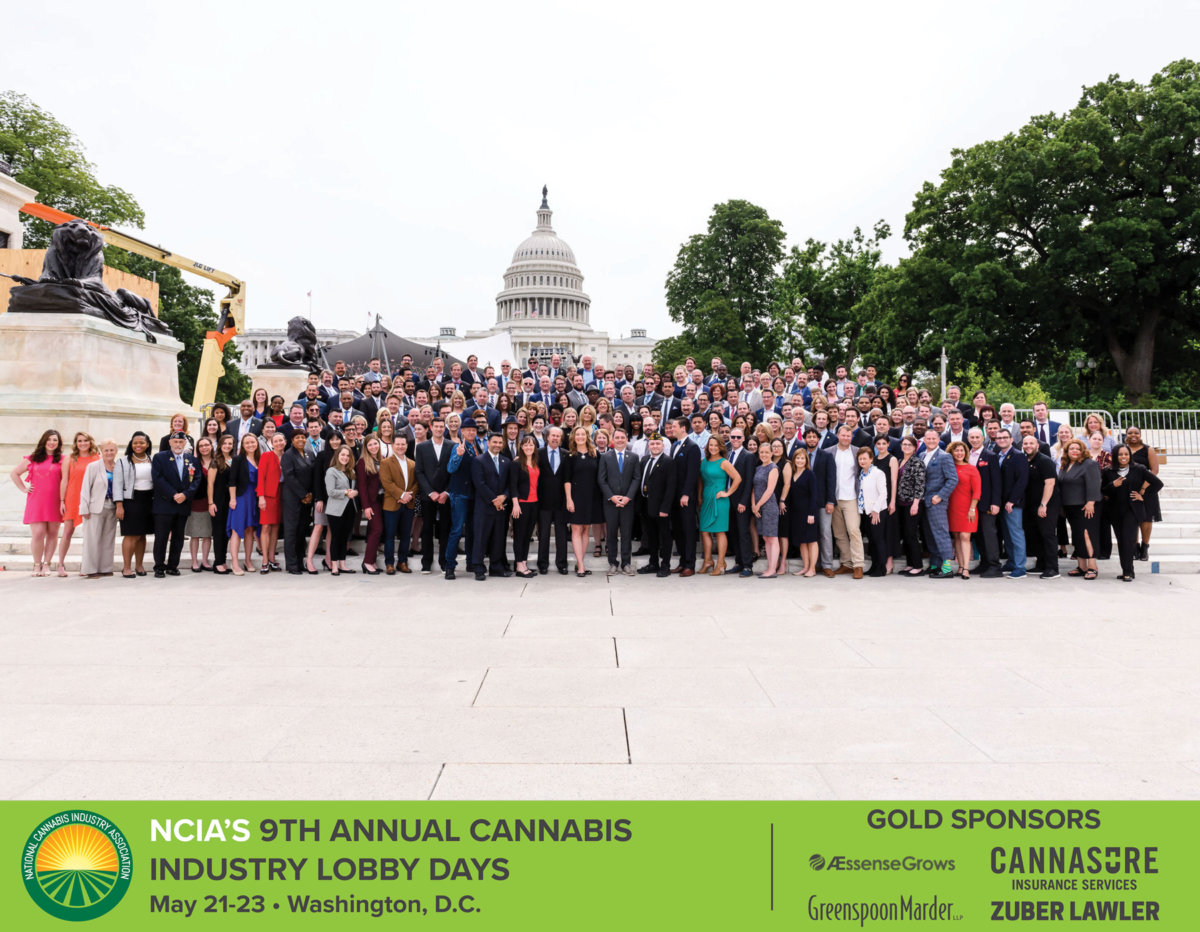

 As a country, the U.S. is experiencing what can best be described as the “age of distrust.” While public distrust in institutions has been escalating for at least a decade, according to the annual Edelman Trust Barometer which has tracked trust in media, governments, businesses, and nonprofits since 2000. Social unrest and a global pandemic have escalated this distrust. Never has the public eyed institutions or businesses with such suspicion.
  Tara Coomans is the CEO of
 A native of Newton Massachusetts and a 1979 graduate of Tufts University, Jimmy Young has over 40 years of experience in commercial television and radio. A former Emmy Award-winning Talk Show host for his sports talk show for kids on NECN in the 90’s, he is one of the rare professionals in that industry who has had success in front of the camera, in production, and in sales management.