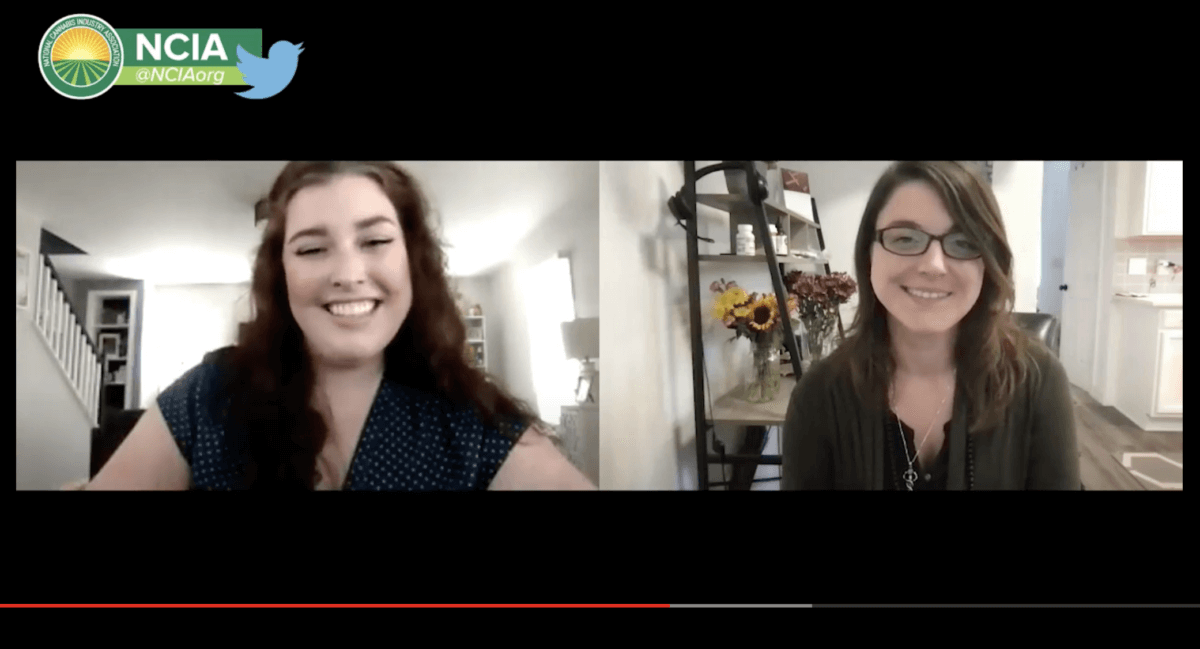
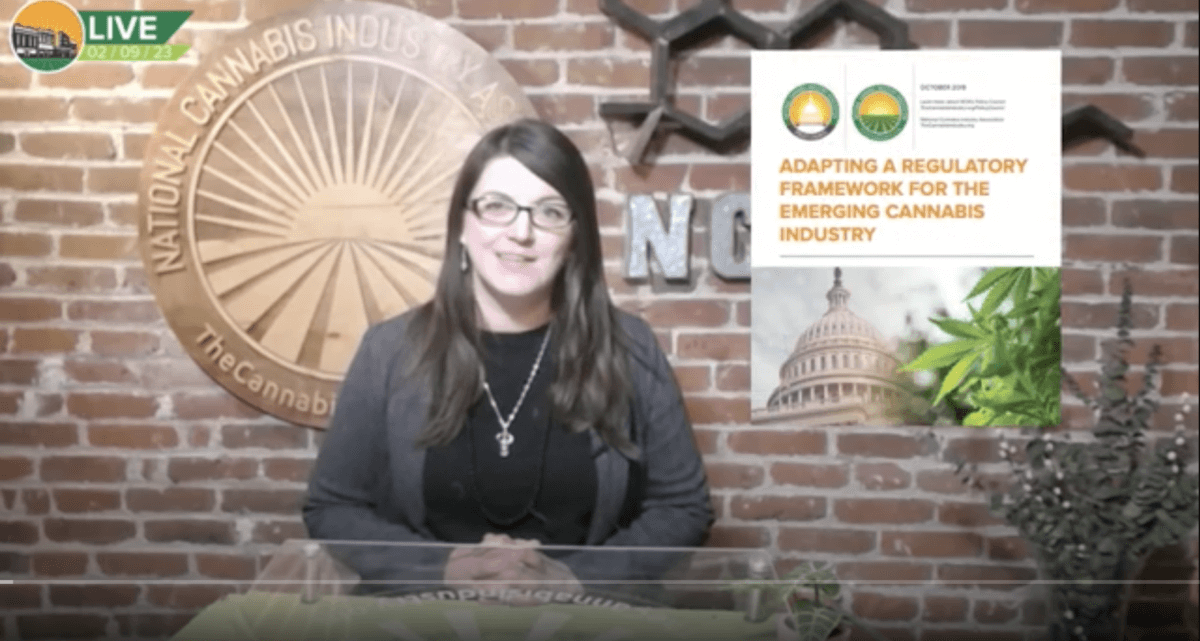
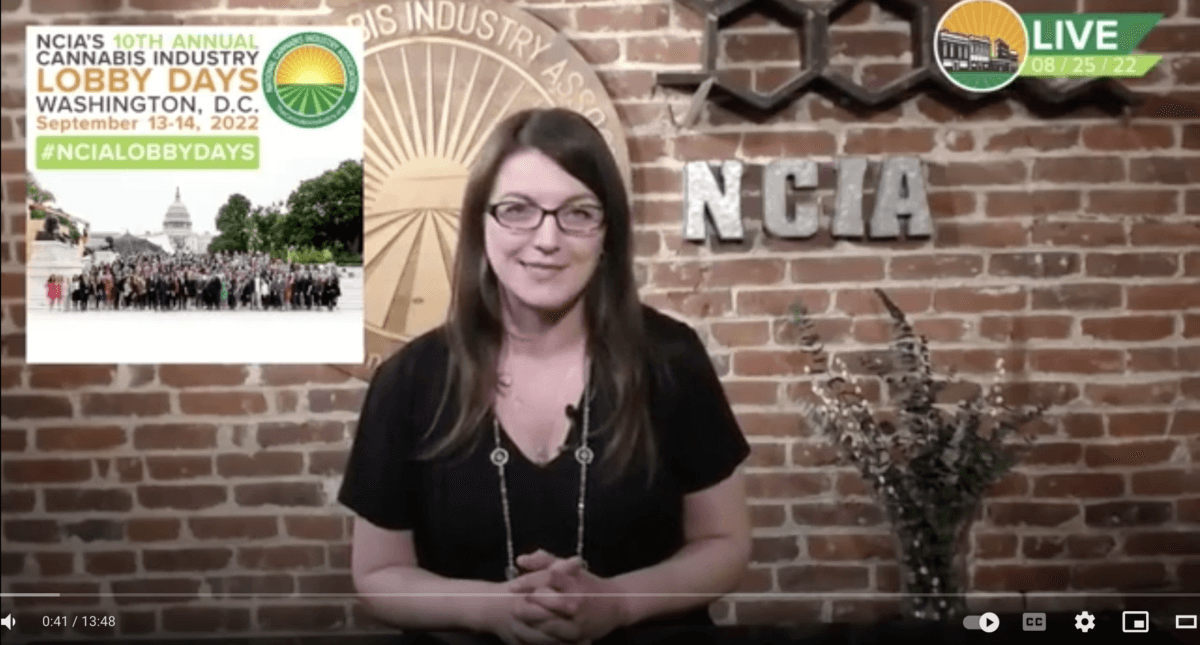
NCIA Director of Communications Bethany Moore checks in with what’s going on across the country with the National Cannabis Industry Association’s membership, board, allies, and staff. Join us every other Thursday on LinkedIN for NCIA Today Live.
Bills in Congress, SAFE Banking, and House and Senate Committees
by Michelle Rutter Friberg, NCIA’s Deputy Director of Government Relations
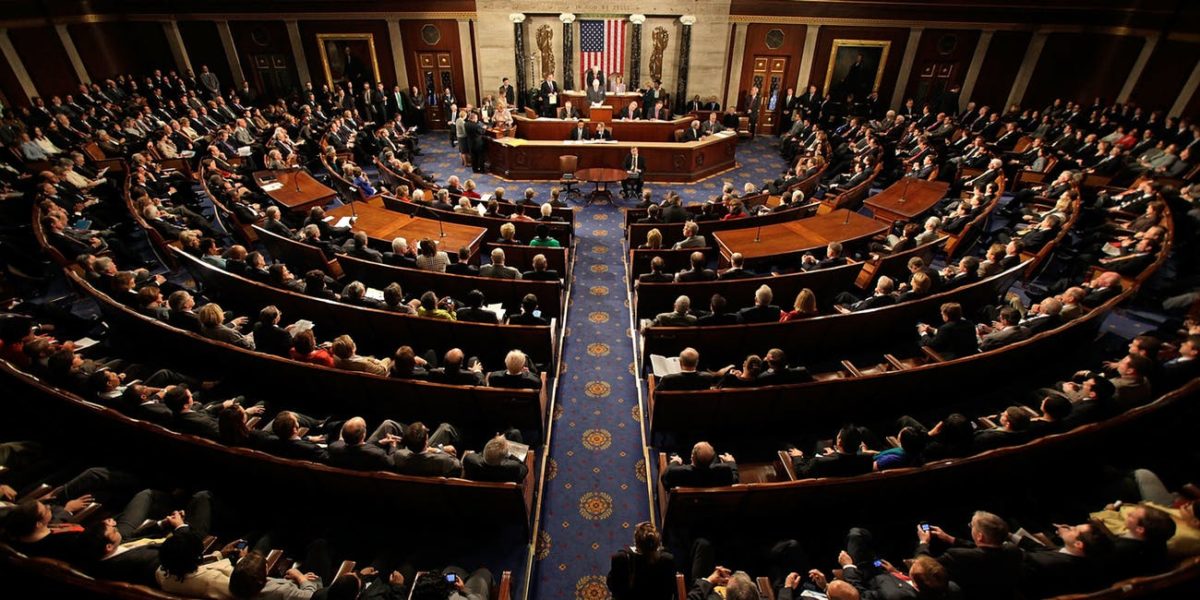
While it got off to a slow start, the 118th Congress is finally in full swing. Let’s take a look at some of the latest cannabis and government relations news coming out of Washington, D.C.:
Bills are being introduced
When a new Congress begins, all legislation from the last session must be re-introduced and start from scratch again in the legislative process. Over the last few weeks, a couple of cannabis bills have been reintroduced: two from Congressman Greg Steube (R-FL) and one from Congressman Alex Mooney (R-WV).
Rep. Mooney was the first to introduce a cannabis bill for the 118th Congress when he released his Second Amendment Protection Act. Last Congress, a similar bill was filed by the late Rep. Don Young (R-AK) known as the Gun Rights And Marijuana (GRAM) Act. The full text of the new measure is not yet available so it’s unclear what exactly the bill contains, but advocates expect the bill to be similar to the version Mooney introduced in the 116th Congress. Interestingly, although federal law explicitly prohibits all Americans who consume or possess marijuana from purchasing or possessing a firearm, a judge in Oklahoma late last week declared that ban unconstitutional.
Congressman Steube’s two bills were the Veterans Cannabis Use for Safe Healing Act and the Marijuana 1-to-3 Act. The former prohibits the Department of Veterans Affairs (VA) from denying a veteran any VA benefit due to participation in a state-approved marijuana program. For veterans participating in these approved programs, the VA must ensure its healthcare providers both discuss marijuana use with such veterans and adjust treatment plans accordingly and record such use in the veterans’ medical records. The latter bill, the Marijuana 1 to 3 Act, has been introduced by Rep. Steube in past sessions and seeks to do exactly what the title says: reschedule cannabis to Schedule 3 – a reform that would not resolve the federal conflict with the vast majority of state laws with some form of legal cannabis
A SAFE Bet?
The cannabis industry may have been devastated when Congress failed to pass the SAFE Banking Act last Congress, but we’re not giving up yet! Congressional champions have every intention of reintroducing SAFE in both chambers, but don’t expect the bill to look identical to last session.
Last week, Senate Majority Leader Schumer held a closed-door meeting with a number of other Democratic Senators to discuss what’s next for the bill. Reportedly, the Senators discussed changing the text of the bill to reflect some of the “SAFE +” language that was negotiated at the end of 2022, including the HOPE Act. It’s currently unclear if the House’s version will be identical.
Committees Finally Seated
It took Congress longer than usual to seat committees this session – particularly in the House – but we now know which members will have jurisdiction over which issue areas. Our friends at Politico put together an extensive list, but some committees I’ll be keeping my eye on include the House Judiciary Committee, the Senate Banking Committee, and the Appropriations Committees in both chambers.
Over the years, the simple possession or use of cannabis has seen many lives upended by arrests and criminal convictions. Unfairly, racial disparities have determined that black and brown individuals suffer most of these convictions, arrests, and prosecutions, even though white individuals use and possess cannabis at similar rates. The resulting criminal records lead to individuals being denied fundamental rights to employment, housing, and education opportunities.
However, on October 6, 2022, President Biden made an announcement that could change the cannabis and criminal clemency conversation. The president asserted he would:
grant pardons to individuals with prior low-level federal cannabis possession offenses
change federal cannabis laws by reviewing the cannabis Schedule I rule.
The federal government’s classification of cannabis as a Schedule I substance puts it in the same category as more lethal drugs like heroin and LSD while drugs like fentanyl are not considered less severe than marijuana since it falls under Schedule II.
As more states legalize the sale and use of cannabis, the classification of Schedule I no longer makes sense. Additionally, more direct research on the proper utilization of marijuana can develop suitable restrictive and preventative measures to protect against harmful outcomes of cannabis use.
The Biden initiative is crucial because it can begin to remove the burden of employment, education, and housing limitations often experienced by individuals with simple cannabis possession convictions. Besides, if marijuana is rescheduled to Schedule II, or as many advocates champion for a complete descheduling, it could mean the end of cannabis prohibition altogether.
Widespread Support for this Initiative
Nearly 70% of Americans support the President’s pardon proclamation. Publicly, two in three Americans support Biden’s plan for cannabis reforms, and three in four support the removal of cannabis from Schedule I of the Controlled Substances Act.
Bipartisan support for this move is also high, with 74% of Independents, 84% of Democrats, and 58% of Republicans backing the proposal. At the state level, 68% of respondents support governors that want to issue pardons for people with low-level cannabis possession convictions.
Why This is Important
The expeditious review process requested by President Biden has the potential to open the cannabis industry to further changes, like the easing of banking restrictions for cannabis businesses. For instance, the call for action by governors is already inspiring many to rethink state and local relief for marijuana users. Kentucky, Colorado, and Kansas are three states already actively considering enacting the Biden pardons and drafting new reform bills for marijuana cases.
“The lack of safe banking and financial services for the cannabis industry in the State of Colorado has become a dire public safety issue for highly regulated cannabis businesses operating in compliance with state law,” Gov. Jared Polis’ office wrote to House and Senate leaders.
“Further, the lack of safe banking exacerbates the uneven playing field faced by small and minority-owned cannabis businesses, despite their serving the same communities and being subject to the same increased state regulation as other cannabis businesses in the State,” the letter said.
It’s true – over the years, the cannabis industry has dealt with a lack of financial and banking services because of the strict regulations and criminalization associated with marijuana. Consequently, this has resulted in severe public safety issues, even for cannabis businesses that operate within the compliance mandates of the state law.
Additionally, operators are disadvantaged because they lack funding or banking systems that support cannabis business processes. But following Biden’s pardon, many hope that Congress’ marijuana reform will pass the Secure and Fair Enforcement (SAFE) Banking Act for the industry.
If passed, the protection against armed robbery will increase. Also, the SAFE Banking Act will support the minority, veterans, and women who own small cannabis businesses. This, in turn, is expected to improve public safety amid the growing use of cannabis and cannabis products while simultaneously creating jobs within states.
Ushering in the Era of Cannabis Banking and FDIC
Even though the SAFE Banking Act has been in the House of Congress seven times, federally insured banking services and modern digital banking solutions like electronic payment processing are still inaccessible to the cannabis industry.
The Act lags in the senate under Democratic and Republican control. However, the senate is said to be preparing to enact the reform for the SAFE Banking Act as part of the Biden marijuana proposals. And why not? There is significant support for the SAFE Banking Act.
For instance, National Association of State Treasures members have voiced their support for the SAFE Banking Act. Public policy also demands the immediate relief the ACT will provide cannabis businesses. Therefore, the expectation that leaders in the government will push for banking reforms for cannabis businesses is prevalent.
The SAFE Banking Act is an Advocate for the War on Drugs
Many believe that the baking legislation would advocate for the war on drugs because it would offer protection against the risk of robbery and violence. By denying cash-based cannabis businesses access to the traditional financial system, the state and local governments provide an invitation threat that has seen many victims working in cannabis businesses lose their lives or livelihoods.
On the other hand, the right to payment solutions, like credit cards, protects against armed robbery. Nonetheless, for the banking legislation to work, it requires the support of criminal reforms. This is where initiatives like predicant Biden’s pardon and marijuana schedule reform come in.
The SAFE Banking Act will solve the injustice associated with financial inequality, thus, providing public safety that protects customers, employees, and businesses in the cannabis industry. And with reduced invitations for armed robberies working in tandem with the use of mandated cannabis products, the war on drugs will ensue.
Cannabis Businesses Contribute Equally to the Economy
As such, it is only fair to provide them with the same rights and protections that other businesses, whether big or small, enjoy. Therefore, starting with the push to decriminalize and legalize marijuana, not just at the federal level but at the state level, is a solid place to start.
Following this pardon with an advocacy of the SAFE Banking Act will additionally provide cannabis businesses with the capability to carry out operations securely and optimally. But attention must be paid to the details pertinent to these reforms to ensure thousands of convicts get a better chance at life and cannabis businesses get opportunities to continue contributing to the economy.
FAQs
What does President Biden’s pardon for marijuana possession entail?
President Biden’s cannabis reform initiatives are set to accomplish three things:
Pardon convicts with low-level marijuana possession offenses, thus, allowing them to get housing, education, and employment without prejudice
Reduce the marijuana Schedule level on the Controlled Substances Act from Schedule I to Schedule II, which lessens the seriousness of marijuana possession
Inspire governors to offer the same pardons at the state and local levels where most marijuana convictions are carried out
Is there support for President Biden’s announcement?
Yes. There is ample support from the public and bipartisan control for Biden’s pardon and advocacy for the marijuana schedule change in the Controlled Substances Act.
What would the pardon mean for cannabis banking?
The de-scheduling of the marijuana Controlled Substances Act would remove the many legal hurdles and fears of the financial institutions that keep them from supporting cannabis businesses. This would reduce the discriminatory risks associated with banking or financing cannabis businesses.
Joshua Gilstrap is the Marketing Manager for e2b teknologies, in addition to his marketing responsibilities Joshua leads business development for e2b teknologies emerging Canna Suite product line. A business graduate with a focus in marketing from Miami University in Oxford, Ohio, he joined the e2b team in the Fall of 2019. Josh brought with him a wide array of business and practical experience in planning and execution. Since coming aboard he has led multiple projects including website hosting and theme standardization company wide, marketing automation streamlining the efficiency of the customer journey, and sales automation where he is changing the conversation from promotion to education, from pitching to catching, and from push to pull in order to keep up with the shifting tides of a digital transformation.
Video: Insights From NCIA’s 10th Annual Lobby Days
“I think it was really successful on all fronts.
Whether it be the networking aspect, VIP access to key decision makers, or just the ability to get to know people both fellow cannabis business owners and congressional leaders.
Lobby Days was a perfect example of really putting the membership into work and seeing what it is that you pay for.” – Chris Jackson, NCIA Board Member
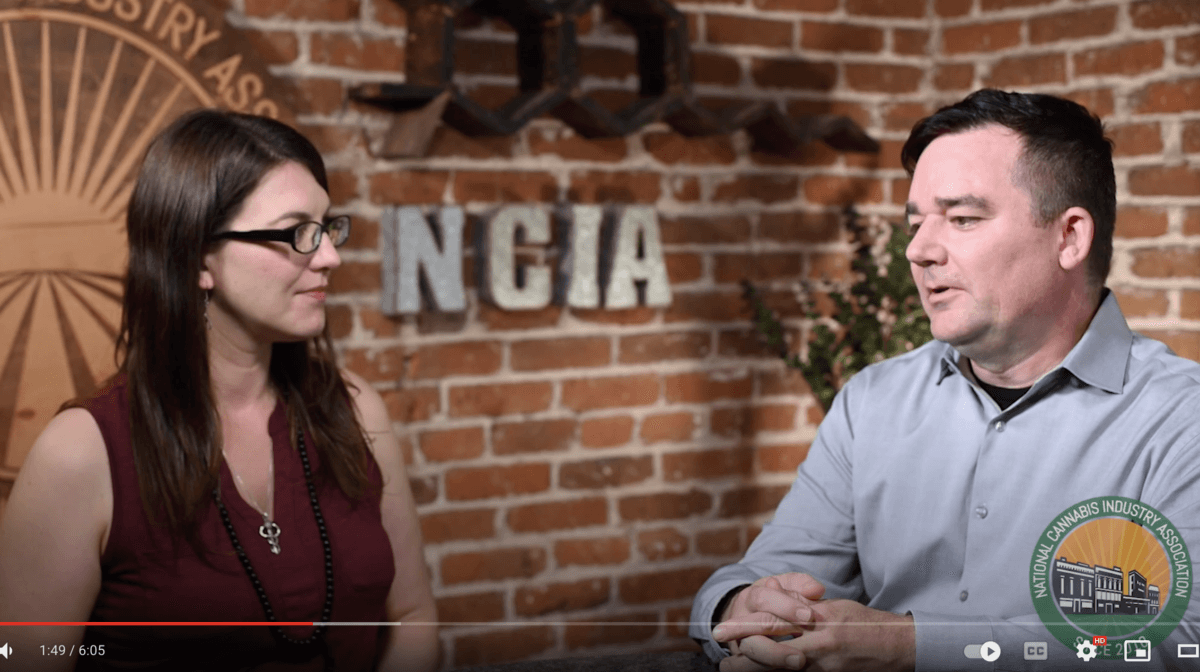
NCIA Director of Communications Bethany Moore checks in with what’s going on across the country with the National Cannabis Industry Association’s membership, board, allies, and staff. This week Bethany is joined by NCIA CEO Aaron Smith to talk about the importance of having your voice heard on Capitol Hill at our upcoming 10th Annual Cannabis Industry Lobby Days on September 13-14. Join us every other Thursday on Facebook for NCIA Today Live.
This is your chance to unite with other NCIA members to advocate for the issues most important to small cannabis businesses – from SAFE Banking to federal de-scheduling – and to share your personal stories with national lawmakers who need to hear from Main Street Cannabis businesses.
Watch this video to hear from NCIA’s CEO and Co-founder, Aaron Smith, about why you should attend this most impactful and crucial event next month. Not yet a member? Join today and then make your plans to join us in D.C.
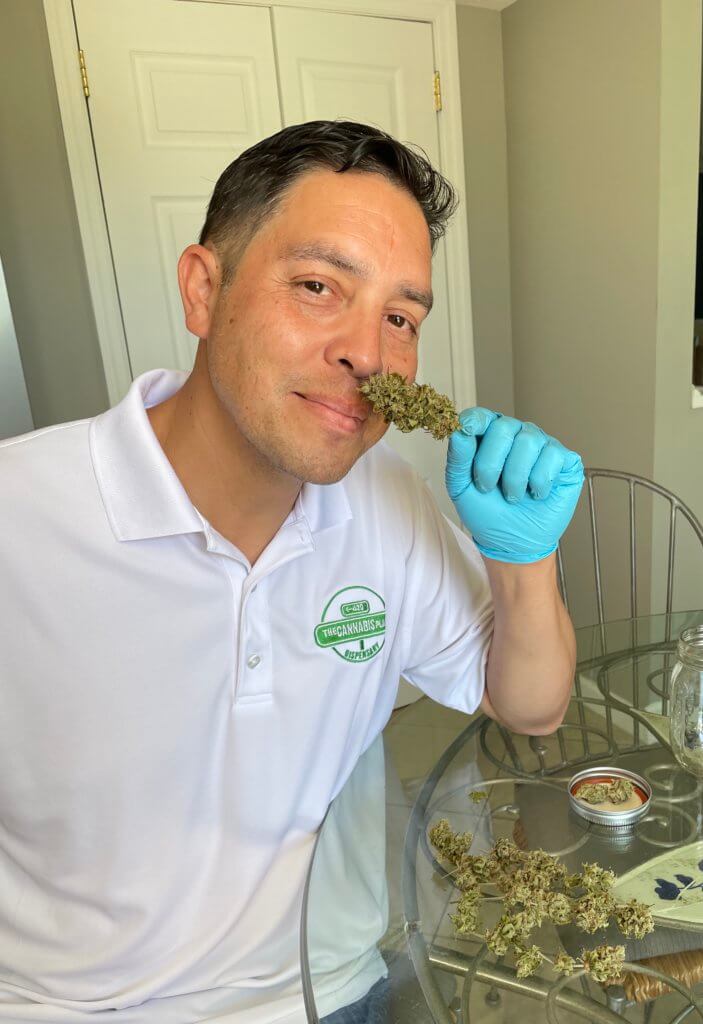
Equity Member Spotlight: Osbert Orduña – The Cannabis Place
NCIA’s editorial department continues the Member Spotlight series by highlighting our Social Equity Scholarship Recipients as part of our Diversity, Equity, and Inclusion Program. Participants are gaining first-hand access to regulators in key markets to get insight on the industry, tips for raising capital, and advice on how to access and utilize data to ensure success in their businesses, along with all the other benefits available to NCIA members.
Tell us a bit about you, your background, and why you launched your company.
I am a first-generation Latino of Colombian descent, Spanish was my first language and my dad spent most of my youth incarcerated. I grew up in NYC Public Housing projects, and I have first-hand knowledge of the indignity of what it feels like to personally be stopped and frisked nearly 100 times which is what happened to me as a kid and young adult for doing nothing else than being a poor Latino growing up in the hood. I was an Education Opportunity Fund scholar and the first in my family to go to college, where I received a degree in business, and a graduate certificate in law. I earned the designation of Disabled Veteran while serving in Iraq with the United States Marine Corps, and I am also a 9/11 first responder. I retired after a career in public service, and have worked as an entrepreneur for over 10 years, and know what it takes to start a business from scratch, without a rich uncle, generational wealth, or rich financial backers.
In late 2020 and early 2021, I had the opportunity to visit 50 non-MSO recreation and medical dispensaries in five states on the east and west coast. I wanted to learn more about dispensaries and best practices across the industry, but my trip opened my eyes to a different reality. Forty-nine of the dispensaries were owned by white males and one was owned by a white female, not one owner looked like me or shared a similar background. None of these dispensary owners had been stopped and frisked hundreds of times for no other reason than just because they lived in an area with historically high rates of arrests and enforcement from over-policing. Yet they were now engaged in an industry that seemed to exclude us. My trip left me sad but determined to enter the cannabis market so that people who look like me who came from the struggle of the streets, and were collateral damage in the war on drugs could have a chance. I was determined to create a positive example for Latinos and others to follow.
What unique value does your company offer to the cannabis industry?
The Cannabis Place offers a unique value proposition which is our commitment to launching as a union cannabis dispensary on day one. As of yet, we are the only dispensary in the state of New Jersey and the nation to propose this. By launching our business as a unionized shop we are being a partner to our Jersey City, NJ community. Our value proposition promises that we will be a responsible and proactive member of the community that provides union career opportunities with true living wages that will empower our team members to provide upward mobility for themselves, their families, and the greater community. Furthermore, we are engaged as a Workforce Development partner with Cornell University, the Workforce Development Institute, and Hudson County (NJ) Workforce Development Board. With these partnerships, we will develop standardized training modules that will be utilized to train prospective dispensary workers and provide opportunities for those seeking cannabis careers in this new and emerging industry.
Our mission: To provide high-quality cannabis to clients with a consistent product and first-class service they can trust. To build our brand on the core values of client service and care, while maintaining the highest standards of quality, integrity, and community outreach.
What is your goal for the greater good of cannabis?
As the CEO of The Cannabis Place, our primary goal for the greater good of cannabis is to advocate and support a proactive approach to adult-use by providing a local and safe environment to dispense cannabis products. We operate as a social impact cannabis brand and are dedicated to providing consistent access to safe and reliable cannabis products that are ethically grown and sourced. Our aim is to launch the first unionized cannabis dispensary in New Jersey, leading by example, and demonstrating to other businesses that true success is based on placing people over profits.
Our goals are as follows:
Be an accelerator for generational wealth-building opportunities among our employees from the community
Be a reliable source for cannabis education and awareness
Utilize our Community Impact grants to assist and support outreach in areas that have been disproportionately impacted
Our advocacy at The Cannabis Place is based on workers rights, especially organization, fairness and quality healthcare. We believe that it should be easier for people in all job fields to organize. At The Cannabis Place we support the implementation of legislation that will raise the minimum wage floor for all workers in our community, to provide for true living wages that place people over profits. Workers in all industries deserve more from the moment they are hired. Like many others I grew up as part of the working poor, in public housing with limited minimum wage job opportunities, without healthcare and with minimal alternatives to life on the streets. At The Cannabis Place we believe that by providing our workforce with union careers with true living wages and full benefits, our team members, their families and their communities will feel the immediate difference of financial stability, long-term growth, and the impact of upward financial mobility to help them support their family and to build a better life.
What kind of challenges do you face in the industry and what solutions would you like to see?
Latinos are consistently underrepresented in terms of business owners throughout all industries. Now when you focus specifically on cannabis and look at a national level, just 5.7% of all license types are held by the Hispanic community. I have seen challenges in the cannabis industry in two key areas, access to capital and the real estate market. It takes money to make money so if you grew up poor, without generational wealth, no rich uncle, no hedge fund connections or oligarchs to call on, how do you raise funds to have the millions that are needed to launch a dispensary or grow? Next and along the same lines is real estate. A lot of landlords won’t lease to cannabis businesses but unfortunately, our experience has been that again a predatory market exists where cannabis rental rates are 2 to 10 times the normal lease rates for the area. The other option is to buy a commercial parcel which brings us back to issue #1 – access to capital. I am ever the optimist, and I see the Latino community growing in the legal cannabis industry as entrepreneurs, c-suite members, and as leaders in the industry bringing our unique insight and sabor to the industry while creating opportunities for generational wealth for our community. In order to get there, we need to bridge the gap through social equity grants and loans that can help Hispanic cannabis entrepreneurs raise enough capital to start their business, and receiving financial education is also crucial for Hispanic entrepreneurs in multiple phases of the cannabis business planning timeline.
Why did you join NCIA? What’s the best or most important part about being a member through the Social Equity Scholarship Program?
We are a Disabled Veteran and Latino-owned company with a core focus on community impact through social impact so the ability to be a Social Equity Scholarship recipient in an organization like the NCIA, a group who are actually dedicated to ensuring that small cannabis businesses have a seat at the table in Washington, D.C. and beyond, was super important to us. We look forward to learning new information and utilizing networking opportunities to help us grow and succeed in the cannabis industry.
The fact that NCIA is leading change to protect the legal cannabis industry, advocate for our state laws, advance federal policy reforms, and to make this a more inclusive and prosperous space by working together to defend the responsible cannabis industry. Creating more opportunities for small businesses rather than just the wealthiest few is the most important thing for us as members of the Social Equity Scholarship Program.
The Cannabis Place 420 Corp is the first ever Disabled Veteran and Minority Owned Business enterprise to successfully navigate the Jersey City, NJ municipal cannabis dispensary approval process in this new and emerging cannabis market.
Video: NCIA Today – Friday, November 19, 2021
NCIA Deputy Director of Communications Bethany Moore checks in with what’s going on across the country with the National Cannabis Industry Association’s membership, board, allies, and staff. Join us every Friday on Facebook for NCIA Today Live.
Thoughtful Legislation: States Reform Act Introduced
Photo By CannabisCamera.com
By Michelle Rutter Friberg, NCIA’s Deputy Director of Government Relations
Recent polling from Gallup showed that an astonishing 68% of Americans believe that cannabis should be legal. And while support spans age groups and party lines, cannabis is usually thought of as an issue Democrats champion – but one woman is looking to change that.
This week, freshman GOP Congresswoman Nancy Mace (SC) officially threw her hat in the cannabis reform ring with the introduction of the States Reform Act. Notably, this is the second comprehensive cannabis bill introduced by a Republican member of Congress (the other was sponsored by Rep. Dave Joyce, one of the co-chairs of the Cannabis Caucus).
According to Rep. Mace’s office, here are some of the things the bill does:
Ensures that no state or local government will be forced to change its current cannabis policies by removing cannabis from Schedule I and deferring to states.
Regulates cannabis federally like alcohol under USDA for growers, ATF/TTB for cannabis products, and FDA for medical use.
Institutes a low 3% federal excise tax on cannabis products to fund law enforcement, small business, and veterans mental health initiatives.
Ensures the safe harbor of state medical cannabis programs and patient access while allowing for new medical research and products to be developed.
Outlines the federal release and expungement for those convicted of nonviolent, cannabis-only related offenses. This will not include cartel members, agents of cartel gangs or those convicted of driving under the influence (DUI). Mace’s office estimates that approximately 2,600 releases will be expected at the federal level. State level releases and expungements will be left to each state to determine.
Protects military veterans by ensuring they will not be discriminated against in federal hiring for cannabis use or lose their VA healthcare benefits.
Protects children and young adults under the age of 21 from cannabis products and advertising nationwide. Incentivizes states to make cannabis illegal for anyone under the age of 21, with a medical exception for prescribed use. Provides funding to the Substance Abuse and Mental Health Services Administration to ensure protections for minors are being considered.
Protects medical cannabis for the following uses: arthritis, cancer, chronic pain, sickle cell, HIV/AIDS, PTSD and other medical uses per a state’s specific cannabis regulations.
NCIA applauds Rep. Mace for introducing this new and carefully thought out piece of legislation. There are many provisions in the bill that we support: low tax rates and barriers to entry, allowing states to lead – but also many areas with room for improvement like those pertaining to criminal justice and trade. NCIA will continue to work with Rep. Mace’s office to improve this bill and attempt to find common ground across political parties in order to advance cannabis policy reforms.
A Full Plate For Congress – Status Update for SAFE Banking, MORE Act, CAOA, and Veterans
Photo By CannabisCamera.com
by Michelle Rutter Friberg, NCIA’s Deputy Director of Government Relations
I’m not sure if you’ve seen the news, but Congress has had a lot on its plate recently: negotiations over infrastructure, the budget, the debt ceiling, reconciliation, not to mention the ongoing COVID-19 pandemic! And while the path to cannabis reform has been slightly overshadowed by some of these larger issues, for the time being, the NCIA team is continuing to work tirelessly and incessantly on your behalf to enact legislation that would help you and your business. Let’s take a look at some of the more recent developments from Washington, D.C:
SAFE Banking:
Last month, the House passed the language of the SAFE Banking Act for the fifth time via the must-pass National Defense Authorization Act (NDAA). NCIA and our allies on Capitol Hill are always trying to be creative and come up with new, different avenues to advance our policy priorities, and the NDAA was a great opportunity that we were able to take advantage of! NCIA will continue to work with members of the Senate Armed Services Committeeand other stakeholders to push for the SAFE Banking Act to be included in the final bill language. Stay tuned as the NDAA process unfolds throughout the remainder of autumn.
The MORE Act:
Also last month, the House Judiciary Committee passed the MORE Act out of committee by a vote of 26-15 but the bill still has a long journey ahead of it. It’s unlikely that committees like Ways and Means and Energy and Commerce will waive their jurisdiction again, and it’s critical to remember that the chamber actually became slightly more conservative following the 2020 election. Committee schedules are jam-packed right now, however, we continue to meet with those with jurisdiction over the MORE Act and encourage them to take up this important piece of legislation.
CAOA:
The discussion draft of the Cannabis Administration and Opportunity Act (CAOA) was unveiled back in July by Senate Majority Leader Schumer (D-NY), Finance Committee Chairman Ron Wyden (D-OR) and Sen. Cory Booker (D-NJ). In the following month, NCIA worked diligently with our Evergreen Roundtable, board, committees, social equity scholarship members, and others to provide detailed feedback on various topics as requested by the Senators. NCIA continues to be a resource for the Sponsoring Offices and committees of jurisdiction, however, official bill introduction likely won’t happen until early-2022.
Veterans:
Last week, the House Veterans Affairs Committee: Subcommittee on Health held a hearing on a number of bills; among them H.R. 2916, the VA Cannabis Research Act of 2021. While this bill is not a piece of NCIA priority legislation, we applaud the committee, longtime sponsor and ally Congressman Correa (D-CA), and their teams for discussing this important topic. Of note is testimony from Dr. David Carroll, Executive Director at the Office of Mental Health and Suicide Prevention at the Department of Veterans Affairs (VA). His testimony is only about a page long, but the gist is that the VA does not support this bill. I’d also like to highlight the statement Rep. Correa submitted for the record, which you can find here.
Even though Capitol Hill’s bandwidth is stretched, NCIA will continue our work in Washington, D.C. to get these (and other) cannabis provisions enacted into law. Have questions or thoughts? Find me over on NCIA Connect!
Take A Survey: U.S. Cannabis Industry Sentiment and Business Conditions
NCIA chief economist and his cannabis economics firm, Whitney Economics, are collaborating with NCIA to conduct a national survey of businesses and stakeholders in the U.S. cannabis industry. Below, please find a link to the Survey of U.S. Cannabis Industry Sentiment and Business Conditions. It examines the key issues facing the industry including what you are experiencing when doing business in the industry. The survey seeks to investigate what is working and what can be improved from the perspective of businesses and stakeholders in the cannabis industry.
The goal of the survey is to tabulate ancillary business and cannabis operator opinions on the state of the U.S. cannabis market. Responses are confidential and will be kept anonymous.
Your participation and insights will help policymakers understand the issues that face the industry from your perspective. The survey takes between 4–5 minutes to complete. Please complete the survey by Sunday, October 31.
The initial analysis will be made available to all participants later this fall.
If you have any questions regarding the survey, please contact Beau Whitney from Whitney Economics at Beau@whitneyeconomics.com
Thank you for supporting this survey.
Even With So Much Progress, We Must Remain Diligent
By Rachel Kurtz-McAlaine, NCIA’s Deputy Director of Public Policy
What a time to be in the cannabis industry! Federal legalization feels like it is finally on the horizon, especially with the big news that tomorrow will be a press conference to introduce a draft discussion bill that has been promised by Senate Majority Leader Chuck Schumer Senate Majority Leader Chuck Schumer (D-NY), Senate Finance Committee Chairman Ron Wyden (D-OR) and Sen. Cory Booker (D-NJ).
When I first started cannabis reform advocacy 25 years ago, cannabis legalization seemed unattainable in my lifetime, given the stigma we were, and still are, up against. But medical cannabis was just starting to pass and more of us were coming around to believing in the potential of the plant and being horrified at the war on drugs to the point that we devoted our lives to ending it. That includes the founders of this organization and many who went on to start businesses that are now members of NCIA.
Running a business in the cannabis industry can be a daily challenge, from banking to text messaging to supply chain issues, so it may be hard to notice the sea change happening with cannabis bills around the country. Four state legislatures legalized cannabis just within the first six months of this year, for a total of 18 states and Washington, D.C., that have legalized cannabis for adult use over 21 years of age. (You can check out our state policy map to learn more about the status of different states.)
Believe it or not, that sea change is happening in Congress, too, and we want to make sure we’re doing everything we can to inform you about what is happening and to hear you.
As Michelle wrote about previously in the Government Relations blog, Give Us MORE, the MORE Act of 2021 was reintroduced at the end of this Spring in the House of Representatives. Read Michelle’s excellent summary, but more importantly, read the bill! An almost identical version of the MORE Act passed the House last Fall, only to be held up by a GOP-led Senate, but showed the real momentum happening in Congress.
Despite the hold up in the Senate, there is some bipartisan support. A Republican bill was even introduced in the House, the “Common Sense Cannabis Reform For Veterans, Small Businesses, and Medical Professionals Act,” that would have similar legalization efforts to the MORE Act, such as descheduling cannabis from the Controlled Substances Act and punting on regulations to federal agencies, but would not have any of the provisions that address industry equity and retribution from the years of harm caused by cannabis prohibition.
Support for legalization is now so mainstream that even Amazon is now backing cannabis legalization, expressing support for the MORE Act, although it remains to be seen if they will continue supporting MORE or get behind Sen. Schumer’s bill.
The SAFE Banking Act of 2021 is still in play and remains a crucial bill given that it could have the highest likelihood of passing the soonest. It can be overlooked given the trajectory of descheduling bills, but NCIA’s Government Relations team remains committed to SAFE and continues lobbying for it because, even though we’re planning what descheduling looks like now, it could take a few years to get there. In the meantime, banking is in emergency status.
As federal descheduling appears on the horizon, I encourage you to read the bills, including the Schumer bill, and consider how they will affect you and your business. I’m not saying legislation will necessarily pass this year, but right now is when ideas are being discussed, amendments are being drawn up, decisions are being made.
Consider how much we need to do federally versus getting the states to standardize their regulations versus having a set of voluntary self-regulatory measures that shows we are a self-aware industry and want to be safe for our customers. Keep in mind that much of the alcohol industry is self-regulated, and why would we purposely advocate to regulate ourselves more than the alcohol industry when cannabis is demonstrably safer? I appreciate the thriving alcohol market, the innovation and craft, but I know we can do even better while minimizing harm and acknowledging the past harm, but we have to be diligent.
NCIA is proud and honored to be representing the broad spectrum of the industry, from multi-state operators, to small legacy farmers, to those that have been hurt by past prohibition and want to be part of this thriving industry – all of the industry. That means hearing from you, your concerns, your ideas, your insights. Please feel free to contact me at Rachel@TheCannabisIndustry.org.
I encourage you to read the bills, including Sen. Schumer’s draft discussion bill being released tomorrow, keep reading blog posts, watching webinars, checking out NCIA’s industry buzz, and stay informed because a new day is dawning, but it’s going to be a long day, so we better be prepared for it.
Give Us MORE
Photo By CannabisCamera.com
by Michelle Rutter Friberg, NCIA’s Deputy Director of Government Relations
Last week, a long-awaited and much-anticipated piece of cannabis legislation was finally unveiled. On Friday, H.R. 3617, known as the Marijuana Opportunity, Reinvestment, and Expungement Act, or the MORE Act, was reintroduced by House Judiciary Committee Chairman Jerry Nadler (D-NY). You’ll remember that back in December 2020, the House of Representatives made history when they passed the MORE Act by a vote of 228-164. Let’s take a look at the bill and break it down:
What:
H.R. 3617, the Marijuana Opportunity, Reinvestment, and Expungement (MORE) Act
Who:
House Judiciary Committee Chairman Jerry Nadler (D-NY) is the lead sponsor, along with Reps. Lee (D-CA), Blumenauer (D-OR), Jackson Lee (D-TX), Jeffries (D-NY), and Velazquez (D-NY).
Status:
Just like the last session, the bill has been referred to a number of committees: In addition to Judiciary, it was also passed on to the Committees on Energy and Commerce, Agriculture, Education and Labor, Ways and Means, Small Business, Natural Resources, Oversight and Reform, and Transportation and Infrastructure.
Summary:
The MORE Act would remove cannabis from the federal Controlled Substances Act and attempt to undo the damage caused by racially and economically disproportionate enforcement of prohibition. It would also eliminate the conflict between federal law and states with regulated cannabis systems, and would require the expungement of past federal cannabis convictions. The bill would establish a Cannabis Justice Office to administer a program to reinvest resources in the communities that have been most heavily impacted by prohibition, funded by a graduated tax on state-legal cannabis commerce. It would also prevent discrimination based on cannabis consumption during immigration proceedings, and permit doctors within the Veterans Affairs system to recommend medical cannabis to patients in accordance with applicable state laws.
Background:
As I mentioned previously, during the 116th Congress, the MORE Act passed the House but was not taken up by the Senate. Now, during the 117th Congress, the calculus has changed a bit – on both the House and Senate sides. On the House side, the chamber is more Republican than the last time the bill was passed – meaning that advocates will have to work hard to ensure no more votes are lost and that support increases. On the Senate side, Democrats now maintain the majority by the skin of their teeth, but all legislation effectively needs 60 votes to pass – a difficult threshold. It’s also important to note that the MORE Act has not been introduced in the upper chamber as all eyes focus on Leader Schumer (D-NY) and Sens. Booker (D-NJ) and Wyden’s (D-OR) upcoming comprehensive bill.
Notable Changes & Provisions:
When the MORE Act passed out of the House back in December 2020, it contained a small but impactful section that was included at the last minute. This contentious provision related to discrimination against victims of cannabis prohibition in the permitting process. A section that pertained to applications for a federal cannabis permit stated that an application may be rejected and a permit denied if the Secretary of Treasury finds that the legal person (including in the case of a corporation, any officer, director, or principal shareholder) is “by reason of previous or current legal proceedings involving a felony violation of any other provision of Federal or State criminal law relating to cannabis or cannabis products, not likely to maintain operations in compliance with this chapter,” which would be a major blow to the intent of the legislation to undo the harms caused by prohibition. NCIA brought this provision and our concerns to the bill sponsors’ attention, resulting in them publicly committing on the House Floor to revisit and improve this section. That language was not included in the 117th Congress’ recently reintroduced version.
Also of note, the MORE Act includes tax language. When the bill was first introduced in 2019, it contained a tax section that set up a flat 5% sales tax on cannabis products at the federal level. That was later amended to be a graduated tax, beginning at 5% and increasing up to 8% in subsequent years post-legalization. The soon-to-be-reintroduced MORE Act has the same graduated tax levels.
What’s Next:
The bill has a long path ahead: as I pointed out, there are multiple committees of jurisdiction that will want to weigh in on this important legislation – I’d venture to say that both the Ways and Means (tax writing) and the Energy and Commerce Committees will have substantive edits. Another consideration is one I’ve mentioned in passing, and that’s the impending introduction of new, comprehensive cannabis reform legislation that will (hopefully) soon be unveiled in the Senate. It’s also important to note that the MORE Act is missing one critical thing: regulations, and we at NCIA believe that those can make all the difference when looking at what’s next for this legislation.
We applaud Chairman Nadler and the other cosponsors of this legislation for tackling this topic, and congratulate them on the bill’s reintroduction! We look forward to continuing to work with their offices to improve and build support for this critical piece of legislation. Stay tuned on our blog, our NCIA weekly newsletter, and NCIA Connect to find out the latest on MORE!
Hurry Up And Wait: Descheduling, DEA Licenses, And Other Reform Legislation to Watch
By Morgan Fox, NCIA’s Director of Media Relations
The cannabis world is still eagerly awaiting the introduction of Senate Majority Leader Chuck Schumer’s comprehensive descheduling legislation, but that doesn’t mean things haven’t been moving on the policy front in recent weeks!
First up, the DEA announced that it was finally moving forward with approving applications to cultivate cannabis for research purposes, which would effectively end the federal government’s stranglehold on research production. The agency spent years fending off lawsuits from applicants, who correctly asserted that not only was the monopoly limiting research, but the cannabis being grown at the single licensed facility at the University of Mississippi was basically unusable for research purposes anyway. This announcement comes several years after the DEA publicly stated that it would begin the licensing process. Better late than never.
Next, Sen. Ron Wyden, who is also working closely with Majority Leader Schumer on descheduling along with Sen. Cory Booker, introduced S. 1698 last week. While text of this bill is currently not publicly available, the name suggests that this legislation would direct the FDA to allow hemp-derived CBD, made legal under the 2018 Farm Bill, to be used as a dietary supplement or in food. Some perceive this bill as necessary to get some regulatory clarity from the FDA, which has been dragging its feet and missed several deadlines for CBD regulations. Many in the industry blame this lack of regulation for larger retailers staying out of the CBD market, which has led to massive supply gluts of the substance and has been hypothesized to be a leading cause for the recent boom in Delta 8 THC production.
And earlier this month, Rep. David Joyce, an Ohio Republican who co-chairs the Congressional Cannabis Caucus, introduced a narrowly tailored bill to remove cannabis from the schedule of controlled substances. The bill assigns regulatory responsibilities to the FDA and the Alcohol and Tobacco Tax and Trade Bureau and gives them a one-year deadline to come up with a regulatory structure similar to alcohol. It also contains provisions similar to the protections that exist in the House-approved SAFE Banking Act, calls for studies on how cannabis impacts pain and driving, and improves access for veterans. Notably, this bill does not contain any social equity or restorative justice language.
While the chances of such legislation passing in the Democrat-controlled House are slim, it could serve as a doorway to get fence-sitting Republicans into the debate. It could also be a tool to identify those members of the GOP who are steadfastly opposed to any legalization bill and out of touch with their constituents, many of whom would directly benefit from cannabis policy reforms and who are increasingly in support of ending federal prohibition.
We’re also getting word that the Marijuana Opportunity, Reinvestment, and Expungement (MORE) Act is getting reintroduced in the House this week (and may have already been at the time of this publication). This legislation made history last December when it became the first descheduling bill to receive a floor vote – and pass – in either chamber of Congress. We are hopeful that there will be some revisions from the previous bill, including the removal of a provision that would allow federal licensors to deny applications for cannabis business licenses based on prior state or federal felony convictions, and the inclusion of a more sensible and robust regulatory framework.
We are less than halfway through the calendar year, and it is shaping up to be a momentous one for cannabis advocacy! Stay tuned for more updates from Capitol Hill.
P.S. On the state side, Alabama became the latest state to approve an effective medical cannabis law. Yes, Alabama. That brings the count of medical states to 36, after unfortunately losing Mississippi to a shameful court decision. So far in 2021, four states have approved adult-use or medical cannabis legislation, and more are expected to do so in the coming weeks and months.
Video: NCIA Today – May 7, 2021
NCIA Deputy Director of Communications Bethany Moore checks in with what’s going on across the country with the National Cannabis Industry Association’s membership, board, allies, and staff. Join us every Friday here on Facebook for NCIA Today Live.
This site uses cookies. By using this site or closing this notice, you agree to the use of cookies and our privacy policy.

 Joshua Gilstrap is the Marketing Manager for

 NCIA’s editorial department continues the Member Spotlight series by highlighting our
  I am a first-generation Latino of Colombian descent, Spanish was my first language and my dad spent most of my youth incarcerated. I grew up in NYC Public Housing projects, and I have first-hand knowledge of the indignity of what it feels like to personally be stopped and frisked nearly 100 times which is what happened to me as a kid and young adult for doing nothing else than being a poor Latino growing up in the hood. I was an Education Opportunity Fund scholar and the first in my family to go to college, where I received a degree in business, and a graduate certificate in law. I earned the designation of Disabled Veteran while serving in Iraq with the United States Marine Corps, and I am also a 9/11 first responder. I retired after a career in public service, and have worked as an entrepreneur for over 10 years, and know what it takes to start a business from scratch, without a rich uncle, generational wealth, or rich financial backers.
  Latinos are consistently underrepresented in terms of business owners throughout all industries. Now when you focus specifically on cannabis and look at a national level, just 5.7% of all license types are held by the Hispanic community. I have seen challenges in the cannabis industry in two key areas, access to capital and the real estate market. It takes money to make money so if you grew up poor, without generational wealth, no rich uncle, no hedge fund connections or oligarchs to call on, how do you raise funds to have the millions that are needed to launch a dispensary or grow? Next and along the same lines is real estate. A lot of landlords won’t lease to cannabis businesses but unfortunately, our experience has been that again a predatory market exists where cannabis rental rates are 2 to 10 times the normal lease rates for the area. The other option is to buy a commercial parcel which brings us back to issue #1 – access to capital. I am ever the optimist, and I see the Latino community growing in the legal cannabis industry as entrepreneurs, c-suite members, and as leaders in the industry bringing our unique insight and sabor to the industry while creating opportunities for generational wealth for our community. In order to get there, we need to bridge the gap through social equity grants and loans that can help Hispanic cannabis entrepreneurs raise enough capital to start their business, and receiving financial education is also crucial for Hispanic entrepreneurs in multiple phases of the cannabis business planning timeline.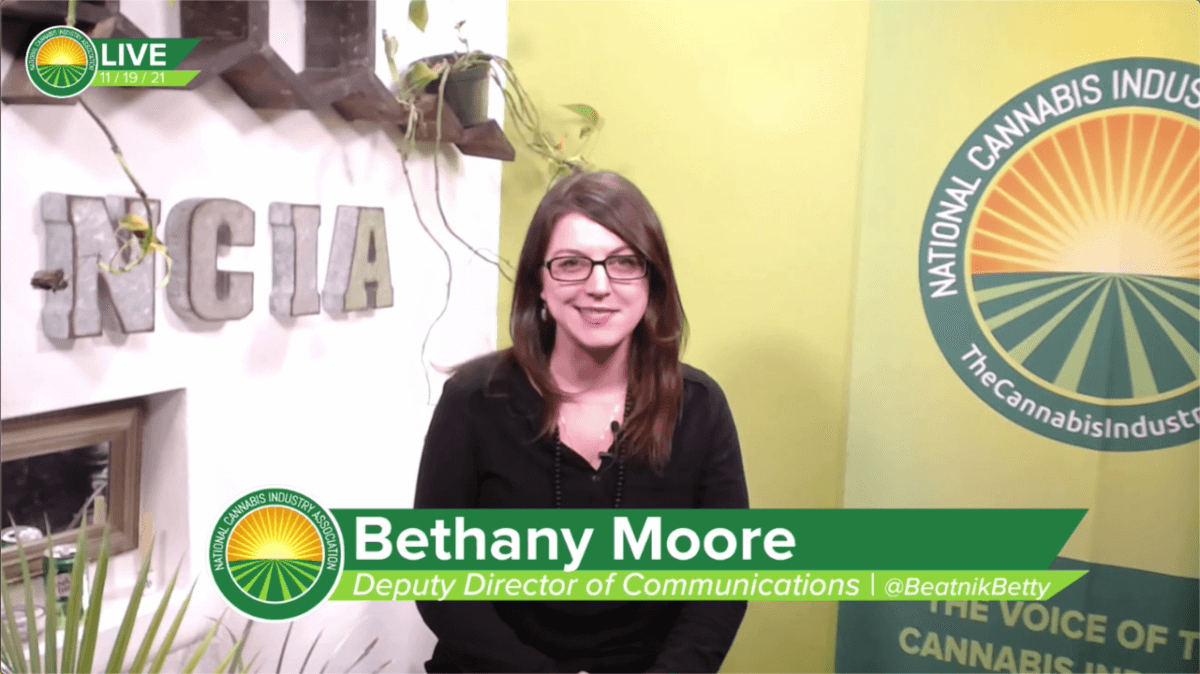


 By Rachel Kurtz-McAlaine, NCIA’s Deputy Director of Public Policy
 By Morgan Fox, NCIA’s Director of Media Relations